
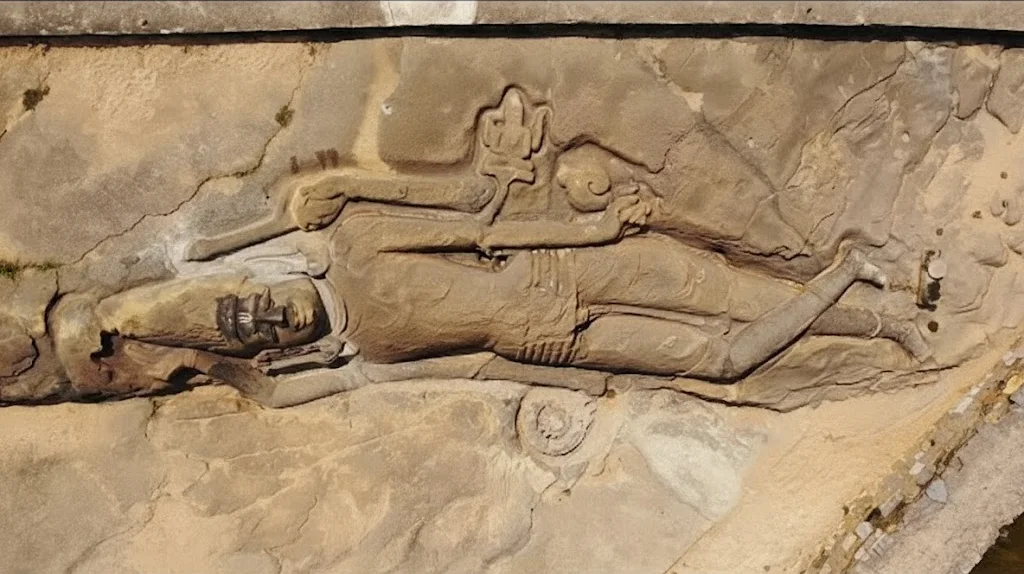
Odisha’s sacred landscape is a living museum of faith and art, and among its hidden jewels shines the Anantasayana Vishnu, the eternal reclining form of Lord Vishnu that embodies cosmic preservation, balance, and rest. Moreover, across the state, from Bhubaneswar’s temple corridors to the serene banks of the Brahmani River in Dhenkanal; this divine imagery finds its most magnificent expression in the Saranga Anantasayana Vishnu, a colossal 15-meter rock-cut sculpture that leaves visitors in awe.
During my recent journey to Saranga, the rhythmic flow of the Brahmani River seemed to whisper ancient hymns, and meanwhile the massive form of Lord Vishnu, carved directly into stone, radiated a peace that transcended time. In that moment, I realized that this was not merely a sculpture, it was Odisha’s soul carved in rock. Furthermore, the atmosphere felt timeless, and consequently it deepened my connection with this sacred place.
In this blog, I’ll take you through the historical origins, sculptural beauty, and spiritual symbolism of the Anantasayana Vishnu tradition in Odisha.Table of Contents
The Historical Legacy of Anantasayana Vishnu in Odisha
The tradition of Anantasayana Vishnu idols in Odisha dates back to the early medieval period, particularly between the 8th and 12th centuries CE, when Vaishnavism flourished under the Bhaumakaras and Somavamsis. Moreover, during this era, sculptors and temple patrons sought to depict Lord Vishnu in his most tranquil and cosmic form, reclining on the serpent Ananta (or Shesha), symbolizing the infinite nature of existence.
According to the Vishnu Purana, Vishnu’s divine slumber represents the peaceful interlude between the cycles of creation and destruction. Additionally, Odisha’s artisans internalized this idea, transforming it into monumental works of art along riverbanks and temple walls. Furthermore, their creations echoed deep spiritual symbolism across generations.
One of the earliest and finest examples is the Saranga Anantasayana Vishnu in Dhenkanal, dating to the 9th century CE, carved during the Bhaumakara reign. Meanwhile, it embodies Vishnu’s eternal rest amid the cosmic ocean, reflecting both spiritual serenity and regional craftsmanship. Consequently, it remains one of the most admired rock-cut sculptures in Odisha.
Other examples include the Ananta Vasudeva Temple in Bhubaneswar (13th century), where a smaller yet exquisitely detailed idol emphasizes Vishnu’s yogic sleep, and the Anantasaayi Vishnu Temple in Sambalpur, built in the 16th century by Balarama Deva, which beautifully integrates local Odia folk motifs. Moreover, each site adds its own artistic nuance to the tradition.
These monuments highlight Odisha’s Vaishnava heritage, blending devotional philosophy with exquisite craftsmanship. Therefore, they stand as a testament to how religion, art, and royal patronage intertwined to create living sanctuaries of faith. Ultimately, they keep the spiritual narrative of Anantasayana Vishnu alive even today.
The Anantasayana Vishnu of Saranga: Odisha’s Rock-Cut Wonder in Dhenkanal
Nestled on the banks of the Brahmani River, about 67 km from Dhenkanal and 8 km from Talcher, lies one of India’s largest and most stunning reclining Vishnu sculptures, the Anantasayana Vishnu at Saranga. Moreover, this sacred setting creates an unforgettable first impression for every visitor.
This monumental image, carved out of a single stone slab, stretches nearly 15 meters in length. Lord Vishnu reclines gracefully on the coiled serpent Ananta; meanwhile, its multiple hoods fan out like a protective canopy. At his feet sits Goddess Lakshmi, massaging his legs, a tender moment of cosmic compassion, while Brahma, the creator, emerges from a lotus sprouting from Vishnu’s navel. Consequently, every element reflects deep symbolism.
Standing before it, I was struck not only by its scale but also by its emotive serenity. Furthermore, the fine detailing of Vishnu’s conch, discus, and mace, though weathered by centuries, still radiates power and balance. Additionally, the sculpture’s sheer presence evokes profound devotion.
Local legends suggest that this idol is Swayambhu (self-manifested). Moreover, many villagers believe it appeared miraculously to protect the region from floods which is a belief still honoured today. During Ananta Chaturdashi and Janmashtami, devotees flock here to offer coconuts, flowers, and diyas, creating a surreal glow as dusk descends over the river. Therefore, the festive ambience adds a divine charm to the site.
For travellers, reaching Saranga is a journey through scenic paddy fields and rustic villages, and ultimately a fitting prelude to witnessing divinity carved in stone. Furthermore, the peaceful surroundings enhance the spiritual experience even before you arrive.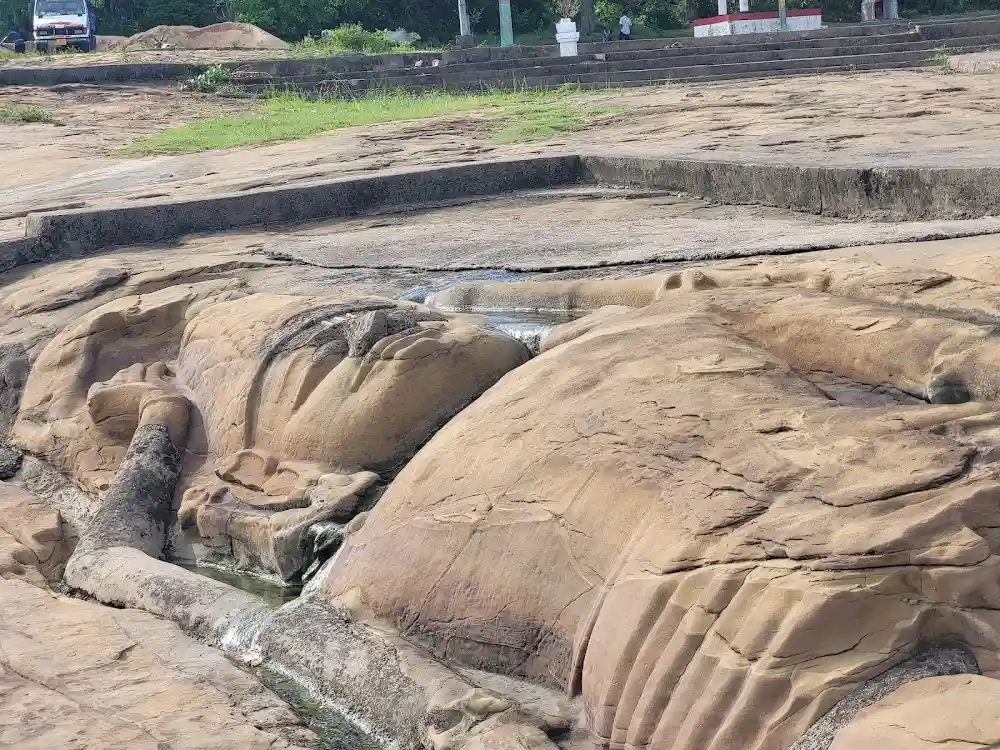
Iconographic Significance: Decoding the Cosmic Meaning of Anantasayana Vishnu
In Odia Shilpasastra (ancient treatises on sculpture), every element of the Anantasayana Vishnu form holds symbolic meaning. Moreover, this is not merely art, rather it’s philosophy materialized.
- Vishnu’s Reclining Pose (Yoganidra) represents the state of supreme consciousness that sustains creation even during rest.
- Ananta (the serpent), with his endless coils, embodies infinity and time’s cyclical nature.
- Brahma, emerging from Vishnu’s navel, signifies creation arising from cosmic preservation.
- Lakshmi, seated near his feet, symbolizes nurturing prosperity and the continuity of life.
- The Four Attributes: conch (sound), chakra (time), mace (power), and lotus (purity); convey Vishnu’s control over the universe’s fundamental forces.
What’s remarkable is how Odisha’s sculptors followed these precise iconographic guidelines while adding regional elegance, graceful curves, fluid drapery, and emotive expressions that soften the cosmic into the personal. Furthermore, their artistic intuition elevated these forms into timeless masterpieces.
Thus, each Anantasayana sculpture, especially at Saranga, becomes a bridge between divinity and humanity, and ultimately a silent sermon in stone that teaches balance, awareness, and surrender.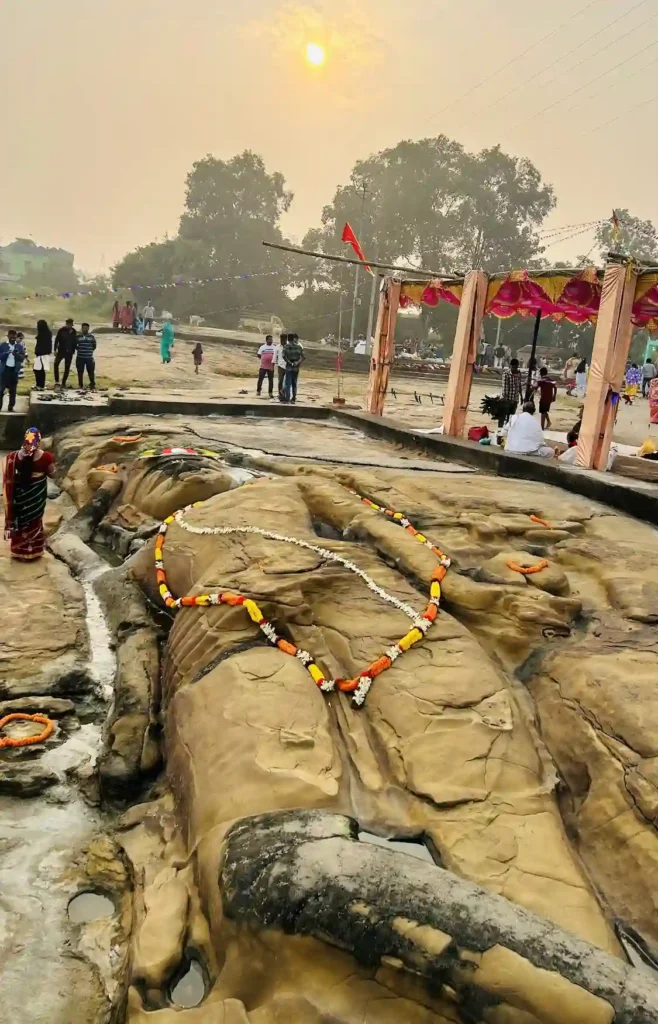
The Spiritual Essence: What Anantasayana Vishnu Teaches Us Today
At its heart, Anantasayana Vishnu is more than a sculpture; it’s a meditation on peace. Moreover, the Lord’s serene expression reminds devotees to stay centred even when the world churns around them.
In Odisha, people associate this form with stability and renewal. Additionally, farmers pray to Saranga Vishnu for rains and good harvests, while spiritual seekers visit to experience mental stillness. During Ananta Chaturdashi, devotees tie sacred threads (Ananta Danda) on their wrists, symbolizing Vishnu’s protection and the infinite nature of faith.
As I sat by the Brahmani River watching the evening aarti flicker against the stone idol, I understood why this form endures, it teaches how rest can be divine, and furthermore how silence too can preserve the world.
People Also Ask – Answers to Common Questions
1. Where is the famous Anantasayana Vishnu idol in Odisha located?
2. What is the historical significance of the Saranga Anantasayana Vishnu?
3. How long is the Anantasayana Vishnu idol at Saranga?
4. What does the reclining pose of Vishnu signify?
5. When is the best time to visit Saranga, Dhenkanal?
How to Reach Saranga Anantasayana Vishnu
- By Road: 67 km from Dhenkanal town; 8 km from Talcher via NH-53.
- By Rail: The nearest railway station is Talcher, well connected to Cuttack and Bhubaneswar.
- By Air: The closest airport is Biju Patnaik International Airport, Bhubaneswar (about 140 km).
- Best Time: Winter months (Oct–Mar).
Conclusion: Let Anantasayana Vishnu’s Eternal Serenity Guide Your Journey
The Anantasayana Vishnu of Odisha, especially the grand sculpture at Saranga, Dhenkanal, is more than an archaeological marvel. Moreover, it’s a living symbol of peace, eternity, and divine artistry.
My visit to this sacred site was transformative. The rhythmic river, the stillness of stone, and the whisper of faith created a moment that transcended time. Furthermore, whether you are a spiritual traveler, history enthusiast, or art lover, this site promises an experience that connects the human soul to cosmic calm.
So, when you plan your Odisha journey in 2025, make sure to stand before the Anantasayana Vishnu at Saranga. Therefore, let his eternal rest awaken your inner stillness.