
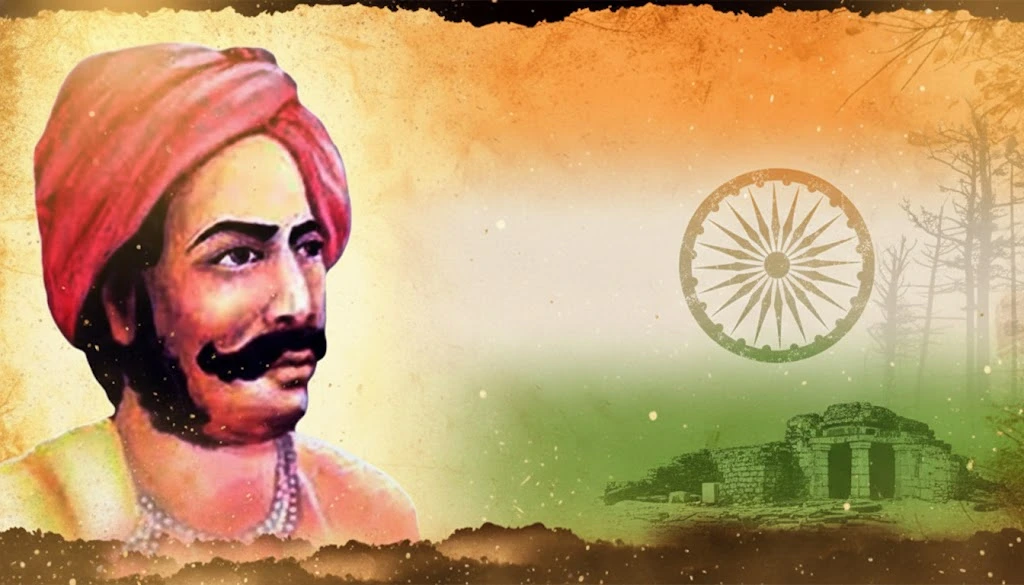
Imagine a freedom fighter who chose forests over comfort, resistance over silence, and dignity over submission, long before organized nationalism took shape in India. Veer Surendra Sai of Sambalpur stands tall as one such indomitable hero. Born in 1809, he fought British colonial rule for nearly four decades, making him one of the longest-resisting revolutionaries in Indian history.
As someone who grew up reading about Odisha’s unsung heroes, I have always drawn deep inspiration from his life. His courage did not come from grand armies or royal patronage but from unwavering conviction and grassroots support. In this detailed, SEO-optimized blog, we journey through his life, his role in the freedom movement, and how modern institutions continue to carry his name forward.Table of Contents
Early Life of Veer Surendra Sai: Roots of Resistance in Sambalpur
Veer Surendra Sai was born in 1809 in Bargaon village near Sambalpur, Odisha, into the royal Chauhan dynasty. His father, Dharam Singh, belonged to the ruling lineage of Sambalpur, tracing ancestry back to Raja Madhukar Sai. From an early age, Surendra Sai witnessed political instability and growing British interference in princely affairs.
When Raja Mohan Sai died in 1827 without a male heir, Surendra Sai emerged as a legitimate claimant to the throne. However, the British East India Company ignored traditional succession norms and installed Rani Mohan Kumari as a puppet ruler. This decision deeply angered local zamindars, tribal chiefs, and common people.
From that moment, Surendra Sai’s life took a decisive turn; from royal claimant to people’s leader.Conflict with the British: The Making of a Revolutionary Leader
Although Rani Mohan Kumari was later removed, the British again bypassed Surendra Sai and installed Narayan Singh as ruler. This repeated denial was not just personal; it symbolized colonial disregard for indigenous rights.
Surendra Sai began organizing resistance by uniting Gond, Binjhal, and Kisan tribal communities, along with gauntias (village headmen). He became their voice against heavy taxation, land seizures, and administrative oppression.
Because of his influence, British officials increasingly viewed him as a threat. False accusations followed, and by 1840, Surendra Sai, his brother Udwanta Sai, and relatives were arrested and sentenced to life imprisonment.Imprisonment and the Turning Point of 1857
Surendra Sai was imprisoned in Hazaribagh Jail, far from Sambalpur. However, history intervened during the Great Revolt of 1857. On 31 July 1857, mutineers stormed the jail and freed political prisoners, including Surendra Sai.
Instead of joining rebel troops elsewhere, he made a daring journey back to Sambalpur through forests and hills. His return electrified the region. Villagers, tribal leaders, and local chieftains rallied behind him once again.
When British officers refused to recognize his claims and demanded his submission, Surendra Sai chose rebellion over compromise.Veer Surendra Sai and the 1857 Uprising in Odisha
Unlike many revolts that fizzled out after 1858, Veer Surendra Sai’s rebellion in Sambalpur continued for years. He led guerrilla warfare from forests, striking British outposts, disrupting communication lines, and seizing treasuries.
His leadership style was inclusive. He respected tribal autonomy and fought alongside them as equals. Battles at Kudopali, Deogarh, and surrounding regions kept British forces under constant pressure.
Even after major uprisings elsewhere failed, Surendra Sai’s resistance remained active, making Sambalpur one of the longest-rebelling regions in colonial India.Surrender, Betrayal, and Final Imprisonment
By the early 1860s, relentless military pressure weakened the rebellion. British officers offered amnesty, promising safety and pension. After long negotiations, Surendra Sai surrendered in May 1862.
Initially, the British granted him land and a pension. However, mistrust soon resurfaced. In 1864, he was re-arrested on fabricated charges and detained without proper trial under Regulation III of 1818.
He was transferred to Asirgarh Fort, where he spent his final years in isolation. Veer Surendra Sai passed away around 1884, far from his homeland, but undefeated in spirit.Legacy of Veer Surendra Sai in Modern Odisha
Although colonial records tried to erase him, Odisha remembers Veer Surendra Sai with pride. His name lives on through major institutions that symbolize progress and public service.
Veer Surendra Sai University of Technology (VSSUT), Burla
Formerly UCE Burla, VSSUT stands as one of Odisha’s premier engineering institutions. It represents innovation, resilience, and youth empowerment, values Surendra Sai embodied.
Veer Surendra Sai Institute of Medical Sciences and Research (VIMSAR)
Located in Burla, VIMSAR serves western Odisha’s healthcare needs. Naming it after Surendra Sai reflects his lifelong service to the people.
Veer Surendra Sai Airport, Jharsuguda
This airport connects western Odisha to major Indian cities. It symbolizes how a once-marginalized region now takes flight, guided by the legacy of a fearless leader.
Why Veer Surendra Sai Still Inspires Me
As an Odia, learning about Veer Surendra Sai has always shaped my understanding of freedom. His story taught me that resistance does not always happen in capitals, it often begins in forests, villages, and hearts.
Whenever I see institutions carrying his name, I feel reminded that courage and integrity outlive oppression. His life continues to inspire me to stand firm for justice, even when the odds seem overwhelming.