
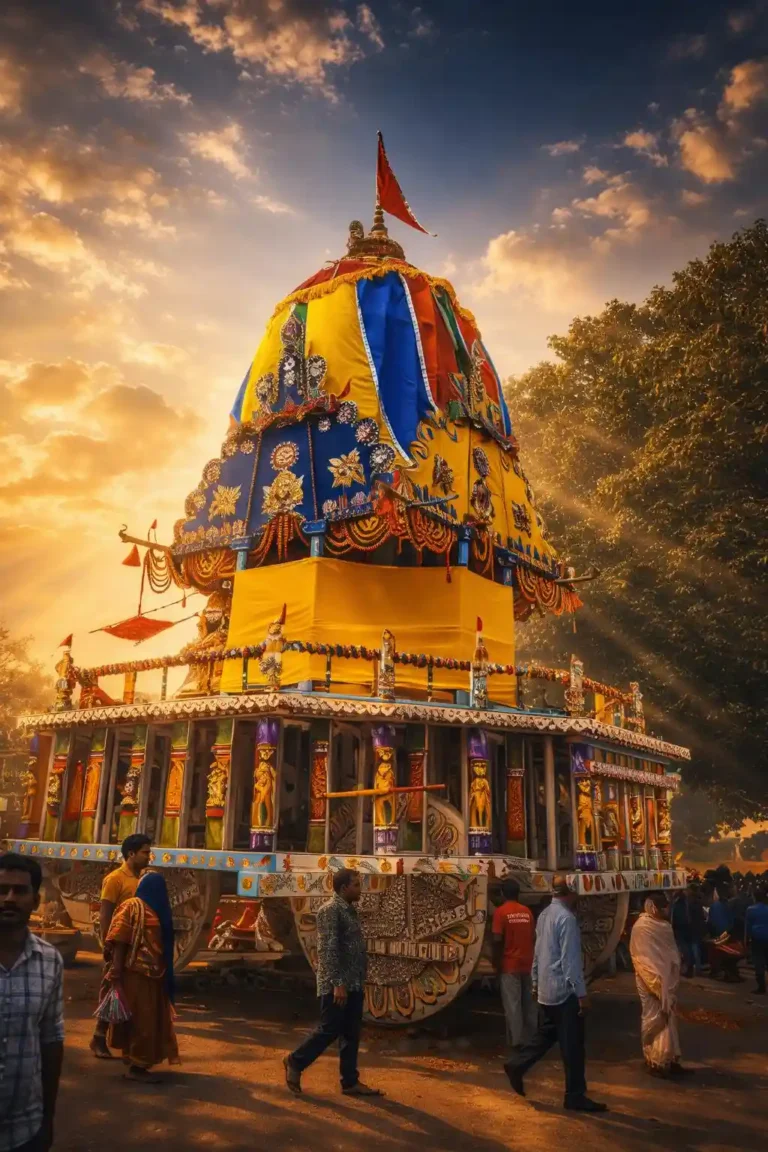
Introduction to Rukuna Rath Yatra
Odisha is synonymous with Rath Yatras. While Puri’s grand chariot festival attracts global attention, Bhubaneswar’s Rukuna Rath Yatra carries a quieter yet equally powerful spiritual energy. Every year, during Ashokastami in the month of Chaitra, thousands gather in Old Town Bhubaneswar to witness Lord Lingaraj’s majestic procession.
If you are searching for information about Lingaraj Rukuna Yatra, curious about the meaning of Rukuna Rath, or planning ahead for Rukuna Yatra 2026, this detailed guide will help you understand its history, rituals, legends, tourism value, and lived experience.
Let us explore why this 1,000-year-old festival continues to move hearts.Table of Contents
The Spiritual Significance of Rukuna Rath Yatra
The Rukuna Rath Yatra represents divine unity and spiritual progression. Lord Lingaraj, worshipped here as Harihara (a combined form of Shiva and Vishnu), symbolizes harmony between Shaiva and Vaishnava traditions.
Why It Is Called “Rukuna”
The word “Rukuna” comes from “Analeuta,” meaning the chariot does not turn back. Unlike other Rath Yatras where the chariot rotates during return, here the chariot moves straight in both directions.
This straight movement symbolizes:
- Focused devotion
- Life’s forward journey
- Steadfast faith
Moreover, devotees believe that pulling the ropes of the Rukuna Rath cleanses sins and brings spiritual merit. Therefore, participation becomes an act of purification.
Additionally, many consider this yatra “Papa Binashi,” meaning destroyer of sins. Because of this belief, thousands eagerly wait each year for the festival.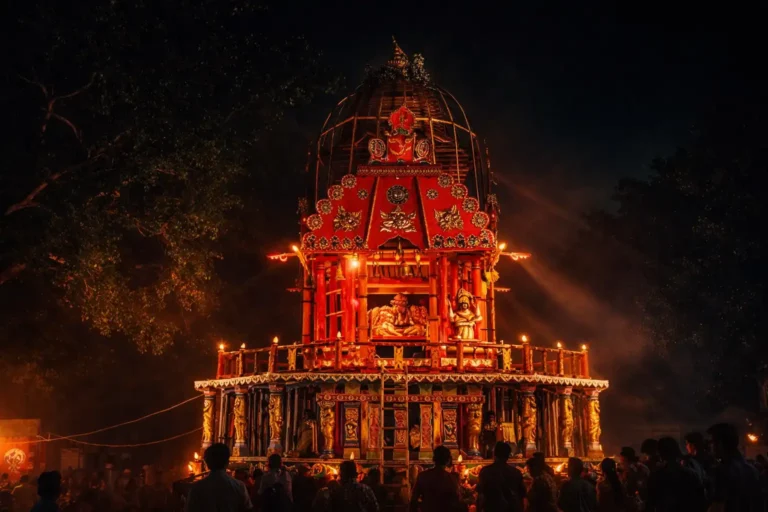
Historical Origins of Lingaraj Rukuna Yatra
Historians trace the Yatra back over 1,000 years to the Somavanshi period. The festival developed alongside the majestic Lingaraj Temple, which remains the spiritual heart of Bhubaneswar.
Over centuries, rulers preserved and strengthened this tradition. Consequently, the yatra became a vital part of Ekamra Kshetra’s sacred calendar.
Interestingly, the festival takes place during Chaitra Navratri, specifically on Ashokastami. This timing connects it with renewal, divine energy, and seasonal transition.Legends and Stories Behind Rukuna Rath
The Visit to Mausi Maa Temple
One popular legend states that Lord Lingaraj visits his aunt (Mausi Maa) at Rameswar Temple during this procession. This familial symbolism humanizes the divine and strengthens emotional connection among devotees.
Demon-Slaying Tale
Another story narrates how Lord Shiva defeated evil forces during this sacred journey. Therefore, the procession represents victory of righteousness.
Miraculous Movements
Locals often share accounts of unexplained chariot shifts, which devotees interpret as divine will rather than human effort.
These stories, passed down through generations, enrich the spiritual fabric of the Yatra.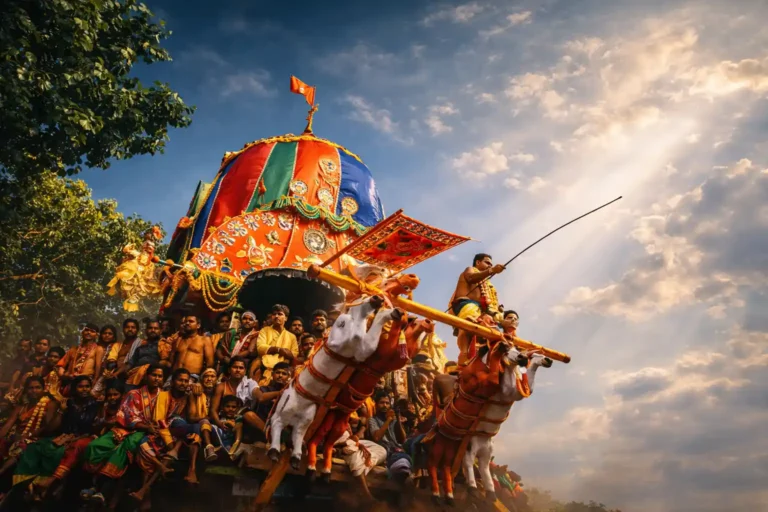
Rituals of Rukuna Rath Yatra
Pre-Yatra Rituals
- Mangala Alati
- Abakasha Niti
- Sahanamela (public darshan)
Priests then ceremonially place the bronze idol of Chandrasekhar (representative of Lord Lingaraj) on the chariot.
The Grand Procession
Devotees pull the massive Rukuna Rath from Lingaraj Temple to Rameswar Temple. The journey lasts five days.
Throughout the procession:
- Bhajans echo in the streets
- Conch shells resonate
- Devotees chant “Jai Lingaraj”
Return Journey
On Panchami Tithi, the chariot returns without turning, reinforcing its symbolic straight path.
Moreover, daily bhog offerings and aartis continue during this period, intensifying devotional fervour.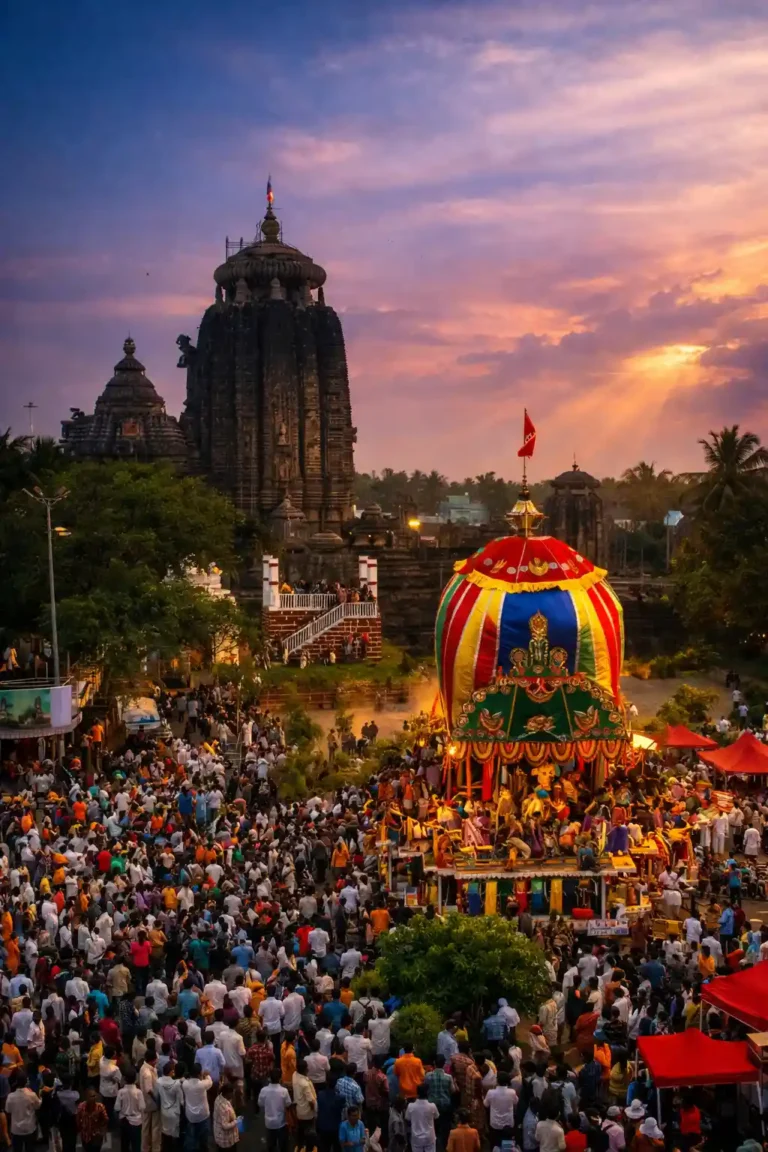
Deities Associated with Rukuna Rath Yatra
Central Deity
- Lord Lingaraj (Harihara form)
Accompanying Deities
- Parvati
- Ganesha
- Kartikeya
Local Celebrations During Rukuna Rath Yatra
Streets fill with:
- Decorative rangolis
- Temple flags
- Flower garlands
Local vendors sell prasad, sweets, and traditional handicrafts. Cultural performances, including Odissi dance and devotional music, enhance the festive mood.
Women actively participate, children wave flags, and elders chant hymns. As a result, the event becomes a community celebration rather than just a religious ritual.
Furthermore, the evening aarti glows under oil lamps, creating a mesmerizing spiritual ambiance.Tourism Significance
Although Puri Rath Yatra draws international crowds, Rukuna Rath Yatra offers a more intimate experience.
Why Tourists Love It
- Authentic temple rituals
- Less commercialized atmosphere
- Historical temple backdrop
- Rich photography opportunities
Visitors can also explore nearby attractions:
- Mukteswar Temple
- Rajarani Temple
- Ekamra Haat
People Also Ask (FAQs)
1. What is Rukuna Rath Yatra?
This is an annual chariot festival of Lord Lingaraj held in Bhubaneswar during Ashokastami in Chaitra month.
2. Why is it called Rukuna Rath?
It is called “Rukuna” because the chariot does not turn during its return journey (Analeuta tradition).
3. When is Rukuna Yatra 2026?
Rukuna Yatra 2026 will be celebrated on Ashokastami in March–April 2026 (exact date based on Hindu calendar).
4. Where does Lingaraj Rukuna Yatra take place?
It takes place in Old Town Bhubaneswar, from Lingaraj Temple to Rameswar Temple.
5. Can tourists participate in pulling the Rukuna Rath?
Yes, devotees and visitors can participate in pulling the chariot under temple supervision.
Conclusion
The Rukuna Rath Yatra is not merely a festival; it is Bhubaneswar’s spiritual heartbeat. It teaches steadiness, devotion, and unity.
If you truly want to experience Odisha beyond tourist brochures, plan your visit for Rukuna Yatra 2026. Stand among devotees, hold the sacred rope, and feel the timeless rhythm of faith.