
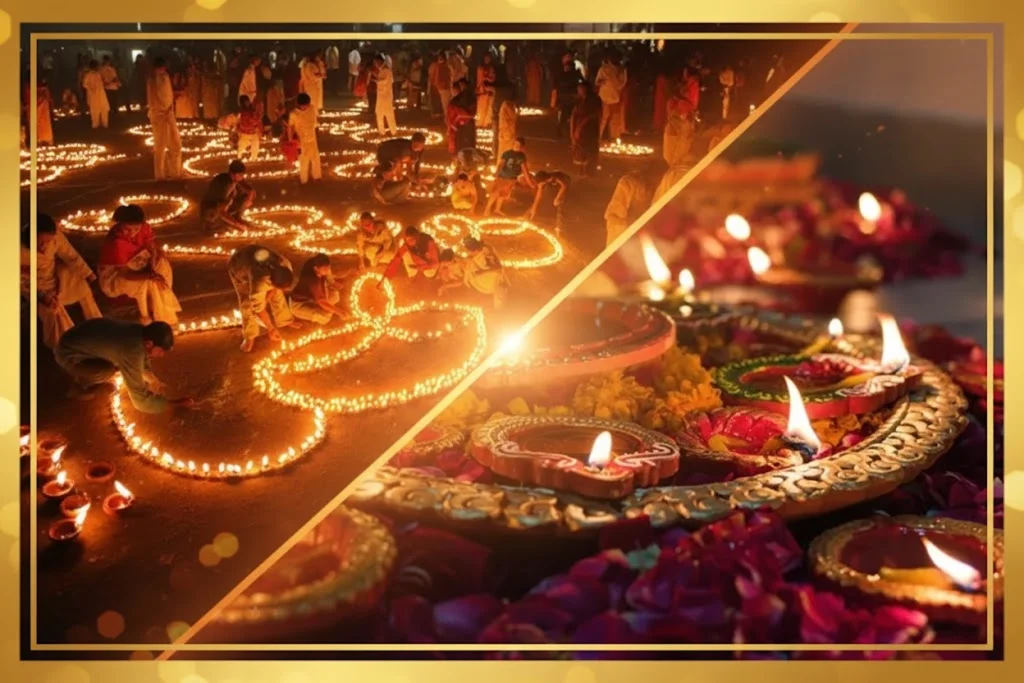
Dipawali in Odisha 2025 is not just a festival of lamps; it’s a profound spiritual journey that connects the living with their ancestors. While most parts of India celebrate Diwali by worshipping Goddess Lakshmi, Odisha’s version blends Kali Puja, Payasraddha (ancestor worship), and the Badabadua Daka ritual. The result is an experience that transcends material joy and celebrates remembrance, light, and devotion.
Growing up in an Odia village, I’ve lived this festival’s every emotion, from lighting clay lamps with my grandmother to chanting “Bada Badua Ho” under the starry sky. Through this blog, I invite you to walk with me through those sacred lanes and understand what makes Dipawali in Odisha a celebration like no other.Table of Contents
The Essence of Dipawali in Odisha: Where Light Meets the Spirit
Unlike other regions where Diwali centres around Goddess Lakshmi, Odisha’s Dipawali honours Goddess Kali, the fierce form of Shakti who annihilates evil and protects her devotees. It coincides with Amavasya (new moon night), symbolizing the emergence of divine light from darkness.
In every Odia home, hundreds of diyas (earthen lamps) flicker along doorways and fences. Mustard oil fuels these lamps which are a symbol of purity and simplicity. The fragrance of incense mingles with the night breeze, while children run through courtyards laughing, bursting sparklers.
But unlike cities where fireworks dominate, Odisha’s Diwali focuses on remembrance. It’s not just about prosperity; it’s about gratitude toward those who came before us. As my grandmother used to say, “We light the path for those who once lit ours.”
Payasraddha in Dipawali Amabasya: Honouring Ancestors with Love and Light
The Payasraddha ritual forms the spiritual heart of Dipawali in Odisha. Performed on Diwali Amavasya, it is a sacred ceremony where families pay homage to their ancestors, offering Atta pinda (Wheat flour balls) and fruits.
In my childhood, this ritual began at dusk in the courtyard with my mother keeping all Puja-ready. My grandfather would prepare pindas using wheat flour, sesame, and ghee, while my grandmother used to cut sugarcane into pieces and keep in the Sraddha place. The priest would then place offerings on jackfruit leaves, light diyas and the cotton wrapped Arti sticks; and pour water from copper pots, symbolizing the eternal flow of life. As mantras echoed, we whispered the names of our forefathers, “Badabadua ho, Ganga Jaa, Gaya jaa, Baisi pahache gadagadauthaa” (Oh Revered Ancestors! May your soul head towards the heaven climbing up the twenty-two steps of Lord Jagannath’s temple.).Badabadua Daka: Odisha’s Most Enchanting Diwali Ritual
mesmerizing ritual performed on the night of Amavasya. It’s when Odias light kaunria kathi (jute stems) dipped in oil and chant in unison:
“Bada Badua Ho, Andhara Re Aasa, Alua Re Jaa.” (Oh ancestors, come in the darkness and return to light.)
We believe our ancestors bless us in return, ensuring good health and harvests. People from different parts of Odisha visit Puri to perform this sacred ritual in front of the Singhadwara of the Jagannath Temple. They light dry jute sticks to illuminate the path for their ancestors’ souls.
Crackers, Feasts, and Festive Merriment
After the solemnity of rituals comes pure joy. Children light sparklers and phuljhadi (flower pots) while elders supervise, ensuring safety. Unlike urban overindulgence, villages keep fireworks moderate, symbolic of joy, not extravagance.
The festive meal is another highlight. Families prepare khichdi, dalma, and payas, while sweet trays overflow with delicious pitha varieties. After dinner, children gather outside, watching diyas flicker in rows, their flames dancing with the wind. The moment feels timeless, a shared silence of gratitude.
The Spiritual Takeaway: Why Dipawali in Odisha Matters
In an era of LED lights and loud fireworks, Dipawali in Odisha stands apart, quieter, yet more profound. It teaches balance: between joy and gratitude, celebration and reflection.
The rituals of Payasraddha and Badabadua Daka remind us that life is not just about accumulation but acknowledgment, honouring those who built the path before us.
So, if you plan to experience something truly authentic this year, visit Odisha during Diwali 2025. Attend a village celebration, witness the fire lit fields, and join the chant that unites generations. Let this Dipawali light not just your home, but your heart.