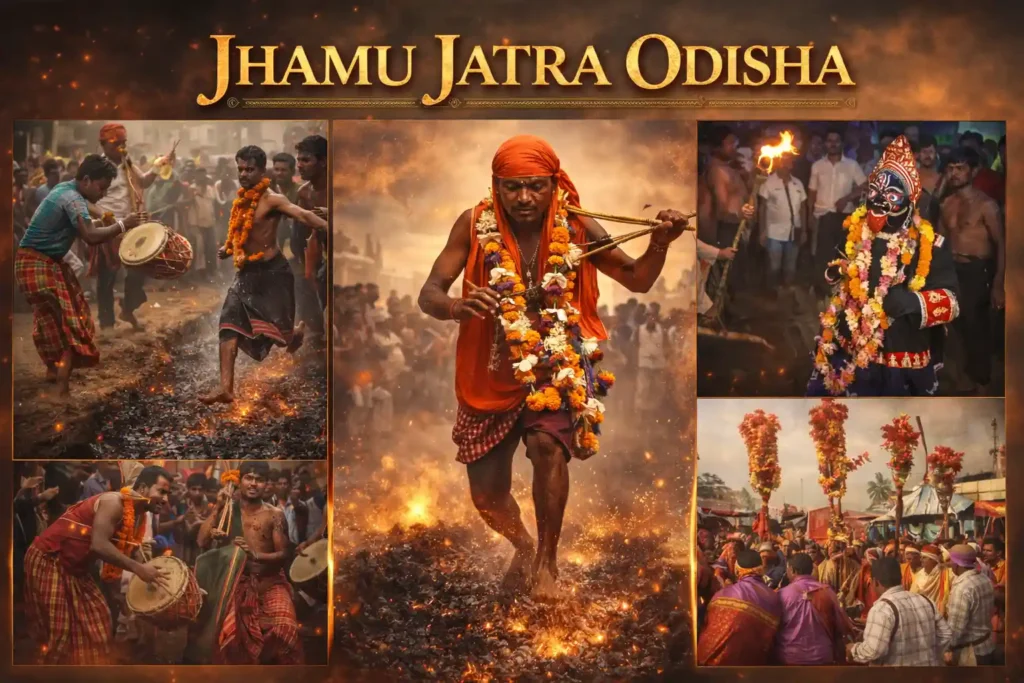
Odisha is known for its vibrant temples, spiritual traditions, and deeply rooted folk festivals. Among them, Jhamu Jatra Odisha stands out as one of the most dramatic and powerful expressions of devotion. Every year during the month of Baisakh (April), thousands of devotees gather across villages to witness a breath-taking ritual; barefoot devotees walking across burning embers as an offering to the divine.
Although it may look astonishing to outsiders, for locals it represents faith, courage, and gratitude toward the goddess or Lord Shiva. Festivals like Maa Mangala Jhamu Jatra, Maa Kali Jhamu Jatra, and Maa Sarala Jhamu Jatra attract huge crowds of devotees and curious visitors alike.
In this detailed guide, we will explore the rituals, spiritual meaning, famous locations, unique traditions, and upcoming celebrations like Jhamu Jatra 2026. If you want to experience Odisha’s living folk spirituality, this festival deserves a place on your travel list.Table of Contents
What is Jhamu Jatra Odisha?
Understanding the Fire-Walking Ritual of Devotion
Jhamu Jatra, also known as Jhamu Yatra or Bhadra Jhamu, is a traditional fire-walking festival celebrated across Odisha. During the ritual, devotees walk barefoot across long beds of burning charcoal or embers to demonstrate their unwavering devotion to the deity.
The ritual usually takes place around the full moon of Baisakh, shortly after Rama Navami. In several villages, the festival is dedicated to Lord Shiva in his Bhairava form, while in other places it honors powerful local goddesses like:
- Maa Mangala
- Maa Kali
- Maa Sarala
- Maa Bhagabati
- Village guardian deities (Grama Devatis)
Devotees believe that when their prayers are answered, whether it is recovery from illness, success in life, or fulfilment of a wish; they must perform Jhamu as a vow of gratitude.
As a result, the fire walk becomes not just a ritual but a sacred promise fulfilled before the deity.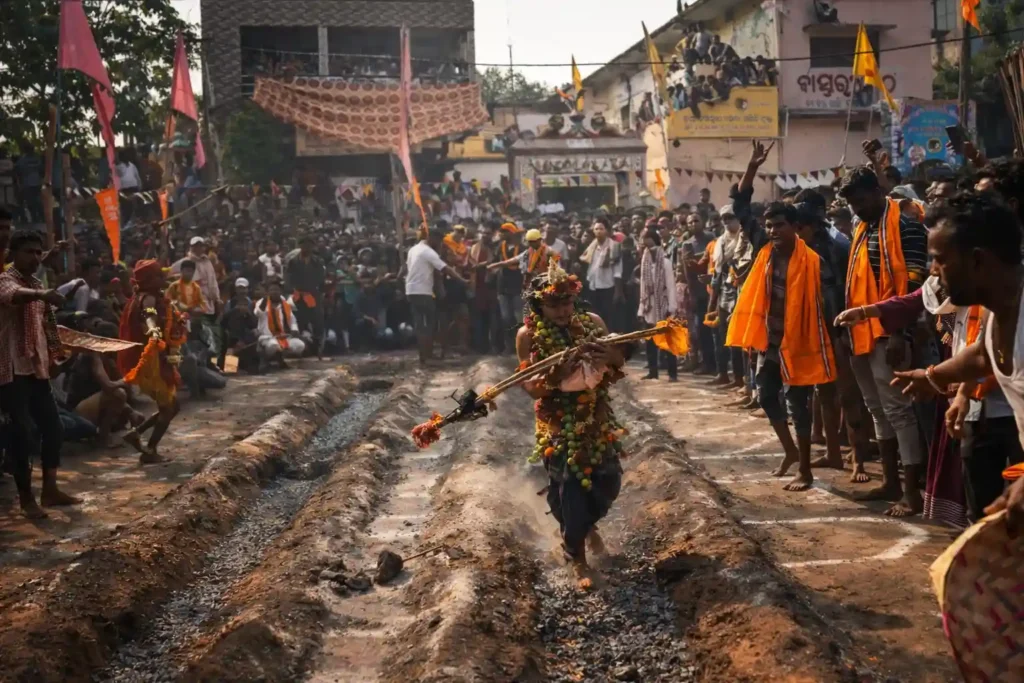
The Spiritual Significance Behind Jhamu Jatra
A Symbol of Faith, Purification, and Divine Protection
The fire-walking ritual carries deep symbolic meaning in Hindu folk traditions. Walking across burning coals represents victory over fear, suffering, and worldly challenges.
Many devotees believe that:
- The fire purifies the soul
- It burns away past sins
- It grants divine blessings for health and prosperity
Furthermore, the ritual is closely connected with Lord Shiva’s fierce Bhairava energy, which symbolizes destruction of ignorance and protection of devotees.
Interestingly, performers often claim they do not feel pain or burns, which they attribute to the grace of the goddess or Lord Shiva. For villagers, this moment reinforces their belief that true faith can overcome even the fiercest elements of nature.Maa Mangala, Maa Kali & Maa Sarala Jhamu Jatra
Different Regional Traditions Honouring Powerful Goddesses
Although the ritual format remains similar, different regions celebrate Jhamu Jatra Odisha in honour of specific deities.
Maa Mangala Jhamu Jatra
This version is particularly popular in coastal districts of Odisha. Devotees perform the fire walk to seek blessings for prosperity, family well-being, and protection from misfortune.
Maa Kali Jhamu Jatra
In several villages, the ritual is dedicated to Maa Kali, symbolizing strength and protection from evil forces. The atmosphere becomes especially intense as devotees enter trance-like devotional states before crossing the fire bed.
Maa Sarala Jhamu Jatra
Near the famous Maa Sarala Temple in Jagatsinghpur district, devotees organize special rituals honoring the goddess known for granting courage and wisdom.
Each of these celebrations highlights Odisha’s diverse yet interconnected folk traditions.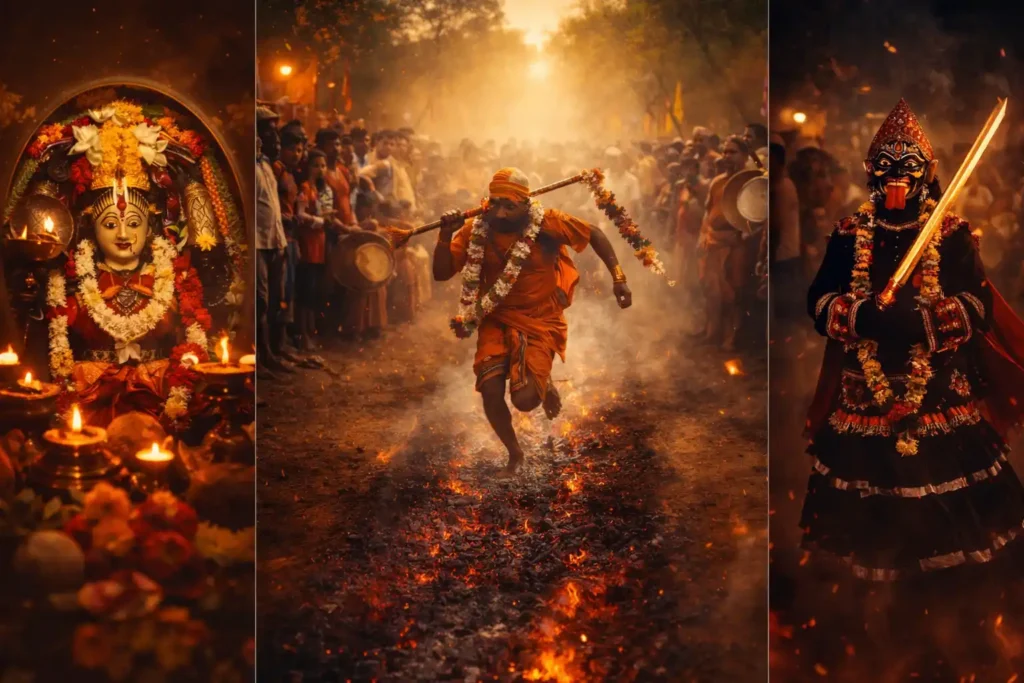
Where is Jhamu Jatra Celebrated in Odisha?
Popular Locations Known for Grand Celebrations
While Jhamu Jatra Odisha takes place in hundreds of villages, some locations attract especially large gatherings.
Puri District
Areas like Pipili, Brahmagiri, and Satyabadi host spectacular events with long fire beds and grand processions.
Khordha District
Places such as Jatni, Banpur, and Begunia organize famous Jhamu rituals that draw visitors from nearby cities like Bhubaneswar.
Cuttack District
Regions like Banki and Athagarh showcase dramatic fire-walking ceremonies combined with vibrant village fairs.
Ganjam District
Towns like Aska and Bhanjanagar celebrate the festival with great enthusiasm and traditional performances.The Fire-Walking Ritual: How Jhamu Jatra is Performed
A Step-by-Step Look at the Sacred Ceremony
The highlight of Jhamu Jatra Odisha is the spectacular fire-walking ritual.
Here’s how the ceremony usually unfolds:
- Preparation of the Fire Bed – Priests prepare a long rectangular bed of burning charcoal, usually 20–40 feet long.
- Ritual Invocation – Mantras are chanted and holy water is sprinkled to invoke divine protection.
- Devotees Enter Trance – Participants who have fasted and prayed for days often enter a devotional trance while drums beat rhythmically.
- Walking Across the Embers – One by one, devotees walk calmly across the glowing coals, sometimes multiple times.
- Celebration After Completion – After the walk, devotees raise their hands in gratitude while the crowd chants “Jai Maa!” or “Jai Bhairava!”
The Unique Kantabedi Ritual
Rolling Over Thorny Spine Plants as an Act of Faith
Another fascinating tradition associated with Jhamu Jatra Odisha is Kantabedi.
In this ritual, devotees roll across a bed of thorny spine plants. Although it may look painful, participants believe the goddess protects them from harm.
Symbolically, the act represents:
- Surrender to divine power
- Humility before the deity
- Removal of obstacles in life
The Unique Kantabedi Ritual
Rolling Over Thorny Spine Plants as an Act of Faith
Another fascinating tradition associated with Jhamu Jatra Odisha is Kantabedi.
In this ritual, devotees roll across a bed of thorny spine plants. Although it may look painful, participants believe the goddess protects them from harm.
Symbolically, the act represents:
- Surrender to divine power
- Humility before the deity
- Removal of obstacles in life
Village Fairs & Community Celebrations
How the Festival Brings Entire Communities Together
Jhamu Jatra is not just a ritual, it is a grand community celebration.
Days before the event, villages transform into lively festival grounds. You will find:
- Colourful processions with drummers and conch blowers
- Women performing traditional dances
- Devotees carrying decorated palanquins of the deity
- Temporary markets selling bangles, toys, and sweets
Food stalls offer delicious Odia dishes like:
- Dalma
- Pakhal Bhat
- Chhena Poda
- Sugarcane Juice
My Childhood Memory of Watching Jhamu Jatra
A Personal Experience That Shows the Festival’s Emotional Power
Growing up near Jatni, Jhamu Jatra was always the most exciting event of the year for me.
Every summer evening during the festival, my cousins and I rushed to the village ground hours before the ritual began. The air smelled of smoke from burning neem wood, turmeric paste, and freshly fried snacks.
When the first devotee stepped onto the glowing embers, the entire crowd fell silent. Watching someone walk calmly across blazing coals felt almost magical.
Even today, attending Jhamu Jatra brings back that same childhood thrill, now mixed with deep respect for the faith and courage behind every step.Jhamu Jatra 2026: When and Where to Experience It
Planning Your Visit to Odisha’s Fire-Walking Festival
If you are planning to witness Jhamu Jatra 2026, the best time to visit Odisha will be April during the month of Baisakh.
Recommended places to experience the festival include:
- Jatni (Khordha district)
- Pipili (Puri district)
- Banki (Cuttack district)
- Aska (Ganjam district)
For the best experience:
- Arrive early in the evening
- Respect local customs and rituals
- Stay at a safe distance from the fire bed
- Carry water and light clothing
People Also Ask About Jhamu Jatra Odisha
1. What is Jhamu Jatra in Odisha?
Jhamu Jatra is a traditional fire-walking festival where devotees walk barefoot over burning embers to fulfill vows and express devotion to deities like Lord Shiva or village goddesses.2. When is Jhamu Jatra celebrated?
The festival usually takes place during Baisakh (April–May) around the full moon after Rama Navami.3. Which gods or goddesses are worshipped in Jhamu Jatra?
Devotees perform the ritual in honor of Lord Shiva (Bhairava form) and goddesses such as Maa Mangala, Maa Kali, and Maa Sarala.4. Where can tourists see Jhamu Jatra in Odisha?
Popular locations include Jatni, Pipili, Banki, Begunia, Brahmagiri, and Aska.5. Is fire walking in Jhamu Jatra safe?
Devotees prepare spiritually through fasting and prayer. They believe divine protection prevents injuries, although spectators should always maintain a safe distance.Why You Should Experience Jhamu Jatra Odisha
Very few festivals in India combine devotion, courage, and community participation as powerfully as Jhamu Jatra Odisha.
The sight of devotees walking across glowing embers, the rhythm of drums echoing through villages, and the collective prayers of thousands create an unforgettable spiritual atmosphere.
For travellers, cultural enthusiasts, and devotees alike, witnessing this festival offers a deeper understanding of Odisha’s living traditions.Final Thoughts: Witness Faith That Walks Through Fire
Jhamu Jatra is more than a festival, it is a powerful expression of faith that has survived for centuries. The ritual shows how devotion can unite communities and inspire extraordinary acts of courage.
If you ever plan to visit Odisha during summer, make sure to include Maa Mangala Jhamu Jatra, Maa Kali Jhamu Jatra, or Maa Sarala Jhamu Jatra in your travel list.Trending Posts