
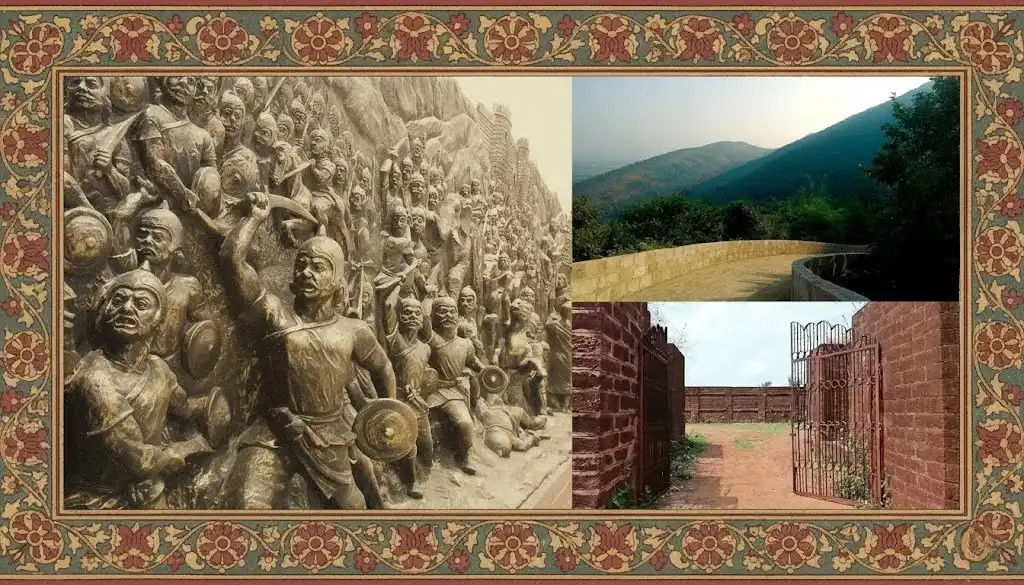
When you begin exploring Odisha beyond its temples and foot-hills, firstly, one name rises with unmatched dignity, Khordha. This historic land near Bhubaneswar is not merely a district on the map; rather, it is the soul of Odisha’s resistance, pride, and political consciousness.
Khordha was once the beating heart of Odisha’s sovereignty. Historically, from 1568 to 1803, it functioned as the political capital of the region and eventually later became the last independent Odia kingdom to fall under British rule. However, even after military defeat, Khordha never surrendered its spirit.
As a woman born on this soil, personally, I do not read Khordha’s history like a distant observer. Instead, I carry it within me. The courage of the Paikas, the wisdom of its kings, and the resilience of its people therefore shape my identity every single day.
Ultimately, this blog is an invitation; to understand Khordha’s history, to feel its legacy, and to recognise why this land still commands reverence in Odisha.Table of Contents
Khordha District: Where Geography Shaped Destiny
Khordha district occupies a strategically important position in coastal Odisha. Geographically, surrounded by forests, hillocks, rivers, and ancient pathways, the region naturally evolved as a fortified stronghold. Thus, these geographical features did not merely protect Khordha; they trained its people to resist.
Dense forests offered cover for guerrilla warfare, while hills like Barunei became natural defence points. Gradually, over time, the land shaped the mind-set of its inhabitants; being alert, self-reliant, and fiercely loyal to their roots.
Consequently, this geography later played a decisive role during the Paika Rebellion, making Khordha one of the most difficult regions for British forces to control.Historical Overview of Khordha
Khordha rose to prominence after the fall of the Gajapati empire in the late 16th century. In 1568 CE, Ramachandra Deva I of the Bhoi dynasty established Khordha as the new political centre of Odisha.
This was not merely a shift of capital. It was a reassertion of Odia sovereignty during a period of political instability. From that point onward, Khordha became the nucleus of administration, military organisation, and religious authority.
For more than two centuries, Khordha stood firm against external pressures; from Mughal Subahdars to Maratha influence and finally British colonial ambitions.The Kings of Khordha and the Bhoi Dynasty
Ramachandra Deva I: The Founder King
Ramachandra Deva I was more than a political leader. In fact, he understood that true authority in Odisha flowed from Lord Jagannath. By aligning kingship with Jagannath culture, he legitimised his rule and thus unified the people emotionally and spiritually.
As a result, this connection between state power and temple authority became the foundation of Khordha’s governance.
Successor Kings and Sustained Resistance
Subsequently, later rulers of Khordha continued this tradition. They defended territory, protected temple rights, and at the same time maintained alliances with Paikas and local chieftains.
However, by the late 18th century, British interference in revenue collection and temple administration began eroding Khordha’s autonomy; thereby setting the stage for open rebellion.Jagannath Temple and Khordha’s Political Power
In Odisha, fundamentally, Jagannath is not merely a deity; He is the symbol of collective identity. Accordingly, Khordha’s rulers held authority over the Jagannath Temple, which meant controlling not just religious rituals but also cultural legitimacy.
Naturally, British attempts to regulate temple administration deeply angered the Khordha Rajas and the people alike. As a result, this interference was perceived as an assault on faith, tradition, and sovereignty.
Resistance Against the Mughals: Khordha Before the British
Long before the British, similarly, Khordha rulers and Paikas resisted Mughal subahdars of Cuttack, especially over control of the Jagannath Temple administration.
Historical accounts describe repeated confrontations between Khordha kings and Mughal authorities, where, notably, the issue was not merely political, but spiritual sovereignty. In this context, control over Jagannath Temple rituals symbolised legitimacy over Odisha.
Consequently, several Paika leaders and temple servitors lost their lives protecting temple traditions from external interference. Ultimately, their resistance ensured that Jagannath culture remained Odia at its core, despite imperial pressure.The Paikas: Odisha’s Indigenous Warrior Class
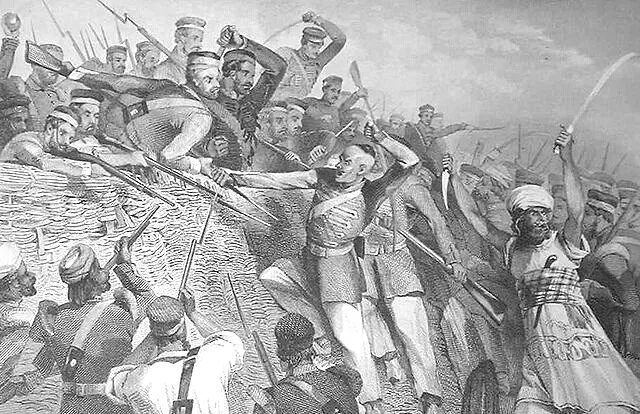
Paikas were hereditary soldiers trained from childhood in martial arts, swordsmanship, and battlefield strategy. Importantly, they were not mercenaries; they were sons of the soil.
By day, they tilled fields. By duty, they defended Khordha. Above all, their loyalty lay with the land, the king, and Lord Jagannath.
As a result, this unique structure allowed Khordha to maintain a standing force without draining its economy; thereby making Paikas central to its resilience.
The Paika Rebellion of 1817
The Paika Rebellion erupted in 1817, notably led by Bakshi Jagabandhu, the commander of Khordha’s Paika forces. The causes were many:
Firstly, displacement of Paikas from land
Secondly, British land revenue systems
Additionally, economic exploitation
Finally, interference in Jagannath Temple affairs
Consequently, Paikas attacked British administrative centres, seized forts, and temporarily restored Khordha’s authority. Although the rebellion was eventually crushed, today historians now recognise it as India’s earliest large-scale anti-colonial uprising.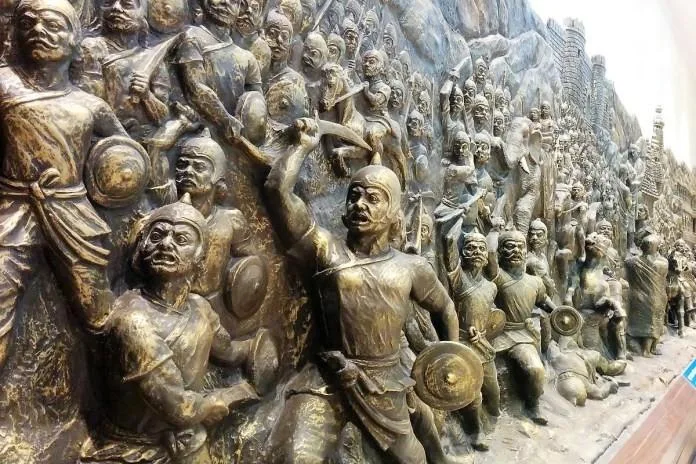
Bakshi Jagabandhu: The People’s Leader
Bakshi Jagabandhu was not born into royalty, yet his leadership united warriors, peasants, and tribal communities.
Growing up in Khordha, his name was spoken in my home with pride; not as a rebel, but as a protector of dignity. His courage continues to inspire generations, especially women like me who learn to stand firm through his example.Paika Families of Khordha: Guardians of an Unwritten History
The Paika Rebellion was not led by isolated warriors. Rather, it was sustained by entire Paika families, many of whose descendants still live in and around Khordha district.
According to historical records and regional histories, several Paika lineages consistently served the Khordha kings and later resisted British authority. In effect, these families acted as:
- Firstly, military commanders
- Secondly, village protectors
- Additionally, guerrilla strategists
- Finally, messengers and informants
Though colonial records often avoided naming them, oral traditions preserve surnames associated with Paika service, such as Paikaray, Balabantray, Pahadsingh, Dalabehera, Pradhan, Khuntia, families historically linked with temple service, militia duty, and battlefield organisation.
Meanwhile, many Paika households preserved weapons, manuscripts, and oral songs narrating the rebellion. Notably, these were passed down quietly, especially during British rule, when open remembrance invited punishment.
Beyond Jagabandhu, the Minister of the then King, Jai Rajaguru, several Paika commanders and village leaders played crucial roles in sustaining resistance. In regional historical narratives, names like Mukti Mandal, Krushna Chandra Bhramarabara Ray, and Narayan Birabara Samanta appear as organisers, messengers, and field leaders.
Even today, local festivals, akhada traditions, and folk performances in Khordha echo Paika discipline; thereby proving that resistance survived through culture.British Conquest of Khordha (1803)
In 1803, British forces finally annexed Khordha, making it the last Odia kingdom to lose sovereignty. However, domination remained incomplete.
Although the British could occupy land, they could not erase memory, faith, or pride. Instead, Khordha’s resistance lived on through folk songs, oral histories, and collective consciousness.
Meanwhile, Mukunda Deva II, the last king of Khordha, stands as a tragic yet powerful symbol of lost sovereignty. Even though his military power was limited under British pressure, his moral resistance and refusal to fully submit kept the spirit of independence alive.
Thus, his dethronement in 1803 marked the formal end of Khordha’s independence; yet not the end of resistance. In many ways, the Paika Rebellion was a direct response to the injustice faced by the Khordha royal house.Odisha’s Freedom Narrative
Khordha challenges the notion that India’s freedom struggle began in 1857. Decades earlier, this land had already risen in organised defiance.
Understanding Khordha history allows us to rewrite India’s resistance narrative, with Odisha at its core.Heritage Sites: Where Stones Remember Stories
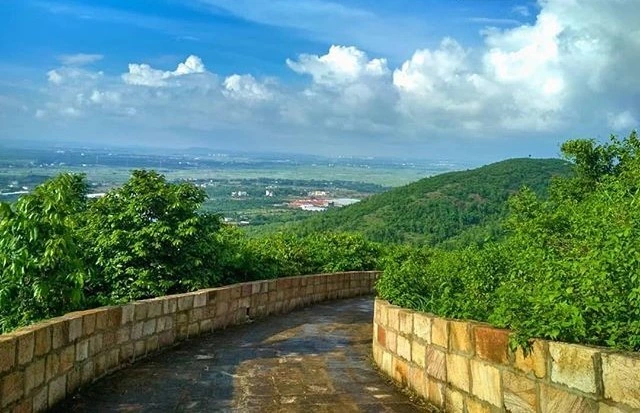
Khurda Fort
Khurda Fort stands as the most powerful physical reminder of Khordha’s sovereignty. It served as:
- The administrative centre of the Bhoi kings
- A military base for Paika mobilisation
- A key target during British annexation
The fort’s ruins still whisper stories of planning, resistance, and final defiance. Standing there, one does not merely see stones, one feels history pressing against silence.
Barunei Hills
Barunei Hills were more than a religious site. During the Paika Rebellion, they functioned as:
- Strategic hideouts
- Guerrilla training zones
- Spiritual retreats
Paikas believed Barunei to be a source of divine strength. Even today, the Barunei Temple remains a sacred space where faith and resistance intersect.
Buxi Jagabandhu Bidyadhar (BJB) High School: Education Rooted in Revolution
One of the most significant historical institutions in Khordha is BJB High School, named in memory of Buxi Jagabandhu Bidyadhar Mahapatra, the legendary leader of the Paika Rebellion of 1817.
This school is not merely an educational institution; it is a symbolic continuation of the Paika resistance.
According to historical accounts, the naming of educational institutions after freedom fighters like Buxi Jagabandhu was a conscious effort by local leaders and historians to ensure that colonial suppression did not erase indigenous heroes from public consciousness.
As a girl from this land, I grew up hearing elders speak of BJB High School with reverence. They never spoke of it as “just a school.” They spoke of it as a place where discipline, courage, and Odia pride were quietly instilled.
My Identity as a Woman of Khordha
As a woman born here, personally, Khordha’s history gives me strength. It teaches me that silence is not survival. Instead, resistance is.
In this way, the Paikas teach courage. Likewise, the queens teach dignity. Above all, the rebellion teaches resilience.
Thus, this land reminds me daily that identity is inherited, and responsibility follows.
How to Reach Khordha
- Nearest city: Bhubaneswar (25 km)
- Rail & Air: Bhubaneswar
- Road: NH-16
People Also Ask – Answers to Common Questions
1. What is Khordha famous for?
Khordha is famous for the Paika Rebellion and being Odisha’s last independent kingdom.