
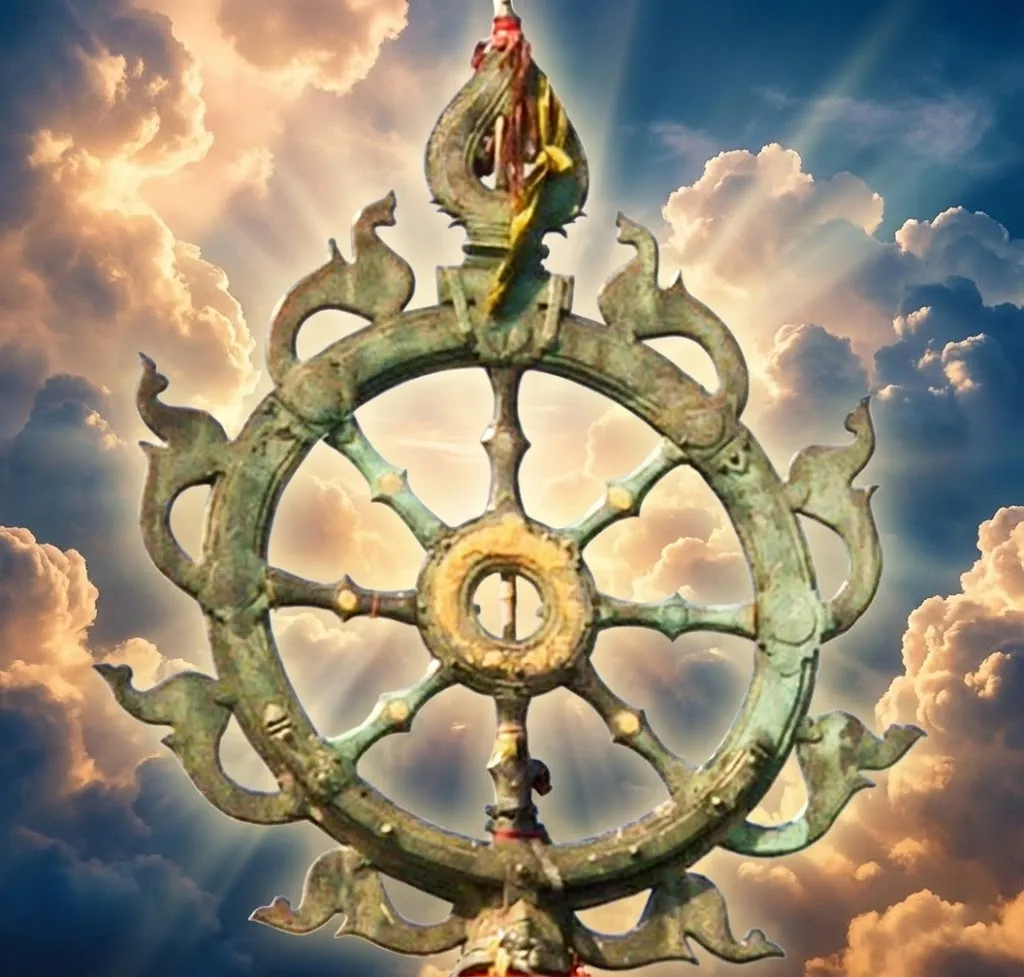
Introduction: The Blue Wheel That Watches Over Puri
Every time I walk through the sacred streets of Puri, my eyes instinctively search the skyline for one powerful symbol; the Nilachakra crowning the Shree Jagannath Temple. Long before the temple’s towering structure comes into full view, the Nilachakra announces Jagannath’s presence, visible from miles away.
This majestic blue wheel is not just an architectural ornament. Instead, it represents divine protection, cosmic balance, and eternal watchfulness. For millions of devotees, the Nilachakra of Jagannath Temple offers instant spiritual reassurance, even without stepping inside the sanctum.
In this blog, I explore the history, symbolism, craftsmanship, spiritual meaning, and ritual importance of Nilachakra, along with its inseparable bond with the Patitapabana flag. I also share my own experience of witnessing Nilachakra darshan from afar, an experience that still fills me with peace.
If you are searching for “Jagannath Temple Nilachakra”, this guide will help you understand why this sacred wheel stands as one of Hinduism’s most powerful symbols.Table of Contents
What Is Nilachakra? Understanding Its Divine Identity
- Nila – Blue
- Chakra – Wheel
Spiritually, Nilachakra is believed to be a replica of Lord Vishnu’s Sudarshana Chakra, the celestial weapon that destroys evil and protects righteousness. Since Lord Jagannath is worshipped as a form of Vishnu, the presence of Nilachakra becomes deeply symbolic.
Devotees believe that Nilachakra constantly guards Puri Dham, ensuring divine order and spiritual safety for all who reside within or visit the holy city.Spiritual Symbolism of Nilachakra in Jagannath Culture
Nilachakra as Sudarshana Chakra
- Protection from negativity
- Destruction of ignorance
- Preservation of cosmic order
The Symbolism of Blue
- Alloy composition
- Constant exposure to salty sea breeze
Stillness vs Movement
Masterful Craftsmanship and Design of Nilachakra
Engineering Marvel of the Sacred Wheel
The Nilachakra is an extraordinary example of traditional Kalinga engineering, reflecting precision, strength, and spiritual intent in its construction.
Dimensions and Structure
- Height: approx. 11 feet 8 inches
- Outer diameter: 7 feet 6 inches
- Circumference: nearly 36 feet
- Weight: approx. 2200 kg
- Spokes: 8 spokes, each around 2 feet long
A strong central metal rod anchors the wheel securely on the temple’s peak, 213 feet above ground level.
Artistic Detailing
Each spoke is decorated with flame-like structures called Magara munda (as per Odishan temple architecture), symbolising power and protection. The wheel is crafted using dual-cast metal plates, clamped tightly for long-lasting durability.
Traditional Artisanship
Historical inscriptions credit the craftsmanship to families from Pathuria Sahi and Bauri Maharana lineages, who have preserved this sacred skill for generations.Historical Installation and Reinstallation of Nilachakra
The history of Nilachakra installation reflects resilience, devotion, and divine trust.
According to the Madala Panji (Jagannath Temple chronicle), Nilachakra has been installed and reinstalled multiple times due to:
- Severe cyclones
- Natural wear over centuries
During the reigns of kings like Ramachandra Deva I and Divyasingha Deva, powerful storms dislodged the wheel. Each time, skilled artisans restored it after:
- Scriptural consultations
- Royal permissions
- Ritual sanctifications
The Sacred Bond Between Nilachakra and Patitapabana Flag
The Patitapabana Bana (flag) and Nilachakra are spiritually inseparable, together expressing the living rhythm and divine authority of Lord Jagannath’s temple.
Why the Flag Is Essential
- Changed daily by Chunara servitors
- Signals continuity of temple rituals
- If absent, bhog and puja stop immediately
Symbolic Meaning
- Nilachakra: Eternal, unmoving truth
- Patitapabana flag: Active grace, compassion, and redemption
Nilachakra Darshan: Blessings Without Barriers
- Pilgrims bow the moment Nilachakra comes into view
- Hotels and mathas align rooftops for darshan
- Devotees offer food facing Nilachakra, known as Chakra Manohi
My Personal Experience beholding Nilachakra in Puri
I still remember my first early-morning walk in Puri, when the sun rose behind the temple and the Nilachakra glowed softly against the sky. That moment felt deeply calming; almost like being silently reassured that the divine was watching over everything.
Even today, whenever crowds overwhelm me near the Singhadwara, I step back, look up at Nilachakra, and feel grounded. That single glance restores balance within me.