
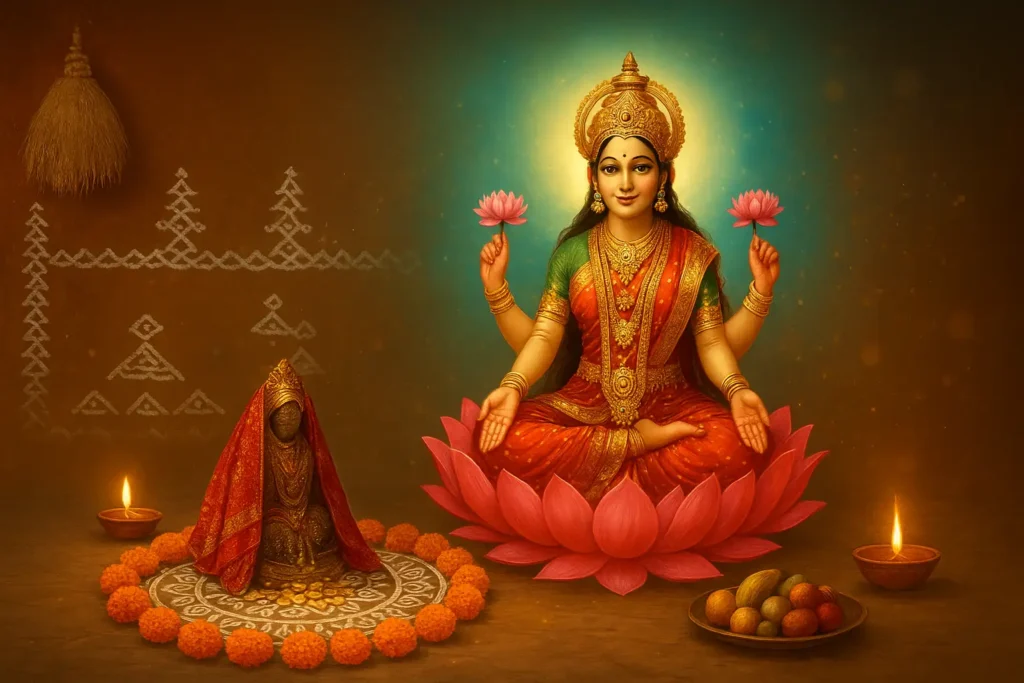
When the crisp breeze of Margashira (November–December) sweeps across Odisha, homes come alive with divine radiance. They echo with prayers, jhoti-chita art, and the sweet aroma of arisa pithas. It’s Manabasa Gurubar — the festival that turns every Odia home into a sacred temple of Goddess Lakshmi. This sacred day celebrates abundance, purity, and compassion.
As an Odia woman, this festival holds a special place in my heart. Every Thursday, I watch my home transform. The soft clinking of utensils at dawn fills the air. By dusk, the flickering diyas glow warmly. Each moment reminds me of my grandmother’s patient devotion during my childhood in our village.
In this blog, we’ll explore the essence of Odia Manabasa Gurubar 2025. You’ll discover its empowering tale rooted in Lakshmi Purana, the intricate rituals, and the delicious food traditions. We’ll also reflect on its enduring message of equality and faith.Table of Contents
The Socio-Cultural Significance of Manabasa Gurubar: A Festival of Equality, Prosperity, and Women’s Power
The Odia Manabasa Gurubar is not just a household festival; it’s a living expression of Odisha’s values; family unity, gratitude for harvest, and respect for women’s strength. Celebrated on four consecutive Thursdays in the month of Margashira, it marks the transition from Kartika’s simplicity to a season of abundance and joy.
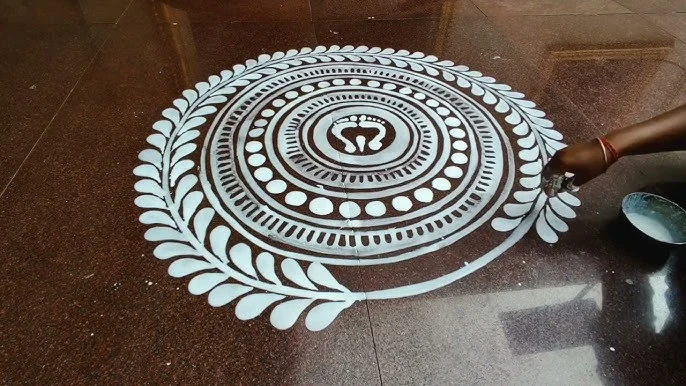
In every Odia household, women take the lead from rising early to purify homes, draw intricate manabasa jhoti patterns (rice-paste motifs), and prepare prasad to welcome Goddess Lakshmi. These symbols aren’t mere decorations; they represent pathways for the goddess’s divine entry.
Moreover, the festival has deep social roots. Inspired by Balarama Das’s 16th-century Lakshmi Purana, it was one of the earliest Odia literary works to question caste discrimination and affirm that devotion matters more than birth. Through the goddess’s blessings, lower-caste women like Shriya were uplifted, symbolizing inclusion and social harmony.
Markets across Odisha brim with turmeric leaves, rice, and jaggery; showcasing how this tradition fuels the local economy. Even today, Manabasa Gurubar binds communities, where neighbours exchange prasad, elders narrate myths, and young girls learn the art of jhoti chita from their mothers.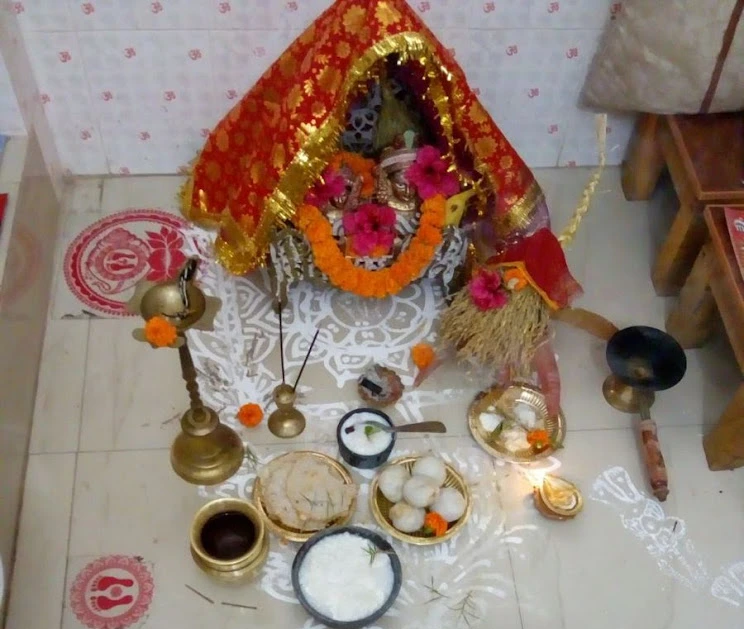
The Tale Behind Manabasa: The Divine Story of Goddess Lakshmi and Shriya
The origin of Manabasa Gurubar comes from the Lakshmi Purana, written by saint-poet Balarama Das during the 16th-century Bhakti movement in Odisha. Interestingly, this marked a turning point in devotional literature. The story focuses on Goddess Lakshmi, her compassion, and her defiance against social injustice.
As the story unfolds, in ancient Puri, untouchables were forbidden from entering temples. Among them lived Shriya, a humble scavenger woman who longed to worship Lakshmi. One Thursday in the Margashira month, she swept her small hut clean and drew lotus patterns in jhoti-chita on the floor. She performed the puja with pure devotion, offering rice prasad, lotus flowers, and her unwavering faith.
Following this heartfelt devotion, moved by her sincerity, Lakshmi visited Shriya’s home and accepted her worship. The goddess blessed her with abundance and peace. But when Lakshmi returned to the Jagannath Temple, Lord Jagannath and Balabhadra rejected her, calling her impure for visiting an “untouchable’s” house.
In deep sorrow, hurt by this injustice, Lakshmi left the temple and took prosperity with her. Soon, famine spread across the land. The temple lacked offerings, and even the deities suffered from hunger. Realizing their mistake, Jagannath and Balabhadra searched for her. They finally found her in her new palace on the golden sands.
In the end, Lakshmi forgave them but made a divine rule. She declared that her blessings would reach every home, regardless of caste or wealth, on the Thursdays of Margashira. She also convinced the Lord to spread equality within the temple before returning.
This powerful tale makes Manabasa Gurubar far more than a religious observance. It stands as a revolutionary story celebrating equality, compassion, and the feminine power that sustains society.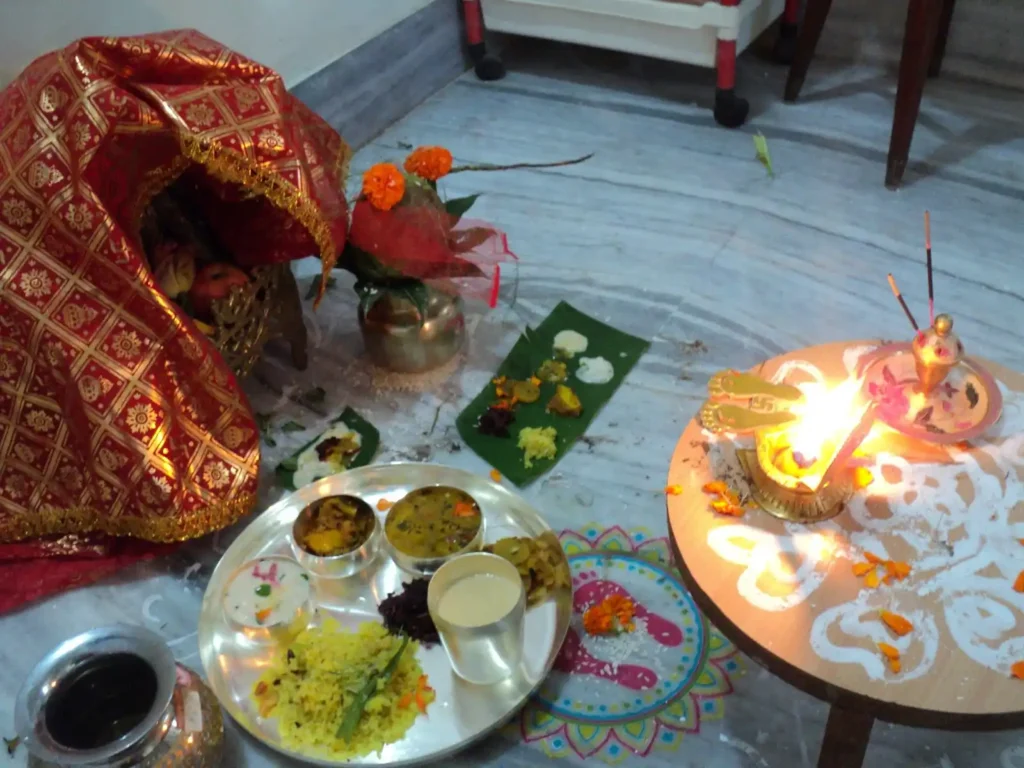
Rituals of Manabasa Gurubar: Purity, Devotion, and Sacred Grace
Every Thursday of Manabasa marks a Pali (turn), and each turn expresses a deeper level of devotion. Traditionally, women begin the rituals early at dawn.
- Cleaning and Purification: Women clean the floors with cow dung and water, following an ancient practice that symbolizes purity. Their effort fills the surroundings with divine energy and spiritual calm.
- Drawing Chita (Jhoti): They decorate doorsteps and courtyards with intricate white rice-paste designs. Foot-shaped motifs of Goddess Lakshmi, lotus flowers, and elephants mark her sacred path into the home.
- Setting the Maana: Women fill a traditional bamboo measure with new paddy to represent Maa Lakshmi. They place it on a wooden stool (khatuli) and adorn it with newly cut sugarcane, mustard flowers, and radish — symbols of harvest and gratitude.
As incense fills the air, devotees recite the Lakshmi Stotra and Lakshmi Purana. They perform Puja to invite prosperity and peace into their families. They adorn the goddess with winter flowers like yellow and red marigolds, which devotees regard as highly auspicious for Maa Lakshmi.
Women also prepare different bhogas on each Thursday, as described in the Lakshmi Purana:
- First Thursday: Dahi Pakhala (curd rice)
- Second Thursday: Kheeri (rice pudding) and Khechudi
- Third Thursday: Chitau Pitha and Chakuuli — soft rice cakes with coconut garnish
- Final Thursday (Sesha Pali): The Puja concludes with a grand feast. Women prepare Arisa, Kakara, Mandapitha (steamed rice dumplings with coconut and jaggery), Nanamama, Karanji, Budha Chakuli (thick chilla), Badas, and many other sweets. They share these offerings with neighbours as a gesture of unity and joy.
My Childhood Memories: Grandma’s Devotion and the Magic of Manabasa
Growing up in my native village, Manabasa Gurubar was more than a festival; it was an experience. The actual excitement, however, began on the day before the final Thursday.
Mom and Grandma would head to the Dhinkishala (the place where the traditional rice-grinding tool was kept) to grind the soaked and sun-dried rice under the Dhinki. Eventually, the fine rice flour they made was later used to prepare Arisha Pitha. Watching them work the Dhinki and grind the batter with the stone-made Shilbata was truly fascinating, and I found pure joy in lending a small hand in the process.
Moreover, I can still recall her rhythmic voice chanting Lakshmi Purana, the smell of cow-dung filling the courtyard, and the mesmerising yellow colours of marigold put together for the Puja. Meanwhile, mom would be busy putting beautiful Lotus Jhoti for the Asthana of Puja, and my small hands would be tracing uneven Jhoti patterns on the mud floor. Her faith was quiet yet powerful.
The kitchen, on the other hand, was the heart of the day. The hissing of steaming pitha, the laughter of cousins, and the craving for Arisa pitha blended perfectly. Besides, Grandma’s mock scolding filled the air with life. Evenings, therefore, were for community; neighbours brought kheeri and stories, and their voices merged with the rustle of palm trees.
Ultimately, those memories shaped my understanding; prosperity is not in wealth but in shared devotion and joy. Indeed, they continue to remind me of the warmth, togetherness, and divine simplicity that define our traditions.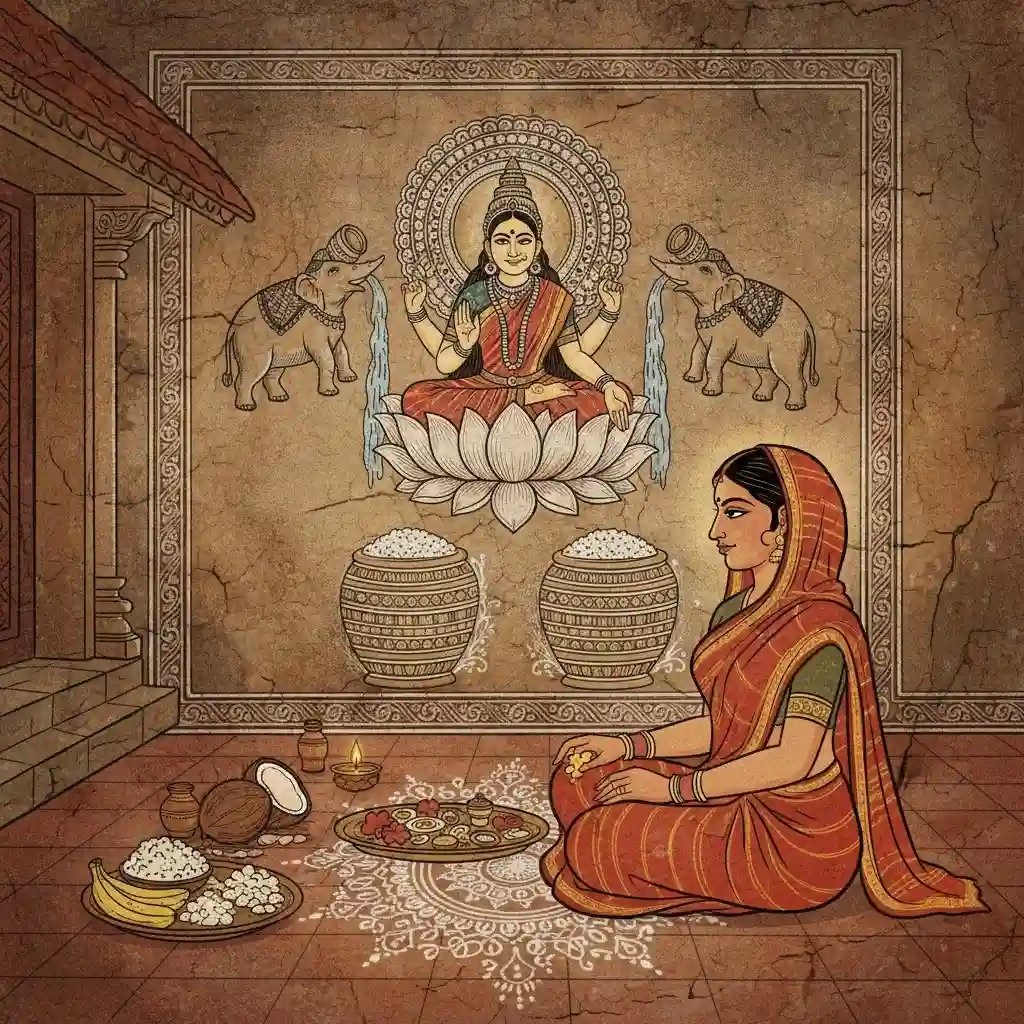
My Modern-Day Puja: Continuing the Tradition as an Odia Bohu
Now, as a Odia bohu (daughter-in-law), I continue the rituals in my own way, blending my grandmother’s traditions with today’s simplicity. Indeed, the essence of those sacred Thursdays still lives within me.
In my city apartment, the space is smaller, yet the spirit remains vast. I still scrub the floor with pure water, draw jhoti before the day begins, and prepare the batter in electric grinders. Instead of earthen pots, I make pithas in stainless steamers. Whenever I read Laxmi Purana, I instantly feel my Grandma’s presence guiding my hands with love and care.
Furthermore, balancing between work life and traditional ethics brings a sense of fulfillment. Although modern life is fast-paced, I take pride in passing down these rituals to my next generation. Occasionally, we visit my in-law’s ancestral village to experience the real festivities there and relive the warmth of community celebration.
Ultimately, performing Manabasa Gurubar now fills me with quiet pride; I am both the devotee and the carrier of tradition. Moreover, it connects me not just to my roots, but to every Odia woman who has ever prayed for her family’s happiness through this festival of faith.People Also Ask – Answers to Common Questions
1. What is Manabasa Gurubar in Odisha?
2. What is the story behind Manabasa Gurubar?
3. How is Manabasa Gurubar celebrated?
4. What food is prepared during Manabasa Gurubar?
5. What is the significance of the “mana” in Manabasa?
Conclusion
The Odia Manabasa Gurubar is more than a festival; it’s a poetic union of faith, equality, and womanhood. Through every pitha, and jhoti chita, Odisha celebrates not just prosperity but dignity; proving that divine grace flows where hearts are pure.
For me, each Thursday brings both nostalgia and renewal, the echo of my grandmother’s chants mingling with my own prayers. As families prepare for Manabasa Gurubar 2025, may Goddess Lakshmi enter every home with blessings of peace, unity, and endless joy.
So, this Margashira, open your doors, adorn your floor with Lotus Jhoti, and let Lakshmi walk into your heart, one sacred Thursday at a time.