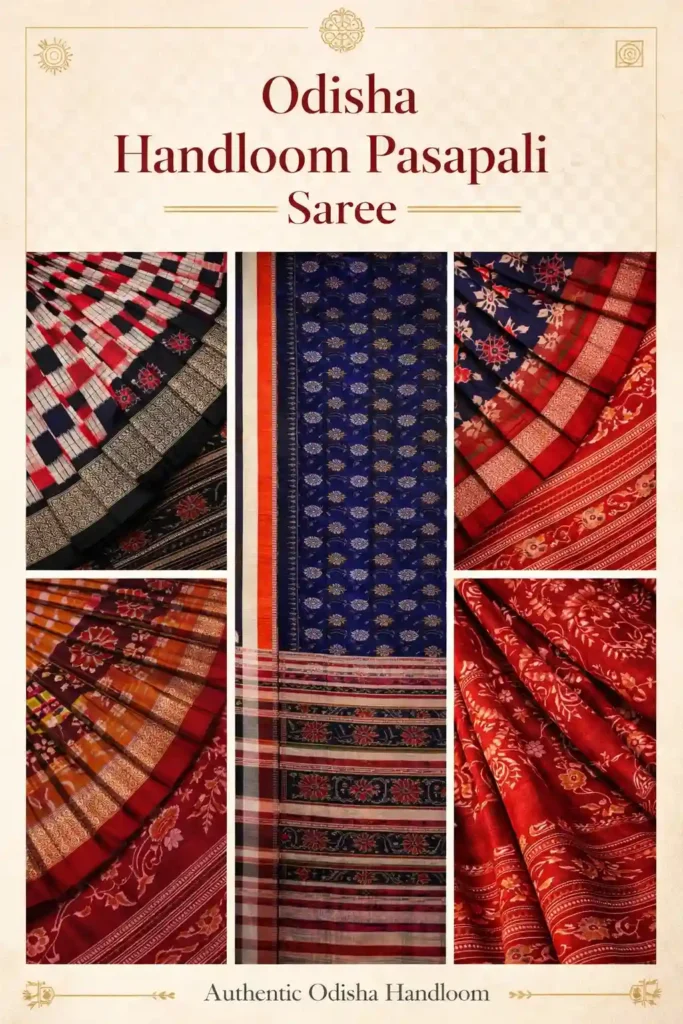
As someone who deeply values traditional weaves, I always feel a special connection when I drape an Odisha handloom Pasapali saree. The bold checkered pattern instantly reflects heritage, intelligence, and grace. More importantly, this saree is not just fabric—it is Odisha’s cultural identity woven thread by thread.
If you are searching for Pasapali saree Odisha, Pasapali print cotton saree, Pasapali print saree, or even Pasapali print saree low cost options, this detailed guide will answer everything. Let’s explore its origin, symbolism, weaving process, price range, and where to buy authentic pieces.Table of Contents
The Origin of Odisha Handloom Pasapali Saree
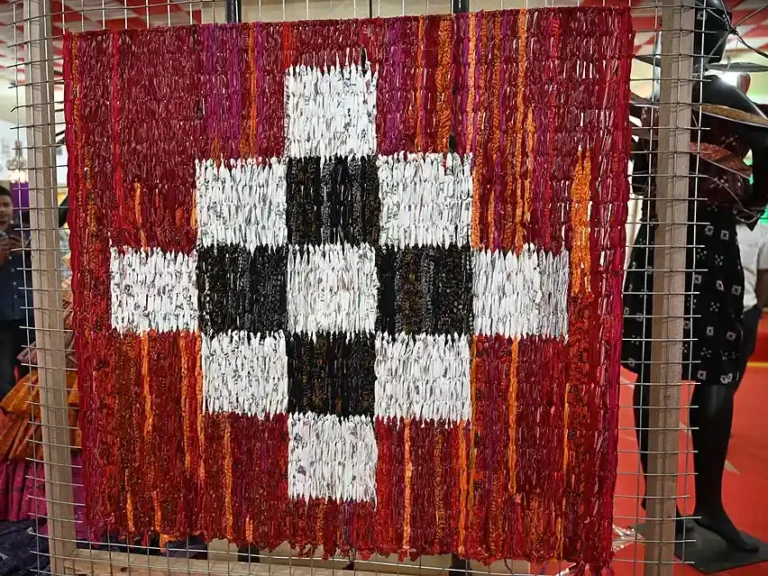
The Pasapali saree originates from Western Odisha, especially from Barpali in Bargarh district and nearby Sambalpur regions. The word “Pasapali” comes from “Pasa” (dice game) and “Palli” (pattern or plate). The checker design resembles a chessboard or traditional dice board, symbolizing strategy and balance in life.
Historically, royal families appreciated this design because it represented foresight and wisdom. Over time, skilled weavers preserved this technique using the traditional Bandha method.
Today, the saree proudly carries a GI (Geographical Indication) tag under Sambalpuri handloom heritage.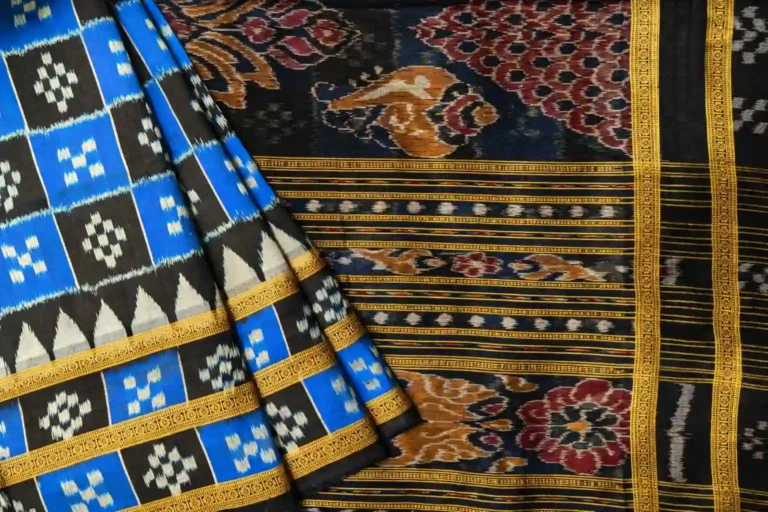
What Makes Odisha Handloom Pasapali Saree Unique?
Unlike printed imitations, authentic Pasapali sarees are handwoven using the double ikat technique. Artisans dye the yarn before weaving, ensuring that patterns align perfectly on the loom.
Key Features
- Bold checker body (chessboard pattern)
- Contrast borders and elaborate pallu
- Extra weft motifs like flowers, peacocks, and temple designs
- Natural dye shades like red, maroon, black, and purple
- Lightweight feel (400–600 grams)
Fabric Variants: Silk vs Cotton Pasapali
Pasapali Silk Saree
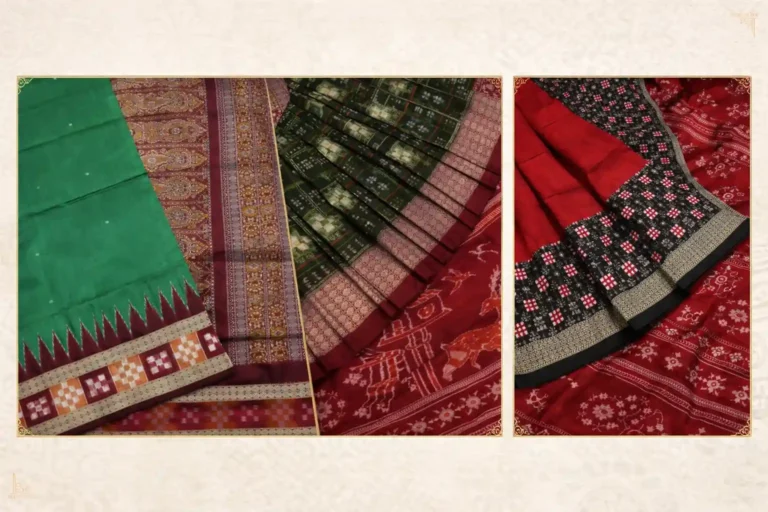
Silk variants use mulberry silk yarn, giving the saree a glossy, festive appearance. These sarees suit weddings, pujas, and cultural functions.
- Elegant shine
- Rich pallu work
- Long-lasting durability
Pasapali Cotton Saree
If you prefer comfort and affordability, cotton versions are perfect.
- Breathable and lightweight
- Ideal for office and daily wear
- Easy maintenance
The Weaving Process of Odisha Handloom Pasapali Saree
The making of a Pasapali saree demands precision and patience.
Step 1: Yarn Preparation
Weavers spin silk or cotton yarn and wind it into bobbins.Step 2: Tie-and-Dye (Bandha Technique)
Artisans tie specific sections of yarn with thread and dye them in stages to create the checker design.Step 3: Loom Setting
They carefully arrange dyed yarn on pit looms. Alignment is crucial because even a minor shift can distort the pattern.Step 4: Weaving
Weavers interlace warp and weft threads using traditional looms. Extra weft techniques create motifs in the pallu and borders. Finally, artisans wash and polish the saree to enhance its texture and sheen. This detailed process explains why authentic pieces cost more than printed versions.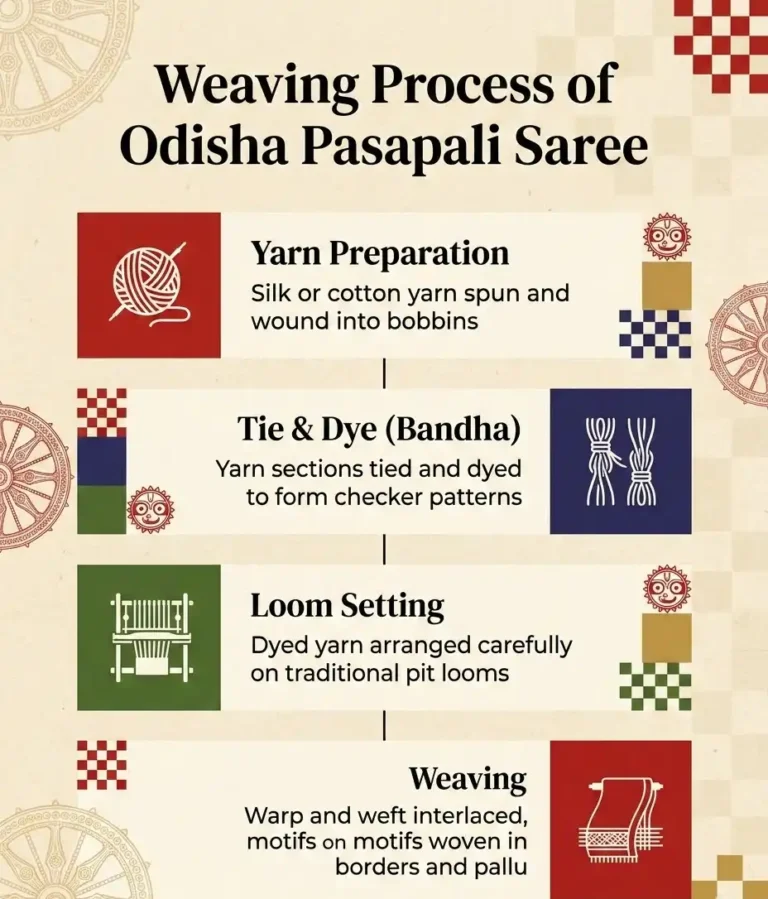
Symbolism Behind Pasapali Motifs
The checkered pattern is more than decoration. It symbolizes:
- Strategy and calculation
- Balance between fate and effort
- Prosperity and auspiciousness
Additionally, supporting motifs add deeper meanings:
- Lotus – Purity and divine grace
- Peacock – Joy and beauty
- Kalasha – Abundance
- Fish – Wealth and good fortune
Where to Buy Authentic Pasapali Saree in Odisha
To avoid fake machine prints, always buy from trusted sources:
- Boyanika (Odisha Government Emporium)
- Utkalika Handloom Stores
- Barpali Weaver Cooperatives
- Toshali Mela exhibitions
- Certified online Odisha handloom platforms
When shopping, ask for:
- GI tag confirmation
- Handloom mark
- Weaving details from the seller
Pasapali Print Saree Low Cost vs Handloom: What’s the Difference?
Many shoppers search for Pasapali print saree low cost options online. While printed sarees are affordable and visually similar, they are machine-made polyester or blended fabric versions.
- Handloom Pasapali – Double Ikat technique, ₹2,000–₹25,000, highly durable, authentic cultural value
- Printed Pasapali – Digital or screen print, ₹800–₹1,500, moderate durability, decorative purpose
My Personal Experience Wearing Pasapali
During my late college days, I wore a silk Pasapali saree at a family ceremony. Surprisingly, despite its richness, the fabric felt incredibly light. Moreover, the breathable weave made it comfortable even in humid weather.
The checker pallu received countless compliments. However, what touched me most was the pride I felt knowing rural artisans created it.
Since then, I have gifted cotton Pasapali sarees to friends who now appreciate its elegance and comfort. Wearing this saree is not just fashion, it is an emotional experience.People Also Ask (FAQs)
1. What is Odisha handloom Pasapali saree famous for?
It is famous for its bold checker pattern created using the double ikat technique.2. What is the price of Pasapali saree in Odisha?
Cotton variants start around ₹2,000, while silk versions range from ₹8,000 to ₹25,000.3. Is Pasapali saree different from Sambalpuri saree?
Pasapali is a design style within the broader Sambalpuri handloom category.4. How can I identify original Pasapali saree?
Check for GI tag certification, slight ikat blur, and confirm that it is handwoven rather than printed.5. Are Pasapali print sarees durable?
Printed versions are affordable for occasional use but less durable than handloom varieties.Why You Should Own an Odisha Handloom Pasapali Saree
Firstly, it supports rural artisans. Secondly, it offers unmatched elegance. Moreover, it blends tradition with modern fashion.
- Supports traditional weaving communities
- Offers timeless elegance
- Combines heritage with modern style
Final Thoughts: Carry Odisha’s Legacy with Pride
The Odisha handloom Pasapali saree represents strategy, beauty, and resilience. While fashion trends change rapidly, this weave remains timeless. Therefore, if you truly appreciate Indian handloom artistry, this saree deserves a place in your collection.Trending Posts