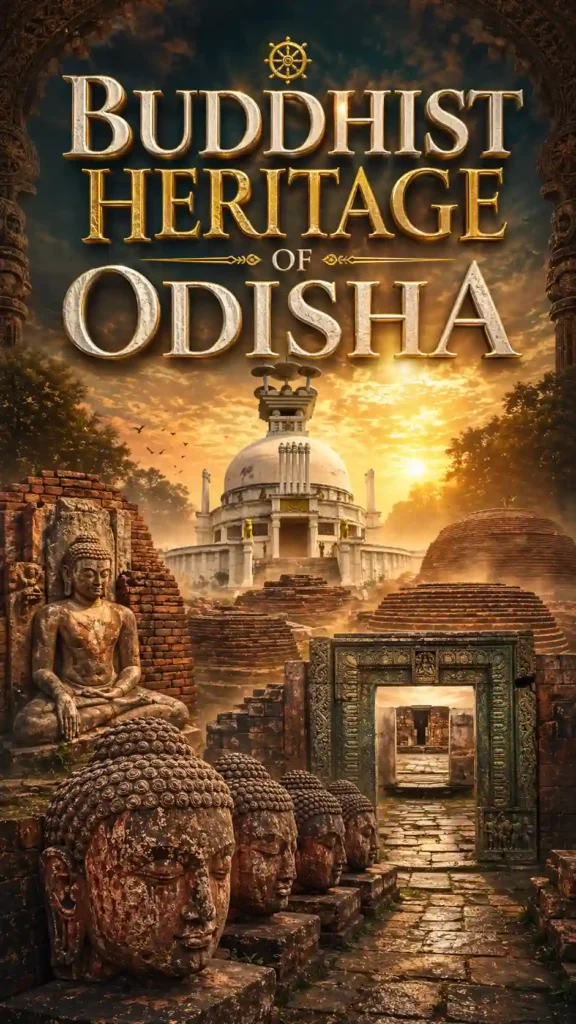
When we talk about India’s rich past, monuments are not just structures—they are stories carved in stone. In fact, they serve as the most visible record of human civilization, reflecting how societies evolved intellectually, culturally, and spiritually over time.The Buddhist Heritage of Odisha stands as one of the finest examples of this legacy. From ancient stupas to monastic universities, Odisha offers a powerful glimpse into how Buddhism shaped not only architecture but also trade, society, and cultural exchange.
Let’s explore this fascinating journey.Table of Contents
Monuments as the Foundation of Buddhist Heritage (Understanding their deeper meaning)
This section explains how monuments reflect the intellectual and cultural growth of civilizations.
Monuments are, without a doubt, the backbone of any civilization’s identity. They reveal the aspirations, beliefs, and lifestyles of people in tangible form. In India, this expression reached remarkable heights through religious architecture.
Buddhism, which remained a dominant force for nearly 2,600 years, played a crucial role in shaping this architectural heritage. It influenced not only spiritual practices but also literature, rituals, and societal traditions that continue even today.
Moreover, rulers, emperors, and wealthy merchants actively supported Buddhism. They built stupas, monasteries, and pillars to honor the teachings of Buddha and to spread his message across regions.Role of Emperor Ashoka in Buddhist Heritage (The turning point in history)
This section highlights how Ashoka shaped Buddhist monuments across India.
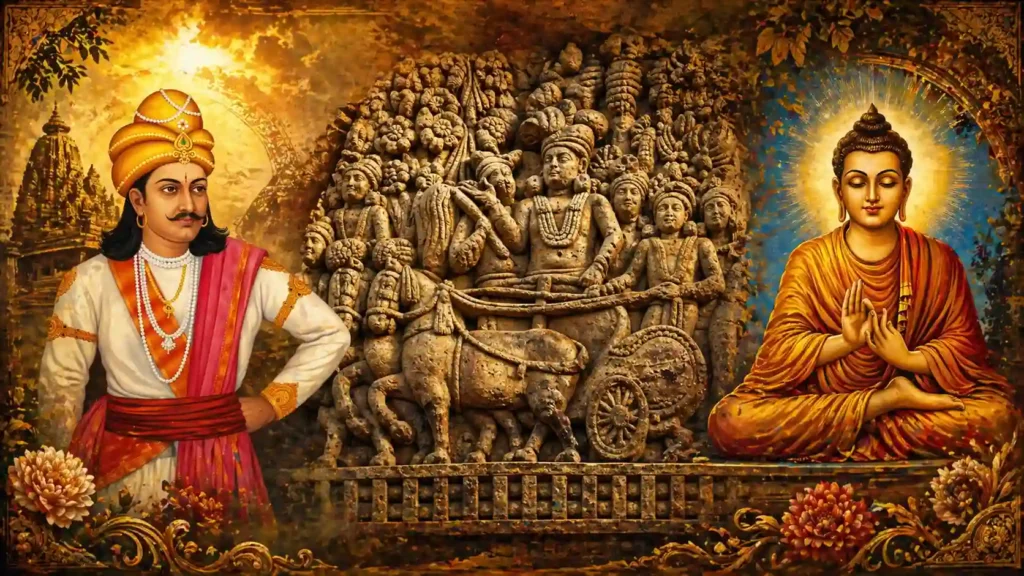
One cannot discuss Buddhist Heritage without mentioning Emperor Ashoka. After embracing Buddhism, Ashoka initiated an extraordinary architectural movement.
- He is believed to have constructed 84,000 Buddhist monuments across his empire
- He redistributed Buddha’s relics into stupas across regions
- He introduced three major architectural forms:
- Pillars
- Stupas
- Rock-cut caves
Growth of Buddhism Across Dynasties (How different rulers shaped the legacy)
This section explains the expansion of Buddhism through various ruling periods.
Buddhism flourished under multiple dynasties, and each contributed significantly:
Kushan, Satavahana & Gupta Periods
- Large-scale acceptance of Buddhism
- Construction of monasteries along trade routes
- Growth of artistic and architectural excellence
Post-Gupta Era
- Bhaumakaras of Odisha
- Palas of Bengal
- Expansion of stupas, monasteries, and apsidal temples
Buddhist Learning Centres in Odisha (Exploring ancient universities and knowledge hubs)
This section uncovers Odisha’s role as an intellectual powerhouse.
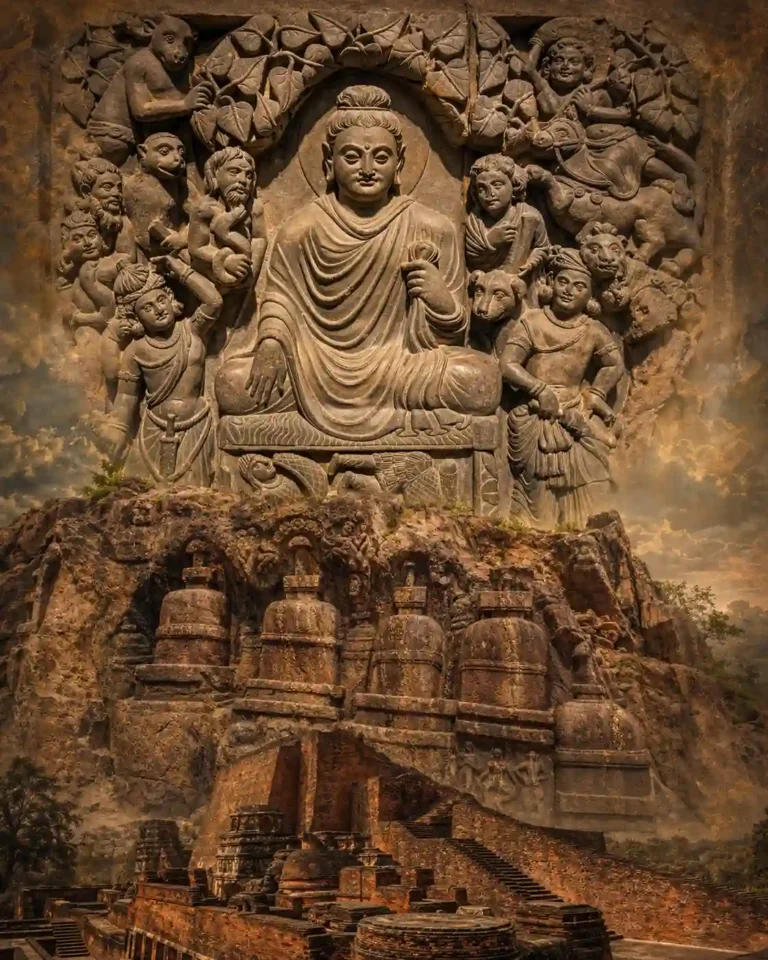
During the early medieval period, Buddhism in Odisha reached new heights with the rise of major learning centres.
Pushpagiri – The Ancient University of Odisha
- Mentioned by Chinese traveler Xuanzang
- Flourished around the 6th century A.D.
- Comparable to Nalanda and Vikramashila
Other Important Centres
- Bhojakagiri Vihara
- Jayashrama Vihara
- Jagadala Monastery
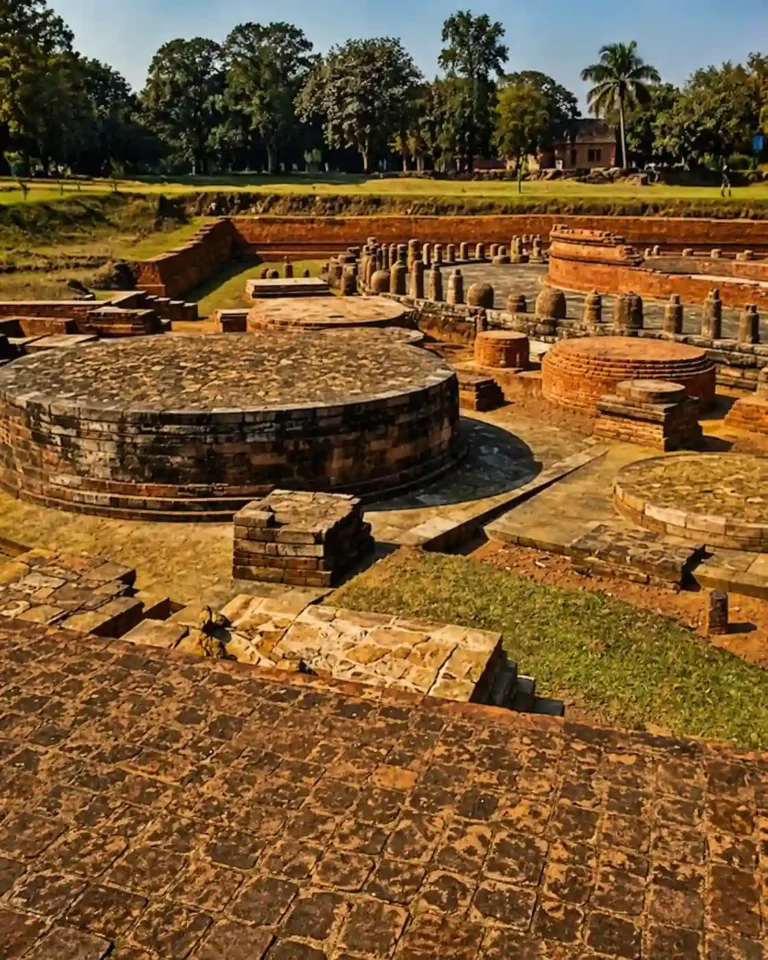
Major Buddhist Heritage Places in Odisha (Connecting history with real locations)
This section highlights key archaeological sites.
Odisha’s Buddhist Heritage comes alive through its monuments:
- Lalitgiri – One of the oldest Buddhist sites with relics and stupas
- Udayagiri – A major monastic complex with inscriptions
- Ratnagiri – A renowned Mahavihara and artistic centre
- Langudi Hills – Rock-cut stupas and newly discovered remains
- Dhauli – Site of Ashoka’s transformation
Influence of Trade and Economy on Buddhist Heritage (Understanding the economic backbone)
This section explains how trade supported Buddhist expansion.
Odisha’s strategic location along the eastern coast made it a thriving trade hub. It connected inland and maritime trade routes, exported goods like textiles, spices, pearls, and gemstones, and maintained links with regions like Sri Lanka and Southeast Asia.
- Merchants funded monasteries
- Trade routes became centers of Buddhist activity
- Urbanization supported cultural growth
Art and Architecture of Buddhist Monuments (A unique Odishan identity)
This section explains artistic uniqueness.
The Buddhist monuments of Odisha developed a distinct indigenous style.
- Swastika-pattern monastery layouts
- Decorative motifs like creepers and dwarfish figures
- Architectural similarities with Brahmanical temples
Historical Geography of Odisha (Why location mattered)
This section explains Odisha’s geographical importance.
Ancient Odisha, known as Kalinga, Utkala, and Odra, was strategically positioned. It connected northern and southern India, linked inland and maritime trade, and hosted major urban centers like Tosali and Kalinganagar.
This geographical advantage made Odisha a cultural bridge, allowing Buddhism to spread widely.People Also Ask (Answering common search queries)
1. Why is Buddhist Heritage important in Odisha?
It reflects Odisha’s role as a major center of Buddhist learning, architecture, and cultural exchange for centuries.
2. Which dynasties supported Buddhism in Odisha?
Dynasties like the Bhaumakaras, Guptas, Satavahanas, and Palas significantly supported Buddhism.
3. What is Pushpagiri in Odisha?
Pushpagiri was an ancient Buddhist university mentioned by Chinese traveler Xuanzang.
4. How did trade influence Buddhism in Odisha?
Trade routes helped fund monasteries and spread Buddhist teachings across regions.
5. What are the main Buddhist monuments in Odisha?
Lalitgiri, Udayagiri, Ratnagiri, Langudi, and Dhauli are the प्रमुख Buddhist heritage sites.
All answers are based on historical and cultural understanding.A Legacy That Still Speaks (Bringing everything together)
The Buddhist Heritage of Odisha is not just about ancient ruins—it is a story of transformation, knowledge, and cultural exchange. From Ashoka’s vision to merchant-supported monasteries, every element reflects a deeply interconnected civilization.
Even today, these monuments stand as silent storytellers, reminding us of a time when Odisha was a global centre of Buddhist thought and learning.Explore & Experience Odisha’s Buddhist Heritage
If you are passionate about history, culture, or unexplored travel:
- Plan a visit to Odisha’s Buddhist Heritage sites
- Share this blog with history enthusiasts
- Explore more such stories on Srujanee