As the scorching summer slowly gives way to the first whispers of monsoon, Odisha transforms into a land of swings, songs, festive laughter, and the irresistible aroma of freshly prepared Podapitha. This magical time marks the arrival of Raja Sankranti 2026, one of the most culturally vibrant and emotionally cherished festivals of Odisha.
Unlike most Indian festivals centered around gods and rituals alone, Raja Sankranti celebrates something far deeper and profoundly human, the fertility of Mother Earth and the dignity of womanhood.
During these sacred days, the entire state pauses agricultural activities to allow the Earth to “rest,” just as women traditionally rest during menstruation.
From beautifully decorated village swings and traditional Raja songs to Pahili Raja celebrations and delicious festive cuisine, Raja Parba reflects Odisha’s deep ecological wisdom and social harmony.
Whether you are searching for Raja Sankranti in Odisha, curious about the Raja Sankranti significance, exploring Pahili Raja traditions, or planning to experience the Raja Festival in Odisha during 2026, this detailed guide covers everything you need to know.Table of Contents
What is Raja Sankranti?
The word Raja comes from the Sanskrit word Rajaswala, meaning “a menstruating woman.”
According to Odia tradition, Mother Earth (Bhudevi) undergoes her menstrual cycle during the first three days of the festival.
Therefore, the Earth is considered sacred, fertile, and deserving of rest.
As a result:
- Farming activities stop temporarily
- Digging or ploughing the land is avoided
- People refrain from walking barefoot on soil
- Women and girls become the center of celebration
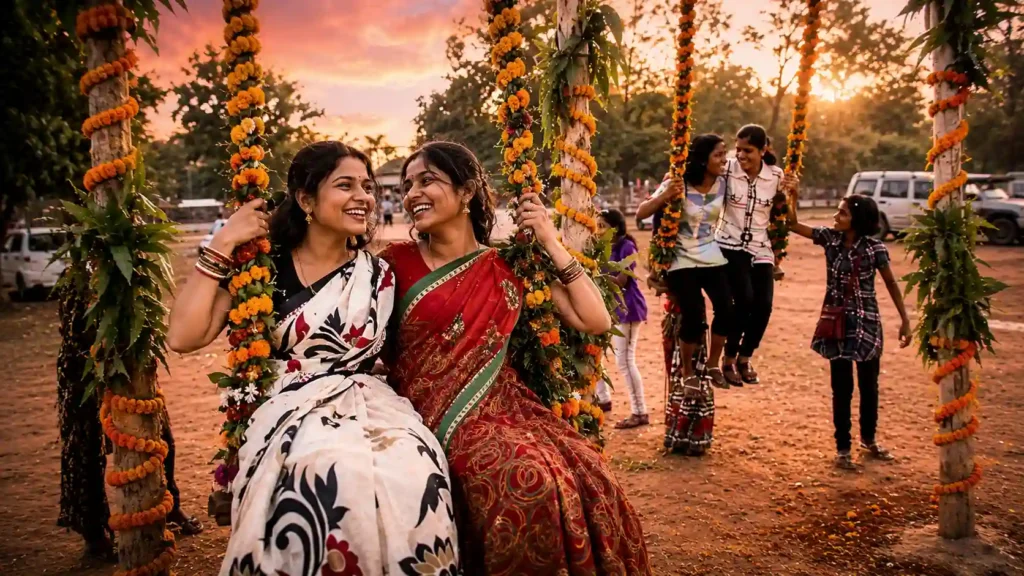
Raja Sankranti 2026 Dates and Structure
Although popularly called a three-day festival, Raja actually unfolds over four significant days.
Pahili Raja — 14 June 2026 (Sunday)
Pahili Raja marks the official beginning of the festival and is considered the most joyful day.
Girls:
- Wear new sarees or dresses
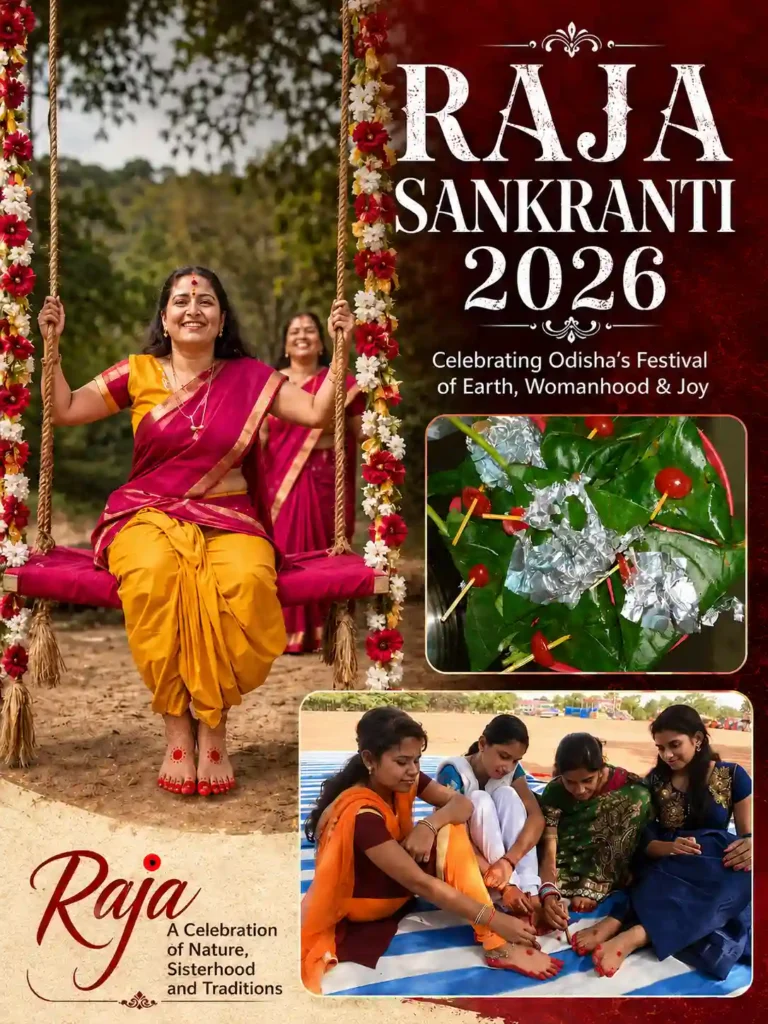
- Apply Alta on feet
- Decorate hands with Mehendi
- Enjoy swings and songs
The atmosphere becomes festive from morning itself.
Raja Sankranti / Mithuna Sankranti — 15 June 2026 (Monday)
This is the most spiritually significant day.
It marks:
- The Sun’s transition into Mithuna Rashi (Gemini)
- The symbolic fertility phase of the Earth
Hence, it carries both astrological and agricultural importance.
Bhumi Dahana — 16 June 2026 (Tuesday)
This day represents the sacred resting phase of Mother Earth.
Traditional customs continue with:
- Festive gatherings
- Traditional foods and Pithas
- Swings, songs, and celebrations
- Agricultural rest rituals
The spiritual connection between nature, fertility, and seasonal renewal remains central to the celebration.
Basumati Snana — 17 June 2026 (Wednesday)
The final day marks the ritual cleansing of Bhudevi.
Families worship:
- Grinding stones (Sila-Pua)
- Earth symbols
- Agricultural tools
Turmeric, flowers, and seasonal fruits are offered.
This ritual symbolizes the rejuvenation of the Earth before cultivation resumes.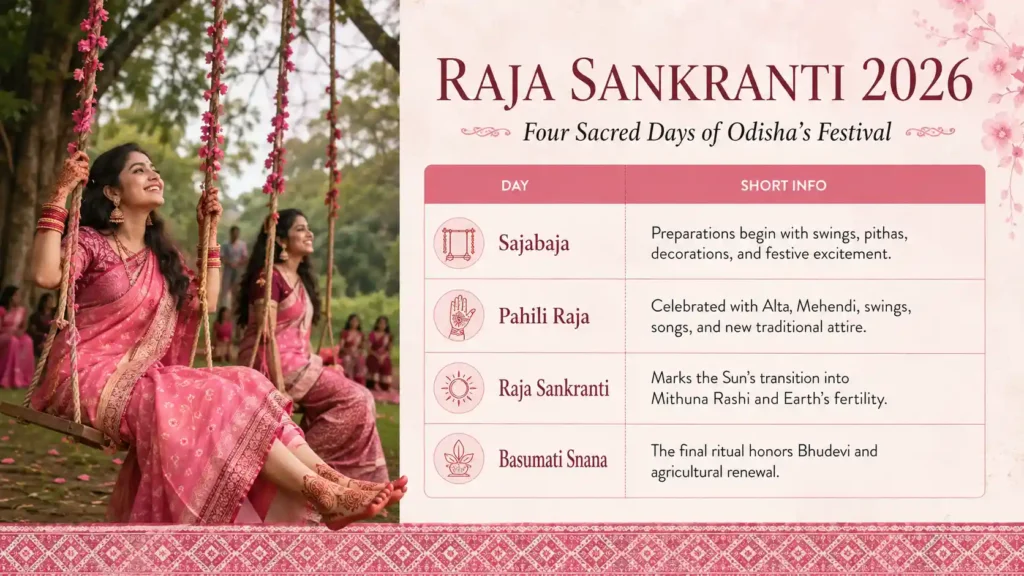
Raja Sankranti Significance
The Raja Sankranti significance goes far beyond celebration.
It reflects Odisha’s centuries-old understanding of:
- Ecology
- Agriculture
- Feminine dignity
- Seasonal cycles
A Celebration of Womanhood
Raja openly acknowledges menstruation as a natural and powerful process.
During the festival:
- Women are encouraged to rest
- Girls are pampered and celebrated
- Feminine energy is linked with fertility and creation
In many ways, Raja was centuries ahead of modern discussions about menstrual dignity.
Respect for Mother Earth
Odisha’s agrarian communities believe the Earth requires rest before monsoon cultivation begins.
Therefore:
- Ploughing is stopped
- Soil is not disturbed
- Agricultural activity pauses temporarily
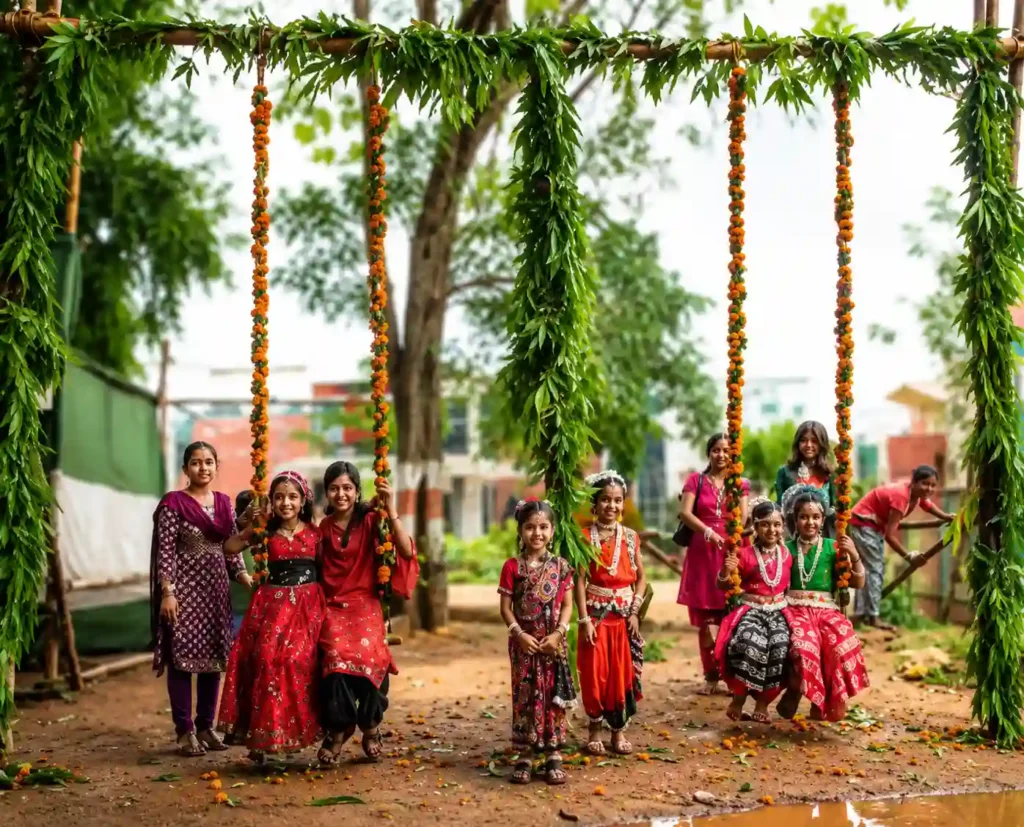
Pahili Raja: The Soul of the Festival
Among all Raja celebrations, Pahili Raja carries unmatched emotional energy.
From dawn itself:
- Villages come alive with music
- Swings move continuously
- Young girls gather in groups
- Traditional songs echo through neighbourhoods
The Tradition of Swings (Doli)
The swing is the heart of Raja.
Traditionally:
- Swings are tied to banyan or mango trees
- Girls compete to swing the highest
- Friends gather around singing Raja Geeta
The rhythmic movement of the swing symbolizes joy, freedom, and seasonal renewal.
Even today, no Raja celebration feels complete without a Doli.Raja Geeta: Songs of Joy and Nature
Traditional Raja songs celebrate:
- Nature
- Love
- Friendship
- Village life
- Feminine beauty
These folk songs are often spontaneous and deeply emotional.
In rural Odisha, the sound of Raja Geeta creates an atmosphere impossible to replicate elsewhere.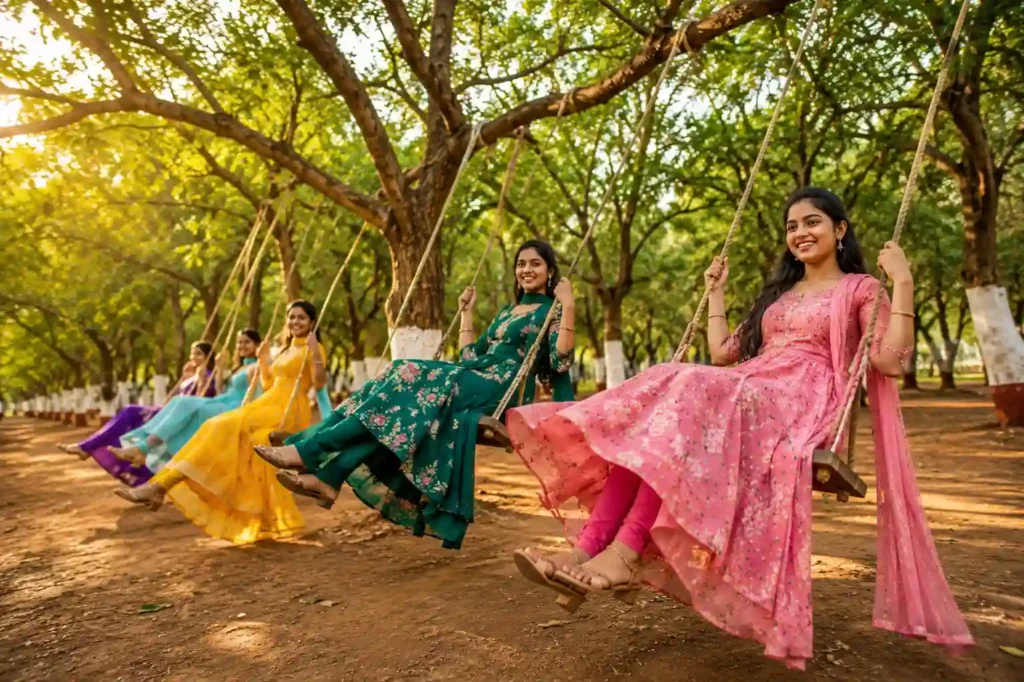
Famous Raja Sankranti Celebrations in Odisha
Although Raja is celebrated across Odisha, some locations are especially famous for their large-scale Raja festivities.
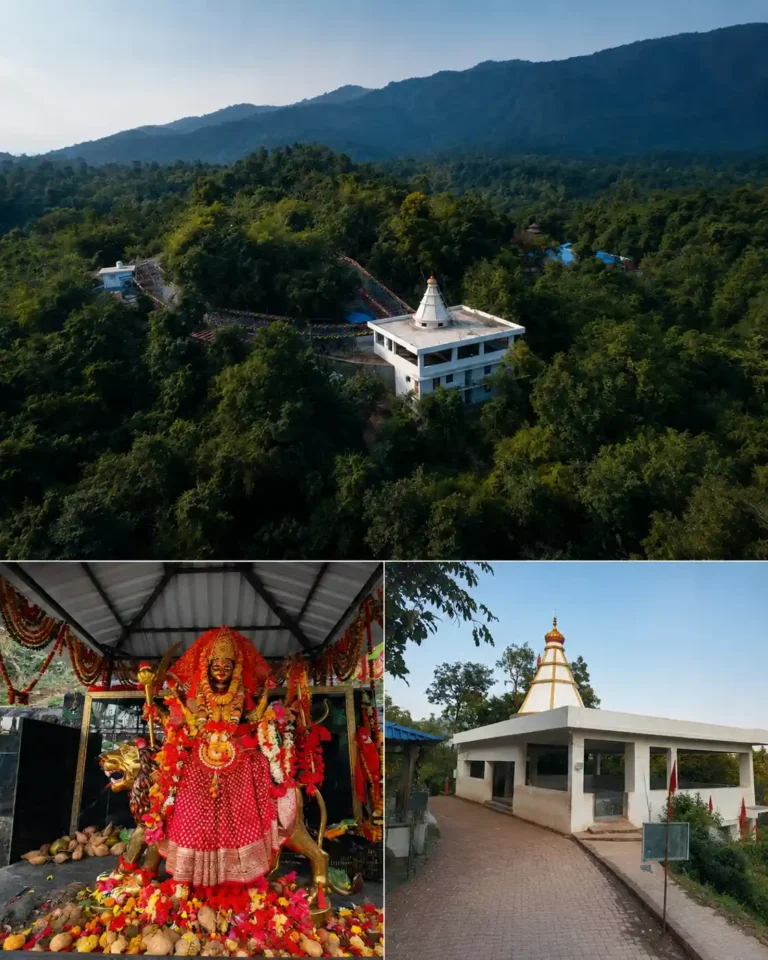
Barunei Hill
One of Odisha’s most iconic Raja festival destinations.
During Raja:
- Thousands gather at the foothills
- Temporary fairs are organized
- Swings, folk performances, and food stalls fill the area
Ugratara Temple
Known for blending:
- Shakti worship
- Tantric traditions
- Raja celebrations
The atmosphere becomes spiritually intense yet festive.
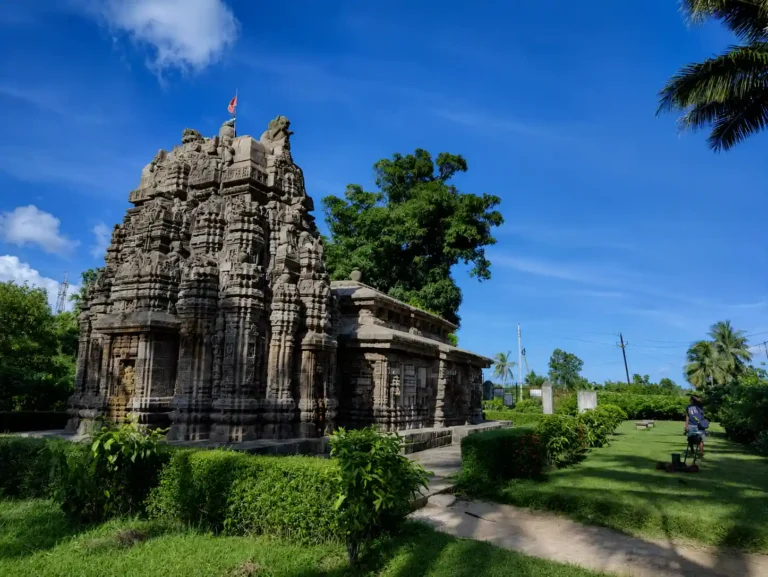
Gadamanitri Ramachandi Temple
One of the most culturally vibrant Raja gatherings in Khordha district.
Here:
- Paika traditions merge with Raja festivities
- Folk performances continue late into the evening
Raja Festival Food: The Taste of Tradition
No discussion about Raja Sankranti 2026 is complete without its unforgettable food traditions.
Podapitha: The King of Raja Cuisine
The most beloved Raja dish is undoubtedly Podapitha.
Prepared using:
- Rice batter
- Black gram
- Coconut
- Jaggery
- Black pepper
- Ginger
Traditionally, it is slow-baked overnight in earthen ovens.
The result:
- Smoky outer crust
- Soft caramelized interior
- Rich festive aroma
For many Odias, Raja does not truly begin until Podapitha arrives.
Raja Paan
Special Raja Paan (betel nut) contains:
- Sweet spices
- Coconut
- Cherries
- Flavored fillings
Raja Sankranti in Modern Odisha
Although Raja originated in agrarian villages, it continues to thrive in modern urban Odisha.
Raja in Bhubaneswar and Cuttack
Cities now organize:
- Community Raja festivals
- Cultural competitions
- Traditional dress events
- Podapitha festivals
Shopping malls even install decorative swings during Raja season.
Corporate Raja Celebrations
IT offices and institutions increasingly celebrate Raja through:
- Traditional attire competitions
- Folk music performances
- Pitha-sharing events
My Personal Raja Sankranti Experience
During my college years, I once spent time with Raja in a remote village near Khordha.
That experience completely changed my understanding of the festival.
There were:
- No loudspeakers
- No artificial decorations
- No commercial events
Instead, there were giant banyan trees holding handmade rope swings.
Village girls wore colorful sarees and sang Raja songs throughout the afternoon.
I still remember sitting with friends on mud verandahs, eating warm Podapitha wrapped in banana leaves while listening to distant folk music floating through the village.
What moved me most was the sense of community.
Every house welcomed visitors.
Every conversation felt warm.
And for three days, the entire village truly slowed down; as if everyone collectively agreed to breathe more gently.
That experience taught me that Raja is not merely a festival. It is a feeling.Best Places to Experience Raja Sankranti 2026
For the most immersive experience, visit:
- Rural Khordha
- Nayagarh villages
- Cuttack outskirts
- Traditional Sashan villages of Puri
People Also Ask (FAQs)
1. What is Raja Sankranti in Odisha?
Raja Sankranti is a four-day Odia festival celebrating womanhood, fertility, and the menstrual cycle of Mother Earth.
2. What is Pahili Raja?
Pahili Raja is the first and most festive day of Raja Parba.
3. Why is Raja Sankranti celebrated?
It symbolizes Earth’s fertility, feminine dignity, and the beginning of the agricultural season.
4. What food is famous during Raja Festival?
Podapitha is the most iconic Raja delicacy.
5. When is Raja Sankranti 2026?
Raja Sankranti 2026 will be celebrated on 15th June according to the Odia calendar.Final Thoughts: Why Raja Sankranti 2026 Matters More Than Ever
In a fast-moving modern world, Raja Sankranti 2026 reminds us to slow down.
To honor nature.
Respect women.
Celebrate rest.
And to reconnect with the community.
Very few festivals in India combine ecological wisdom, feminine celebration, food culture, music, and social harmony so beautifully.
Whether you celebrate Raja in a village courtyard beneath a banyan tree or in a city apartment sharing Podapitha with loved ones, the spirit remains unchanged.
It is a festival of renewal.
A festival of joy.
A festival where Odisha itself seems to breathe differently.
So this Raja season:
- Wear new clothes
- Taste Podapitha
- Swing beneath the monsoon sky
- Sing Raja songs
- Experience one of India’s most meaningful cultural celebrations