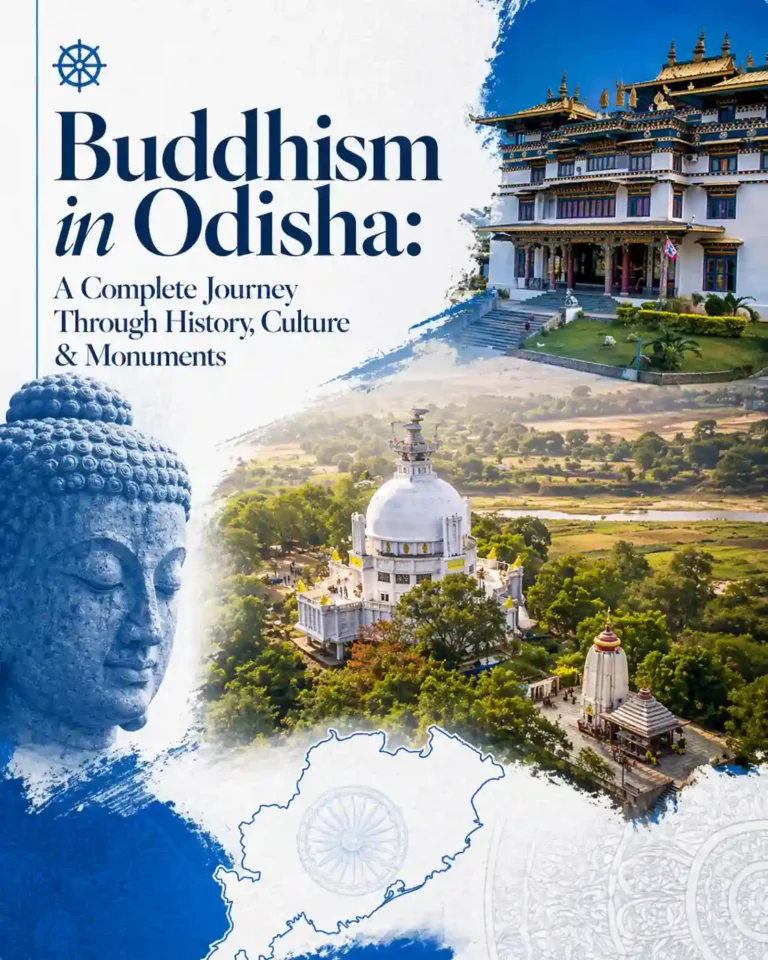
When we explore India’s spiritual history, Buddhism in Odisha emerges as a powerful yet often underappreciated chapter. While many people associate Buddhism with places like Bodh Gaya or Sarnath, Odisha quietly preserves a rich legacy that spans centuries.
Interestingly, this legacy is not just about religion. Instead, it connects deeply with architecture, trade, politics, and cultural evolution. So, if you are curious about how Buddhism shaped an entire region, this guide will help you understand it in a simple and engaging way.
This overview is based on historical insights and cultural understanding. :contentReference[oaicite:0]{index=0}Table of Contents
Monuments and Civilization (Understanding how Buddhism shaped physical history)
This section explains how monuments reflect the intellectual and cultural evolution of society.
To begin with, monuments are not just stones or ruins. Rather, they are living records of human thought and progress. In Odisha, Buddhist monuments clearly show how ideas transformed into structured institutions.
In fact, Buddhism influenced India for nearly 2,600 years, and during this time, rulers, merchants, and communities actively contributed to building:
- Stupas
- Monasteries (Viharas)
- Pillars and caves

The Turning Point: Emperor Ashoka and the Rise of Buddhism (Explaining the origin of expansion)
This section highlights the historical moment that accelerated Buddhism in Odisha.
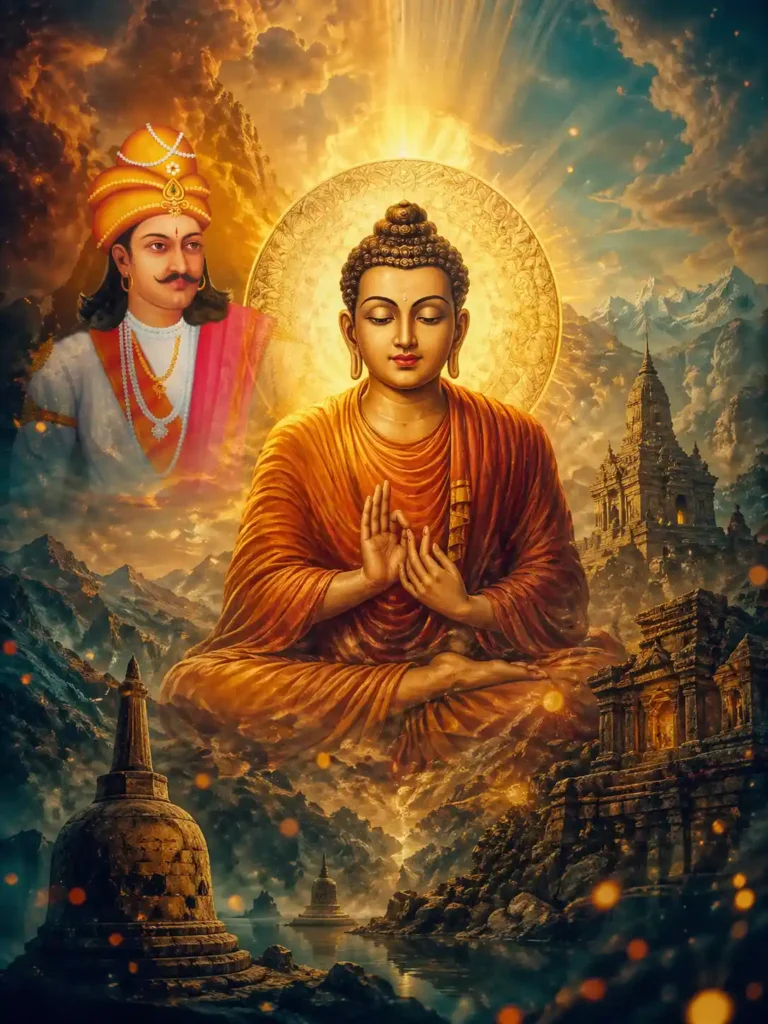
Undoubtedly, the story of Buddhism in Odisha begins with a dramatic transformation—the aftermath of the Kalinga War.
After witnessing immense destruction, Emperor Ashoka embraced Buddhism and committed himself to spreading peace. Consequently:
- He constructed thousands of Buddhist monuments across his empire
- He redistributed Buddha’s relics into stupas
- He introduced pillars, stupas, and rock-cut caves as key architectural forms
Growth Across Dynasties (Tracing how Buddhism expanded over centuries)
This section explains how different rulers supported Buddhism in Odisha.
Buddhism did not grow overnight. Instead, it evolved through continuous support from various dynasties.
Early Expansion (Kushan, Satavahana & Gupta Periods)
- Buddhism gained wide acceptance
- Monasteries were built along trade routes
- Art and architecture flourished
Post-Gupta Period (Regional Patronage)
- Bhaumakaras (Odisha)
- Palas (Bengal)
Buddhist Learning Centres (Exploring Odisha’s intellectual heritage)
This section reveals Odisha’s role as a hub of education and knowledge.
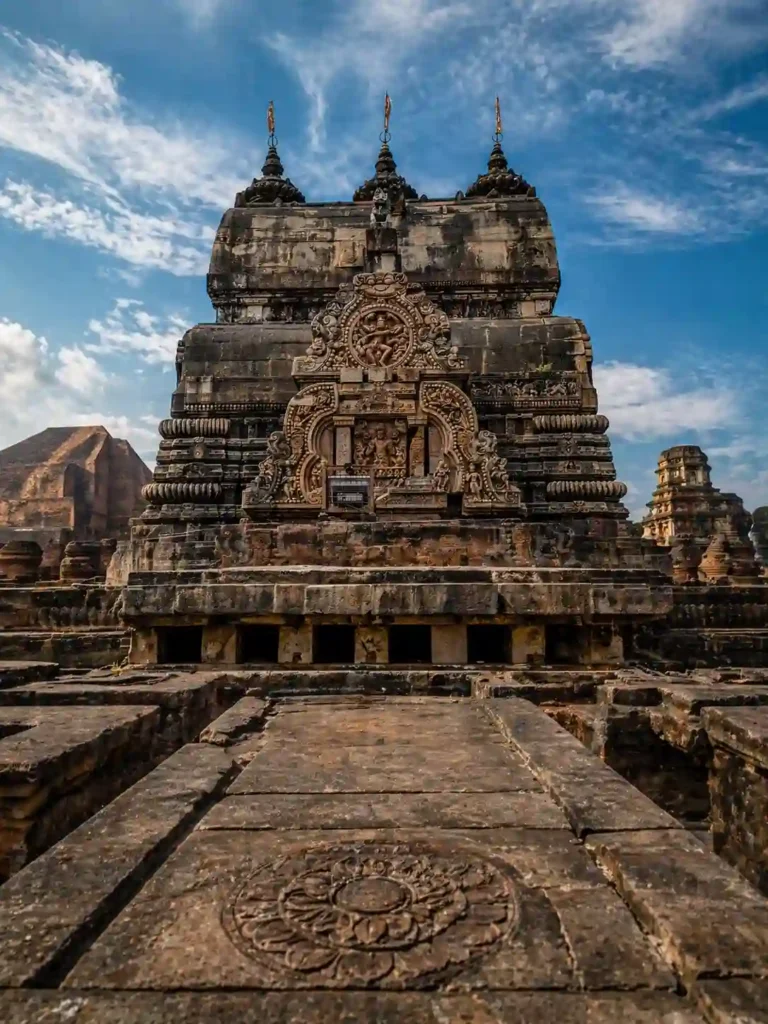
As Buddhism in Odisha matured, it gave rise to significant learning centres.
Pushpagiri University
- Flourished around the 6th century A.D.
- Mentioned by Chinese traveler Xuanzang
- Comparable to Nalanda and Vikramashila
Other Notable Centres
- Bhojakagiri Vihara
- Jayashrama Vihara
- Jagadala Monastery
Major Buddhist Sites in Odisha (Connecting readers with real locations)
This section introduces key places that define Buddhism in Odisha.
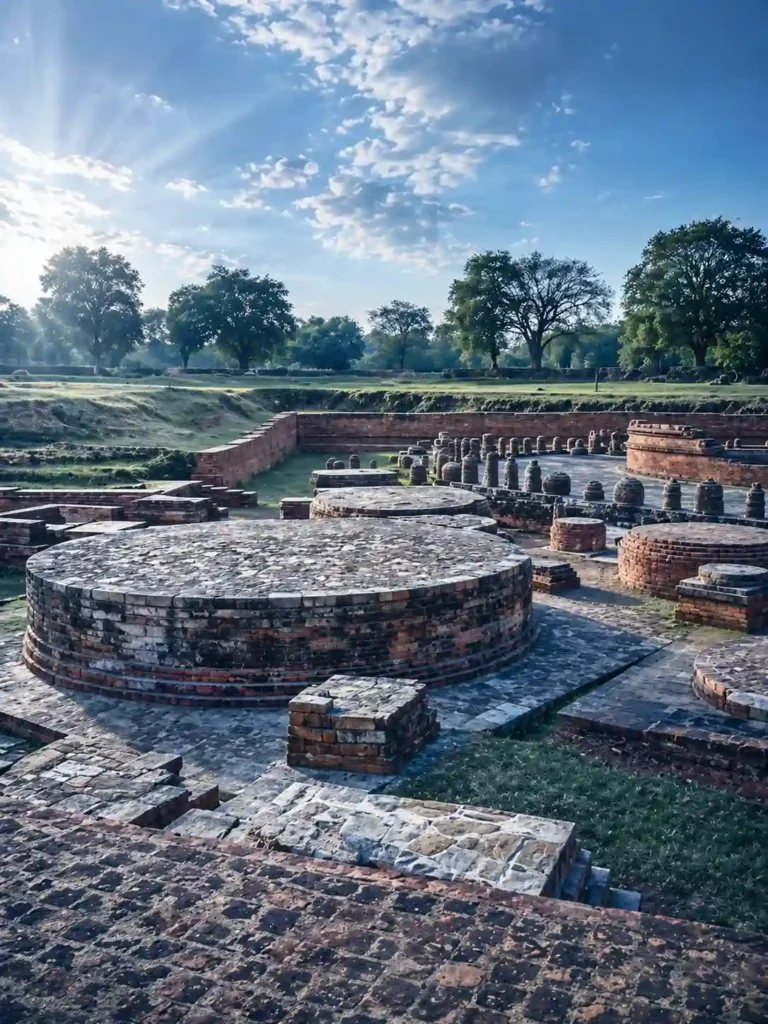
If you want to explore Buddhism in Odisha practically, these sites are essential:
Lalitgiri
- One of the oldest Buddhist sites
- Contains relics and early stupas
Udayagiri
- Large monastic complex
- Evidence of organized Buddhist communities
Ratnagiri
- Major center of Vajrayana Buddhism
- Known for artistic excellence
Langudi Hills
- Rock-cut stupas
- Recently excavated site
Dhauli
- Associated with Ashoka’s transformation
- Symbol of peace and change
Trade and Economy (Understanding the hidden force behind Buddhism)
This section explains how trade supported the spread of Buddhism.
Now, here’s something many people overlook—trade played a major role in Buddhism in Odisha.
Due to its coastal location:
- Odisha became a major trade hub
- It connected inland India with Southeast Asia
- It exported goods like textiles, pearls, and spices
- Merchants funded monasteries
- Trade routes became spiritual corridors
- Buddhist centres developed near commercial hubs
Art and Architecture (Discovering Odisha’s unique Buddhist style)
This section highlights artistic uniqueness and innovation.
Buddhist monuments in Odisha developed a distinct architectural identity.
- Swastika-pattern monastery layouts
- Decorative motifs like creepers and dwarf figures
- Similarities with contemporary temple architecture
Historical Geography of Odisha (Why location mattered)
This section explains how geography influenced Buddhist growth.
Ancient Odisha, known as:
- Kalinga
- Utkala
- Odra
was strategically located along the eastern coast.
- It became a bridge between north and south India
- It connected maritime and inland trade routes
- It supported urban and cultural growth
People Also Ask (Answering key user queries for SEO)
1. What is the significance of Buddhism in Odisha?
Buddhism in Odisha represents a major historical phase where religion, trade, and culture developed together, making it a key center of learning and architecture.
2. Which are the main Buddhist sites in Odisha?
Lalitgiri, Udayagiri, Ratnagiri, Langudi, and Dhauli are the प्रमुख Buddhist sites.
3. Who promoted Buddhism in Odisha?
Emperor Ashoka initiated its spread, while later dynasties like Bhaumakaras and Palas supported its growth.
4. What is Pushpagiri in Odisha?
Pushpagiri was an ancient Buddhist university mentioned by Chinese traveler Xuanzang.
5. How did trade influence Buddhism in Odisha?
Trade routes helped fund monasteries and spread Buddhist teachings across regions.
All answers are based on historical and cultural understanding.Conclusion: Why Buddhism in Odisha Still Matters Today
This section summarizes the importance and relevance.
To sum up, Buddhism in Odisha is not just about ancient ruins—it is a story of transformation, knowledge, and cultural exchange.
From Ashoka’s vision to merchant-supported monasteries, every element reflects a society that balanced spirituality with progress.
Even today, these monuments continue to inspire travelers, historians, and spiritual seekers alike.