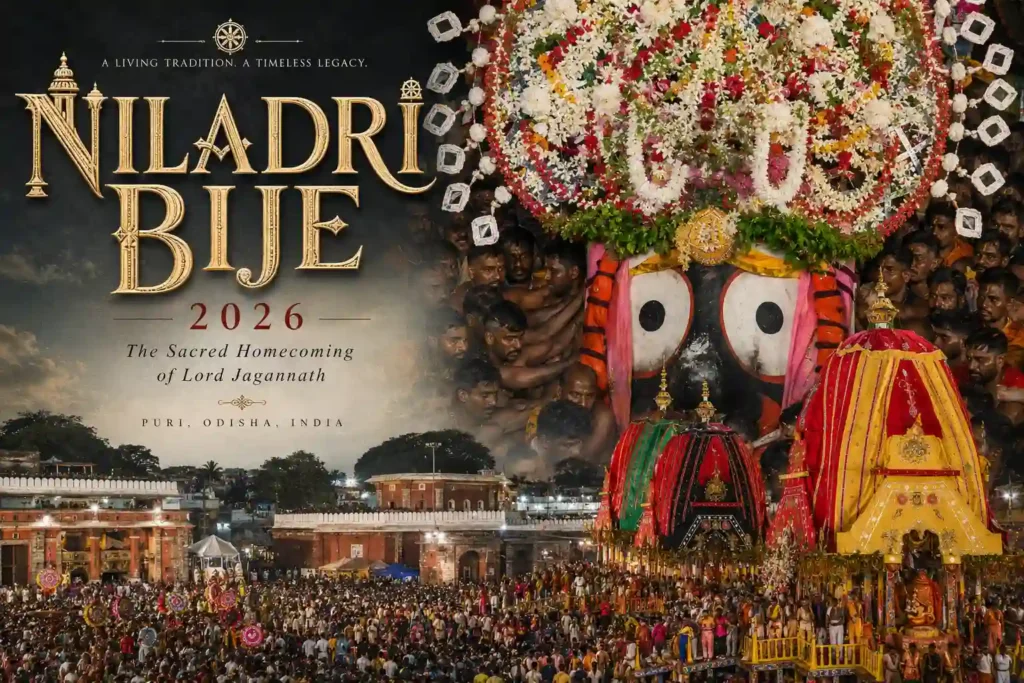
Among all the rituals associated with the grand Ratha Yatra, one ceremony stands out for its emotional depth, cultural symbolism, humor, devotion, and human-like divine drama—Niladri Bije. Celebrated on the final day of the Rathayatra festivities in Puri, Niladri Bije marks the return of Lord Jagannath, Lord Balabhadra, Devi Subhadra, and Sudarshan Chakra into the sacred sanctum of the Jagannath Temple.
However, this return is not simple.
After spending nine days at Gundicha Temple during Rathayatra, Shree Jagannath must face the displeasure of Goddess Lakshmi, who remains alone in the temple while the Lord journeys away with His siblings. What follows is one of the most beautiful and relatable episodes in Jagannath culture:Table of Contents
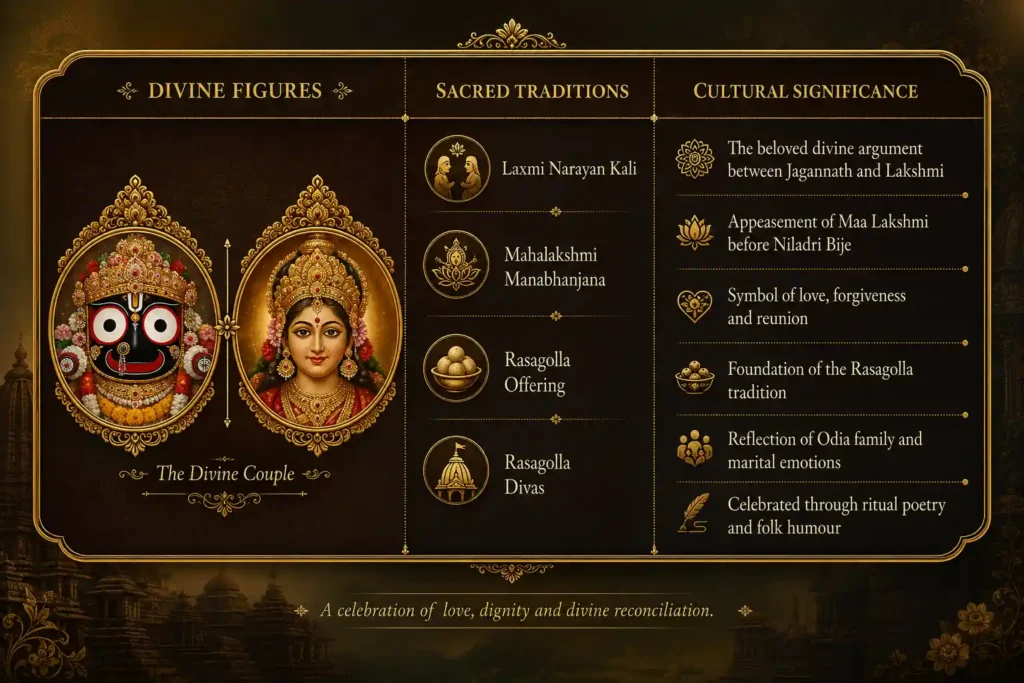
The famous “Laxmi Narayan Kali” or divine argument between Jagannath and Lakshmi.
Moreover, Niladri Bije is deeply connected with:
- Rasagolla tradition
- Mahalakshmi Manabhanjana
- Odia family culture
- Marital emotions
- Ritual poetry
- Folk humour
Rasagolla Divas
What is Niladri Bije?
The term:
“Niladri” refers to the sacred abode of Lord Jagannath
and
“Bije” means entering or re-entering.
Thus:
Niladri Bije refers to the ceremonial re-entry of Lord Jagannath into the Jagannath Temple after Rathayatra.
The ritual takes place on:
- Trayodashi Tithi after:
- Bahuda Yatra
- Suna Besha
- Adhara Pana
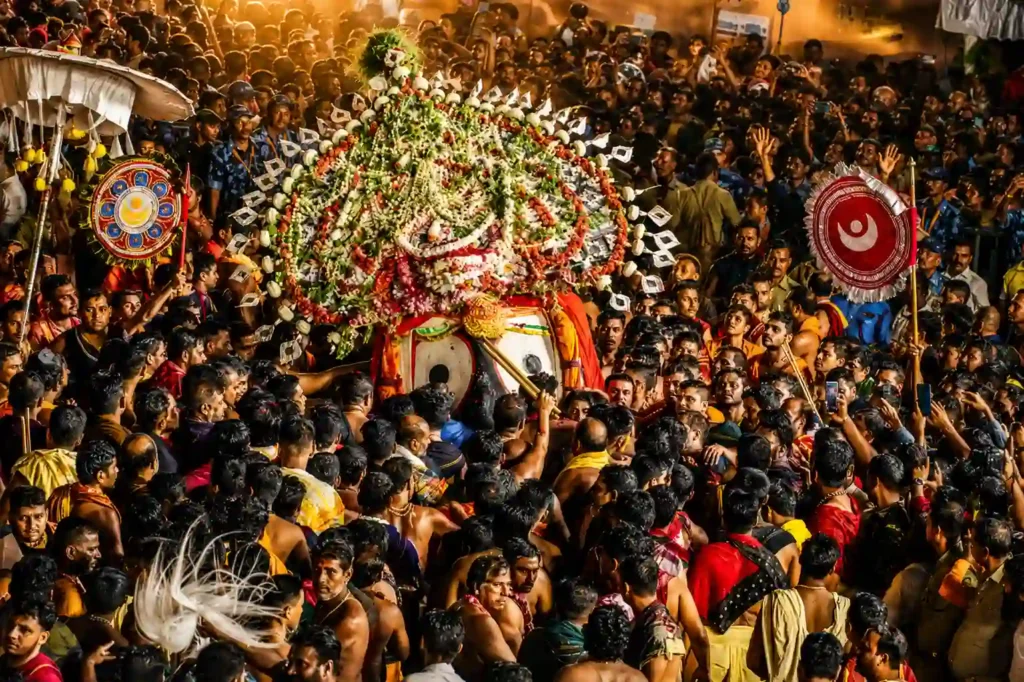
Why Niladri Bije Is Emotionally Unique
Unlike many rigid temple rituals, Niladri Bije feels deeply human.
Here:
- Gods express emotions
- Husband and wife argue
- Jealousy appears naturally
- Reconciliation happens lovingly
Instead:
He behaves like a family member.
This humanized divine behaviour is one of the most remarkable aspects of Jagannath culture.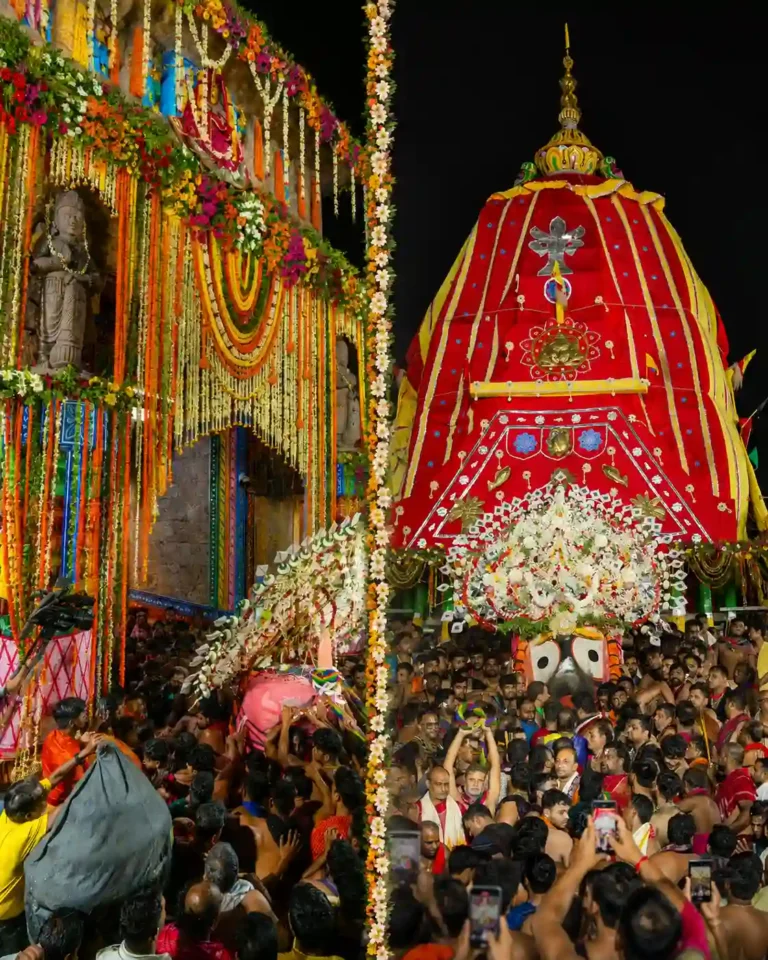
Why Goddess Lakshmi Becomes Angry
During Rathayatra:
- Lord Jagannath travels to Gundicha Temple for nine days.
However:
- Goddess Lakshmi is left behind in the Srimandir.
Imagine the situation: A newly married wife remains alone at home while her husband travels joyfully with his brother and sister.
Naturally:- Lakshmi feels neglected
- Emotional hurt develops
- Divine anger arises
This emotional episode becomes:
Mahalakshmi Manabhanjana
meaning:
“Pacifying Goddess Lakshmi.”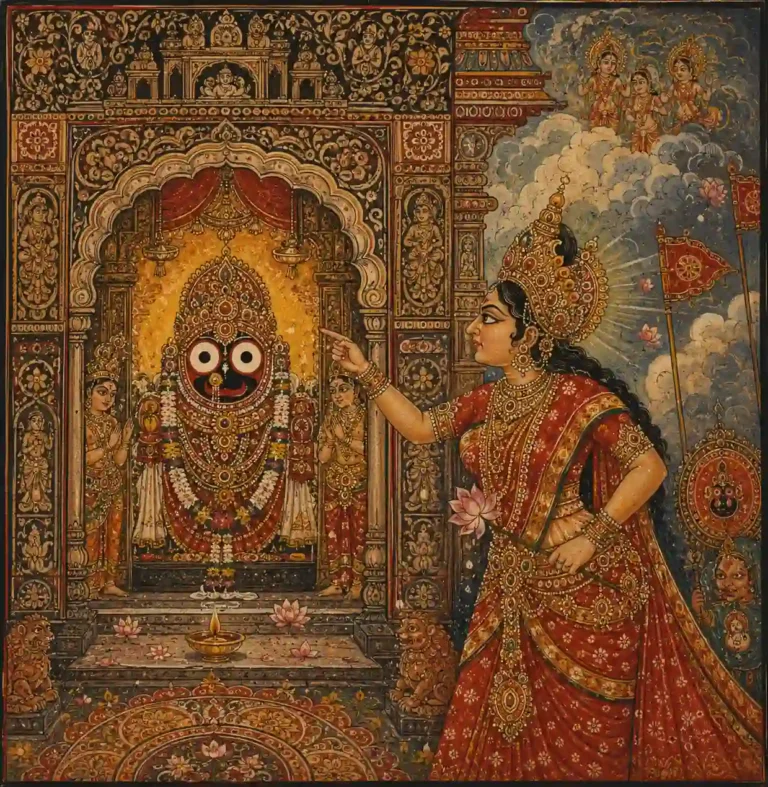
Hera Panchami: The Beginning of the Divine Conflict
Hera Panchami
On this day:
- Goddess Lakshmi visits Gundicha Temple to meet Lord Jagannath.
According to temple tradition:
- Goddess Bimala gives Lakshmi a sacred Mohachurna (enchanted powder) to attract the Lord back.
However:
- Lakshmi fails to meet Jagannath properly because the evening rituals have already begun.
Disappointed and angry:
- She leaves Gundicha Temple through Nakachana Dwara
- Symbolically breaks a portion of Jagannath’s chariot
This act represents:
A wife’s emotional expression of displeasure.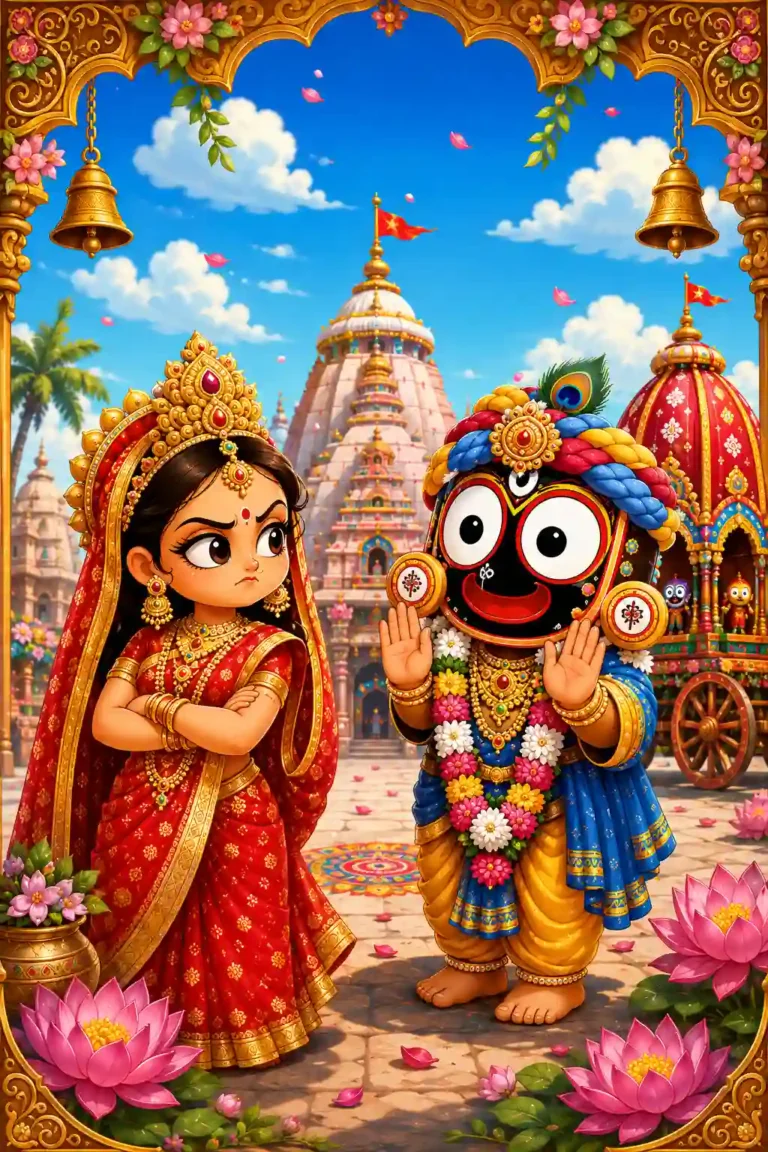
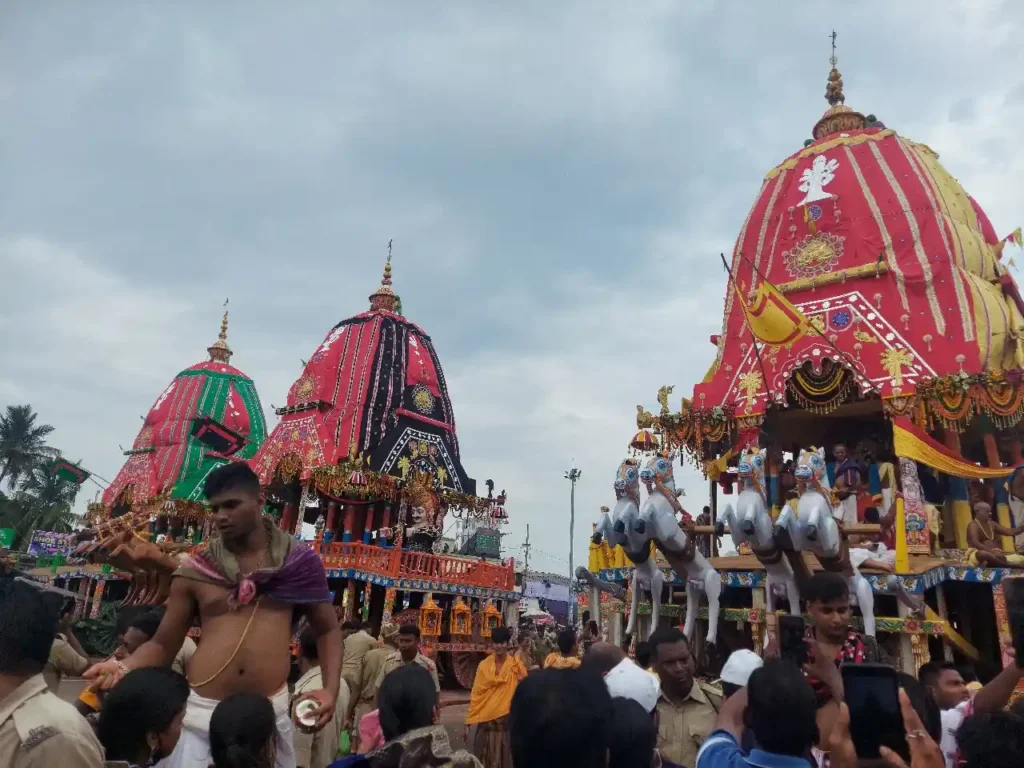
The Return Journey During Bahuda Yatra
After spending seven days at Gundicha Temple:
- Lord Jagannath begins the return journey known as Bahuda Yatra.
Meanwhile:
- Goddess Lakshmi waits near Chahani Mandapa anxiously.
As the chariots approach:
- She prepares to confront the Lord directly.
The atmosphere becomes both:
- Sacred
- Emotionally dramatic
Laxmi Narayan Kali: The Divine Argument
One of the most iconic elements of Niladri Bije is:
“Laxmi Narayan Kali” or “Bachanika”
This ritual dialogue between Lord Jagannath and Goddess Lakshmi reflects:
- Humour
- Romance
- Anger
- Family emotions
- Marital relationships
Goddess Lakshmi Closes the Temple Doors
As Lord Jagannath attempts to enter the temple:
- Goddess Lakshmi blocks His entry.
- The temple doors are shut.
This symbolizes:
- Emotional distance
- Hurt feelings
- A wife demanding explanation from her husband.
Jagannath Tries to Pacify Lakshmi
(The Lord’s emotional attempts to calm the Goddess)
Lord Jagannath then lovingly pleads with Lakshmi.
He explains:
- He had gone because of His promise to Goddess Gundicha
- His elder brother accompanied Him
- He never intended to hurt Lakshmi’s feelings
The Lord says lovingly:
“Open the doors and let me see your moon-like face.”
He also praises Her beauty and expresses how difficult the nine days felt without seeing Her.
The emotional depth of these poetic conversations reflects traditional Odia household culture beautifully.Lakshmi’s Jealousy Toward Subhadra
In the poetic exchanges:
- Lakshmi complains that Jagannath always takes Subhadra everywhere.
She sarcastically says:
“Go back with your sister.”
This playful jealousy resembles:
- Everyday family conversations
- Traditional Odia domestic humour
- Sister-in-law dynamics
The Role of Lord Balabhadra
Eventually:
Lord Balabhadra intervenes.
He reminds Jagannath:
- Goddess Lakshmi manages the household while They travel away.
He advises the Lord:
- To respect Her emotions and calm the situation.
This elder-brother mediation adds another human dimension to Jagannath culture.
Rasagolla: The Sweet That Ends the Argument
Finally:
- Lord Jagannath offers Rasagolla to Goddess Lakshmi.
The moment She tastes the sweet:
- Her anger melts away instantly.
She smiles again.
The temple doors open.
The Lord re-enters the sanctum.
This symbolic act became:
One of Odisha’s greatest culinary-cultural traditions.Rasagolla Divas 2026
The offering of Rasagolla during Niladri Bije led to the celebration of:
Rasagolla Divas
across Odisha.
The festival celebrates:
- Odisha’s culinary heritage
- Jagannath traditions
- The emotional symbolism of reconciliation
Many historians believe:
- Rasagolla traditions existed in Odisha since at least the 12th century.
References to Rasagolla also appear in:
Jagamohana Ramayana
written during the 15th century.Odisha’s GI Tag and Rasagolla Heritage
Odisha later received:
GI Tag recognition for Odisha Rasagola
highlighting:
- Its historic association with Jagannath culture
- Temple traditions
- Niladri Bije rituals
Thus:
Rasagolla is not merely a sweet.
It is:
- A cultural identity
- A ritual offering
- A symbol of reconciliation.
My Personal Experience Witnessing Niladri Bije
I still remember witnessing Niladri Bije in Puri during Rathayatra season.
The atmosphere outside Singhadwara felt completely different from earlier rituals.
Unlike the energetic excitement of pulling the chariots:
- Niladri Bije carried emotional intensity.
People laughed while listening to the playful verbal exchanges between Jagannath and Lakshmi.
At the same time:
- Many devotees folded hands silently
- Some smiled emotionally
- Others discussed the Bachanika traditions passionately
When the Rasagolla offering happened:
- The crowd erupted joyfully.
It felt less like a rigid temple ritual and more like:
A divine family reunion.
That emotional warmth makes Niladri Bije unforgettable.Spiritual Meaning Behind Niladri Bije
Beneath its humor and domestic emotions, Niladri Bije carries profound spiritual lessons.
It teaches:
- Relationships require understanding
- Ego must dissolve through love
- Anger can transform through compassion
- Forgiveness strengthens unity
Thus:
- Jagannath and Lakshmi become symbols of ideal reconciliation.
Cultural Importance in Odia Society
The Bachanika traditions preserve:
- Folk poetry
- Oral storytelling
- Marital symbolism
- Household culture
- Traditional humour
The ritual mirrors:
Everyday Odia family life through divine storytelling.
This cultural relatability keeps Jagannath traditions emotionally alive even today.Literary Significance of Bachanika
Many poets composed versions of:
Lakshmi Narayan Kali
over centuries.
One of the most famous versions comes from:
- Gaur Charan Adhikari of Lehanga village near Khordha.
These poetic exchanges remain:
- Rich in metaphor
- Emotionally expressive
- Culturally rooted
Even today:
- People recite them during Rathayatra season.
Important Rituals Associated with Niladri Bije
Before Niladri Bije on Ekadasi:
- The deities appear in magnificent golden ornaments.
This attracts lakhs of devotees.
Adhara Pana
A special sweet drink is offered in giant pots placed before the deities.
This ritual takes place the day before Niladri Bije, on Dwadasi.
The pots are later broken ritually.
Gainthala Phita
After reconciliation:
- Sacred knots of the divine wedding are ceremonially untied.
This represents:
Reunion and harmony.People Also Ask (FAQs)
1. What is Niladri Bije?
2. Why does Goddess Lakshmi become angry during Niladri Bije?
3. What is Laxmi Narayan Kali?
4. Why is Rasagolla important in Niladri Bije?
5. What is Rasagolla Divas?
Conclusion
Among all Jagannath traditions, Niladri Bije feels uniquely personal.
Here:
- Gods argue lovingly
- Relationships feel human
- Humor becomes sacred
- Sweetness restores harmony
The ritual reminds us that:
Even divine relationships require understanding, patience, and reconciliation.
That is why Niladri Bije continues touching hearts generation after generation.
So the next time you witness Rathayatra in Puri, do not leave after Bahuda Yatra.
Stay till Niladri Bije.
Listen to the Bachanika.
Feel the emotional warmth of Mahalakshmi Manabhanjana.
And taste the sweetness of Odisha’s sacred Rasagolla tradition.
Because in the end:
- Love wins
- Anger dissolves
- And Lord Jagannath returns home.
Trending Posts