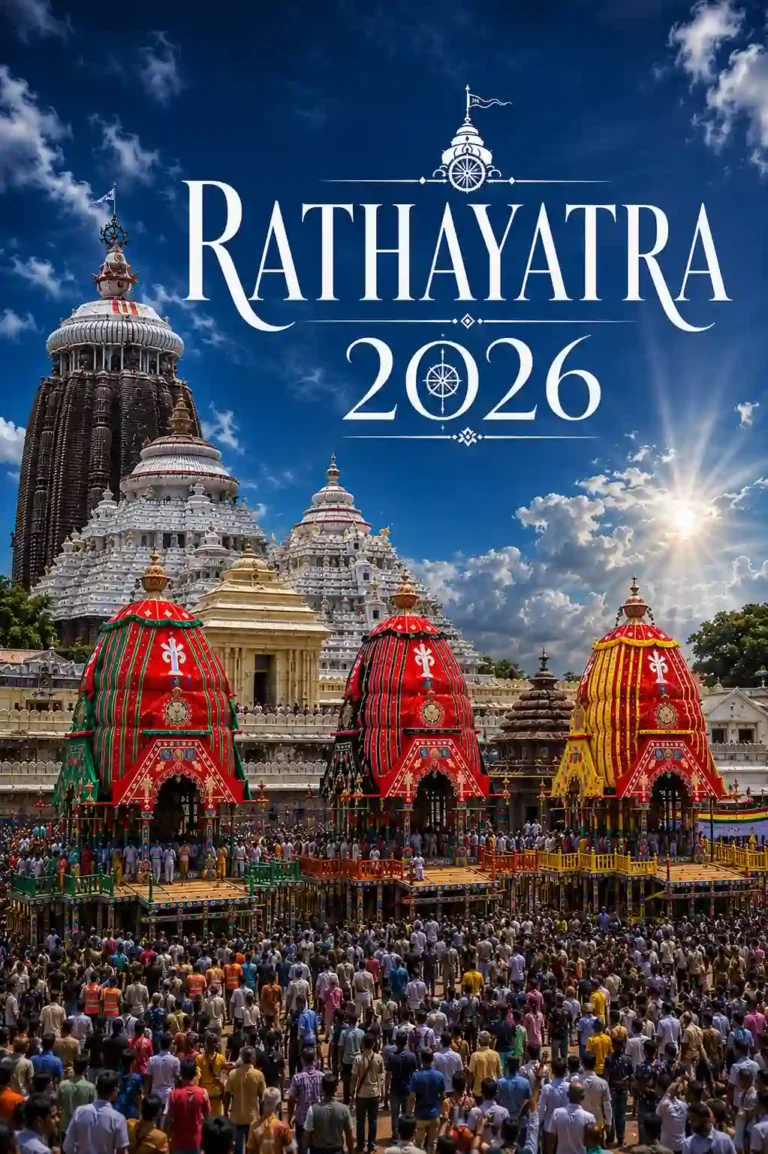
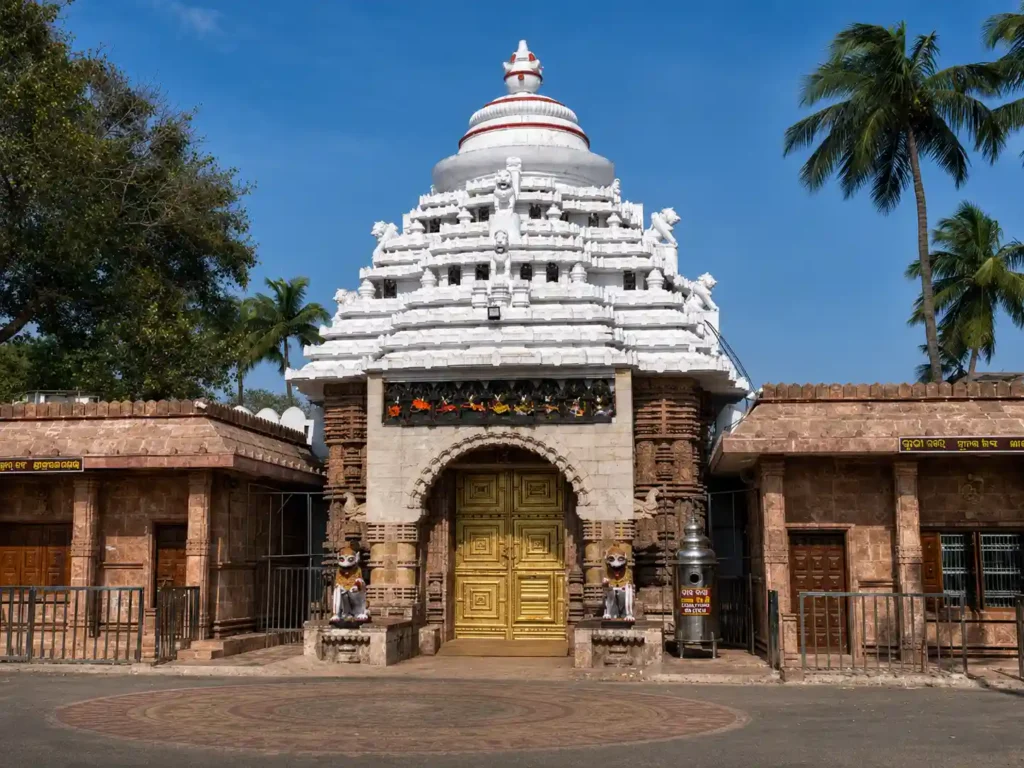
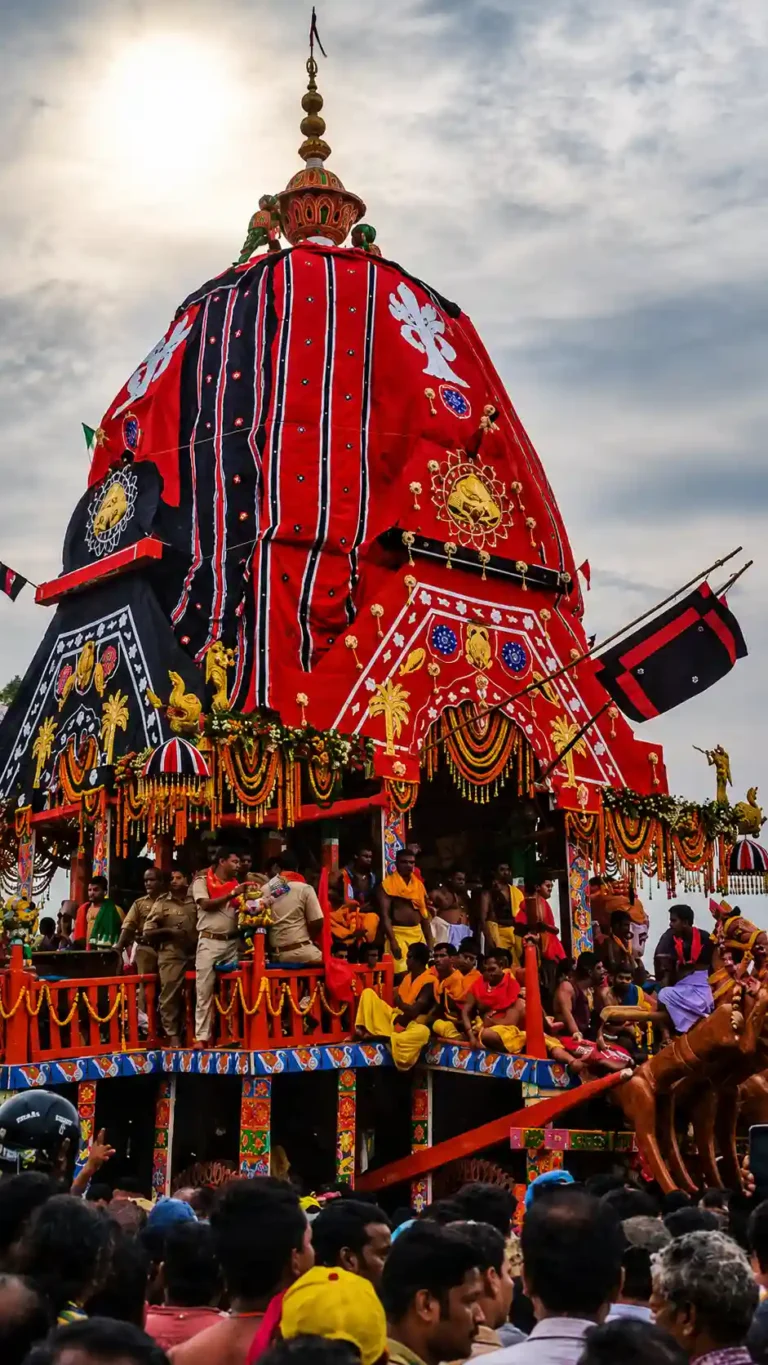
Every year, as the monsoon clouds begin gathering over the sacred coastal town of Puri, millions of devotees from across the world prepare for one of humanity’s greatest spiritual gatherings; Jagannath Rathayatra. The atmosphere becomes electric with devotion. Temple bells echo through the Grand Road, conches blow continuously, and chants of “Jai Jagannath” fill the air as Lord Jagannath steps out of His sanctum to bless humanity.
Unlike most Hindu festivals confined within temple walls, Rathayatra 2026 is a celebration where divinity comes out among people. Here, Lord Jagannath, along with Lord Balabhadra and Devi Subhadra, rides massive wooden chariots through the streets of Puri, allowing millions to witness His divine presence regardless of caste, religion, nationality, or social status.
For devotees, Rathayatra is not merely a festival.
It is:
A spiritual emotion
A symbol of equality
A living heritage tradition
A divine reunion between God and humanity
Table of Contents
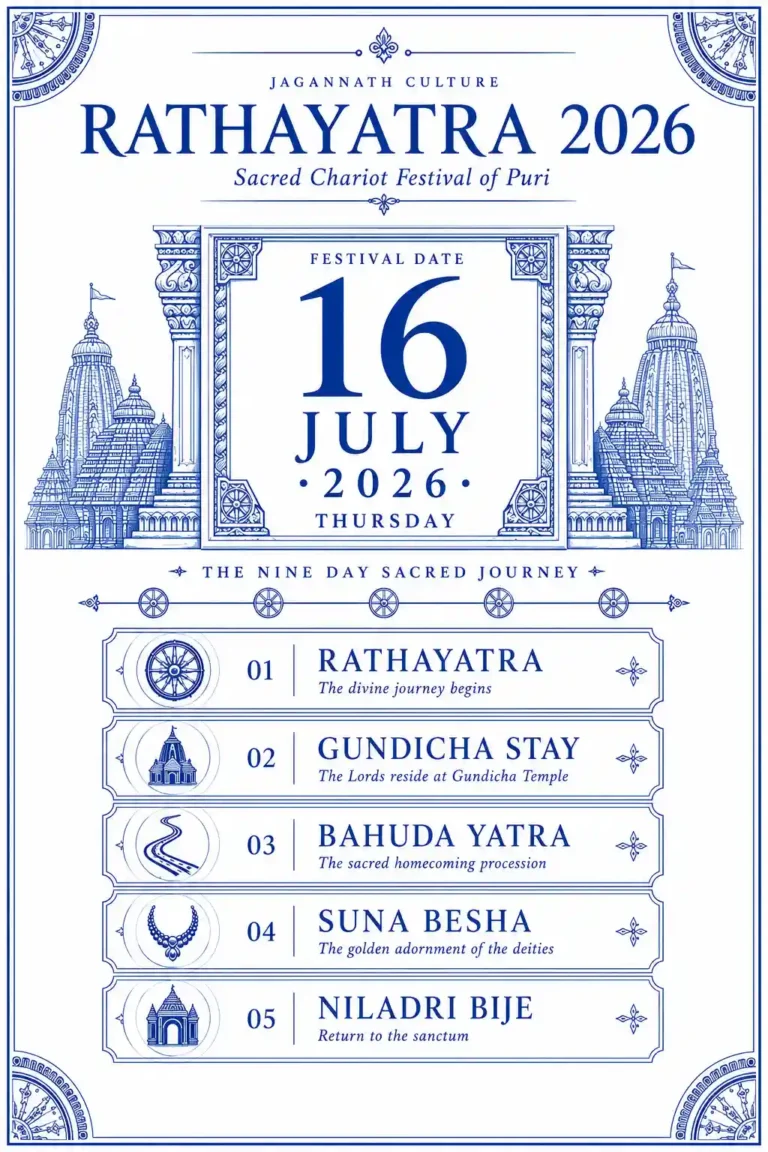
Rathayatra Puri 2026 Date
Rathayatra 2026 Date
The grand Puri Rathayatra 2026 is to be celebrated on:
Thursday, 16 July 2026
The nine-day festival includes:
Rathayatra
Gundicha stay
Bahuda Yatra
Suna Besha
Niladri Bije
Each ritual carries deep spiritual meaning within Jagannath culture.
What is Rathayatra?
The word:
“Ratha” means chariot
and
“Yatra” means journey.
Thus, Rathayatra literally means:
“The Chariot Journey.”
During this festival:
Lord Jagannath
Lord Balabhadra
Devi Subhadra
travel from the Jagannath Temple to the Gundicha Temple on gigantic wooden chariots.
The journey symbolizes:
Divine compassion
The Lord visiting His birthplace
Accessibility of God to all humanity
The soul’s spiritual journey toward liberation.
Why Jagannath Rathayatra Is Different from Other Festivals
One of the most remarkable aspects of Jagannath Rathayatra is that:
The Lord Himself comes out among devotees.
Since non-Hindus traditionally cannot enter the Jagannath Temple, Rathayatra becomes:
A public darshan for everyone
People from:
India
Europe
America
Japan
Russia
Africa
gather together to witness this extraordinary festival.
Thus, Rathayatra represents:
Universal brotherhood and inclusiveness.
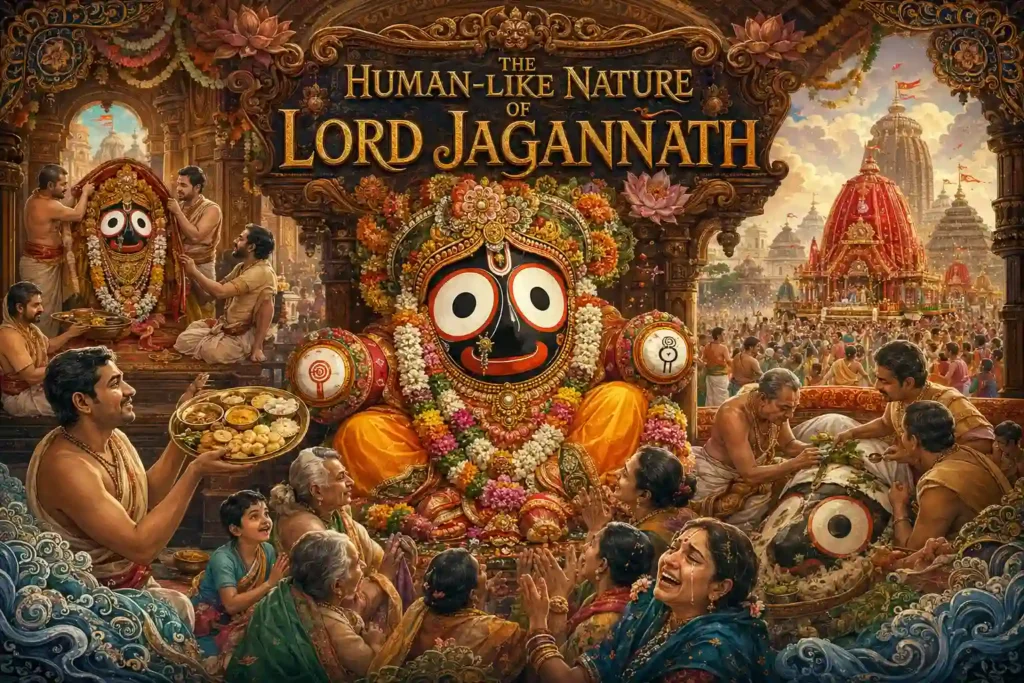
The Human-Like Nature of Lord Jagannath
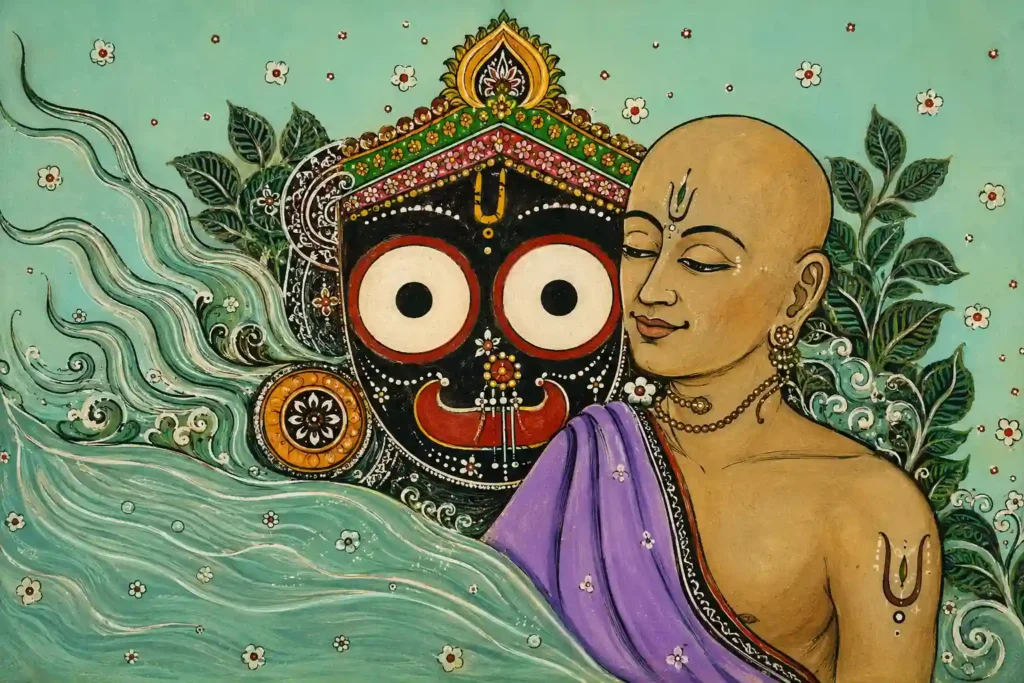
Lord Jagannath is worshipped in a deeply humanized form.
He:
Eats food
Sleeps
Falls ill
Travels
Changes clothes
Experiences emotions
This intimate human connection makes Jagannath devotion emotionally powerful.
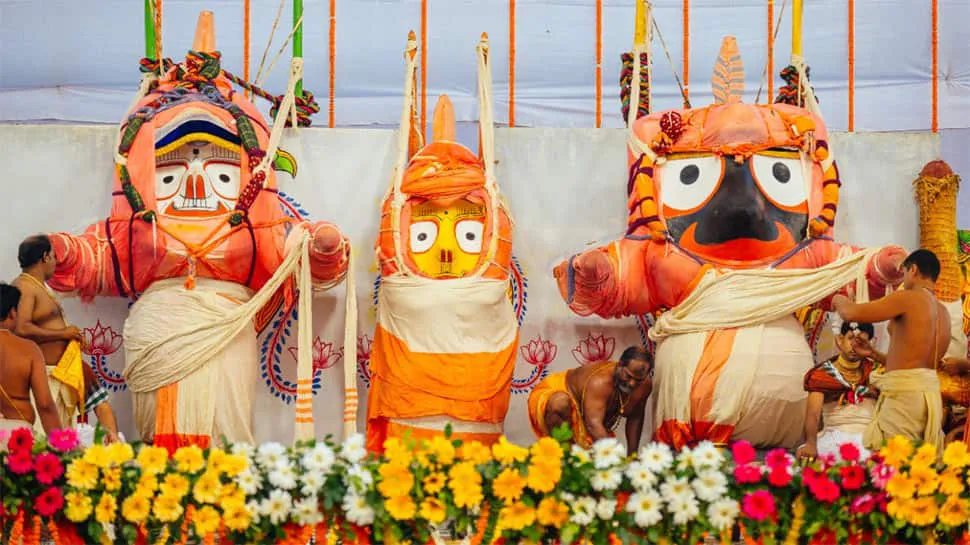
Why the Lord Falls Sick Before Rathayatra
Before Rathayatra begins, the deities participate in:
Snana Purnima
During this ritual:
The deities receive a grand ceremonial bath with 108 pots of sacred water.
After the ritual:
Lord Jagannath falls ill with fever
The deities remain in isolation for 14 days
This sacred period is called:
Anasara
The Lords receive Ayurvedic treatment before reappearing for Rathayatra.
History of Rathayatra
The history of Rathayatra stretches back many centuries and combines:
Mythology
Scriptures
Temple traditions
Historical records
Mention in Ancient Scriptures
Several ancient Hindu texts mention Rathayatra, including:
Niladri Mahodaya
Skanda Purana
Brahma Purana
Kapila Samhita
Vamadeva Samhita
According to the Niladri Mahodaya:
Lord Jagannath Himself instructed King Indradyumna regarding the annual chariot festival.
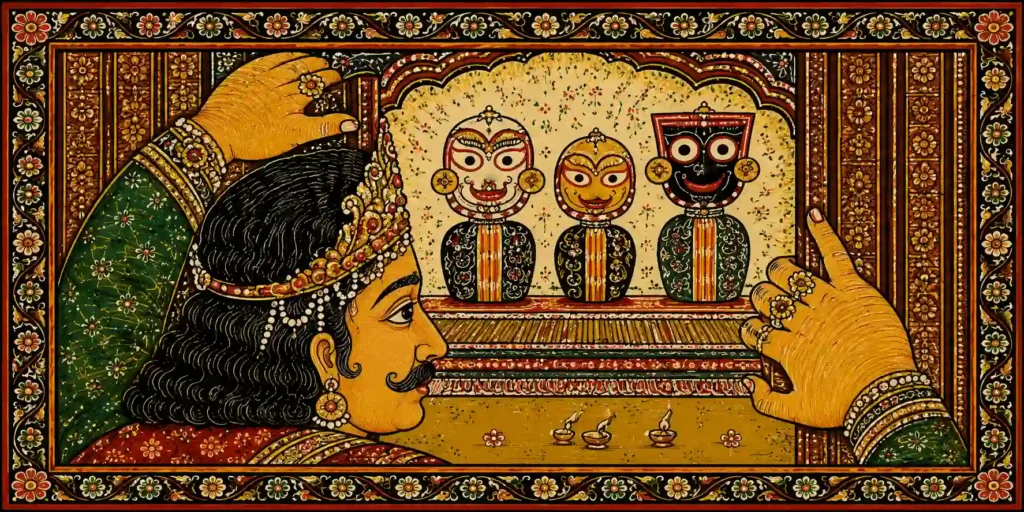
The Role of King Indradyumna
According to tradition:
King Indradyumna invited Lord Brahma to consecrate the deities.
Before installation:
The wooden idols explained their rituals and traditions.
These divine instructions continue to guide the rituals of the Jagannath Temple even today.
Gundicha Temple as the Birthplace of the Lord
A popular belief states that:
Gundicha Temple is the Janmabedi (birthplace) of Lord Jagannath.
Thus, every year:
The Lord returns to His birthplace during Rathayatra.
This journey carries a beautiful emotional message:
“Never forget your mother and motherland.”
Historical Evidence of Rathayatra
Historical records indicate that Rathayatra existed for centuries.
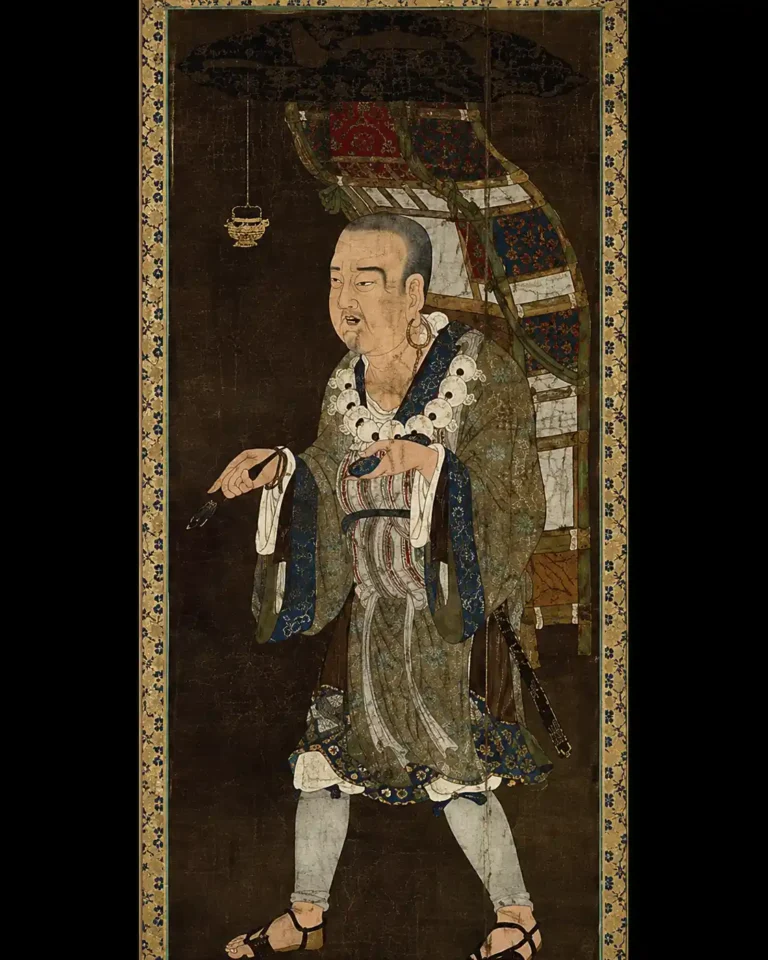
Hiuen Tsang’s References
Chinese traveler:
Xuanzang
mentioned similar chariot festivals during his Indian travels.
Medieval and Colonial Accounts
European travelers also documented:
Massive crowds
Giant chariots
Extraordinary devotional atmosphere in Puri.
Historian Hermann Kulke suggested that the festival developed prominently during:
Somavamsi or Ganga dynasty rule around the 11th century.
Rathayatra Surviving Invasions
According to the Madala Panji:
Rathayatra survived multiple invasions.
During one attack by:
Keshodas Maru
the chariots near Gundicha Temple were reportedly burned.
Yet the tradition revived repeatedly through:
Kings
Temple servitors
Devotees
This resilience reflects Odisha’s spiritual strength.
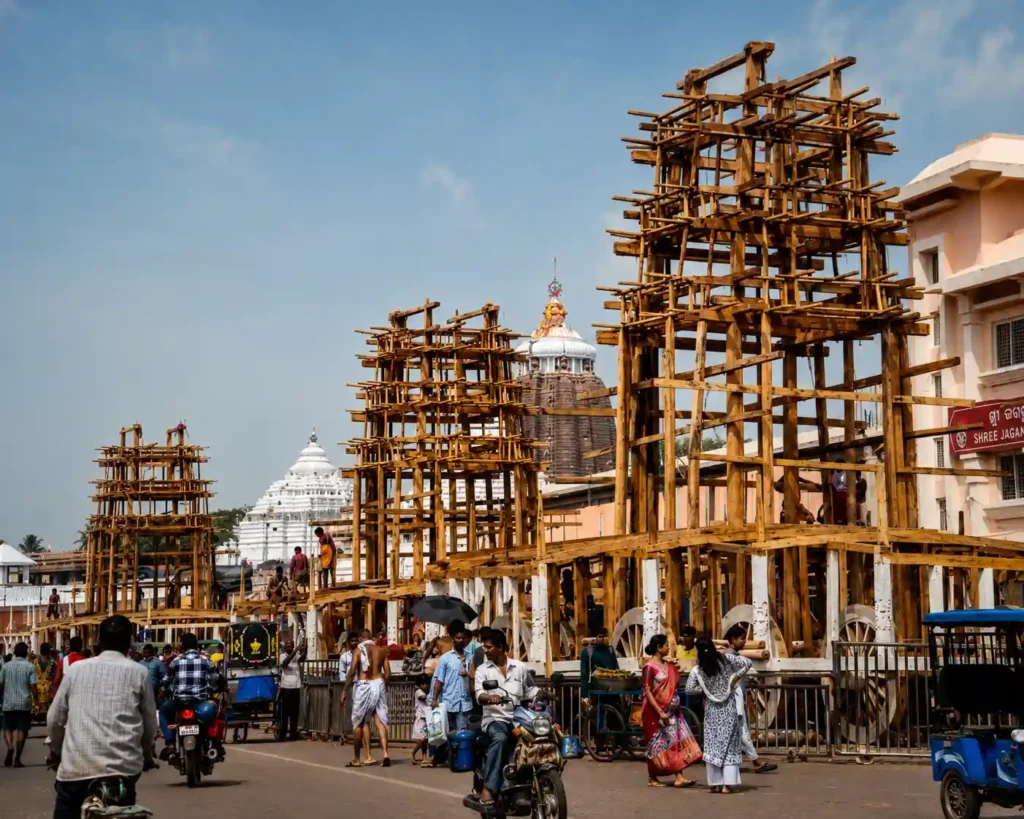
Construction of the Chariots
The preparation for Rathayatra begins months before the festival.
Sacred Wood Collection
During:
Saraswati Puja
special logs arrive from forests of:
Nayagarh
Khandapada
Khordha
These sacred woods are selected ritually.
Akshaya Tritiya and Rathakhala
Construction formally begins on:
Akshaya Tritiya
at:
Rathakhala
near the palace of Gajapati in Puri, on the Grand road, in the guidance of the Goddess Charchika.
Traditional Vishwakarma servitors build the massive chariots entirely by hand every year.
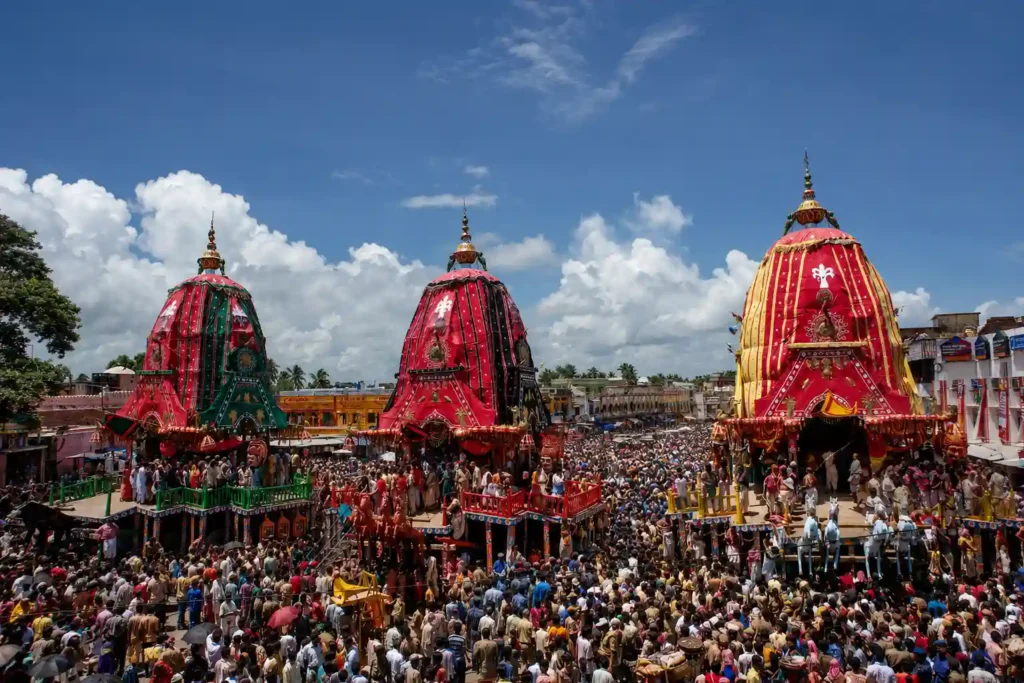
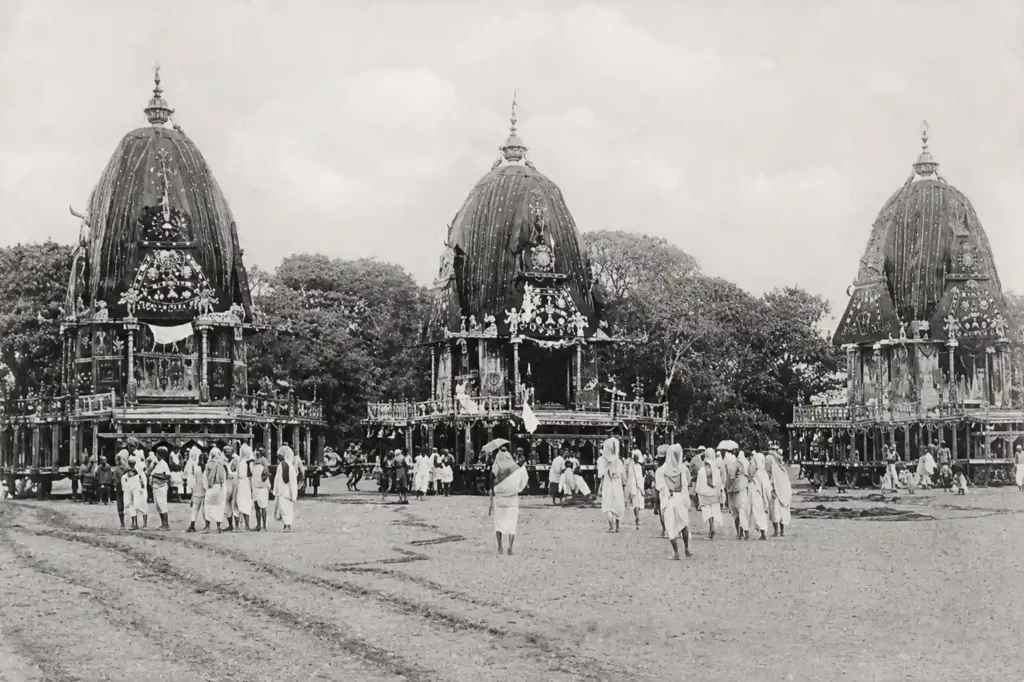
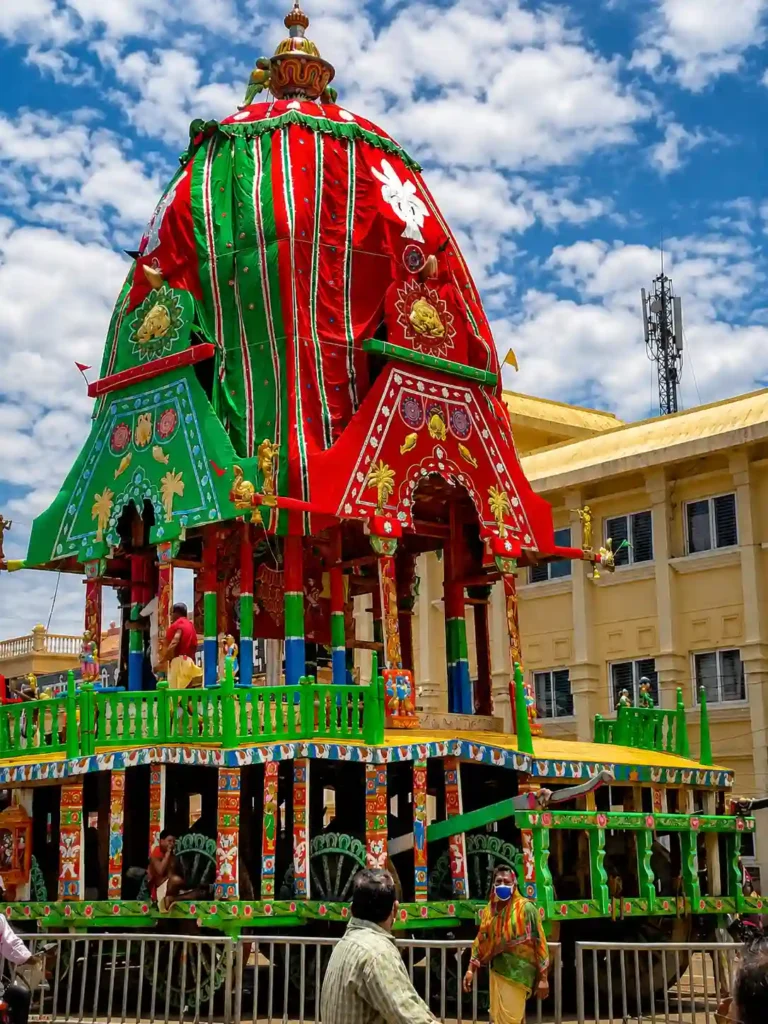
The Three Chariots of Rathayatra
Taladhwaja – Chariot of Lord Balabhadra
Features:
Height: Around 43 feet
Wheels: 14
Colours: Green and red
The sacred rope:
Vasuki Naga
Four black horses pull the chariot.
Darpadalana – Chariot of Devi Subhadra
Features:
Height: Around 42 feet
Wheels: 12
Colours: Red and black
Guardian deity:
Banadurga
Arjuna serves symbolically as the charioteer.
Nandighosha – Chariot of Lord Jagannath
Features:
Height: Around 45 feet
Wheels: 16
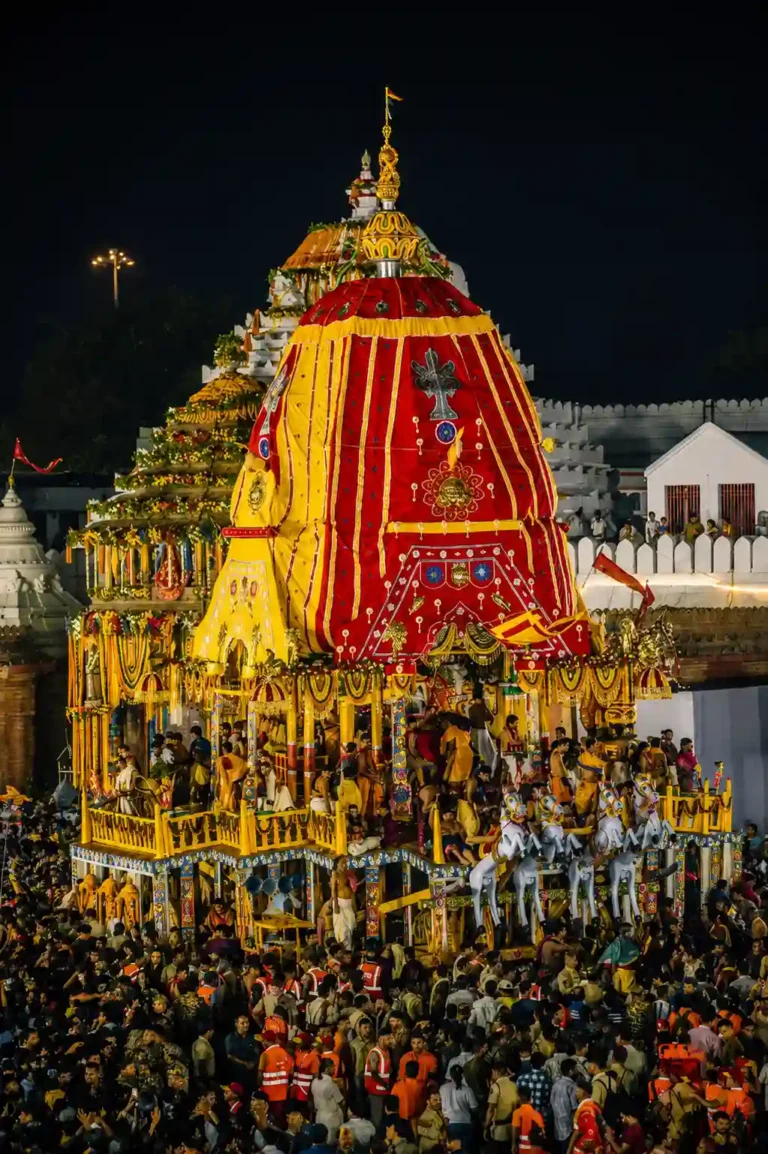
Colours: Yellow and red
Four white horses:
Shankha
Balahaka
Shweta
Haridashwa
pull the grand chariot.
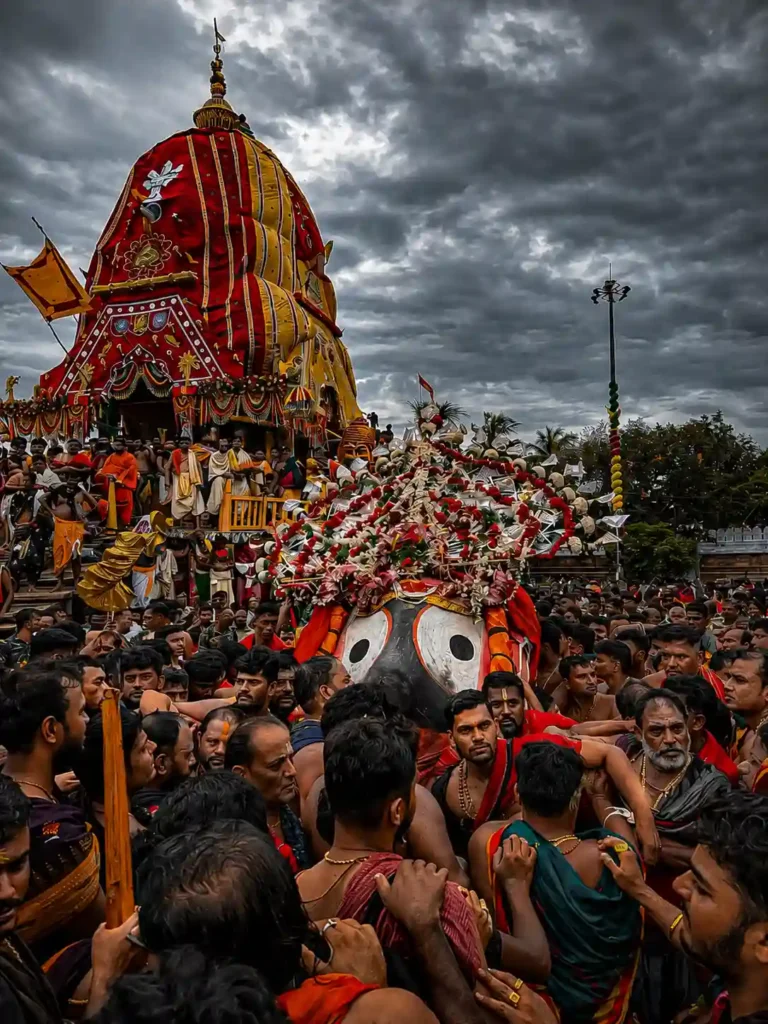
Pahandi Bije: The Most Emotional Ritual
One of the most unforgettable moments of Rathayatra is:
Pahandi
During this ritual:
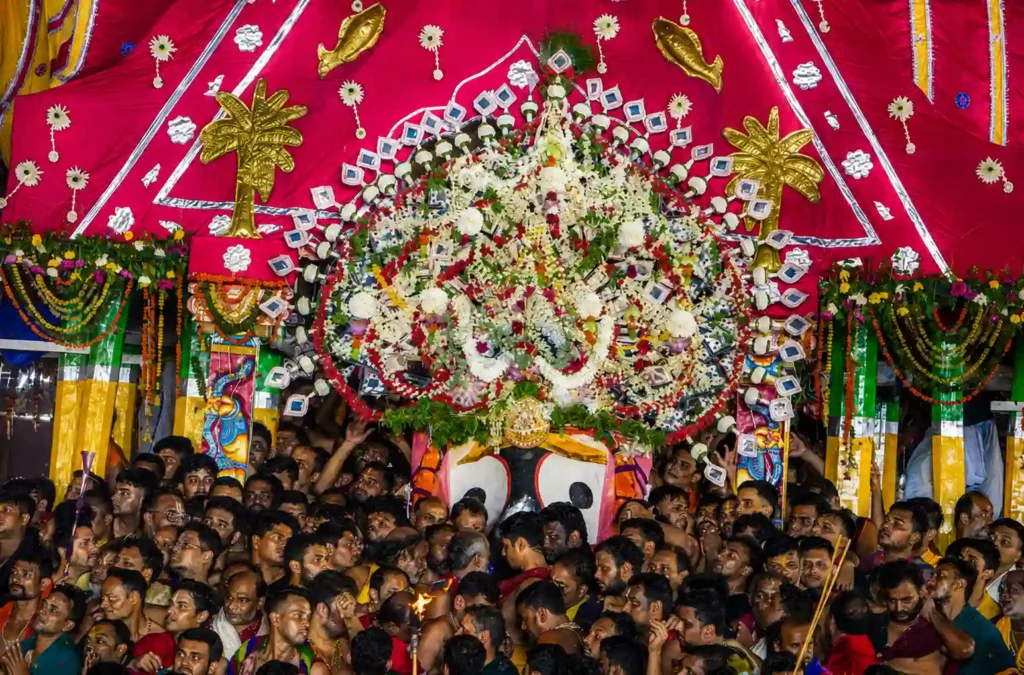
The deities emerge from the temple sanctum rhythmically.
The atmosphere becomes overwhelming with:
Drums
Bells
Chanting
Conches
As Lord Jagannath’s large divine eyes appear before devotees, many become emotional instantly.
The moment feels spiritually transformative.
Chhera Pahanra Ritual
During:
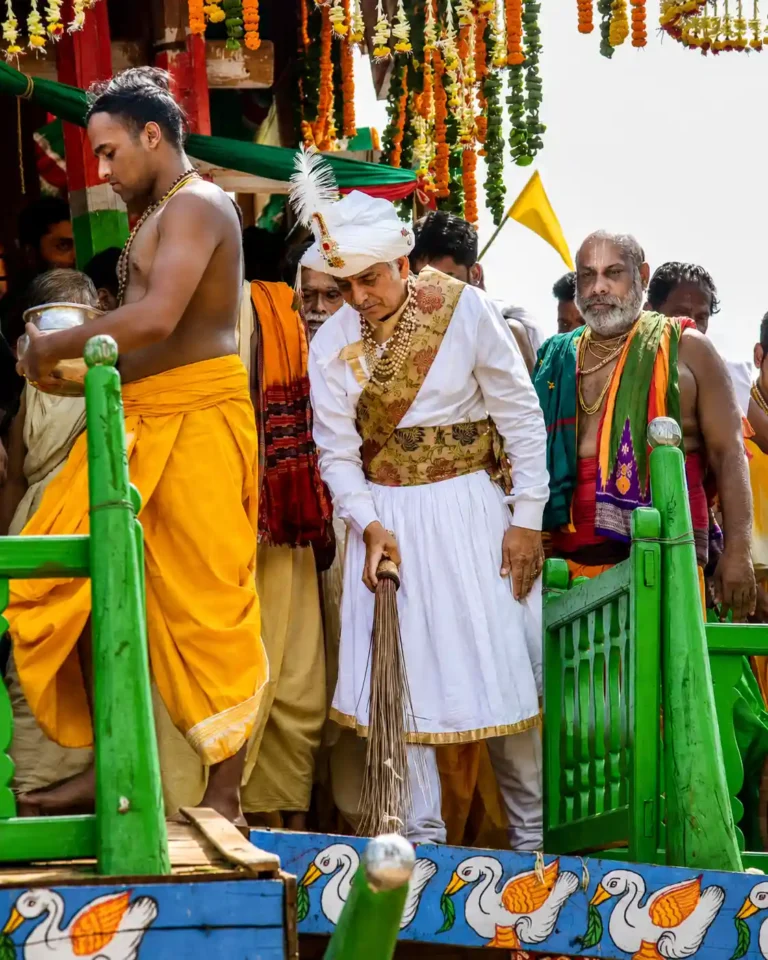
Chhera Pahanra
the Gajapati King of Puri sweeps the chariots with a golden broom.
This ritual teaches:
Before Lord Jagannath, everyone is equal.
Even the king becomes a servant.
Stories That Define Jagannath’s Compassion
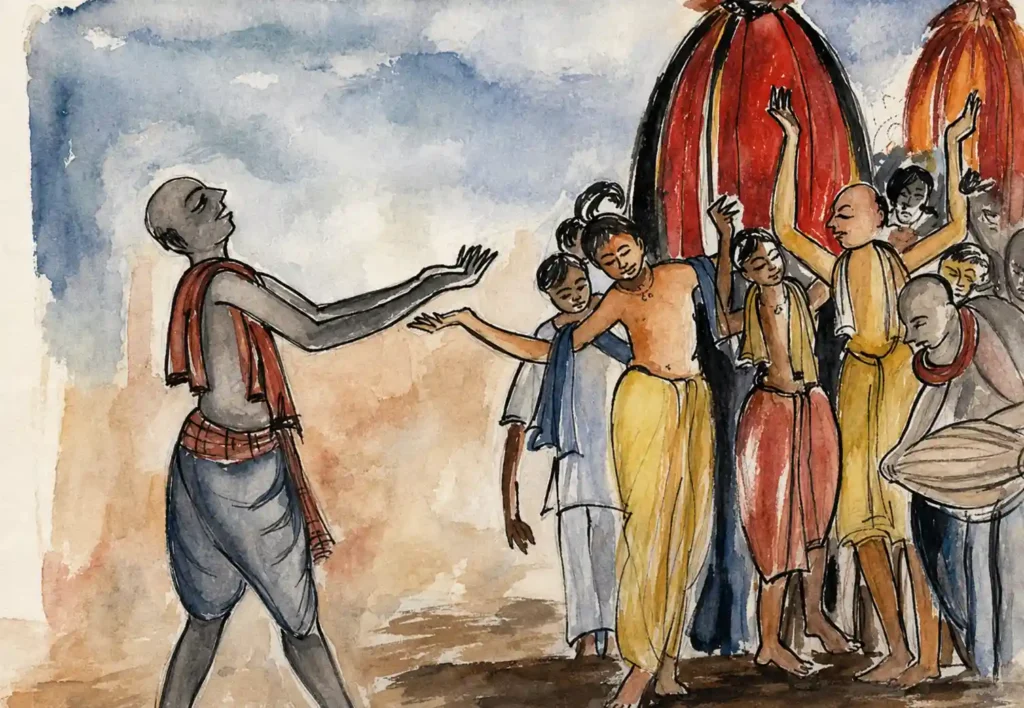
Salabega and the Halted Chariot
(The Muslim devotee loved by Jagannath)
One of the most emotional legends involves:
Salabega
According to tradition:
Lord Jagannath stopped His chariot for Salabega’s darshan.
Even today:
The chariot pauses near Salabega’s samadhi during Rathayatra.
Balaram Das and Divine Acceptance
Poet:
Balaram Das
faced social rejection.
Yet Lord Jagannath accepted his devotion wholeheartedly.
These stories establish:
Jagannath belongs to everyone.
My Personal Experience at Rathayatra
I still remember my first Rathayatra in Puri.
The city felt alive before sunrise.
People occupied rooftops, roads, balconies, and every visible corner of the Grand Road.
Then suddenly:
Temple bells rang loudly
Drums thundered
Devotees shouted “Jai Jagannath!”
And Lord Jagannath emerged.
For a few moments:
The crowd cried
Some folded hands silently
Others danced uncontrollably
While touching the rope of Nandighosha, I felt an emotional connection impossible to explain fully.
What moved me most was the equality.
Nobody cared who stood beside them.
Everyone simply became:
A devotee of Jagannath.
Travel Guide for Rathayatra Puri 2026
How to Reach Puri
Train
Puri Railway Station connects major Indian cities.
Air
Nearest airport:
Biju Patnaik International Airport
Distance:
Approximately 60 km
By Road
Excellent road connectivity from:
Bhubaneswar
Konark
Cuttack
Important Tips for Visitors
Book hotels several months early
Wear light cotton clothing
Carry drinking water
Follow police instructions
Avoid overcrowded areas
Reach viewing spots early morning
People Also Ask (FAQs)
1. What is the Rathayatra Puri 2026 date?
Rathayatra 2026 is expected on 16 July 2026.
2. Why is Jagannath Rathayatra famous?
It is famous because Lord Jagannath comes out publicly to bless all devotees equally.
3. What is the history of Rathayatra?
The festival is mentioned in ancient scriptures like Niladri Mahodaya and has been celebrated for centuries.
4. What are the names of the three Rathayatra chariots?
The chariots are:
Nandighosha
Taladhwaja
Darpadalana
5. Can non-Hindus attend Rathayatra?
Yes. Everyone can witness Rathayatra from outside the temple.
Conclusion
In a world divided by identity, politics, and boundaries, Rathayatra 2026 continues teaching a timeless lesson:
Equality
Compassion
Inclusiveness
Devotion
Every year, Lord Jagannath leaves His temple not to display power,
but to embrace humanity.
That is why millions return repeatedly to Puri, not simply to witness a festival,
but to feel emotionally connected with something divine.
So if you truly wish to experience:
Odisha’s spiritual heartbeat
India’s living heritage
And one of the world’s greatest religious gatherings
then witness Puri Rathayatra at least once in your lifetime.
Stand before the giant chariots.
Listen to the chants.
Touch the sacred ropes.
Feel the devotion around you.
And perhaps, somewhere amidst the ocean of humanity,
you too will feel Lord Jagannath smiling directly at your soul.