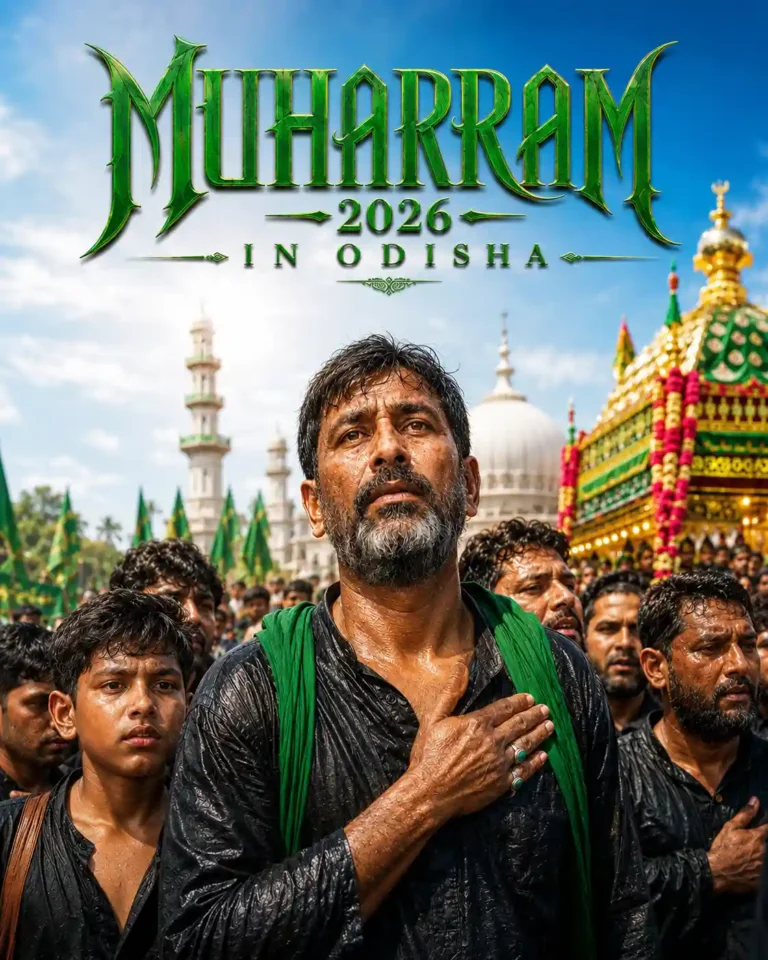
As the Islamic New Year quietly begins under the sighting of the crescent moon, a deep atmosphere of reflection and mourning spreads across Muslim communities throughout India. Unlike festive celebrations marked by loud joy, Muharram 2026 arrives with solemn prayers, emotional remembrance, and spiritual introspection. Across Odisha, especially in cities like Bhadrak and Cuttack, Muharram transforms streets into moving symbols of sacrifice, devotion, and communal harmony.
For many Indians, Muharram is not simply a religious observance. Instead, it is a living reminder of the timeless battle between truth and tyranny. The martyrdom of Imam Hussain at Karbala continues to inspire millions across generations, religions, and cultures.Table of Contents
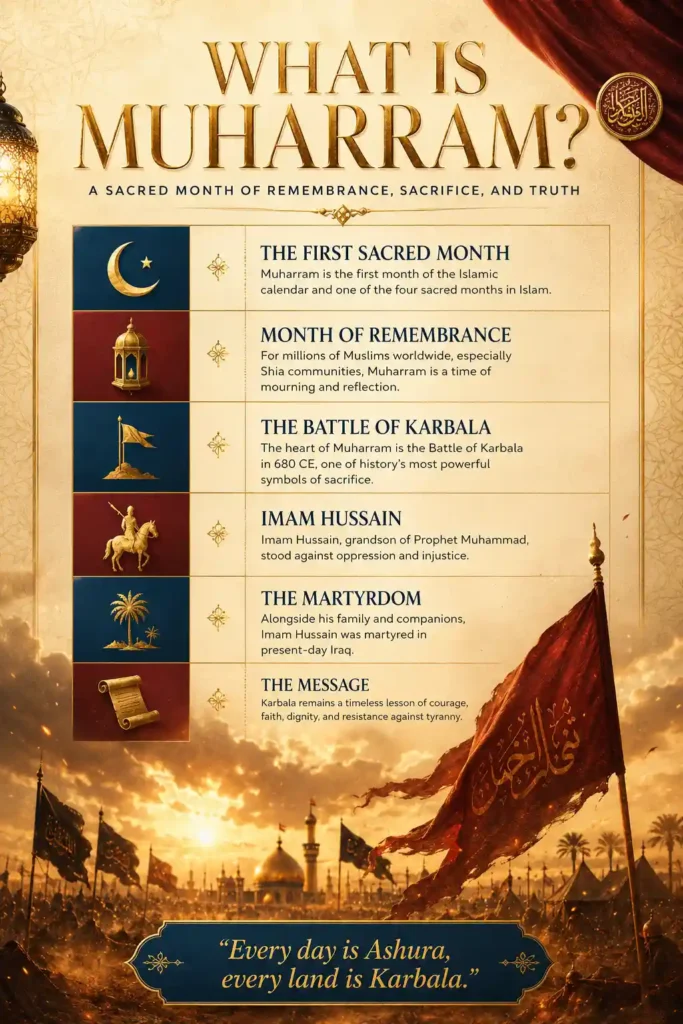
What is Muharram?
Muharram is the:
- First month of the Islamic calendar
- One of the four sacred months in Islam
However, for Muslims worldwide, especially Shia communities, Muharram is primarily associated with mourning and remembrance.
The central focus of Muharram is:
The Battle of Karbala (680 CE)
This tragic event took place in present-day Iraq, where:
- Imam Hussain, the grandson of Prophet Muhammad
- Along with his family and companions
Why Imam Hussain’s Sacrifice Matters
Imam Hussain refused to surrender before tyranny despite overwhelming odds.
At Karbala:
- Water was denied for days
- Children suffered extreme thirst
- The small caravan faced a massive army
Yet Hussain chose sacrifice over compromise.
Therefore, Muharram symbolizes:
- Justice
- Courage
- Patience
- Faith
- Resistance against oppression
Muharram 2026 Dates
Expected Muharram 2026 Dates
- Beginning of Muharram: Around 16 June 2026
- Ashura (10th Muharram): Around 26 June 2026
Dates may vary slightly depending on moon sighting.
The first ten days remain the most spiritually intense period of mourning.Indian Muharram: A Unique Cultural Experience
The observance of Indian Muharram carries a distinctive cultural identity.
While the spiritual core remains centred on Karbala, regional traditions add local flavours to the rituals.
The Tradition of Tazia
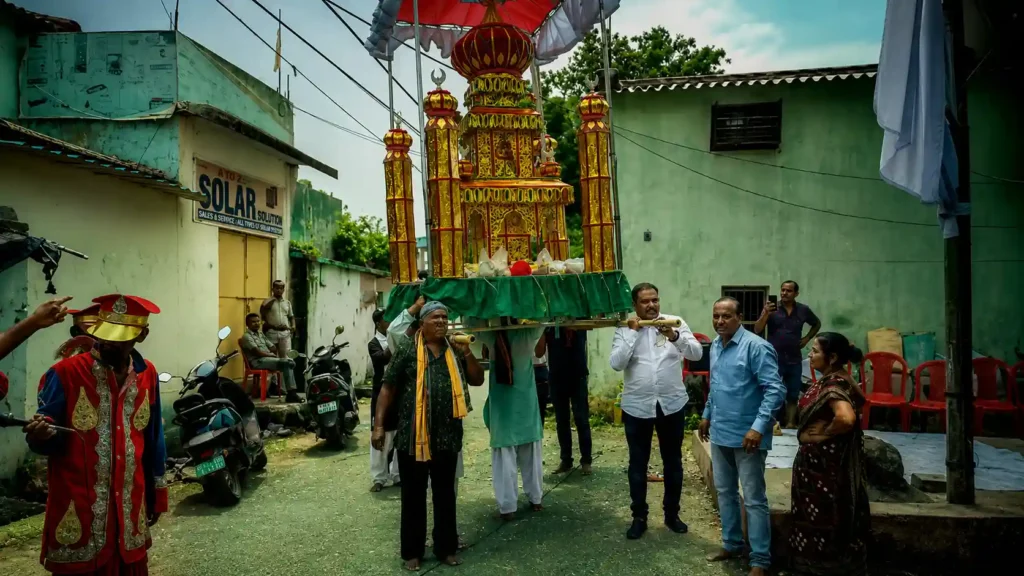
One of the most striking features of Muharram in India is the Tazia.
Tazias are:
- Decorative replicas of Imam Hussain’s mausoleum at Karbala
- Built using bamboo, paper, foil, lights, and craftsmanship
Artisans often spend months creating these elaborate structures.
Some Tazias become:
- Multi-storied
- Highly artistic
- Architecturally detailed
Muharram Procession: The Heart of Ashura
The Muharram procession or “Juloos” forms the emotional centre of Ashura observance.
During the procession:
- Devotees carry Tazias
- Alam (sacred standards) are displayed
- Elegies are recited
- Matam (ritual mourning) takes place
The streets echo with:
“Ya Hussain!”
These processions symbolize:
- Grief
- Loyalty
- Spiritual remembrance
Muharram in Odisha
The tradition of Muharram in Odisha beautifully reflects the state’s long-standing culture of communal harmony.
Unlike many places where festivals remain community-specific, Muharram in Odisha often sees participation and respect from:
- Hindus
- Muslims
- Local communities
- Social organizations
This spirit of unity has roots in:
- Odisha’s Sufi traditions
- Shared neighbourhood culture
- Historical coexistence
The Role of “Maula” Culture in Odisha
In many parts of Odisha:
- Imam Hussain is affectionately remembered as “Maula”
- Muharram rituals become emotionally localized
People gather for:
- Mourning assemblies
- Public prayers
- Community meals
- Water distribution camps
Muharram Bhadrak: Odisha’s Grandest Muharram Celebration
When discussing Muharram Bhadrak, one immediately thinks of:
- Massive Tazias
- Enormous processions
- Extraordinary crowd participation
Bhadrak hosts one of the most prominent Muharram celebrations in Eastern India.
The Famous Tazia Competition of Bhadrak
Different “Sahis” or local neighborhoods compete to create:
- Taller Tazias
- More artistic structures
- Better illumination designs
As Ashura approaches:
- Streets glow with lights
- Drums echo through markets
- Crowds gather in huge numbers
Peace Committees and Communal Harmony
Despite huge crowds, Muharram in Bhadrak is known for remarkable coordination.
Local:
- Peace committees
- Religious elders
- Administrative authorities
work together to maintain:
- Discipline
- Harmony
- Respectful observance
Muharram Cuttack: The Historic Soul of Karbala Observance
The millennium city of Cuttack offers one of Odisha’s oldest and most emotionally intense Muharram experiences.
With centuries-old Muslim heritage, Cuttack’s Muharram rituals carry profound historical depth.
Qadam-e-Rasool
This sacred shrine becomes the focal point of Muharram gatherings.
Processions from areas like:
- Sutahat
- Dewan Bazar
- Choudhury Bazar
converge toward Qadam-e-Rasool during Ashura.
The atmosphere becomes deeply spiritual and emotionally charged.Marsiya Tradition in Cuttack
One of the most beautiful traditions of Muharram in Cuttack is the recitation of:
Marsiya (elegiac poetry)
These Urdu and Persian elegies narrate:
- The tragedy of Karbala
- The suffering of Imam Hussain’s family
- The emotional pain of Ashura
Rituals of Muharram 2026
The first ten days of Muharram follow a deeply spiritual structure.
Wearing Black
Black symbolizes:
- Mourning
- Sacrifice
- Emotional solidarity
Most devotees avoid bright festive clothing during this period.
Sabeel: The Tradition of Free Water Distribution
Across Odisha, volunteers set up:
Sabeel stalls
These stalls distribute:
- Drinking water
- Sharbat
- Sweet beverages
Sham-e-Ghariban
After Ashura processions conclude, devotees observe:
Sham-e-Ghariban
This “Night of the Orphans” symbolizes:
The suffering of Imam Hussain’s surviving family members.
Lights are dimmed.
Elegies continue.
The mood becomes deeply sorrowful.Muharram and Odisha’s Martial Traditions
In parts of Bhadrak and coastal Odisha, Muharram processions display symbolize:
- Bravery
- Strength
- Resistance against injustice
My Personal Experience Witnessing Muharram in Odisha
A few years ago, I witnessed Muharram in Bhadrak for the first time.
What struck me most was not merely the scale of the procession.
It was the emotion.
As the Tazias moved slowly through crowded streets:
- Drums echoed rhythmically
- Black flags waved in the evening wind
- People cried openly while chanting “Ya Hussain”
Yet amidst the mourning, there was extraordinary unity.
I saw:
- Hindu shopkeepers distributing water
- Local volunteers helping crowds
- Elders calming young participants peacefully
The experience completely changed my understanding of Muharram.
It was not a display of aggression.
It was collective remembrance rooted in grief, dignity, and humanity.Tourism and Cultural Importance of Muharram in Odisha
For cultural researchers and travellers, Muharram offers:
- Historical insight
- Religious understanding
- Community interaction
- Documentary photography opportunities
However, visitors must remember:
Muharram is a mourning observance, not entertainment.
Respectful participation is essential.Travel Tips for Muharram 2026 in Odisha
Best Places to Witness Muharram
- Bhadrak
- Cuttack
Best Dates
Visit around:
24–26 June 2026
for peak Ashura processions.
Respectful Conduct
Visitors should:
- Wear modest clothing
- Avoid loud behaviour
- Respect mourning rituals
- Seek permission before close photography
People Also Ask (FAQs)
1. When is Muharram 2026?
Muharram 2026 is expected to begin around 16 June 2026, with Ashura on 26 June 2026.
2. Why is Muharram important?
Muharram commemorates the martyrdom of Imam Hussain at the Battle of Karbala.
3. What is a Tazia in Muharram?
A Tazia is a symbolic replica of Imam Hussain’s mausoleum carried during processions.
4. Which places are famous for Muharram in Odisha?
Bhadrak and Cuttack are especially famous for Muharram processions.
5. Can non-Muslims witness Muharram processions?
Yes, respectful public participation and observation are common in India.Final Thoughts: The Timeless Message of Muharram 2026
The story of Karbala is more than history.
It is a timeless reminder that:
- Truth demands courage
- Faith requires sacrifice
- Humanity must stand against oppression
Whether you witness the towering Tazias of Bhadrak or the emotional Marsiya gatherings of Cuttack, Muharram 2026 in Odisha leaves a profound emotional impact.
As the final processions fade into the night and the chants of “Ya Hussain” slowly quieten, one truth continues to echo across generations:
The sacrifice of Imam Hussain was not for one community alone—it was for humanity itself.
If you wish to understand Odisha beyond temples and monuments, witnessing Muharram with respect and empathy offers one of the most meaningful cultural experiences imaginable.
Ya Hussain!
Peace, harmony, and humanity prevail forever.Trending Posts