
Table of Contents
A Sacred Jewel within Jagannath Dham
Why Maa Bimala is Worshipped Here
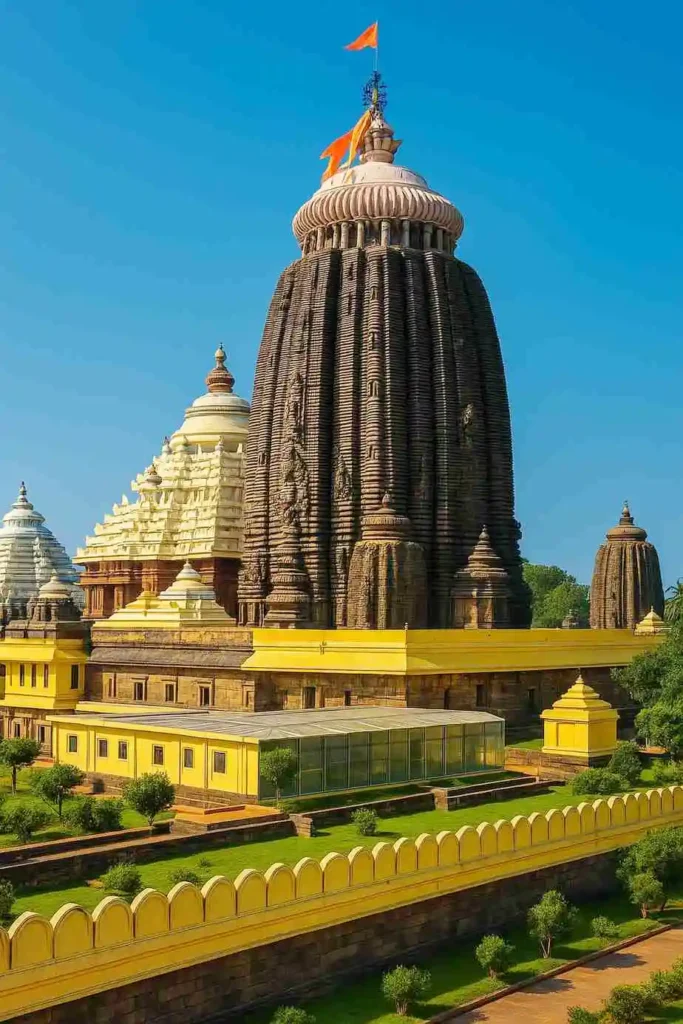
According to ancient Hindu mythology, after Goddess Sati’s self-immolation during Daksha Yajna, Lord Shiva, overwhelmed with grief, carried her body while performing the cosmic Tandava dance. To restore balance, Lord Vishnu used his Sudarshan Chakra to cut her body into 51 pieces, and each place where a part fell became a Shakti Peetha. Specifically, devotees believe Puri to be the sacred spot where Sati’s feet fell, thus establishing Bimala Peetha as one of Odisha’s four Adi Shakti Peethas, also known as Padapitha (the sacred place of the pious feet). For example, this mythological significance elevates its status in tantric and devotional traditions.
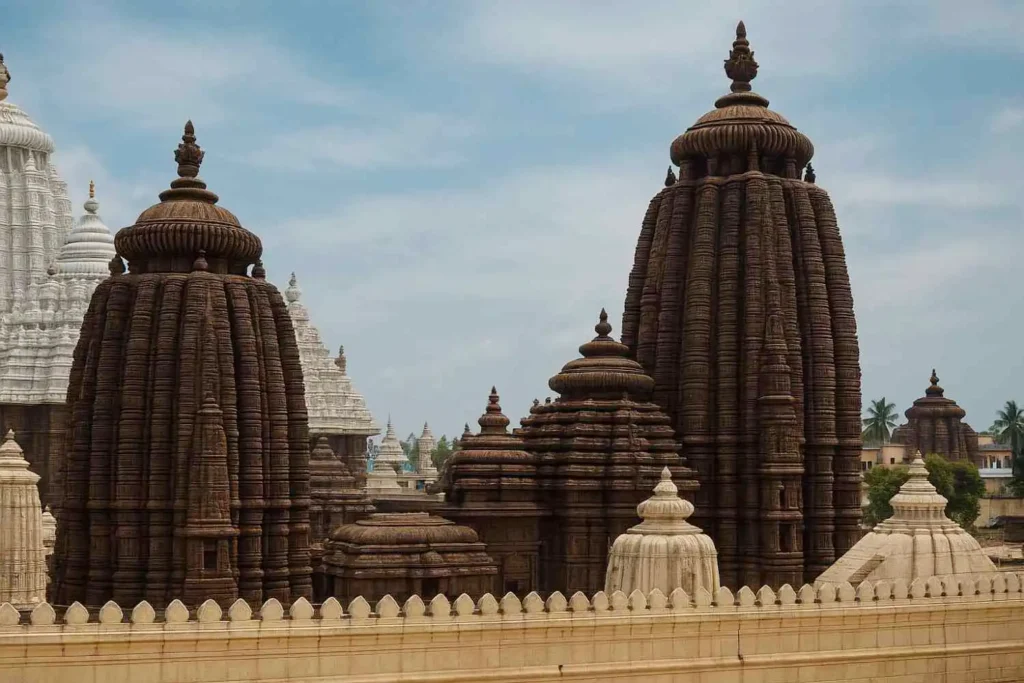
Moreover, in ancient times, Puri served as a prominent tantric center, consequently attracting spiritual seekers from across India. In addition, texts like the Skanda Purana highlight Bimala’s role as a supreme goddess, therefore making her worship integral to Puri’s spiritual identity.Older than the Jagannath Temple
Architectural Grandeur – A Kalinga Style Marvel
A Unique Spiritual Tradition – Durga Madhava Worship
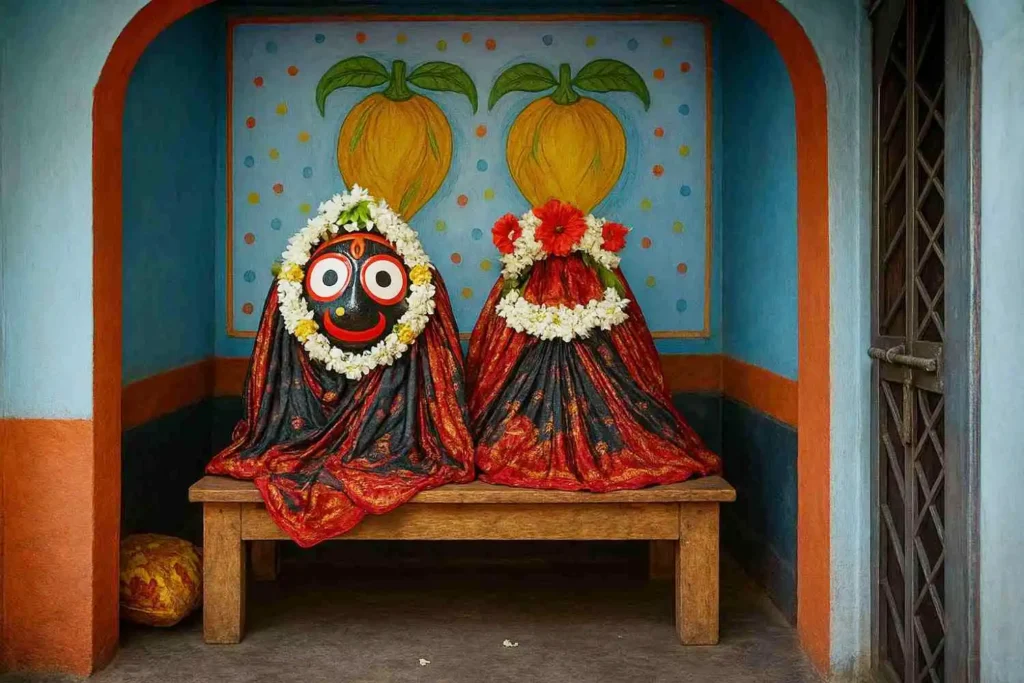
One of Puri’s most fascinating rituals is the Durga Madhava Puja, which blends Shakta and Vaishnava worship. Specifically, it begins on Ashwin Shukla Ashtami (Mula Ashtami). During this ritual, Maa Bimala, worshipped as Durga, is ceremonially brought to meet Lord Jagannath in his Madhava form. For example, the idols are placed together on the Ratna Simhasana, thus symbolizing the union of Shakti and Vishnu. Then, in a grand procession, they are taken to the Narayani Temple in Dolamandap Lane, also known as Shakta Gundicha, which depicts the journey of Bhairava (Jagannath) and Bhairavi (Bimala).
Moreover, high-ranked Brahmin families, established by historical kings, perform unique rituals during this period. For instance, no women are allowed inside the shrine during these 16 days, because the goddess is worshipped in her fierce form. Therefore, this tradition, deeply rooted in tantric recognition, is rare in Hindu practices, consequently showcasing Puri’s spiritual unity. In addition, it continues for 16 continuous days, thus making it a remarkable ritual.Major Festivals – Best Time to Witness the Temple’s Glory
The temple comes alive during festivals, each of which actively enhances its spiritual vibrancy. First, devotees celebrate Durga Puja/Shola Puja for 16 days, unlike the usual 9. For example, priests perform tantric rituals, prepare special bhogs (including non-vegetarian offerings on Maha Saptami, Maha Ashtami, and Maha Navami before Dasahara), and arrange grand decorations. Moreover, they adorn Maa Bimala as Mahishasuramardini, thus attracting thousands of devotees. However, authorities restrict women’s entry during the Puja, because the goddess is worshipped in her fierce form. In addition, devotees worship Goddess Kakudikhai, representing Bimala at the southeast corner of Srimandir, in her earthen idol during the three-day Durga Puja.
Second, they celebrate Chaitra Purnima as a vibrant spring festival, specifically marked by processions and devotional music. Therefore, visiting during these festivals offers an immersive experience, for instance, with Odia bhajans and folk dances. Consequently, these events showcase the temple’s unique Shakta-Vaishnava traditions.Rituals & Beliefs – Why Pilgrims Seek Bimala’s Blessings
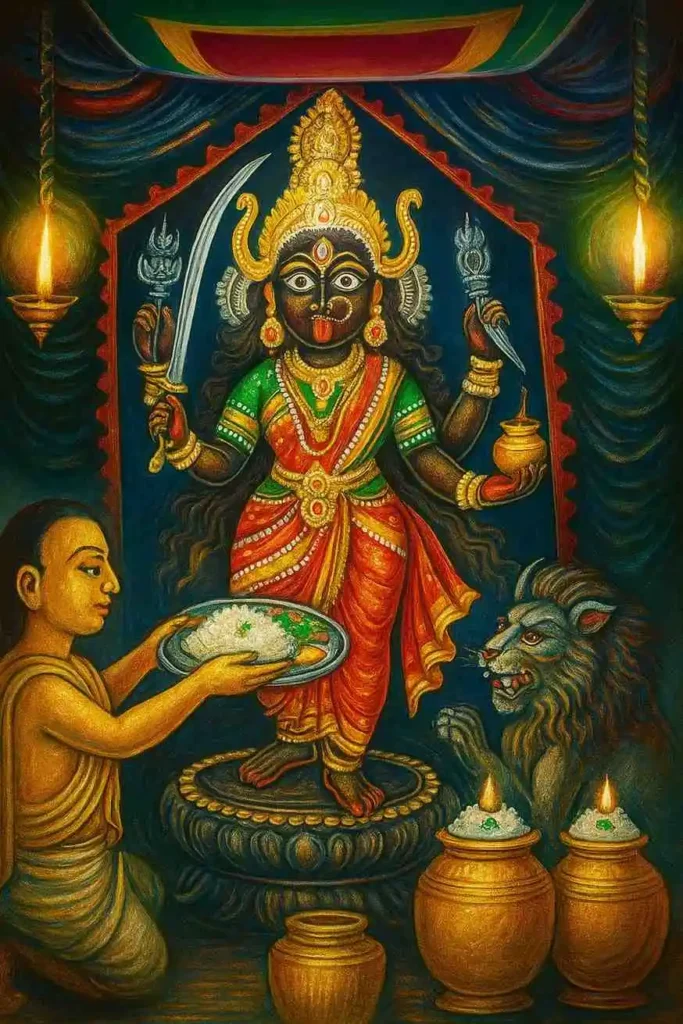
- Morning Aarti with Vedic chants
- Bhog offerings of rice, lentils, sweets, and during Durga Puja, special non-vegetarian preparations
- Evening prayers with lamps and devotional music
How to Reach Bimala Devi Temple
- By Air: The nearest airport is Biju Patnaik International Airport, Bhubaneswar (60 km, 1.5 hours via NH 316). For example, taxis (Rs. 1,000–1,500) or buses are available.
- By Train: Puri Railway Station is just 2 km away, thus connecting to cities like Delhi and Kolkata. Moreover, auto-rickshaws (Rs. 50–100) offer easy access.
- By Road: Puri is well-connected via NH 316 from Bhubaneswar and Cuttack. Therefore, buses and taxis are frequent.
Travel Tips for Pilgrims
- Timings: 5 AM–11 PM, aligned with Jagannath Temple hours. Therefore, arrive early for darshan.
- Dress Code: Wear modest clothing; for instance, cover shoulders and knees, and avoid leather items.
- Entry: Only Hindus are allowed, as per Jagannath Temple rules.
- Best Time: October–March for pleasant weather and festivals. For example, Navratri offers vibrant experiences.
- Budget: A 2-day trip from Bhubaneswar costs Rs. 3,000–6,000 per person, thus plan accordingly.
- Essentials: Carry water, sunscreen, and a camera, although no photography is allowed inside the sanctum.
Nearby Attractions
- Jagannath Temple: A UNESCO-recognized spiritual hub. For instance, it’s the heart of Vaishnava worship. Additionally, it draws millions of devotees annually.
- Puri Beach: Famous for golden sands and sunrise views. Moreover, it’s ideal for serene walks. Similarly, it offers vibrant local markets nearby.
- Konark Sun Temple: A UNESCO World Heritage Site, 35 km away. Thus, it showcases stunning architecture. In addition, its intricate stone carvings narrate ancient legends.
- Chilika Lake: Asia’s largest brackish lagoon, 50 km away. For example, perfect for birdwatching. Furthermore, it is home to the rare Irrawaddy dolphins.
People Also Ask
Q1. Where is Bimala Devi Temple located?
Q2. Why is it important?
Q3. Can non-Hindus enter?
Q4. What is special about its offerings?
Q5. Best time to visit?
A Living Symbol of Spiritual Unity
The Bimala Devi Temple stands as more than a Shakti Peetha; for instance, it actively demonstrates how diverse traditions coexist in harmony. Specifically, the fierce yet compassionate goddess presides at the heart of Jagannath Dham, thus blessing every devotee who seeks her grace. If you plan a pilgrimage to Puri, then complete your journey with Maa Bimala’s darshan—only then does your yatra reach true fulfillment.
Therefore, plan your visit today, and experience the rare blend of Shakta power and Vaishnava devotion that defines Puri’s spiritual landscape. Moreover, immerse yourself in its vibrant rituals, for example, during Shakta Gundicha, consequently deepening your spiritual connection.