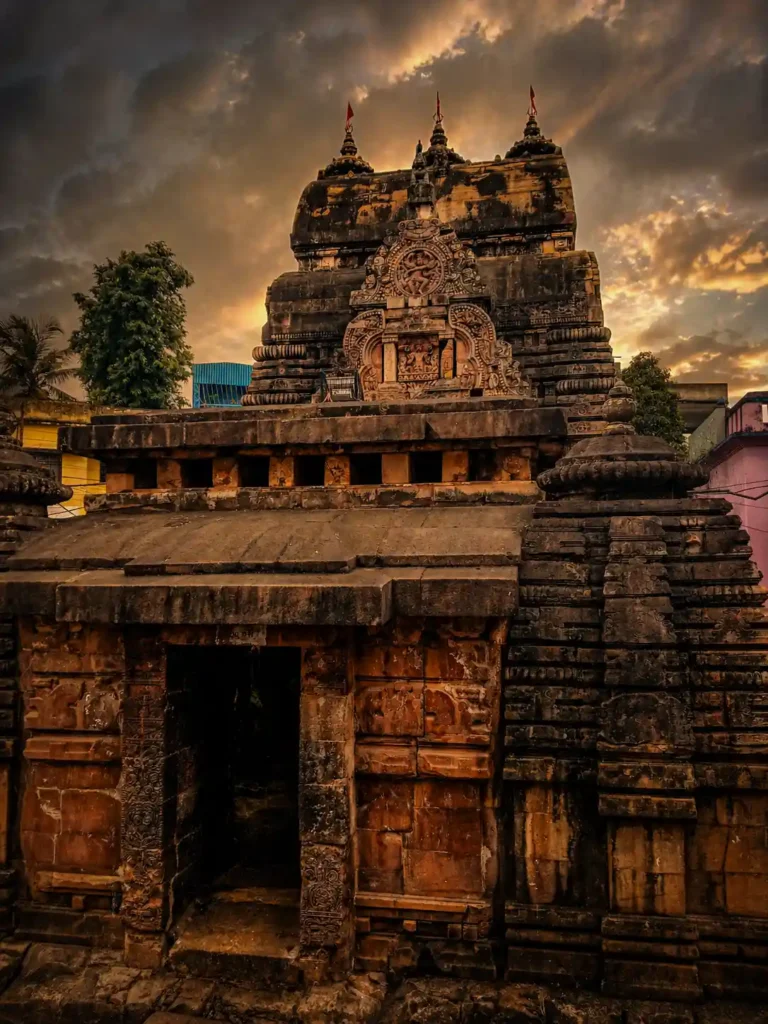
Among the many magnificent temples of Bhubaneswar, one shrine stands apart—not because of towering grandeur, but because of its mystery, unusual architecture, and deeply spiritual aura. That monument is the Baitala Temple, one of the most intriguing sacred sites in Odisha.
Located in the heart of Old Town Bhubaneswar, the Baitala Temple is unlike any other temple in the city. While most Odishan temples follow the classic curvilinear spire design, this shrine breaks convention with its distinctive semi-cylindrical roof and fierce tantric iconography. As a result, it immediately captures the curiosity of every traveller, historian, and devotee who encounters it.
More importantly, the temple is not merely an architectural marvel, it is a profound symbol of Odisha’s tantric traditions, medieval artistry, and spiritual diversity. :contentReference[oaicite:0]{index=0}Table of Contents
Historical Background of Baitala Temple
The Baitala Temple dates back to the 8th century CE, making it one of the oldest surviving temples in Bhubaneswar. It was constructed during the reign of Queen Tribhuvana Mahadevi of the Bhauma-Kara dynasty, a royal lineage known for encouraging tantric worship and supporting diverse spiritual traditions in Odisha.
This period was marked by intense religious experimentation and the flourishing of esoteric forms of worship, particularly Tantric Shaktism. Therefore, Baitala Temple represents more than medieval architecture, it reflects an entire spiritual movement that shaped Odisha’s religious identity.
Moreover, the temple provides rare evidence of how tantric practices once occupied a respected and visible place within mainstream sacred life.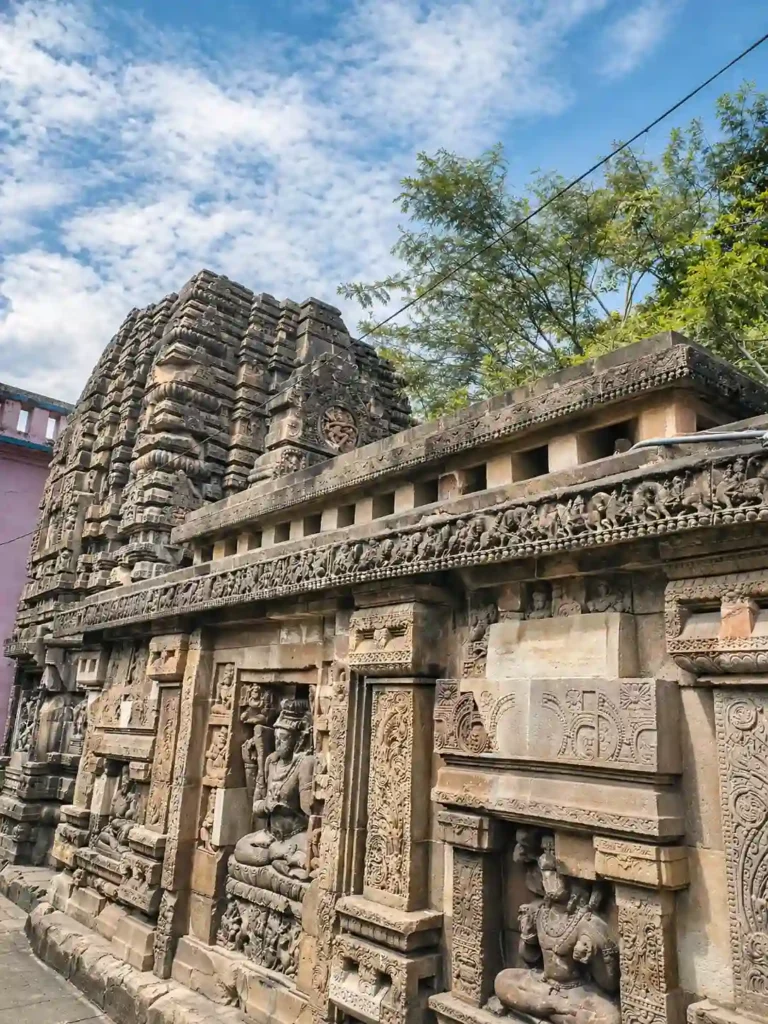
Why Baitala Temple is Architecturally Unique
One glance at Baitala Temple is enough to realize that it differs dramatically from most temples in Odisha.
Khakhara Style Architecture
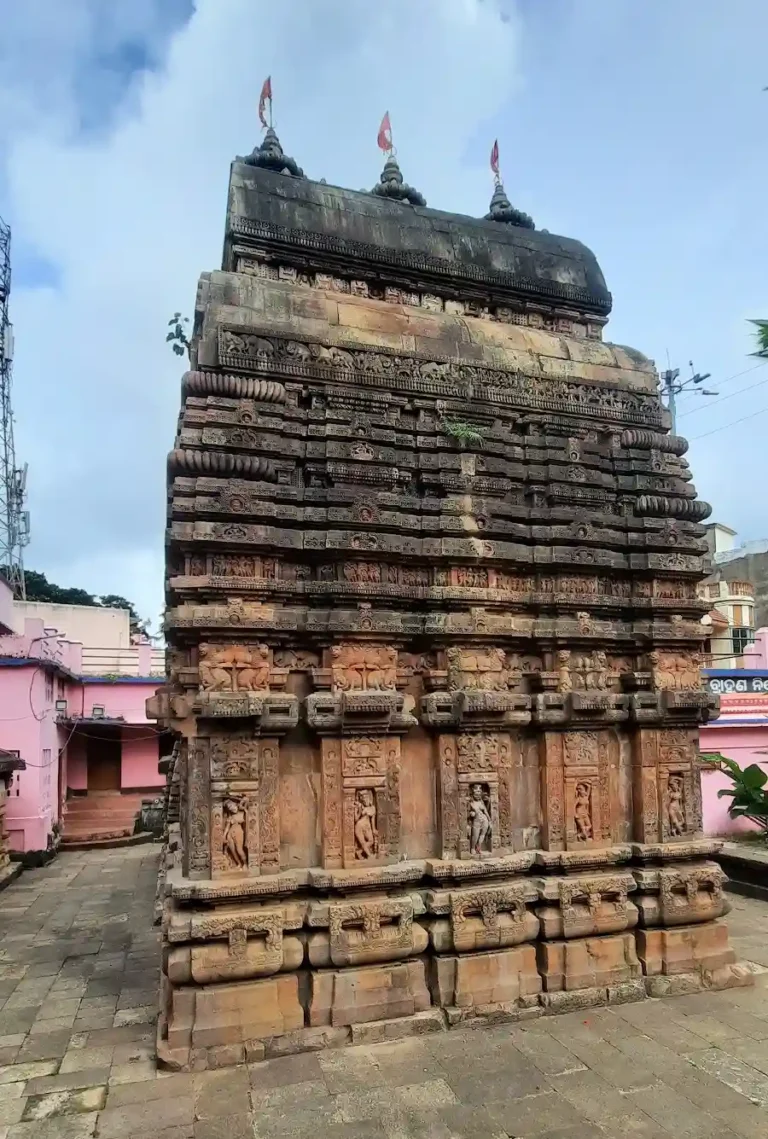
The temple is among the finest examples of Khakhara-style Kalinga architecture, a rare architectural form associated primarily with Shakti shrines.
- A semi-cylindrical vaulted roof
- An elongated oblong sanctum
- Distinctive horizontal elevation
This roof style resembles South Indian Dravidian gopuram influences, demonstrating architectural exchange between regions.
Why It Is Called “Tini Mundia Deula”
Locally, people call Baitala Temple “Tini Mundia Deula”, meaning Temple with Three Heads. This name comes from its three-spired roofline, which creates a striking silhouette against the sky.
- Mahasaraswati
- Mahalakshmi
- Mahakali
The Fierce Deity of Baitala Temple
At the spiritual heart of Baitala Temple resides Goddess Chamunda, worshipped locally as Kapalini. She is not portrayed in a gentle maternal form. Instead, she appears in one of the fiercest manifestations of divine feminine power.
The Iconography of Chamunda
- Seated upon a corpse
- Adorned with a garland of skulls
- Accompanied by a jackal and owl
- Holding weapons such as sword, trident, shield, bow, and thunderbolt
- Piercing a demon to symbolize victory over evil
Spiritual and Tantric Significance of Baitala Temple
Baitala Temple is one of Odisha’s most important surviving Tantric Shakti shrines. Historically, tantric practitioners visited the temple for rituals involving deep spiritual practices.
- Meditation on divine feminine power
- Spiritual transformation
- Protection from negative energies
- Inner awakening through esoteric practices
Because of this, the temple carries a mystical reputation even today.
Many devotees still believe the goddess grants courage, removes fear, and radiates powerful spiritual energy.Sculptural Beauty and Exterior Carvings
The walls of Baitala Temple are covered in intricate sculptural panels that reveal the artistic sophistication of ancient Odisha.
Deities and Mythological Figures
- Shiva
- Vishnu
- Various forms of Devi
- Celestial attendants
Secular and Narrative Scenes
- Hunting processions
- Elephant capture scenes
- Daily life depictions
- Erotic couples
My Personal Experience Visiting Baitala Temple
My visit to Baitala Temple was one of the most unforgettable heritage experiences I have had in Bhubaneswar. I arrived early in the morning when the golden sunlight gently touched the temple’s ancient stone surfaces.
At first glance, the temple’s unusual silhouette immediately stood out from the surrounding shrines. As I walked closer, the detailed carvings drew me in, and every inch of stone seemed to contain a story.
However, the most powerful moment came inside the sanctum. The dim lighting, the fierce idol of Chamunda, and the silence of the chamber created an atmosphere unlike any temple I had visited before.
Standing before the goddess, I felt a rare blend of reverence, awe, and primal energy.Tourism Significance of Baitala Temple
Baitala Temple is one of Bhubaneswar’s most culturally significant monuments, yet many tourists overlook it while focusing on larger temples.
- It is among the earliest Khakhara-style temples in Odisha
- It preserves rare tantric iconography
- It showcases unique architectural fusion
- It offers a less crowded heritage experience
The temple lies near major landmarks, making it easy to include in a heritage walk.
Strategically located near Lingaraj Temple, Bindu Sagar Lake, and Mukteswara Temple, it fits perfectly into a cultural itinerary.Myths and Local Beliefs Around Baitala Temple
Like many ancient shrines, Baitala Temple carries strong local folklore and spiritual beliefs.
- Goddess Chamunda protects Bhubaneswar from evil forces
- The temple’s energy intensifies after sunset
- Worship here grants strength during difficult phases
Best Time to Visit & Travel Tips
Best Time
- October to March (pleasant weather)
- Early morning for peaceful darshan
- During Navratri for vibrant experience
Travel Tips
- Remove footwear before entering
- Dress modestly
- Ask before photographing rituals
- Visit with a guide for deeper understanding
- Combine with nearby temple circuit
People Also Ask (FAQs)
1. Why is Baitala Temple famous?
It is famous for its rare Khakhara architecture and fierce Chamunda idol.
2. Where is Baitala Temple located?
It is in Old Town Bhubaneswar, Odisha.
3. Who built Baitala Temple?
It was built during the Bhauma-Kara dynasty in the 8th century CE.
4. Which deity is worshipped in Baitala Temple?
Goddess Chamunda/Kapalini is the presiding deity.
5. Is Baitala Temple worth visiting?
Absolutely—it is one of Odisha’s most unique and historically significant temples.
All answers are based on historical and cultural understanding.Final Thoughts: Why You Should Visit Baitala Temple
If you want to experience a temple that offers more than beauty—a temple that evokes mystery, power, and historical depth—then Baitala Temple deserves your attention.
Visit it not just as a tourist, but as a seeker. Observe its carvings, stand before Chamunda, and feel the silence.
Because some temples inspire devotion. Others awaken curiosity. Baitala Temple does both.