India’s tribal art traditions are not merely decorative expressions. Instead, they are living archives of faith, folklore, healing practices, and ancestral memory. Among these rare artistic traditions, Saura Painting from Odisha stands out as one of the oldest and most spiritually significant tribal art forms of India.
Even today, deep inside the forested hills of southern Odisha, the Saura tribal community continues to preserve this sacred visual language through wall paintings, ritual symbols, and ceremonial storytelling.
Interestingly, these paintings are not created only for beauty. Rather, they are deeply connected with religion, nature worship, ancestor rituals, and cosmic balance.
Moreover, for readers interested in Buddhism, indigenous spirituality, and Jagannath culture, Saura Painting opens an entirely different doorway into India’s ancient philosophical traditions.Table of Contents
What This Blog Will Help You Understand
This section explains why Saura Painting is culturally important and why it deserves global recognition.
In this detailed guide, you will discover:
- The origin and history of Saura Painting
- The connection between the Saura tribe and Indian mythology
- How these paintings relate to spirituality and ritual practices
- The symbolic meanings behind Saura pictograms
- The possible links between tribal beliefs, Buddhism, and Jagannath culture
- Why this ancient art form is slowly disappearing
- How modern India can preserve this heritage
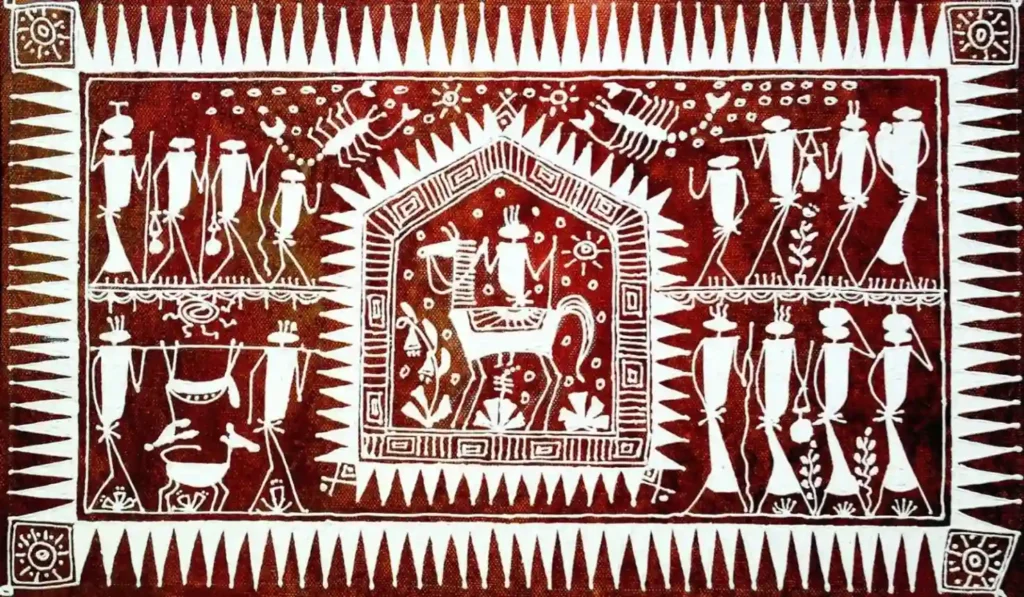
The Origin of Saura Painting
This section explores where Saura Painting began and how the tradition evolved over centuries.
The Sauras, also known as Soras, Savaras, or Saoras, are considered one of the oldest tribal communities of India.
They are primarily found in the districts of Rayagada, Gajapati, Koraput, and Ganjam in Odisha.
Historically, references to the Savaras appear in ancient Indian epics like the Ramayana and the Mahabharata.
Therefore, the tribe is not merely an isolated indigenous community; instead, it forms an integral part of India’s civilizational history.
According to tribal traditions and historical interpretations:
- Savari, the devoted woman who welcomed Lord Rama, belonged to the Savara community.
- Viswavasu Savara was believed to worship Nilamadhava, the early form of Lord Jagannath.
- Jara Savara appears in the Mahabharata narrative connected to Krishna’s final journey.
What Exactly Is Saura Painting?
This section explains the artistic style, purpose, and ritual significance of Saura Painting.
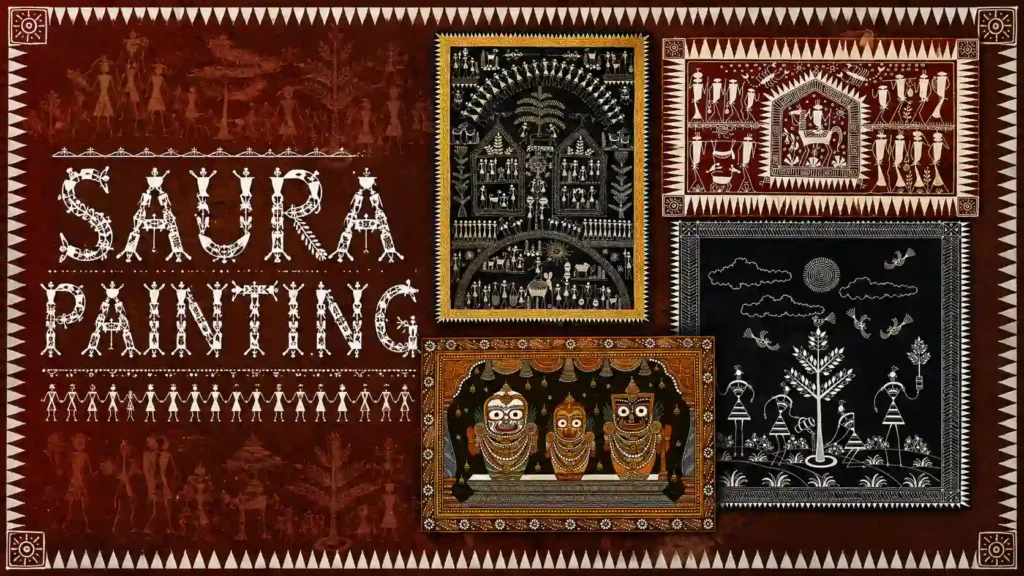
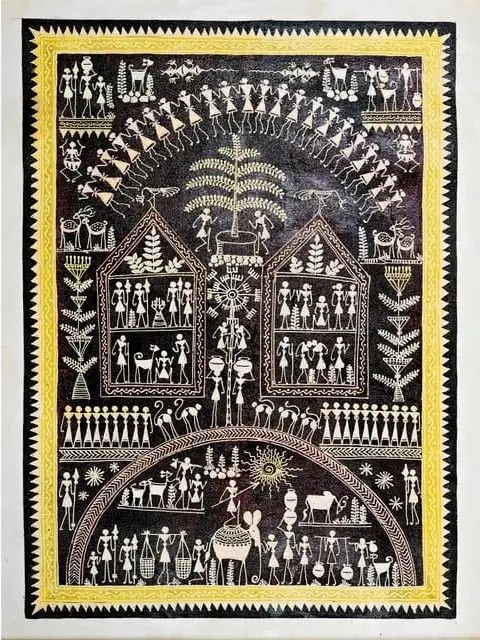
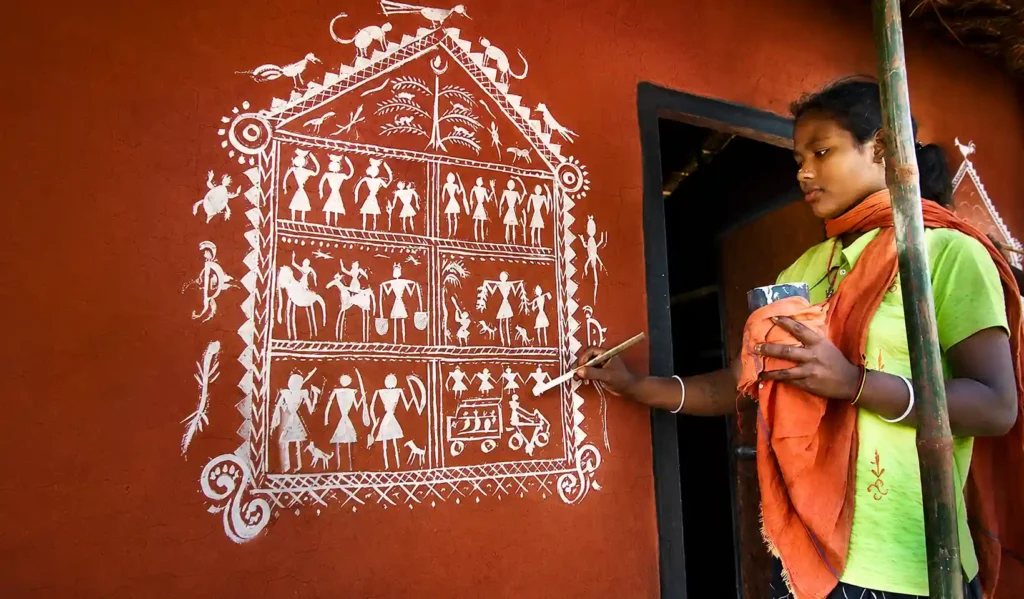
Saura Painting is a form of sacred tribal mural art traditionally painted on the walls of Saura homes.
These paintings are called Ikons or Iditals.
Unlike commercial paintings, these artworks were originally created for:
- Worship
- Healing rituals
- Agricultural ceremonies
- Ancestor remembrance
- Protection from evil spirits
- Community celebrations
Therefore, every Saura Painting carries a purpose beyond decoration.
The paintings usually feature:
- Human figures
- Birds and animals
- Sun and moon symbols
- Trees and nature forms
- Ritual dancers
- Ancestors and spirits
- Agricultural activities
- Hunting scenes
The Spiritual Philosophy Behind Saura Painting
This section highlights the religious and philosophical depth hidden inside the artwork.
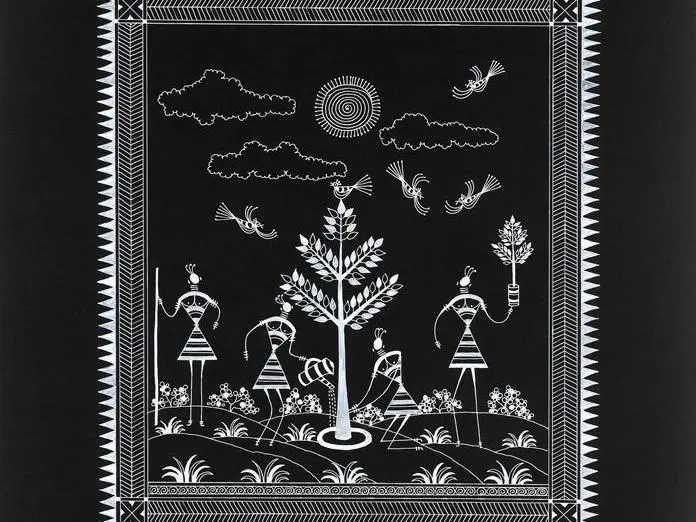
One of the most fascinating aspects of Saura Painting is that it acts like a visual prayer.
The Saura community believes that the spiritual world constantly interacts with human life.
As a result, rituals and paintings are used to maintain harmony between:
- Humans
- Ancestors
- Nature
- Spirits
- Deities
Each painting contains symbols that only priests or experienced painters fully interpret.
In many ways, these pictograms function like a sacred script without written language.
Moreover, the paintings are often created during:
- Harvest rituals
- Disease prevention ceremonies
- Seed sowing festivals
- Worship of village deities
- Funeral rites
Saura Painting and Its Connection With Buddhism
This section explores possible philosophical parallels between Saura traditions and Buddhist thought.
Although Saura Painting itself is not directly Buddhist, several spiritual ideas found in the tradition resonate strongly with Buddhist philosophy.
Respect for Nature and All Living Beings
Like Buddhism, Saura belief systems emphasize coexistence with nature.
Animals, trees, rivers, and mountains are treated as spiritually alive.
Ancestor Consciousness and Impermanence
The Saura worldview accepts life, death, and rebirth as interconnected processes.
Similarly, Buddhist teachings often focus on impermanence and continuity of existence.
Simplicity and Symbolism
Saura art avoids excessive ornamentation.
Instead, it communicates profound meaning through minimalistic symbols — a feature often seen in Buddhist visual traditions as well.
Community-Centered Spirituality
Unlike highly institutionalized religions, Saura spirituality is rooted in collective rituals and shared harmony.
This resembles early Buddhist community structures centered around ethical living and social balance.
Because Odisha historically witnessed strong Buddhist influence, scholars often explore possible cultural interactions between tribal spirituality and Buddhist practices in eastern India.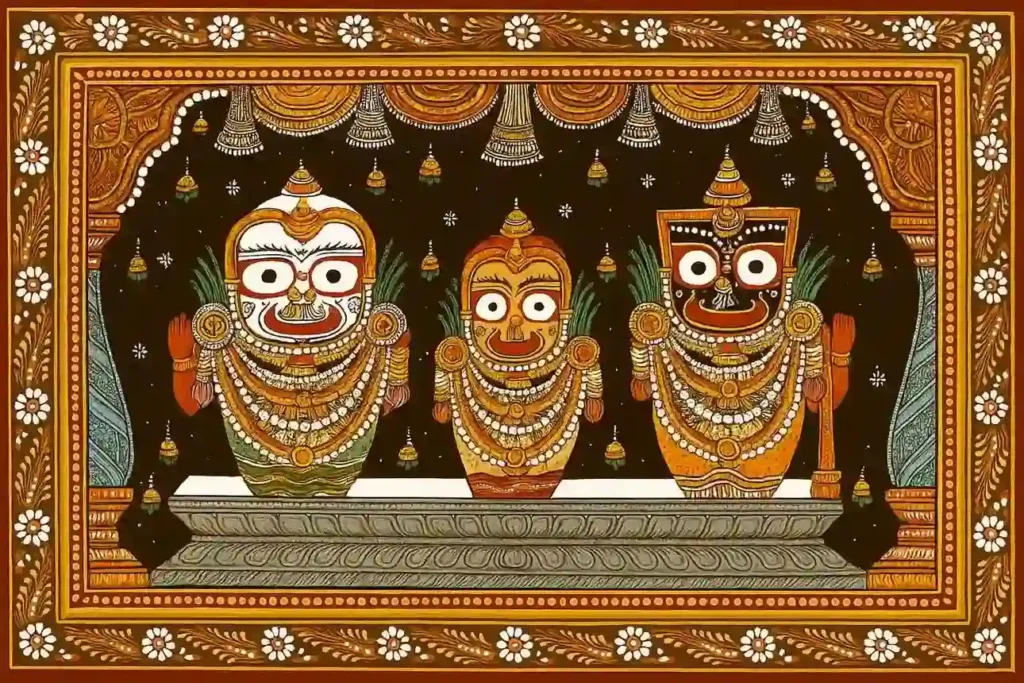
The Sacred Relationship Between Saura Tribe and Jagannath Culture
This section explains why Saura traditions are important in understanding Odisha’s Jagannath heritage.
One of the most discussed historical narratives in Odisha connects the Saura tribe with Jagannath Temple.
According to the traditional chronicles known as the Madala Panji:
- A tribal chief named Viswavasu worshipped Lord Nilamadhava deep inside the forest.
- King Indradyumna later discovered this form of divinity.
- Eventually, the worship evolved into the Jagannath tradition of Puri.
Even today, tribal influences remain visible in Jagannath rituals, iconography, and wooden deity forms.
Therefore, understanding Saura Painting also helps us understand the indigenous roots of Odisha’s spiritual identity.Important Types of Saura Paintings and Their Meanings
This section explains major ritual paintings and what they symbolize.
Jodisum Painting
This painting is associated with village protection and harvest rituals.
It often depicts priests, musicians, sacrificial ceremonies, and symbolic animals.
Jananglasum Painting
This artwork is created during rituals related to healing and blessings.
It includes scenes of worship, agricultural fertility, and ancestral spirits.
Andumjappur
This painting is connected with seed sowing ceremonies and agricultural prosperity.
Sidangpur
It is painted to pray for a successful harvest and protection of crops.
Gangsum
This sacred pictogram is traditionally associated with protection from diseases like smallpox.Artistic Style and Visual Features of Saura Painting
This section explores the visual identity that makes Saura Painting unique.
Several visual features distinguish Saura Painting from other Indian tribal arts:
Geometric Human Figures
Human bodies are usually represented through triangles, lines, and rhythmic formations.
Earth-Based Colours
Traditionally, artists used natural pigments derived from soil, plants, and minerals.
Narrative Composition
Instead of isolated images, the paintings tell complete ritual stories.
Symmetrical Balance
Most paintings maintain harmony and movement through carefully arranged patterns.
Because of these characteristics, Saura Painting is now appreciated globally as both tribal heritage and contemporary visual art.Modern Commercialization: Opportunity or Threat?
This section discusses how commercialization is changing the original spirit of Saura Painting.
Today, Saura Painting appears on:
- Home décor items
- Fashion products
- Office interiors
- Handicrafts
- Contemporary canvas art
On one hand, this popularity provides livelihood opportunities to tribal artists.
However, on the other hand, commercialization sometimes removes the sacred and ritualistic essence of the art form.
Earlier, artists painted for spiritual purposes.
Now, many paint mainly for market demand.
As a result, there is growing concern about preserving the original cultural meaning behind the artwork.Challenges Faced by the Saura Community
This section highlights the social realities behind this celebrated art tradition.
Despite their rich cultural heritage, many Saura communities still struggle with:
- Poverty
- Malnutrition
- Lack of healthcare
- Educational barriers
- Economic exploitation
- Loss of traditional practices
Furthermore, modern cultural influence is slowly disconnecting younger generations from their ancestral art forms.
Therefore, preserving Saura Painting also means supporting the dignity and survival of the Saura people themselves.People Also Ask About Saura Painting
1. What is Saura Painting famous for?
Saura Painting is famous for its sacred tribal pictograms, ritual storytelling, geometric human figures, and deep spiritual symbolism connected with nature and ancestor worship.
2. Which state is known for Saura Painting?
Odisha is the primary state associated with Saura Painting, especially districts like Rayagada, Gajapati, Koraput, and Ganjam.
3. Is Saura Painting connected to Lord Jagannath?
Yes. Traditional narratives suggest that the Savara tribal community worshipped Nilamadhava, believed to be an early form of Lord Jagannath.
4. What materials are used in traditional Saura Painting?
Traditionally, artists used natural earth colours, plant-based pigments, bamboo brushes, and mud walls as painting surfaces.
5. How is Saura Painting different from Warli Art?
Saura Painting is more ritualistic and spiritually symbolic, while Warli Art mainly focuses on daily life and social activities.Why Saura Painting Matters in Modern India
This section explains why preserving tribal art is important today.
In a rapidly digitized world, traditions like Saura Painting remind us that art can still be sacred, collective, and deeply philosophical.
More importantly, these paintings preserve voices that history often ignored — the voices of indigenous communities who protected ecological wisdom, ritual knowledge, and cultural continuity for centuries.
Therefore, protecting Saura Painting is not merely about saving an art form. Instead, it is about safeguarding India’s pluralistic heritage.Final Thoughts
Saura Painting is not just tribal decoration painted on mud walls.
Rather, it is a visual philosophy of life, memory, spirituality, and coexistence.
From ancient mythology to Jagannath culture, from ritual healing to symbolic storytelling, this remarkable art form continues to carry the heartbeat of Odisha’s indigenous heritage.
And perhaps that is why Saura Painting still feels timeless even in the modern world.
If you found this article insightful, share it with fellow readers interested in tribal heritage, Buddhism, Odisha culture, and Indian art traditions.
Also, support indigenous artists by purchasing authentic tribal artworks and spreading awareness about endangered cultural traditions like Saura Painting.