
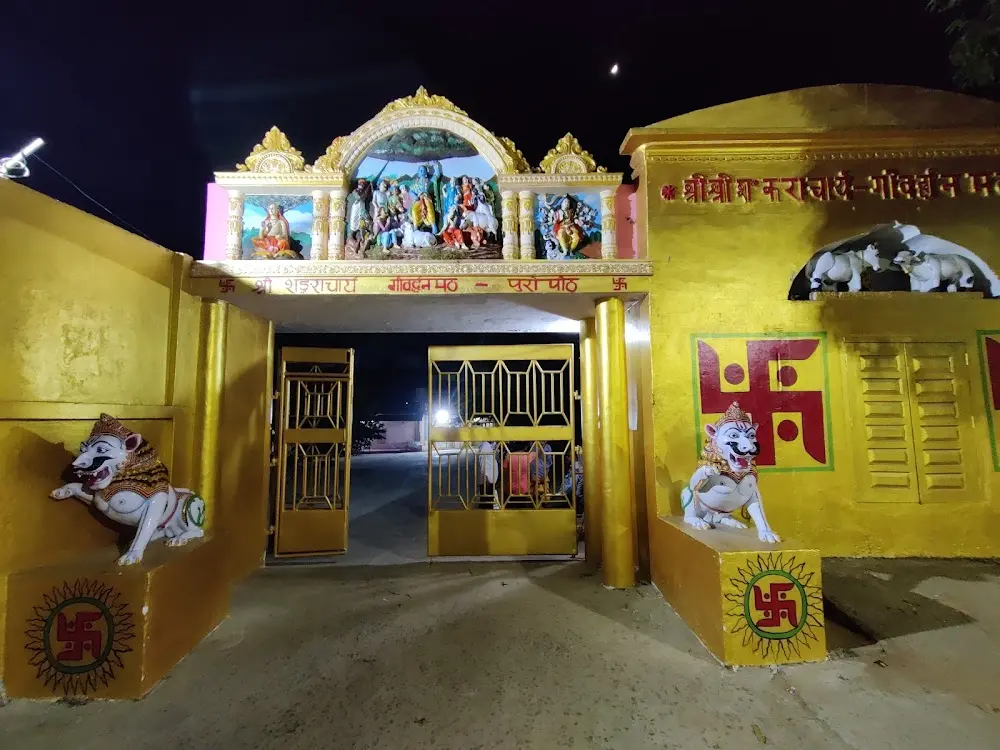
Introduction: A Sacred Beacon on India’s Spiritual Map
As an avid pilgrim and explorer of Odisha’s sacred landscape, few places uplift the heart as deeply as Govardhan Math in Puri. Nestled close to the iconic Jagannath Temple (Srimandir), this ancient monastery stands as a living testament to the wisdom of Advaita Vedanta and the spiritual leadership of Shankaracharyas across centuries. More than a place of worship, Govardhan Math embodies a tradition that unifies philosophy, ritual, devotion, and cultural identity.
When you search for “govardhan math puri” or “govardhan math shankaracharya”, you step into a world where timeless teachings guide seekers from around the globe and where India’s Vedic heritage continues to thrive with relevance today.
Throughout this blog, I’ll walk you through the deep roots of Govardhan Math, its vital role in Srimandir rituals, its historic evolution, and the unforgettable spiritual experience I had during the sacred Samudra Arati festival. By the end, you will understand why this monastery not only shapes spiritual life in Odisha but also embodies the heart of India’s Advaita tradition.Table of Contents
The Spiritual Significance of Govardhan Math
At its core, Govardhan Math represents the eastern peetham of the four cardinal monasteries established by the great philosopher-saint Adi Shankaracharya to preserve and propagate Sanatana Dharma and Advaita Vedanta, the doctrine of non-dualism. These four mathas form a spiritual compass across India, with Govardhan Math anchoring the eastern axis.
Establishment of Govardhan Math dates back to the ancient vision of Shankaracharya, rooted in his mission to unify divided religious thought and restore dharmic discipline. Unlike many institutions that evolved organically over time, Govardhan Math was intentionally built as a beacon of Vedic knowledge, ethical living, and liberation (moksha); where seekers can understand that the individual self and the supreme Brahman are one.
Even today, the math’s teachings remind devotees that true wisdom transcends ritual alone; it embraces unity, compassion, and inner awakening.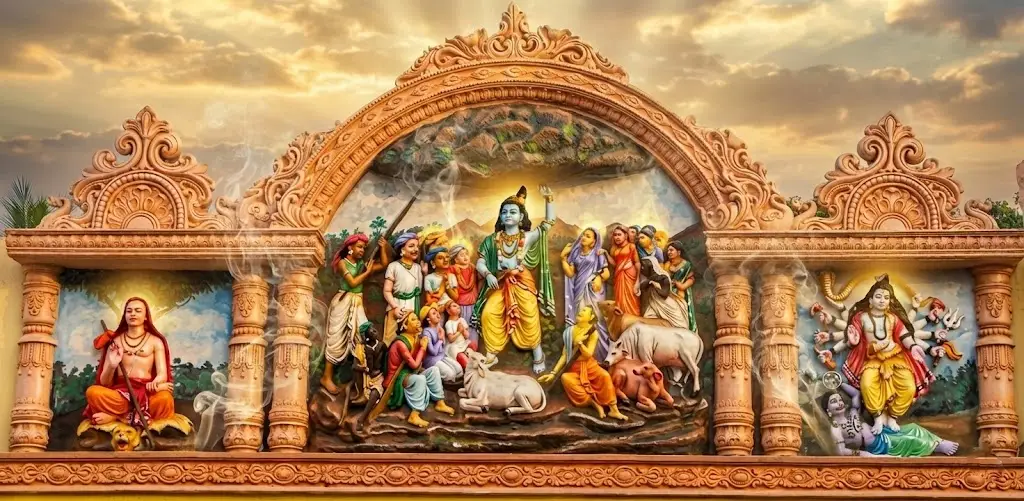
Shankaracharya: The Pillar of Govardhan Math
The head of Govardhan Math carries the title Shankaracharya, honouring the lineage started by Adi Shankaracharya himself. According to tradition, Shankaracharya designated four peethas to uphold Vedic culture and guide spiritual evolution across regions. Govardhan Math serves as the Eastern Āmnāya Pītham; focused on Rig Veda scholarship and spiritual authority.
Today, Jagadguru Shankaracharya Sri Nischalananda Saraswati Maharaj serves as the 145th head of Govardhan Math, carrying forward this sacred legacy with clarity and compassion. Under his guidance:- Vedic wisdom is preserved and taught with precision
- Philosophical dialogues bridge ancient texts and modern life
- Spiritual seekers find clarity in Advaita Vedanta teachings
Govardhan Math and Srimandir: A Unique Spiritual Partnership
One of the remarkable aspects of Govardhan Math is its deep and long-standing association with the Jagannath Temple (Srimandir) in Puri. Unlike many monastic institutions that operate separately from temple life, Govardhan Math actively collaborates with the temple on ritual purity, festival protocols, and Vedic correctness.
Established by Adi Shankaracharya in the 9th century (believed around 486 BC in the Kartika month), Govardhan Math has guided temple practices to ensure that sacred observances align with Vedic injunctions.
During major festivals like Rath Yatra, Shankaracharyas advise temple priests on ceremonial authenticity. The matha also plays a role during Navakalevara, the rare ritual of renewing the wooden deities, helping preserve age-old traditions.
Because of this synergy between Advaita philosophy and Vaishnava devotion, the rituals at Srimandir carry both spiritual depth and ritual integrity, creating a tapestry where unity blends seamlessly with diversity.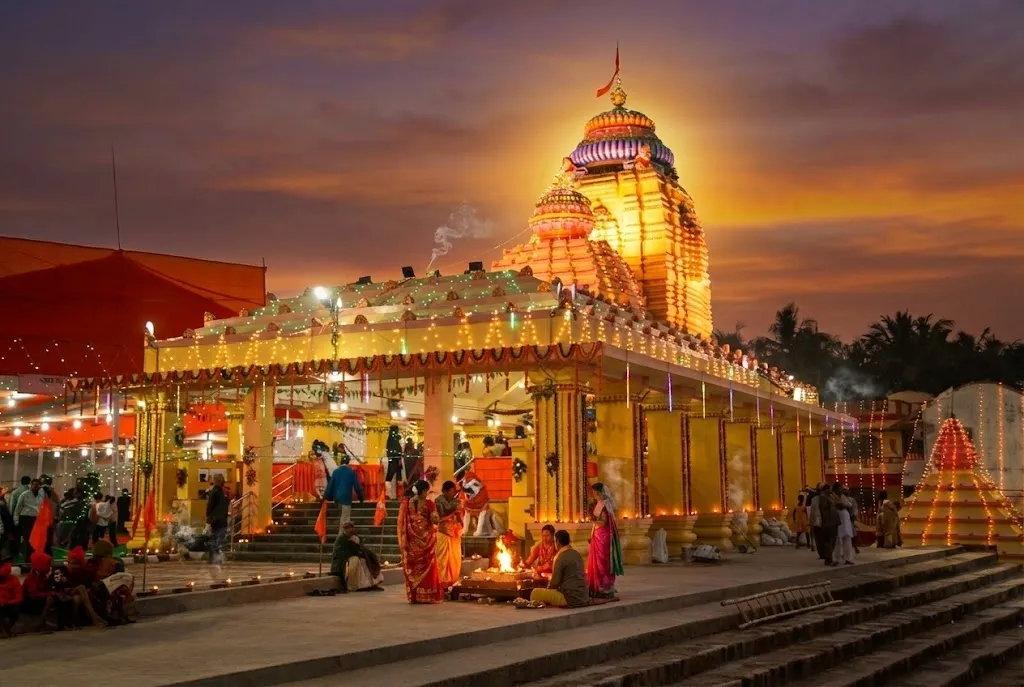
The Rich Historical Tapestry of Govardhan Math
Govardhan Math has a remarkable history intertwined with India’s spiritual evolution. Founded by Adi Shankaracharya to combat religious fragmentation and re-establish Vedic dharma, it became a centre of learning and devotion in eastern India.
Shankaracharya’s mission faced challenges from foreign invasions and fragmented sects. Yet, through his scholarship and spiritual authority, he brought unity and strength back into the tradition. He traveled widely, debating and teaching across regions, and laid the foundation for Govardhan Math to be one of the pillars of Hindu thought.
Over centuries, this matha survived political disruptions, cultural shifts, and colonial rule, preserving its sanctity and significance. Historical texts suggest that even during turbulent times, the matha served as a repository for ancient manuscripts, philosophical texts, and Vedic learning.
Interestingly, Govardhan Math also reflects regional Kalinga architectural elements, with serene courtyards, libraries, and meditation spaces that invite contemplation and study.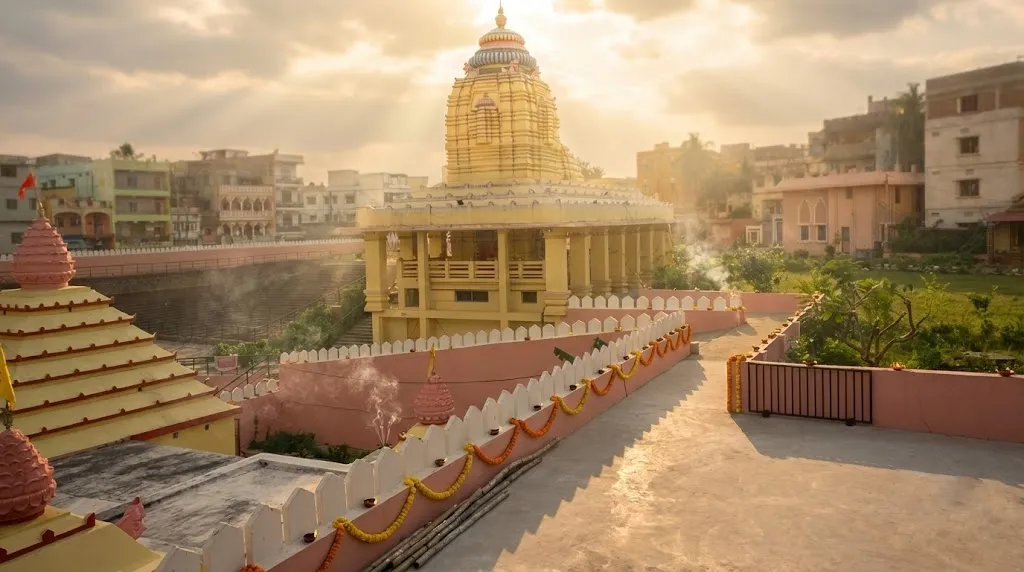
The Deities and Symbols of Govardhan Math
- Lord Jagannath – symbolizing the universal lord
- Goddess Vimala (Bhairavi) – representing the divine feminine and Shakti
- Ardhanareshwara Shiva – a composite form reflecting unity of Shiva and Shakti
- Govardhananatha Krishna – the presiding form associated with devotion and grace
Samudra Arati Festival: A Modern Ritual with Ancient Roots
Govardhan Math not only preserves ancient traditions but also nurtures spiritually meaningful innovations. One such beautiful ritual is the Samudra Arati, which honors the ocean as a manifestation of divine power and purification.
Held annually at Puri’s sea shore, this festival invites thousands of devotees to participate in a sunset ritual where lamps are offered to the sea, accompanied by Vedic chants and prayers. In addition to spiritual devotion, the Samudra Arati fosters environmental reverence, emphasizing harmony between humanity and nature.
This heart-stirring event draws both Indian and international pilgrims, promoting spiritual awareness and ecological respect. If your travel plans include early January, do mark 3rd January 2026 for this soul-stirring observance.My Personal Experience at Samudra Arati
Last year, I had the profound privilege of attending Samudra Arati at Puri. Arriving at dusk, the vast expanse of the ocean lay before me, whispering ancient secrets with every wave.
As the ceremony began, devotees gathered in hushed reverence. Conch shells sounded, lamps flickered, and the rhythmic chants filled the air with an almost tangible sense of sacredness.
Then, when Shankaracharya Sri Nischalananda Saraswati Maharaj arrived to lead the ritual, his calm presence seemed to deepen the spiritual ambiance. In that moment, I felt an inner stillness; as if centuries of wisdom were washing over me with each chant and ocean breeze.
Participating in the ceremony not only strengthened my belief in devotion’s power but also reminded me that ancient wisdom remains alive and accessible in the present day.