

Introduction: Why Gandahati Waterfall Feels Like Nature’s Secret
As someone who deeply enjoys exploring Odisha’s lesser-known natural wonders, I always look for places that offer both visual beauty and inner calm. While popular waterfalls attract crowds, it is the quieter cascades that truly leave a lasting impression. Gandahati Waterfall, located in the scenic Gajapati district of Odisha, is one such hidden treasure.
Tucked away amidst dense forests and rolling hills, gandahati waterfall offers a rare blend of perennial water flow, rich biodiversity, and peaceful surroundings. Unlike many seasonal waterfalls, Gandahati flows throughout the year, making it an ideal destination for nature lovers, photographers, and picnic seekers alike.
In this detailed blog, I take you through the scenic beauty of Gandahati Waterfall, its tourism importance, distance and accessibility, historical and ecological significance, and my memorable visit with friends. If you are searching for “gandahati waterfall Odisha”, “gandahati waterfall Gajapati”, or “gandahati waterfall distance”, this guide will help you plan a fulfilling trip.Table of Contents
The Mesmerizing Scenic Beauty of Gandahati Waterfall
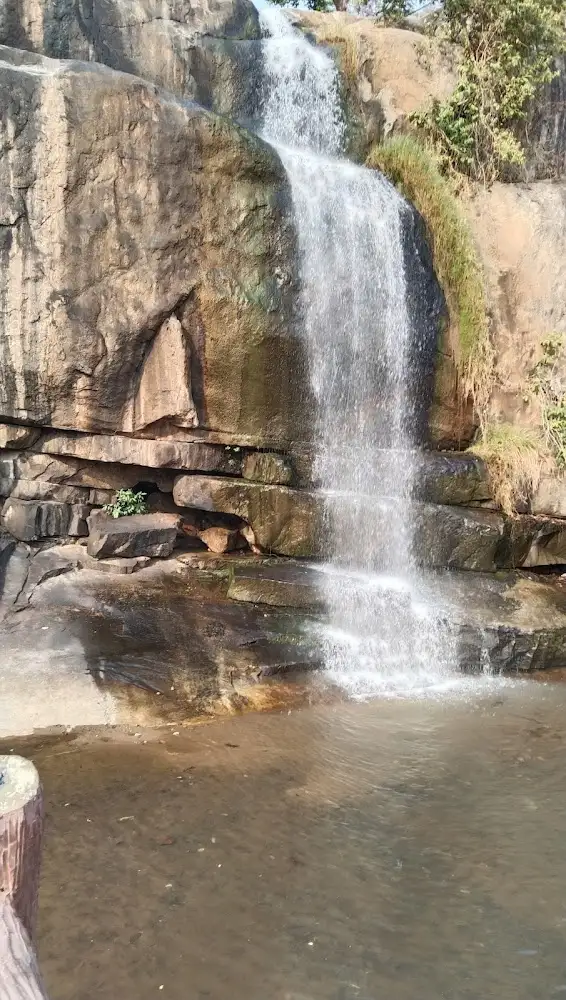
The moment you reach Gandahati Waterfall ; the sound of cascading water instantly commands your attention. Almost immediately, the waterfall descends from a height ranging between 20 to nearly 70 feet , depending on the season, on the Mahendratanaya River , forming a brilliant white cascade against dark rocky cliffs.
What truly makes Gandahati especially captivating is how the water splits into multiple streams as it falls, creating misty veils that shimmer in sunlight. During monsoon and post-monsoon months, the flow becomes more powerful, yet never chaotic. Instead, it feels rhythmic and soothing.
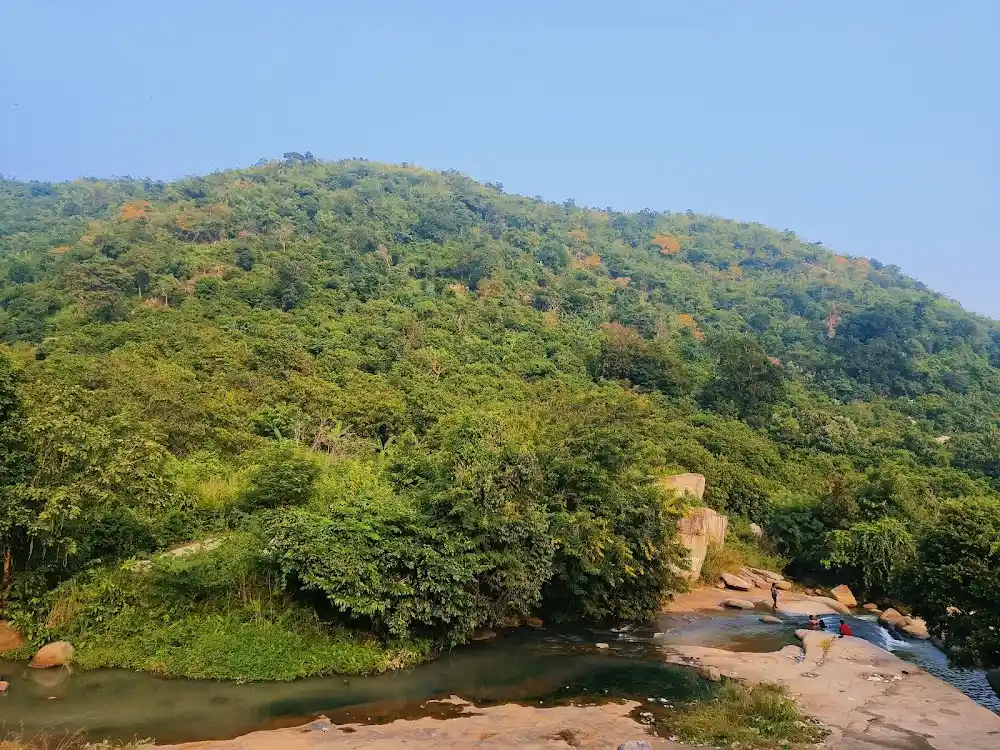
All around, dense forests surround the waterfall, dominated by sal, piasal, mahua, and bamboo trees . Together, these towering greens frame the waterfall beautifully and create a natural amphitheatre. At the same time, at the base, small natural pools form where visitors can gently dip their feet and cool off.
Meanwhile, bird calls echo from the forest canopy, leaves rustle softly, and cool mist brushes your face; ultimately, every element works together to create a deeply calming environment. As seasons change, seasonal wildflowers add bursts of colour, ensuring that no two visits to Gandahati Waterfall feel the same .Tourism Significance of Gandahati Waterfall in Odisha
Over the years, Gandahati Waterfall Gajapati has emerged as one of southern Odisha’s most significant natural attractions. As a result, tourists from across Odisha and neighbouring Andhra Pradesh frequently visit this site, especially during weekends and holidays.
Moreover, the waterfall plays a vital role in promoting eco-tourism in Gajapati district . Spread across an ecological zone of more than 1,200 hectares , the surrounding area supports diverse plant and animal life. Therefore, Gandahati is not just a sightseeing spot; it is also a living classroom for environmental awareness.
At the same time, families choose Gandahati as a safe picnic destination , while solo travellers and photographers appreciate its untouched charm. Importantly, its offbeat nature helps preserve its authenticity, as large commercial crowds have not yet overtaken the site.
Furthermore, with support from Odisha Tourism , facilities such as landscaped gardens, pathways, children’s play areas, and viewing platforms have been developed carefully; without disturbing the natural ecosystem. Consequently, Gandahati significantly strengthens Odisha’s nature-based tourism portfolio .Location, Distance, and Accessibility of Gandahati Waterfall
- Paralakhemundi (District HQ): ~30 km
- Berhampur: ~153 km
- Bhubaneswar: ~315 km
- Paralakhemundi Railway Station
- Palasa Railway Station (approx. 47 km away)
Historical and Cultural Importance of Gandahati Waterfall
Beyond its scenic appeal, Gandahati Waterfall also holds historical importance. In fact, the area was once a mutha (administrative unit) under the ancient Paralakhemundi Zamindari . Interestingly, the name Gandahati is believed to originate from the words “ganda” (elephant) and “hati” (gorge) , indicating that this region may once have served as an elephant corridor.
Even today, the surrounding forest still supports rich wildlife, including deer, peacocks, leopards , and traces of Asian small-clawed otters , thereby highlighting its ecological significance.
Additionally, a nearby Santoshi Maa Temple adds a spiritual dimension to the visit. As a result, many locals combine nature exploration with temple visits, making Gandahati a space where nature, history, and devotion intersect naturally .Why Gandahati Is an Eco-Sensitive Zone
Unlike many waterfalls that dry up during summer, gandahati waterfall remains perennial due to its consistent water source. This rarity makes it ecologically valuable.
Authorities have installed protective fencing, defined pathways, and viewing platforms to ensure visitor safety and environmental protection. Visitors are encouraged to avoid littering, loud music, or disturbing wildlife.
Gandahati stands as a reminder that responsible tourism is the only way to preserve such pristine locations for future generations.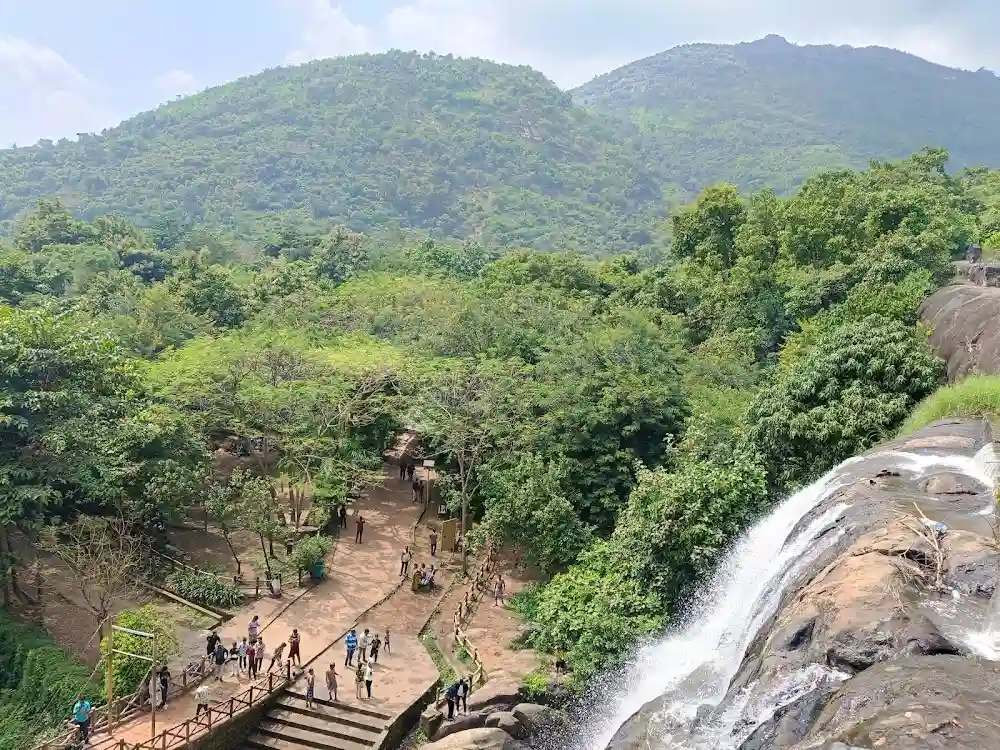
My Personal Experience Visiting Gandahati Waterfall with Friends
Last year, my friends and I decided to take a break from routine and planned a trip to Gandahati Waterfall from Bhubaneswar. We started early in the morning, and as the urban landscape faded behind us, winding forest roads and cashew plantations welcomed us.
Descending the stone steps toward the waterfall, the sound of rushing water grew louder with every step. When Gandahati finally came into full view, we stood still for a moment—completely mesmerised.
We spread mats near the base and enjoyed a relaxed picnic. Some of us dipped our feet in the cool water, while others explored nearby trails and clicked photographs from different angles. The mist from the waterfall refreshed us, washing away fatigue and stress.
What stayed with me most was the silence between conversations, broken only by water and birds. That calm, shared with close friends, turned the visit into a deeply bonding experience. Even today, Gandahati remains one of my most cherished travel memories.Best Time to Visit Gandahati Waterfall
- Monsoon (July–September): Best flow, lush greenery
- Post-Monsoon (October–February): Pleasant weather, safe exploration
- Summer (March–June): Still flowing, but visit early morning
People Also Ask – Answers to Common Questions
1. Where is Gandahati Waterfall located?
2. What is the distance of Gandahati Waterfall from Bhubaneswar?
3. Is Gandahati Waterfall open throughout the year?
4. Is Gandahati suitable for family picnics?
5. Are there facilities near Gandahati Waterfall?
Conclusion
In conclusion, Gandahati Waterfall in Gajapati, Odisha, offers much more than scenic beauty. It brings together nature, history, biodiversity, and emotional calm in a way few destinations can.
Whether you are a photographer, a nature lover, or someone simply looking to slow down, Gandahati welcomes you with open arms.