Early Life and Education of Harekrushna Mahtab
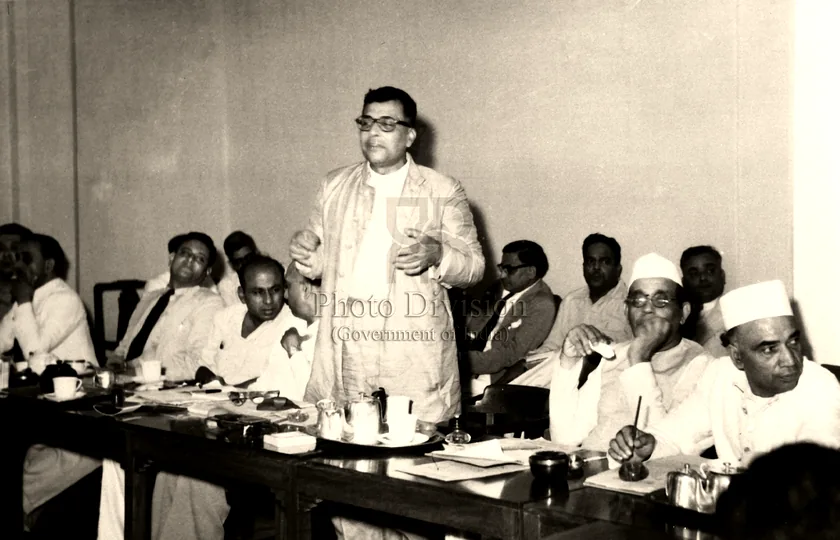
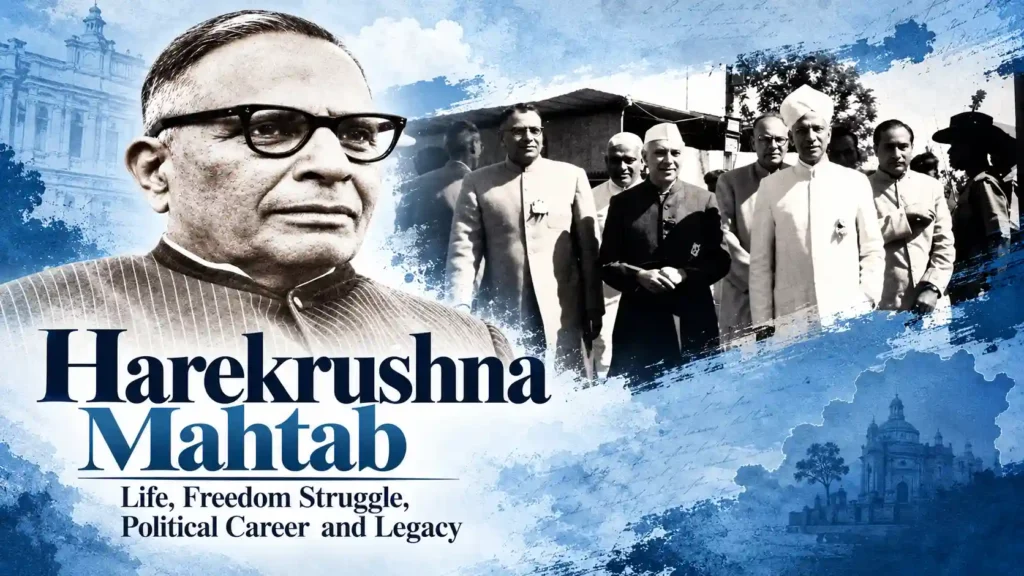
Harekrushna Mahtab was born in Agarpada village in Bhadrak district. His parents were Krushna Chandra Das and Tofan Devi from a Khandayat family. Subsequently, he completed his matriculation studies at Bhadrak High School and later joined Ravenshaw College in Cuttack for higher education.
Later, at Ravenshaw College, he joined Bharati Mandir. Founded at Bakharabad in Cuttack in 1919, this organisation spread nationalist ideas. Consequently, Bharati Mandir sent delegates to the Calcutta Congress Session in 1919. The representatives included Jadumani Mangaraj, Bhagirathi Mohapatra and Harekrushna Mahtab.
Leaving College for the Freedom Movement
During the Non-Cooperation Movement, Mahtab responded to Mahatma Gandhi’s call. He left his studies at Ravenshaw College in 1921. As a result, he then devoted himself to organisational work in Balasore.
Furthermore, during Mahatma Gandhi’s visit in December 1927, Mahtab arranged for Gandhi’s stay at Charbatia in Balasore district. Together, they discussed Odisha’s historic salt industry. In particular, they examined how British monopoly policies hurt local salt-producing families.
Harekrushna Mahtab in the Salt Satyagraha
Notably, Inchudi on the Balasore coast became one of the major centres of the Salt Satyagraha in India. Therefore, the Utkal Pradesh Congress Committee decided to launch the Civil Disobedience Movement there. A committed group of 21 volunteers travelled on foot from Cuttack to Inchudi under Gopabandhu Choudhury’s leadership.
British authorities soon arrested Mahtab and Gopabandhu Choudhury at Balasore. Consequently, the court sentenced them to eighteen months in prison. Nevertheless, the salt campaign persisted despite strict police repression. Salt manufacture along the Balasore coast continued until the rainy season.
Congress Leadership and the Quit India Movement
Subsequently, in 1938, Mahtab became President of the Utkal Congress. In this role, he strengthened the party organisation across Odisha.
On 8 August 1942, the Congress Working Committee adopted the Quit India resolution. Soon after, police arrested Mahtab in Mumbai alongside Jawaharlal Nehru and Sardar Patel. Other detained leaders included Maulana Azad and Govind Ballabh Pant. British authorities then imprisoned them at Ahmednagar Fort.
Harekrushna Mahtab and the Integration of Odisha
Indeed, a major part of Mahtab’s political contribution was his role in the integration of Odisha’s princely states. Several states were initially reluctant to join Odisha, making the process politically difficult.
In particular, Mahtab worked closely with Sardar Vallabhbhai Patel. Nilgiri was the first princely state to merge with Odisha, and Mahtab’s decisive efforts drove this development forward. Overall, the wider process brought 26 princely states into Odisha and helped shape the administrative structure of modern Odisha.
First Chief Minister of Odisha After Independence
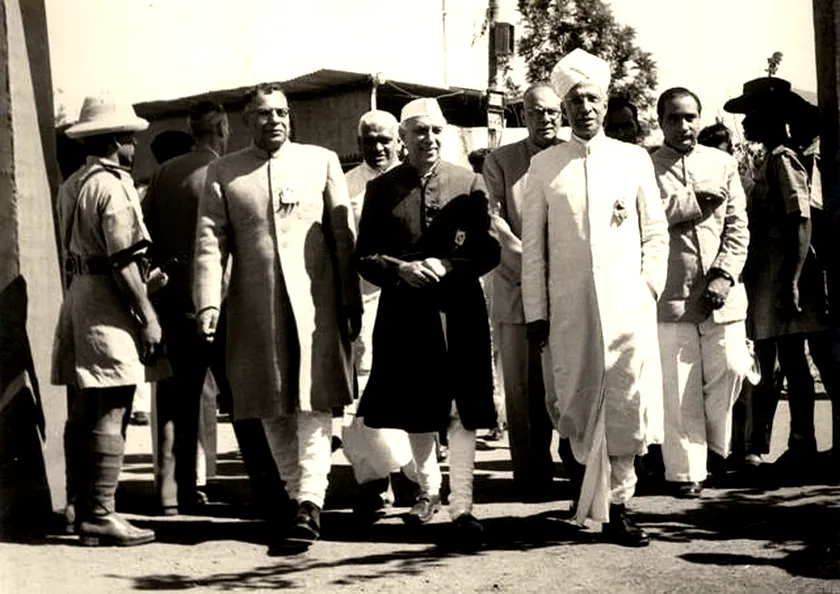
Following the 1946 Odisha Assembly election, the Congress secured a clear majority. The party unanimously chose Mahtab as leader of the Congress Legislature Party, making him the Premier of Odisha. Meanwhile, his first term ran from 1946 to 1950, and he later returned for another term from 1956 to 1961.
During these tenures, his administration spearheaded several major decisions and development projects that influenced the direction of post-independence Odisha.
Harekrushna Mahtab and Bhubaneswar as the Capital
Undoubtedly, one of the most consequential decisions associated with Mahtab’s leadership was locating the capital of Odisha at Bhubaneswar. On 30 September 1946, the Odisha Legislative Assembly unanimously approved Bhubaneswar as the new capital. The resolution also directed the immediate construction of administrative buildings.
Subsequently, the capital shifted from Cuttack to Bhubaneswar on 10 October 1949. On that date, the Legislative Assembly began functioning from a temporary building. This marked an important stage in the administrative development of post-independence Odisha.
Industrial Development and Major Projects
Throughout his tenure, Mahtab placed strong emphasis on industrial and economic development. In particular, he pushed actively to expand Odisha’s industrial base and make greater use of its mineral resources.
Important projects and institutions associated with this period include:
- Odisha Textile Mills and Kalinga Tubes at Choudwar
- Odisha Mining Corporation
- Refractories at Rajgangpur and Belpahar
- Ferro Manganese plants at Rayagada and Joda
- Kalinga Iron Works at Barbil
- Aluminium plant at Hirakud
- Development and exploitation of Odisha’s mineral resources
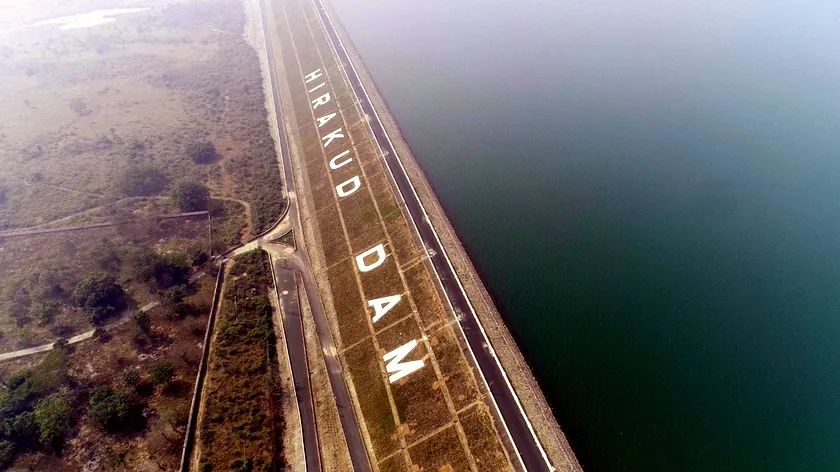
Additionally, he championed the landmark Hirakud Dam project in coordination with government planners. He also assisted with establishing the Cuttack Akashvani centre and played a major role in developing Barabati Stadium.
Political Career Beyond the Chief Minister’s Office
Beyond the Chief Minister’s office, Mahtab served as Secretary of the Congress Parliamentary Party from 1952 to 1954. Later, he served as Governor of Bombay Province from 1955 to 1956. Subsequently, voters elected him to Parliament from 1962 to 1967. During 1962–63, he served as Deputy Leader of the Congress Parliamentary Party.
Later, in 1967, he resigned from the Congress and formed the regional Jana Congress. Voters elected him to the Assembly from Bhubaneswar and Basudevpur in 1967. Subsequently, he won re-election from Bhubaneswar in the 1972 and 1974 elections.
Harekrushna Mahtab as a Writer and Journalist
Besides politics, Mahtab achieved distinction as a writer, historian and journalist. Specifically, he published the weekly Swaraj Samachar from Balasore to spread patriotic ideas. In 1923 he started the Odia daily The Prajatantra. Although his imprisonment in 1930 temporarily interrupted its printing, publication resumed successfully on 9 August 1947.
Furthermore, he later published the Odia weekly Rachana, the English daily The Eastern Times and the Odia monthly Jhankar. Through these publishing activities, he helped connect politics, literature and public discussion across Odisha.
Gaon Majlis and the Sahitya Akademi Award
Notably, his serial writings under the title Gaon Majlis became a celebrated literary contribution. This essay collection earned the Central Sahitya Akademi Award in 1983.
As a prolific author, he wrote poetry, novels, essays, historical works and journalism. For example, his important novels include Prativa, Toutar, Abyapara, Nutana Dharma, Trutiya Parva and 1975. His notable English books include Gandhi, the Political Leader and The Beginning of the End. In addition, he published Call to Action and Towards Serving the Nation.
Contribution to Odisha’s Literary and Cultural Life
Throughout his life, Mahtab supported literature, history, journalism, culture and sports. In 1947, he founded the Prajatantra Prachar Samiti, which served as a lasting socio-cultural institution.
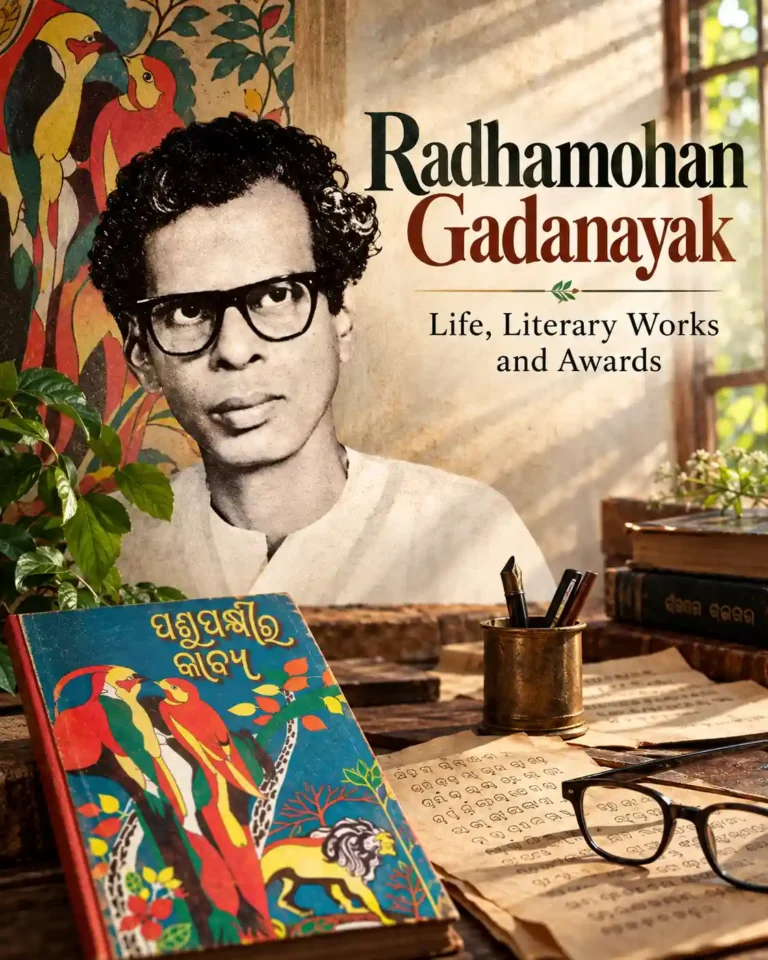
In addition, publications associated with Prajatantra included Minabazar for children, Nari Jagat for women and weekly literary editions. At the same time, the annual Vishubamilan on Vishuba Sankranti became a major literary festival. Renowned writers and poets like Radhamohan Gadanayak gathered there to exchange views.
Furthermore, he served several terms as president of the Odisha Sahitya Akademi and Sangeet Natak Akademi. Recognising his scholarly merit, Andhra, Saugor and Utkal Universities conferred honorary doctorates on him.
A Multifaceted Personality: Harekrushna Mahtab
Overall, Harekrushna Mahtab combined political leadership, public administration, journalism, literature, history and social reform. Consequently, his influence reached far beyond government office. His newspapers, books and cultural forums fostered lively public debate and intellectual life.
Similarly, his political work reflected a strong concern for Odisha’s economic development. During his first premiership, he prioritised the state's economic needs. Furthermore, he argued consistently for expanded development and education.
Later Years and Legacy of Harekrushna Mahtab
Eventually, Harekrushna Mahtab passed away on 2 January 1987. Nevertheless, his legacy continues through institutions and public spaces associated with his name.
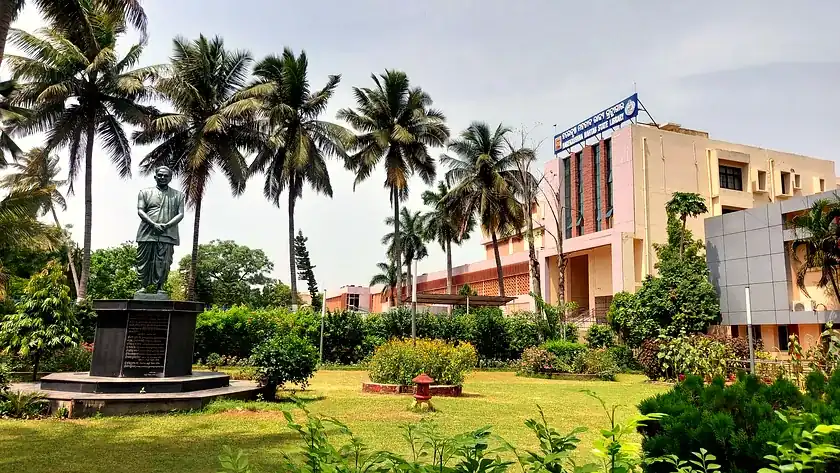
Today, Swaraj Ashram in Cuttack preserves his valuable collection. In addition, the state government established the Harekrushna Mahtab State Library in Bhubaneswar in his honour.
Across the state, people honour his contributions to the freedom movement and princely state integration. They also remember his leadership in developing Bhubaneswar, expanding industry, journalism and literature.
Frequently Asked Questions About Harekrushna Mahtab
Who was Harekrushna Mahtab?
Harekrushna Mahtab was a freedom fighter, statesman, historian, writer and social reformer. He played a foundational role in the development of modern Odisha.
When did Harekrushna Mahtab become Chief Minister of Odisha?
Following the 1946 Assembly election, he assumed leadership of the Odisha government and served from 1946 to 1950. Subsequently, he returned for another term from 1956 to 1961.
What was Harekrushna Mahtab’s role in the freedom movement?
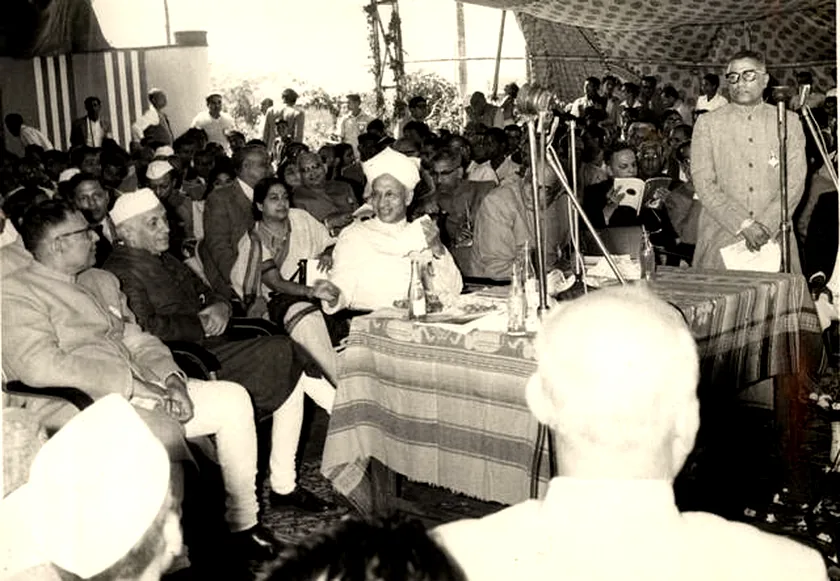
During the freedom struggle, he took part in the Non-Cooperation Movement, Salt Satyagraha and Quit India Movement. Consequently, he faced multiple terms of imprisonment for the national cause.
What was Harekrushna Mahtab’s contribution to Bhubaneswar?
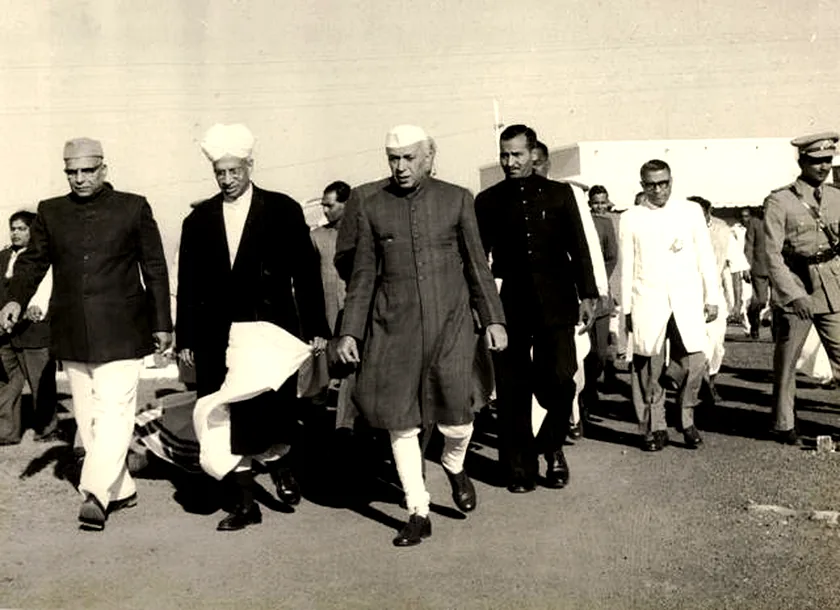
Under his leadership, the Odisha Assembly voted to establish the state capital at Bhubaneswar in 1946. Subsequently, the government completed the official relocation from Cuttack in 1949.
What was Harekrushna Mahtab’s contribution to literature?
As a prolific author, he wrote poetry, novels, essays, historical works and journalism. Notably, his celebrated book Gaon Majlis won the Central Sahitya Akademi Award in 1983.
Which newspaper did Harekrushna Mahtab found?
He founded the prominent Odia daily The Prajatantra and also published Swaraj Samachar, Rachana, The Eastern Times and Jhankar.
What is Harekrushna Mahtab remembered for?
Historians and citizens honour his freedom struggle and political leadership. In addition, they remember his role in integrating princely states, industrial growth and journalism.
Conclusion: The Lasting Impact of Harekrushna Mahtab
Harekrushna Mahtab was a towering public figure whose career crossed several formative chapters in Odisha’s modern history. From joining the freedom struggle to heading the state government, he shaped modern Odisha. In addition, his work in integrating princely states, journalism and literature left a permanent mark.
His visionary decisions directed post-independence Odisha's administrative and industrial progress. At the same time, his books, newspapers and cultural initiatives enriched public life across the state. His legacy remains an important part of the story of modern Odisha.