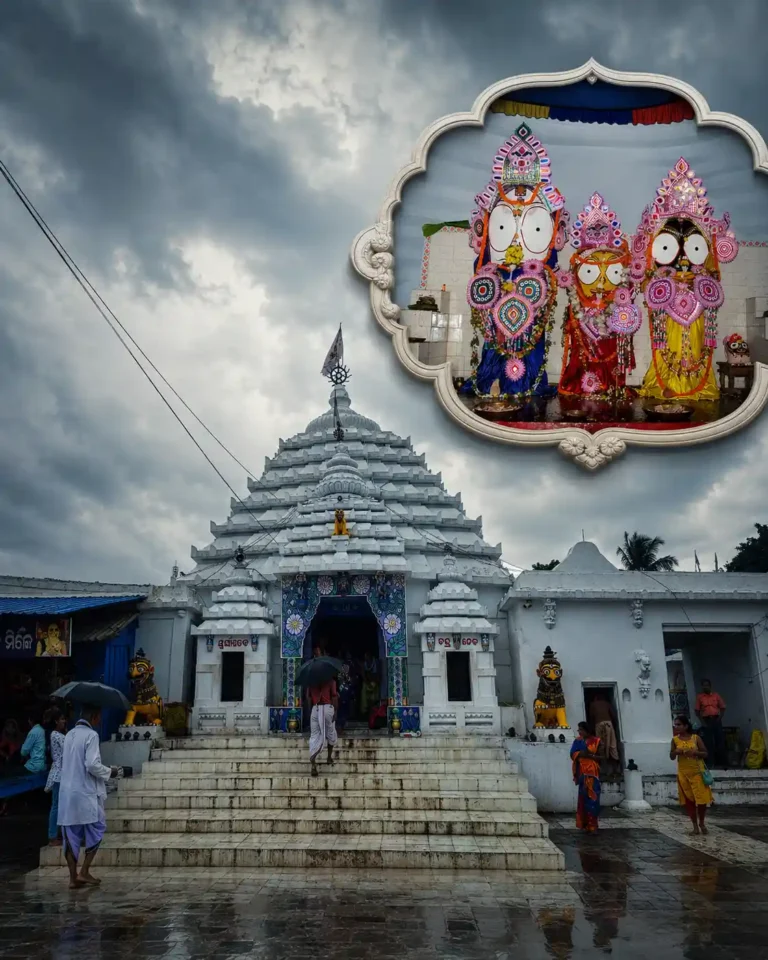
Discover the spiritual heritage, fascinating legends, centuries-old traditions, and living culture that make Baladevjew Temple, Kendrapara one of Odisha's most revered pilgrimage destinations.
Every pilgrimage destination has a story. Some are recorded in history, while others live forever through devotion and tradition. Baladevjew Temple Kendrapara is one such sacred place where mythology, history, faith, and culture beautifully come together.
Located in the heart of Odisha's Kendrapara district, this temple is not merely a religious monument—it is an emotional and spiritual identity for thousands of devotees. The temple is popularly known as Tulsi Kshetra, and every year countless pilgrims visit seeking the blessings of Lord Baladev, the elder brother of Lord Jagannath.
Interestingly, unlike many famous temples that are known only for their architecture, Baladevjew Temple is celebrated for its legends, unique rituals, grand Rath Yatra, delicious Rasabali Mahaprasad, and centuries-old traditions that continue to thrive today.
In this detailed guide, we explore everything you need to know about Baladevjew Temple Kendrapara, from its legendary origins to practical travel information.Table of Contents
Why is Baladevjew Temple Kendrapara Famous?
What this section explains:
Understanding why this temple holds exceptional religious and cultural importance in Odisha.
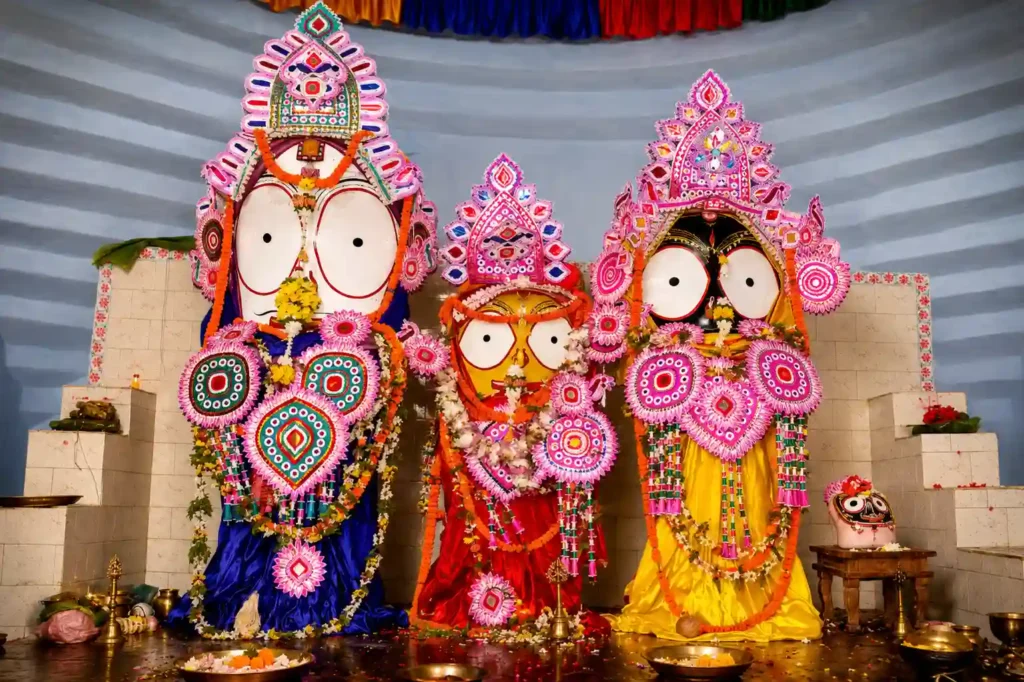
Baladevjew Temple is one of the most significant temples dedicated to Lord Baladev (Balabhadra) in India. The temple has earned immense respect because devotees believe that Lord Baladev himself chose Kendrapara as his eternal abode.
The temple is also known as:
- Tulsi Kshetra
- Siddha Baladevjew Temple
- One of Odisha's major pilgrimage centres
The Legendary Story Behind Baladevjew Temple Kendrapara
What this section explains:
The mythology that connects Lord Baladev with Kendrapara.
According to local tradition, during the Mahabharata period, Lord Balarama decided not to participate in the great war. Instead, he undertook a sacred pilgrimage across various holy places.
When he arrived in ancient Udra Desha, local Brahmins sought his protection from a cruel demon named Kandarasura.
Lord Balarama defeated the demon and restored peace to the region.
Local belief says that different places in the area were named after parts of the demon's body, including:
- Asureshwar
- Balagandi
- Nahakhand
Another legend narrates that Kandarasura's daughter Tulsi surrendered herself before Lord Balarama after her father's death. Impressed by her devotion, the Lord promised that in the Kali Yuga he would reside in her land and accept her devotion forever.
This promise is believed to be the reason Kendrapara came to be known as Tulsi Kshetra.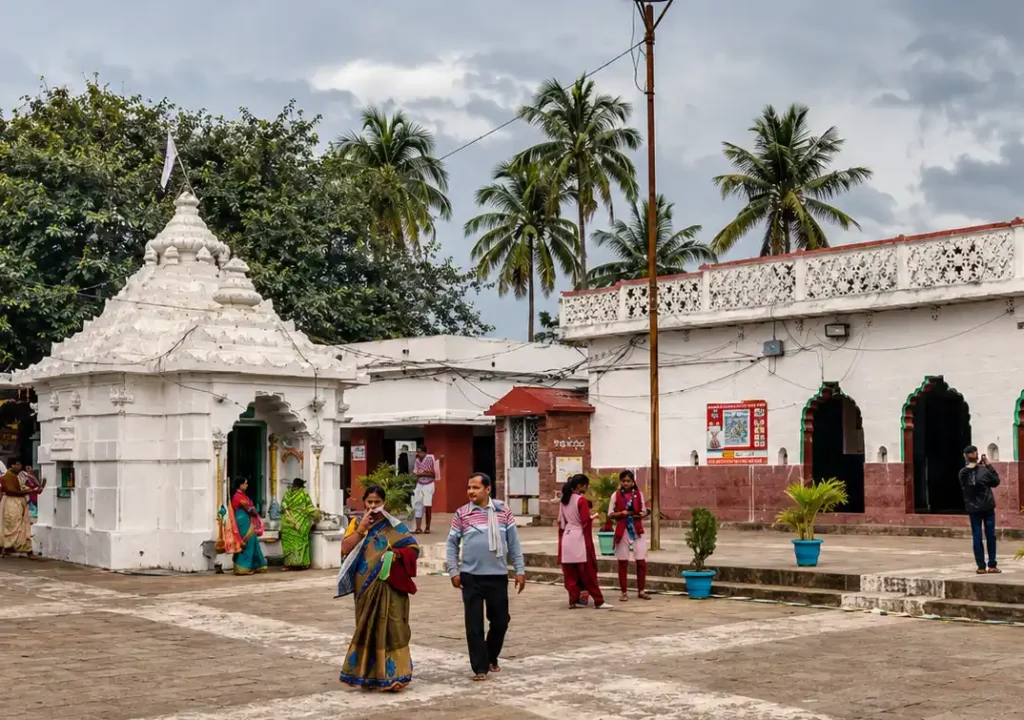
The Discovery of the Sacred Idol
What this section explains:
This section tells the story of how devotees rediscovered the deity of Lord Baladev.
One of the most fascinating stories associated with the temple centers on a devotee named Siddhadas.
According to tradition:
- A cow mysteriously poured its milk daily beneath a Tulsi tree.
- Curious villagers investigated the spot.
- They discovered an idol of Lord Baladev underneath.
- Siddhadas informed Supleswar Mahapatra about the discovery.
- After receiving divine instructions in a dream, Supleswar Mahapatra installed the idol and began its worship.
The Historical Journey of the Temple
What this section explains:
How the temple evolved through centuries.
Historical traditions suggest that the original temple stood at another location in Kendrapara.
During the Mughal period, local accounts state that the temple suffered destruction during campaigns against Hindu temples.
However, the story did not end there.
The King of Kujang arranged to relocate the deity by boat. According to local belief, the boat suddenly stopped on the banks of the Madhu Sagar River and refused to move further.
That night, the king reportedly received divine instructions that Lord Baladevjew wished to remain in Tulsi Kshetra.
Initially, the deity stayed beneath a sacred banyan tree called Sakhibat.
Later, another divine dream instructed devotees to build a permanent temple at Ichchapur.
Eventually, with the support of the rulers of Kujang and Chhedra, the present temple was constructed around 1670 AD, establishing the sacred complex that devotees visit today.Temple Administration Through the Years
What this section explains:
How the temple has been preserved.
The temple was managed for generations by Mahants who supervised rituals and festivals.
Later:
- Administrative reforms were introduced.
- A committee took responsibility.
- Eventually, the temple came under a Trust Board.
Today, an Executive Officer assists in managing daily affairs.
The temple also developed sustainable revenue sources to support daily worship and Mahaprasad preparation.Architecture and Spiritual Atmosphere
What this section explains:
What visitors experience inside the temple complex.
The temple complex reflects the devotional atmosphere seen in Odisha's major pilgrimage centres.
Within the complex, devotees can find shrines dedicated to:
- Lord Shiva
- Lakshmi Devi
- Chaitanya Mahaprabhu
- Kanaka Durga
- Various forms of Lord Jagannath
One of the most sacred places is the Tulsi Mandapa, where devotees believe that circumambulation brings spiritual purification.
Every evening, devotional songs create an atmosphere of serenity and deep faith.The Famous Rasabali Mahaprasad
What this section explains:
Why food offerings are an important part of temple tradition.
Among all offerings, Rasabali enjoys extraordinary popularity.
Prepared using:
- Butter
- Milk
- Sugar
it has become synonymous with Baladevjew Temple.
Other offerings include:
- Potali Pitha
- Ukhudha
- Laddu
- Kora
- Magaja Laddu
Unique Traditions of Devotees
What this section explains:
Customs that continue to unite communities.
One remarkable tradition is known as Khatani.
Devotees fulfil their vows by offering:
- Rice
- New utensils
- Earthen pots
After worship, they organize community feasts and distribute food among the poor.
The remaining prasad is taken back home and shared with family members as a blessing.
Similarly, many devotees receive Baladevjew's garlands for marriages and housewarming ceremonies, believing they bring prosperity and divine protection.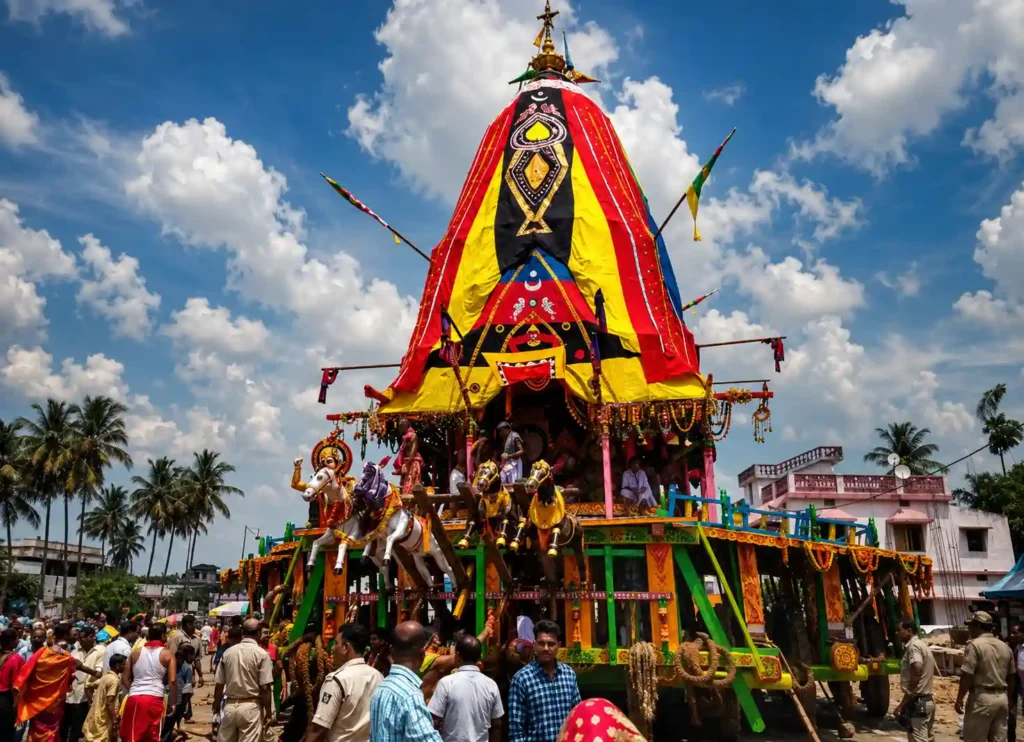
Rath Yatra of Baladevjew Temple Kendrapara
What this section explains:
Why the temple's biggest festival attracts thousands.
The Rath Yatra is undoubtedly the grandest celebration at Baladevjew Temple.
Unlike Puri, where three separate chariots are used, Baladevjew Temple features one magnificent chariot carrying the Trimurti.
Thousands of devotees gather to pull the chariot while chanting:
"Jai Baladev!"
Parents often touch their children to the chariot or place them near the Lord's feet, praying for:
- Good health
- Protection
- Success
- Long life
Why Kendrapara is Called Tulsi Kshetra
What this section explains:
Understanding the sacred identity of the region.
According to local belief, Kendrapara became Tulsi Kshetra because of Lord Baladev's promise to Tulsi after defeating Kandarasura.
Another historical interpretation suggests that Kendrapara served as a central administrative region among surrounding settlements.
Although scholars present different theories regarding the origin of the name, the devotional identity of Tulsi Kshetra remains deeply rooted in local tradition.Lord Baladev: The Protector of Agriculture
What this section explains:
The cultural importance of Lord Baladev.
Lord Baladev is traditionally associated with the plough, symbolizing agriculture and prosperity.
Since Kendrapara has historically been an agriculturally rich region, devotees consider him the guardian of farming communities and the protector of livelihood.
His worship therefore represents not only spiritual faith but also gratitude for abundance and harmony.Travel Guide to Baladevjew Temple Kendrapara
What this section explains:
Practical information for visitors.
By Road
Kendrapara is well connected by road from:
- Bhubaneswar
- Cuttack
- Jagatsinghpur
- Paradeep
By Rail
The nearest major railway stations include:
- Cuttack
- Bhubaneswar
By Air
The nearest airport is:
Biju Patnaik International Airport, Bhubaneswar
Visitors can hire taxis or buses to reach Kendrapara.Best Time to Visit
The ideal time includes:
- Kartika month
- Rath Yatra festival
- Winter season
By Rail
The nearest major railway stations include:
- Cuttack
- Bhubaneswar
By Air
The nearest airport is:
Biju Patnaik International Airport, Bhubaneswar
Visitors can hire taxis or buses to reach Kendrapara.Best Time to Visit
The ideal time includes:
- Kartika month
- Rath Yatra festival
- Winter season
People Also Ask
1. Why is Baladevjew Temple Kendrapara famous?
Baladevjew Temple stands among Odisha's most important temples dedicated to Lord Baladev and holds special reverence as Tulsi Kshetra.
2. What is the famous prasad of Baladevjew Temple?
Devotees especially cherish Rasabali, Potali Pitha, and other traditional offerings served as the temple's famous prasad.
3. When was the present temple built?
Regional rulers built the present temple around 1670 AD, according to historical tradition.
4. Why is Kendrapara called Tulsi Kshetra?
Local traditions say that Lord Baladev promised Tulsi that he would reside in her land during the Kali Yuga, giving Kendrapara the name Tulsi Kshetra.
5. What is unique about the Rath Yatra here?
Unlike Puri's three separate chariots, Baladevjew Temple celebrates Rath Yatra with a single grand chariot that carries the Trimurti, creating a unique local tradition.Conclusion
Baladevjew Temple Kendrapara is far more than an ancient shrine. It represents centuries of faith, legends, resilience, and community traditions that continue to inspire devotees across Odisha and India.
Whether you visit for spiritual peace, historical curiosity, or cultural exploration, the temple offers an unforgettable experience rooted in devotion and living heritage.Trending Posts