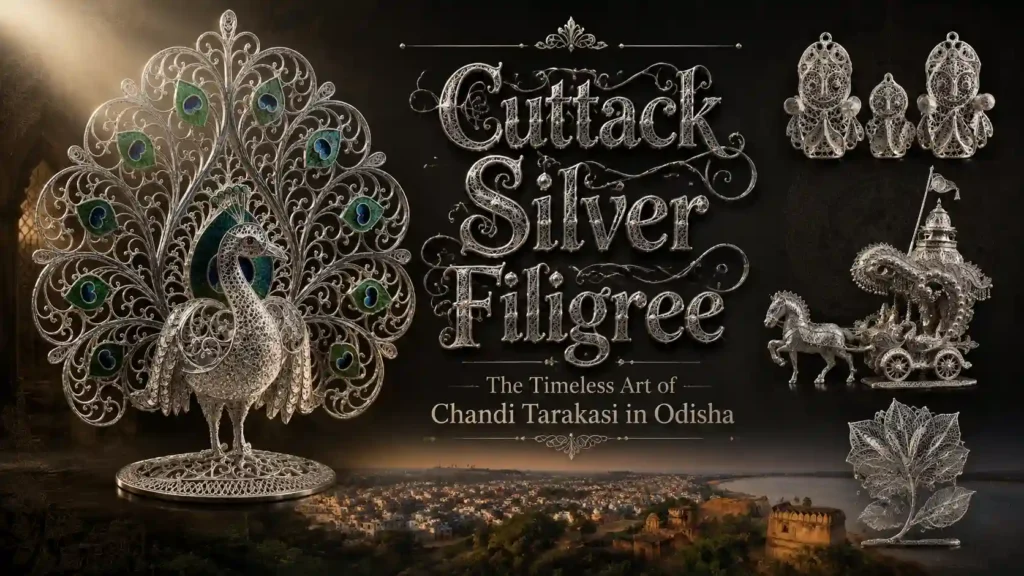
What makes Kataka the Silver City of India? The answer lies in its breathtaking Silver Filigree, popularly known as Chandi Tarakasi or Rupa Tarakasi. For nearly five centuries, artisans of Kataka have transformed fine strands of silver into delicate masterpieces that resemble lace rather than metal.
From elegant filigree jewelry worn by brides to the magnificent Chandi Medha displayed during Durga Puja, this remarkable craft represents Odisha’s rich artistic heritage and unmatched craftsmanship.
Today, with the prestigious Geographical Indication (GI) Tag, Kataka Silver Filigree Work has gained global recognition, making it one of India’s finest traditional handicrafts.
Whether you are an art lover, traveler, collector, or someone searching for authentic handcrafted jewelry, this guide explores everything you need to know about Filigree Making in Odisha.Table of Contents
Quick Facts About Kataka Silver Filigree
| Feature | Details |
|---|---|
| Local Name | Chandi Tarakasi / Rupa Tarakasi |
| Location | Kataka, Odisha |
| GI Tag | Awarded in March 2024 |
| Age of the Craft | Around 500 years |
| Material Used | 90% or higher purity silver alloy |
| Famous Products | Jewelry, Chandi Medha, idols, souvenirs, decorative items |
What is Silver Filigree?
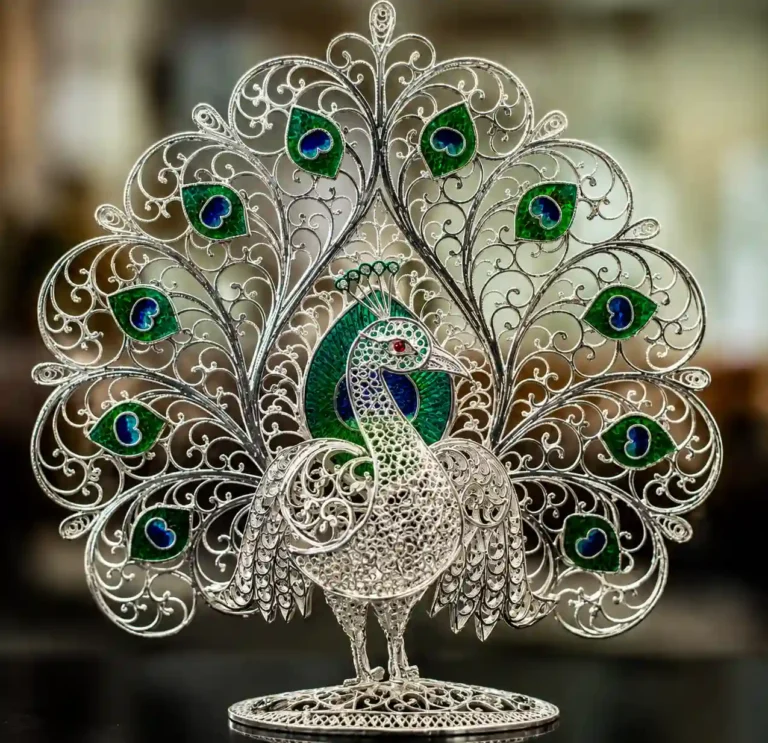
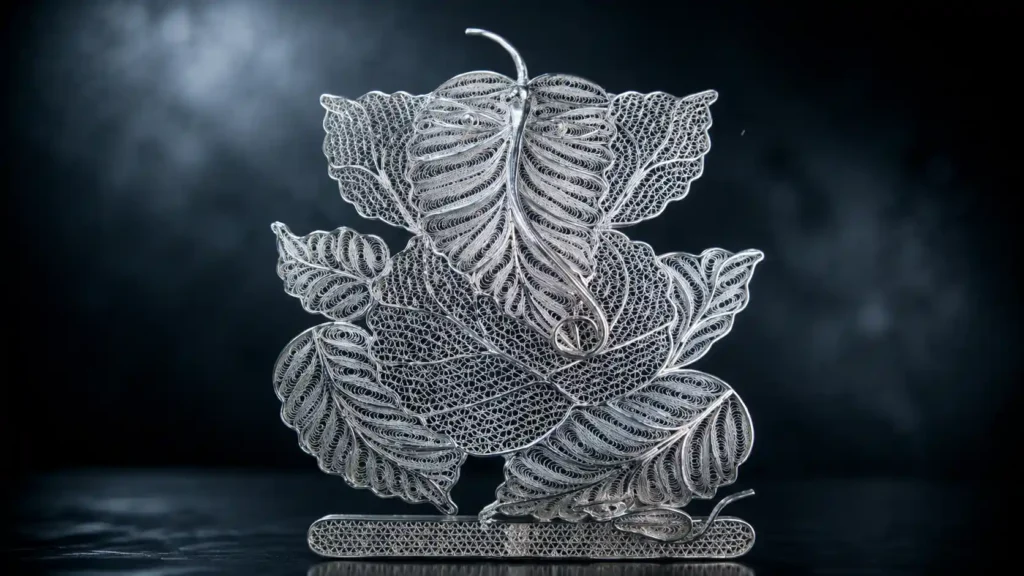
Silver filigree is the art of creating decorative objects using extremely thin silver wires.
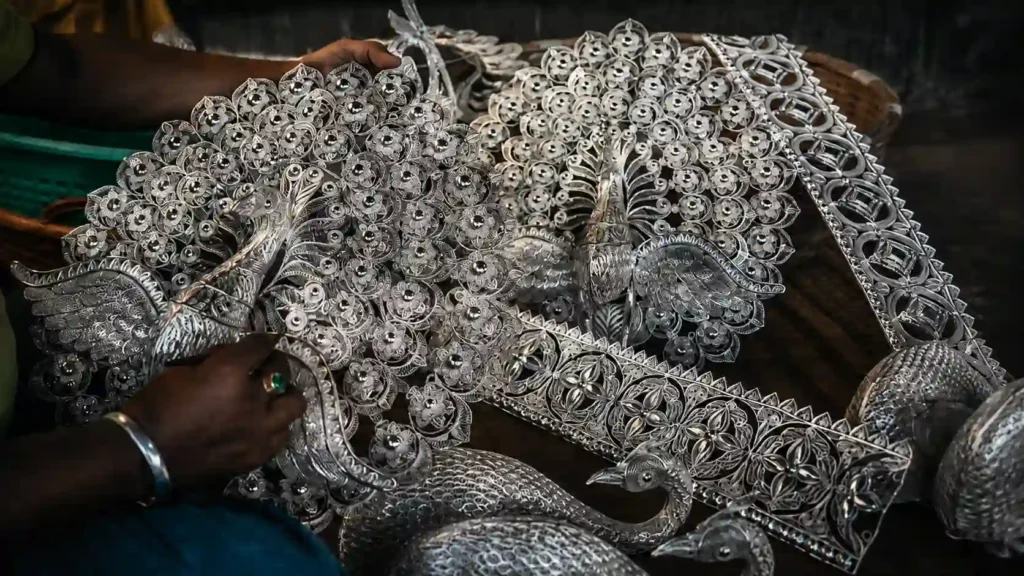
Instead of carving or casting metal, artisans carefully twist, curl, weave, and solder delicate silver threads into intricate designs.
The result is artwork that looks light, elegant, and almost like embroidered lace.
In Odisha, this traditional art is known as Chandi Tarakasi, meaning “silver wire craft.”
Why is Kataka Called the Silver City?
Kataka has been the heart of silver craftsmanship for centuries.
Generations of skilled artisans have preserved this rare handcraft, making the city famous worldwide.
Today, when people search for:
- Silver Filigree Kataka
- Kataka Filigree Work
- Kataka Silver Filigree Work
they are referring to this unique heritage that has become the identity of the Millennium City.
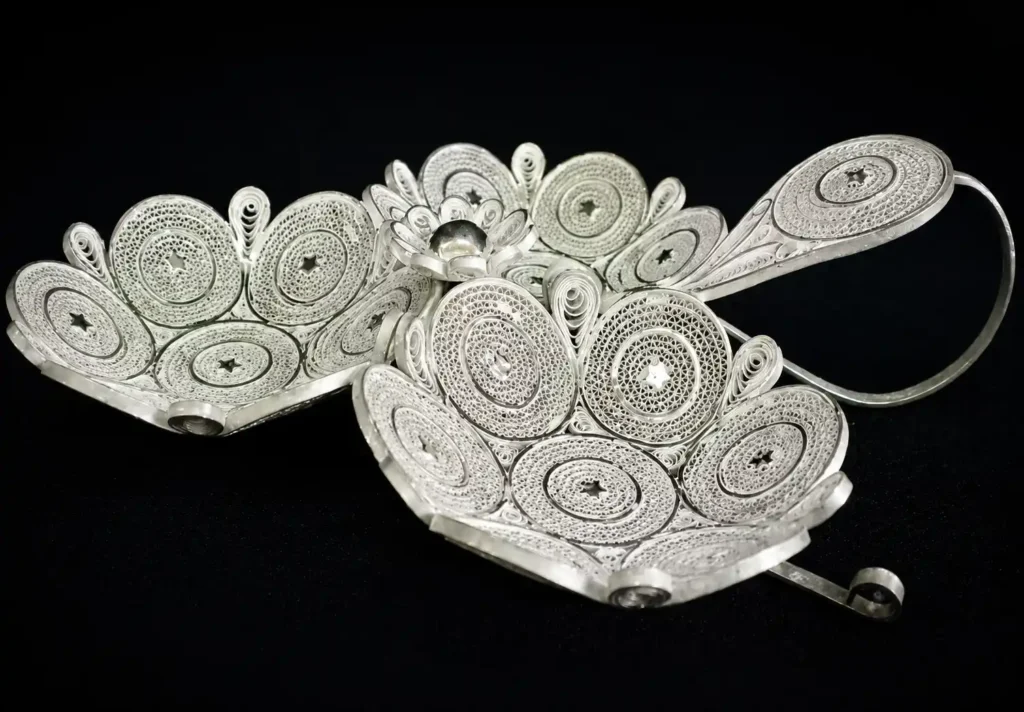
History of Filigree Making in Odisha
A 500-Year-Old Legacy
The history of Filigree Making in Odisha dates back nearly five centuries.
Historians believe the craft evolved through:
- Ancient Odia metalworking traditions
- Persian artistic influences during Mughal rule
- Maritime trade links between ancient Kalinga and Southeast Asia
Over time, Kataka artisans perfected their own distinctive style characterized by extremely fine silver wire patterns inspired by nature.
Popular motifs include:
- Lotus flowers
- Peacocks
- Creepers (Lata)
- Floral vines
- Geometric webs
- Temple-inspired patterns
Unlike heavy silver ornaments, Kataka Filigree Work is admired for its delicate appearance and lightweight elegance.
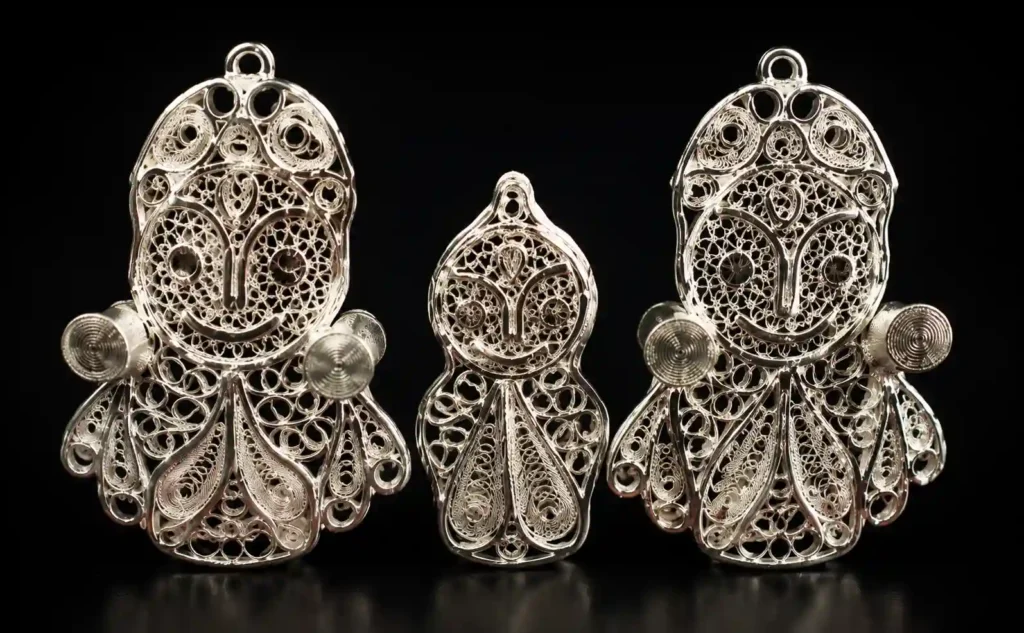
How is Kataka Silver Filigree Made?
Step 1: Melting the Silver
Artisans melt high-purity silver inside traditional clay crucibles over charcoal.
A small amount of copper is added to increase strength while maintaining flexibility.
Step 2: Drawing the Silver Wire
The silver is repeatedly pulled through steel draw plates.
With every pass, the wire becomes thinner until it is often finer than a strand of human hair.
This process gives the craft its name—Tarakasi, meaning fine wire work.
Step 3: Twisting and Designing
Two or more silver wires are twisted together to create beautiful textured edges.
Thicker wires are then bent into the main framework of the design.
Step 4: Filling the Pattern
Using tiny tweezers, artisans carefully place and roll delicate silver wires into floral and geometric motifs.
Every piece is assembled completely by hand.
The joints are fixed using natural flux and silver solder before being gently heated.
Step 5: Cleaning and Polishing
Finally, the ornament is cleaned using traditional soapnut (Ritha) solution and acid water.
After brushing and polishing, the silver shines brilliantly, giving Kataka filigree its signature appearance.
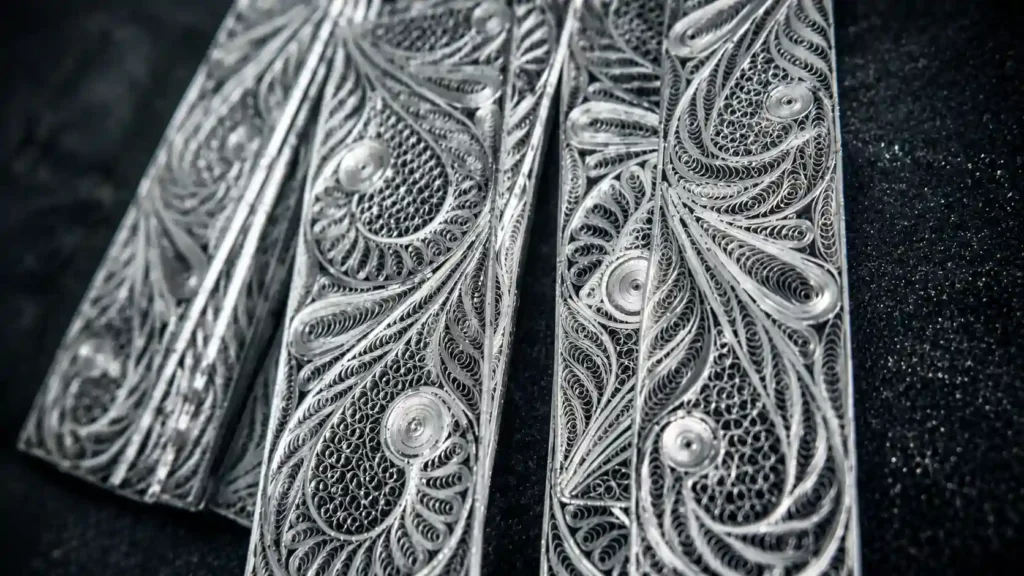
What Makes Kataka Filigree Work Unique?
Several features distinguish this craft from other silver ornaments.
Extremely Fine Wire Work
Every design is made from incredibly thin silver threads.
Lightweight Beauty
Despite their elaborate appearance, filigree ornaments remain surprisingly light.
Entirely Handmade
Each piece reflects hours or even weeks of skilled craftsmanship.
Rich Cultural Heritage
Every ornament carries centuries of Odisha’s artistic tradition.
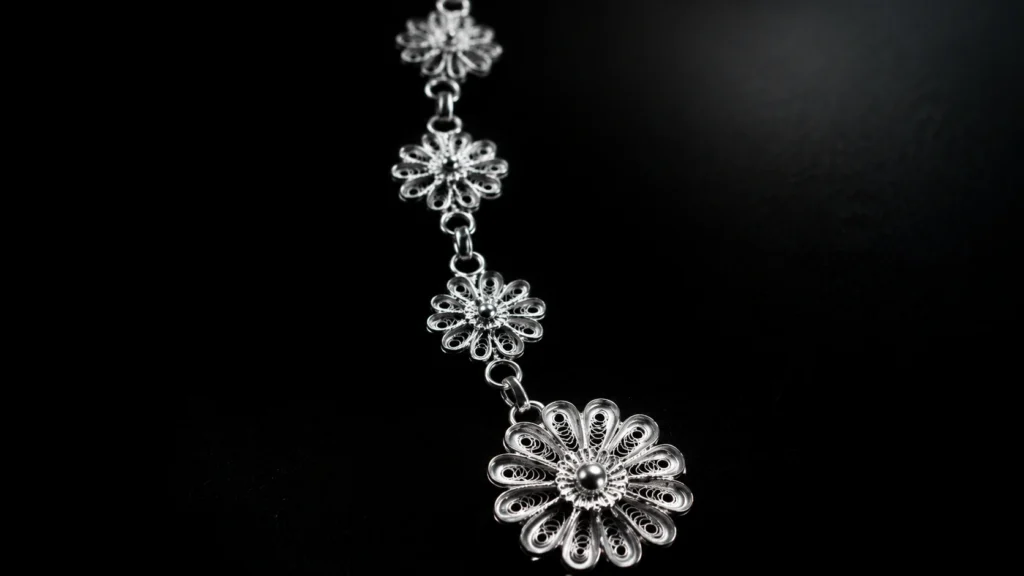
Popular Types of Filigree Jewellery
One of the biggest attractions of Filigree Jewellery is its versatility.
Traditional pieces include:
- Jhuntia (toe rings)
- Kamarbandh (waist belt)
- Matha Tika
- Bridal necklaces
- Bangles
- Anklets
Modern collections feature:
- Chandelier earrings
- Contemporary pendants
- Bracelets
- Brooches
- Minimalist necklaces
- Designer rings
The blend of traditional craftsmanship and modern fashion has made Kataka filigree increasingly popular among younger buyers.
Beyond Jewellery: The Magnificent Chandi Medha
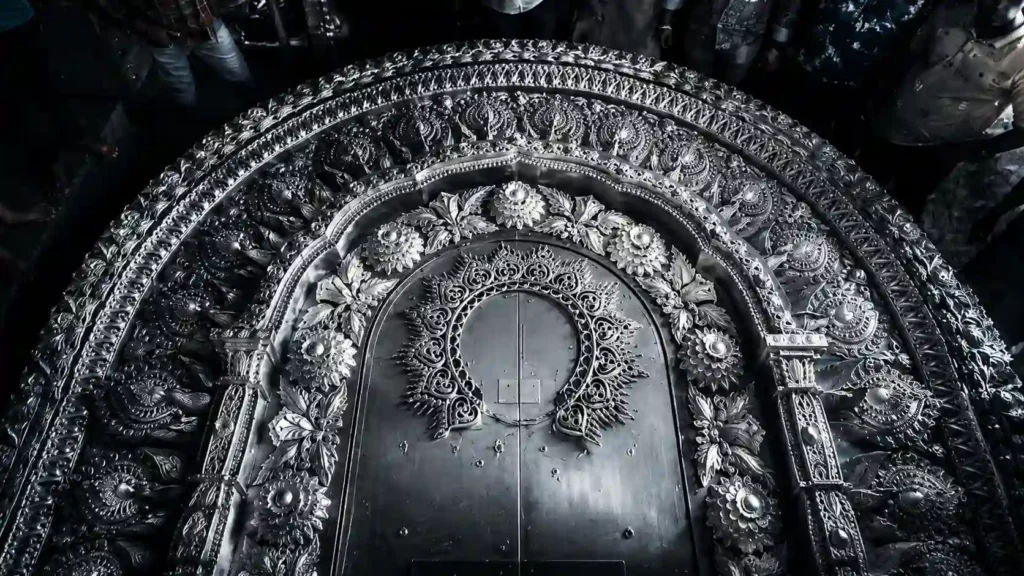
Perhaps the grandest expression of Kataka’s silver artistry is the Chandi Medha.
Every Durga Puja, artisans create enormous silver backdrops measuring up to 20–25 feet high.
These spectacular installations decorate Durga idols across famous puja pandals in:
- Choudhury Bazar
- Sheikh Bazar
- Nayasarak
Thousands of kilograms of silver craftsmanship transform the city into a dazzling artistic celebration.
Beautiful Souvenirs You Can Buy
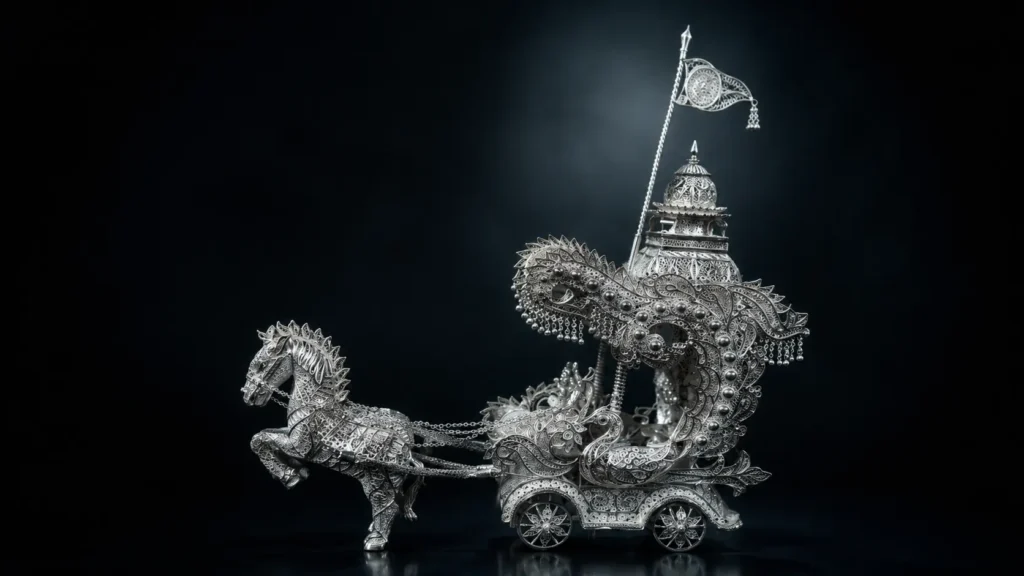
Besides jewelry, artisans also create:
- Miniature Konark Sun Temple Wheels
- Jagannath idols
- Taj Mahal replicas
- Betel leaf (Paan) boxes
- Attardans (perfume containers)
- Decorative bowls
- Home décor items
- Silver gift articles
These make excellent souvenirs from Odisha.
The GI Tag: A Historic Recognition
One of the biggest milestones for Kataka Silver Filigree came in March 2024, when it received the prestigious Geographical Indication (GI) Tag.
This recognition ensures:
- Protection of authentic craftsmanship
- Recognition of traditional artisans
- Prevention of counterfeit products
- Promotion of Odisha’s cultural heritage
Only genuine handcrafted filigree produced in Kataka can legally be marketed as Kataka Rupa Tarakasi.
Modern Initiatives to Preserve the Craft
Although rising silver prices and machine-made products pose challenges, several initiatives are helping artisans.
These include:
- GI Tag protection
- Government support
- Silver Filigree Common Facility Centre (CFC) at Bidanasi
- Design innovation
- Tourism promotion
- Skill development programmes
The upcoming CFC will provide:
- Modern testing laboratories
- Design assistance
- Live demonstrations
- Tourist experience zones
Where to Buy Authentic Kataka Silver Filigree?
If you’re planning a visit to Kataka, buy directly from trusted artisan markets.
Best Shopping Areas
- Nayasarak
- Balu Bazar
- Choudhury Bazar
You can also purchase from:
- Boyanika
- Utkalika
- Certified artisan workshops
How to Identify Genuine Filigree Jewellery?
- Before purchasing:
- Check for BIS Hallmark.
- Ask whether the product carries the GI-certified identity.
- Purchase from reputed artisans or government outlets.
- Avoid unusually cheap machine-made imitations.
- Authentic handcrafted filigree requires tremendous skill and cannot be mass-produced.
How to Care for Silver Filigree?
To preserve its beauty:
- Store in airtight pouches.
- Avoid exposure to moisture.
- Clean gently with a soft toothbrush.
- Use mild soapnut (Ritha) water.
- Polish occasionally using a silver polishing cloth.
Proper care keeps filigree shining for generations.
Why Every Traveler Should Experience Kataka Filigree
Visiting a filigree workshop is an unforgettable cultural experience.
You can:
- Watch artisans weave silver by hand.
- Learn centuries-old techniques.
- Support local craftspeople.
- Buy authentic handmade souvenirs.
- Understand why Kataka is called the Silver City.
Few traditional crafts in India combine history, artistry, and precision as beautifully as Chandi Tarakasi.
People Also Ask – Answers to Common Questions
What is Kataka Silver Filigree?
Kataka Silver Filigree, locally called Chandi Tarakasi, is a traditional handcrafted art in which artisans create intricate designs using extremely fine silver wires.
Why is Kataka famous for filigree work?
Kataka has been the centre of silver wire craftsmanship for nearly 500 years. Its artisans are internationally recognized for producing delicate and intricate silver creations.
What is the GI Tag for Kataka Filigree?
The GI Tag, awarded in March 2024, legally protects authentic Kataka Rupa Tarakasi, ensuring only genuine handcrafted products from Kataka carry this identity.
What products are made using silver filigree?
Popular products include jewelry, Chandi Medha decorations, Jagannath idols, Konark wheel replicas, decorative boxes, souvenirs, and home décor items.
Where can I buy authentic Kataka Filigree?
The best places are Nayasarak, Balu Bazar, Choudhury Bazar, and government outlets like Boyanika and Utkalika, where certified handcrafted products are available.
Key Takeaways
- Kataka Silver Filigree (Chandi Tarakasi) is one of India’s finest silver crafts.
- The art has flourished in Odisha for nearly 500 years.
- Every piece is handcrafted using ultra-fine silver wires.
- The craft received a prestigious GI Tag in 2024.
- From elegant jewelry to grand Chandi Medha, filigree reflects Odisha’s artistic excellence.
- Buying authentic handcrafted filigree helps preserve the livelihood of traditional artisans.
Conclusion
Related guide: Discover Odisha's dance and craft traditions, from Odissi to Pattachitra.