1. Cultural Origins: Why Gaja Laxmi, Why 11 Days, and the 1923 Genesis
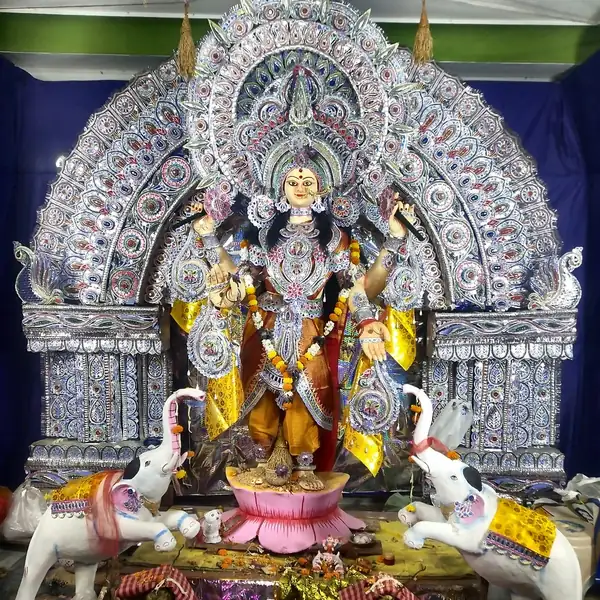
The roots of this public festival date back to 1923 at Meena Bazar. At that time, local traders led by merchant Kunja Sahu pooled contributions to establish the town's first public clay mandap. Dhenkanal was still a princely state back then. Consequently, local shopkeepers and artisans wanted a celebration owned by the working merchant community rather than the royal court.
Over the past century, that single clay mandap grew into a massive civic tradition. Today, each bazaar committee (sahi) competes enthusiastically. They strive to construct the tallest pandal, commission the finest idol, and install breathtaking light gates.
FESTIVAL FIELD SHEET
| Core Deity | Goddess Gaja Laxmi (Goddess of Wealth with Twin Elephants) |
| Inaugural Night | Kumar Purnima (Ashwina Full Moon) |
| Total Duration | 11 Days (Culminating in the Bhasani Immersion Carnival) |
| Number of Active Mandaps | 38 to 42 Registered Bazaar Committees |
| Prime Spectacle Hours | 8:30 PM to 2:30 AM (Peak lighting, music, and food stalls) |
| Key Route | NH 16 to NH 55 via Cuttack / Khuntuni (~68 km from Bhubaneswar) |
The Iconography: What Makes the Clay Idols Distinct
Coastal Odisha’s Durga idols represent the fierce, weapon-bearing vanquisher of Mahishasura. In contrast, the Gaja Laxmi idol in Dhenkanal embodies calm maternal grace and agricultural abundance. Several distinct artistic elements set these sacred clay sculptures apart:
- The Sacred Posture: Sculptors depict the Goddess seated in Padmasana (lotus posture). She rests atop a fully blossomed pink lotus rising above pristine cosmic waters.
- The Twin Elephants: Two sculpted royal white elephants (Gaja) flank the Goddess. Their trunks are raised skyward, holding golden urns (amrita kalasha) to perform the ritual Gaja-Abhisheka bath.
- The Artisans: Sculptors gather clay from the silt-rich banks of the Brahmani River basin. Hereditary artisan families from Cuttack and Midnapore arrive months in advance. Then, they shape straw frames and river mud into serene, lifelike deities.
- Traditional Ornaments: Leading committees strictly avoid synthetic paints and tin foil. Instead, they adorn the idols with handcrafted silver filigree (tarakasi) and beaten brass backdrops (medha). Local trade guilds preserve these genuine gold and silver ornaments across generations.
2. The Visual Revolution: Multi-Tiered Pixel LED Gates
For decades, Dhenkanal was renowned across Eastern India for its intricate bulb gates. Artisans painstakingly wired thousands of incandescent filament bulbs onto bamboo scaffolds to depict mythological scenes.
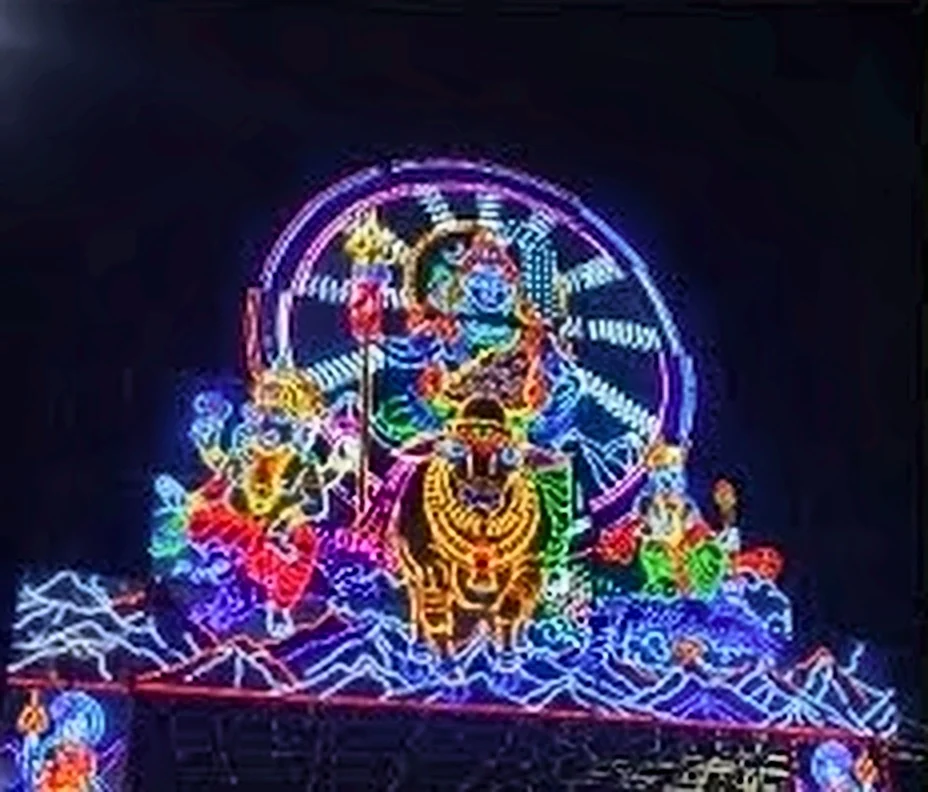
Recently, however, the festival underwent a major technological revolution. Committees replaced traditional bulbs with high-density programmable pixel LED gates. As a result, the town's main avenues now function as an open-air digital light gallery.
Local committees collaborate closely with master lighting fabricators from Chandannagar in West Bengal and Cuttack. Together, they erect heavy steel trusses spanning 40 to 60 feet across the streets. These animated structures often rise four stories into the night sky.
What the Visual Spectacle Delivers
The modern pixel installations provide a dynamic sensory experience across three core elements:
- Dynamic Storytelling Gates: The pixel gates do not simply blink. Instead, they run computerized mythological stories. Overhead arches display revolving Sudarshana Chakras, blooming lotus blossoms, running elephants, and hypnotic 3D tunnel illusions.
- Continuous Overhead Ceilings: Between major bazaars, overhead lighting nets form an unbroken canopy. Consequently, the streets are bathed in glowing waves of cyan, gold, and royal violet.
- Dedicated Power Stability: Grid drops can interrupt computerized sequences. For this reason, committees station heavy, silent-diesel generator rigs in alleys every 150 meters. Dedicated electrical squads remain on standby throughout the night.
Overhead Street Canopies
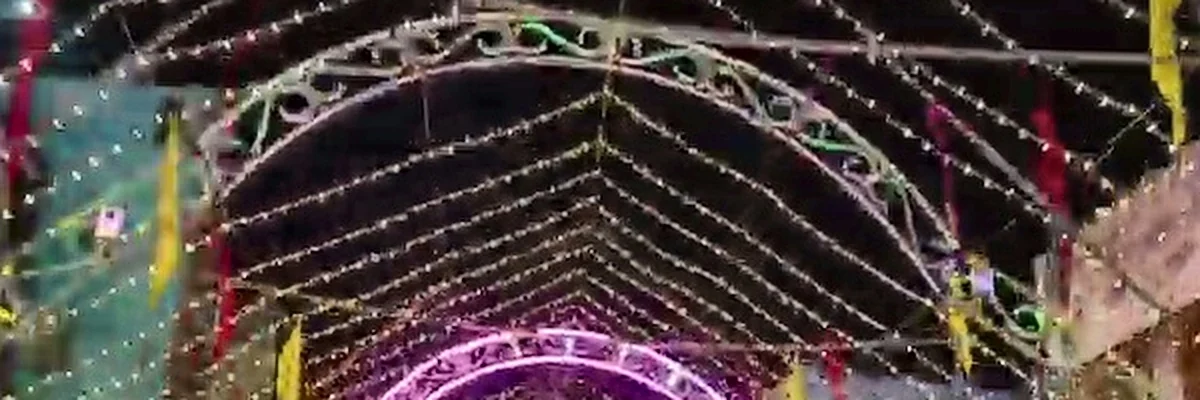
Walking beneath these illuminated corridors feels like entering a vaulted cathedral of pure color. Curved structural archways reflect vibrant patterns off shopfronts every few yards. In fact, this creates a bright, welcoming pedestrian promenade that remains energetic well past 2:00 AM.
3. The Walking Pandal Circuit: Navigating the Town
Visiting Dhenkanal during Laxmi Puja requires a strategic walking route. Nearly 40 pandals line narrow avenues, while over 100,000 visitors fill the town center after midnight. If you wander randomly, you will quickly hit pedestrian chokepoints.
Therefore, follow this linear, high-efficiency route. It starts at the outer entrance gates and moves smoothly toward the historic bazaar core:
High-Efficiency Walking Route:
Station Bazar
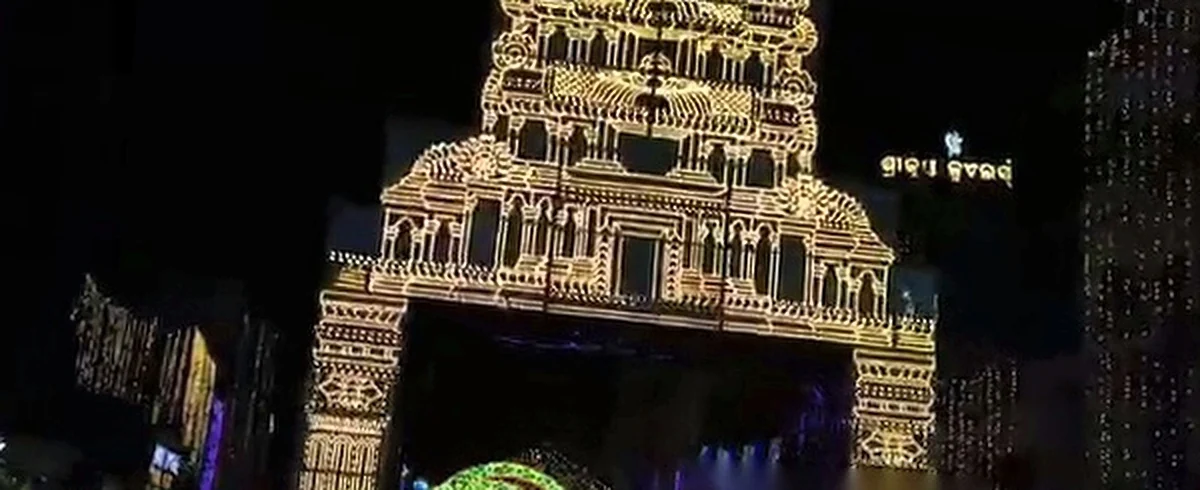
Station Bazar serves as the primary gateway for travelers arriving from the railway station and northern bypass road. Because of this strategic location, the committee builds the widest entrance arches in the district. Their golden Gopuram gate stands over 50 feet tall and uses yellow pixel LEDs. Beyond the main gate, visitors walk through a continuous light corridor stretching hundreds of meters down the road.
Meena Bazar (The Heritage Epicenter)
Meena Bazar remains the spiritual anchor of Dhenkanal Laxmi Puja. Founded in 1923, this committee prioritizes classical dignity over modern electronic displays. The idol here is widely considered the most artistically refined in the region. Hereditary Cuttack silversmiths frame the Goddess with an exquisite silver filigree (tarakasi) backdrop. Although darshan lines are long, witnessing this original heritage puja is an essential pilgrimage.
Mahabir Bazar & Ganesh Bazar
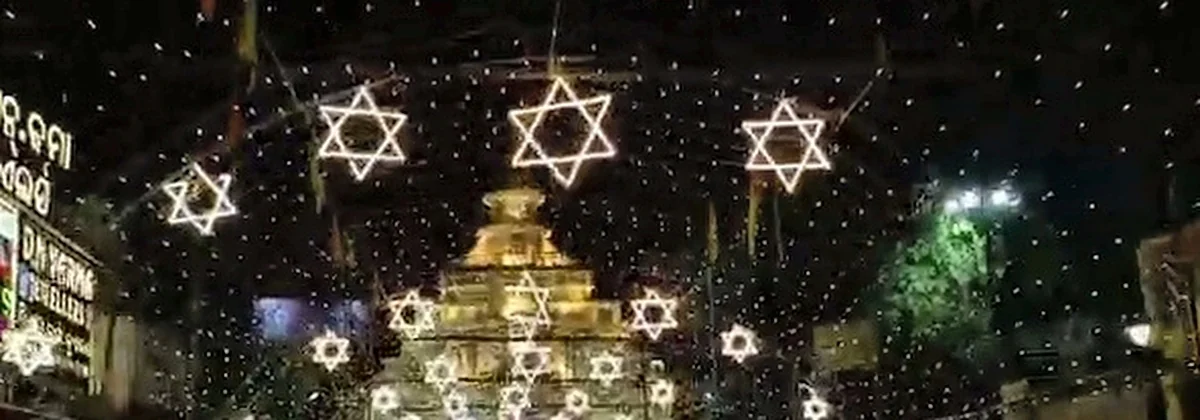
These two neighboring committees share a friendly annual rivalry. Each year, they compete to design the most ambitious architectural pandals. They build full-scale replicas of famous Indian temples and royal palace gates using bamboo, coir, and hand-painted relief panels. In addition, suspended glowing stars and warm floodlights illuminate the entire approach.
Jawahar Chowk & Kaibalya Bazar
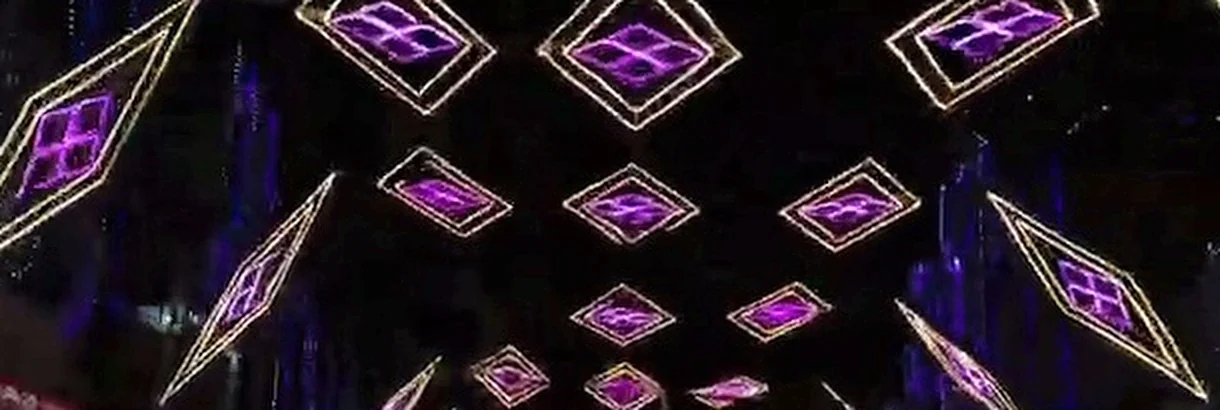
Located at the town’s commercial crossroads, Jawahar Chowk serves as the late-night social and culinary heart of the festival. Overhead, suspended 3D diamond LED lattices illuminate the street in rhythmic purple and gold patterns. Meanwhile, bustling sweet stalls and live folk stages keep this zone crowded until 3:00 AM.
4. Midnight Street Food: The Real Dhenkanal Flavors
Walking between pandals in the cool autumn air quickly works up an appetite. Fortunately, Dhenkanal boasts a rich culinary heritage shaped by local dairy farming and pulse cultivation. Instead of visiting generic fast-food carts, seek out these authentic regional specialties:
| Dish | Where to Find It | What Makes It Authentic |
|---|---|---|
| Dhenkanal Bara | Old Bus Stand Alleys, Meena Bazar Lane | Black gram (biri), coarse grind, fried in smoking mustard oil with aloo dum and yellow-pea ghuguni |
| Chhena Poda (Caramelized Whole Wheel) | Heritage sweet shops near Clock Tower | Slow-baked in fresh sal leaves over charcoal with a thick golden-brown caramelized crust |
| Chhena Jhili (Hot) | Station Road Sweet Outlets, Bypass stalls | Fresh cottage cheese swirls deep-fried in pure desi ghee and steeped in cardamom sugar syrup |
| Chaat & Dahi Bara | Jawahar Chowk Food Corridor | Topped with crunchy sev, grated beetroot, coriander, and rich spiced aloo dum broth |
Authentic Dhenkanal Bara
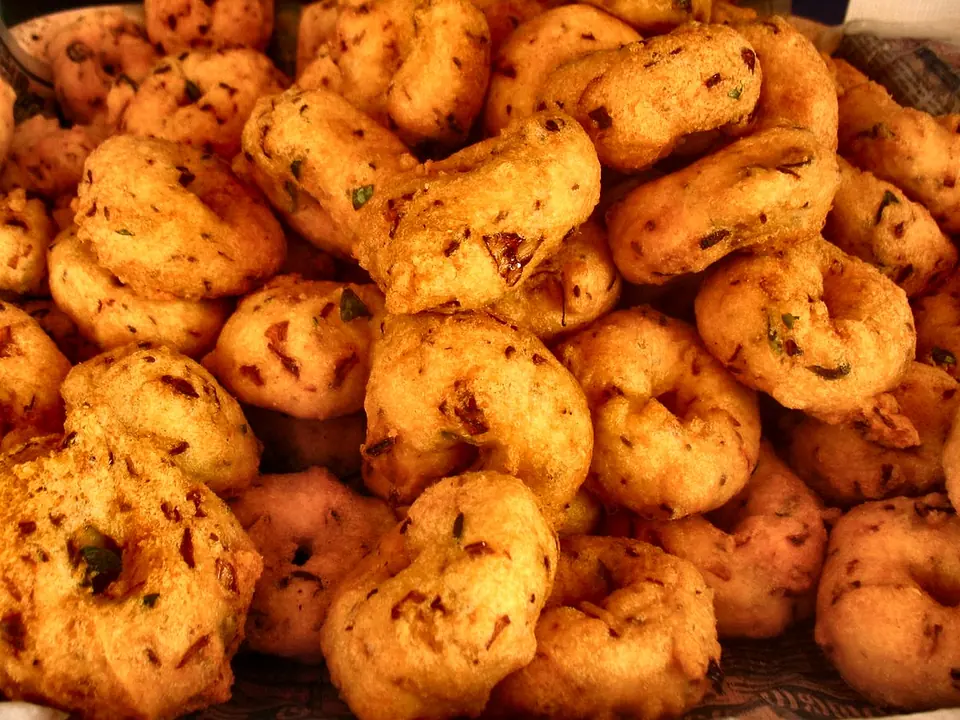
Dhenkanal's bara differs notably from coastal Odia vadas and south Indian medu vadas. Cooks prepare it from coarsely crushed black gram (biri), seasoned with cumin, fresh ginger, and green chilies.
They shape the batter by hand into thick patties and fry them in smoking mustard oil. As a result, the baras develop a dark golden, crunchy crust while staying soft inside.
Vendors place two or three hot baras in a dried sal-leaf bowl (dana) and crush them lightly. Next, they ladle generous portions of spicy potato curry (aloo dum) and slow-cooked yellow-pea ghuguni on top. Fresh chopped onions and chilies complete the dish. Eating hot bara at midnight is an unforgettable festival ritual.
Fresh Chhena Poda & Chhena Jhili
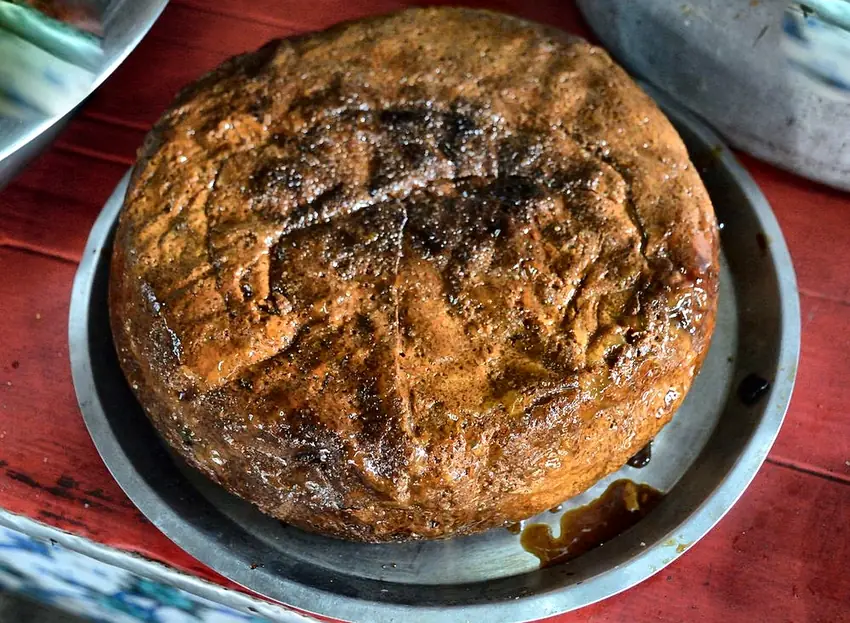
Sweet makers in Dhenkanal and nearby Choudwar are famous for dairy sweets. To make authentic chhena poda, artisans knead fresh cottage cheese with semolina, sugar, and cardamom. Then, they wrap the mixture in sal leaves and bake it over charcoal ovens. This slow process creates a thick caramelized crust around a soft, smoky core.
Similarly, sweet stalls along Station Road fry fresh swirls of chhena jhili in pure desi ghee. Afterward, they soak the golden spirals in warm cardamom syrup before serving them fresh to late-night visitors.
5. Traffic Regulations, Police Diversions & Parking Blueprint
The district administration enforces strict traffic regulations during the eleven festival nights. These measures keep pedestrian corridors safe and prevent gridlock across town.
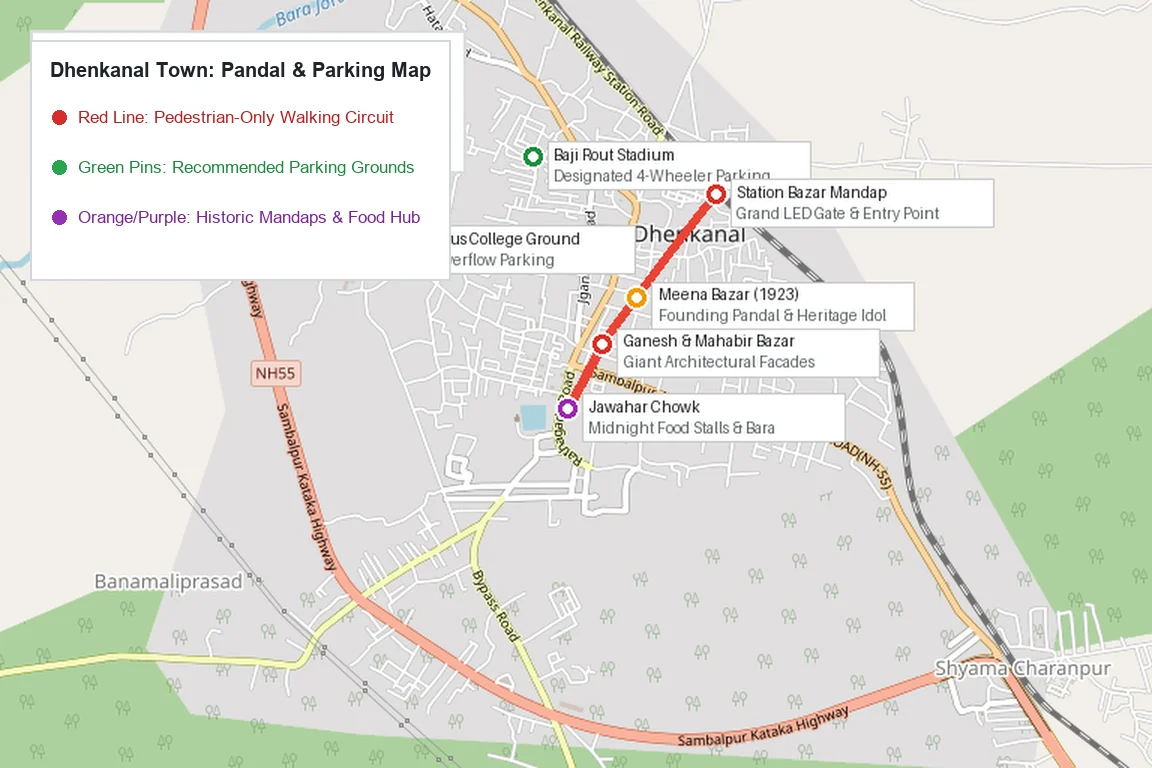
The Pedestrian Core (Ground Rules)
Police officers manage vehicle movement using clear perimeter boundaries:
- The 5:00 PM Barricade: Steel gates seal off the main road from the Collectorate down to Station Bazar every afternoon.
- Pedestrian-Only Zones: Cars, auto-rickshaws, and two-wheelers cannot enter inner market streets between 5:00 PM and 3:30 AM.
- Highway Diversions: Meanwhile, long-distance freight trucks on NH 55 are diverted onto outer bypasses to keep highway approaches clear.
Recommended Parking Grounds
Never attempt to drive directly into the bazaar center. Instead, leave your vehicle at these designated perimeter parking grounds:
- Baji Rout Stadium (Primary): This is the largest designated four-wheeler parking ground. It offers organized gates, level ground, and direct access to Station Bazar.
- Dhenkanal Autonomous College Ground (Overflow): Located along the western approach, this spacious campus handles overflow vehicles with an easy highway exit.
- Court & Collectorate Grounds: These perimeter spaces remain accessible during earlier festival days and feature traffic police assistance.
6. Highway Logistics: Driving from Bhubaneswar or Cuttack on NH 55
Public buses between Dhenkanal, Cuttack, and Bhubaneswar stop running by 9:30 PM. Unfortunately, this coincides with the peak hours for light shows and cultural pandals. Night trains run irregularly and remain crowded. Consequently, traveling by personal car or private cab is the most reliable option.
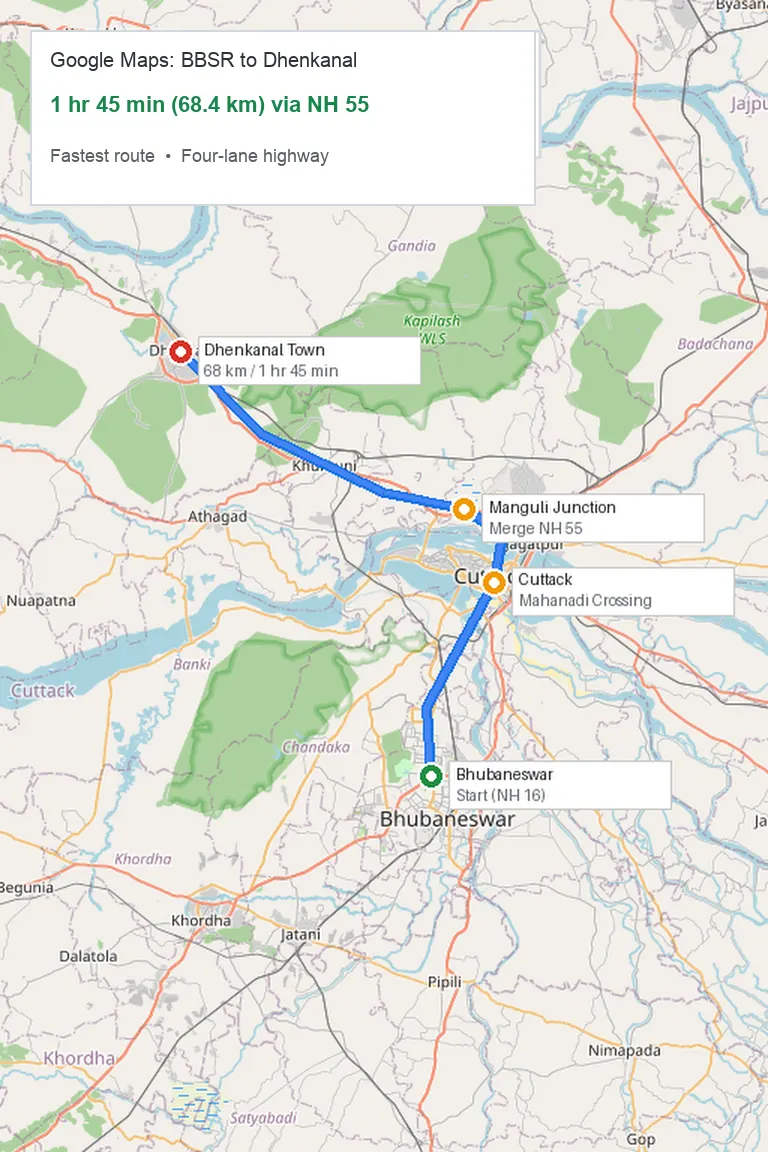
HIGHWAY NAVIGATION TIMELINE
Route Conditions & Driving Strategy
Plan your driving schedule around these field-tested highway tips:
- The Route: Drive north on NH 16 from Bhubaneswar and cross the Mahanadi river at Cuttack. Then, merge onto NH 55 toward Dhenkanal at Manguli Junction.
- Road Quality: The highway from Choudwar to Dhenkanal is now an upgraded four-lane road. Most drivers complete the trip in under 1 hour and 45 minutes. However, stay alert for bridge diversions near Khuntuni.
- The Midnight Return Window: The best departure time is between 1:30 AM and 2:30 AM. During this period, pedestrian crowds thin out, so retrieving your car is quick. The return drive along NH 55 is cool, smooth, and takes about 80 minutes back to Bhubaneswar.
7. Practical Field Tips for Families & Travelers
Keep these practical guidelines in mind to enjoy a comfortable night visit:
- Footwear: A complete pandal tour requires 10,000 to 14,000 steps over tarmac and packed earth. Therefore, wear cushioned walking shoes.
- Carry Cash: Although vendors accept UPI payments, mobile networks frequently jam near Meena Bazar. Keep ₹1,000 to ₹1,500 in small cash notes for food and rickshaws.
- Warm Layers: Because Dhenkanal is surrounded by forested hills, temperatures drop noticeably after midnight. Pack light jackets or shawls for children and elders.
- Medical and Safety Desks: Police watchtowers and women’s assistance booths operate at every major crossing. In addition, first-aid teams remain stationed near Baji Rout Stadium.
8. Complete Day-and-Night Weekend Itinerary
If you drive from Bhubaneswar or Cuttack, you can pair your festival visit with local heritage sites during the day. Here is an efficient weekend itinerary:
DAY-TO-NIGHT WEEKEND ITINERARY
| 12:30 PM | Depart Bhubaneswar / Cuttack in your vehicle |
| 2:00 PM | Ascend the scenic hill road to Kapilash Temple (Lord Chandra Sekhar Jew) |
| 4:00 PM | Explore the peaceful forest foothills of Saptasajya |
| 5:30 PM | Arrive at Dhenkanal town periphery; park at Baji Rout Stadium |
| 6:00 PM | Early darshan at Meena Bazar before crowds swell |
| 8:00 PM | Enjoy hot Dhenkanal bara, aloo dum, and fresh chhena jhili |
| 9:00 PM | Tour the illuminated pixel gate corridors: Ganesh Bazar to Station Bazar |
| 1:30 AM | Return to the parking lot; take NH 55 for an easy drive home |
9. Why a Dedicated Vehicle Rental Solves Festival Logistics
Relying on public transport often leaves travelers stranded after 9:30 PM. At the same time, returning on a two-wheeler late at night exposes you to highway fatigue and cold winds.
Hiring a dedicated round-trip cab or self-drive car with LocalDrive provides several practical advantages:
- A Secure Mobile Base: Parked at Baji Rout Stadium, your car serves as a secure resting spot. Elders and kids can rest, charge phones, or store belongings between walking loops.
- Total Time Freedom: You can watch animated light displays past 1:30 AM without rushing for the last bus.
- Sightseeing Flexibility: A private vehicle also lets you visit Kapilash Temple, Saptasajya, or Joranda Gadi before entering the festival. You can also explore Sapua Dam or Anantasayana Vishnu at Saranga.
Frequently Asked Questions
When do the pandal lights switch on and off in Dhenkanal?
Dynamic pixel LED gates and pandal illuminations turn on around 6:00 PM each evening. They run at full power until 2:30 AM or 3:00 AM. After 3:00 AM, operators switch off decorative gates for morning rituals.
What is the best day of the 11-day festival to visit?
Days 3 through 7 provide the best experience. By Day 3, all complex pandals and food stalls operate smoothly. Furthermore, you avoid the intense crowds of the final weekend and the Bhasani immersion carnival.
What happens on the final day of Dhenkanal Laxmi Puja?
The festival concludes with the Bhasani Jatra immersion procession. All 38+ clay idols are mounted on decorated trucks and wooden chariots. Folk troupes, traditional Ghanta drummers, and laser displays accompany the parade toward the river immersion ghats.
Are clean restroom facilities available during the festival?
Municipal workers place bio-toilets near Baji Rout Stadium and Town Hall. However, for cleaner facilities, travelers usually stop at modern fuel stations along the NH 55 bypass before entering town.
How far is Dhenkanal from Bhubaneswar and Cuttack?
Dhenkanal is approximately 68 km from Bhubaneswar, which takes about 1 hour and 45 minutes via NH 16 and NH 55. From Cuttack, the distance is roughly 42 km and takes about 1 hour by car.
Can private cars enter Dhenkanal town during Laxmi Puja?
No. Police prohibit private cars and two-wheelers from entering central roads between 5:00 PM and 3:30 AM. Therefore, drivers must park at perimeter grounds like Baji Rout Stadium and continue on foot or via e-rickshaw.