What is the official dress code for Puri Jagannath Temple?
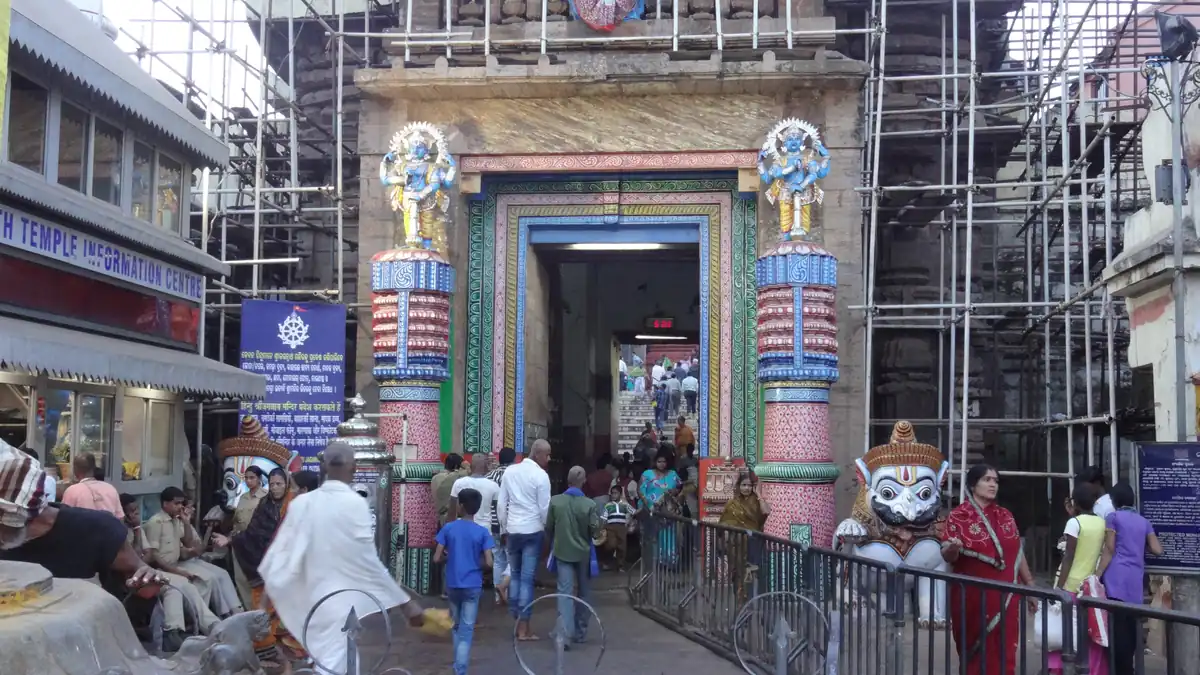
Back on January 1, 2024, the Shree Jagannath Temple Administration (SJTA) along with the Chhatisa Nijog (the council representing temple servitors) formally requested all visiting pilgrims to wear “decent and dignified attire”—known locally in Odia as Shalina Poshak. Many travelers assumed Puri was about to copy the strict rules from South Indian shrines like Guruvayur or Padmanabhaswamy, where men must take off their shirts and wrap a mundu.
That didn't happen here.
Because Puri welcomes millions of pilgrims from every state across India—many stepping off sleeper trains after three days on the road—the temple committee kept things practical. The ground expectations boil down to four simple points:
- Men visiting for darshan: Traditional clothes like a dhoti-kurta, pyjama-kurta, or dhoti-gamucha are preferred if you are performing special rituals. But for general entry, your everyday trousers, chinos, polo t-shirts, and plain full-length jeans are completely accepted at all four gates.
- Women visiting for darshan: Traditional Indian wear is the norm. Sarees, salwar suits with a dupatta, or long kurtis paired with leggings, palazzos, or pants pass through with zero issues.
- Children under twelve: Totally exempt from dress restrictions. Little boys and girls can wear their normal shirts, frocks, casual shorts, or dungarees.
- Temple servitors (Sevayats): The rule is actually most rigid for the priests themselves. When performing daily niti inside the Garbhagriha, servitors are strictly barred from wearing stitched trousers or shirts. They must wear an unstitched cotton dhoti, uttariya, and gamucha.
Can you wear jeans and casuals to Puri Jagannath Temple?
Yes, you can wear regular jeans without any trouble. I do it regularly, and on any given morning you will see hundreds of young devotees, students, and family travelers entering Srimandir in standard denim trousers. Security guards standing by the metal detectors have no problem with denim as a fabric.
What they do reject is distressed styling, beachwear, or loungewear. Here are the specific casual items that will get you stopped:
- Ripped or distressed jeans: Any jeans featuring deliberate cuts, frayed patches, shredded thighs, or designer holes will get an instant rejection from the JTP officers. Don't bother trying; you will have to step out.
- Inner vests and sleeveless athletic tops: Men wearing sleeveless banyans (ganji), gym tanks, running singlets, or basketball jerseys are turned away at the barricade.
- T-shirts with offensive prints: Plain casual t-shirts and normal brand logos are fine. But t-shirts promoting alcohol brands, beer bottles, obscene slogans, or disrespectful graphics will definitely get stopped.
- Joggers and sleeping pyjamas: Thin cotton nightwear pyjamas or baggy gym joggers look like informal house loungewear, and gate guards will often pull you aside.
What clothes are allowed for men in Puri Temple?
When getting dressed for your temple visit, pick your clothes based on what you plan to do once you get inside:
1. Traditional Indian Attire (Best for Rituals & Special Pujas)
If you arranged a special puja with a family Panda, plan to spend hours sitting in the Jagamohana, or want to attend early morning Mangala Alati, traditional clothing feels fantastic and shows respect:
- Dhoti and Kurta: A clean cotton dhoti (white, cream, or light yellow) paired with a simple cotton kurta. Odia Khandua borders are a classic local favorite.
- Dhoti and Gamucha: Wrapping a plain dhoti around your waist with an authentic Odia cotton gamucha or uttariya draped across your chest or shoulder. That is how thousands of local devotees do it every day.
- Pyjama-Kurta: A breathable cotton pyjama paired with a knee-length kurta. Extremely practical in Puri's coastal heat.
2. Modest Everyday Casuals (Accepted for General Darshan)
If you're on a quick road trip or general pilgrimage, keep it simple:
- Formal trousers or chinos: Clean full-length trousers paired with any collared button-down shirt or polo.
- Plain straight-fit jeans: Intact denim trousers paired with a neat polo shirt or short kurta.
- Drawstring cotton trousers: A huge pro-tip from my own visits! Since you must take off your leather belt before entering (explained below), trousers with an internal drawstring or elastic waist save you the awkwardness of holding up loose pants while moving through dense crowds.
The Important Rule on Lungis
One small trap to avoid: while an unstitched traditional dhoti or south-Indian mundu is respected, printed daily lungis are not permitted. Servitors and gate police treat lungis as informal house clothes meant for sleeping. If you arrive in a printed lungi, you will be told to change into a dhoti before stepping onto Baisi Pahacha.
What clothes are allowed for women in Puri Temple?
For women devotees, the core expectation is modest coverage: shoulders, chest, and legs should remain covered down to ankle length.
1. Sarees (The Timeless Standard)
A saree is by far the most popular and respected attire at Srimandir. Whether you wear a simple cotton saree or an exquisite Sambalpuri, Khandua, or Bomkai weave, you will walk past security without a second glance. A practical tip from my family visits: pin your pallu securely with two strong safety pins at your shoulder. When the crowd surges inside the Bhoga Mandapa, pinned pleats keep you comfortable and composed.
2. Salwar Kameez and Churidar
A traditional three-piece salwar-kameez set with a dupatta is completely welcome. Devotees usually drape the dupatta over both shoulders or cover their head during darshan.
3. Long Kurtis with Leggings or Palazzos
Modern ethnic outfits are everywhere at the temple. Just make sure the kurti is knee-length or longer, paired with full-length leggings, palazzos, or churidars.
Can Women Wear Jeans to Puri Temple?
Yes, but pair them with a long ethnic kurti that extends well past your hips. If you wear jeans with a short western crop top, tight gym tee, or sleeveless top, women police officers stationed at the gate barricades will ask you to cover up.
What clothing items are strictly banned at the temple gates?
To avoid being pulled out of the queue, steer clear of these prohibited items:
| Clothing Type | Strictly Banned Items (Turned Away at Gates) | Ground Reason |
|---|---|---|
| Legwear | Shorts, Bermudas, 3/4th capris, cargo shorts, beach boardshorts | Considered casual beachwear; not permitted in sanctum areas |
| Denim Styles | Ripped, torn, distressed, or acid-washed shredded jeans | Fails basic decency decorum standards |
| Tops & Vests | Sleeveless banyans (ganji), gym tank tops, crop tops, deep cut blouses | Shoulders and torso must remain covered |
| Western Wear | Mini skirts, above-knee dresses, backless dresses, sheer fabrics | Exposes bare legs in dense prayer halls |
| Loungewear | Nighties, sleeping pyjamas, printed daily lungis, track pants | Informal house clothes are not accepted for temple darshan |
| Graphics & Prints | Liquor/tobacco logos, political slogans, offensive graphics | Disrupts religious decorum and sanctum peace |
What should you do if security stops your clothes?
If you arrived on Bada Danda straight from Puri beach in travel shorts without knowing the rules, don't worry. You don't have to hire a rickshaw back to your hotel or forfeit your morning darshan. You can fix the problem on the spot within two minutes.
The 2-Minute Bada Danda Solution
- Don't argue with the JTP officer: The guards are simply carrying out administrative orders. Arguing only wastes your time and causes unnecessary stress.
- Cross the plaza facing Singhadwara: Directly across the pedestrian road, dozens of small handloom stalls and street vendors sell plain cotton dhotis for ₹120 to ₹250.
- Wrap it right over your shorts: You don't need a changing room. Devotees regularly buy a lightweight cotton dhoti, wrap it securely around their waist right over their shorts, tuck in the edges, and step back into the line. Security will let you straight through.
- Women's emergency fix: If a female visitor is stopped for a short top or western dress, the same stalls sell cotton dupattas and full wrap-around traditional cotton shawls for ₹100 to ₹200 that cover you entirely.
Footwear, leather, and mobile phones: rules you cannot bypass
Your clothes are only the first checkpoint. Srimandir enforces strict zero tolerance on three additional categories, and these rules are non-negotiable:
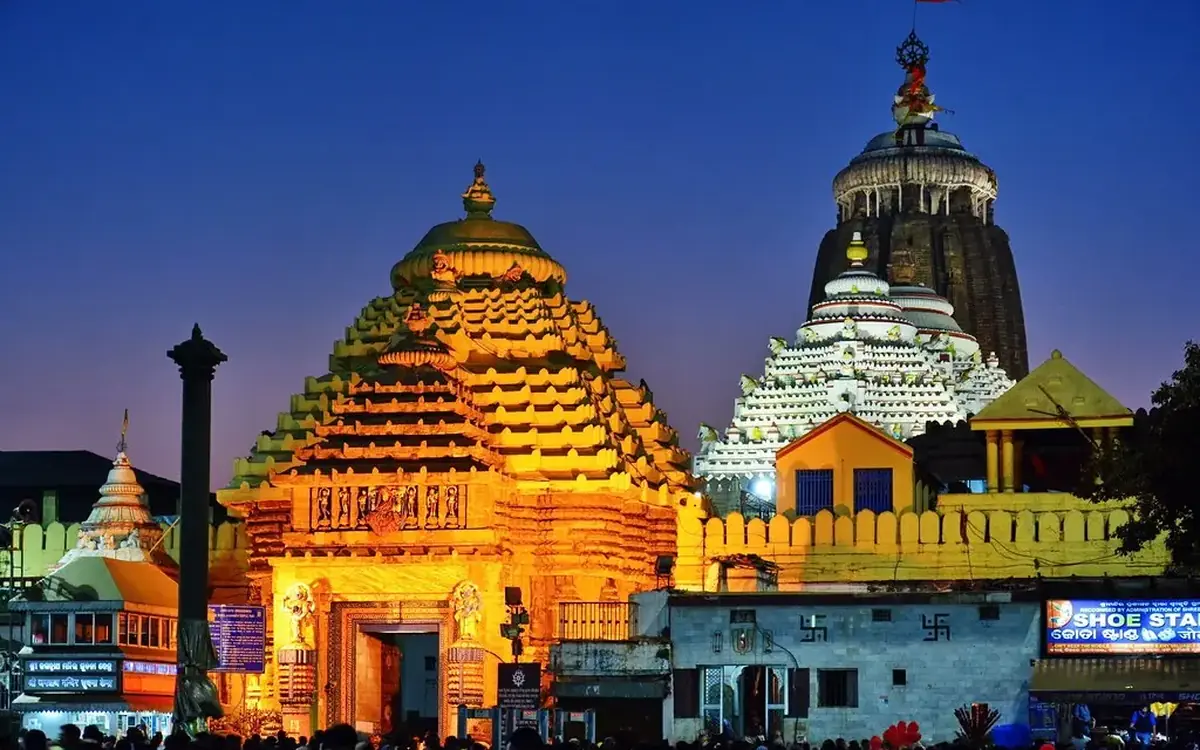
1. Leather Items Are Strictly Forbidden
In Sanatan temple traditions, dead animal leather cannot enter a consecrated sanctum. Police officers at the metal detector frame check this thoroughly:
- Leather Belts: Security personnel will make you unbuckle and remove any leather belt before passing the scanner. If your trousers are loose without a belt, you will have to hold them up with one hand during your entire darshan! Wear trousers with an elastic band, drawstrings, or a dhoti.
- Leather Wallets: Keep your cash, cards, and ID loose in your front pocket or inside a small cloth bag. Leather and suede wallets are turned away.
- Watch Straps: Metal and silicone smartwatch straps are fine, but leather watch bands must be removed.
2. Mobile Phones and Cameras Are 100% Banned
No smartphones, digital cameras, or recording gadgets are allowed past the gates. Carrying a mobile phone inside Srimandir leads to immediate confiscation and spot fines ranging from ₹1,000 to ₹5,000.
3. Where to Safely Store Your Belongings
Do not leave your belongings with unauthorized street touts. Always use the official SJTA facilities:
- Official Shoe Stand (Jota Stand): Located immediately to your right outside Singhadwara next to the police outpost. Hand over your shoes and collect a numbered metal token.
- Electronic Mobile Lockers: Secure administration lockers are located right beside the shoe stand for a nominal fee (₹10–₹20).
- Jagannath Ballav Complex: If you parked your vehicle at Jagannath Ballav, leave your phones, cameras, and luggage in your car or at the pilgrim center cloakroom before heading to the temple.
Step-by-step walkthrough: from parking to the Garbhagriha
Navigating Srimandir is straightforward once you know the exact flow on the ground:
- Park Your Vehicle: Private vehicles are barred from the main Grand Road. Park at the massive Jagannath Ballav Parking Complex or Old Jail ground. Grab an electric battery rickshaw (₹20 per passenger) to reach Singhadwara plaza.
- Drop Footwear & Mobiles: Head straight to the authorized SJTA cloakroom counters to your right before entering the barricades. Deposit your shoes, hand over your phone, and keep your cash and ID safely in your pocket.
- Choose Your Gate: Since mid-2024, all four gates are open for devotees:
- Singhadwara (Lion's Gate / East): The main ceremonial entrance facing the Aruna Stambha. Usually the busiest, but offers the grand classic entry.
- Ashwa Dwara (Horse Gate / South): Great for faster entry when walking from Swargadwar or the beach side.
- Vyaghra Dwara (Tiger Gate / West): Direct access from western lanes and parking areas.
- Hasti Dwara (Elephant Gate / North): Often has the shortest queues during peak noon hours.
- Security Clearance: Walk through the metal detector frame. JTP officers conduct a quick physical check for leather belts, mobile devices, and clothing compliance.
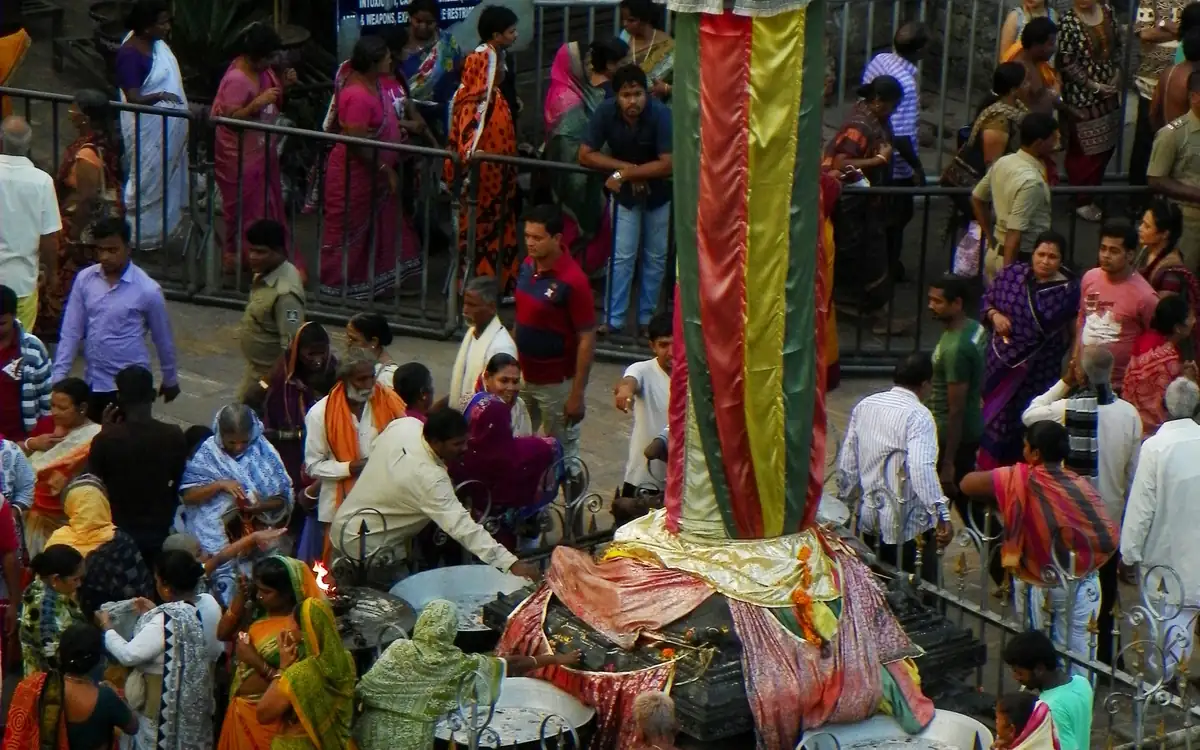
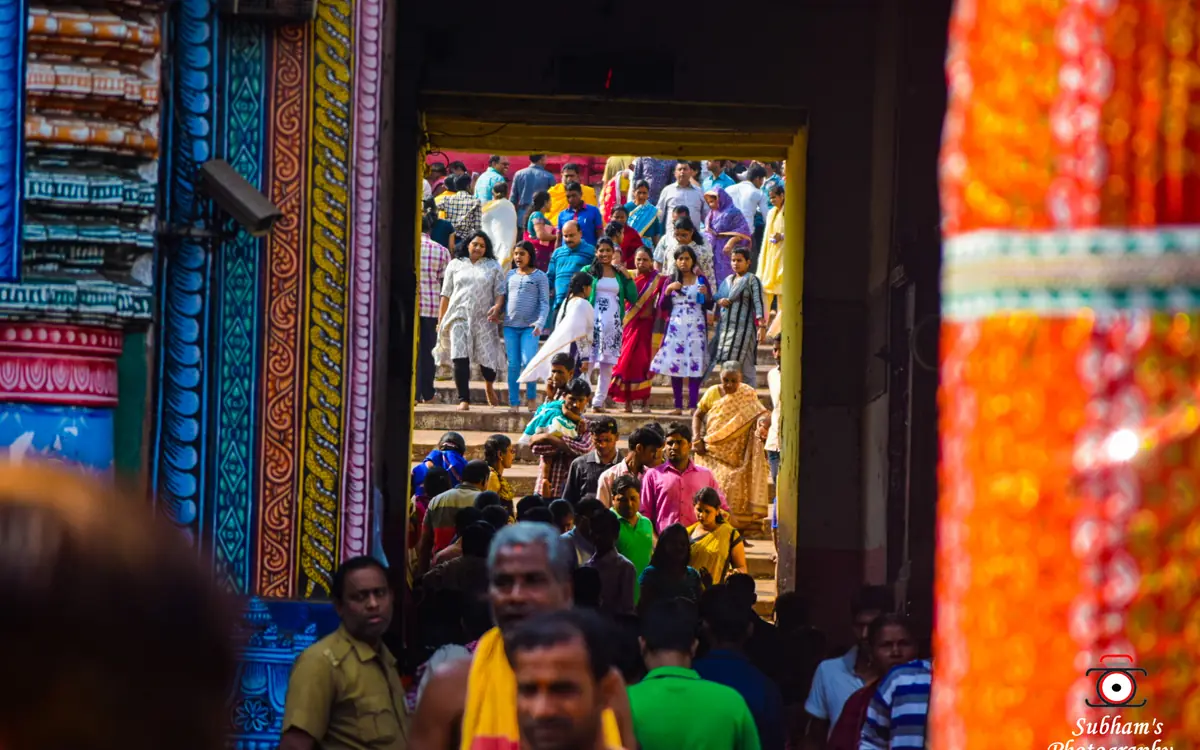
- Ascend Baisi Pahacha: Climb the revered twenty-two sacred steps. Devotees touch each stone step with their hands and bow their heads before entering the inner courtyard (Kurma Bedha).
- The Holy Darshan: Move through the Jagamohana toward the inner sanctum to witness Mahaprabhu Jagannath, Balabhadra, and Devi Subhadra on the Ratna Singhasana.
- Anand Bazaar: After darshan, head toward Anand Bazaar inside the complex to taste hot Mahaprasad served fresh in clay pots (kudua).
Rules for non-Hindu and foreign visitors
By unbroken centuries-old tradition, only practicing Sanatan Hindus are permitted past the gates of Srimandir. Non-Hindu and foreign nationals cannot enter past the Singhadwara. Even so, you can still experience the divine energy from outside:
- Patitapabana Darshan: As you stand on Bada Danda by the Aruna Stambha, look straight through the open Singhadwara doorway. Mounted on the right inner wall is the holy image of Lord Jagannath known as Patitapabana (the Savior of the Fallen). Devotees of every faith can stand by the Sun Pillar and have clear darshan.
- Raghunandan Library Rooftop: Visitors frequently view the grand temple complex and the sacred Neelachakra flag fluttering atop the main spire from the rooftop of the historic Raghunandan Library across the street.
- The Annual Rath Yatra: During the world-famous Rath Yatra, the Lord of the Universe leaves His sanctum and rides His grand chariot along Bada Danda, offering open darshan to every human being regardless of caste, creed, or religion.
Daily Srimandir ritual schedule and best darshan hours
Planning your arrival around the temple's daily schedule saves you hours of waiting in the coastal heat:
- Mangala Alati (5:30 AM – 6:30 AM): The earliest morning darshan and my personal favorite. The sea breeze is cool, the stone steps of Baisi Pahacha are refreshing, queues are light, and the morning chanting is unforgettable. Perfect for families with elders.
- Abakasha & Besha (7:00 AM – 8:30 AM): Sacred morning bathing and dressing rituals of the deities.
- Gopala Ballabha Bhoga (9:00 AM – 10:00 AM): Morning breakfast offerings of sweets, fruits, and curd.
- Sakala Dhupa & Madhyanna Dhupa (11:30 AM – 2:00 PM): Cooked meals offered to the deities; queues become heavier around noon.
- Sandhya Alati (6:00 PM – 7:30 PM): Evening lamp offering; crowds peak dramatically after sunset.
- Badasinghara Besha & Pahuda (10:30 PM – 11:30 PM): The final flower decoration of the deities before the temple doors close for the night.
Combining your temple visit with other sacred sites in Puri
Once you are comfortably dressed in temple attire, explore the sacred heritage across Puri district:
- Narendra Pokhari: Located just 1.5 km from the main temple, this sprawling sacred tank hosts the divine water boat procession during Chandan Yatra. Learn more in our guide to Narendra Pokhari, Puri.
- Alarnath Temple at Brahmagiri: Located 25 km from Puri along the coast, this historic shrine becomes the spiritual center of Odisha when Lord Jagannath remains in 15-day seclusion. Explore our feature on Alarnath Temple Brahmagiri.
- Sakshi Gopal Temple: On your drive back along the Puri-Bhubaneswar highway, stop at Satyabadi to witness the divine shrine of Lord Gopinatha. Read our complete Sakshi Gopal Temple travel guide.
- Festival Highlights: If you visit during peak summer or monsoon, understand the rich ritual traditions through our deep dives on Snana Purnima in Puri and the world-renowned Puri Rath Yatra.
Frequently Asked Questions
Can men wear regular jeans to Puri Jagannath Temple?
Yes, 100%. I wear them regularly, and I see hundreds of men in plain denim every time I visit. Just make sure they aren't torn, ripped, or distressed. Clean, regular-fit jeans paired with a simple shirt, polo, or short kurta will get you past security with zero drama.
Is a dhoti mandatory for men in Puri Temple?
No, a dhoti is not compulsory for general darshan. You can comfortably enter in formal trousers, jeans, or a pyjama-kurta. A dhoti is only customary if you are performing specific puja rituals inside sanctum enclosures with servitors.
Can women wear western outfits to Puri Temple?
Western dresses, short skirts, crop tops, and sleeveless shirts are strictly prohibited. However, plain jeans paired with a long ethnic kurti covering below the hips are generally permitted, though traditional sarees or salwar-kameez remain the safest and most comfortable choice.
What should you do if police stop you for wearing shorts?
Do not go back to your hotel. Handloom shops directly across from the Singhadwara sell white cotton dhotis for ₹120 to ₹250. You can buy one, tie it over your shorts on the plaza, and walk straight into the queue.
Are leather belts and wallets allowed inside Puri Jagannath Temple?
No. All leather articles including belts, wallets, and leather watch straps are strictly banned. Free and paid cloakrooms near the Lion's Gate allow devotees to store these items before entering.
Can I take my mobile phone inside Srimandir?
No. Smartphones, smartwatches, and cameras are completely banned inside the temple. Deposit your phone at the authorized SJTA mobile lockers near the gate before joining the queue.
Are all four gates of Puri Jagannath Temple open now?
Yes. Following administrative decisions in mid-2024, all four gates (Singhadwara, Ashwa Dwara, Vyaghra Dwara, and Hasti Dwara) are open for devotees to enter and exit.
Can children enter wearing western casuals?
Yes. Children under 12 years of age are exempt from rigid traditional dress codes and can wear normal shirts, casual shorts, and frocks.