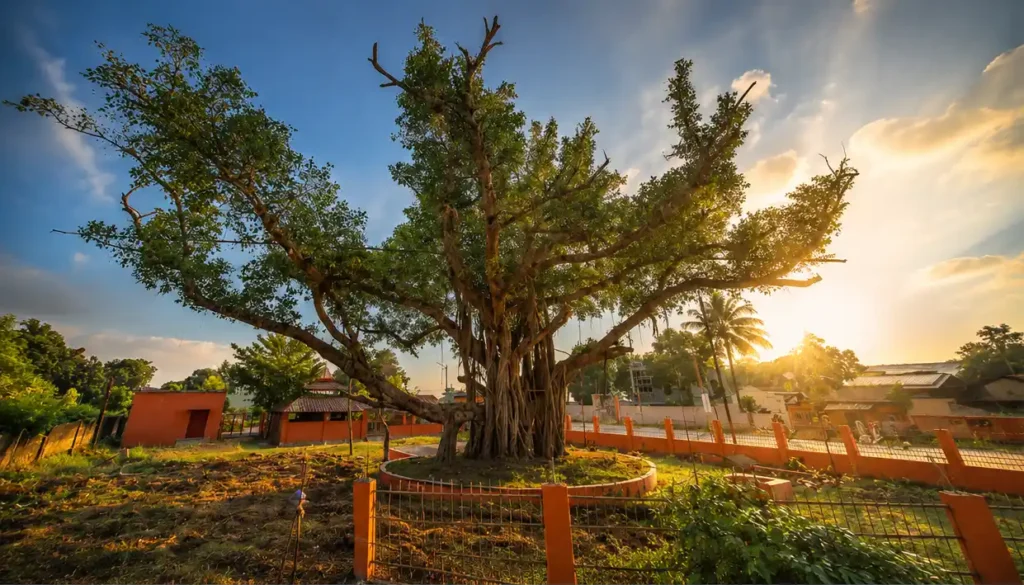
Why Is Olata Bata Deogarh Famous?
Hidden in the historic town of Deogarh, Odisha, stands one of nature’s most fascinating wonders, the Olata Bata, a centuries-old Giant Ficus Tree Deogarh that appears to grow upside down.
Unlike ordinary banyan trees, the leaves of this remarkable tree grow in an unusual inverted direction, making it one of Odisha’s most mysterious natural attractions. But Olata Bata is more than a botanical curiosity. It is also a deeply revered Holy Ficus Tree, attracting pilgrims, nature lovers, photographers, and heritage enthusiasts throughout the year.
If you are exploring western Odisha, Olata Bata is a destination that beautifully blends science, spirituality, and folklore.Location
Address: Purunagarh, Deogarh, Odisha 768108, India
Table of Contents
Quick Facts About Olata Bata
| Feature | Details |
|---|---|
| Name | Olata Bata (ଓଲଟା ବଟ) |
| Scientific Name | Ficus benghalensis (Banyan Tree) |
| Popular Name | Giant Ficus Tree, Deogarh |
| Location | Purunagarh, Deogarh District, Odisha, India |
| Famous For | Rare inverted leaf growth (Olata Bata phenomenon) |
| Religious Importance | Sacred banyan tree worshipped by local devotees |
| Best Time to Visit | October to March |
Key Takeaway
What Does "Olata Bata" Mean?
- Olata means inverted or upside down.
- Bata means banyan tree.
The name perfectly describes this extraordinary tree.
Unlike a normal banyan, the leaves appear reversed, giving the entire canopy an unusual appearance that surprises every visitor.
This rare phenomenon has earned the tree recognition as the Giant Ficus Tree Deogarh.Why Is the Giant Ficus Tree Deogarh Unique?
A Rare Botanical Wonder
The most striking feature of Olata Bata is its unusual leaf orientation.
Instead of the glossy upper surface facing the sky, many leaves appear inverted, exposing their lower surface upward. Combined with its sprawling aerial roots and irregular canopy, the tree creates the illusion of growing upside down.
Botanists believe this may be the result of an uncommon natural growth pattern or genetic variation, making it one of Odisha’s most remarkable botanical specimens.
Whether viewed scientifically or spiritually, the tree remains an extraordinary wonder.Why Is Olata Bata Considered Sacred?
A Living Symbol of the Cosmic Tree
For centuries, local communities have worshipped Olata Bata as a Holy Ficus Tree.
Its unusual form reminds devotees of the cosmic tree (Ashwattha) described in the Bhagavad Gita, where Lord Krishna speaks of a tree with its roots above and branches below, symbolizing the universe and the eternal cycle of creation.
Because Olata Bata resembles this sacred description, it has become an important place of worship in western Odisha.What Are the Local Beliefs?
Local folklore adds another layer of mystery to Olata Bata.
Many devotees visit the tree to:
- Offer prayers.
- Tie sacred threads around the aerial roots.
- Seek blessings for prosperity.
- Pray for good health.
- Fulfil personal wishes.
For generations, local families have considered the tree a living deity, and harming any part of it is regarded as disrespectful.
This deep reverence has helped preserve the tree for centuries.Science Meets Spirituality
One of the most fascinating aspects of Olata Bata Odisha is how it connects science with faith.
From a Scientific Perspective
- Rare leaf orientation.
- Unusual canopy formation.
- Massive aerial root system.
- Exceptional longevity.
- Symbol of eternity.
- Representation of the cosmic tree.
- Sacred place for prayer and meditation.
- Living heritage of local traditions.
My Experience Visiting Olata Bata
During my visit to Deogarh, Olata Bata left a lasting impression.
As I stepped beneath its enormous canopy, the unusual leaves immediately caught my attention. Standing under the centuries-old branches, I could sense why local people treat this tree with such devotion.
The peaceful surroundings, gentle rustling of the leaves, and stories shared by local residents transformed what seemed like a simple tree into a living symbol of Odisha’s natural and cultural heritage.
For me, Olata Bata was not just a botanical wonder, it was an experience of faith, history, and nature coming together.How to Reach Olata Bata Deogarh
Road
- Olata Bata is located in Purunagarh, approximately 2 km from the Deogarh Bus Stand.
- It is easily accessible by road from Sambalpur, Angul, and Bhubaneswar.
Rail
- The nearest railway stations are:
- Rairakhol Railway Station
- Sambalpur Junction Railway Station
- Taxis and local buses are available from both stations to reach Olata Bata.
Air
- The nearest airport is Veer Surendra Sai Airport, Jharsuguda.
- From the airport, visitors can hire a taxi or travel by bus to reach Deogarh and then continue to Olata Bata.
Places to Visit Nearby
Make your Deogarh trip more memorable by visiting:
- Deogarh Jagannath Temple
- Pradhanpat Waterfall
- Deogarh Palace
- Gohira Dam
Travel Tips
Before visiting Olata Bata, keep these tips in mind:
- Visit during the morning for pleasant weather.
- Avoid damaging the aerial roots.
- Respect local religious customs.
- Wear comfortable walking shoes.
- Carry a camera for nature photography.
- Combine your visit with nearby heritage sites.
People Also Ask – Answers to Common Questions
What is Olata Bata?
- Olata Bata is an ancient Giant Ficus Tree in Deogarh, famous for its unusual inverted leaf growth and sacred significance.
Where is Olata Bata located?
- It is located in Purunagarh, about 2 km from Deogarh town in Odisha.
Why is Olata Bata called the Holy Ficus Tree?
- Local people worship it as a sacred banyan tree because its unique form resembles the cosmic tree described in Hindu scriptures.
Is Olata Bata a tourist attraction?
- Yes. It attracts pilgrims, photographers, botanists, heritage enthusiasts, and eco-tourists throughout the year.
What is the best time to visit?
- The ideal time to visit is between October and March, when the weather is cool and comfortable.
Key Takeaways
- Olata Bata Odisha is one of India’s most unique natural heritage sites.
- The Giant Ficus Tree Deogarh is famous for its rare inverted leaf growth.
- The tree is worshipped as a Holy Ficus Tree by local communities.
- It beautifully combines science, spirituality, folklore, and ecology.
- Olata Bata is one of the must-visit attractions in western Odisha.
Conclusion
Olata Bata is much more than an unusual banyan tree. It is a living symbol of Odisha’s rich natural heritage, spiritual traditions, and cultural wisdom. Whether you visit to study its rare botanical features, seek blessings beneath its sacred canopy, or simply enjoy the serenity of Deogarh, the experience is unforgettable.
In an age where nature’s wonders are increasingly under threat, Olata Bata reminds us that some of the greatest mysteries still stand quietly beneath ancient branches, waiting to inspire those who pause to look closely.
If you are planning a journey through western Odisha, make sure the Giant Ficus Tree Deogarh, popularly known as Olata Bata, is on your travel itinerary.
Nature, faith, and history meet under one extraordinary tree.