
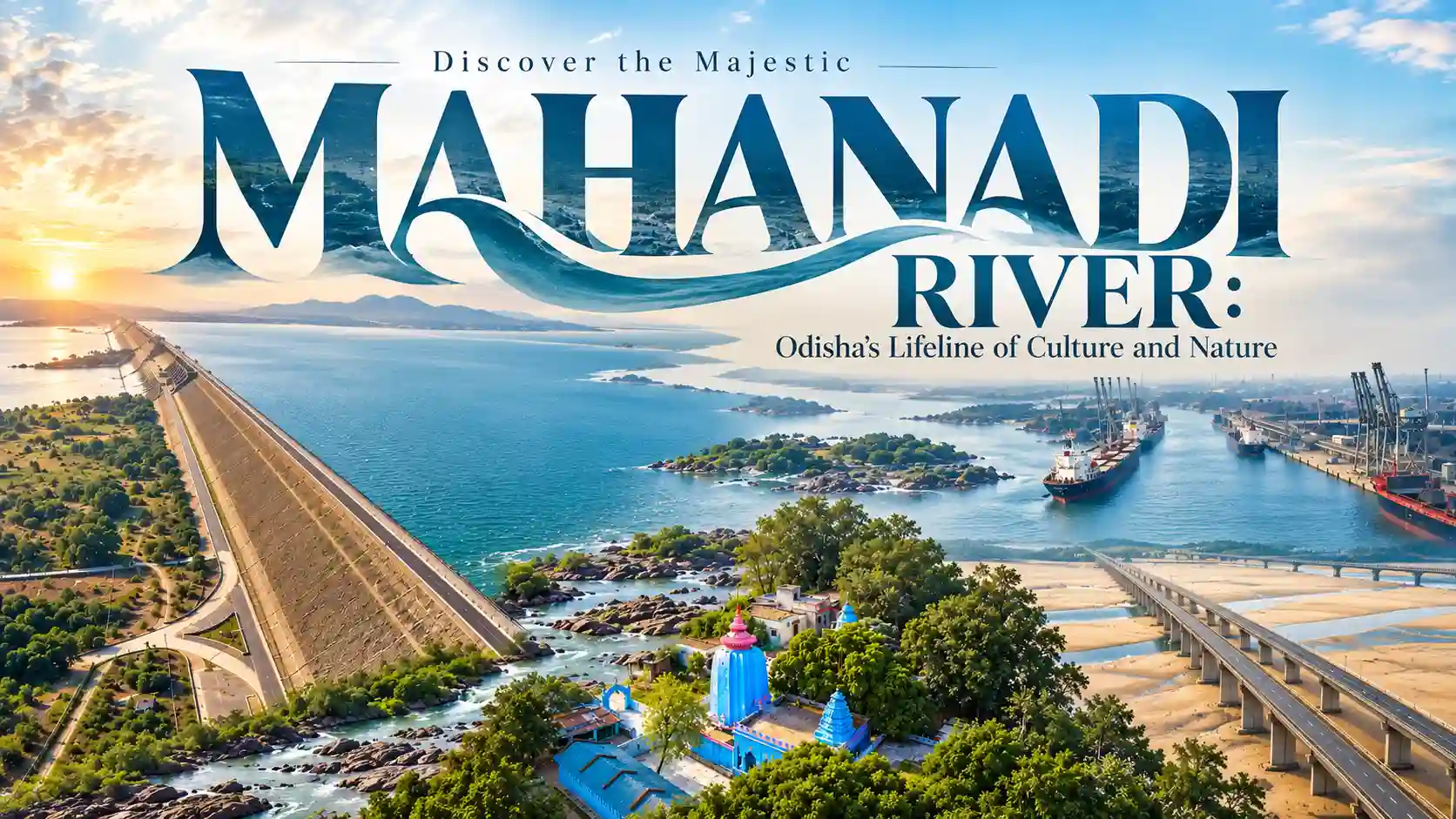
Water shapes Odisha. The Mahanadi, Brahmani and Baitarani carry life from the hills to the coast, Hirakud tames floods and feeds fields, and quieter reservoirs such as Deras, Jhumka and Sapua have become favourite weekend escapes.
This guide brings together every river, lake and dam we have covered on LocalDrive. Use it to plan a scenic day trip, then follow the links to our detailed guides for directions, timings and tips.
In this guide:
- Great Rivers of Odisha
- Dams and Reservoirs
- Lakes and Sacred Tanks
- Planning Your Visit
- Frequently Asked Questions
Great Rivers of Odisha
The Mahanadi
The Mahanadi changes character along its course, from a broad reservoir near Sambalpur to the channels around Cuttack and the coastal delta. Read our full guide to The Mahanadi.
The Brahmani
The Brahmani flows almost 799 km and is a lifeline for millions across the state. Read our full guide to The Brahmani.
The Baitarani
The Baitarani rises in the hills of Keonjhar, with a sacred origin story at Gonasika, before reaching the coast. Read our full guide to The Baitarani.
The Prachi
The Prachi is often called the cradle of Odisha’s ancient culture for the temples and settlements along its banks. Read our full guide to The Prachi.
Tikarpada
Tikarpada in Angul district is where the Mahanadi cuts through dramatic gorges inside the Satkosia Tiger Reserve. Read our full guide to Tikarpada.
Dams and Reservoirs
Hirakud Dam
Hirakud Dam near Sambalpur is one of the longest earthen dams in the world at 25.79 km, inaugurated in 1957. Read our full guide to Hirakud Dam.
Deras Dam
Deras Dam built in 1967 about 20 km from Bhubaneswar, is a lifeline for the Chandaka-Dampara Wildlife Sanctuary. Read our full guide to Deras Dam.
Jhumka Dam
Jhumka Dam near Baikunthpur in Khordha district is a forest-fringed reservoir for a peaceful day out. Read our full guide to Jhumka Dam.
Sapua Dam
Sapua Dam is a snake-shaped reservoir completed in 2006, about 35 km from Dhenkanal town. Read our full guide to Sapua Dam.
Kanjhari Dam
Kanjhari Dam in Keonjhar’s green hills offers misty mornings, forest trails and birdwatching. Read our full guide to Kanjhari Dam.
Lakes and Sacred Tanks
Ansupa Lake
Ansupa Lake in the Banki block of Cuttack district is a horseshoe-shaped freshwater lake known for migratory birds. Read our full guide to Ansupa Lake.
Bindu Sagar
Bindu Sagar just north of the Lingaraj Temple, has been at the centre of Old Bhubaneswar’s rituals for centuries. Read our full guide to Bindu Sagar.
Visiting Bindu Sagar
Visiting Bindu Sagar describes the lake today, with the Lingaraj Temple reflected in its waters. Read our full guide to Visiting Bindu Sagar.
Planning Your Visit
- October to February is the most pleasant time for dams and lakes; the monsoon brings full reservoirs but slippery paths.
- Deras and Jhumka are under an hour from Bhubaneswar, which makes them easy half-day trips.
- Carry your own water and snacks, since facilities at smaller dams are limited.
- Do not swim in reservoirs or rivers unless a spot is marked safe; currents and depth can be deceptive.
Frequently Asked Questions
Which is the longest dam in Odisha?
Hirakud Dam near Sambalpur is one of the longest earthen dams in the world, stretching 25.79 km across the Mahanadi.
Which dams are near Bhubaneswar?
Deras Dam, about 20 km from the city, and Jhumka Dam in Khordha district are both easy trips from Bhubaneswar.
Where is Ansupa Lake?
Ansupa Lake is in the Banki block of Cuttack district and is known for its horseshoe shape and migratory birds.
Which river is called the cradle of Odisha’s ancient culture?
The Prachi River is often called the cradle of Odisha’s ancient culture.
Final Thoughts
Whether you want to stand on the Hirakud embankment, watch birds at Ansupa or spend a quiet afternoon at Deras, Odisha’s waters have something for every traveller. Follow the links above to plan each trip.
Related guides: