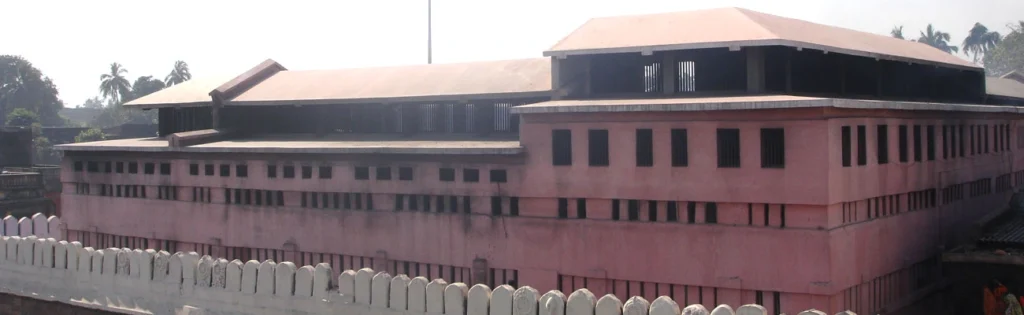
If you’ve ever visited the holy city of Puri in Odisha, then the one thing you can’t miss is not just the majestic Jagannath Temple, but also its legendary kitchen. Indeed, renowned as the largest kitchen in the world, it’s not just about scale—rather, it’s about devotion, discipline, tradition, and above all, a culinary connection with divinity. In this blog, we firstly dive into the fascinating details of this spiritual kitchen, where Mahaprasad—Lord Jagannath’s divine food—is cooked every day.
Why Is the Jagannath Temple Kitchen Famous?
Imagine a kitchen that has been feeding thousands of devotees every day for centuries—without modern machines, LPG, or electricity.
Welcome to the Jagannath Temple Kitchen in Puri, Odisha, widely regarded as the World’s Largest Kitchen. More than just a place where food is cooked, it is a living tradition of faith, discipline, sustainability, and divine service.
Every day, hundreds of temple cooks prepare the sacred Mahaprasad for Lord Jagannath using ancient cooking methods that have remained almost unchanged for centuries.
Whether you are a pilgrim, a food enthusiast, or a heritage traveller, this extraordinary kitchen offers an unforgettable glimpse into the heart of Jagannath Culture.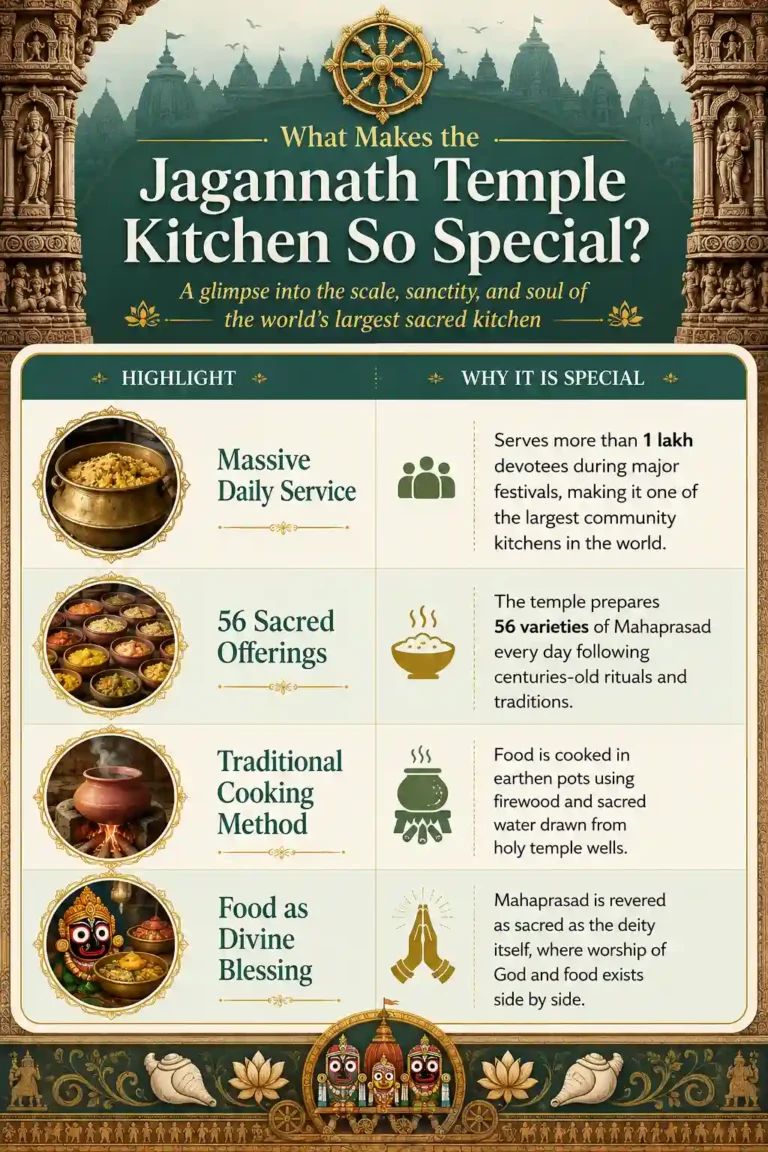
Quick Facts About the World's Largest Kitchen
| Feature | Details |
|---|---|
| Name | Jagannath Temple Kitchen (Rosha Ghara) |
| Location | Shree Jagannath Temple, Puri, Odisha |
| Recognition | World's Largest Sacred Kitchen |
| Daily Dishes | 56 traditional offerings (Chhappan Bhoga) |
| Cooking Method | Earthen pots over wood-fired cooking platforms (Chula) |
| Daily Capacity | Serves around 1 lakh devotees daily and over 2 lakh during major festivals |
| Cooking Staff | Suara and Mahasuara temple servitors |
| Fuel | Firewood only |
Historical and Spiritual Significance of the Mahaprasad
As per the Skanda Purana, eating Mahaprasad—even stale—washes away sins and grants moksha. In Puri, it’s not just an offering but is considered Lord Jagannath Himself. Moreover, it unites all—people of every caste and creed share it together from the same pot.
Do You Know?
Devotees also call Mahaprasad Kaibalya, meaning that it leads to liberation. People believe that those who eat it with faith will not take rebirth.
Types of Mahaprasad Offered Daily
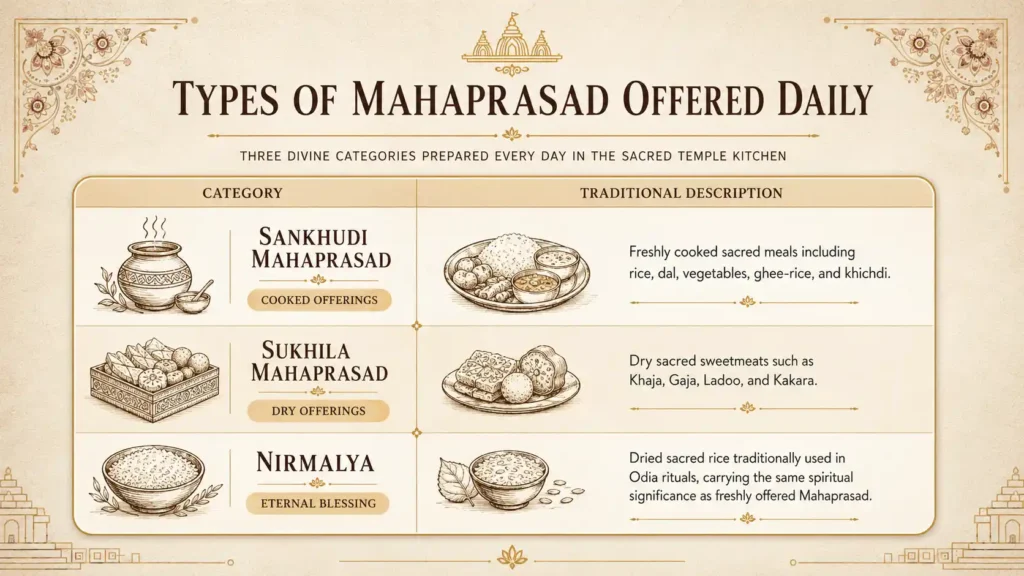
Three divine categories of food are made every day.
1. Sankhudi Mahaprasad
Cooked meals like rice, dal, vegetables, ghee-rice, and khichdi.
2. Sukhila Mahaprasad
Dry sweetmeats like Khaja, Gaja, Ladoo, and Kakara.
3. Nirmalya
Traditionally, Odia households commonly use dried cooked rice in all rituals. In fact, it holds the same spiritual value as fresh Mahaprasad.
The Holy Cooking Method of Jagannath Temple
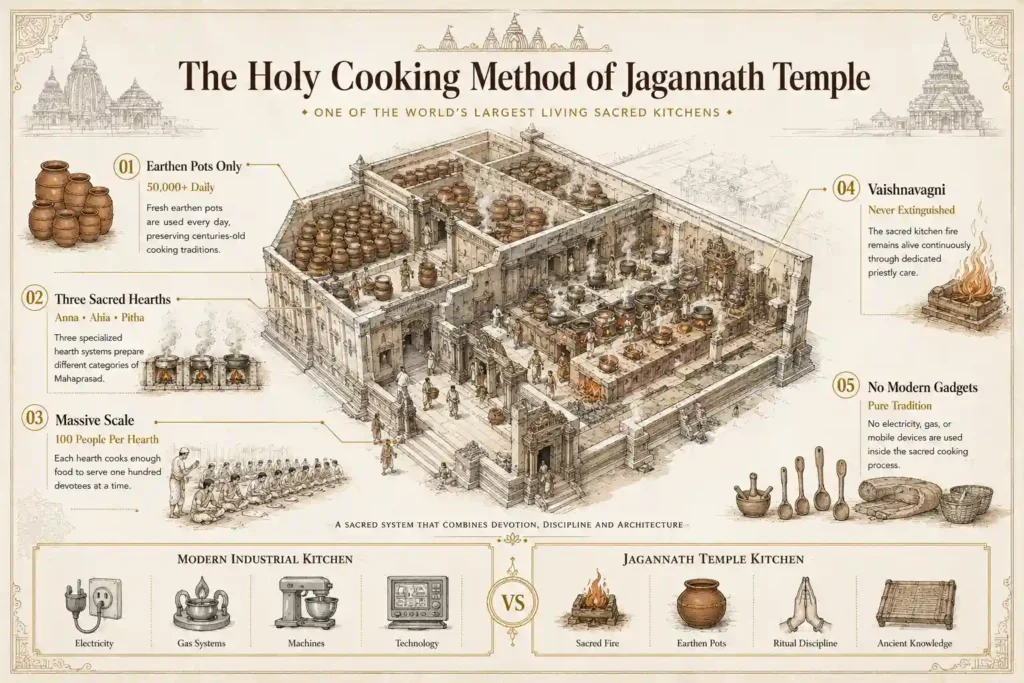
Simple yet sacred. Traditional yet gigantic.
Earthen Pots Only
- Firstly, the temple staff use over 50,000 new earthen pots daily.
- Secondly, the cooks prepare food on three types of hearths – Anna Chuli, Ahia Chuli, and Pitha Chuli.
- Thirdly, each hearth cooks food for 100 people at a time.
Constant Sacred Fire – Vaishnavagni
Importantly, the fire in the temple kitchen never extinguishes. In fact, a designated priest diligently keeps it alive round-the-clock.
No Modern Gadgets Allowed
Instead of electricity, gas, or mobile phones—there are only ritual fire, devotion, and age-old processes.
Who Cooks the Mahaprasad?
Thousands of traditional cooks work in silence and sanctity.
- Only Suara and Mahasuar caste men (temple-appointed cooks) can enter.
- Must be bathed, clean-shaven, wear no metal or thread.
- No talking, joking, or phone usage allowed.
- Food is carried with a mouth cover to maintain purity.
How Does the Kitchen Support Sustainability?
Thousands of traditional cooks work in silence and sanctity.
Long before sustainability became a global concern, the Jagannath Temple Kitchen had already embraced eco-friendly practices.
Its sustainable traditions include:
- Cooking only in biodegradable earthen pots.
- Using renewable firewood.
- Drawing water from ancient sacred wells.
- Supporting thousands of local potters through daily clay pot production.
- Producing almost no non-biodegradable waste.
Can the Kitchen Really Feed Over One Lakh People?
Thousands of traditional cooks work in silence and sanctity.
Yes.
Its efficiency comes from:
- Hundreds of traditional hearths.
- Simultaneous cooking in stacked earthen pots.
- Well-organized temple servitors.
- Centuries-old management practices.
Varieties of Mahaprasad You Can Taste
Get a peek into the Lord’s divine menu.
- Rice Dishes: Sadha Anna, Kanika, Dahi Pakhal, Thali Khichdi
- Sweets: Khaja, Jagannath Ballava, Khua, Rasabali, Malpua
- Dal & Curries: Dalma, Mahura, Besara, Goti Baigana
- Milk Dishes: Khiri, Sarapulli (most complex), Rasabali
- Pithas & Cakes: Poda Pitha, Manda, Arisa, Kakara
Fun Fact:
Sarapulli, the most difficult milk dish, is therefore only prepared in this temple and nowhere else!
Water, Wood & Eco-friendliness
The kitchen respects both nature and tradition.
- To begin with, temple priests draw water from two ancient wells: Ganga and Yamuna.
- Next, the cooks use Casuarina wood for cooking.
- Moreover, local village potters make pots that provide a sustainable livelihood.
- Finally, temple authorities have followed eco-friendly and biodegradable practices for centuries.
Can It Really Feed Over 1 Lakh People in a Day?
Let’s do the math.
- 175 hearths × 9 pots × 100 people per pot = 1,57,500 people can be served in 2.5 hours.
- Cooking takes only 12-15 minutes for rice, dal, and curry.
- Average daily visitors: 30,000–50,000, peaks above 1 lakh during festivals.
People Also Ask
Q1: Why do people call the Jagannath Temple kitchen the biggest kitchen in the world?
Because it has 240 hearths, uses 50,000+ earthen pots daily, and can cook food for over 1.5 lakh people within a few hours.
Q2: What is special about Mahaprasad?
Indeed, devotees regard Mahaprasad as equal to Lord Jagannath Himself and believe it washes away sins and grants salvation. Furthermore, people from all castes and communities freely share and consume it without restriction.
Q3: How do the temple cooks maintain hygiene in the kitchen?
To maintain purity, strict protocols apply: cooks must bathe, wear clean clothes, stay silent, and never reuse pots. Furthermore, no intoxicants, mobile phones, or distractions are allowed.
Q4: Who bans vegetables in Jagannath's kitchen?
Moreover, the temple authorities strictly prohibit potatoes, tomatoes, onions, garlic, and other modern veggies like cauliflower and capsicum.
Q5: Can I buy Mahaprasad outside the temple?
Yes! Subsequently, after the food is offered to the deities, it is sold at Anand Bazar inside the temple premises to devotees.
Final Thoughts: Why Every Indian Must Visit the Jagannath Temple Kitchen
In conclusion, it’s not just a kitchen. It’s a spiritual ecosystem that nourishes the soul, connects millions to divinity, and proves that tradition can thrive without modern shortcuts. Whether you’re a spiritual seeker, a food lover, or simply curious, visiting the Jagannath Temple Kitchen is a once-in-a-lifetime experience.

Trending Posts