How Old Is Durga Puja in Kataka?
Kataka’s public Durga Puja tradition began at Balu Bazar in 1514. Its origins connect to the arrival of Sri Chaitanya Mahaprabhu in Kataka in 1510, during the reign of Gajapati Prataparudra Deva, whose visit inspired spiritual enthusiasm for public community worship across the city.
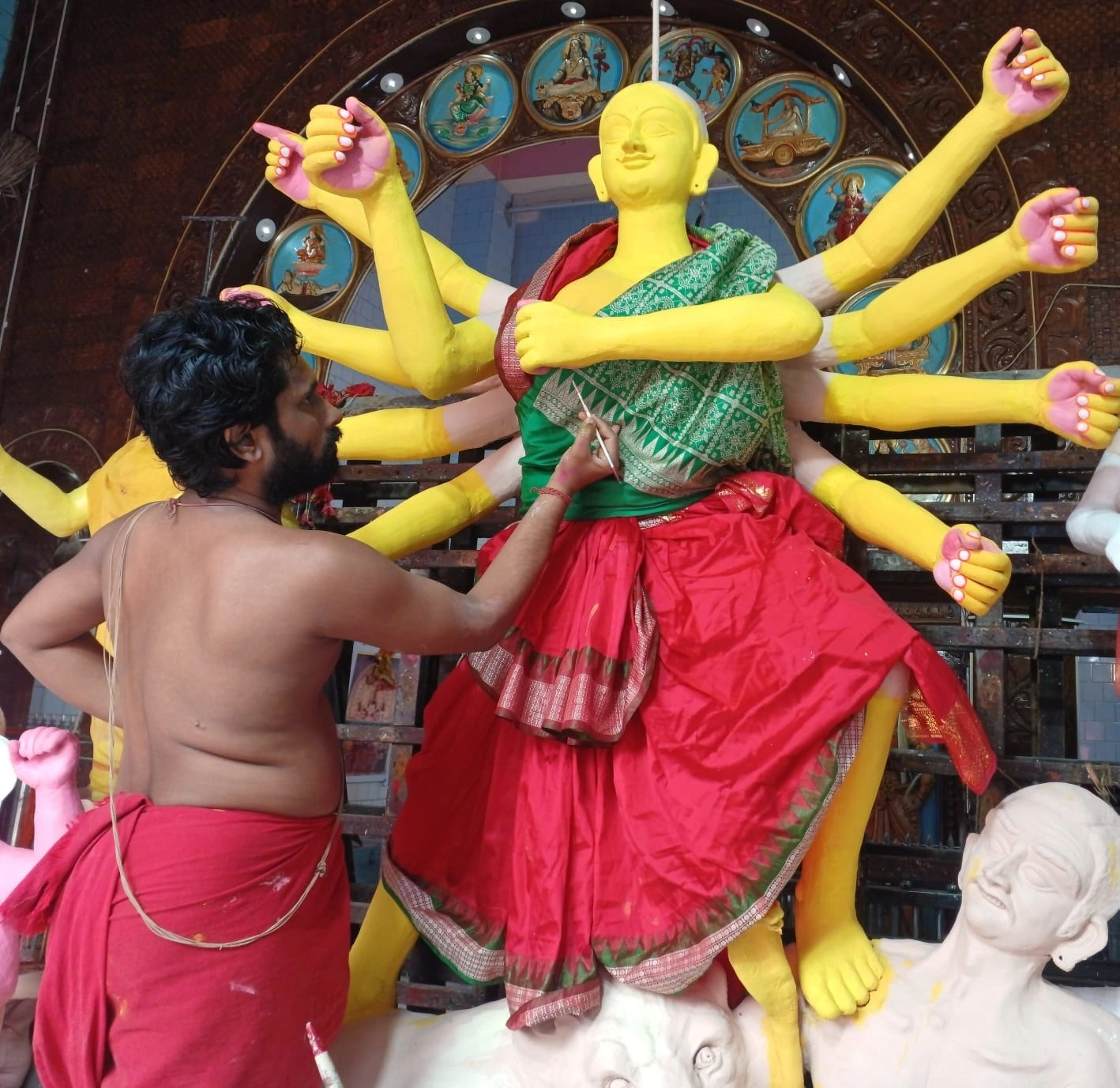
Four years later, in 1514, the royal priest and zamindari family of the Darpan estate (associated with present-day Jajpur district) established the first public community clay idol at Balu Bazar. The sacred idol was sculpted using river alluvium, straw fibre and organic natural pigments.
Balu Bazar holds a revered place in the city’s Puja hierarchy. By historic custom, its idol moves first during the grand Bhasani procession on Vijaya Dashami, honouring its status as Kataka’s earliest public community worship.
What Is Chandi Medha?
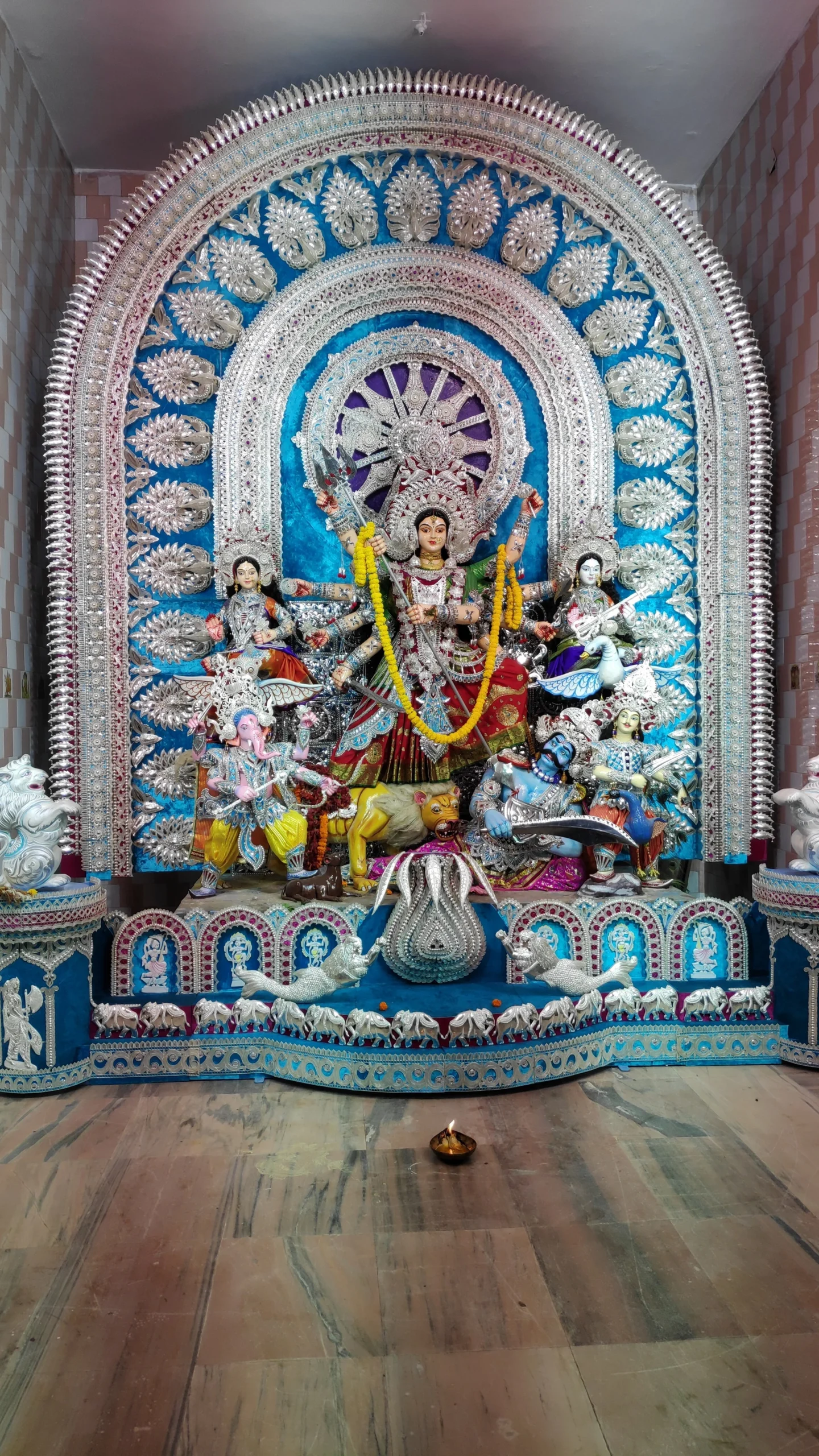
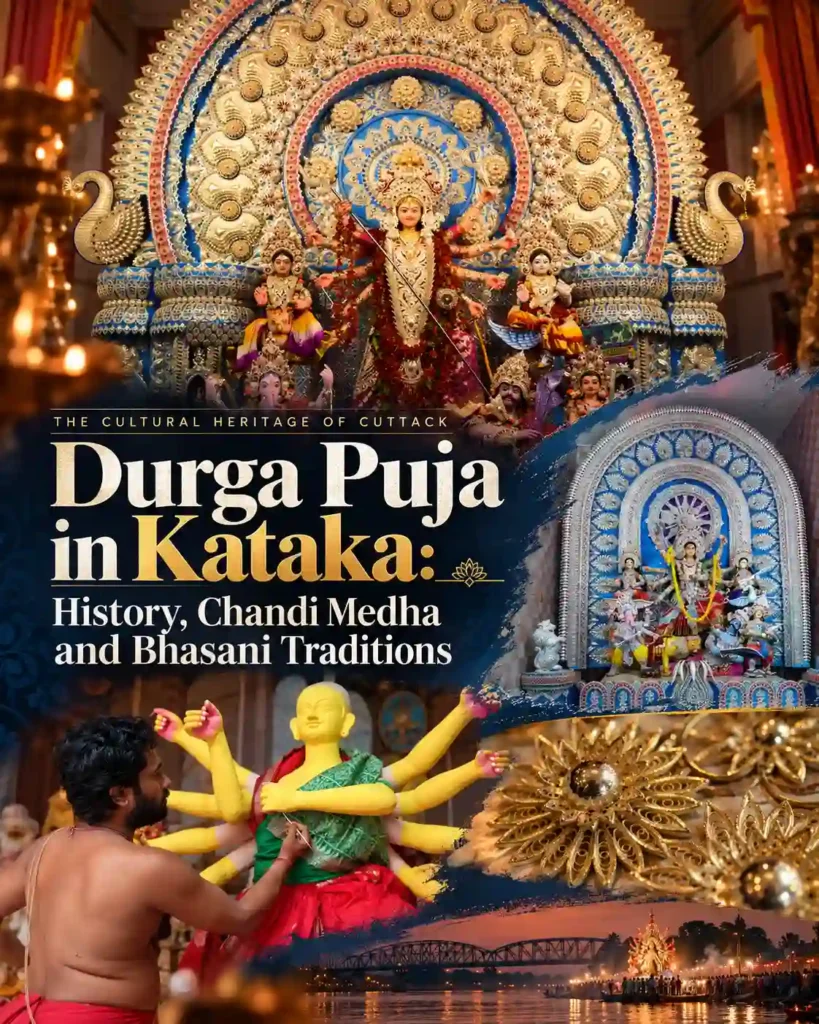
Chandi Medha is the ornate silver filigree backdrop installed behind the deity at a Durga Puja mandap. In Kataka, it is closely connected with Tarakasi, the city’s traditional silver filigree craft. Artisans draw silver into extremely fine wires, twist and shape them into floral, geometric and lace-like patterns, then assemble the individual pieces into magnificent decorative panels.
The result is detailed metalwork that looks almost textile-like from a distance. Up close, the fine wires, repeating motifs and carefully soldered sections reveal extraordinary patience and precision. The panels frame the deity, creating a luminous, intricate backdrop that enhances the sacred idol.
Choudhury Bazar: The First Chandi Medha and Suna Medha
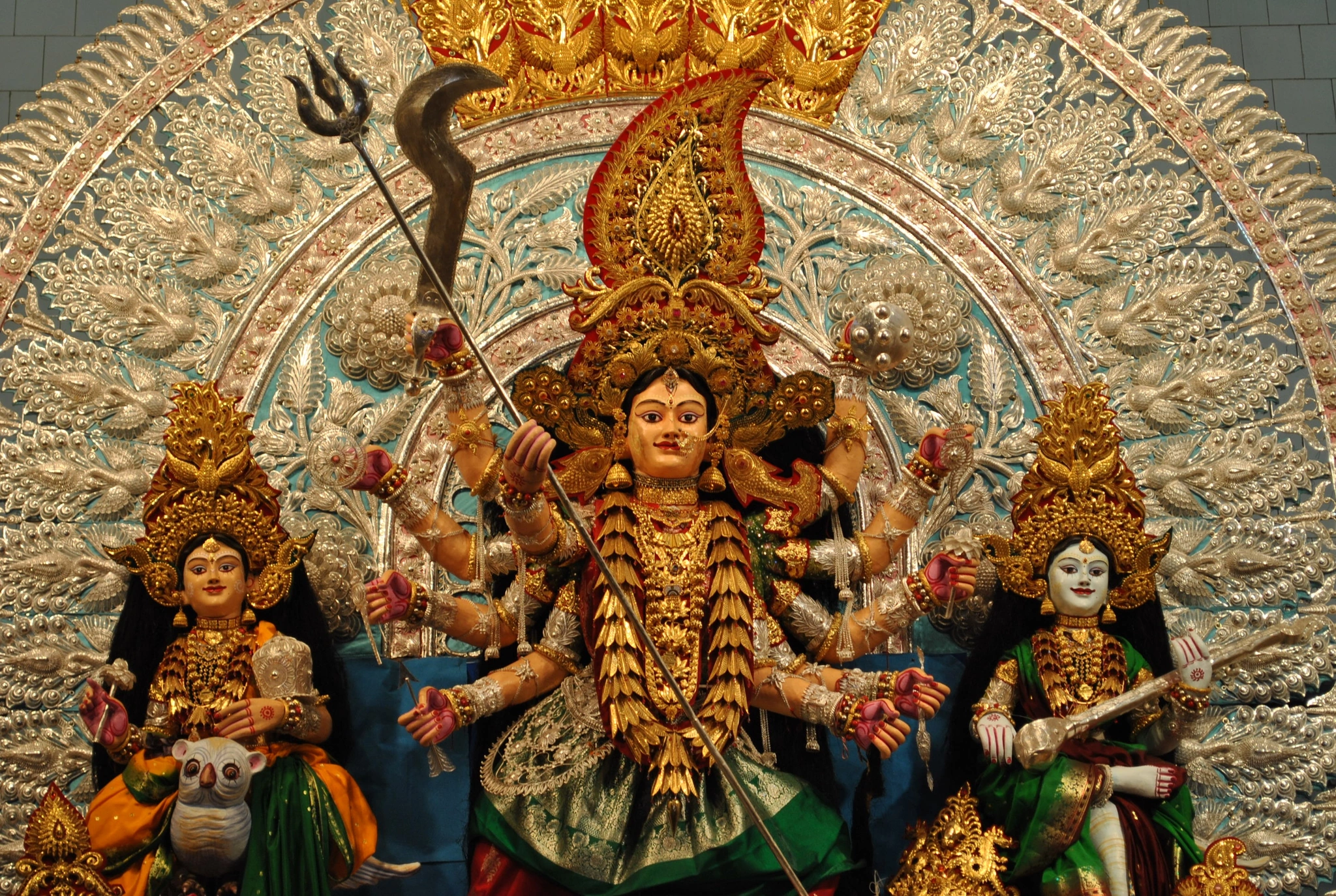
Choudhury Bazar marks a major milestone in Kataka’s silver-medha journey. The Puja committee introduced the city’s first Chandi Medha in 1956, commissioning an exquisite backdrop crafted from more than 250 kilograms of pure silver. This pioneering project inspired other neighbourhoods across Kataka to design their own distinctive silver tableaus.
In 2006, Choudhury Bazar introduced a Suna Medha, adding pure gold ornaments and crowns to the sacred tableau. The ensemble features magnificent gold adornments for Goddess Durga, Mahishasura, the lion and other deities in the divine retinue. Together, the silver filigree and gold ornamentation create a breathtaking visual spectacle unique to the mandap.
Kataka’s Tarakasi Craft: Fine Work in Silver
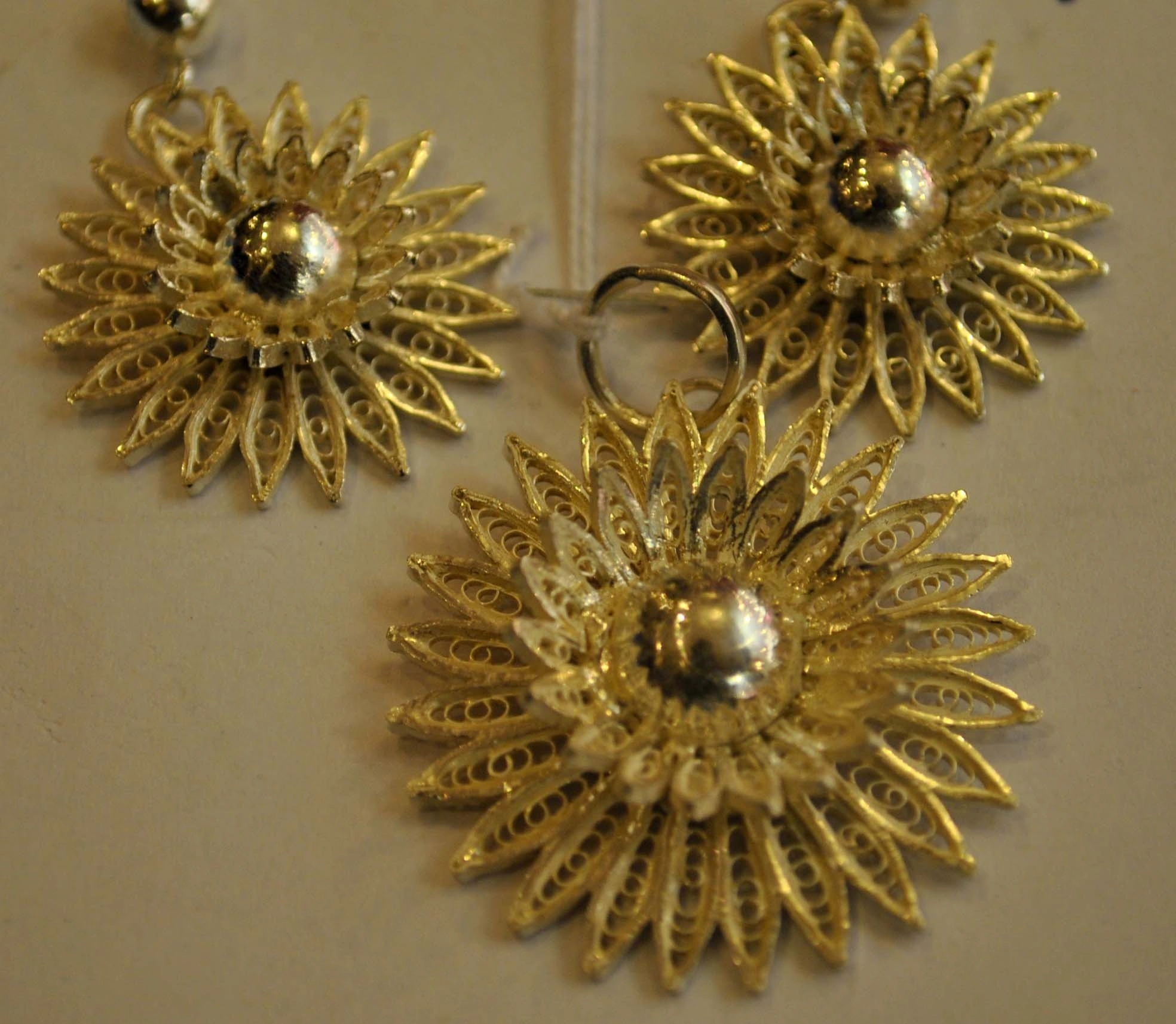
Tarakasi depends on transforming silver into fine wire and shaping it entirely by hand. Artisans twist, curl and join the wires into intricate motifs of flowers, leaves, scrolls and delicate lace. Producing a large Chandi Medha requires hundreds of individually crafted components fitted seamlessly into a unified design.
The craft links the Puja season with Kataka’s wider identity as the historic centre of silver filigree artistry. These medhas represent countless hours of master craftsmanship, precise assembly and time-honoured techniques passed down through generations. After the festival, the finished panels are carefully disassembled, preserved in secure vaults, and prepared anew each autumn.
Notable Durga Puja Mandaps in Kataka
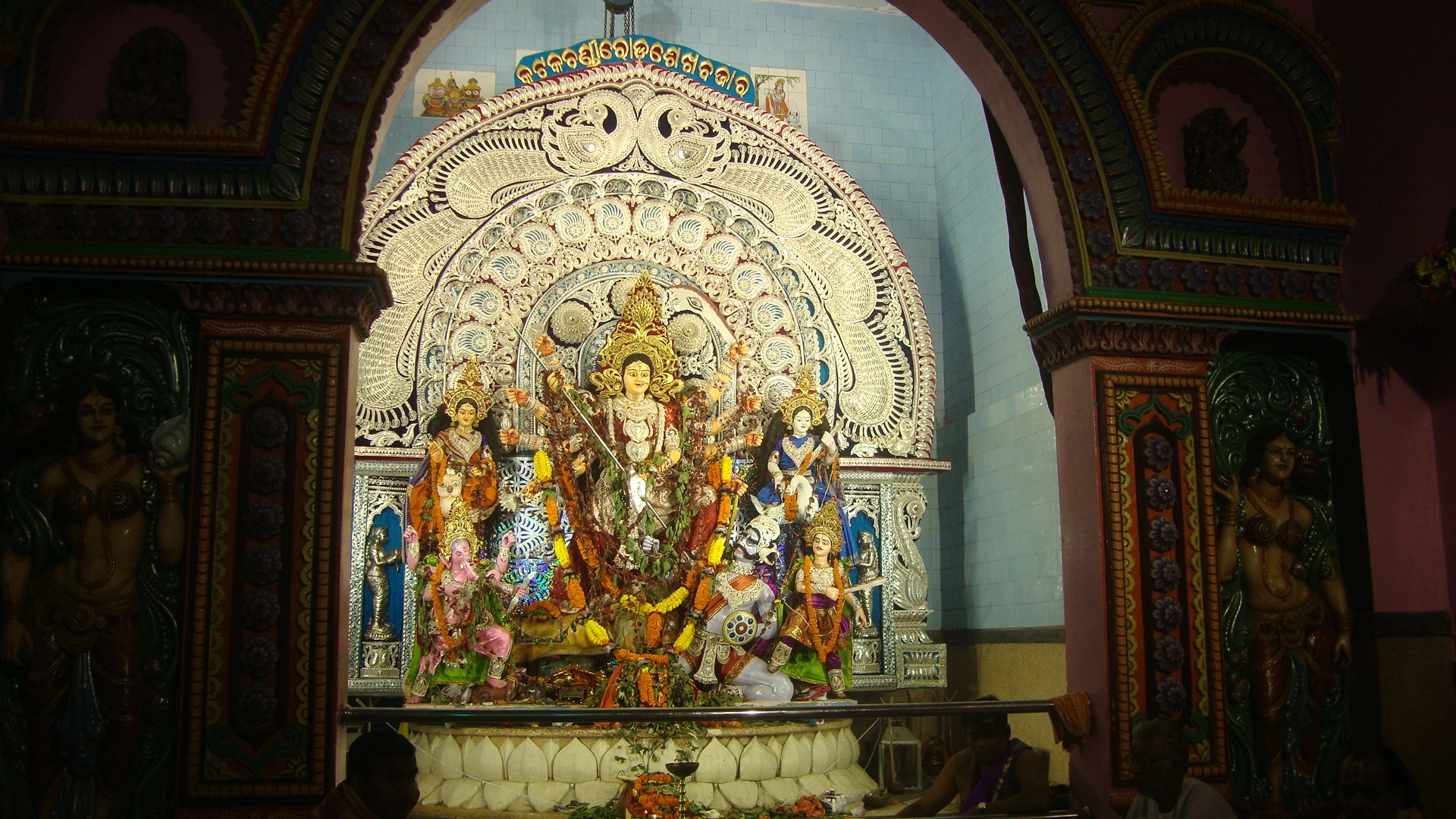
Each neighbourhood mandap across Kataka possesses its own unique character, artistic style and devotion.
Ranihat Durga Mandap
Located near the Clock Tower, the Ranihat mandap features approximately five quintals of silver in a multi-layered floral arch. Its concentric filigree design gives the backdrop a grand, tiered appearance.
Khan Nagar Durga Mandap
Khan Nagar showcases roughly four quintals of silver filigree accompanied by an opulent gold crown. Its monumental gateway draws architectural inspiration from Varanasi’s Swarved Mahamandir, pairing grandeur with fine metalwork.
Sikharpur Mandap
Sikharpur incorporates approximately 2.5 quintals of silver. Its tableau features a central radiant halo around Maa Durga and sweeping filigree wings framing Lakshmi, Saraswati, Kartikeya and Ganesha.
Nuabazar Mandap
Nuabazar stands out by placing a life-sized standing idol of Lord Shiva directly beside Goddess Durga. This striking dual-deity composition creates a profound Shaivite-Shakta synthesis.
Sheikh Bazar Mandap
Sheikh Bazar is celebrated for its 3.5 to four quintals of silver filigree, distinguished by intricate lace patterns, graceful peacock motifs and vibrant LED illumination.
Jobra Mandap
Jobra’s silver medha incorporates between 2.5 and three quintals of silver filigree. The mandap grounds also host lively cultural performances throughout the festival nights.
Chauliaganj Mandap
Chauliaganj boasts one of the heaviest silver installations in the city, with an estimated five to six quintals of silver shaped into an immense decorative tableau.
Balu Bazar Mandap
As the historic birthplace of Kataka’s public Durga Puja, Balu Bazar preserves centuries-old customs and holds the traditional first position in the Bhasani procession.
Chandi Medha and Suna Medha: What Happens After Puja?
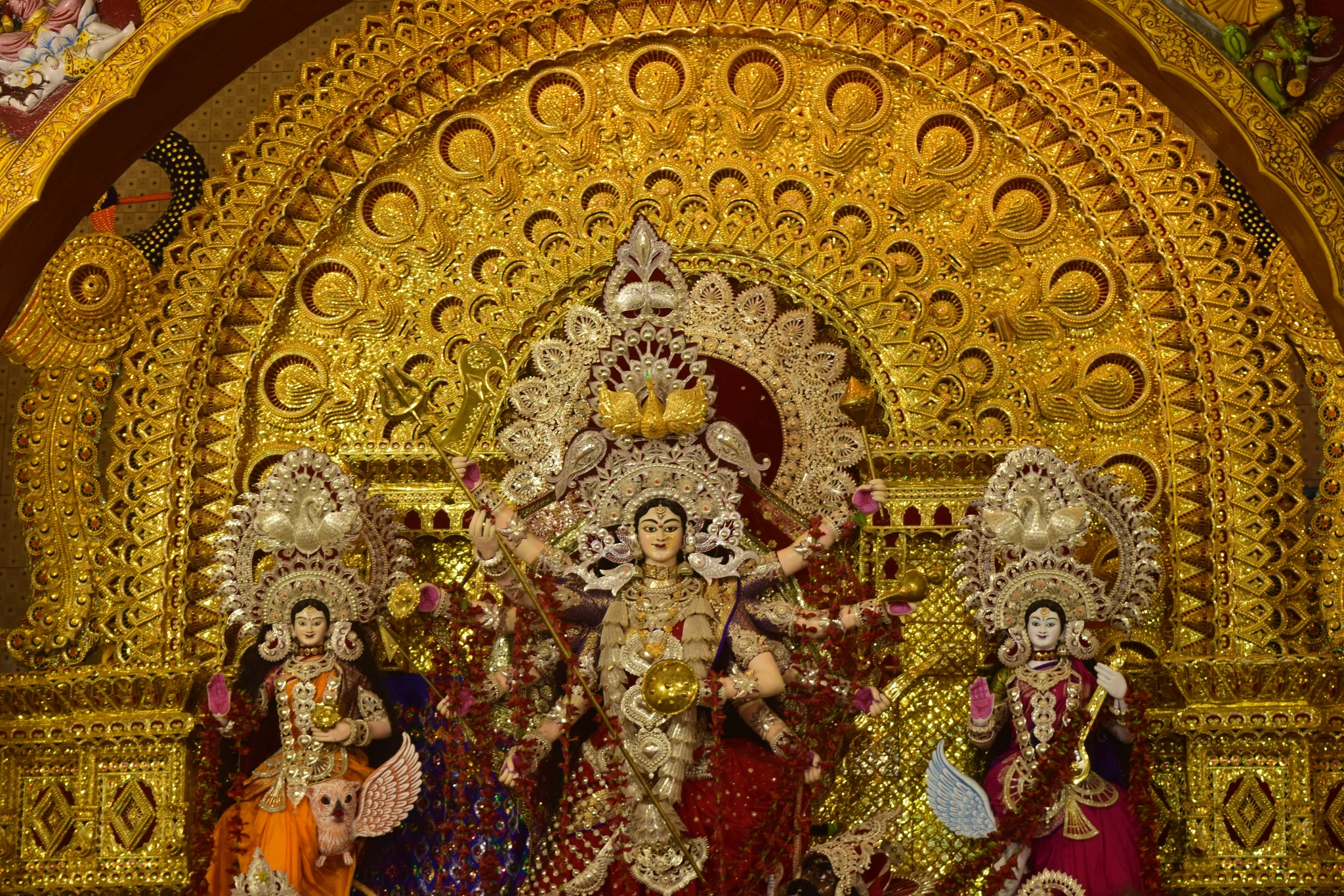
The silver panels and gold ornaments are never immersed with the clay idol. Before immersion begins, the medha panels are carefully dismantled and stored securely in community strongrooms until the following autumn. This ensures the precious metalwork is preserved across generations.
The clay idol (Mrunmayee Murti) is carried in a ceremonial procession to Devigada on the banks of the Kathajodi river, where ritual immersion takes place in designated eco-friendly ponds. This practice honours the sacred clay form while safeguarding Kataka’s invaluable filigree treasures.
The Bhasani Nishan: Flags That Guide the Procession
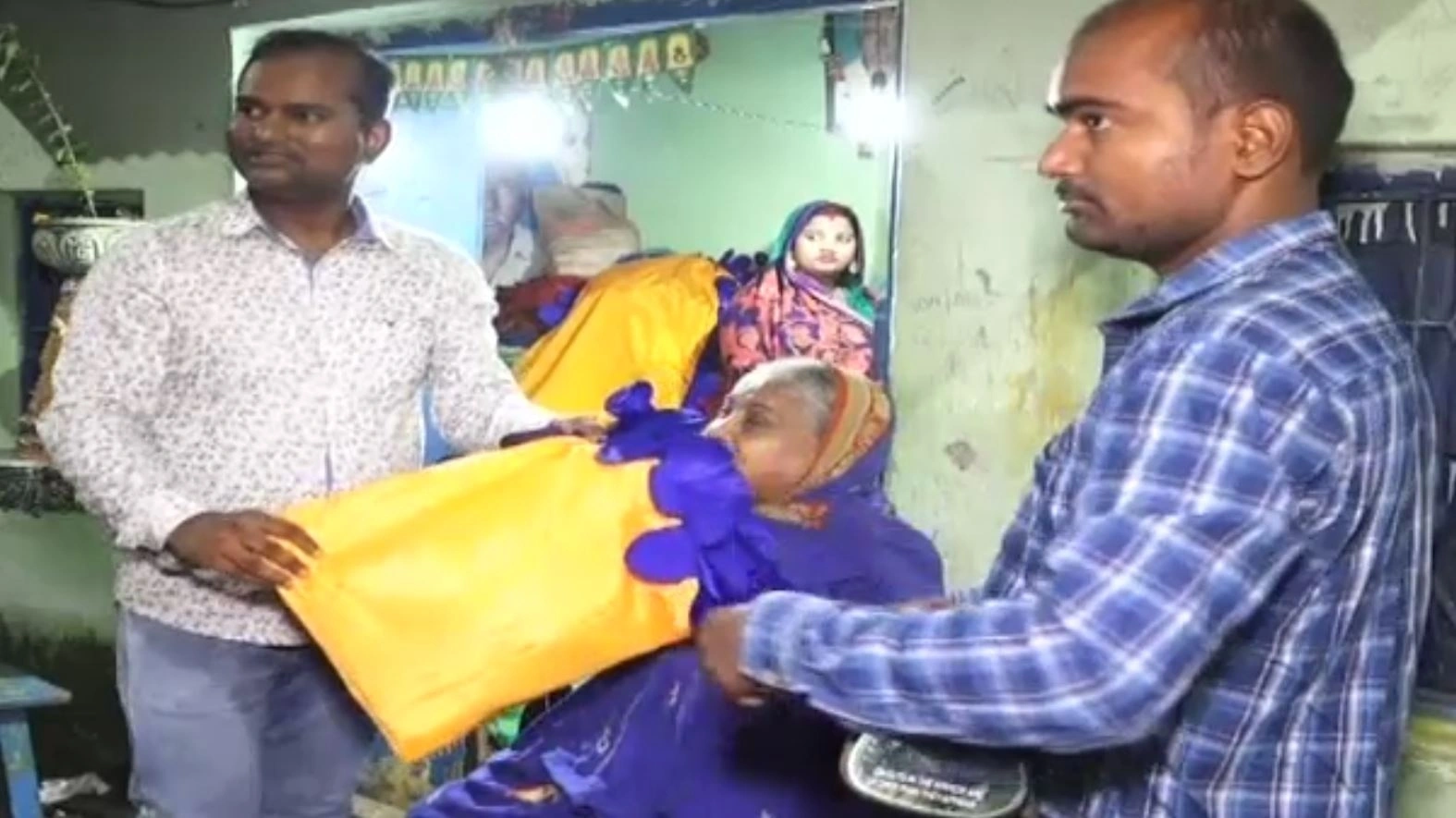
During Kataka’s Bhasani, towering Nishan flags rise high above the streets. Handcrafted from rich velvet and satin and adorned with embroidery, borders and neighbourhood crests, these flags are carried on long bamboo poles ahead of each idol. Their vibrant colours, emblems and shapes allow devotees and organisers to easily identify each neighbourhood contingent amid the sea of people.
These flags serve both ceremonial and practical purposes. With dozens of idols navigating the historic streets simultaneously, a distinctive Nishan guides devotees following their neighbourhood procession, while elevated poles ensure visibility above dense crowds.
A Tradition of Shared Craftsmanship in Dargha Bazar
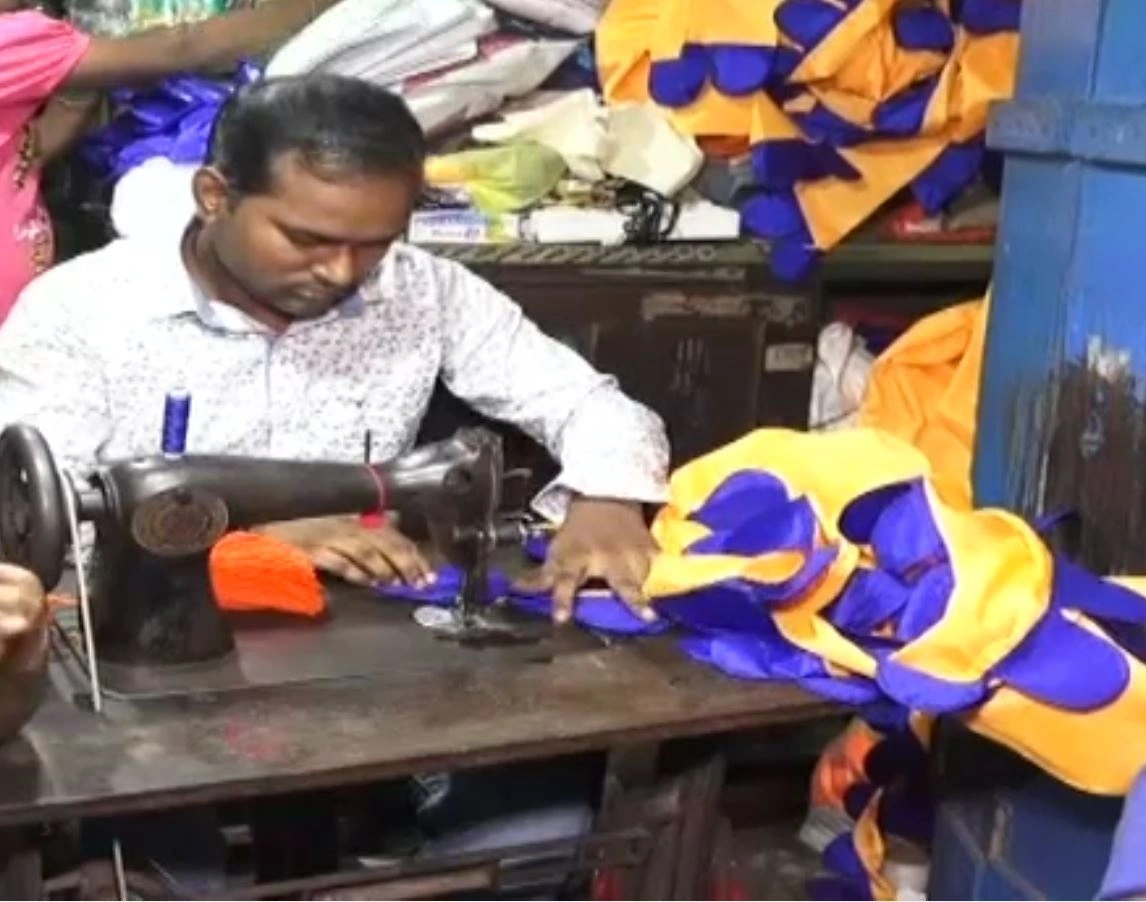
One of the most inspiring dimensions of Kataka’s Puja heritage is the collaboration between Hindu Puja committees and hereditary Muslim tailors. For generations, tailor families in Dargha Bazar, Buxi Bazar and Pension Lane have hand-stitched these ceremonial Nishan banners, carefully cutting fabric, applying sacred emblems, sewing scalloped borders and attaching gold zari braid.
This enduring relationship exemplifies the Odia spirit of bhaichara—brotherhood, harmony and neighbourly solidarity. Puja committees place their orders weeks in advance, while master tailors invest their artistic expertise into every stitch, proving how the festival unites diverse communities in shared pride and celebration.
Bhasani in Kataka: The Grand Immersion Procession
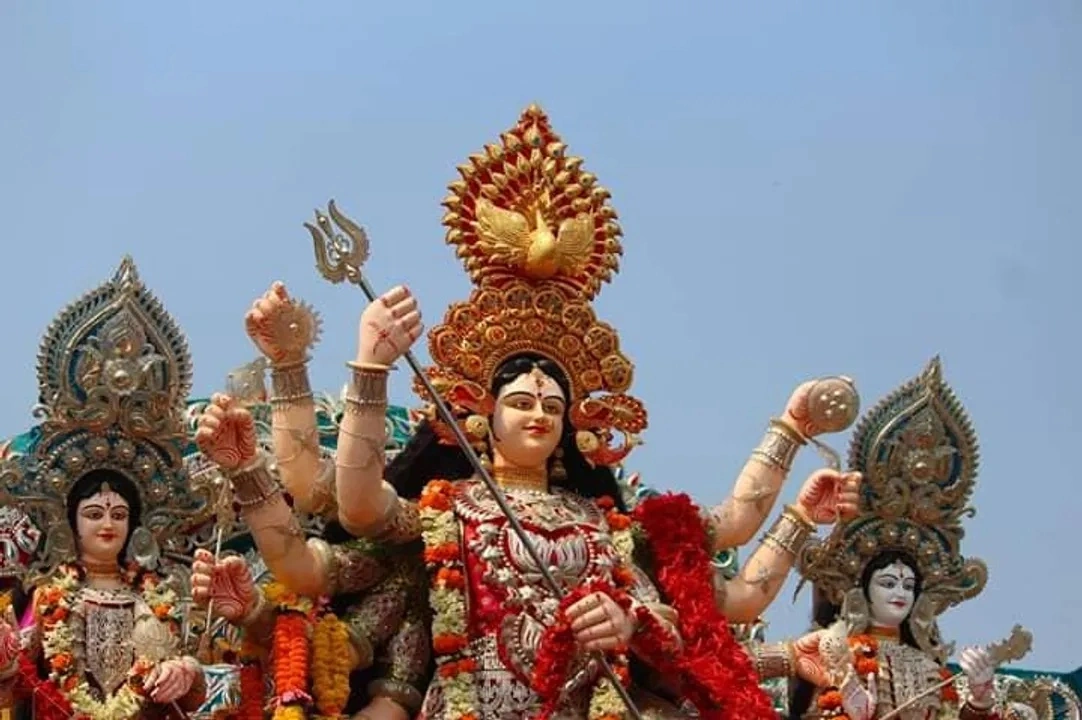
Bhasani marks the grand finale of Kataka’s Durga Puja. Beginning on Vijaya Dashami evening and continuing late into the following day, decorated tableaus wind through major arterial roads toward Devigada on the Kathajodi riverbank. Major carnival routes span College Chhak, Ranihat, Mangalabag, Buxi Bazar and Choudhury Bazar.
The carnival brings together rhythmic dhak beats, traditional percussion, illuminated torana gates, towering Nishan flags and thousands of devotees. Its scale and duration make it both a deeply sacred ritual and an unforgettable public celebration, drawing entire neighbourhoods into the illuminated streets.
Visitors should follow route advisories, give way to moving idol vehicles, and plan designated rendezvous points with family members when navigating peak procession corridors.
Why Kataka’s Durga Puja Is Distinctive
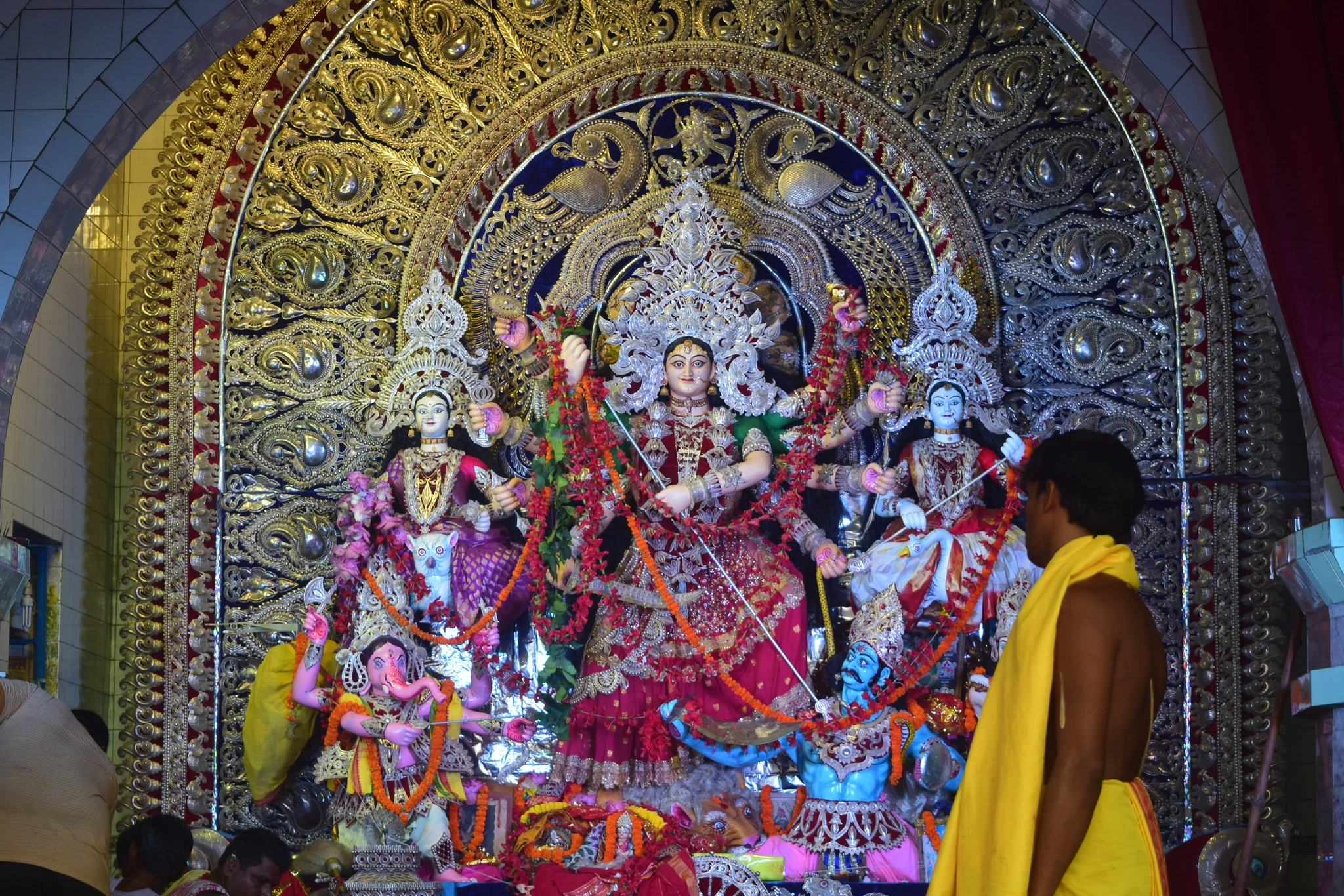
Kataka’s Durga Puja harmoniously unites five centuries of history: the early heritage of Balu Bazar, the peerless craftsmanship of Tarakasi, dazzling Chandi Medha and Suna Medha tableaus, and the vibrant Bhasani immersion procession with its iconic Nishan banners.
Beyond its visual grandeur, the festival reflects the soul of Kataka itself: master silversmiths shaping wire filigree, clay sculptors moulding sacred river alluvium, and Muslim artisans stitching ceremonial flags for Hindu mandaps. Together, these living crafts and shared bonds make the festival an authentic expression of community life, art and devotion.
Frequently Asked Questions
How old is Durga Puja in Kataka?
Kataka’s public Durga Puja tradition began in 1514 at Balu Bazar, giving it a rich history of over five centuries.
Which mandap introduced the first Chandi Medha in Kataka?
Choudhury Bazar introduced the first Chandi Medha in 1956, commissioning a silver backdrop crafted from more than 250 kilograms of pure silver.
What does Chandi Medha mean?
Chandi Medha is the ornate silver filigree tableau or backdrop mounted behind the deities at a Durga Puja mandap.
What is Tarakasi?
Tarakasi is Kataka’s indigenous silver filigree craft, wherein fine silver wires are drawn, twisted and soldered by hand into intricate lace-like designs.
What is Suna Medha?
Suna Medha is a backdrop adorned with pure gold ornamentation and crowns. Choudhury Bazar pioneered this tradition in 2006.
Which Kataka mandaps are known for heavy silver medhas?
Ranihat and Chauliaganj feature the heaviest silver medhas (up to 5–6 quintals), while Khan Nagar, Sheikh Bazar, Jobra and Sikharpur also display massive silver filigree installations.
What is a Bhasani Nishan?
A Bhasani Nishan is a large ceremonial flag flown from a tall bamboo pole ahead of an idol during the immersion procession to identify the neighbourhood contingent.
Who makes the Bhasani Nishan flags?
Hereditary Muslim tailor families in areas such as Dargha Bazar, Buxi Bazar and Pension Lane craft these ceremonial flags for Hindu Puja committees.
Are Chandi Medha panels immersed with the idol?
No. The silver panels and gold ornaments are carefully dismantled and preserved in strongrooms, while only the clay idol is taken for immersion.
Where does the Bhasani procession culminate?
The immersion procession culminates at Devigada along the banks of the Kathajodi river.
Why is Balu Bazar important?
Balu Bazar is the birthplace of Kataka’s public community Durga Puja in 1514 and holds the customary first position in the Bhasani immersion procession.
What makes Nuabazar Mandap different?
Nuabazar places a life-sized idol of Lord Shiva directly beside Goddess Durga, creating a distinctive Shaivite-Shakta tableau.
Conclusion
Durga Puja in Kataka transcends decorative spectacle. Its living heritage thrives through the ancient Balu Bazar lineage, the precision of Tarakasi behind each Chandi Medha, the radiant gold of Suna Medha, and the towering Bhasani Nishan flags leading community processions through the city. These traditions unite master craft, sacred ritual and enduring communal harmony.
From the sweeping silver arches of Ranihat and Sheikh Bazar to the unique Shiva-Durga tableau at Nuabazar and the historic sanctity of Balu Bazar, each mandap enriches Kataka’s cultural tapestry. The grand Bhasani carnival carries this shared heritage into the open streets, celebrating the timeless spirit of the Millennium City.