
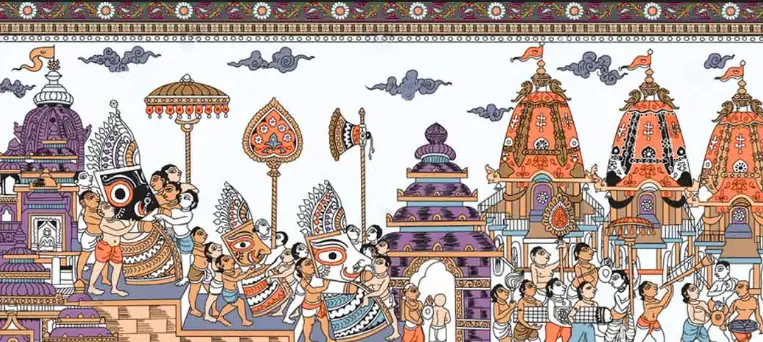
Odisha’s art lives in temples, villages and homes. Odissi grew out of temple ritual, Pattachitra painters still work in Raghurajpur, and the weavers of western Odisha keep Sambalpuri and Pasapali sarees alive thread by thread.
This guide gathers every dance, painting, craft and literary tradition we have written about on LocalDrive. Start here for an overview, then follow the links to our detailed guides on each art form and where to experience it.
In this guide:
- Classical and Temple Dance
- Folk Dance, Theatre and Music
- Painting and Folk Art
- Crafts and Handloom
- Literature and Devotional Poetry
- Planning Your Visit
- Frequently Asked Questions
Classical and Temple Dance
Odissi
Odissi grew from temple rituals at Konark and Puri and was recognised as a classical dance form by the Sangeet Natak Akademi in 1958. Read our full guide to Odissi.
Odissi dance heritage
Odissi dance heritage shows how the dance turns temple sculpture into living movement and storytelling. Read our full guide to Odissi dance heritage.
Gotipua
Gotipua is the boy-dancer tradition that kept Odissi’s roots alive before the classical form took shape. Read our full guide to Gotipua.
Mahari dance
Mahari dance was performed by temple dancers at the Jagannath Temple in Puri as a spiritual offering. Read our full guide to Mahari dance.
The Devadasi tradition
The Devadasi tradition gave temple dancers a central role in rituals, especially at the Jagannath Temple in Puri. Read our full guide to The Devadasi tradition.
Folk Dance, Theatre and Music
Chhau of Mayurbhanj
Chhau of Mayurbhanj blends martial movement with ancient stories and is one of Odisha’s proudest traditions. Read our full guide to Chhau of Mayurbhanj.
Danda Nacha
Danda Nacha is a centuries-old ritual performance and theatre of devotion, also known as Danda Nata or Danda Yatra. Read our full guide to Danda Nacha.
Sambalpuri folk dance
Sambalpuri folk dance from western Odisha is full of swirling movement, handwoven costume and thunderous drums. Read our full guide to Sambalpuri folk dance.
Pala
Pala is a living folk form that weaves together music, mythology and community participation. Read our full guide to Pala.
New Sambalpuri songs
New Sambalpuri songs show how the region’s folk music is finding a new audience across digital India. Read our full guide to New Sambalpuri songs.
Painting and Folk Art
Pattachitra
Pattachitra is Odisha’s cloth painting tradition, best known for its images of Lord Jagannath. Read our full guide to Pattachitra.
Sacred Canvas
Sacred Canvas tells the story of an artist working to protect the Pattachitra legacy. Read our full guide to Sacred Canvas.
Raghurajpur
Raghurajpur on the Bhargavi River in Puri district is the artist village famous for Pattachitra and palm-leaf engraving. Read our full guide to Raghurajpur.
Jhoti Chita
Jhoti Chita is the rice-paste floor and wall art that rural women create for festivals and rituals. Read our full guide to Jhoti Chita.
Crafts and Handloom
Pipili Chandua
Pipili Chandua is the bright appliqué craft of Pipli, a village between Bhubaneswar and Puri. Read our full guide to Pipili Chandua.
Cuttack silver filigree
Cuttack silver filigree known as Chandi Tarakasi, has been made by Cuttack’s artisans for nearly five centuries. Read our full guide to Cuttack silver filigree.
Metal craft
Metal craft covers the fire-and-hammer traditions passed down through artisan families across the state. Read our full guide to Metal craft.
Stone art
Stone art covers Odisha’s famous stone carving tradition and modern stone painting. Read our full guide to Stone art.
Sambalpuri sarees
Sambalpuri sarees are handwoven living art from western Odisha, known for bold colours and symbolic motifs. Read our full guide to Sambalpuri sarees.
The Pasapali saree
The Pasapali saree is the checkered handloom weave that has become a symbol of Odisha’s weaving heritage. Read our full guide to The Pasapali saree.
Literature and Devotional Poetry
Geeta Govinda
Geeta Govinda is Jayadeva’s 12th-century devotional poem and its lasting bond with Lord Jagannath. Read our full guide to Geeta Govinda.
The Odia Mahabharat
The Odia Mahabharat was written by the 15th-century poet Sarala Das and blends the epic with the life of his time. Read our full guide to The Odia Mahabharat.
Planning Your Visit
- Raghurajpur is a short drive from Puri, and Pipli sits on the road between Bhubaneswar and Puri, so both fit easily into a temple trip.
- Buy directly from artisans or government handloom outlets to be sure your saree or painting is genuine.
- Festivals are the best time to see folk dance, while Odissi performances are held through the year in Bhubaneswar.
- Ask before photographing artists at work, and respect their time if you are not buying.
Frequently Asked Questions
When was Odissi recognised as a classical dance?
Odissi was recognised as a classical dance form by the Sangeet Natak Akademi in 1958.
Where can I see Pattachitra artists at work?
Raghurajpur, the artist village on the Bhargavi River in Puri district, is the best place to watch Pattachitra painters.
What is Chandi Tarakasi?
Chandi Tarakasi is the silver filigree craft of Cuttack, where fine silver threads are shaped into lace-like jewellery and decor.
Who wrote the Odia Mahabharat?
The Odia Mahabharat was written by Sarala Das, the 15th-century poet regarded as the originator of Odia literature.
Final Thoughts
Odisha’s art is still made by hand, performed in temples and worn every day. Follow the links above to go deeper into each tradition, and plan time in Raghurajpur, Pipli and Cuttack to see it for yourself.
Related guides: