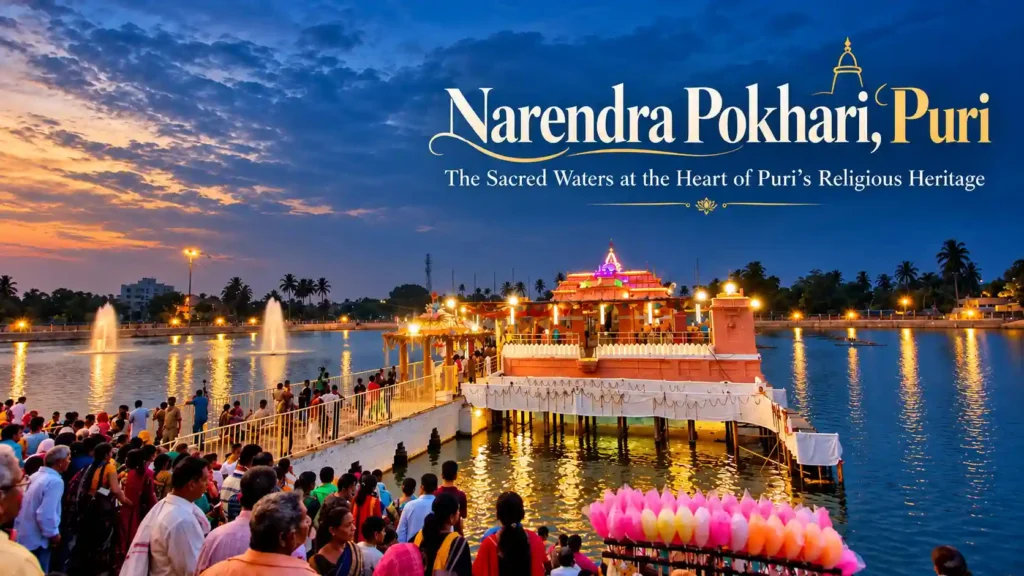
Narendra Pokhari, also known as Narendra Sarovar or Narendra Tank, is one of the important sacred water bodies associated with Lord Jagannath in Puri, Odisha. The pond is closely connected with the annual Chandan Yatra, during which the representative deity of Lord Jagannath, Madanamohana, participates in a ceremonial boat ride on its waters.
Located approximately two kilometres northeast of the Jagannath Temple, Narendra Pokhari has a central island, a small temple and several ghats associated with its religious traditions. Its history is also connected with legends about a pumpkin plant, royal patronage and devotion to Lord Jagannath.
Narendra Pokhari is not the only sacred pond in Puri. Indradyumna Sarovar, Markandeya Sarovar and Sweta Ganga also hold religious significance. Each has its own stories, temples and associations with the spiritual traditions of Jagannath Dham.
Narendra Pokhari: The Sacred Pond of Chandan Yatra
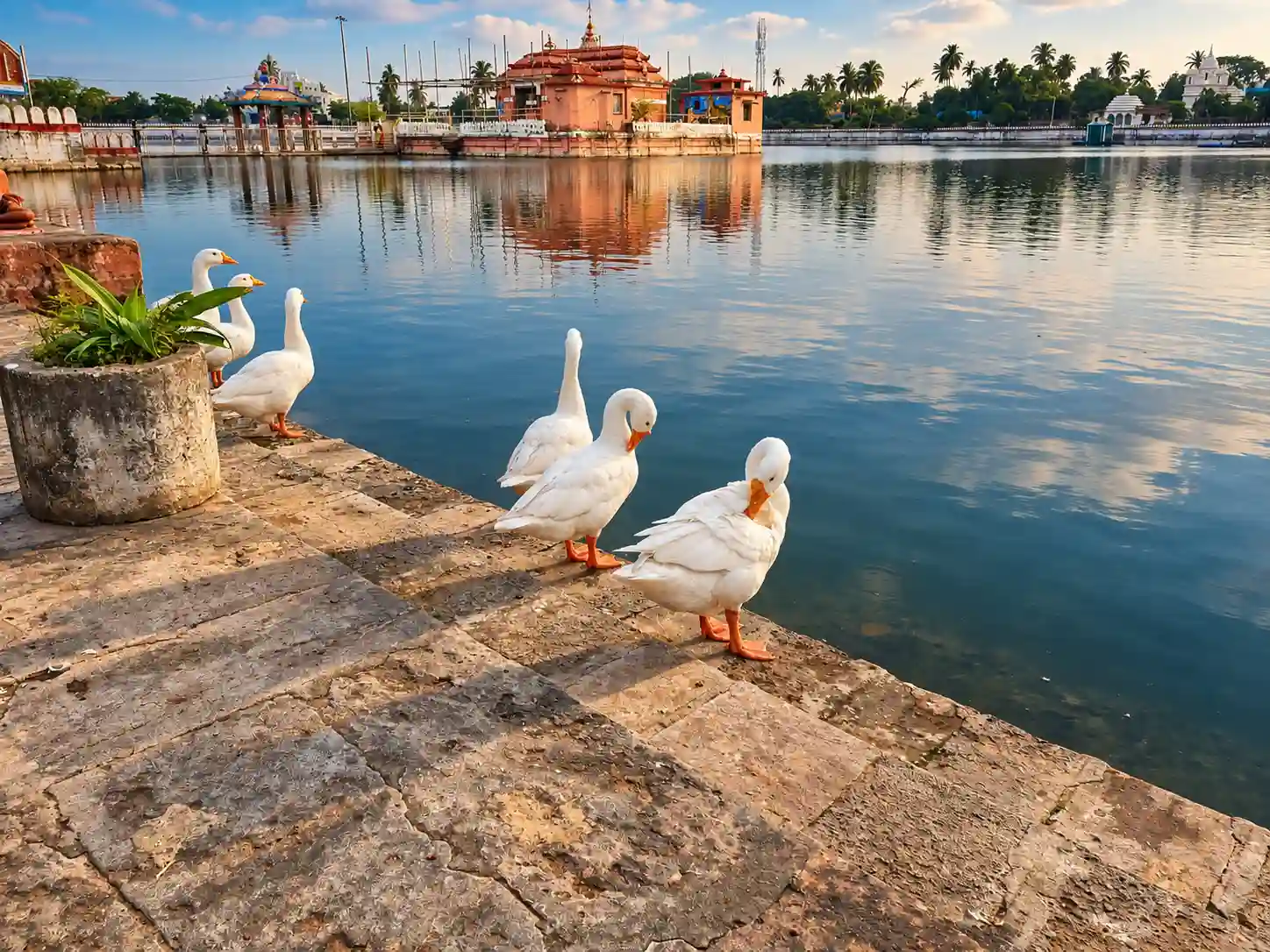
Narendra Pokhari is among the prominent traditional water bodies of Puri. It is particularly important during Chandan Yatra, a festival associated with Lord Jagannath and observed with ceremonial activities on the water.
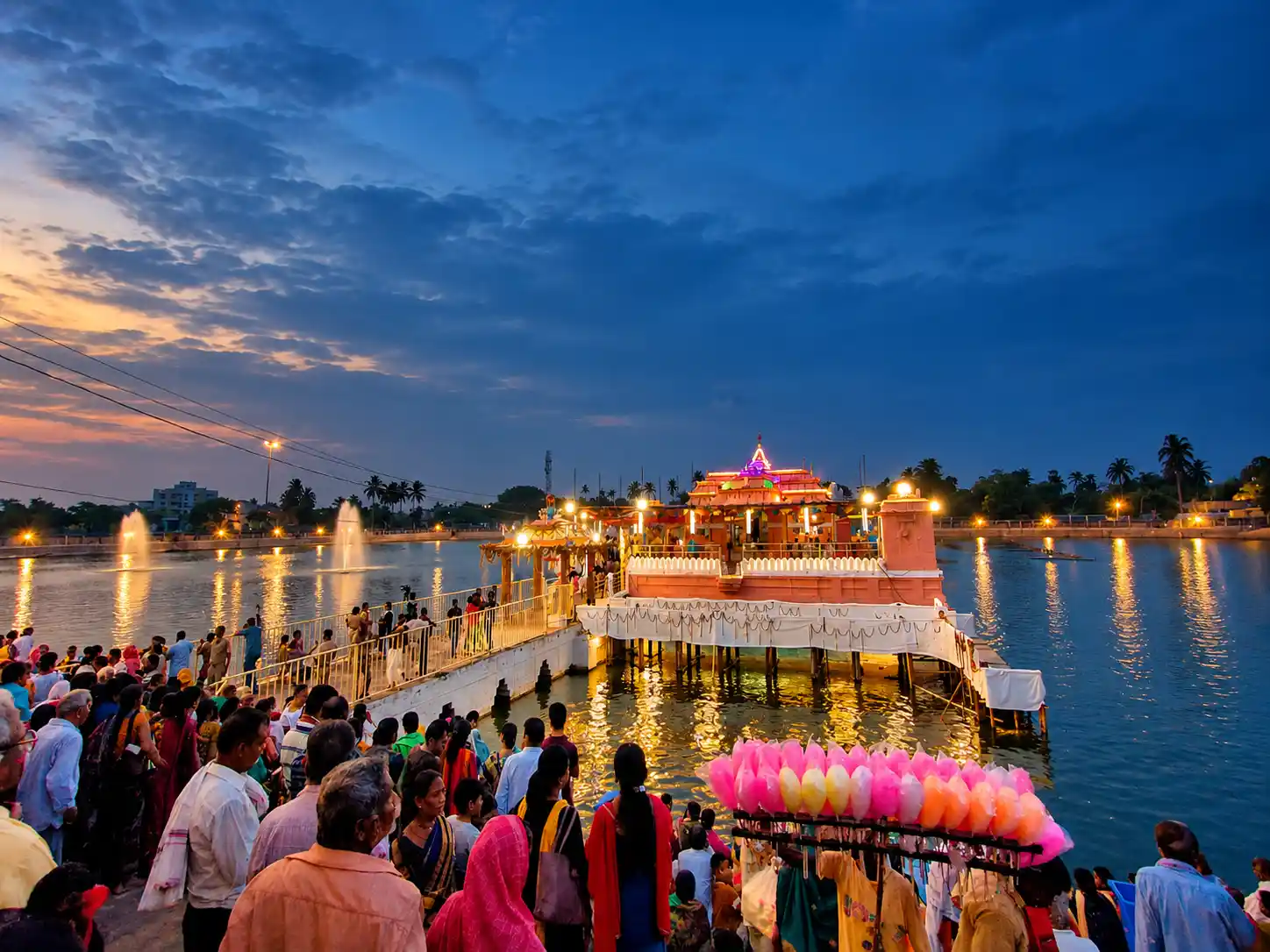
The pond features a small island at its centre, where a structure known as the Chandana Mandapa stands. During Chandan Yatra, Madanamohana, the representative deity of Lord Jagannath, is taken on a decorated boat called a chapa. The deity is associated with the ceremonial activities held at the pond during the festival.
The tank is also known as Chandana Pushkarani because of its connection with Chandan Yatra. Its ghats, island temple and religious traditions make it an important part of Puri’s sacred landscape.
The history behind Narendra Pokhari
One tradition associates the excavation of Narendra Pokhari with Narendra Deva, described as a brother of Gajapati Kapilendra Deva. The pond is associated with the medieval period, and its history is linked with royal patronage and the worship of Lord Jagannath.
The tank is also associated with several named ghats and temples along its banks. These features reflect the relationship between religious ceremonies, royal patronage and the development of sacred spaces in Puri.
The legend of the pumpkin plant
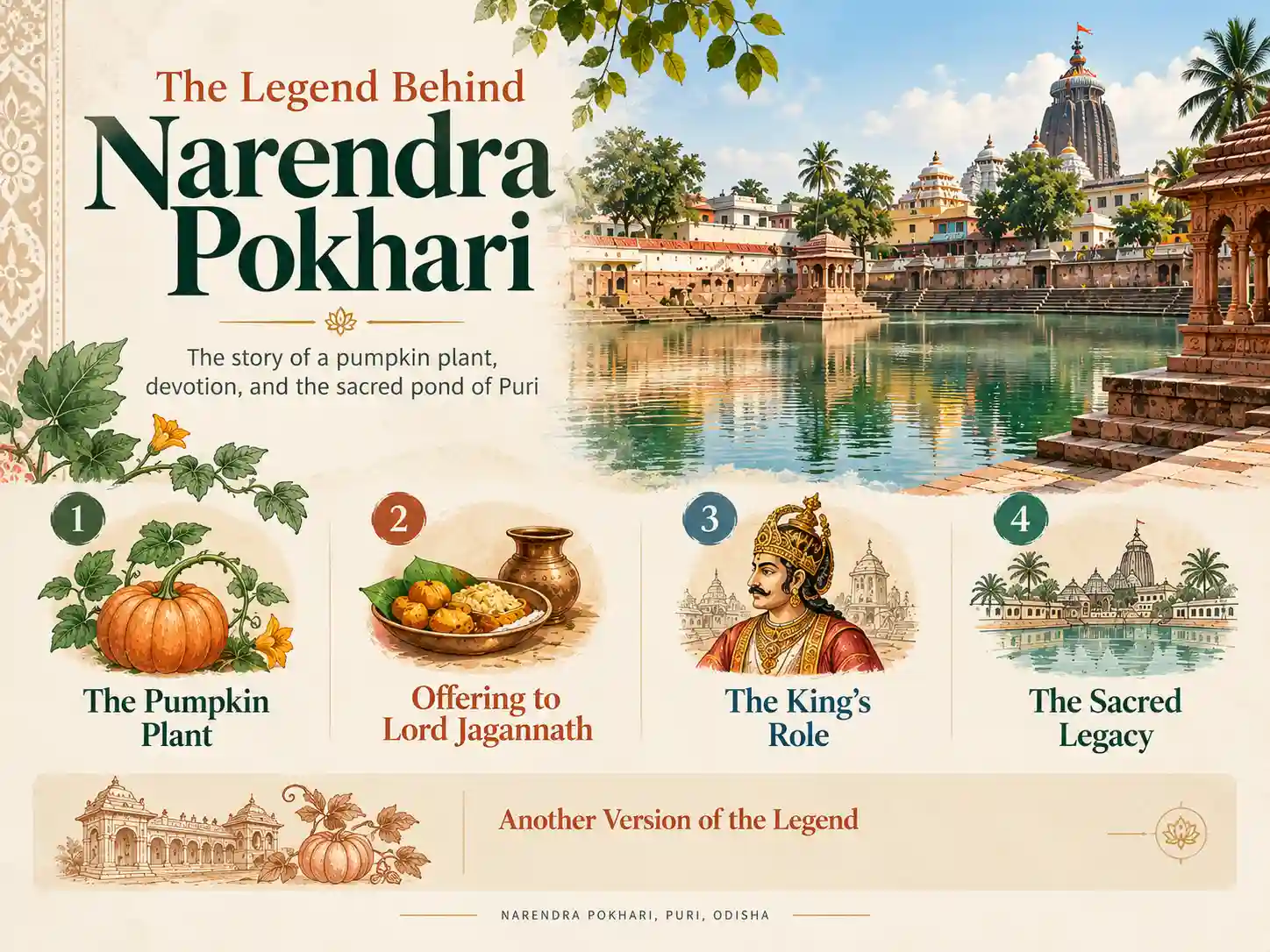
A distinctive legend explains the origin of Narendra Pokhari through a pumpkin plant. According to the story, Kalandi Mahadevi, the wife of Veer Narendra Deva, became an ascetic after her husband’s death. She lived in a garden and devoted herself to Lord Shiva and Lord Krishna. Her spiritual teacher, Babaji Govinda Das, gave her a pumpkin seed, which grew into a large, productive creeper.
The pumpkins were used in preparing Mahaprasad for Lord Jagannath. When Gajapati Kapilendra Deva heard about the plant, he visited the garden with his spiritual teacher, Mahadev Brahma.
Babaji Govinda Das is said to have requested the king to excavate a tank in memory of Veer Narendra Deva. The request also included naming ghats after Narendra Deva and Kalandi Devi. The king subsequently supported the creation of the pond and associated religious structures.
Another version of the legend describes a pumpkin seed discovered in the royal palace courtyard. The resulting plant produced a large number of pumpkins, which were sold, and the proceeds were offered to the Gajapati king. The funds were then associated with the construction of a tank at Shrikshetra.
These stories connect Narendra Pokhari with devotion, generosity and the religious traditions of the Jagannath Temple.
Ghats and the Chandana Mandapa
Narendra Pokhari is known for its series of ghats, traditionally associated with Narendra Deva, his family and royal history. Accounts describe fourteen ghats named after his fourteen sons, along with one associated with Kalandi Devi and another with Narendra Deva.
The pond also has a central island with the Chandana Mandapa, an important feature during Chandan Yatra. A nearby temple complex includes shrines associated with Kalandishvara Shiva and Gopinath. Chara Ganesha is also worshipped in the surrounding area.
Together, these structures connect the pond with Puri’s religious practices and traditional temple landscape.
Why Narendra Pokhari is important during Chandan Yatra
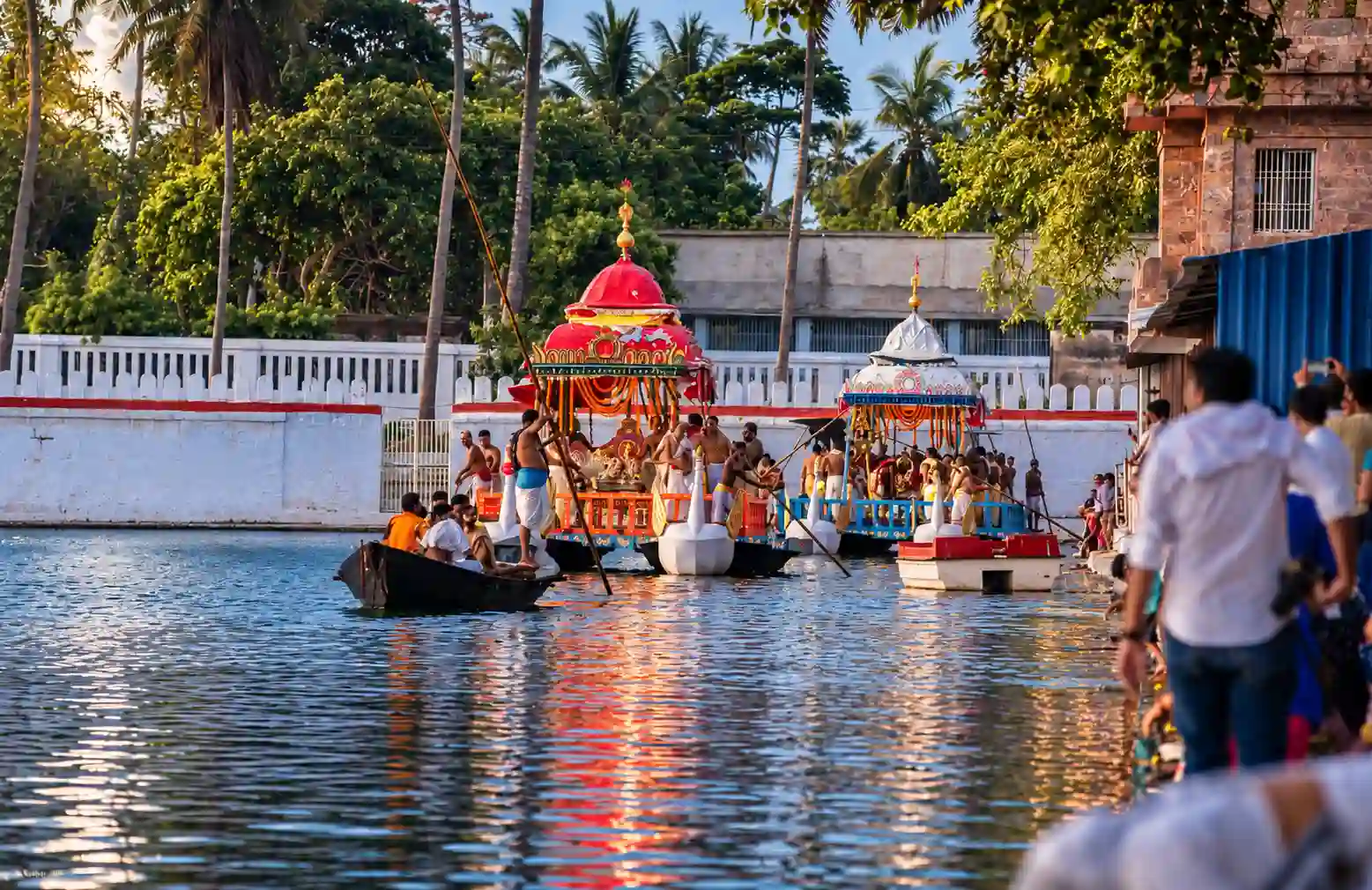
Chandan Yatra is one of the important festivals associated with Lord Jagannath. Narendra Pokhari becomes a centre of ceremonial activity during the festival, when Madanamohana is taken out on the water in a decorated boat.
The boat procession, known as chapa, is an important part of the observance. The central island and Chandana Mandapa provide a setting for the associated rituals.
For visitors interested in Puri’s religious heritage, the pond offers an opportunity to understand how water bodies form part of the city’s festival traditions beyond the main temple itself.
The condition of Narendra Pokhari
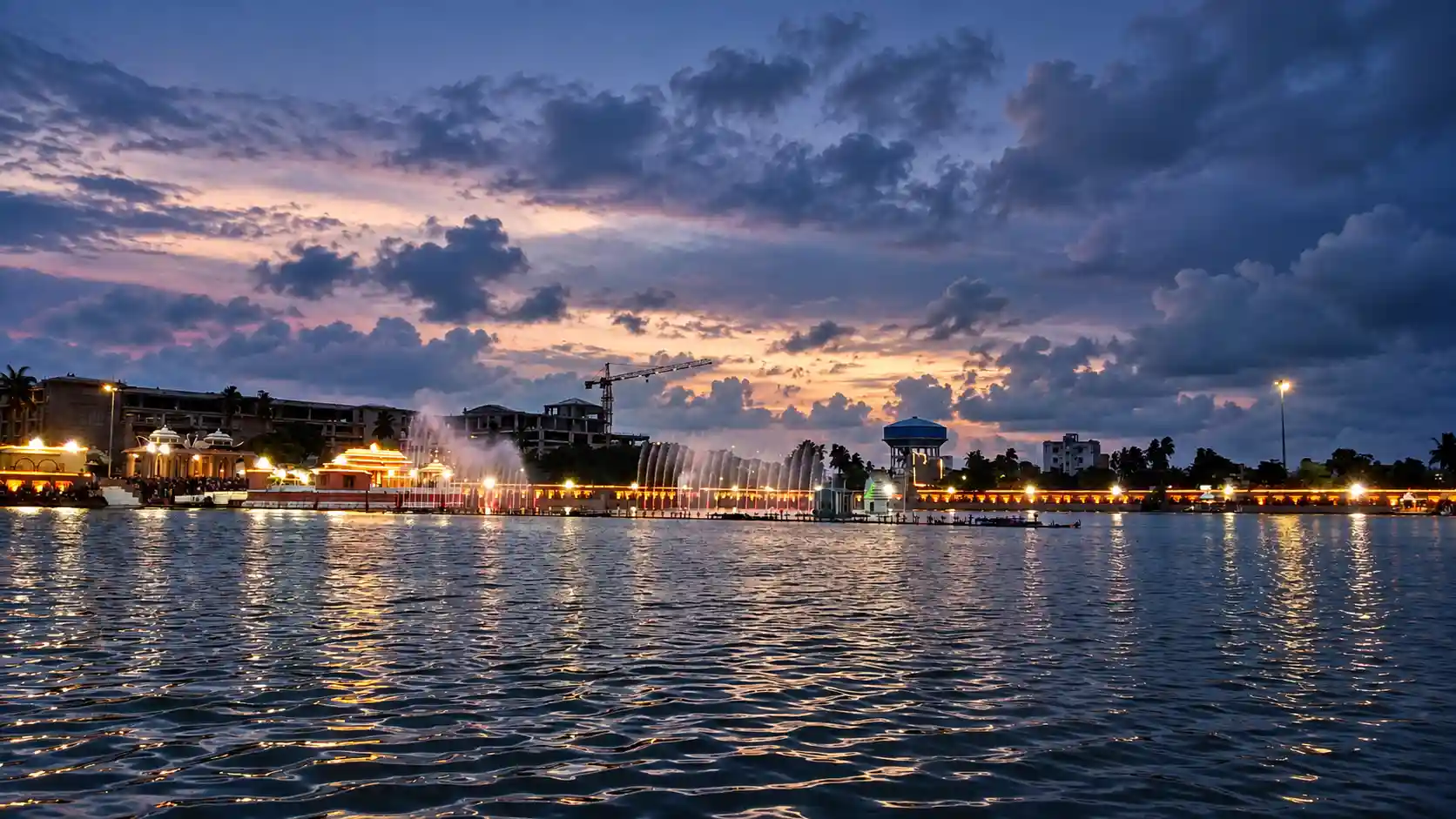
Narendra Pokhari has also faced concerns related to water quality. Historical descriptions refer to a system that brought rainwater from the Madhupur River, also identified as the Mitiani River, through a channel near the western side of the pond.
The inlet and outlet channels have been described as blocked, affecting the movement and renewal of water. Such conditions can contribute to poor water quality and make the maintenance of the pond an important concern.
Preserving Narendra Pokhari involves more than maintaining its appearance. Its water, ghats, island structures and traditional role in Chandan Yatra are all part of its heritage.
Indradyumna Sarovar: A Sacred Pond Connected with Ancient Legends
Indradyumna Sarovar is another important sacred pond in Puri. Located approximately 2.7 kilometres from the Jagannath Temple, it is associated with King Indradyumna, whose legend is closely connected with the religious history of Jagannath Dham.
The pond covers an area described as approximately four and a half acres. A small shrine dedicated to King Indradyumna stands near the water.
The sarovar is also associated with Sri Chaitanya Mahaprabhu, who is believed to have enjoyed jala krida, or water sports, with his associates here.
The legend behind Indradyumna Sarovar
According to tradition, King Indradyumna performed a thousand Ashvamedha yajnas, erected a thousand sacrificial posts known as yupa, and donated large numbers of cows to those in need.
The movement of the cattle is believed to have created a large depression in the ground. Water used during the sacrificial ceremonies subsequently filled the depression, giving rise to the pond known as Indradyumna Sarovar.
This legend connects the pond with the king’s religious activities and acts of charity. It also explains the traditional association between the sarovar and the ancient history of the region.
The story of Gajendra and Lord Vishnu
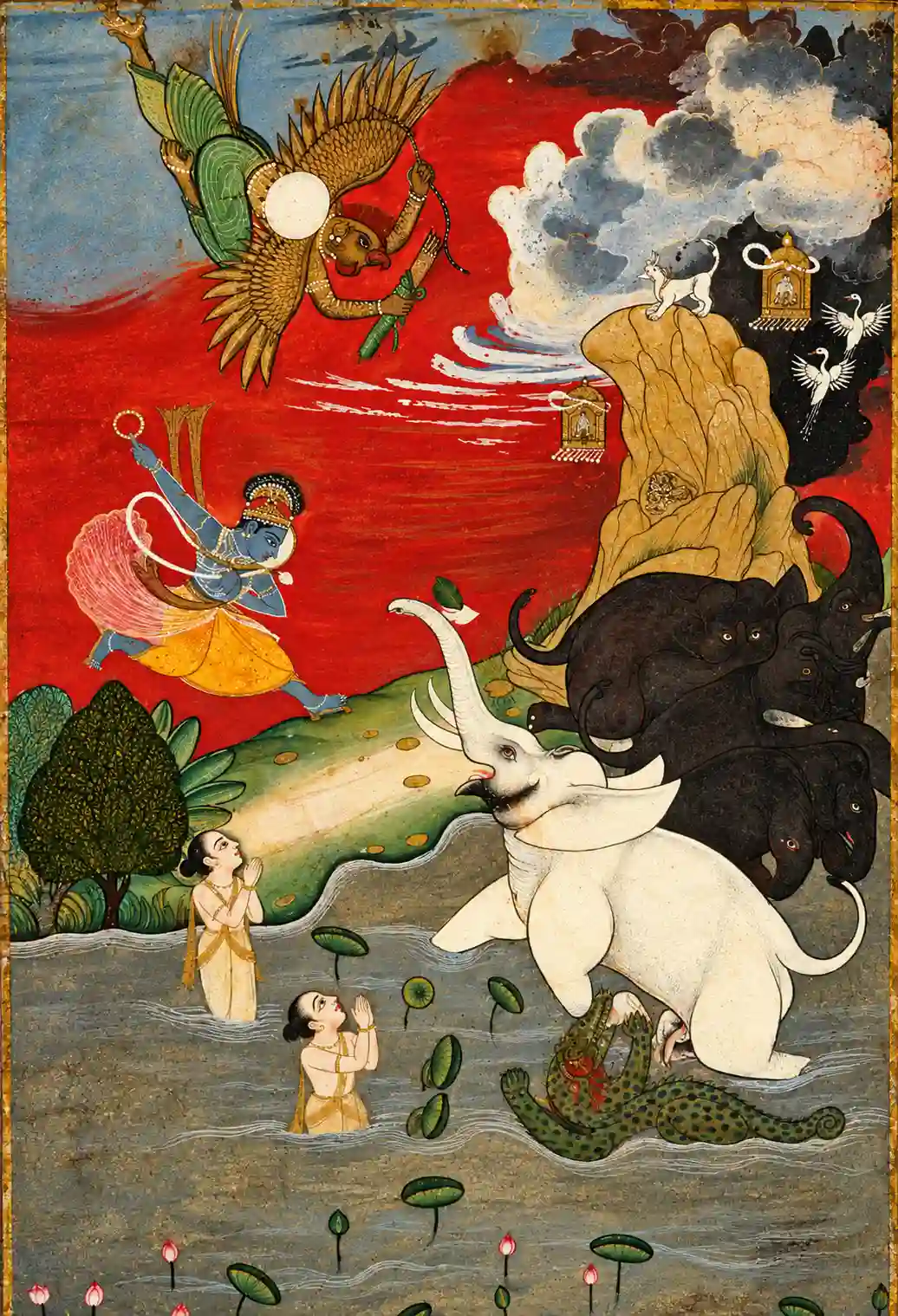
Indradyumna Sarovar is associated with the Hindu legend of Gajendra Moksha.
According to the story, King Indradyumna was cursed by the sage Agastya to be born as an elephant. He could be released from the curse only through the touch of Lord Vishnu.
In his next birth, Indradyumna became Gajendra, an elephant who went to drink water from a lake near Mount Trikuta. A crocodile living in the lake attacked him. The crocodile was Huhu, a Gandharva who had been cursed by the sage Devala.
Gajendra and the crocodile struggled for a long time. Exhausted and unable to free himself, Gajendra prayed to Lord Vishnu. His prayer became known as the Gajendra Stuti.
Lord Vishnu responded to the elephant’s prayers, defeated the crocodile and released both figures from their respective curses. The story is remembered as an expression of divine grace and the power of sincere devotion.
The connection with this legend contributes to the religious significance attributed to Indradyumna Sarovar. Devotees traditionally believe that taking a holy dip in the pond brings spiritual purification.
Markandeya Sarovar: A Pond Associated with Temple Rituals
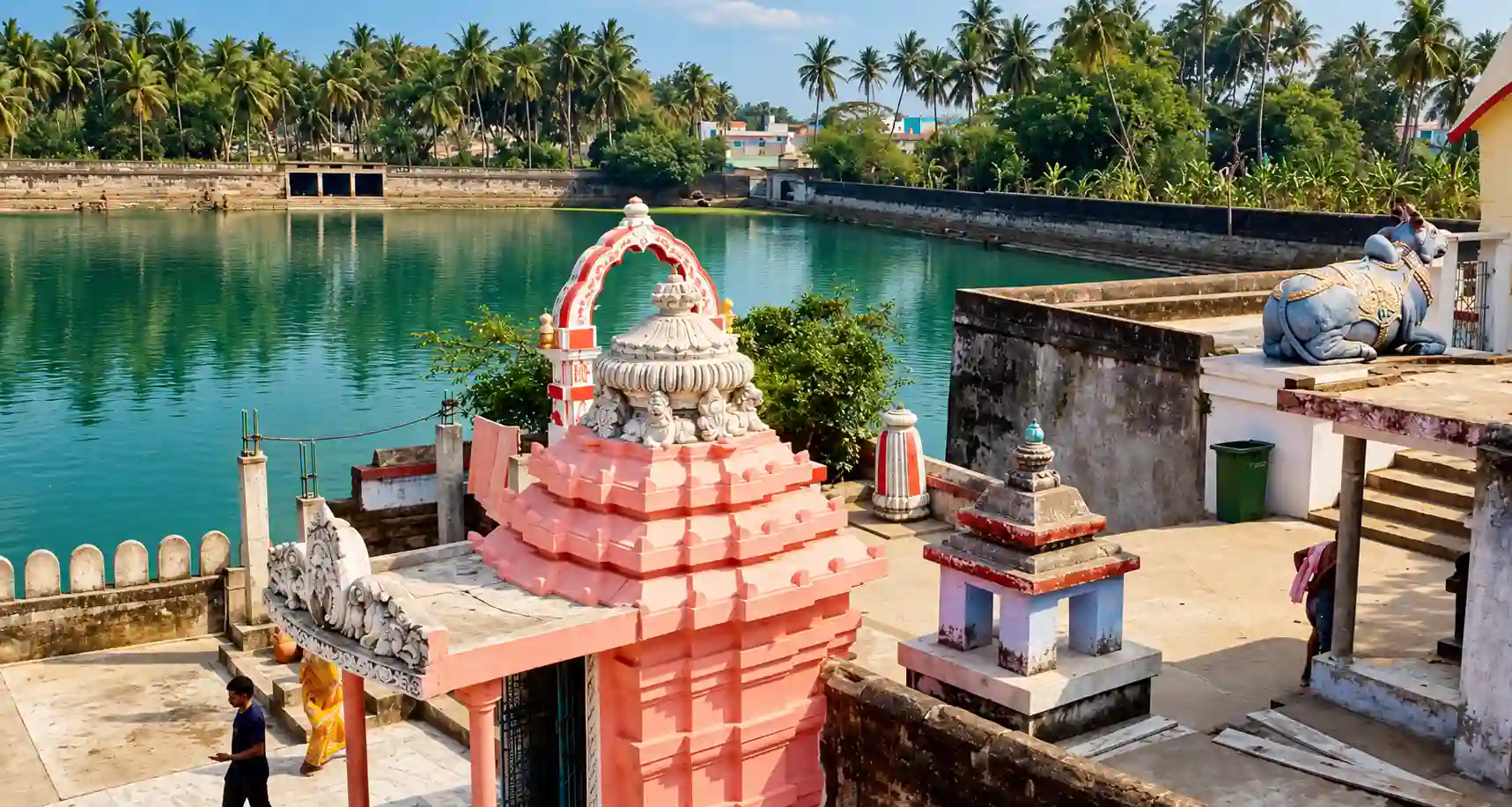
Markandeya Sarovar, also known as Markandeshwar Tank, is situated north of the Jagannath Temple. It is another traditional water body connected with the religious life of Puri.
Its significance comes particularly from its association with rituals related to Lord Jagannath. One of the important festivals connected with the tank is Chandan Yatra.
The area also has historical significance. The temple associated with Markandeshwar Tank contains ancient stone inscriptions connected with the Ganga Dynasty.
Why Markandeya Sarovar matters
The importance of Markandeya Sarovar lies in its place in the religious geography of Puri. The pond and its associated temple structures connect local worship, festival traditions and historical heritage.
Sweta Ganga: A Small Sacred Tank Near Jagannath Temple
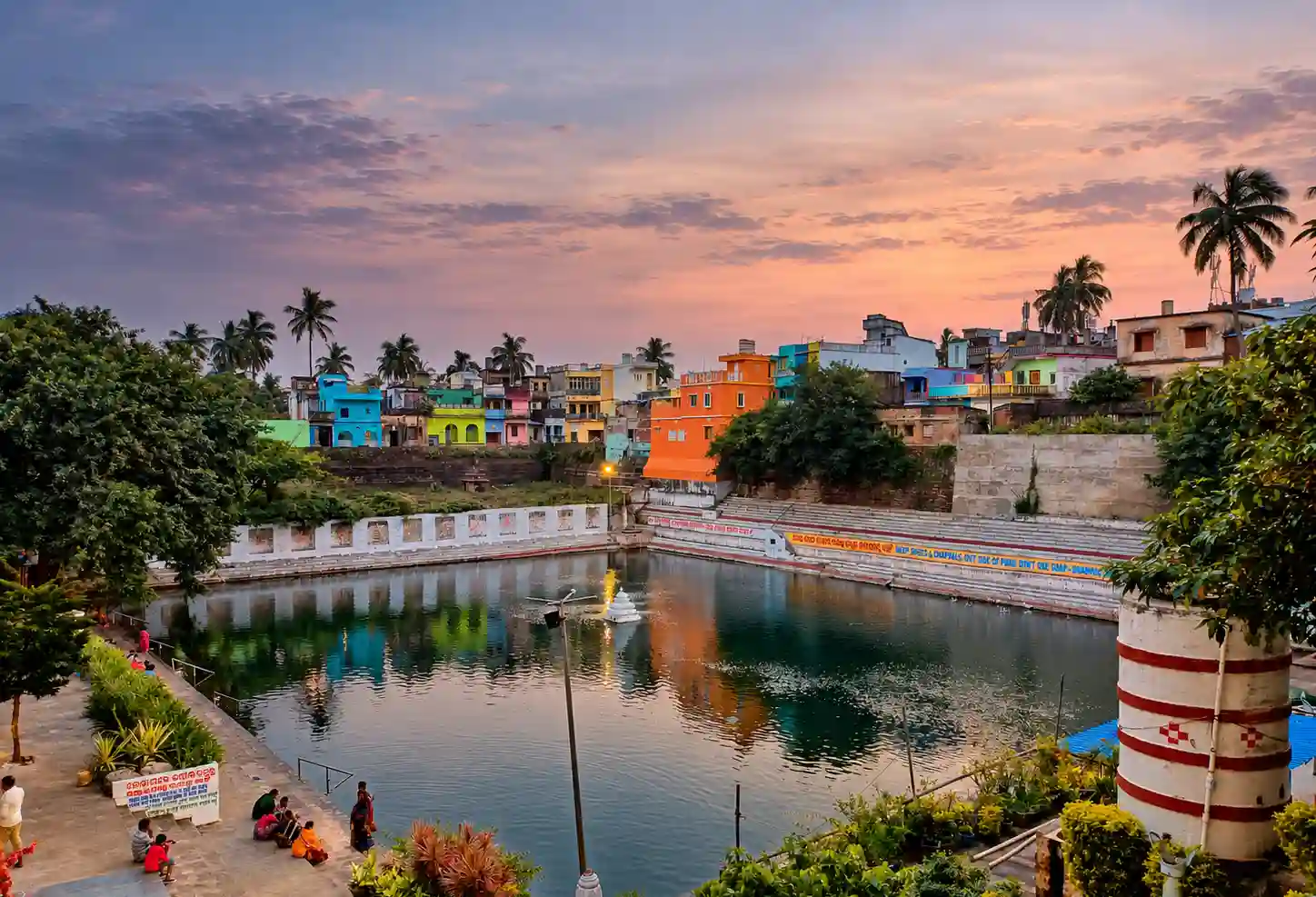
Sweta Ganga, also written as Swetha Ganga, is a small sacred tank situated west of the Jagannath Temple.
Two small temples stand on its banks. One is dedicated to Sweta Madhava, while the other is dedicated to Matsya Madhava. Both are associated with forms of Lord Vishnu.
Although smaller than Narendra Pokhari, Sweta Ganga forms part of the sacred landscape surrounding the Jagannath Temple. Its nearby shrines give the tank a distinct religious identity.
Four Sacred Ponds of Puri: A Comparison
The four ponds have different historical stories and religious associations.
- Narendra Pokhari — Approximately 2 km northeast of Jagannath Temple — Chandan Yatra, ceremonial boat rides and the Chandana Mandapa.
- Indradyumna Sarovar — Approximately 2.7 km from Jagannath Temple — Legends of King Indradyumna, Gajendra Moksha and Sri Chaitanya Mahaprabhu.
- Markandeya Sarovar — North of Jagannath Temple — Ritual associations with Lord Jagannath and historical temple inscriptions.
- Sweta Ganga — West of Jagannath Temple — Shrines dedicated to Sweta Madhava and Matsya Madhava.
Each pond has its own place in Puri’s religious traditions. Narendra Pokhari is especially associated with Chandan Yatra, while Indradyumna Sarovar is remembered through stories of devotion and divine grace. Markandeya Sarovar connects ritual practices with historical inscriptions, and Sweta Ganga is distinguished by its two Vishnu-associated shrines.
How to Visit the Sacred Ponds in Puri
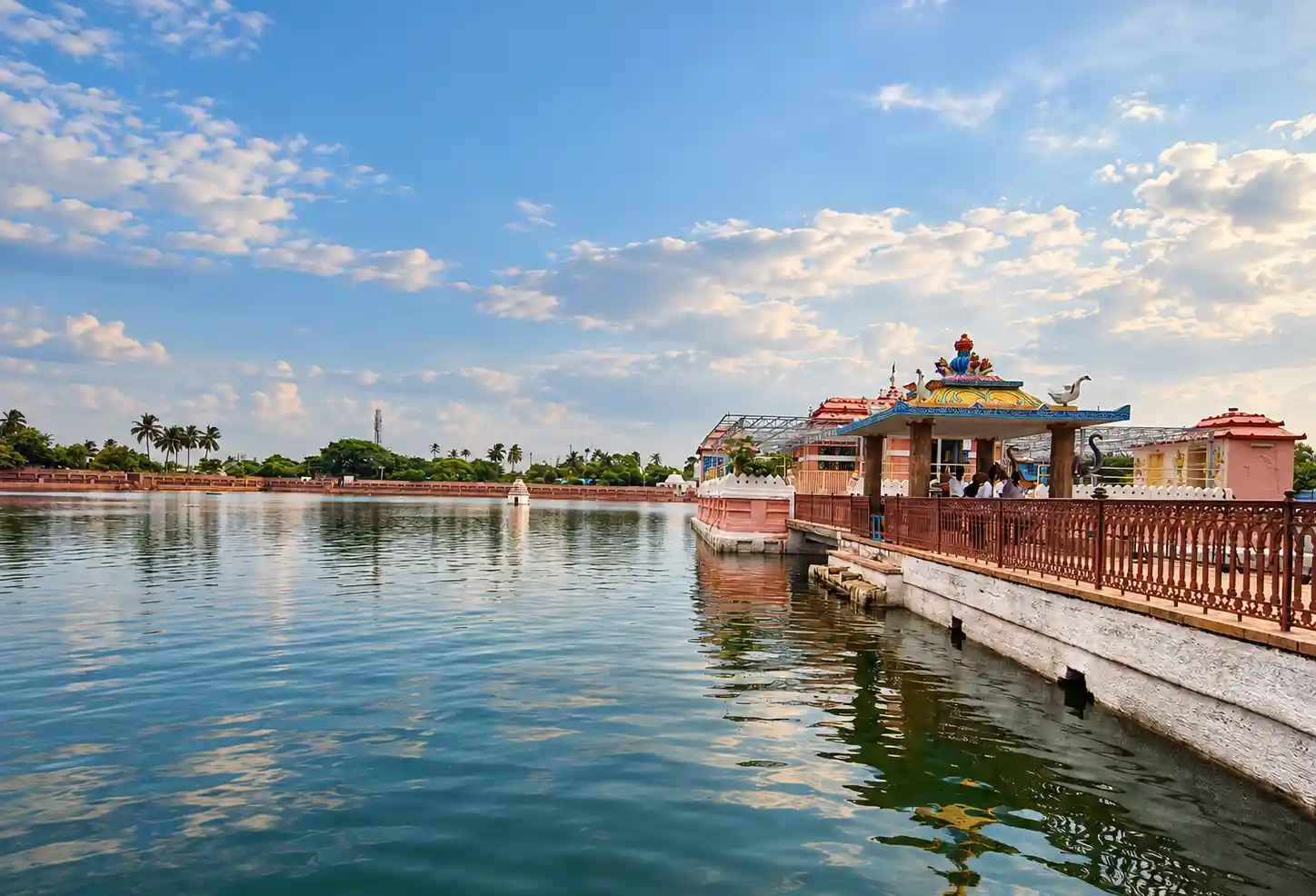
Visitors wishing to see these ponds can include them in a wider visit to the religious and historical sites around the Jagannath Temple.
- Plan your route: The ponds are situated in different parts of Puri, so check their locations before setting out.
- Respect religious practices: Some locations may be used for worship or rituals. Follow local instructions and avoid disturbing ceremonies.
- Dress appropriately: Modest clothing is advisable around temples and sacred water bodies.
- Keep the surroundings clean: Do not throw plastic, food waste or other rubbish into the ponds.
- Check access before visiting: Local access and restrictions may vary, particularly during festivals or religious ceremonies.
- Be careful near the water: Do not enter a pond for bathing unless bathing is permitted and the conditions are considered safe.
Visitors travelling during Chandan Yatra may find Narendra Pokhari particularly relevant. Festival arrangements and access conditions should be checked locally before travelling.
Frequently Asked Questions About Narendra Pokhari and the Sacred Ponds of Puri
What is Narendra Pokhari famous for?
Narendra Pokhari is famous for its association with Lord Jagannath and the Chandan Yatra festival. During the festival, Madanamohana, the representative deity of Lord Jagannath, participates in a ceremonial boat ride on the pond.
Where is Narendra Pokhari located in Puri?
Narendra Pokhari is situated approximately two kilometres northeast of the Jagannath Temple in Puri, Odisha.
What is the story behind Narendra Pokhari?
One traditional legend connects the pond’s construction with Kalandi Mahadevi, her spiritual teacher Babaji Govinda Das and a pumpkin plant that produced fruit used for preparing Mahaprasad. The story associates the excavation of the pond with the memory of Veer Narendra Deva.
What is the importance of Indradyumna Sarovar?
Indradyumna Sarovar is associated with King Indradyumna, Sri Chaitanya Mahaprabhu and the legend of Gajendra Moksha. Devotees traditionally associate a holy dip in its waters with spiritual purification.
What is Markandeya Sarovar known for?
Markandeya Sarovar, also called Markandeshwar Tank, lies north of the Jagannath Temple. It is connected with rituals associated with Lord Jagannath, including Chandan Yatra, and its associated temple contains ancient inscriptions linked with the Ganga Dynasty.
Where is Sweta Ganga situated?
Sweta Ganga is a small sacred tank located west of the Jagannath Temple. Two temples on its banks are dedicated to Sweta Madhava and Matsya Madhava, both associated with Lord Vishnu.
Which pond is associated with Chandan Yatra in Puri?
Narendra Pokhari is particularly associated with Chandan Yatra. The festival includes a ceremonial boat ride involving Madanamohana and activities connected with the Chandana Mandapa on the pond’s central island.
Preserving the Sacred Ponds of Jagannath Dham
Narendra Pokhari, Indradyumna Sarovar, Markandeya Sarovar and Sweta Ganga represent different aspects of Puri’s religious heritage. Their importance comes from their associations with Lord Jagannath, traditional festivals, sacred legends and the temples built around their waters.
These ponds are more than physical landmarks. They are part of the religious geography through which generations of devotees have understood and practised their faith. Their ghats, shrines, ritual spaces and stories help preserve the cultural identity of Jagannath Dham.
Protecting these sites requires attention to their historic structures, religious traditions and water quality. Keeping the surroundings clean and maintaining the ponds can help ensure that these sacred places remain meaningful for future generations.
For anyone interested in the spiritual heritage of Puri, Narendra Pokhari offers a starting point for understanding the city’s sacred ponds and their enduring connection with Lord Jagannath.