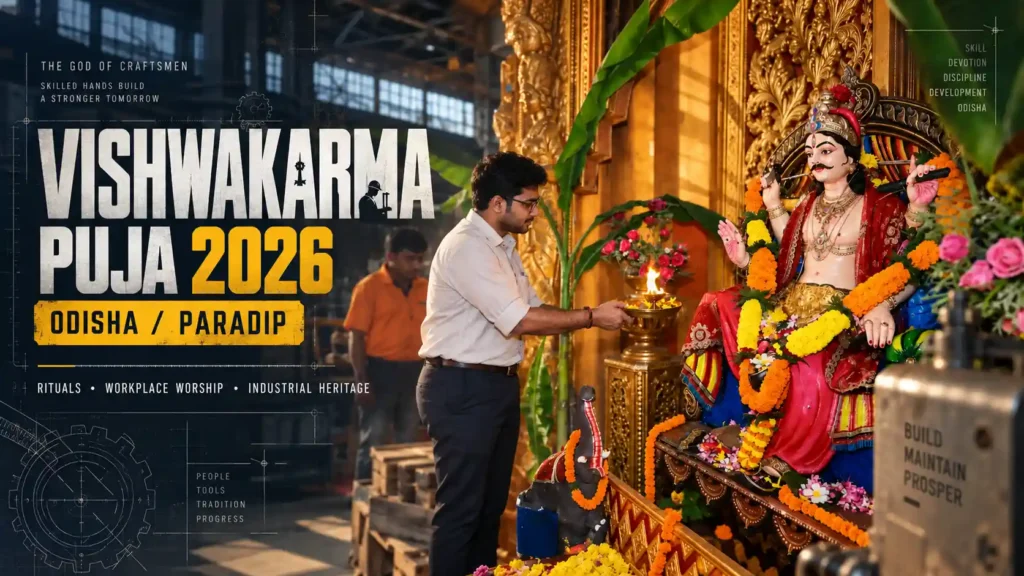
The confusion between September 16 and September 17 appears to have come from different calendar references and timing calculations. Panchang references for Odisha place Vishwakarma Puja on September 17, 2026, coinciding with Kanya Sankranti.
Why Vishwakarma Puja Matters in Odisha
Vishwakarma Puja is not limited to temples. In many parts of Odisha, the main puja takes place where people work: inside factories, beside machines, in garages, at engineering units, inside shops or in small workshops.
The festival is commonly observed by:
- Factory workers
- Engineers and technicians
- Mechanics and garage owners
- Carpenters and metalworkers
- Electricians and machine operators
- Construction workers
- Transport operators
- Shopkeepers and business owners
- Industrial organisations
- Port and engineering departments
- People working with computers, tools and technical equipment
Machines and tools are cleaned, decorated and placed before the deity. For many workers, the ritual is closely linked with their daily income because the same equipment being worshipped is also what they use throughout the year to earn a living.
Some workplaces stop routine operations for a while so employees can attend the puja, share prasad and take part in the local celebration.
Paradip Vishwakarma Puja 2026: Preparations Begin with Bhumi Pujan
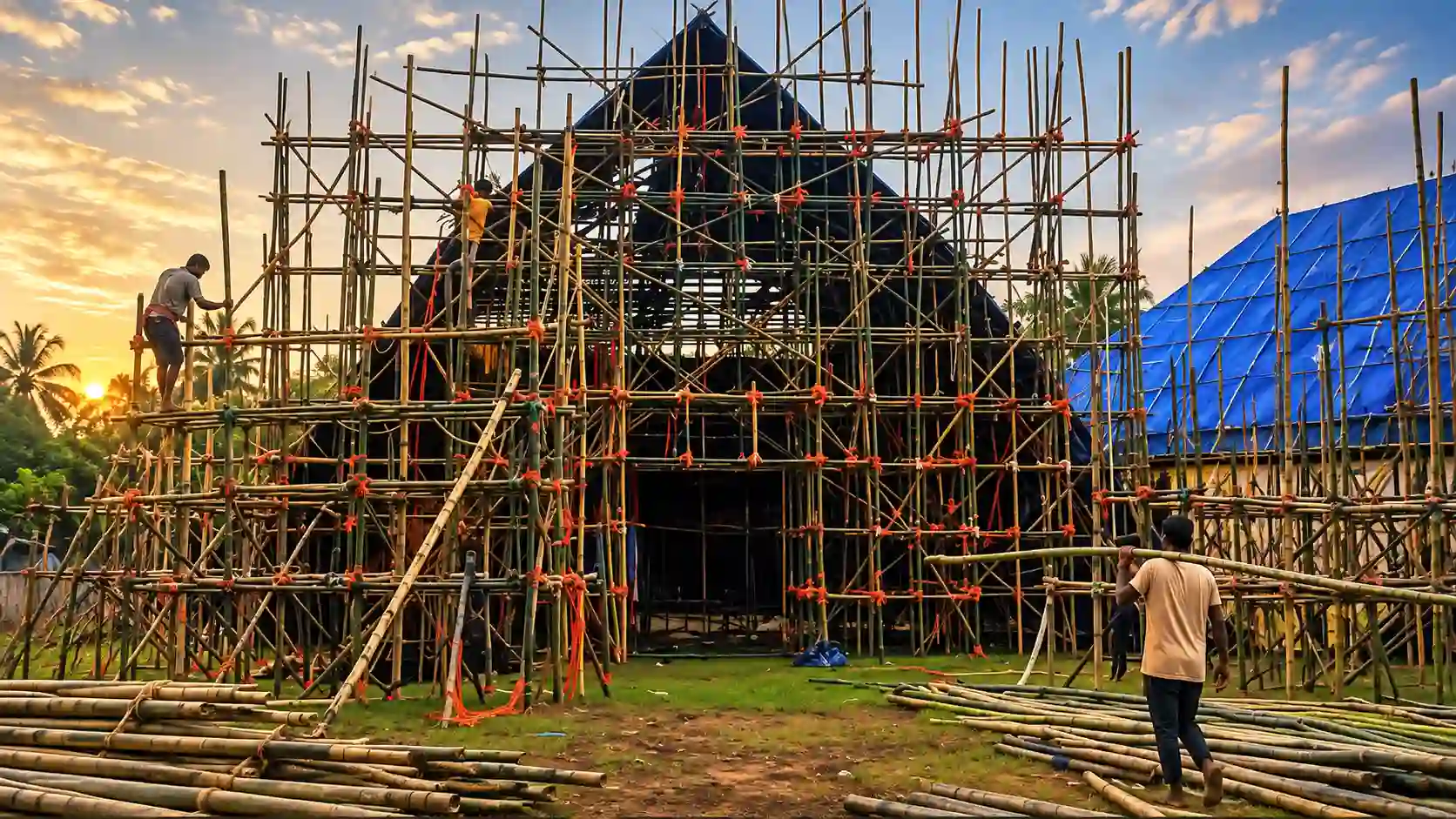
In Paradip, Vishwakarma Puja preparation starts well before September 17. LocalDrive’s ground information from the port city indicates that puja committees had already begun working on large torans and decorative structures in different areas.
The preparations included:
- Bhumi Pujan before construction work
- Bamboo and structural framework installation
- Construction of large decorative torans
- Preparation of puja mandaps
- Idol decoration and finishing work
- Lighting arrangements
- Cultural programme planning
- Participation of skilled artisans from Odisha and neighbouring West Bengal
The Bharatiya Bandar Mazdoor Sangh and the Paradip Port Engineering Department were among the organisations that completed Bhumi Pujan before formally beginning toran construction.
The decorative work involves artisans from Odisha as well as neighbouring West Bengal. Bamboo work, framework preparation, surface decoration, painting, lighting and finishing are completed in stages rather than in one sitting.
A Festival That Has Become Part of Paradip’s Public Identity
In Paradip, Vishwakarma Puja is not confined to the inside of a factory or workshop. During the festival period, the celebration becomes visible along roads, near labour colonies, around industrial establishments and in public puja areas.
The city’s puja locations are decorated with:
- Tall artistic torans
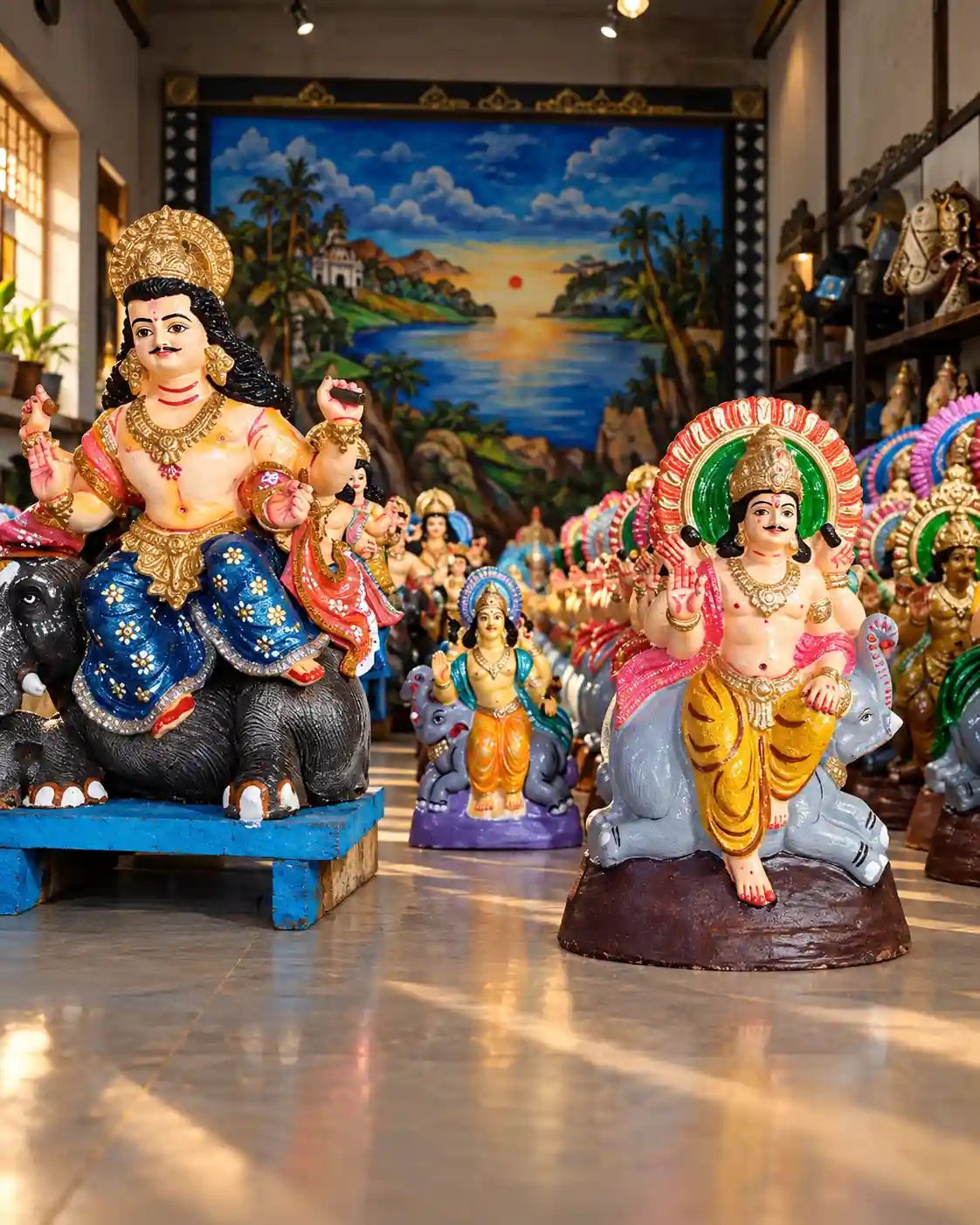
- Large Vishwakarma idols
- Decorative lighting
- Themed pandals
- Temporary stalls
- Community gathering spaces
- Cultural stages
People visiting the city during the festival can see the difference between an ordinary workplace puja and the larger public arrangements made by Paradip’s committees.
According to local reports, the festival in Paradip is planned as a seven-day celebration, beginning from September 17 and continuing through several days of cultural and community activities.
Direct Local Detail: Organisers Prepare for a Seven-Day Celebration
Local organisers describe the Paradip celebration as a yearly project that takes considerable preparation. One organiser explained that the committee has been conducting the puja for nearly a decade.
Each year, the organisers try to change or improve the presentation instead of repeating exactly what was done in the previous edition. This year’s preparation also began with prayers to Lord Vishwakarma and the Mother Goddess for favourable weather and the smooth completion of the programme.
The work is spread across several groups, including:
- Puja committees
- Workers’ organisations
- Artisans
- Electricians
- Decorators
- Local volunteers
- Cultural performers
- Administrative authorities
A large toran or mandap requires more than decoration. Materials have to be brought in, the structure must be made stable, electrical work has to be checked and the entire arrangement must be ready before visitors begin arriving.
Traditional Bhumi Puja Before Toran Construction
Before the decorative torans are built, committees perform Bhumi Puja or Anukula Puja. This marks the beginning of the construction work and is performed before bamboo, frames and other materials are used for the structure.
In the Paradip preparations described by local organisers, the ritual included bamboo, coconut and traditional offerings. Prayers were offered to Lord Vishwakarma and other deities before the physical work began.
The ritual generally includes:
- Cleaning the selected area
- Placing bamboo or construction materials
- Invoking Lord Ganesha
- Offering coconut
- Performing prayers for protection
- Seeking favourable weather
- Asking for the work to be completed without accidents or obstacles
- Beginning the construction after the puja
Lord Ganesha is worshipped first because he is traditionally regarded as the remover of obstacles. Organisers also pray that heavy rain, strong winds and other weather difficulties do not delay or damage the construction work.
What Makes Paradip’s Celebration Different?
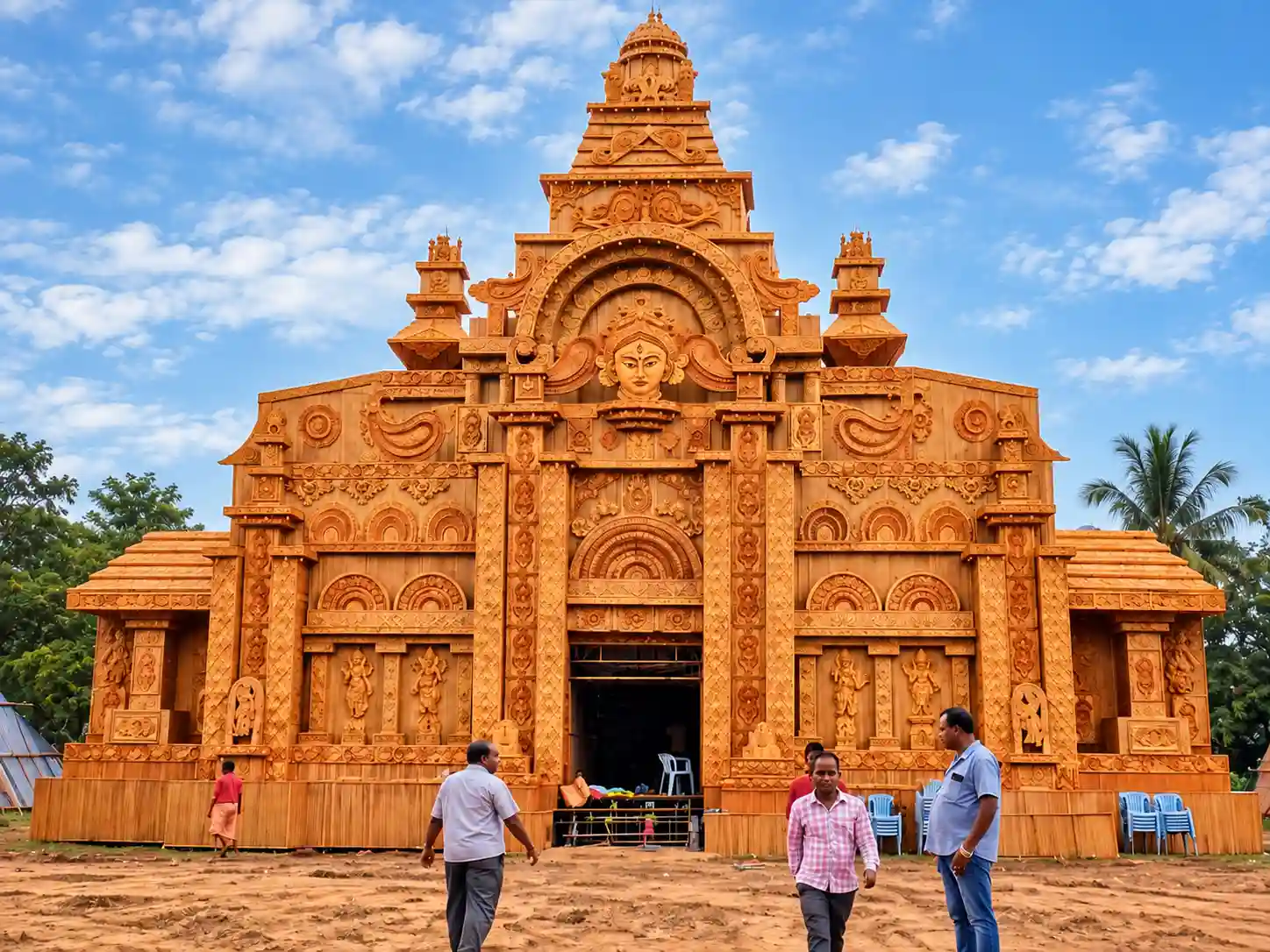
Paradip’s Vishwakarma Puja has a public character that is not usually seen in a small shop or individual workshop ceremony.
Large Decorative Torans
The torans are among the first things people notice during the festival. Their size, shape, lighting and surface decoration depend on the committee’s design and the work completed by the artisans. Some structures take weeks to plan and assemble.
Artisans from Different Regions
Local information indicates that artisans from Odisha and neighbouring West Bengal participate in the construction work. Their involvement brings together workers with different regional experiences in bamboo work, decoration, painting and temporary festival structures.
Seven Days of Programmes
The programme does not finish on the main puja date. Cultural events, devotional activities, entertainment programmes and public gatherings continue during the festival period.
Cultural Performances
Dance, music, religious programmes and performances by artists from Odisha and outside the state form part of the Paradip celebration. These events bring additional activity to the puja areas after the evening worship.
Community Participation
Workers’ organisations, residents, shopkeepers, business owners, artisans and volunteers all have a role in the arrangements. The celebration is closely connected with the working population and industrial background of the port city.
Vishwakarma Puja Rituals at Home and Workplace
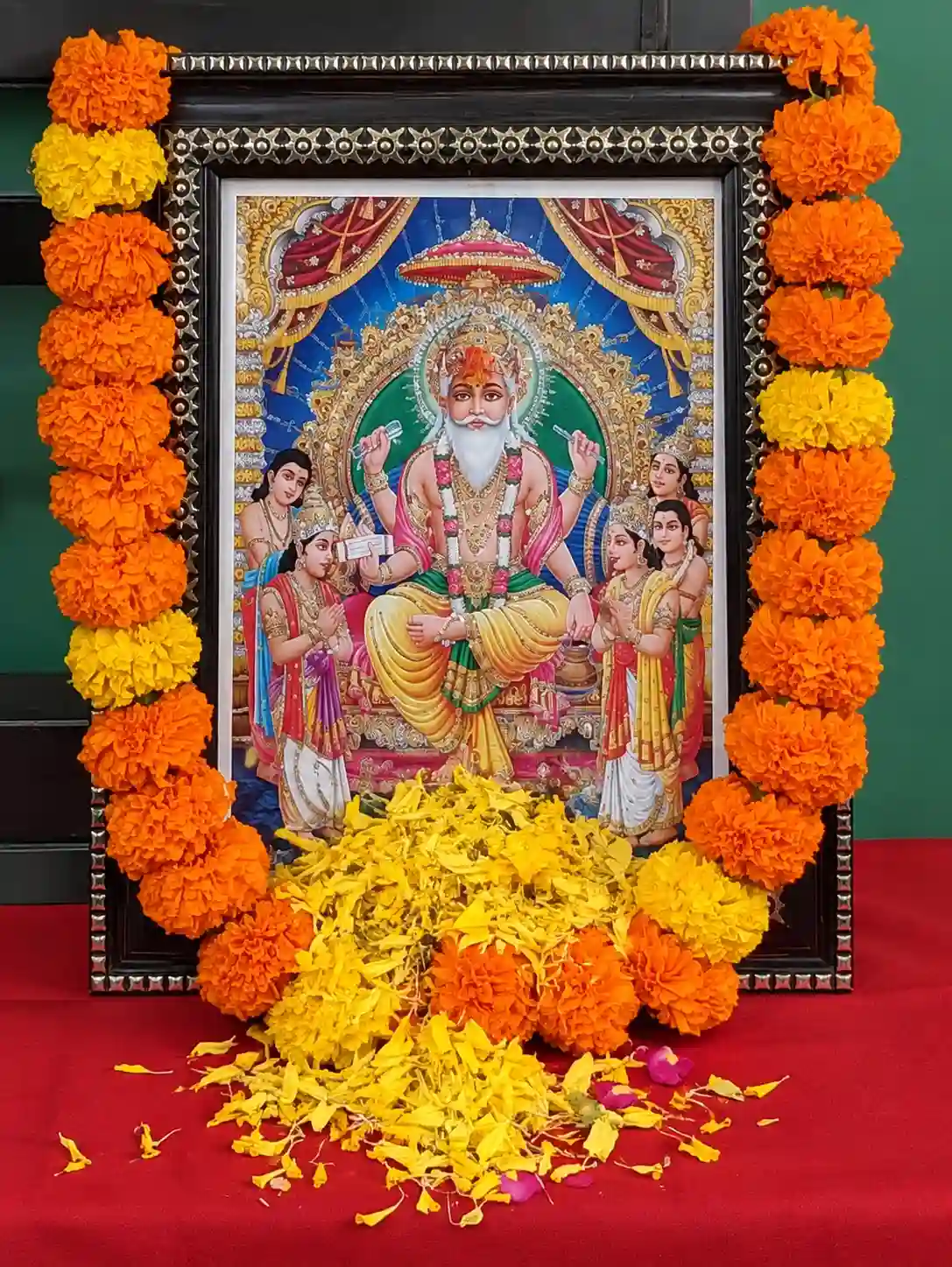
The puja can be performed at a factory, workshop, garage, office, shop, home workspace or business premises.
A traditional observance generally follows these steps.
1. Clean the Workplace
The first step is to clean the area where the puja will take place. This may include:
- Workshop floors
- Machines
- Tools
- Vehicles
- Computers
- Laptops
- Office desks
- Account books
- Equipment
- Electrical instruments
The cleaning process symbolises respect for the tools and objects that support one’s livelihood.
2. Prepare the Puja Area
Place a clean wooden platform or chowki in the selected area. Cover it with a red or yellow cloth and install a picture or idol of Lord Vishwakarma.
3. Arrange the Puja Materials
Common puja materials include:
- Flowers
- Akshata
- Roli
- Sandalwood paste
- Incense sticks
- Diya
- Fruits
- Sweets
- Coconut
- Betel nut
- Kalash
- Panchamrit
- Sacred thread
- Garland
- Clean cloth
The exact list may vary according to family tradition, workplace custom and the priest’s instructions.
4. Worship Lord Ganesha
Begin with prayers to Lord Ganesha to remove obstacles and ensure the puja and workplace activities proceed peacefully.
5. Make the Sankalp
The person conducting the puja makes a sankalp for:
- Safety at work
- Skill development
- Stable income
- Business growth
- Protection from accidents
- Smooth functioning of machinery
- Prosperity for workers and family members
6. Offer Flowers and Akshata
Offer roli, sandalwood, akshata, flowers and garlands to Lord Vishwakarma.
7. Worship Tools and Machines
Tools, machines and technical equipment are placed neatly before the deity. Depending on the workplace, these may include:
- Welding machines
- Drills
- Cutting tools
- Mechanical equipment
- Factory machines
- Computers
- Vehicles
- Electrical tools
- Construction equipment
- Office instruments
A small tilak may be applied to the equipment where appropriate.
8. Offer Bhog
Fruits, sweets, coconut and other offerings are presented as bhog.
9. Perform Aarti
The puja concludes with aarti and prayers for safety, productivity, prosperity and the well-being of everyone working with the tools or machines.
Vehicle Puja on Vishwakarma Puja

Many transport operators, mechanics, drivers and vehicle owners also worship their vehicles.
Vehicles may be:
- Washed and cleaned
- Decorated with flowers
- Marked with roli or sandalwood
- Offered incense
- Given a coconut or sweet offering
- Prayed over for safe journeys
The purpose is not only prosperity but also protection from accidents and mechanical failures. Drivers and owners traditionally seek safety for themselves, passengers and other road users.
Vishwakarma Puja in Industrial Odisha
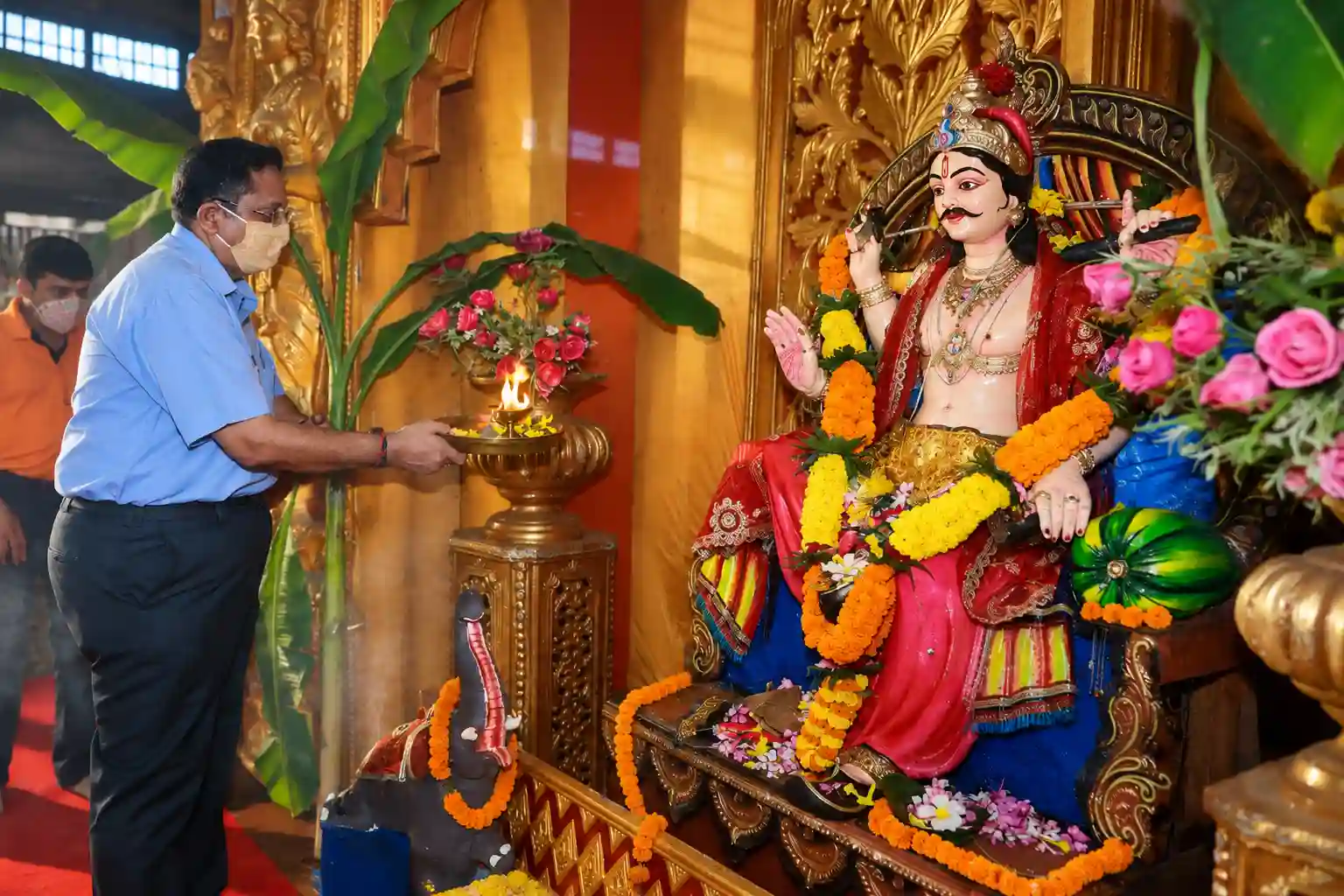
Odisha’s industrial character gives the festival special importance. The state has major industrial and engineering centres where machinery, labour and technical operations are part of everyday life.
The festival is particularly visible in places connected with:
- Ports
- Steel and metal industries
- Engineering units
- Mining-related businesses
- Transport hubs
- Manufacturing facilities
- Workshops
- Construction companies
- Automobile garages
- Electrical and mechanical services
In these locations, Vishwakarma Puja brings together religious observance and workplace culture.
Paradip During the Festival
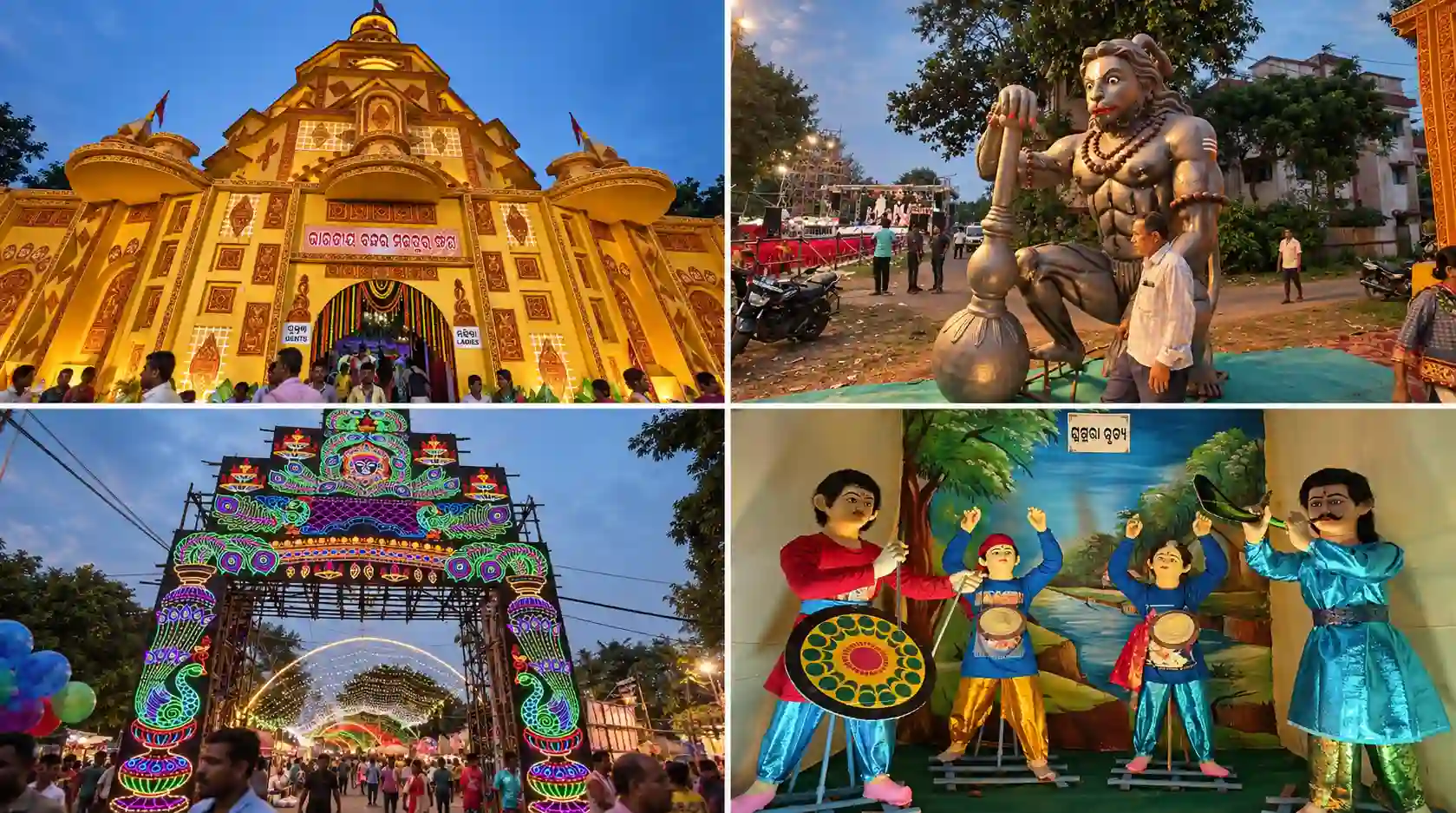
During the seven-day celebration, Paradip is expected to experience increased activity around puja mandaps, decorative torans, temporary stalls and cultural venues.
Local preparations have included temporary arrangements for stalls and festival-related public spaces. Official Paradip Port Authority records also show arrangements connected with temporary space allocation during the 2026 Vishwakarma Puja festival period.
For visitors planning to spend time in Paradip, the nearby Paradeep Sea Beach is another notable local attraction, where the industrial setting of the port city meets the coastline.
Visitors attending the celebration should remain aware of:
- Increased traffic near major puja areas
- Crowds around illuminated torans
- Temporary road diversions
- Evening cultural programmes
- Parking restrictions
- Safety instructions from organisers and authorities
Is Vishwakarma Puja Only a Religious Festival?
In Odisha, especially in Paradip, Vishwakarma Puja has developed into a combination of:
- Religious worship
- Industrial tradition
- Workers’ participation
- Public decoration
- Local craftsmanship
- Cultural programming
- Community celebration
The religious centre remains Lord Vishwakarma, but the public expression of the festival also celebrates the people who build, repair, operate and maintain the systems that support everyday life.
That is why the festival carries particular meaning in industrial and port cities.
Vishwakarma Puja 2026: Simple Checklist
Before conducting the puja, families and workplace organisers can use this checklist:
- Confirm the puja date
- Clean the workplace or shop
- Wash vehicles and machines
- Arrange Lord Vishwakarma’s picture or idol
- Keep a red or yellow cloth
- Arrange flowers and garlands
- Keep roli, sandalwood and akshata
- Prepare diya and incense
- Arrange fruits and sweets
- Keep coconut and betel nut
- Prepare kalash and panchamrit
- Clean tools and equipment
- Keep the puja area safe from electrical hazards
- Complete the aarti and prasad distribution
Frequently Asked Questions
When is Vishwakarma Puja in Odisha in 2026?
Vishwakarma Puja in Odisha will be observed on Thursday, September 17, 2026.
Why is Vishwakarma Puja celebrated?
It is celebrated to honour Lord Vishwakarma, regarded as the divine architect and craftsman. People worship tools, machines, vehicles and workplace equipment for safety, prosperity and smooth functioning.
What is special about Paradip Vishwakarma Puja?
Paradip is known for its large torans, illuminated mandaps, public celebrations, cultural programmes and a festival period that continues for around seven days.
How many days will Paradip Vishwakarma Puja continue in 2026?
Local festival preparations indicate that the celebration is planned to continue for seven days from September 17, 2026.
Who performs Vishwakarma Puja?
Factory workers, engineers, mechanics, artisans, drivers, business owners, technicians, industrial organisations and people working with tools or machines commonly perform the puja.
Can Vishwakarma Puja be performed at home?
Yes. It can be performed at home, in a shop, garage, office, workshop, factory or any place where tools and work equipment are used.
Final Note
Vishwakarma Puja in Odisha is closely connected with the people who use tools, machines and technical skills to earn their livelihood. The festival gives them an occasion to clean their equipment, offer prayers and seek safety and stability for the year ahead.
In Paradip, the celebration extends beyond individual workplaces. Bhumi Pujan, bamboo torans, decorated mandaps, artisans, cultural programmes and seven days of public activity turn the festival into a major annual event across the port city.