Maa Bali Bhuasuni Temple at a Glance
| Temple name | Maa Bali Bhuasuni Temple (ମା’ ବାଲି ଭୂଆସୁଣୀ ପୀଠ) |
| Presiding deity | Goddess Bhuasuni (Bhudevi / Tantric aspect of Kamakhya) |
| Tradition | Shakta, Sabari Tantra and Jagannath culture |
| Location | Bidanasi, Cuttack, Odisha 753014, India |
| Coordinates | Approx. 20.4728° N, 85.8315° E |
| River | Banks of the Mahanadi, near the ancient stone embankments |
| Age | 800+ years (Cuttack’s origins go back to the Keshari dynasty, c. 989–1006 CE) |
| Mentioned in | Madala Panji, Amar-Jhumara Samhita, Achyutananda Malika |
| Offerings (bhoga) | Strictly vegetarian: Pana (sacred sweet drink), fruits and sweets |
| Main festivals | 16-day Dussehra (Shodasha Upachara), Makar Sankranti, Chandan Chapa |
| Nearest railway station | Cuttack Junction (CTC), about 7.5 km |
| Nearest airport | Biju Patnaik International Airport (BBI), Bhubaneswar, about 35 km |
Location: Bidanasi, on the Banks of the Mahanadi
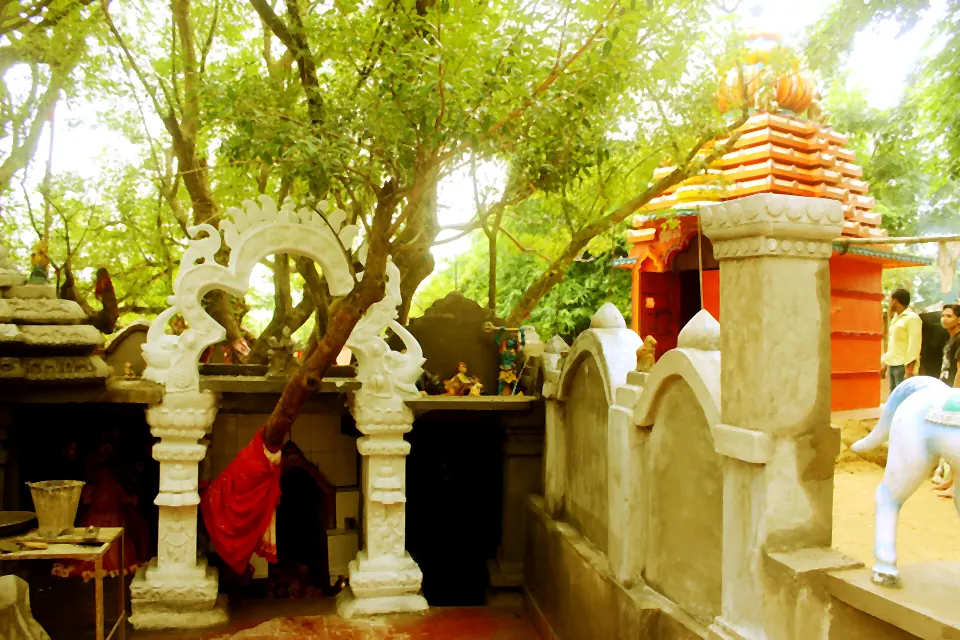
Maa Bali Bhuasuni Temple stands on the northern riverfront of Cuttack, in the historic neighbourhood of Bidanasi along the sacred Mahanadi River. It is about 500 m from the Cuttack Ring Road, around 4 km from Barabati Fort and about 7.5 km from Cuttack Junction railway station.
Cuttack is a thousand-year-old island city, famous for its silver filigree, with two great rivers on either side: the Mahanadi to the north and the Kathajodi to the south. The temple sits near the ancient embankments where the riverbed widens, overlooking the rocky outcrop known as Gudgudi Hill. Surrounded by groves of neem trees and riverside greenery, the shrine is both a quiet spiritual sanctum and a wide viewpoint over the Mahanadi.
History and the Keshari Dynasty Connection
The story of Cuttack and the Bhuasuni shrine goes back more than a thousand years:
- Foundation of Cuttack (989 CE): According to the Madala Panji, the temple chronicle of the Jagannath Temple in Puri, King Nrupa Keshari of the Somavamsi (Keshari) dynasty founded Cuttack (Kataka, meaning military cantonment) in 989 CE.
- The Stone Embankment (1006 CE): To protect the city from the Mahanadi’s floods, King Markata Keshari built the historic stone revetment (Pathara Bandha) in 1006 CE.
- The Rise of Bhuasuni Pitha (around the 12th century CE): Local temple chronicles and palm-leaf manuscripts record that Maa Bhuasuni was enshrined during this period, more than 800 years ago, as the protective deity (Raksha Devi / Adhishtatri Bhudevi) guarding the western river approaches to the royal fort city.
What Does “Bhuasuni” Mean?
The name Bhuasuni carries deep symbolism in Odia culture:
- “Bhu” (ଭୂ): Bhumi, Mother Earth – stability, fertile soil and the foundation of life.
- “Aa” (ଆ): Akasha, the sky or cosmic ether – the infinite.
- “Suni”, linked with water (Pani): the goddess who appeared between earth and sky, above the waters of the Mahanadi.
Together, Bhuasuni means the Supreme Goddess who brings the three elements – Earth (Bhumi), Ether (Akasha) and Water (Jala) – into harmony to protect the city that rests between them.
The Legend of Pitei, the Washerwoman
The founding story of the shrine links local folklore with the wider Shakti tradition of India.
According to local legend, a devout washerwoman named Pitei (linked in Odia folklore with mystic figures such as Nitai Dhobani and Pitai Sabaruni) was washing clothes on the rocky banks of the Mahanadi near Gudgudi Hill. Looking up, she saw a divine vision: the goddess from Kamakhya (Assam) travelling across the sky in a celestial vessel. As the goddess’s shadow fell on the shimmering river, Pitei recognised the divine presence and, through her deep devotion and mystic power (dhyanabala), called the goddess down to earth.

When sacred river water was sprinkled in ritual, the goddess chose to stay at that spot forever. She took the form of a rare tree – a living sanctum – and promised eternal protection to all who seek her refuge.
The Mystery of the Sacred Tree: Cuttack’s Living Lifeline
At the heart of the temple stands a botanical wonder that has puzzled botanists and pilgrims for centuries. The tree has never been clearly classified, and devotees see it as the living form of the goddess.
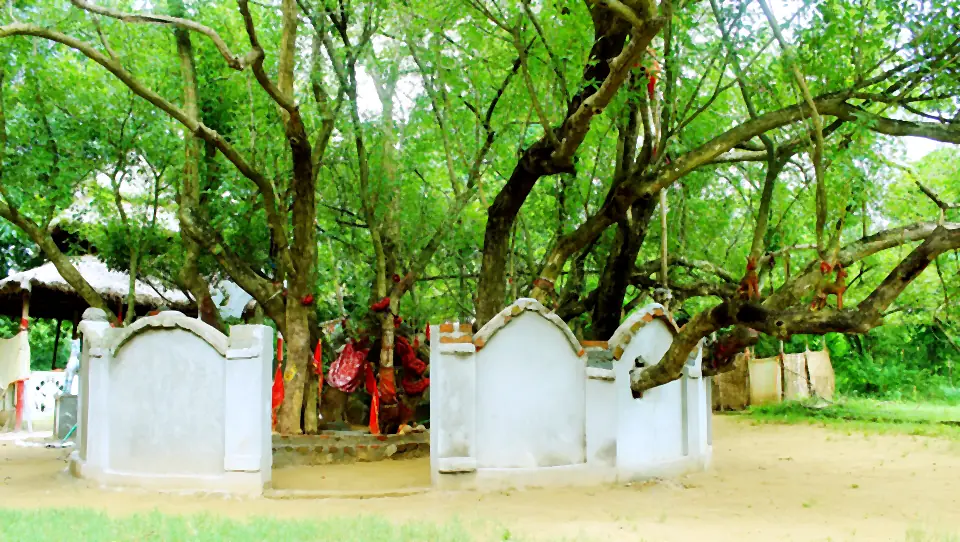
- Five-Lobed Leaves: The leaves look like the open five fingers of a human hand.
- Bitter Healing Essence (Pita): The leaves taste strongly bitter. Devotees believe that eating a small portion of the blessed leaves (Nirmalya) brings relief from chronic illnesses and ailments.
- The 16 Boughs: The tree’s 16 main branches represent the 16 forms of the goddess worshipped during Dussehra.
- The Living Flood Prophecy: An unbroken oral tradition says the tree is bound to the fate of Cuttack itself. A popular saying goes:
“ଏ ଗଛ ବୁଡ଼ିଲେ କଟକ ବୁଡ଼ିବ”
“The day this sacred tree goes under the floodwaters, the city of Cuttack will go under too.”
That is why, every monsoon, the city’s elders anxiously watch the water level around the roots of the Bhuasuni tree.
Saint Achyutananda’s Prophecies and the Amar-Jhumara Samhita
Maa Bali Bhuasuni Temple holds a special place in Odisha’s prophetic literature, the Malika, written by the 16th-century saint-poet Mahapurusha Achyutananda Das, one of the famous Panchasakha. A well-known verse from his Amar-Jhumara Samhita reads:
କଟକ ବାରଣାସୀ ଲୀଳା କରିବେ ପ୍ରଭୁ ଚକାଡ଼ୋଳା,
ଭୂଆସୁଣୀଙ୍କ ସଙ୍ଗେ ମେଳ ହୋଇବେ ମହାନଦୀ କୂଳ,
ଭକ୍ତ ହିତେ ଚଉବା, ଭୂଆସୁଣୀ ହେବେ ଭକ୍ତଙ୍କୁ ସାହା।
Translation: Lord Jagannath, the round-eyed Lord Chakadola, will perform his divine play across Cuttack-Varanasi; on the banks of the Mahanadi he will join Goddess Bhuasuni to protect and guide the righteous devotees.
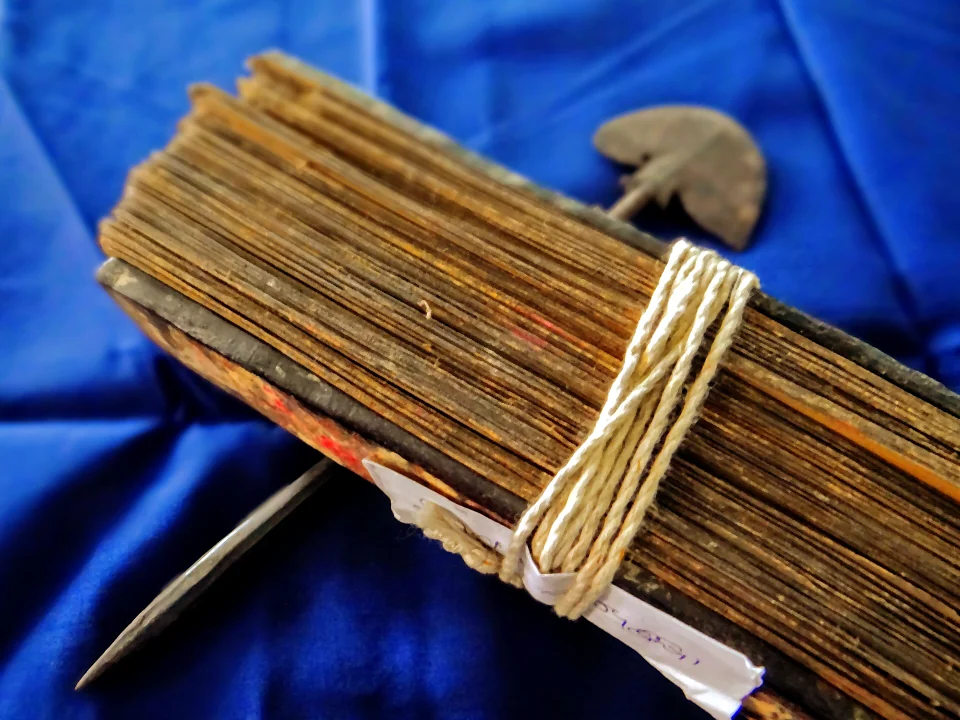
The temple priests keep old palm-leaf records saying that in future spiritual ages, Bhuasuni Pitha will be a place of refuge. Local scholars believe the Kalkiram Bhawan in front of the sanctum is linked to these prophecies of universal renewal.
Tantric Heritage and Spiritual Traditions
Today the temple is a welcoming public pilgrimage site, but its roots lie in the ancient Sabari Tantra and Jamala Tantra traditions.
- The Legacy of Nitai Dhobani and Pitai Sabaruni: Regional Tantric texts often invoke the guardian mothers of the soil. Bhuasuni Pitha is regarded as a true seat where spiritual seekers (sadhakas) once meditated to attain spiritual powers (siddhi).
- The Night Fireball (Agni Pindula): Neighbourhood elders tell of a glowing fireball seen late at night. It is said to rise from the sanctum, travel past the shrines of the goddess’s sister deities in the river valley, and quietly merge back into the sacred tree before dawn.
Major Festivals and Rituals
The temple calendar is full of colourful festivals that draw devotees from across Odisha and neighbouring states. The three biggest are Dussehra, Makar Sankranti and Chandan Chapa.
The 16-Day Dussehra Festival (Shodasha Upachara)
While most Durga Puja celebrations last three to five days, Maa Bhuasuni is worshipped for 16 days in a row leading up to Vijayadashami, making her a highlight of Cuttack’s Dussehra.
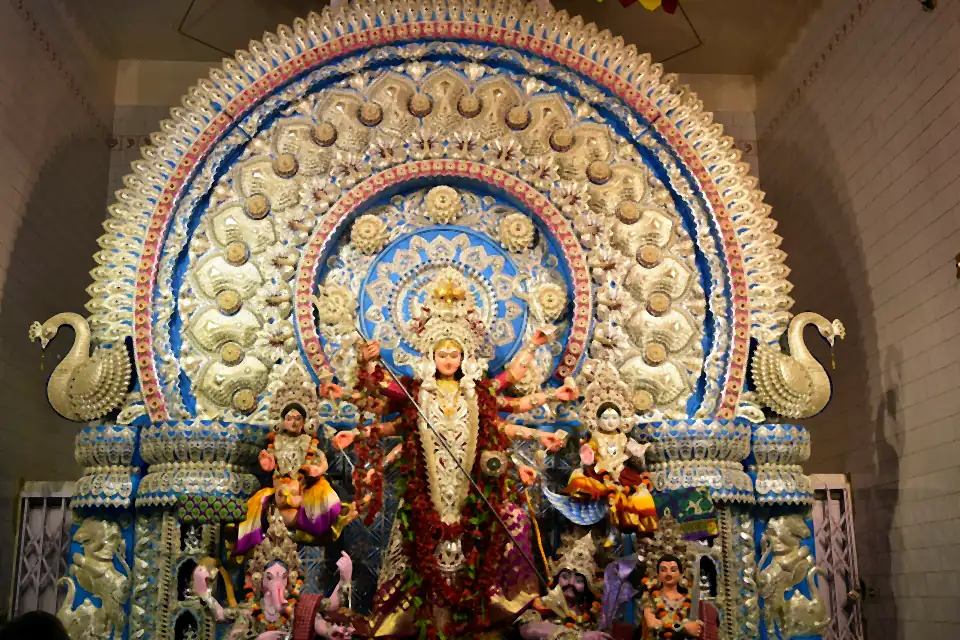
- 16 Branches, 16 Goddesses: Each of the 16 main branches of the sacred tree is worshipped as a separate form of the goddess.
- Daily Rituals: Yajnas, recitation of the Devi Bhagavata and community meals (Annaprasada).
Makar Sankranti: The Appearance Day
Celebrated in mid-January, Makar Sankranti marks the day the goddess appeared. Tens of thousands of pilgrims gather along the riverbank.
- Families bring traditional clay pots (handi) and cook sacred rice and sweet offerings on open earthen stoves.
- Non-stop devotional chanting (Ashtaprahara and Namakirtana) echoes across the Mahanadi valley day and night.
Chandan Chapa: The Sacred Boat Procession
After the seasonal festivities, the movable idol of the goddess is carried in a grand procession with brass cymbals and drums (Ghantapatuara) to the Mahanadi. There she boards a decorated ceremonial boat (Chapa), which makes 21 sacred circling turns (Bhaunra Chapa) on the holy waters.
Temple Rules, Offerings and Taboos
Visitors are expected to respect the temple’s centuries-old customs:
- Strictly Vegetarian (Sattvic): Non-vegetarian food, alcohol and intoxicants are strictly banned anywhere near the shrine. Folk stories say that anyone who broke this rule was warned by nature itself, with swarms of honeybees or snakes appearing nearby.
- The Favourite Offering, Pana Bhoga: The most auspicious offering to Maa Bhuasuni is Pana, a traditional sweet drink made with pure milk, chhena (cottage cheese), ripe bananas, grated coconut, black pepper and fragrant camphor.
- Horses and Bells for Fulfilled Wishes: When a devotee’s vow (Manasika) comes true, they traditionally offer terracotta or brass horses (Katha/Pita Ghoda) and bells (Ghanti) to the temple.
Visitor Guide: Timings, How to Reach and Best Time to Visit
Temple Timings and Essentials
- Location: Bidanasi, Cuttack, Odisha 753014
- Temple Hours: 6:00 AM – 12:30 PM and 4:00 PM – 8:30 PM (longer during Makar Sankranti and Dussehra)
- Entry Fee: Free for all visitors
- Parking: Available along the Bidanasi river Ring Road
- Dress Code: Modest traditional Indian clothing is recommended
How to Reach Maa Bali Bhuasuni Temple
- By Air: Biju Patnaik International Airport (BBI), Bhubaneswar, is about 35 km away. Taxis, app cabs (Ola/Uber) and prepaid airport taxis reach Cuttack via NH-16 in 50–60 minutes.
- By Train: Cuttack Junction (CTC) is about 7.5 km from the temple, with auto-rickshaws, city buses and cycle rickshaws available to Bidanasi. Bhubaneswar station (BBS) is about 30 km away, with frequent local trains and buses.
- By Road: Cuttack is well connected by NH-16. From central Cuttack or Badambadi Bus Stand (about 6 km away), drive along Cantonment Road towards Bidanasi and join the scenic Cuttack Ring Road that runs beside the Mahanadi.
Best Time to Visit
- October to February: The most pleasant weather, with cool river breezes. This season also brings Dussehra (September/October) and Makar Sankranti (January).
- For Photos and River Views: Late afternoon, around 4:30–6:00 PM, gives golden-hour sunsets over the Mahanadi.
Nearby Attractions
- Barabati Fort and Stadium (about 4 km): A historic 13th-century Ganga-era fort with a stone moat.
- Netaji Birthplace Museum (Janakinath Bhawan) (about 5 km): The ancestral home of Netaji Subhas Chandra Bose.
- Kataka Chandi Temple (about 4.5 km): The city’s best-known temple, dedicated to Goddess Chandi.
- Dhabaleswar Temple (about 14 km): An ancient Shiva shrine on an island in the Mahanadi, reached by ferry or suspension bridge.
Conclusion
Maa Bali Bhuasuni Temple is more than a riverside shrine; it is the guardian of Cuttack in the eyes of its people. The legend of Pitei, the mysterious sacred tree, Saint Achyutananda’s prophecies and the 16-day Dussehra all give this Mahanadi temple its special place in the city’s life. Come in the late afternoon for the golden-hour view over the river, try the sacred Pana, and if you can, plan your trip around Dussehra or Makar Sankranti for the full festive experience.
Frequently Asked Questions
Where is Maa Bali Bhuasuni Temple located?
Maa Bali Bhuasuni Temple is on the banks of the Mahanadi River in Bidanasi, Cuttack, Odisha (PIN 753014), about 7.5 km from Cuttack Junction railway station.
Why is the sacred tree of Maa Bhuasuni famous?
Its bitter, five-fingered leaves don’t fit any standard botanical classification. Local prophecy says the tree is Cuttack’s spiritual anchor: if it is ever submerged in a flood, the whole city will be submerged too.
What is the legend behind the temple?
Local legend says that around 800 years ago a mystic washerwoman named Pitei saw the reflection of the goddess from Kamakhya in the river. Through her devotion, she called the goddess to settle permanently on the Mahanadi banks to protect Cuttack.
Can non-vegetarian food be offered at the temple?
No. Non-vegetarian food, eggs and alcohol are strictly banned. The temple follows sattvic traditions, and the main offerings are Pana (a sweet sacred drink), milk, fruits and sweets.
What is the significance of the 16 branches of the tree?
The 16 main branches represent the 16 mother goddesses (Shodasha Matrukas). Each is worshipped on one of the 16 days of Dussehra, leading up to Vijayadashami.
What are the darshan timings at Maa Bhuasuni Temple?
The temple is open daily from 6:00 AM to 12:30 PM and from 4:00 PM to 8:30 PM, with longer hours during Makar Sankranti and Dussehra.
Related guide: Read our complete guide to the Shakti Temples of Odisha.