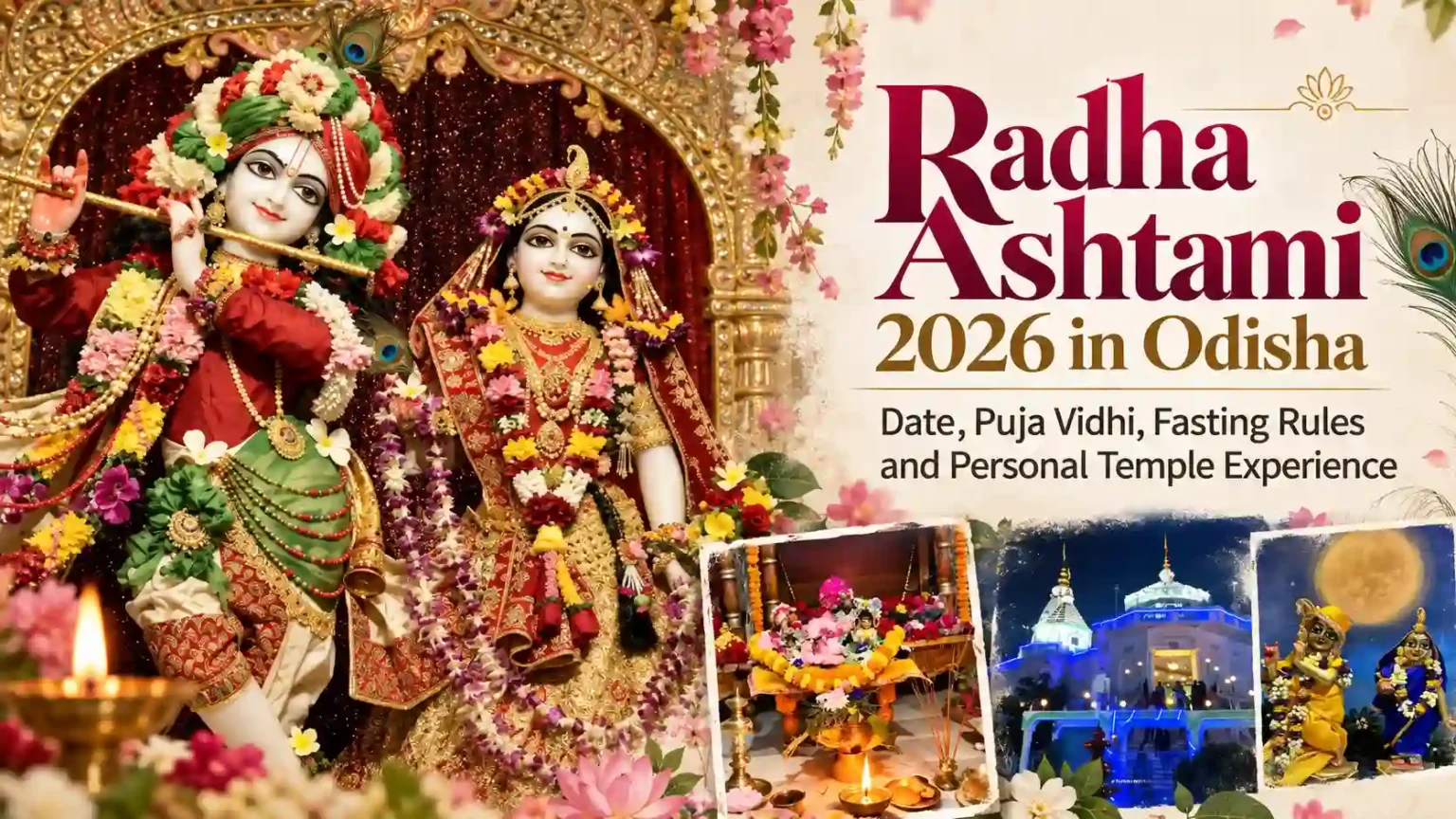
Radha Ashtami 2026 Date in Odisha
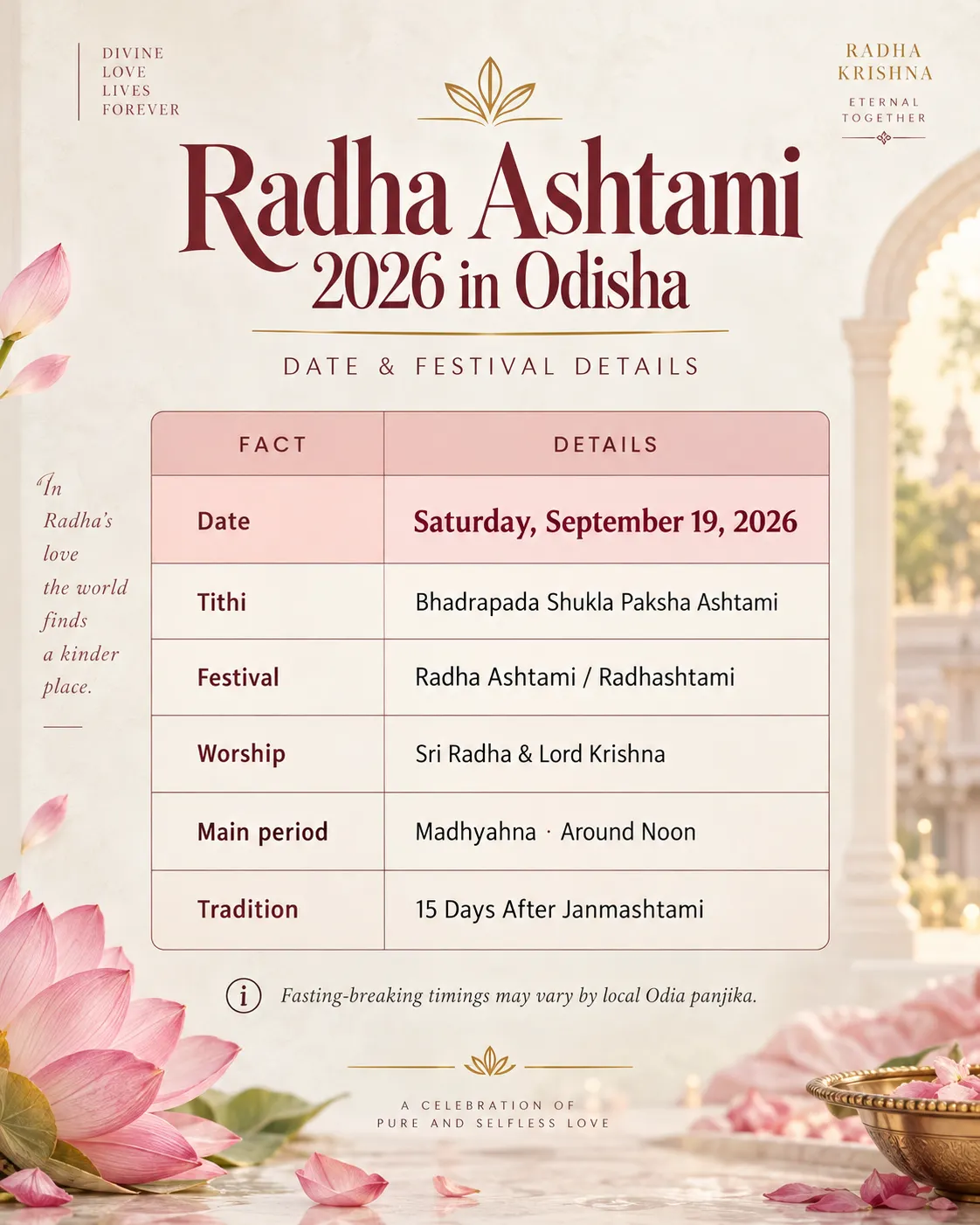
The date for Radha Ashtami in 2026 is:
- Date: Saturday, September 19, 2026
- Tithi: Bhadrapada Shukla Paksha Ashtami
- Festival: Radha Ashtami or Radhashtami
- Main worship period: Usually Madhyahna, around noon
- Deities worshipped: Sri Radha and Lord Krishna
Radha Ashtami traditionally falls 15 days after Janmashtami. Janmashtami marks the appearance of Lord Krishna, while Radha Ashtami marks the appearance of Radha Rani.
For devotees in Odisha, they should check the exact fasting-breaking time with the local Odia panjika, family priest or temple because different traditions may follow different calculations.
What Does Radha Ashtami Commemorate?

Devotees regard Radha Ashtami as Radha Rani’s appearance day. In the devotional explanations used for this article, Radha represents Krishna’s shakti, or divine spiritual energy.
A common Vaishnava explanation compares Radha and Krishna with the sun and its rays. The sun cannot be separated from sunlight, just as Krishna and Radha remain inseparable in devotional theology.
The relationship is often expressed through the idea:
Radha and Krishna are one soul appearing in two bodies.
This is why devotees worship Radha-Krishna together rather than treating Radha as a separate figure unrelated to Krishna.
Some devotional narrations state that the spiritual merit of observing Radha Ashtami vrat is exceptionally significant, comparing it with the merit of numerous Ekadashi fasts and pilgrimages. These statements belong to religious belief and express the importance devotees attach to the festival.
Radha Ashtami 2026 Puja Time
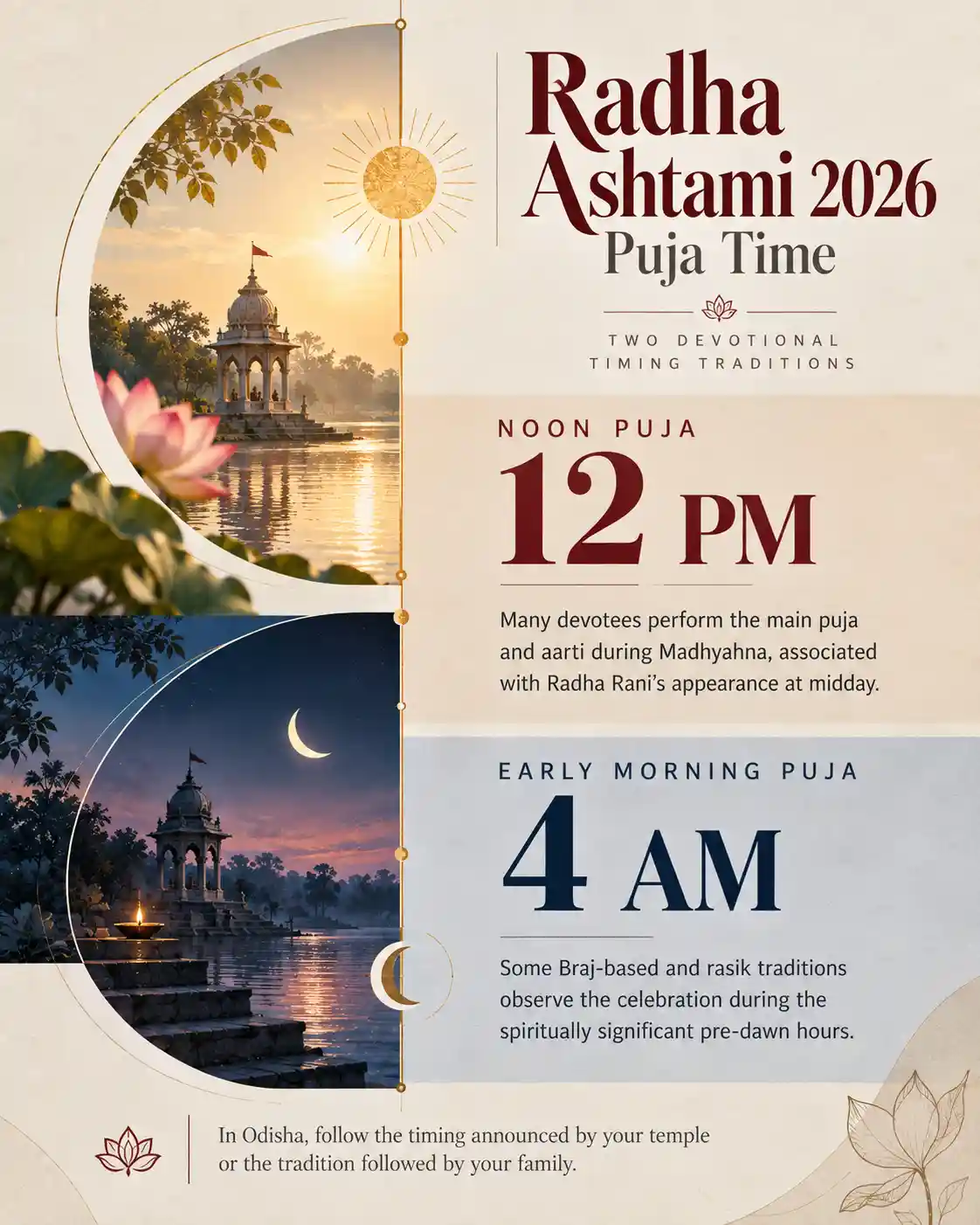
Devotees generally perform the main Radha Ashtami worship during the Madhyahna period, usually around noon.
The references describe two recognised devotional approaches.
Noon Radha Ashtami Puja
One traditional understanding places Radha Rani’s appearance at midday. Because of this, many devotees perform the main puja and aarti around 12 PM.
Early Morning Radha Ashtami Celebration
Some Braj-based and rasik traditions observe the appearance celebration around 4 AM. Devotees associate this practice with the quiet and spiritually significant early morning period.
These are different devotional traditions rather than a simple right-or-wrong disagreement. In Odisha, devotees should follow the timing announced by their temple or the tradition their family follows.
How to Prepare for Radha Ashtami Puja at Home
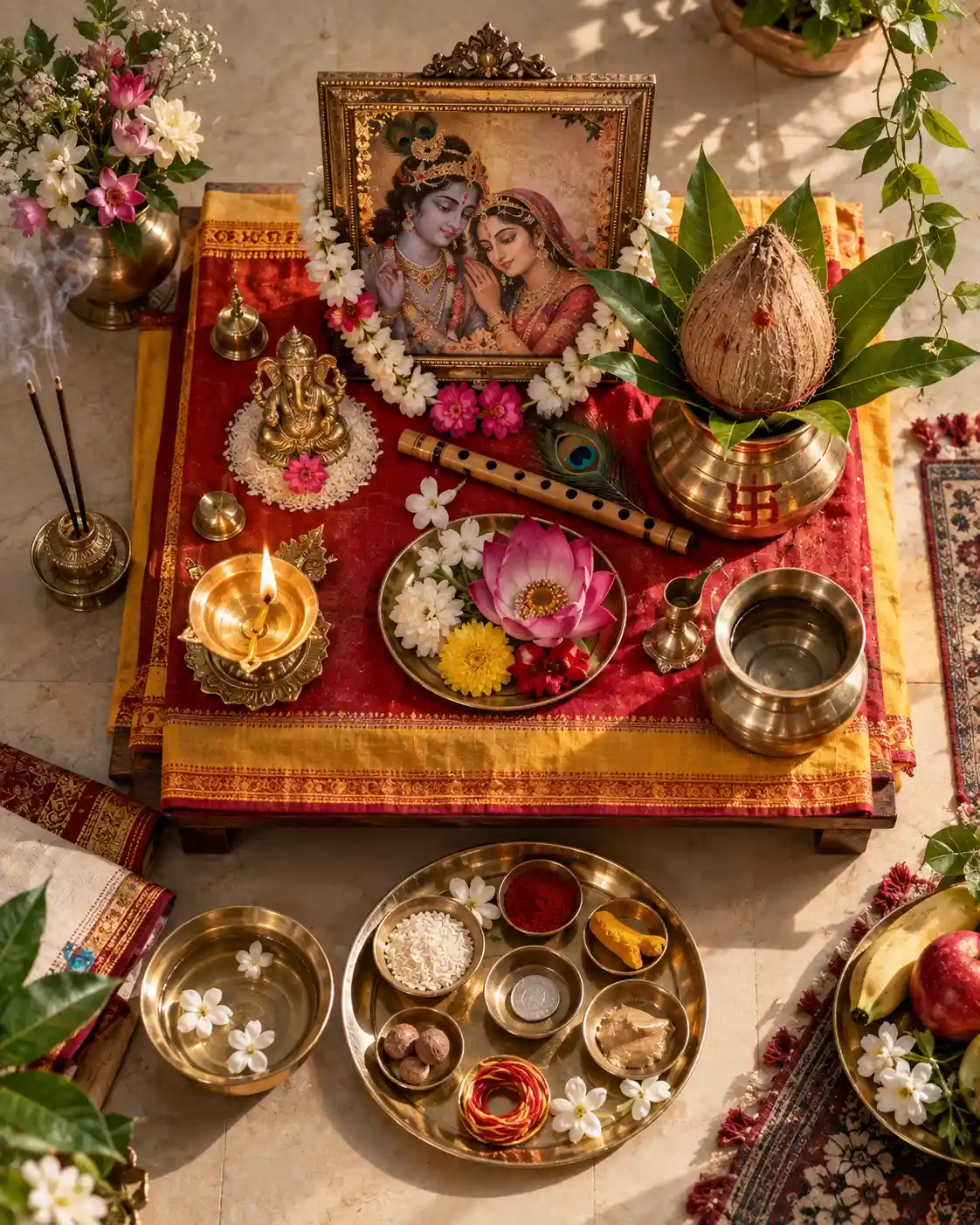
A home puja does not need an elaborate arrangement. The supplied devotional guidance recommends preparing a clean and respectful worship space.
Step 1 Clean the Puja Area
Clean the room or altar before beginning. Place a chowki and cover it with a red or yellow cloth. Install a Radha-Krishna photograph or deity on the chowki.
Step 2 Place Lord Ganesha
Families may place Lord Ganesha on a small seat made from akshata. They traditionally worship him first before beginning the main puja.
Step 3 Prepare the Kalash
You may use a brass, copper or clay kalash.
The kalash arrangement described in the reference includes:
- Gangajal, if available
- Clean water
- Supari
- A one-rupee coin
- A turmeric knot
- Akshata
- Roli or kumkum
- Moli
- Five mango or Ashoka leaves
- A coconut placed on top
Families may decorate the kalash with chandan, roli or kumkum. They can draw a swastika on its surface according to household practice.
Families generally place the coconut with its face directed toward the devotee. Some families use a decorated lamp in place of a formal kalash arrangement.
Step 4 Place a Flute Near Krishna
Devotees may place a flute near Radha-Krishna because it is closely associated with Lord Krishna and his Vrindavan pastimes.
Step 5 Light the Lamp
Light a diya and incense. Devotees may sprinkle Gangajal around the puja area as a symbolic purification and bathing gesture.
Radha Ashtami Puja Vidhi
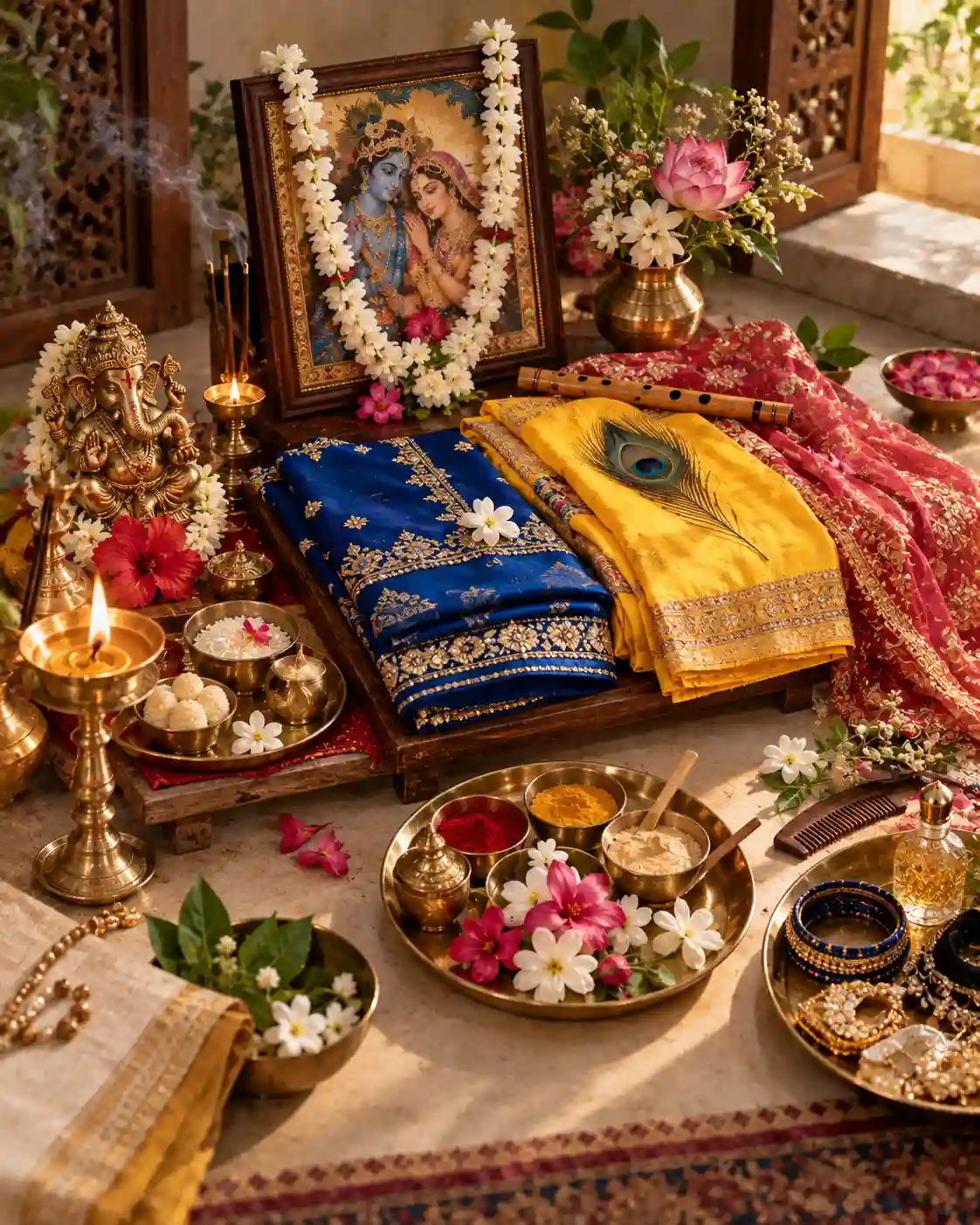
After preparing the altar, devotees can perform the worship in the following sequence.
Worship Ganesha First
Offer Lord Ganesha:
- Tilak
- Akshata
- Flowers
- Incense
- Lamp
- Bhog
The supplied guidance recommends keeping Ganesha’s offering separate from the Radha-Krishna offering. Some traditions also avoid tulsi in Ganesha’s bhog.
Offer Clothes and Chunari
Offer new clothes or a chunari to Radha Rani. Devotees may also dress Krishna in fresh clothes.
The Odia devotional reference mentions a traditional colour arrangement:
- Radha Rani: Blue clothing
- Lord Krishna: Yellow or pitambar clothing
This is a devotional colour tradition and may vary depending on the temple’s decoration style.
Apply Tilak and Chandan
Apply roli, kumkum or chandan to the deities according to the household practice. Offer flowers and garlands after the tilak.
Offer Shringar Items
Devotees may offer one or two shringar items or prepare a more elaborate sixteen-item shringar. The offering may include:
- Bangles
- Bindi
- Sindoor where traditionally appropriate
- Jewellery
- Hair accessories
- Fragrance
- Garlands
- Decorative clothing
The purpose is not the price of the items but the devotional feeling behind the offering.
Panchamrit Abhishek on Radha Ashtami
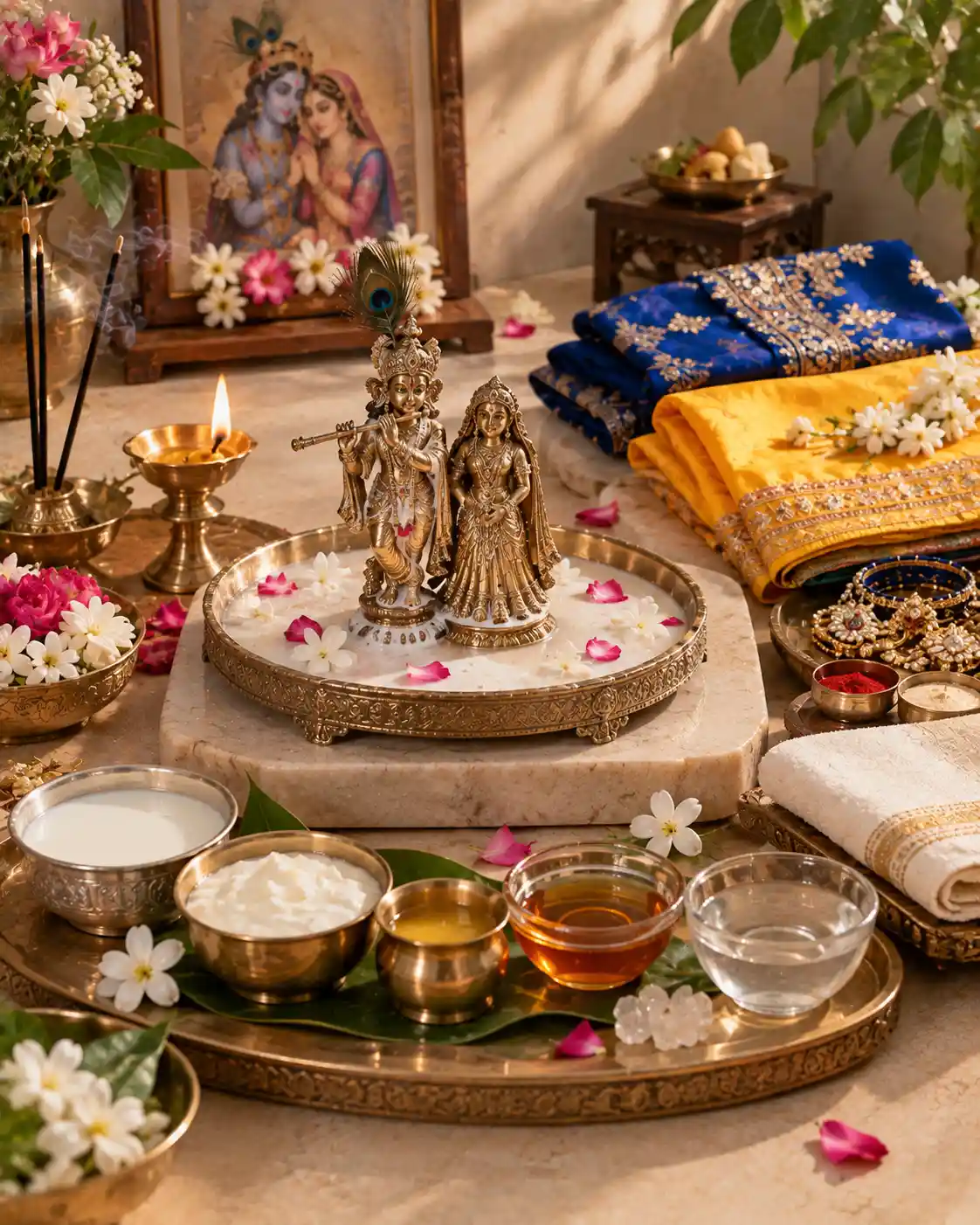
If Radha-Krishna deities are kept at home, some devotees perform panchamrit abhishek.
The five ingredients mentioned in the Odia reference are:
- Milk
- Curd
- Ghee
- Honey
- Sugar water
After the abhishek, gently clean the deity and dress it again. Handle delicate idols according to the material and instructions suitable for them.
If a household does not have Radha-Krishna deities, devotees can instead offer flowers, water, prayers and bhog before a photograph.
What Bhog Is Offered on Radha Ashtami?
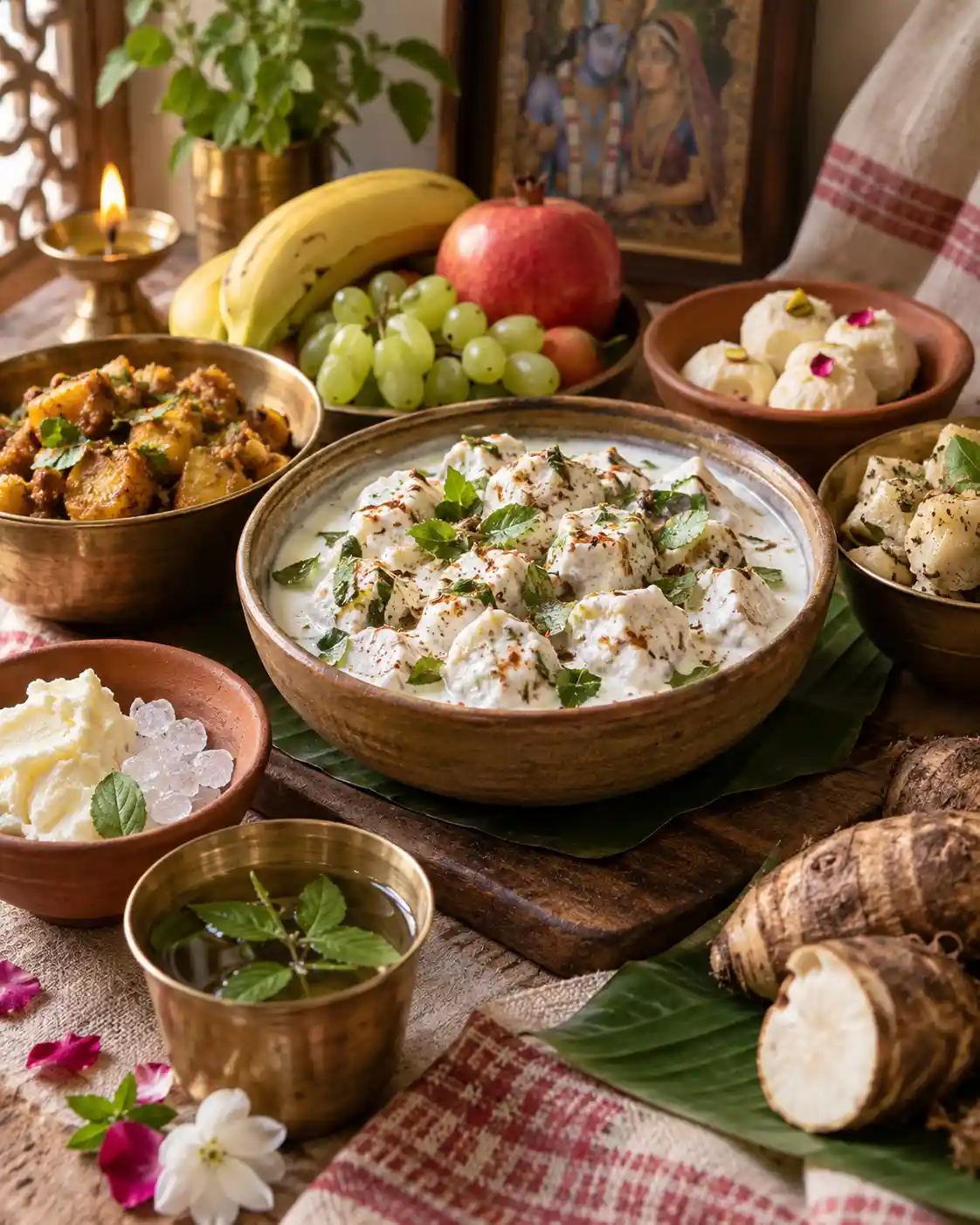
One of the most specific details in the supplied devotional reference is the importance of arbi, especially dahi arbi, as an offering associated with Radha Ashtami.
The reference connects arbi preparations with Radha Ashtami observance in Braj and Barsana traditions. Depending on the household or temple, devotees may prepare:
- Dahi arbi
- Arbi curry
- Vrat-style arbi dishes
- Seasonal fruits
- Homemade sweets
- Milk-based preparations
- Makhan and mishri
- Other sattvic food
Some temples prepare many varieties of bhog, and larger celebrations may include chhappan bhog.
According to the devotional guidance, water and tulsi may also be offered with the Radha-Krishna bhog. Since offering practices differ, devotees should follow the tradition of their temple or family.
Radha Ashtami Fasting Rules in 2026
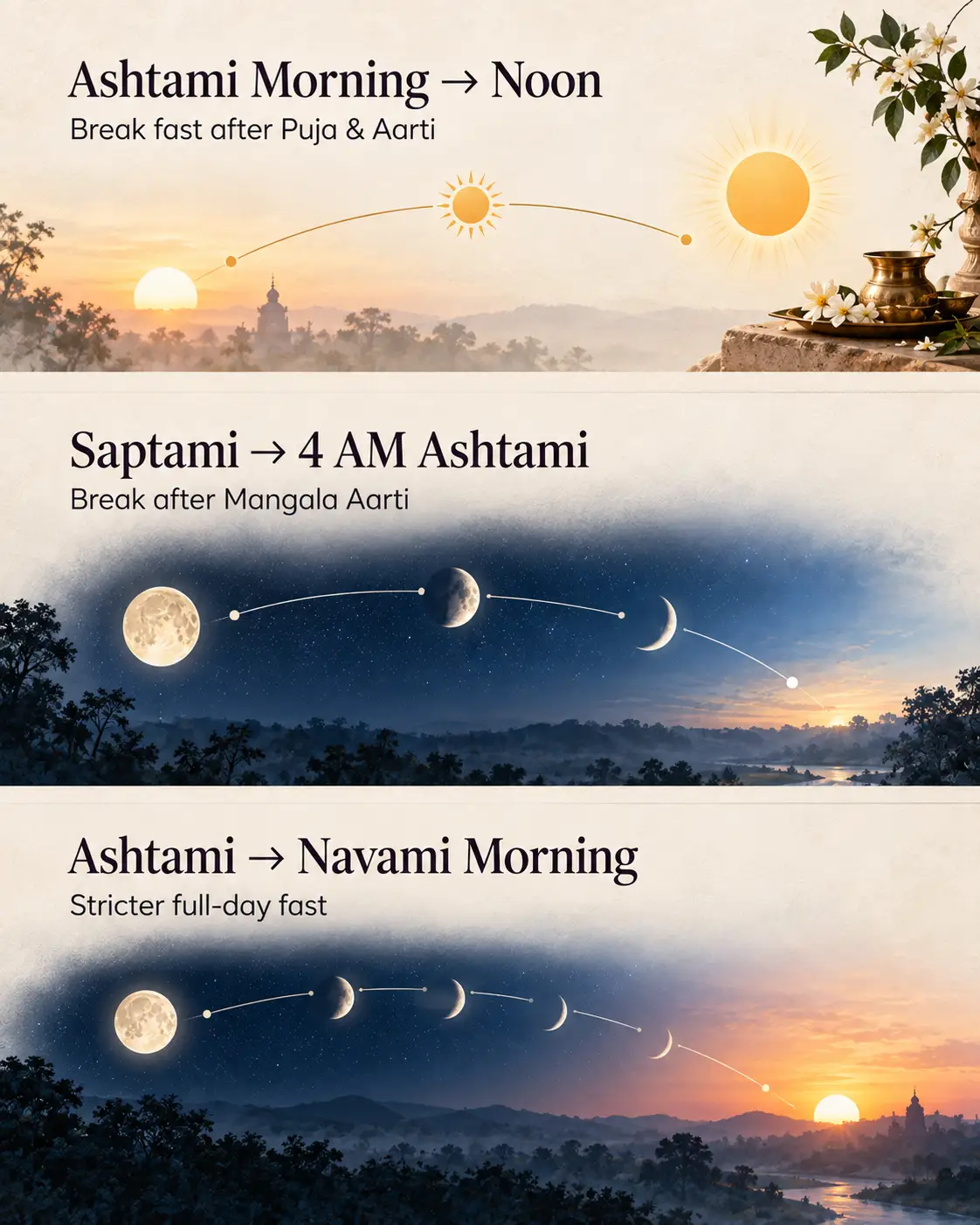
Radha Ashtami fasting is not identical for everyone. The references describe three main fasting patterns.
1. Fast From Ashtami Morning Until Noon
The devotee begins the fast in the morning, performs the Radha Ashtami puja around noon and breaks the fast after the puja and aarti.
This is a practical option followed by many household devotees.
2. Begin the Fast on Saptami
Some devotees begin fasting from Saptami and break the fast around 4 AM on Ashtami after Mangala Aarti.
This practice is more closely connected with early-morning temple traditions.
3. Continue the Fast Until Navami Morning
Some devotees continue the fast throughout Ashtami and break it the next morning. This is a stricter form and should only be followed by those who are physically able and accustomed to such fasting.
Can You Observe Nirjala Fast on Radha Ashtami?
Some devotees observe a nirjala fast, meaning they avoid both food and water. Others follow:
- Phalahar
- Water-based fasting
- Milk and fruit
- A sattvic meal after the noon puja
A strict fast is not compulsory for every devotee. People with medical conditions, children, older adults, pregnant women and those taking regular medication should not force nirjala fasting.
The devotional references themselves emphasise observing the fast according to physical capacity. Prayer, chanting, temple service and listening to katha are also meaningful ways to observe the festival.
When Should the Radha Ashtami Fast Be Broken?
The fast-breaking time depends on the tradition followed.
Many devotees break the fast after:
- Completing the noon puja
- Performing Radha-Krishna aarti
- Offering bhog
- Listening to the vrat katha
- Receiving prasada
Others break the fast after early-morning Mangala Aarti, while some continue until Navami morning.
For Odisha devotees, it is better to follow the fasting instruction given by the local temple or the panjika used by the family rather than mixing timings from unrelated traditions.
Radha Ashtami Vrat Katha
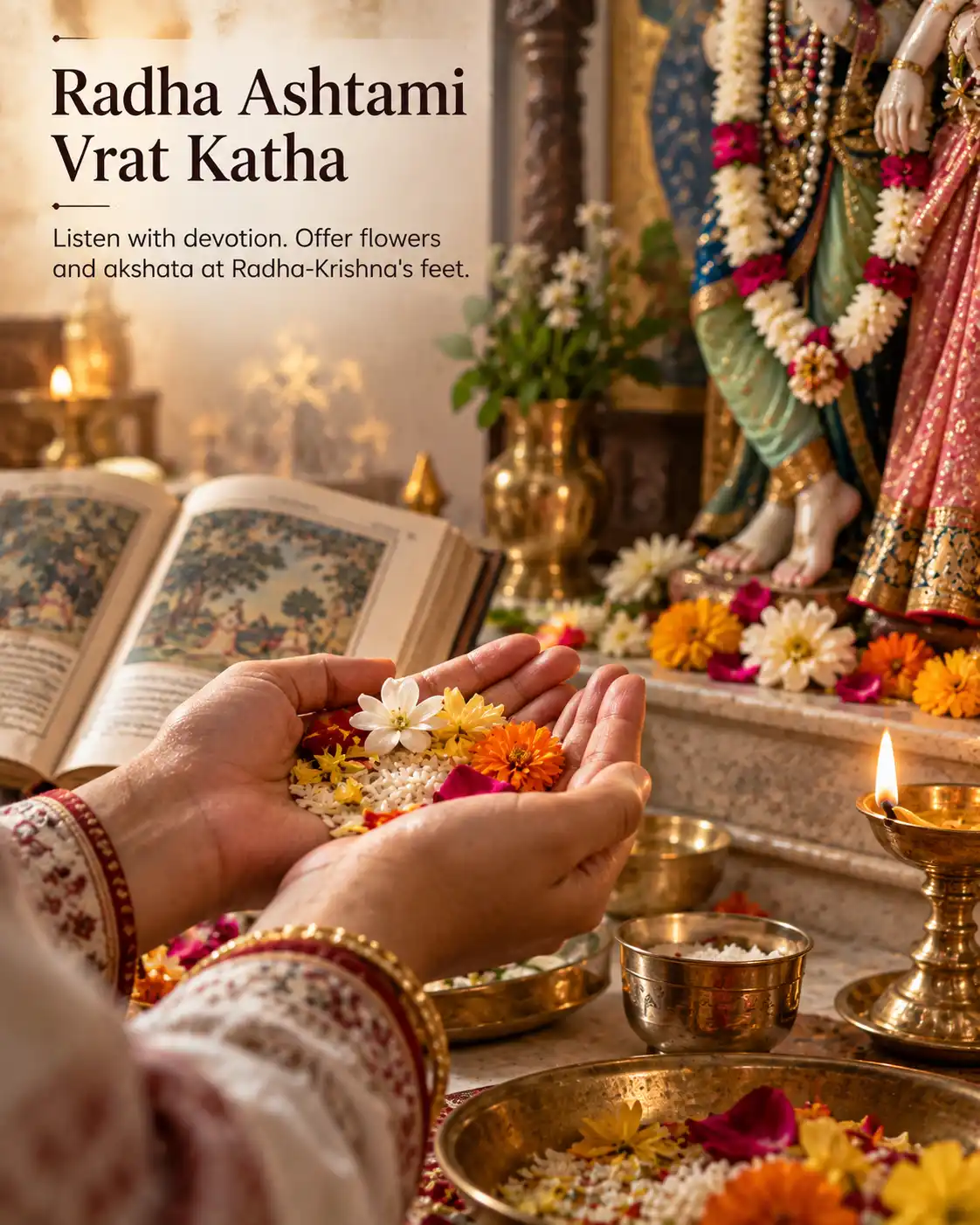
During the puja, devotees may hold flowers and akshata in their hands while listening to the Radha Ashtami vrat katha. After the katha, the flowers and akshata are placed at the feet of Radha-Krishna.
The katha is traditionally listened to as an act of remembrance and devotion. It may be read from a religious text, heard from a priest or listened to during a temple programme.
Radha Ashtami Aarti Procedure
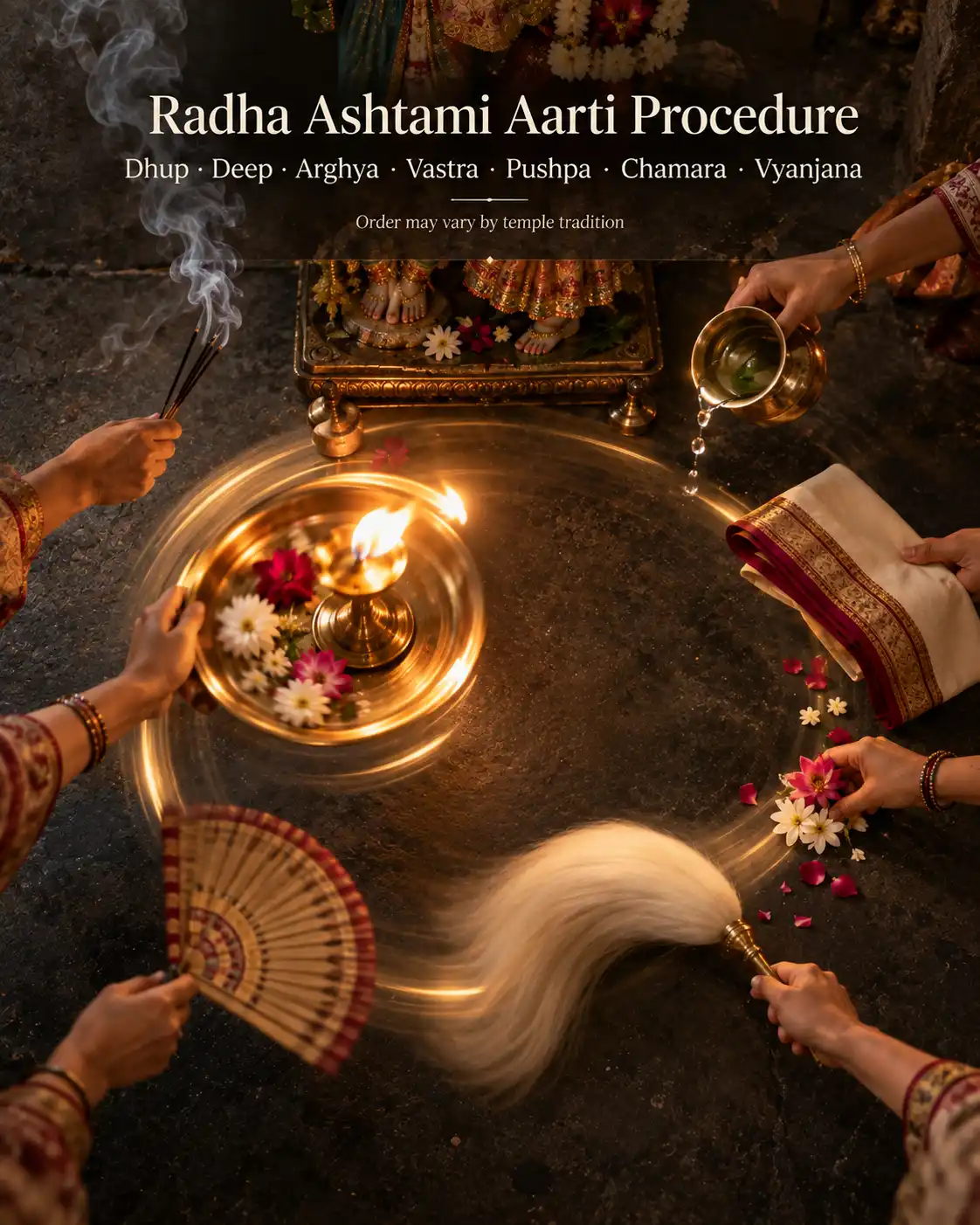
The supplied Odia guidance describes a devotional aarti sequence that may include:
- Dhup
- Deep
- Arghya
- Vastra
- Pushpa
- Chamara
- Vyanjana
The exact order may vary between temples. After aarti, devotees may chant the Hare Krishna Mahamantra and distribute prasada.
Some households also perform a separate Ganesha aarti before the Radha-Krishna aarti.
Radha Ashtami Mantra
The following Radha pranam mantra is commonly recited:
Tapta Kanchana Gaurangi
Radhe Vrindavaneshwari
Vrishabhanu-sute Devi
Pranamami Hari-priye
Its devotional meaning refers to Radha Rani as:
- One whose complexion resembles molten gold
- The queen of Vrindavan
- The daughter of Vrishabhanu Maharaj
- The beloved of Lord Hari
Devotees may also chant the Hare Krishna Mahamantra throughout the day:
Hare Krishna Hare Krishna
Krishna Krishna Hare Hare
Hare Rama Hare Rama
Rama Rama Hare Hare
Radha Ashtami Seva at a Temple
Those who do not have Radha-Krishna deities at home can visit a nearby temple or ISKCON centre.
Temple seva may include:
- Helping in the kitchen
- Cutting vegetables
- Cleaning the worship area
- Arranging flowers
- Assisting with prasada distribution
- Joining kirtan
- Helping devotees
- Participating in temple decoration
The Odia reference specifically suggests that devotees may serve in the temple kitchen if they cannot perform an elaborate home puja.
Radha Kripa Kataksha on Radha Ashtami
Devotees may recite or listen to Radha Kripa Kataksha on Radha Ashtami. It is treated as a prayer seeking Radha Rani’s mercy.
The day may also be spent listening to:
- Radha-Krishna bhajans
- Vrindavan lilas
- Stories of Radha Rani
- Kirtan
- Spiritual discourses
- Devotional songs connected with Braj
The supplied guidance places importance on keeping the mind engaged in Radha-Krishna remembrance throughout the day.
My Radha Ashtami Experience at ISKCON in 2025
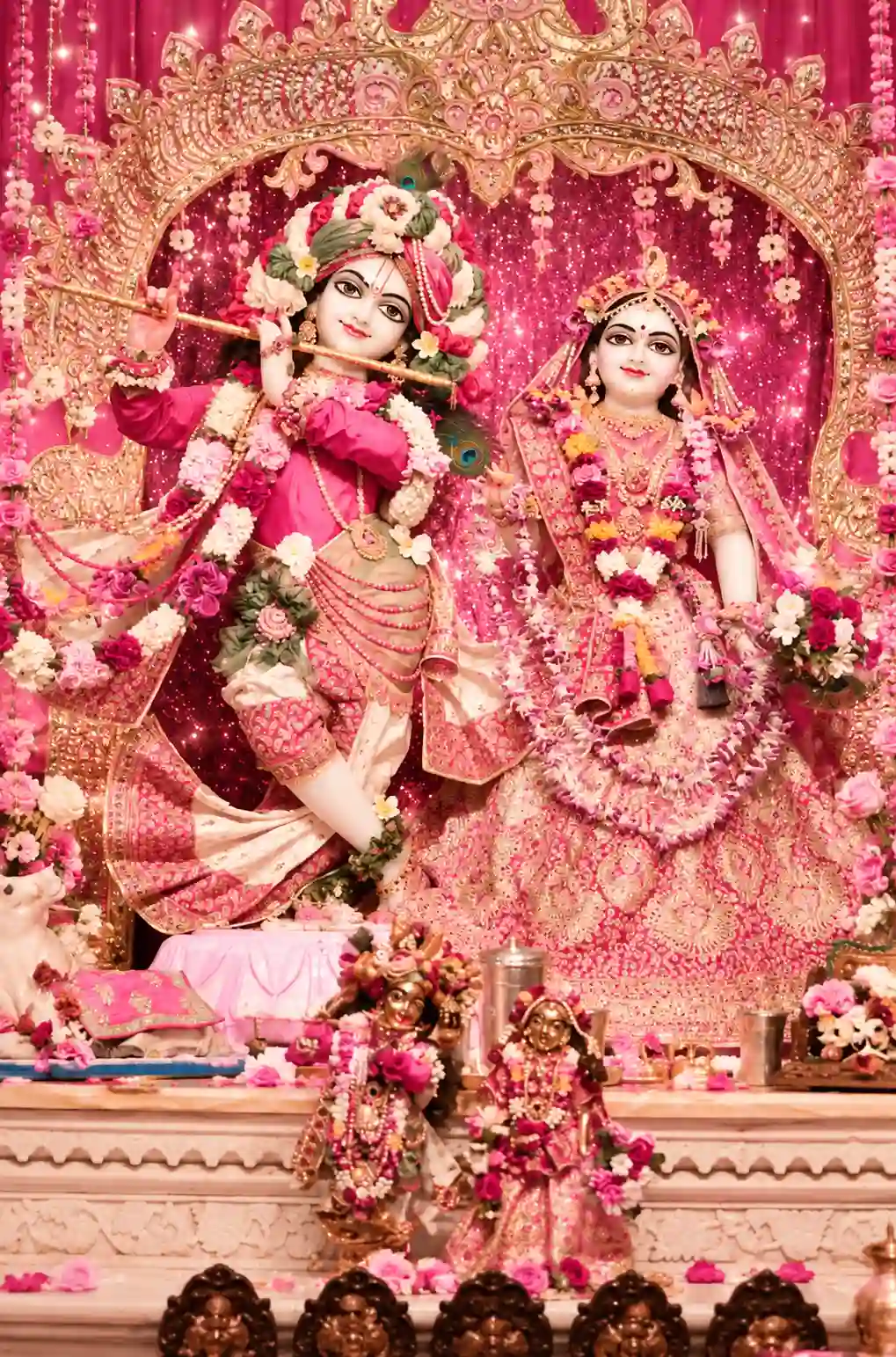
My experience of Radha Ashtami in 2025 was different from simply reading about the festival or watching a celebration online.
I visited an ISKCON temple with my sister. She had completed night duty the previous night and was already tired and sleepy. Although the temple was not very far from our room, the journey became longer because of traffic and the heavy crowd around the temple.
When we reached the area, the surroundings were packed with devotees. There was a traffic jam, and it took roughly one and a half hours to move through the crowd and properly experience the temple atmosphere.
We could not go very close to the deities and had to take darshan from a distance. It was hot, crowded and physically tiring. Still, the atmosphere was full of devotion.
The sound of “Hare Krishna Hare Rama” was echoing around the temple. That chanting created a kind of peace that was difficult to explain. Even though my sister was exhausted after her night duty and the surroundings were uncomfortable, the devotional atmosphere slowly made the tiredness feel less important.
The aarti continued for around half an hour, and we stood among the devotees during the ceremony. For those few minutes, the traffic, heat, tiredness and physical discomfort seemed to disappear from attention.
Before leaving, I was able to see Radha Rani once again. Rain started while we were returning, but the crowd was still moving in different directions.
The visit was not easy in a physical sense. It involved heat, traffic, waiting and standing. Yet the emotional experience was peaceful. It reminded me that the feeling of a festival is not always created by silence or comfort. Sometimes it comes from standing in a crowded temple and hearing thousands of people chant together.
What This Experience Shows About Radha Ashtami
The personal experience also reflects something important about temple festivals in Odisha and elsewhere. Devotees may arrive tired, travel through traffic, wait for darshan and stand in uncomfortable weather, but still remain emotionally connected with the celebration.
The crowd is not only a logistical challenge. It also shows how many people want to participate in the same moment of worship.
At the same time, devotees visiting temples during Radha Ashtami should plan realistically:
- Expect heavy crowds.
- Leave early if possible.
- Carry water if the temple permits it.
- Wear comfortable clothing.
- Avoid pushing through the crowd.
- Follow temple instructions.
- Be patient during darshan and aarti.
- Consider elderly family members and children before choosing a long visit.
What to Do After Radha Ashtami Puja
After completing the puja:
- Distribute prasada.
- Place flowers and akshata respectfully at the deity’s feet.
- Use the offered shringar items as blessings.
- Sprinkle kalash water around the home or plants.
- Retain the coin and supari if that is part of the family practice.
- Respectfully remove the chowki after the observance.
- Continue chanting Radha-Krishna names.
- Spend the evening listening to kirtan or devotional stories.
If Laddu Gopal is worshipped at home, some traditions also treat the deity as a form connected with Radha-Krishna devotion. Panchamrit abhishek and charanamrit distribution may be performed according to household practice.
Devotees interested in another Krishna-related festival memory can also read: Janmashtami 2026 in Odisha: The Krishna Dress I Still Remember from School.
Frequently Asked Questions
When is Radha Ashtami 2026 in Odisha?
Radha Ashtami 2026 will be observed on Saturday, September 19, 2026.
Is Radha Ashtami celebrated 15 days after Janmashtami?
Yes. Traditionally, Radha Ashtami falls 15 days after Janmashtami.
What is the main Radha Ashtami puja time?
The main worship is generally performed around noon, although some Braj-based traditions observe the festival around 4 AM.
What is the main bhog for Radha Ashtami?
Arbi and dahi arbi are specifically mentioned in the devotional traditions used for this guide. Fruits, sweets, milk preparations and sattvic dishes may also be offered.
Can Radha Ashtami fasting be broken at noon?
Many devotees break the fast after the noon puja and aarti. Others follow early-morning or next-day fasting traditions.
Is nirjala fasting necessary?
No. Devotees may choose phalahar, water-based fasting or another suitable form according to their health and family tradition.
Can I celebrate Radha Ashtami without a Radha-Krishna idol at home?
Yes. You can worship before a photograph, chant Radha-Krishna names, read the vrat katha, offer flowers and visit a nearby temple.
What can devotees do at ISKCON on Radha Ashtami?
Depending on the temple schedule, devotees may participate in darshan, kirtan, aarti, abhishek, bhog, prasada distribution and seva.
Conclusion
Radha Ashtami 2026 in Odisha falls on September 19, Saturday. The day may be observed through fasting, Radha-Krishna puja, abhishek, shringar, arbi bhog, katha, kirtan and aarti.
For some devotees, the celebration will happen quietly at home. For others, it will mean travelling to a crowded temple, waiting for darshan and standing through the aarti. Both forms of observance can carry personal meaning when performed with sincerity.
Radhe Radhe.