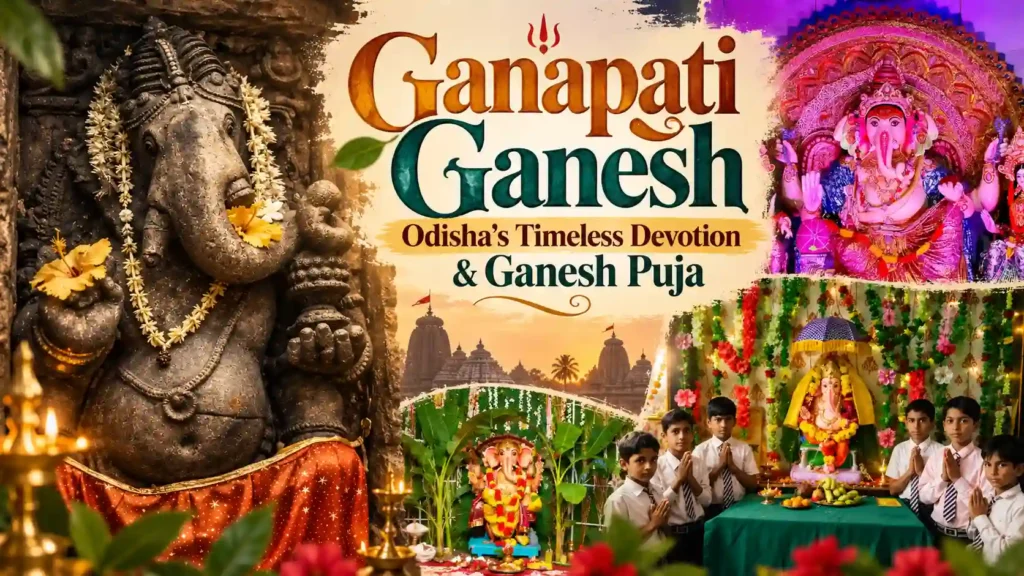
There are two very different ways to come across Ganapati Ganesh in Odisha.
In an old temple, he may appear as a stone figure worked into a larger sculptural programme. During Ganesh Puja, the same deity can become the centre of a temporary pandal surrounded by lights, music, flowers and people.
Both belong to Odisha's religious life, but they tell different parts of the story.
Ganapati Ganesh has been present in Odisha's temple art for centuries. His worship later became part of household devotion, local shrines and large public celebrations. Jatni, in particular, became known for the scale of its Ganesh Puja, where neighbourhoods become temporary centres of worship and celebration.
That is what makes Odisha interesting for anyone trying to understand Ganesha beyond the familiar festival image. The story begins much earlier than the modern pandal.
How Ganapati Ganesh Became Part of Odisha's Temple Tradition
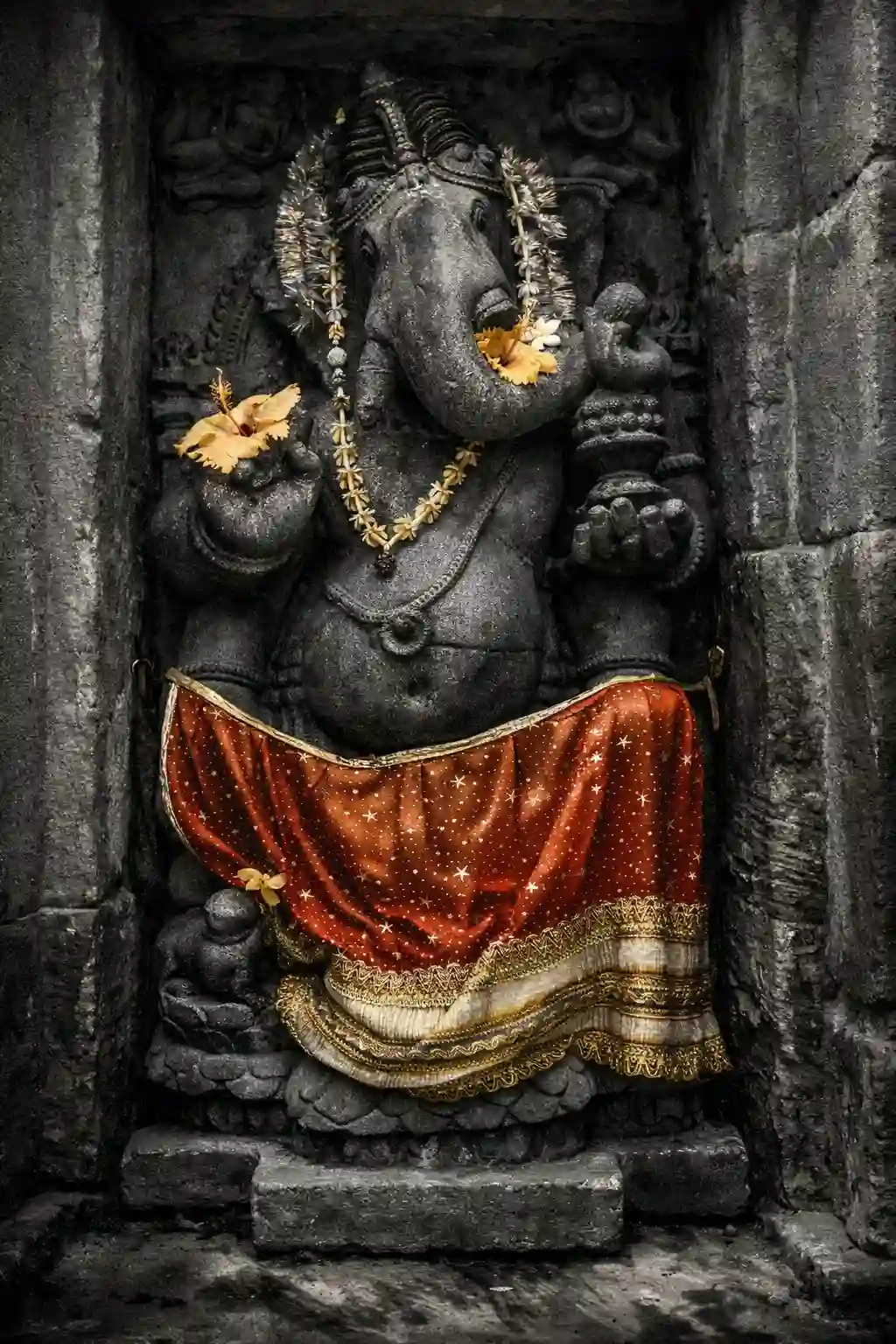
Ganesha did not arrive in Odisha with the modern Ganesh Chaturthi celebration.
His image appears in the state's historic temple sculpture, particularly in and around Bhubaneswar. The Parasuramesvara Temple is among the important early examples considered when tracing the presence of Ganesha in Odisha's temple art.
Later temples developed the imagery further. At Muktesvara Temple and Lingaraj, Ganesha appears within much larger sculptural programmes covering the architecture.
These carvings matter because they show that the relationship between Odisha and Ganapati Ganesh is not simply a modern festival phenomenon. His place in the state's religious art reaches back into its medieval temple tradition.
The Early Temple Image Tells a Different Story
When Ganesha appears in an old temple, there is no crowd gathered around him and no temporary lighting designed to make the idol the centre of attention.
The figure belongs to the architecture itself.
That difference is worth remembering when comparing Odisha's historic temple imagery with today's public Ganesh celebrations. One is permanent stone art; the other is a living, changing festival tradition.
The Ganesha on a Temple Wall Can Look Very Different From a Festival Idol
Modern Ganesh Puja usually gives us a familiar image of Ganesha. He is often seated, heavily ornamented and placed at the centre of a temporary decoration.
Odisha's older sculptures show much more variety.
Ganesha appears in seated and standing forms, while dancing representations are among the more distinctive examples found in the state's medieval temple art.
The stone image also reveals something that photographs of large festival idols can hide: the relationship between the deity and the architecture surrounding him.
In an old shrine, Ganesha does not necessarily dominate the entire visual field. He is part of a carefully arranged religious and architectural setting.
Why the Dancing Ganesha Deserves a Closer Look
It is easy to identify a temple sculpture as Ganesha and continue walking. In Odisha, stopping for another minute can reveal considerably more.
The dancing forms show how temple artists interpreted a familiar deity through movement, posture and ornament. They also demonstrate that representations of Ganesha in Odisha were never restricted to one visual formula.
Why Ganapati Ganesh Has a Special Place in Odisha's Religious Tradition
The name Ganapati is traditionally associated with the leader of the ganas. Ganesha is also connected with wisdom, auspicious beginnings and the removal of obstacles.
That explains why his name and image appear at the beginning of many religious activities. Worshippers invoke him before starting an undertaking, seeking an auspicious beginning rather than simply asking for a favourable result.
In Odisha, this religious role exists alongside a strong artistic tradition. The same deity can be encountered in an ancient temple, a household shrine or a brightly lit public pandal.
The result is a tradition that becomes easier to understand when you look at both the permanent and temporary forms of worship.
Mahavinayaka Is One of Odisha's Important Ganesh Shrines
For anyone interested in Ganesha as a temple deity, the Mahavinayaka Temple at Chandikhol offers a very different experience from a large urban Ganesh Puja.
The shrine is one of Odisha's better-known Ganesh pilgrimage centres. Here, the emphasis is on established worship and pilgrimage rather than a temporary festival installation.
That difference is useful when exploring Odisha's Ganesh tradition. A pilgrimage site and a neighbourhood pandal may honour the same deity, but the experience, setting and purpose are not the same.
Where to See Ganapati Ganesh Beyond the Festival

- Mahavinayaka Temple, Chandikhol for an established Ganesh pilgrimage tradition.
- Parasuramesvara Temple, Bhubaneswar for early temple architecture and Ganesha imagery.
- Muktesvara Temple, Bhubaneswar for detailed medieval Odisha sculpture.
- Lingaraj Temple, Bhubaneswar for Ganesha within a major temple complex.
- Khiching for historic temples and medieval stone sculpture.
These places make it easier to see the difference between Ganesha as an element of permanent temple art and Ganesha as the centre of a temporary public festival.
Then Ganesh Puja Changes the Setting Completely

Ganesh Puja changes the setting completely.
For the festival, Ganesha moves into temporary structures built by local communities. Pandal decoration, lighting, music, devotional programmes and crowds become part of the surroundings.
The idol is no longer something you encounter while walking through an old temple. It becomes the reason people gather in that particular place.
That public character is especially noticeable in Jatni.
Jatni shows another side of Ganapati Ganesh. Here, the deity moves from the permanent world of temple stone into a temporary public celebration created by the community.
Jatni's Ganesh Puja Started Much Smaller Than It Looks Today
Accounts of Jatni's festival trace its beginnings to a simple act of worship by a local shopkeeper.
A man named Dinabandhu Sahoo is credited in local accounts with placing a clay Ganesha idol in his shop and beginning worship there. Other traders reportedly joined the practice, and the celebration gradually expanded.
Over the years, Ganesh Puja became a much larger community event, spreading into public spaces with temporary pandals and associated programmes.
Older reports have mentioned dozens of public pandals and a much larger number of privately worshipped idols. Those figures describe particular years and should not be treated as a fixed count for every edition of the festival.
The more useful part of the history is the change in scale. What reportedly began with a small idol in a shop developed into a festival that became closely associated with Jatni itself.
The Morning of Ganesh Puja Has a Different Rhythm
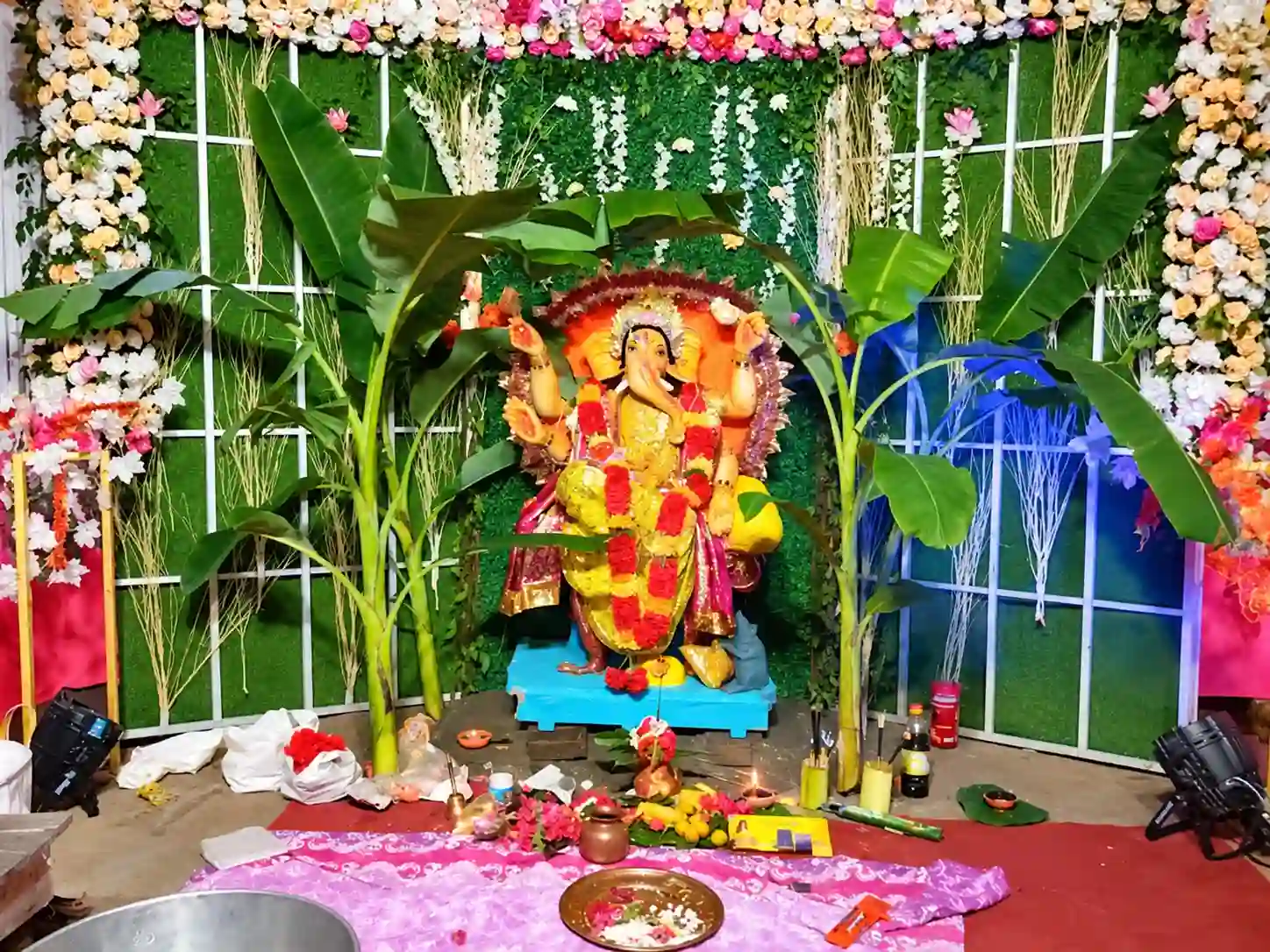
The busiest photographs of Ganesh Puja usually come from the evening. The lights are on, people are moving through the streets and the pandals feel much larger against the night.
Morning has a different character.
The decorated idol is easier to observe without the visual rush created by a large crowd. Flowers, offerings, lamps and the details of the pandal become more noticeable.
For someone interested in the religious side rather than only the spectacle, this quieter period can reveal more.
It is also one reason I would not limit a Jatni visit to the late evening. Seeing the festival at different times gives you two noticeably different experiences.
My Evening in Jatni Was Mostly About Walking
I visited Jatni for Ganesh Puja in 2024 with a close friend from Chhattisgarh.
We did not have a carefully planned route. We simply moved around and stopped whenever another pandal caught our attention.
My friend had never experienced the celebration in Jatni before. What stood out to him was the scale of the decorations and the number of people moving through the festival areas.
We kept walking from one place to another and ended up staying out until around midnight.
There was no single moment that made the evening memorable. It was the way the visit kept extending. We would finish looking at one pandal and then notice another decorated area further along the road.
That experience changed how I would recommend visiting Jatni. I would not plan it like a monument visit where you arrive, see the attraction and leave. Give yourself time to move around.
Why Students Have a Different Reason to Look Forward to Ganesh Puja
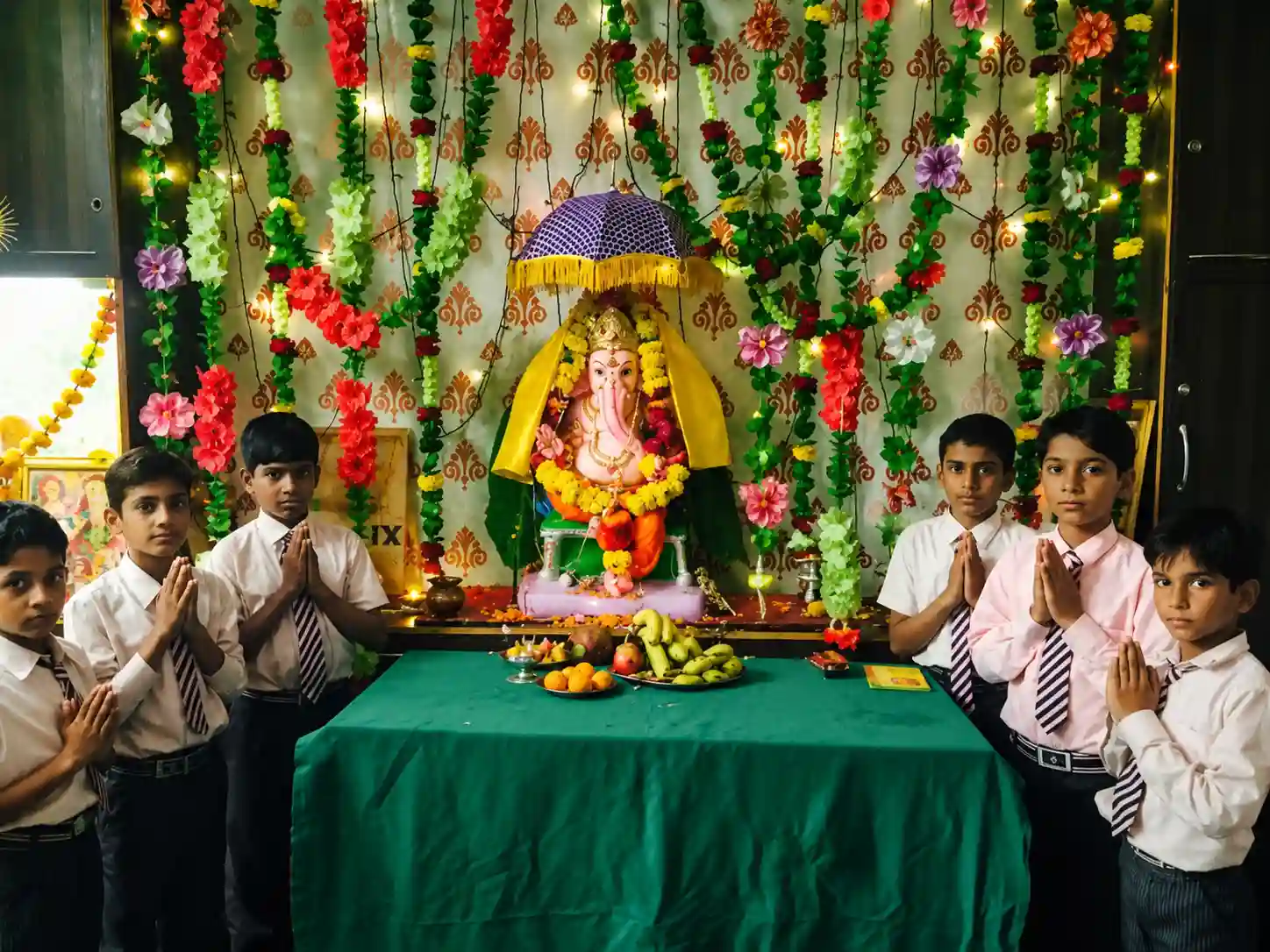
For many students, Ganesh Puja is not simply another day on the festival calendar.
Ganesha's association with knowledge and learning gives the celebration a particular place in school and student life. Classrooms can become small prayer spaces, students gather around decorated idols and books are often placed near the deity during worship.
There is also a social side that is easy to overlook. Students who spend most of the year together in classrooms suddenly become part of organising decorations, arranging offerings and participating in cultural programmes.
That combination of study, worship and participation helps explain why Ganesh Puja remains especially visible in educational settings across Odisha.
The Pandals You Remember May Not Be the Pandals You Find Next Year
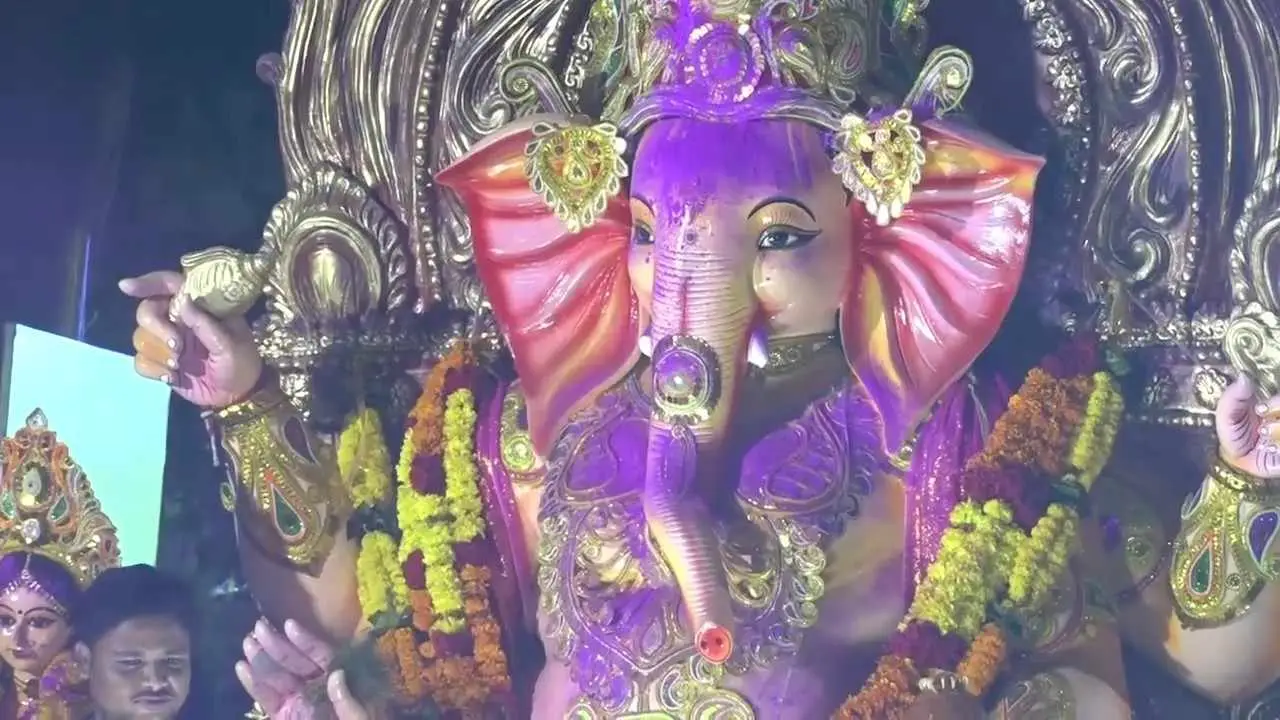
Previous reports have highlighted areas such as Sitaram Chaaka, Raja Bazar, Bada Bazar, Golei Market and Macha Bazar.
But festival pandals are temporary. Their themes, entrances, decorations and even their visual identity can change from one year to another.
That is why an old photograph can be useful for understanding Jatni's festival without being a reliable guide to what will appear during the next celebration.
If you are visiting in 2026, current announcements from local organising committees are more useful than a list copied from an earlier festival.
What Makes an Evening Visit Different From a Daytime Visit
Most people who come specifically to see the pandals will naturally gravitate toward the evening, when the lighting and decorations are switched on.
That is also when the number of people can increase.
If you want photographs with more space around the pandals, arrive earlier. If your priority is seeing Jatni at its busiest, stay later and expect slower movement through crowded areas.
Neither is necessarily better. They are simply two different ways of seeing the same festival.
A Few Practical Things I Would Keep in Mind
- Wear shoes you can comfortably walk in for several hours.
- Carry water, particularly in humid weather.
- Do not depend on finding parking immediately beside popular pandals.
- Keep valuables secure when moving through dense crowds.
- Arrive earlier if photography is your priority.
- Check local traffic arrangements before travelling on major procession days.
- Follow instructions around the pandals and immersion areas.
The Immersion Procession Is Where the Festival Leaves the Pandal

For most of the celebration, the idol remains inside a particular pandal. During visarjan, that changes.
The idol is carried out in procession toward the designated immersion location. Roads become part of the event, and the movement of people becomes just as important as the decoration around the pandal.
This is also the part of the festival where visitors should rely on current information. Procession routes, timings and traffic restrictions can change according to local arrangements.
If you are travelling specifically for visarjan, check the latest instructions before setting out rather than relying on an older route.
Ganapati Ganesh in Odisha Has an Older Story Than the Modern Festival
It is tempting to look at a large Ganesh pandal and think of the festival as the whole story.
It is only one part of it.
Odisha's temple walls preserve much older representations of Ganesha. Shrines such as Mahavinayaka continue a more established form of religious worship. Then there are places like Jatni, where Ganesha becomes the focus of a large community celebration for a short period each year.
Seeing all three makes the connection easier to understand.
The stone sculpture belongs to the history of Odisha's temple art. The shrine belongs to continuing pilgrimage. The pandal belongs to contemporary community life.
They are different settings, but the deity remains recognisable through all of them.
Questions People Ask About Ganapati Ganesh in Odisha
When did Ganesha worship begin in Odisha?
Ganesha images are present in Odisha's early medieval temple art. Parasuramesvara Temple in Bhubaneswar is among the important sites discussed when examining early representations of Ganesha in the region.
Which Ganesh temple should I visit in Odisha?
Mahavinayaka Temple at Chandikhol is one of the state's best-known Ganesh pilgrimage sites. For sculpture, Bhubaneswar's historic temples provide a different experience.
Why is Ganapati Ganesh important in Odisha?
Ganapati Ganesh is important in Odisha because his presence can be traced through temple sculpture, established shrines and contemporary Ganesh Puja celebrations. Jatni represents the public festival side of that much older tradition.
Why is Ganesha called Ganapati?
Ganapati is traditionally interpreted as the leader of the ganas. The name is closely associated with Ganesha's role in Hindu religious tradition.
What forms of Ganesha can be seen in Odisha's temple art?
Odisha's temple sculptures include seated, standing and dancing representations of Ganesha. The dancing forms are particularly distinctive within the state's sculptural tradition.
Why is Jatni famous for Ganesh Puja?
Jatni developed a large community celebration around Ganesh worship. Historical accounts describe its growth from a much smaller local practice into an extended festival involving numerous public pandals and privately worshipped idols.
Is Jatni Ganesh Puja worth visiting?
If you want to see the community side of Ganesh Puja in Odisha, Jatni is worth considering. My own 2024 visit was less about one particular pandal and more about spending an evening walking between different festival areas.
The Story Does Not End When the Pandal Comes Down
The temporary nature of Ganesh Puja can make it seem separate from Odisha's older religious history.
It is not.
Look at Ganesha in the state's temples and you find centuries of sculpture and religious representation. Visit a shrine such as Mahavinayaka and you encounter an established place of worship. Walk through Jatni during Ganesh Puja and you see the same deity occupying a completely different kind of space.
That contrast is what makes the subject interesting.
The story of Ganapati Ganesh in Odisha is therefore bigger than a single festival. It runs from medieval temple sculpture to pilgrimage shrines and, eventually, to the illuminated streets of Jatni during Ganesh Puja.
If you are planning to experience Jatni Ganesh Puja in 2026, check the latest local arrangements before you go. For more stories about Odisha's festivals, places and traditions, explore LocalDrive.