Trip facts
District
Nearest railway station
Kendujhargarh, about 55–60 km
Best time
October to February
Table of Contents
Khandadhar Waterfall Keonjhar: An Overview
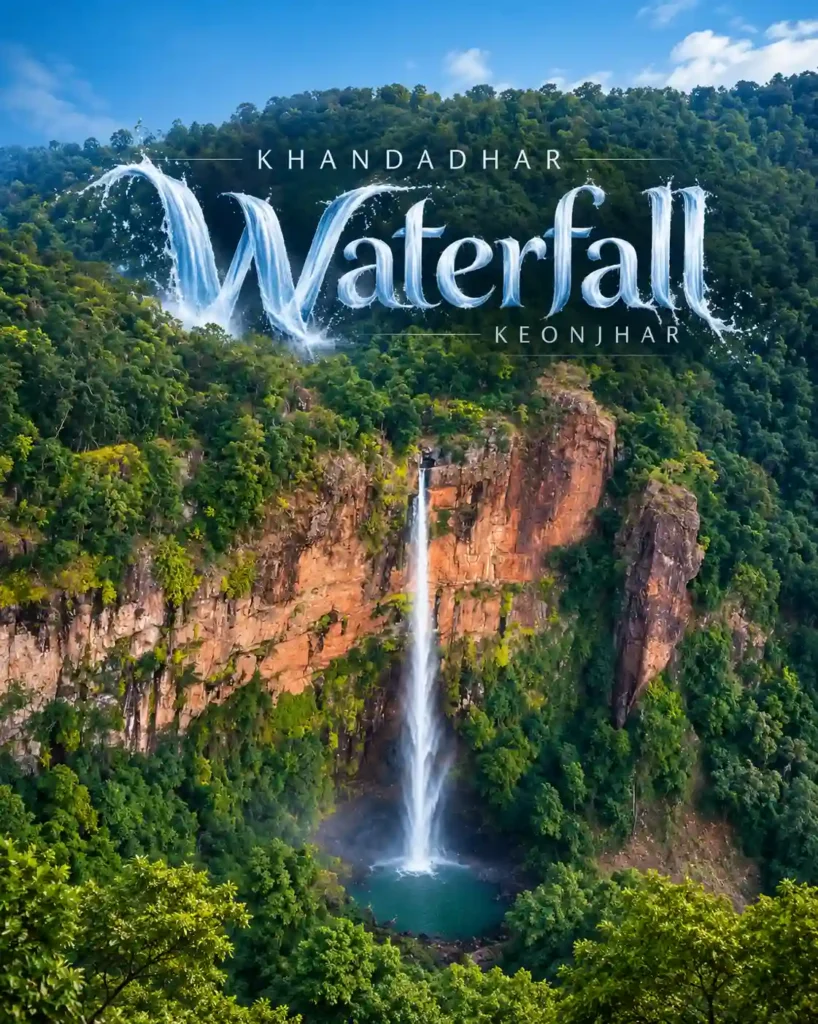
Set amidst the forested hill ranges of Banspal block in Keonjhar (Kendujhar) district, Khandadhar Waterfall is one of northern Odisha’s most striking natural landmarks. Dropping from an approximate height of 500 feet (152 metres), the perennial forest stream creates a dramatic vertical plunge against a steep rock precipice before flowing into the valley below.
The name Khandadhar is derived from the Odia words Khanda, meaning sword, and Dhara, meaning stream or blade edge. Viewed from the valley or approaching forest paths, the slender, continuous column of cascading water shines against dark stone walls like the upright blade of an unsheathed sword. The force of the drop throws up a persistent mist of fine water droplets, giving the base of the gorge its characteristic cool air and hazy spray.
When planning a trip, travellers should note a critical geographical distinction: Odisha is home to two prominent waterfalls named Khandadhar. The first is this waterfall located in Banspal block of Keonjhar district, approximately 50 to 60 km from Keonjhar town. The second is the 244-metre (801-foot) Khandadhar Falls situated in the Bonaigarh subdivision of Sundargarh district. Travel guides frequently confuse the two, mistakenly applying Sundargarh’s height and access routes to Keonjhar. This guide focuses exclusively on the Keonjhar waterfall, its actual road routes, and practical travel realities.
The Landscape Around Khandadhar Waterfall

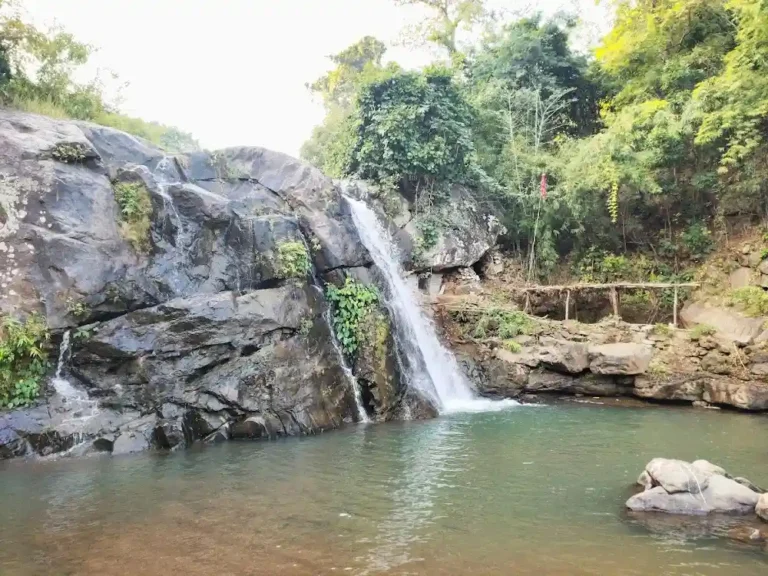
The geographical setting of Khandadhar Waterfall reflects the rugged topography of the Keonjhar plateau. The surrounding terrain is characterised by undulating hills, rocky ravines, and extensive stands of moist deciduous and sal forests that stretch across northern Odisha.
Several environmental features define this mountain stream ecosystem:
- Forest Catchment: The stream originates high in the forested hills of the Banspal range, sustained by rainfall and natural aquifers that maintain flow well into the winter months.
- Microclimate: The deep gorge and consistent water vapour create a microclimate at the foot of the falls that remains cooler than the surrounding open plateau.
- Native Flora: The valley floor and adjoining hillsides host diverse indigenous plant species, wild ferns, seasonal lichens, and native timber species like sal, asan, and bamboo.
- Riparian Habitat: The stream flowing from the plunge pool meanders over mossy boulders and pebble beds, supporting regional birdlife and forest amphibians.
Khandadhar Keonjhar at a Glance
Planning a day excursion to Khandadhar Waterfall requires understanding that this is a remote forest destination rather than a suburban park. Public transit options directly to the waterfall site are practically non-existent, and the final approach winds through quiet rural stretches. Visitors should review basic travel parameters before starting from Keonjhar town to ensure an unhurried, comfortable journey.
| Travel Parameter | Verified Details |
|---|---|
| District & Block | Keonjhar (Kendujhar) District, Banspal Block, Odisha |
| Estimated Height | Approximately 500 feet (152 metres) |
| Distance from Keonjhar Town | Approximately 50 to 60 km (approx. 1.5 to 2 hours drive) |
| Nearest Towns | Suakati, Banspal, Kendujhargarh (Keonjhar town) |
| Nearest Railway Station | Kendujhargarh Railway Station (KDJR, ~55–60 km) |
| Nearest Major Airport | Biju Patnaik International Airport (BBI), Bhubaneswar (~230 km) |
| Best Visiting Season | October to February (Winter & Post-Monsoon) |
| Primary Activities | Nature photography, forest walking, landscape sightseeing, day picnics |
What Makes Khandadhar Waterfall Special?
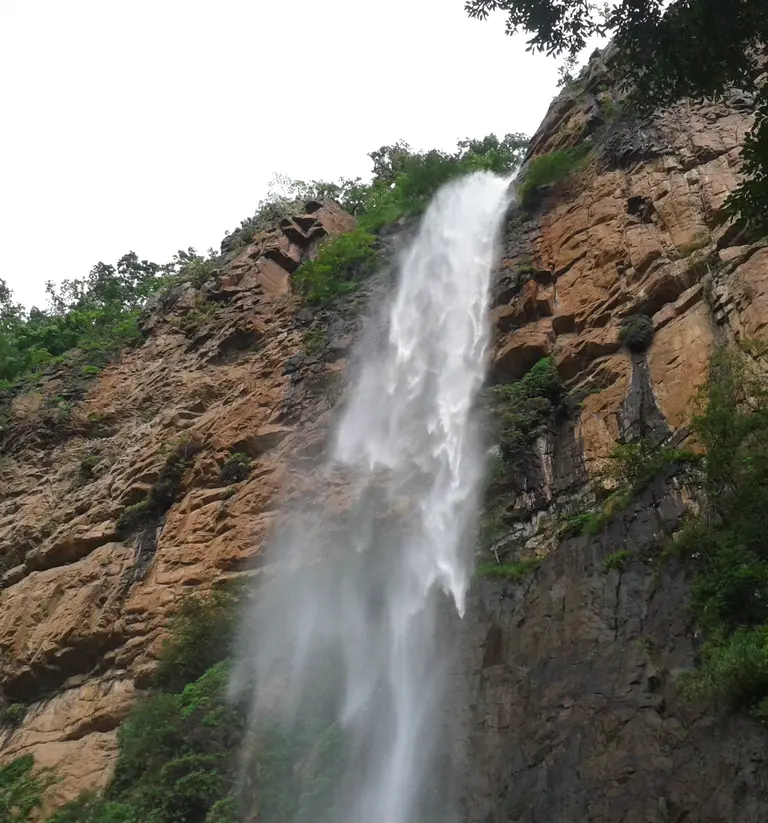
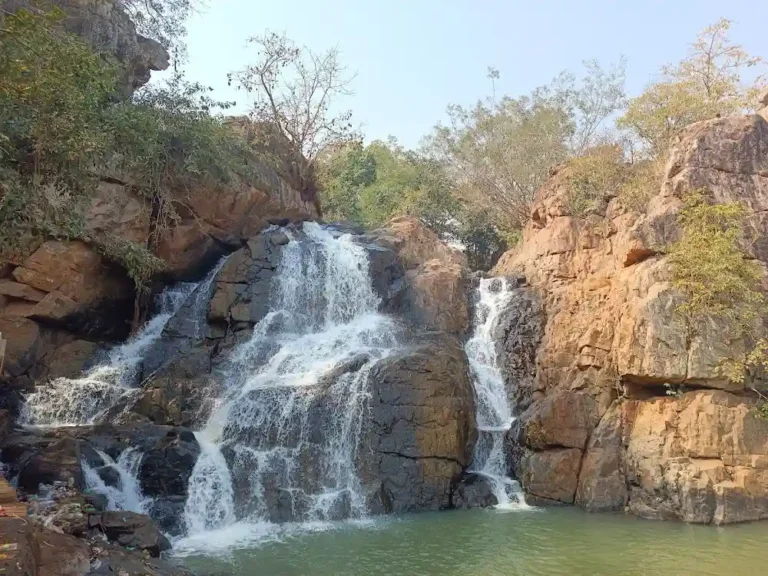
Unlike wide, tiered cascades such as Sanaghagara, Khandadhar in Keonjhar is defined by its sheer verticality. The water plunges straight down a towering rock face in a compact, powerful ribbon. Because of the considerable height, the falling water breaks into droplets midway through its descent, generating clouds of water mist that billow outward across the gorge.
Visitors often observe the following distinct characteristics:
- Sword-Like Visual Line: The narrow, glistening column stands out sharply against the rugged, weathered cliff wall, providing clear visual justification for its traditional name.
- Acoustic Presence: As the water hits the rocky basin, a deep rhythmic sound resonates through the forest valley, audible well before the falls come into direct view.
- Uncommercialised Setting: The area lacks commercial vendors, loud amusement rides, or permanent stalls, preserving an authentic forest atmosphere.
How to Reach Khandadhar Waterfall Keonjhar
Reaching Khandadhar requires private or hired transportation, as rural buses only serve main highway stops. Here is the practical routing guidance:
By Road
The primary access route starts from Keonjhar town (Kendujhargarh), which is well-connected to major Odisha cities via NH-20 and NH-49. From Keonjhar, vehicles head west/southwest towards Banspal block. The journey follows national and state highways before turning onto rural paved roads leading through local villages towards the waterfall parking area. The total driving distance is approximately 50 to 60 km and typically takes 1.5 to 2 hours, depending on road conditions. Hiring a private taxi, jeep, or driving a personal vehicle is recommended. Ensure your vehicle has adequate fuel before leaving Keonjhar town, as fuel outlets in the interior block are limited.
By Train
The nearest railway station is Kendujhargarh (station code: KDJR), situated about 55 to 60 km from the waterfall site. Kendujhargarh has direct rail connectivity with Bhubaneswar, Kataka, and Jakhapura Junction. From the railway station, travellers must arrange a private cab or auto-rickshaw to Keonjhar town to hire a taxi for the waterfall.
By Air
The most practical air gateway is Biju Patnaik International Airport (BBI) in Bhubaneswar, approximately 230 km south. From Bhubaneswar, travellers can reach Keonjhar by train or road via NH-20 in approximately 4.5 to 5 hours. Ranchi Airport (IXR) in neighbouring Jharkhand is roughly 220 km to the north and serves as an alternative for travellers arriving from northern states.
Best Time to Visit Khandadhar Waterfall
The travel experience at Khandadhar Waterfall varies significantly across seasons. Understanding seasonal changes helps in choosing the right time for your trip:
- Winter (October to February): Widely considered the best time to visit. Monsoon rains have refreshed the forest canopy and filled the mountain streams, creating an active, steady flow. Temperatures on the Keonjhar plateau remain pleasant during the day (around 18°C to 25°C) and drop to cool single digits at night. Forest paths are dry, clear, and easy to navigate.
- Monsoon (July to September): The waterfall reaches its peak water volume, producing an impressive visual and acoustic roar. However, heavy rains can make interior village roads muddy, forest footpaths slick with moss, and swollen stream beds dangerous for walking. Travel during active rainstorms requires extra caution.
- Summer (March to June): Days on the Keonjhar plateau become hot and dry, with midday temperatures often exceeding 36°C. The water volume thins down considerably compared to winter. If visiting during summer, plan your arrival early in the morning before midday heat sets in.
Walking Trails and Practical Visitor Realities
Setting realistic expectations ensures an enjoyable day trip to Khandadhar:
- The Walking Approach: From the point where vehicles are parked, visitors follow a natural forest trail and stone steps that lead down towards the stream bed. The walk takes about 10 to 20 minutes depending on pace.
- Footwear Requirements: Rocks near the stream are naturally uneven, and stones close to the plunge pool are constantly damp from mist. Wear closed walking shoes or sneakers with dependable rubber grip. Avoid smooth-soled sandals or high heels.
- Food and Drinking Water: There are no restaurants, cafeteria facilities, or permanent snack stalls at the waterfall. Visitors must carry adequate drinking water and packed food from Keonjhar town.
- Mobile Connectivity: Mobile network reception can be intermittent or weak in the forested valley of Banspal. Download your offline maps and complete important communications before leaving the highway corridor.
- Restrooms and Facilities: Visitor amenities at remote eco-spots in the district are minimal. Use facilities at Keonjhar town before departing for the day trip.
Safety and Responsible Travel Guidelines
Visiting forest waterfalls requires careful attention to personal safety and environmental preservation:
- Stay Clear of Slippery Boulders: Rocks near the waterfall base are coated in wet algae and mist. Do not attempt to climb wet rock surfaces or venture close to the direct impact zone of falling water.
- Avoid Deep Water Swimming: Plunge pools below tall waterfalls can conceal sudden drop-offs, hidden underwater boulders, and strong swirling currents. Enjoy the cool spray from dry, stable ground.
- Supervise Children: Keep children accompanied and away from steep ledges or wet stream margins at all times.
- Daylight Hours: Plan your departure to leave the waterfall area well before dusk. Interior forest roads lack street lighting, making night driving on rural roads inadvisable.
- Zero Littering: Khandadhar is an ecologically sensitive forest tract. Carry a trash bag in your vehicle and take all plastic wrappers, empty water bottles, and food containers back to Keonjhar for proper disposal.
- Respect Local Villages: The approach passes through traditional tribal hamlets in Banspal block. Respect local privacy, drive at moderate speeds through village roads, and ask permission before taking photographs of residents.
Places to Visit Near Khandadhar in Keonjhar District
Keonjhar district offers several notable cultural and natural sites that can be combined with a trip to Khandadhar:
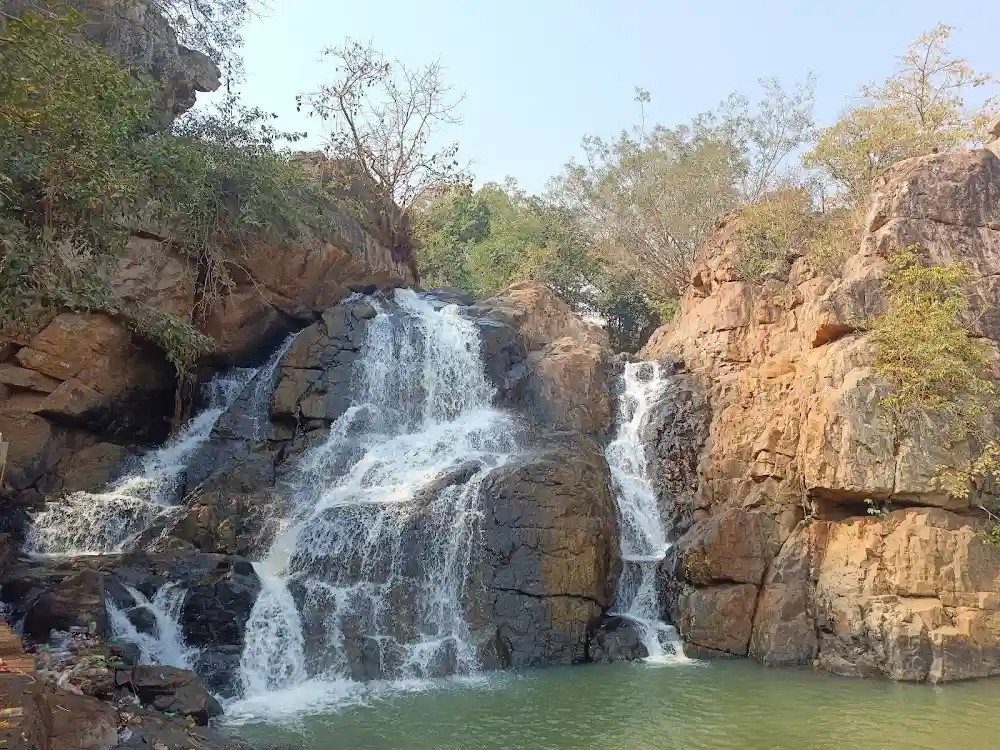
- Sanaghagara Waterfall (~55 km from Khandadhar, ~5 km from Keonjhar town): A charming, accessible waterfall surrounded by landscaped gardens, children’s parks, and forest trails, making it ideal for families.
- Badaghagara Waterfall (~60 km from Khandadhar, ~10 km from Keonjhar town): Located on the Machakandana river, Badaghagara drops about 100 feet in a dense forest setting, offering quiet natural surroundings.
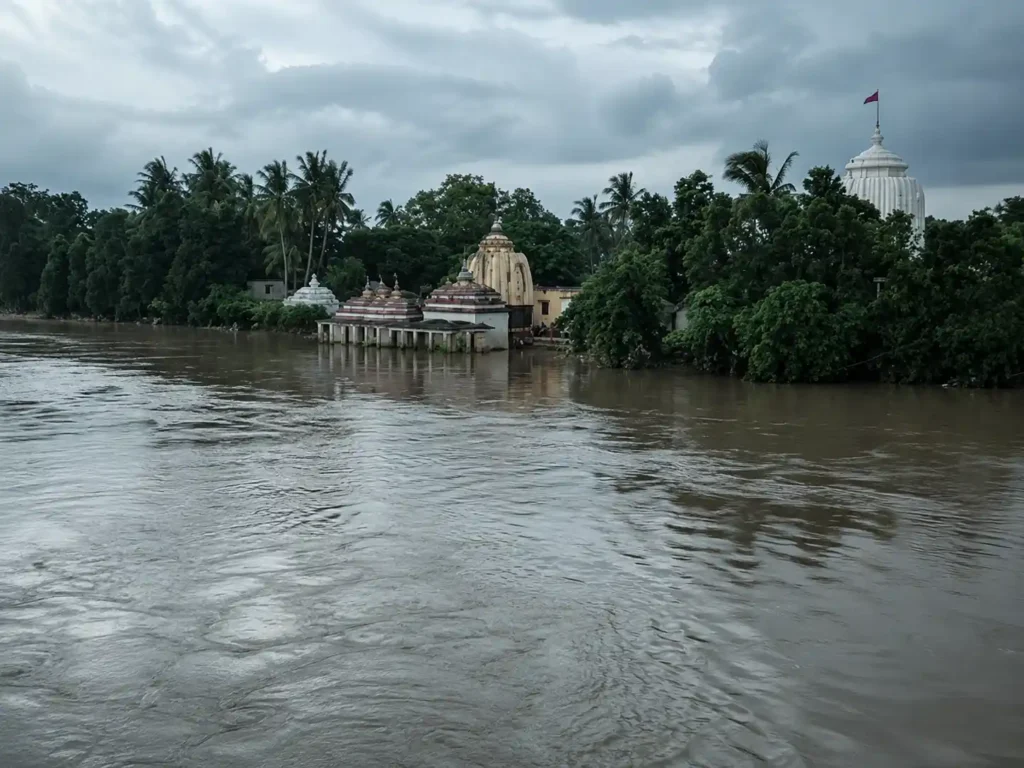
- Gonasika and Guptaganga (~65 km from Khandadhar): The sacred geographical origin of the Baitarani River, framed by high hills and the ancient Brahmeswar Shiva Temple.
- Sitabinji Fresco Paintings (~60 km from Keonjhar town): A historic heritage site featuring the 5th-century ‘Ravan Chhaya’ rock shelter fresco depicting a royal procession.
- Maa Tarini Temple, Ghatagaon (~95 km from Khandadhar): One of Odisha’s most revered pilgrimage shrines, located on NH-20 south of Keonjhar town.
Frequently Asked Questions About Khandadhar Waterfall Keonjhar
1. Where is Khandadhar Waterfall located in Keonjhar?
Khandadhar Waterfall is located in Banspal block of Keonjhar (Kendujhar) district in northern Odisha, approximately 50 to 60 km west/southwest of Keonjhar town.
2. What is the height of Khandadhar Waterfall in Keonjhar?
Khandadhar Waterfall in Keonjhar plunges from an estimated height of approximately 500 feet (152 metres). Note that the often-cited 244-metre waterfall is a separate cascade in Sundargarh district.
3. Is this the same as Khandadhar Waterfall in Sundargarh?
No. Odisha has two distinct waterfalls named Khandadhar. The Keonjhar waterfall is in Banspal block (~500 ft / 152 m high). The Sundargarh waterfall is located near Bonaigarh and Tensa (~244 m / 801 ft high), which is Odisha’s second-highest waterfall. They are located in different districts and have completely separate access routes.
4. How can I reach Khandadhar from Keonjhar town?
The best way to reach the waterfall is by hiring a private taxi or driving a personal vehicle from Keonjhar town towards Banspal and Suakati via NH-49 and rural link roads. The drive covers 50 to 60 km and takes approximately 1.5 to 2 hours.
5. Are there food stalls or hotels at Khandadhar Waterfall?
No. The waterfall is situated in a remote forest area with no commercial restaurants, food stalls, or hotels. Visitors should stay in Keonjhar town and carry their own drinking water and packed snacks for the trip.
Planning Your Visit to Khandadhar Keonjhar
Khandadhar Waterfall in Keonjhar offers an encounter with the untamed hill forests of northern Odisha. Its sheer, sword-like drop and secluded valley setting make it a rewarding destination for nature lovers and travellers exploring beyond standard tourist circuits. By planning your transport in advance, carrying your own supplies, and leaving zero waste behind, you can experience one of Keonjhar’s finest natural water features responsibly.
Related guide: Planning your visit? Use our Odisha waterfall guide.
About the Author
Jyotsna Mohapatra
Related Posts