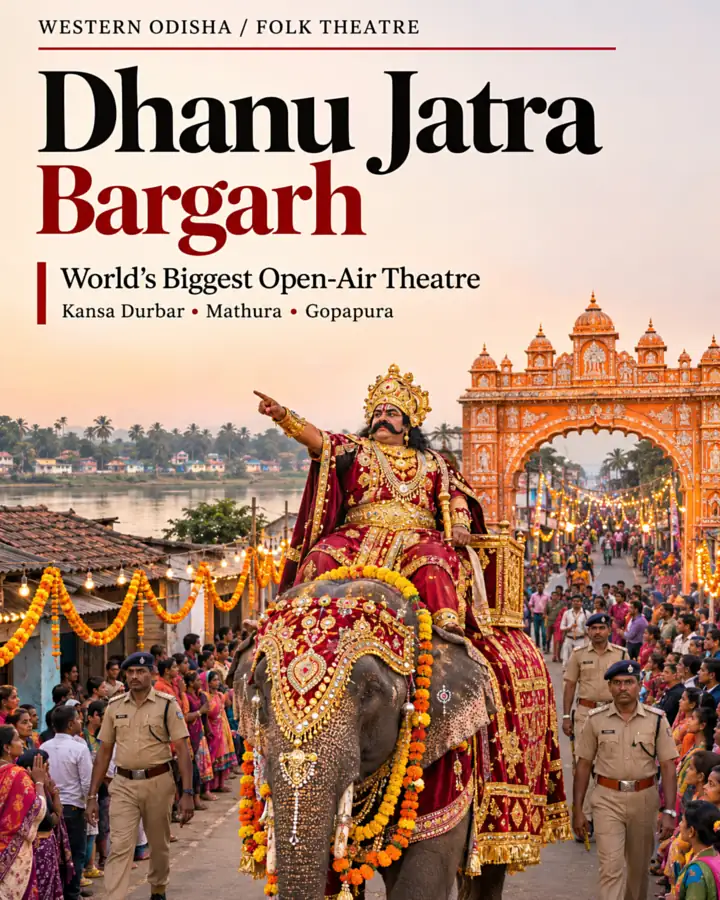
Festival facts
Place
Bargarh, Odisha
Duration
11 days, Pausha Shukla Panchami to Pausha Purnima
2026-27
About 12–22 January 2027 (expected)
Bargarh becomes
Mathura
Ambapali becomes
Gopapura
Jira river plays
Yamuna
Dhanu Jatra 2026-27 Dates
Dhanu Jatra follows the lunar calendar. It begins on Pausha Shukla Panchami and ends on Pausha Purnima with the death of Kansa, so the dates move every year and can fall in late December or in January.
| Dhanu Jatra 2026-27 | About 12 to 22 January 2027 (expected; Pausha Purnima falls on 21–22 January) |
| Last edition (2025-26) | 24 December 2025 to 3 January 2026 |
| Where | Bargarh town (Mathura) and Ambapali village (Gopapura), Bargarh district, Odisha |
| Final day | Kansa Badha, the death of King Kansa, on Pausha Purnima |
The Bargarh Dhanu Yatra committee announces the final schedule a few weeks before the festival, so confirm the dates locally before you book travel.
An Open-Air Theatre With an Entire Town in the Cast
Dhanu Jatra has often been described as the world’s biggest open-air theatre, but its scale is not simply about the size of a performance ground. Almost the entire town becomes involved.
Residents, government employees, politicians, businessmen and spectators all enter the theatrical world in one way or another. Actors and audiences move from place to place according to the demands of each scene. Several performances can unfold at different locations, so the audience does not always sit and wait for the story to come to them. Quite often, they move with it.
This gives Dhanu Jatra a character that is difficult to reproduce inside a conventional auditorium. There is no written script: the actors improvise their dialogue around a story everyone knows. The same Krishna–Kansa story returns every year, and the town still waits for it. In November 2014 the Government of India recognised Dhanu Jatra as a national festival.
The Three Main Parts of Dhanu Jatra
The dramatic structure revolves around three major episodes:
- Krishna Leela: Krishna’s birth, childhood and youth in Gopapura
- Mathura Bijaya: Krishna and Balaram’s journey to Mathura
- Kansa Badha: the death of King Kansa
At the centre is the familiar story of Lord Krishna and his maternal uncle, King Kansa of Mathura. Kansa invites Krishna and Balaram to Mathura to witness and take part in the festivities connected with the Dhanu Yatra, the bow ceremony. Behind that invitation lies his plan to destroy Krishna. Krishna recognises the danger. The story moves towards Mathura and reaches its climax with the death of Kansa, ending the ruler’s oppression.
For the people watching in Bargarh, this is not one uninterrupted play on one platform. Different parts of the story belong to different physical spaces, and that changes the way the audience meets it.
Why Bargarh Becomes Mathura
During the eleven days of Dhanu Jatra, Bargarh is transformed into Mathuranagar, the capital of King Kansa. Across the Jira river, Ambapali becomes Gopapura, the home of Krishna’s childhood. The Jira itself represents the Yamuna, and a pond beside it at Ambapali stands in for Krishna’s Kalindi lake.
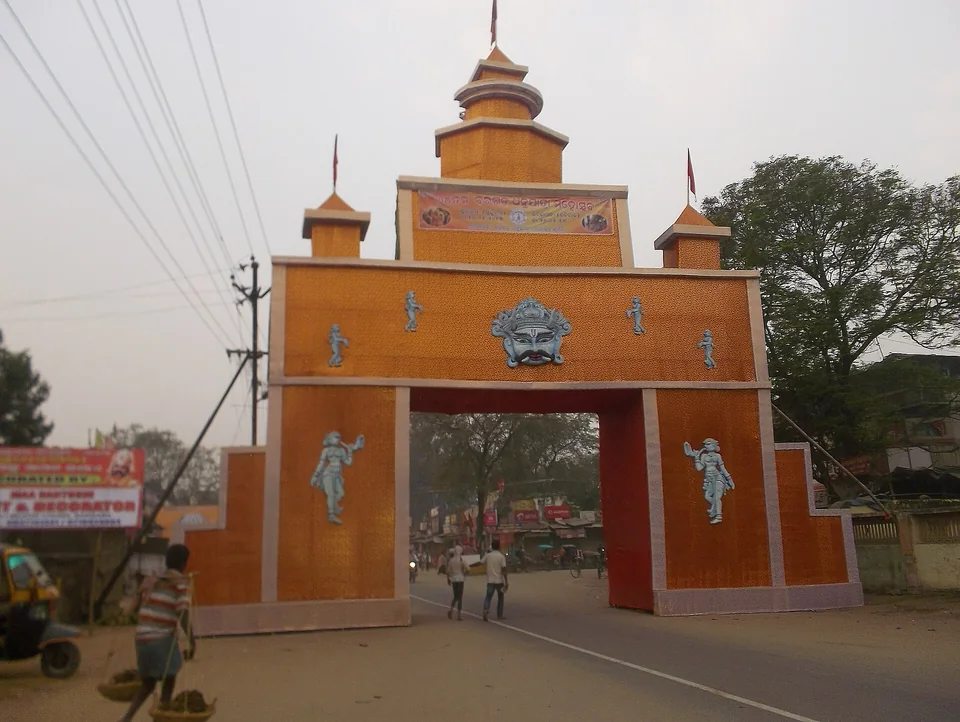
The geography is not a decorative detail added around the performance. It is part of the storytelling. Kansa’s authority dominates Bargarh. Krishna is the centre of attention in Ambapali. The river lies between the two theatrical worlds. By using real places instead of painted backdrops, Dhanu Jatra lays mythology directly over the existing map of Bargarh.
For Eleven Days, Kansa Rules Bargarh
One of the most remarkable parts of the Dhanu Jatra tradition is the authority given to the character of Kansa. During the festival, the administration and people of the town enter his theatrical kingdom. Residents, whatever their profession or background, become subjects of King Kansa within the play.
Older accounts describe vehicles being kept off Bargarh’s roads during the Yatra, so that people moved around the town on foot while Kansa travelled on a decorated elephant. That changed the rhythm of the town. The king was not hidden behind a curtain waiting for an evening show. He could appear on the road. Today the district administration supervises the festival, and normal town life carries on around the performances.
Kansa’s Morning Rounds Through the Town
Kansa’s role extends beyond the evening durbar. For a few hours in the morning, the king visits different parts of Bargarh, bringing the theatrical character straight into everyday public spaces. He is escorted by his royal police, played by real police personnel on festival duty.
The unusual part comes when Kansa notices something wrong. The person concerned can be produced before him and fined, and arguing with the king can make the fine larger. Older accounts say these fines were issued with proper receipts and the money deposited into a public fund.
Politicians and influential people are not spared. Former Chief Minister Biju Patnaik is remembered as having been fined by Kansa along with his ministers. That mixture of theatre, humour and public accountability gives the king’s daily rounds a character far removed from a rehearsed stage scene.
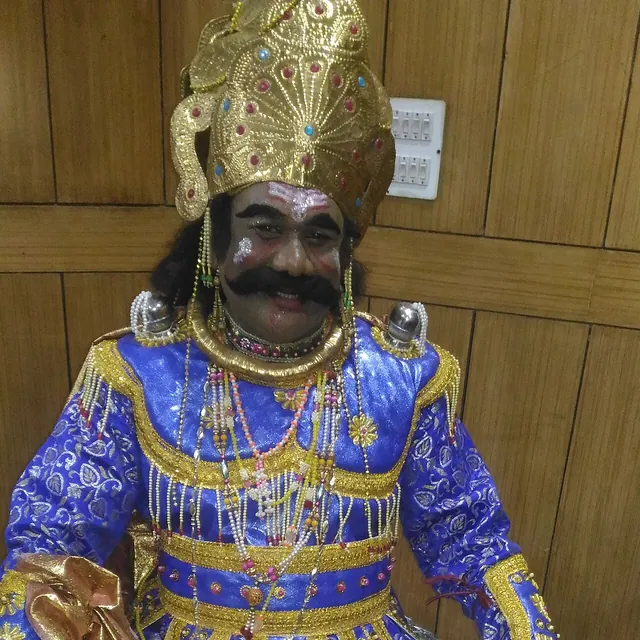
Kansa Durbar Was Also a Public Forum
Every evening, Kansa holds his Durbar, also called the Ranga Sabha, at the Dhanu Jatra field. Older accounts describe it running for six to eight hours on a decorated platform raised eight to ten feet above the ground, with microphones and colourful lighting so the large crowd could follow proceedings. Government officers sit in chairs below as Kansa’s officials.
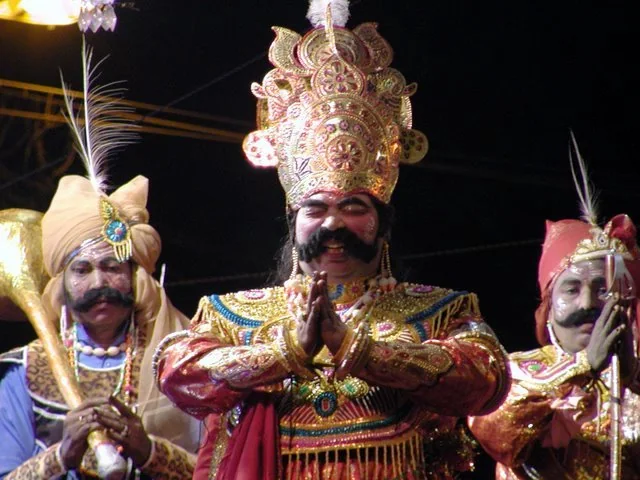
But the durbar is not limited to mythological dialogue. People can raise questions on public-interest issues, and that detail is especially significant. The theatrical king can question people and officials while the public watches, turning the durbar into something between folk theatre, satire and a public forum.
Police personnel, magistrates, engineers, government employees and members of the public all go along with this temporary theatrical order. For those eleven days, performance and civic life sit unusually close to each other.
Ambapali Becomes Krishna’s Gopapura
Across the river, the atmosphere changes. Here the attention moves away from Kansa, and Krishna becomes the centre of the story. Ambapali takes the identity of Gopapura, and Krishna’s life is followed from his birth in Kansa’s prison through his childhood and youth, including the playful and mischievous episodes of his early years.
The village lives the role too. Many Ambapali families give up non-vegetarian food for the festival, and verses from Mathura Mangala have been written on the village walls during the Yatra. Gopapura is created not only through actors and costumes: text, place, music and everyday surroundings are all pulled into the theatrical setting.
Krishna’s Journey Towards Mathura
The separation between Gopapura and Mathura eventually has to close. Kansa sends his minister Akrura across the river in a chariot to bring Krishna and Balaram to Mathura. Krishna sets out from across the Jira in a beautifully decorated chariot, and the journey carries the story towards its conclusion.
Kansa has dominated Mathura throughout the festival. Now Krishna enters that world. The inevitable confrontation follows, ending with Kansa Badha, the death of King Kansa, on Pausha Purnima. This is not merely the end of the plot. Within the wider symbolism associated with the festival, the fall of Kansa carries another meaning.
The 1947–48 Beginning and the Independence Connection
Dhanu Jatra in its present form began in 1947–48, soon after Indian independence. Elders in the area recall an older, smaller form of the play that ran for seven days, but the town-wide festival dates from those first years of freedom.
That timing shaped how people read the performance. Kansa, the oppressive ruler, came to symbolise the outgoing British imperial government. Krishna represented the nationalist hopes of people who had just seen the end of colonial rule. The fall of Kansa was already a story about the end of tyranny; in the years immediately after independence, audiences could connect it with something they had just lived through. The festival carried both mythological and nationalist energy.
The Music and Folk Traditions Inside Dhanu Jatra
The scale of Dhanu Jatra can overshadow another important part of the festival: its performance traditions. The play carries elements of Odisha’s folk music and dramatic forms, including Champu and Chhanda. In earlier years, actors also used amitrakshara chhanda (blank verse) in their improvised dialogue, along with verses from Mathura Mangala. With no fixed script, performers have room to work well beyond rigid dialogue.
Dhanu Jatra is also a platform for cultural groups from across Odisha and neighbouring states, who perform on the Rangamahal stage at the Nishamani School ground. Among the local traditions is Sanchara, popularly known in the area as Gahak Bahak. So while Krishna and Kansa provide the main dramatic structure, the festival is also a meeting ground for music, folk theatre and regional performance.
Why the Audience Is Part of the Performance
Dhanu Jatra becomes difficult to explain once you try to divide everyone neatly into “actors” and “spectators.” That boundary is constantly blurred. A government officer may become part of Kansa’s court. Police may escort the king. A politician may be summoned. A resident becomes one of Kansa’s subjects simply by living within Mathura. Someone in the crowd may watch one scene and then walk to another location where a different part of the story is already underway.
Theatre spills into public life, and public life enters the theatre. That is probably the strongest reason Dhanu Jatra keeps people’s attention even though the central story never changes.
Bargarh During the Eleven Festival Days
The festival atmosphere spreads far beyond the dramatic performances. Households fill with guests from outside Bargarh. Men, women and children dress for the occasion and move through the town. Temporary amusement parks appear, music programmes are organised, food counters open and medical camps are held.
Traders arrive from well outside the region; older accounts mention business communities from Raipur, Nagpur, Mumbai and Delhi selling their goods during the festival. For local businesses, the eleven days bring a very different level of activity. For families, they bring guests. For the town, they bring a temporary change of identity.
A Festival Shared Across Communities
Dhanu Jatra draws people across religious communities; accounts of the festival describe Hindus, Sikhs, Muslims, Christians, Jains and Buddhists all taking part in and enjoying it. That matters because the whole structure of Dhanu Jatra depends on collective participation. A production spread across kilometres cannot run on a small acting troupe alone.
It needs the town. It needs cooperation. It needs thousands of people accepting, at least for a while, that Bargarh is Mathura and Kansa is king. The story belongs to mythology, but the event works through community participation, in the same spirit as Western Odisha’s harvest festival, Nuakhai.
How Large Is the Dhanu Jatra Stage?
The performance area stretches across several kilometres; accounts describe a theatrical zone with a radius of roughly 5 to 8 km. That should not be imagined as one long conventional stage. It is a theatrical zone: Bargarh, Ambapali, roads, public places and the banks of the Jira all become part of it.
This is why Dhanu Jatra is better understood as a network of open-air performance spaces than as one enormous theatre ground. Scenes take place at the same time. Audiences move. Actors move. And ordinary town spaces keep taking on new meanings as the story develops.
Why Dhanu Jatra Still Works With the Same Story
There is no surprise ending. Everyone already knows that Kansa will fall and that Krishna will reach Mathura. They know how the story ends before the first day begins. Yet that does not weaken the festival.
Dhanu Jatra survives because people are not returning to learn what happens next. They are returning to see how Bargarh performs it again. Who will play Kansa? How will the king command the town? What will happen on his rounds? How will the crowd respond? Which cultural troupes will perform? Who has come home for the festival this year? Those changing details keep an old story socially alive.
Visiting Bargarh for Dhanu Jatra
Bargarh sits on the national highway west of Sambalpur, about 60 km away, and has its own railway station, Bargarh Road. The nearest airport is Veer Surendra Sai Airport at Jharsuguda; Raipur and Bhubaneswar have the larger airports. Rooms fill quickly during the festival, so book early or stay in Sambalpur and travel in for the evening durbar.
If you have a few more days, combine the festival with the rest of Bargarh district and the Hirakud region:
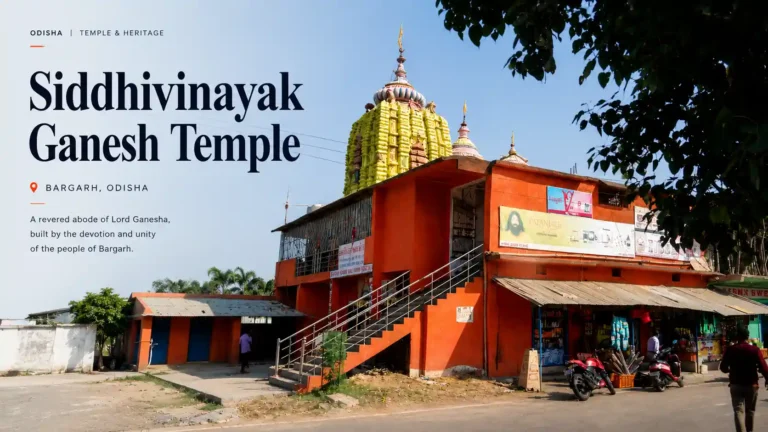
- Siddhivinayak Ganesh Temple in Bargarh town
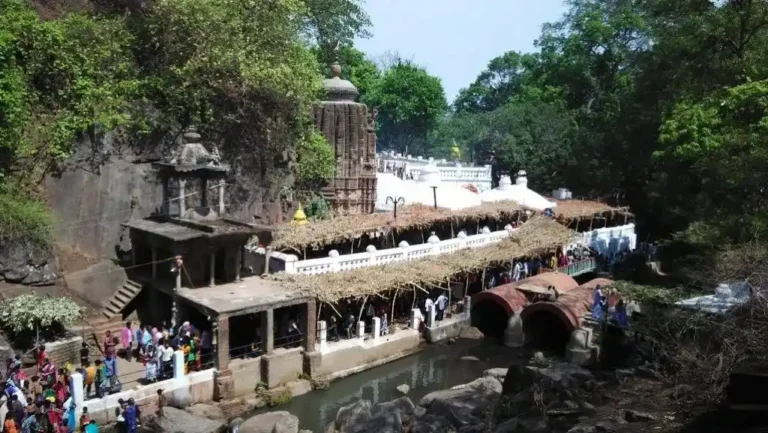
- Nrusinghanath Temple at the foot of the Gandhamardan hills
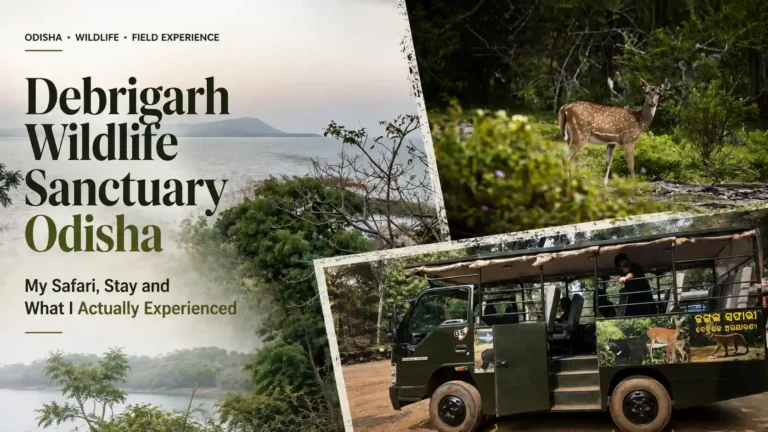
- Debrigarh Wildlife Sanctuary on the Hirakud reservoir
- Hirakud Dam, one of the longest earthen dams in the world
Bargarh is also the home district of the poet Gangadhar Meher, whose village of Barpali lies nearby.
Dhanu Jatra Bargarh Quick Facts
| Festival | Dhanu Jatra (Dhanu Yatra) |
| Place | Bargarh, Odisha |
| Duration | Eleven days, Pausha Shukla Panchami to Pausha Purnima |
| 2026-27 dates | About 12 to 22 January 2027 (expected) |
| Bargarh becomes | Mathuranagar |
| Ambapali becomes | Gopapura |
| Jira river represents | Yamuna |
| Central characters | King Kansa, Lord Krishna and Balaram |
| Major episodes | Krishna Leela, Mathura Bijaya and Kansa Badha |
| Major attraction | Kansa Durbar (Ranga Sabha) |
| Present form since | 1947–48, soon after independence |
| Status | National festival (Government of India, 2014) |
| Performance traditions | Champu, Chhanda, Mathura Mangala and Sanchara (Gahak Bahak) |
| Performance area | Several kilometres across Bargarh, Ambapali and the Jira |
Conclusion
Calling Dhanu Jatra the world’s biggest open-air theatre explains its size. It does not fully explain its character. The more unusual part is the willingness of an entire town to enter the same story.
For eleven days, roads become Mathura. Ambapali becomes Gopapura. The Jira becomes the Yamuna. Police escort a mythological king. Government officers sit in his court. Residents accept the role of subjects. Krishna grows up across the river before finally heading towards Mathura. And everybody already knows what will happen to Kansa.
They still gather to watch. That is the point. Dhanu Jatra is not kept alive by suspense. It survives because Bargarh keeps making the story its own.
Frequently Asked Questions
What is Dhanu Jatra of Bargarh?
Dhanu Jatra is an eleven-day open-air theatre festival in Bargarh, Odisha, in which the Krishna–Kansa story is performed across the town and nearby Ambapali rather than on one conventional stage.
When is Dhanu Jatra 2027?
The 2026-27 edition is expected around 12 to 22 January 2027, from Pausha Shukla Panchami to Pausha Purnima. Confirm the final dates with the Bargarh Dhanu Yatra committee before travelling.
Why is Dhanu Jatra called the world’s biggest open-air theatre?
The performance spreads across Bargarh, Ambapali and the land around the Jira river, with actors, residents, officials and spectators all becoming part of the theatrical world.
What does Bargarh become during Dhanu Jatra?
Bargarh takes the identity of Mathuranagar, the capital of King Kansa.
What does Ambapali become during the festival?
Ambapali becomes Gopapura, the place of Krishna’s childhood.
Which river represents the Yamuna?
The Jira (Jeera) river, flowing between Bargarh and Ambapali, represents the Yamuna.
What are the main episodes performed in Dhanu Jatra?
The three major sections are Krishna Leela, Mathura Bijaya and Kansa Badha.
What is Kansa Durbar?
Kansa Durbar, also called Ranga Sabha, is the royal court of King Kansa. It is the main evening performance, and it also lets public-interest matters enter the theatrical proceedings.
Did Kansa really fine people during Dhanu Jatra?
Yes. On his morning rounds Kansa questions people and can fine anyone he finds doing wrong, including politicians; former Chief Minister Biju Patnaik is remembered as one of them. Older accounts say receipts were issued and the money went into a public fund.
When did Dhanu Jatra begin in its modern form?
The present form began in 1947–48, soon after Indian independence. An older, smaller seven-day form is remembered from before that.
What was the independence-era meaning of Kansa and Krishna?
In that reading, Kansa represented oppressive British imperial rule, while Krishna symbolised the nationalist hopes of the people.
Which folk traditions are associated with Dhanu Jatra?
Champu, Chhanda, amitrakshara chhanda, verses from Mathura Mangala and the local Sanchara or Gahak Bahak tradition.
Is Dhanu Jatra only a religious festival?
Its central story is mythological, but the event is also folk theatre, a cultural gathering, a public festival and a platform for performers and traders.
Why does the same story attract people every year?
The story never changes, but the public participation, moving performances, cultural programmes and Kansa’s daily dealings with the town give every edition its own character.
Related guide: Read our complete guide to the Festivals of Odisha.