Bhagabata Janma 2026 Date in Odisha
| ParticularDetails | |
|---|---|
| Festival | Bhagabata Janma |
| Year | 2026 |
| Date | Saturday, 26 September 2026 |
| Lunar date | Bhadraba Purnima |
| Main observance | Bhagabata Gadi puja and Bhagavata recitation |
| Associated figures | Sukadeva Goswami, King Parikshit and Jagannath Das |
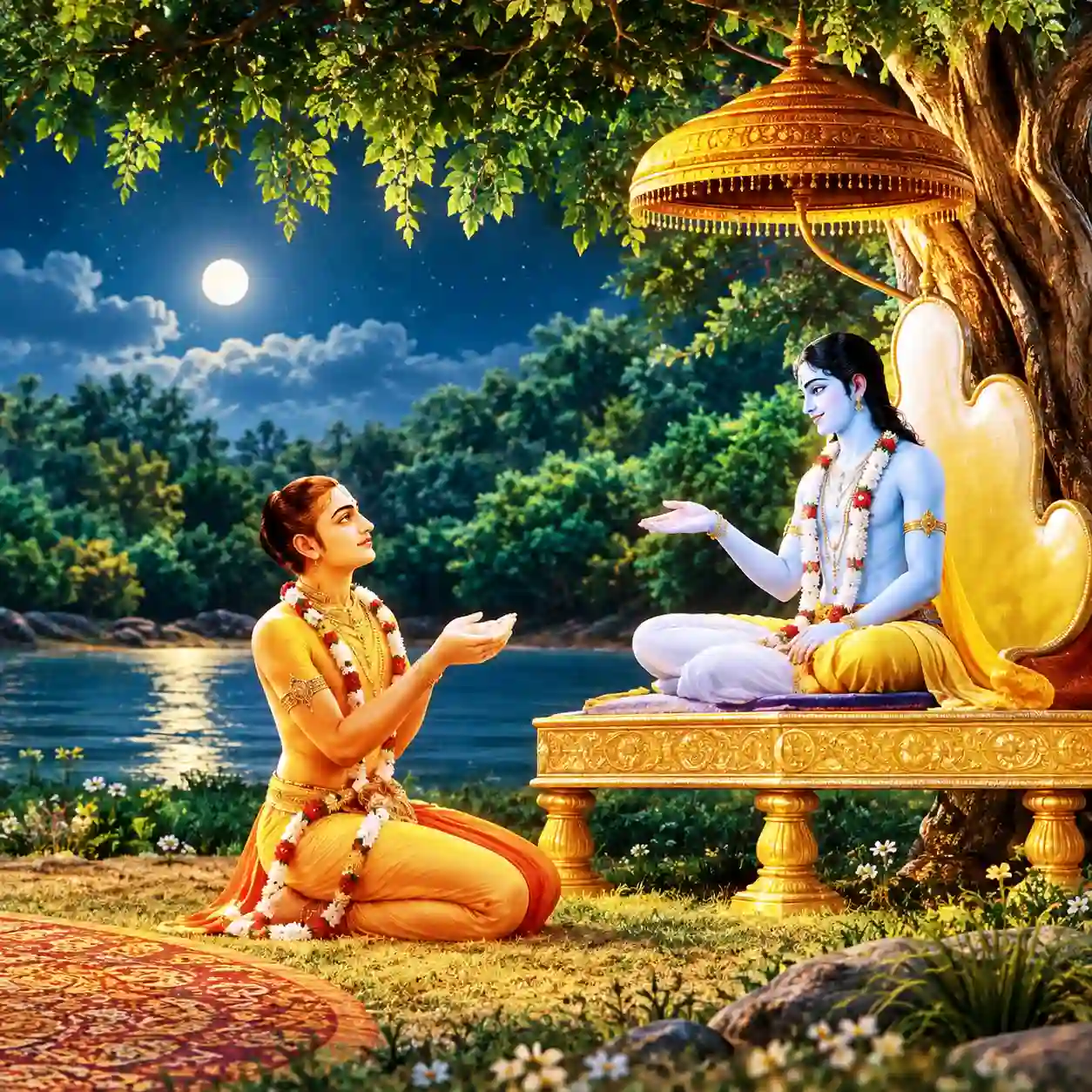
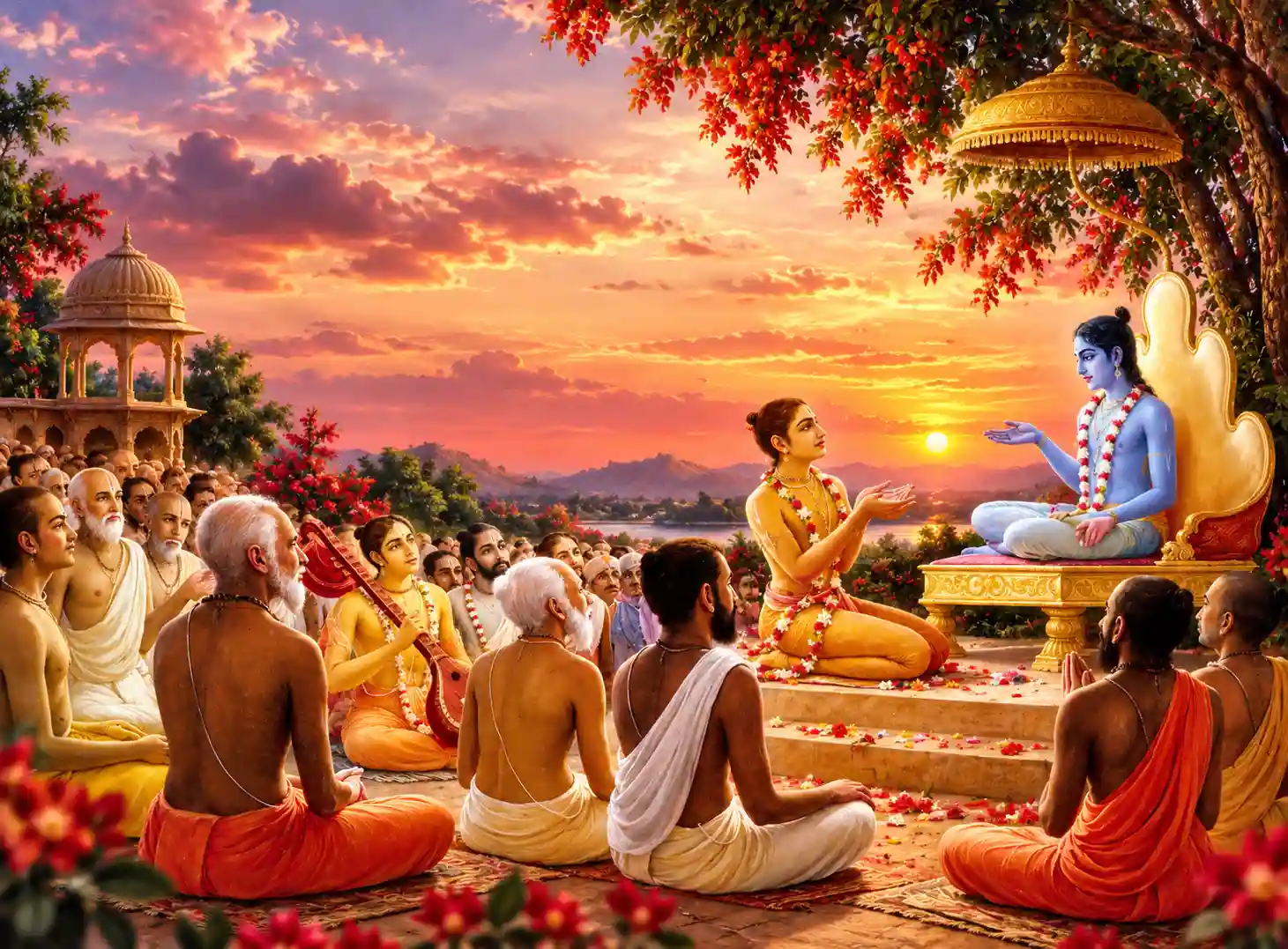
This is the day people recall as the finish of Sukadeva Goswami’s seven-day telling of the Srimad Bhagavatam to King Parikshit. The narration is said to have started on Bhadraba Shukla Navami and ended on Purnima.
Why the Day Is Called Bhagabata Janma
A curse left King Parikshit with just seven days remaining. He chose to spend them hearing the Srimad Bhagavatam from Sukadeva Goswami. The telling ran for seven days. Bhadraba Purnima marks its close, and later the day itself became known as Bhagabata Janma. Here “Janma” means the sacred appearance of Bhagavata knowledge. It is not a person’s birthday and it is not the birth anniversary of Lord Krishna. Krishna Janmashtami and Bhagabata Janma stay separate.
The Bhagabata Gadi in Odisha
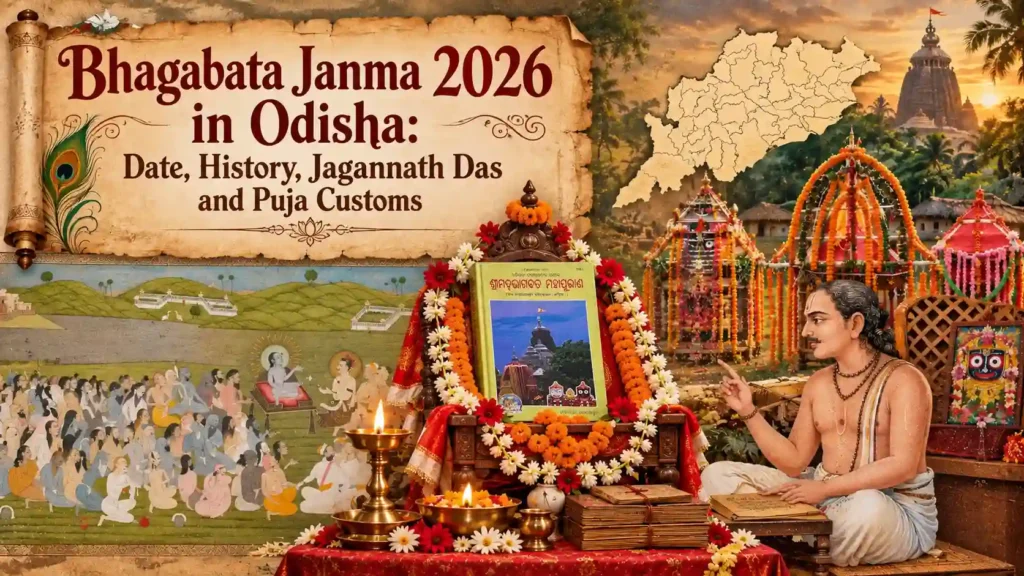
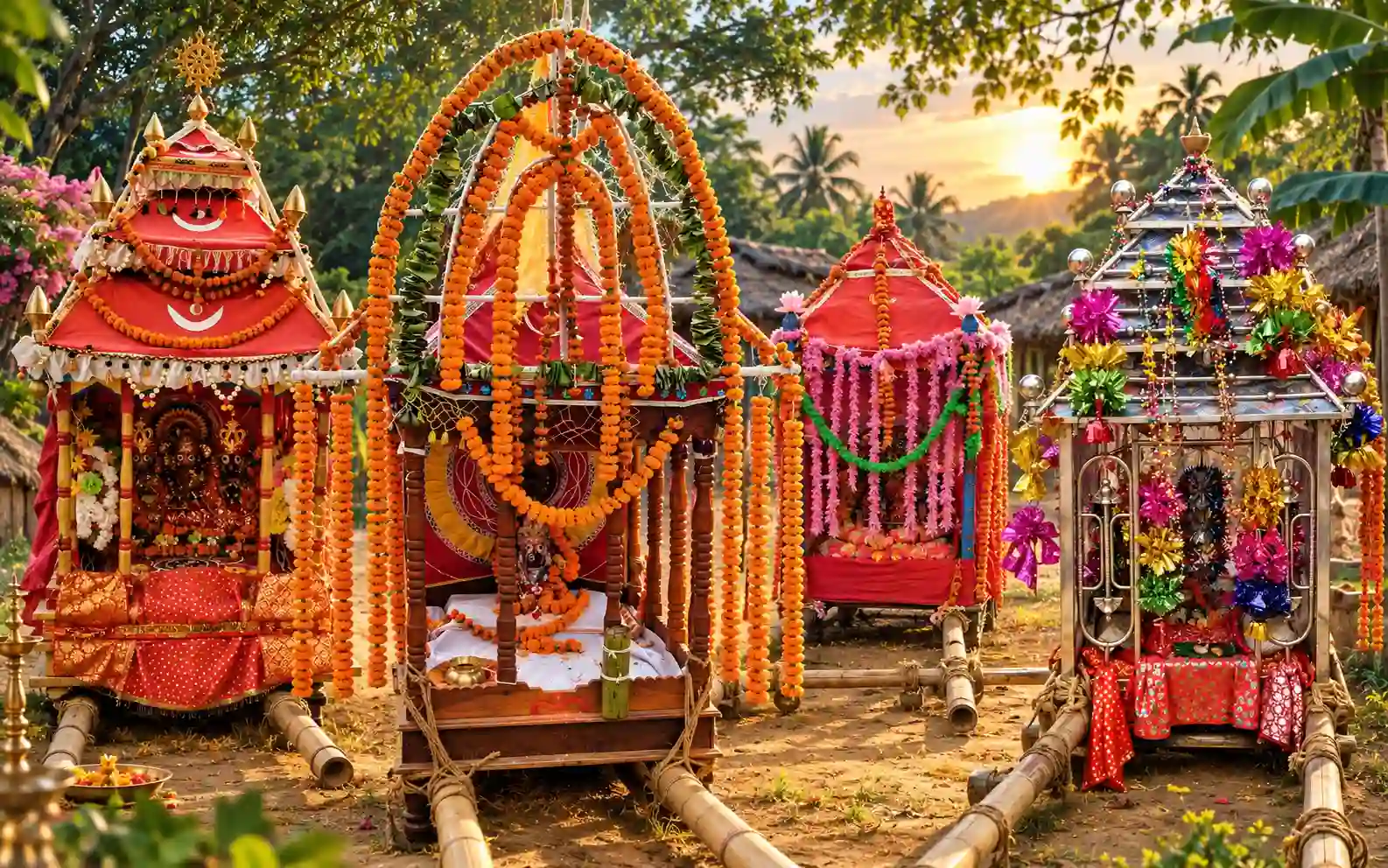
In many homes and villages of Odisha the Bhagabata Gadi is the centre of the day’s worship. The Odia Bhagabata is placed on a raised seat, covered with a clean cloth and ringed with flowers, lamps and other ritual items. Some villages maintain Bhagabata Tungis where the text is read aloud throughout the year. In a few of these places no separate idol is kept. The Bhagabata itself sits on the gadi and receives aarti and offerings. At home the arrangement is usually made in the prayer room or a quiet corner. The space is cleaned, the seat is dressed, the book is placed carefully and a reading begins once the puja is over.
Srimad Bhagavatam and Its Place in Vaishnava Belief
Vaishnava teaching treats Srimad Bhagavatam as the verbal form of Bhagavan. It gathers Krishna’s names, qualities, teachings and deeds together with stories of devotees, kings, sages and different incarnations. Because of that the Bhagavata is handled differently from an ordinary book. During Bhagabata Gadi worship the text is set before the devotees as the very means by which the sacred narration reaches them. A verse often recited with the Bhagavatam says that devotion grows through listening to Krishna’s stories and that sorrow, delusion and fear slowly lessen. That statement belongs to the teaching of the text itself. It is not a medical or psychological guarantee. The real emphasis rests on steady hearing, reflection and practice.
How Jagannath Das Made the Bhagabata Available in Odia
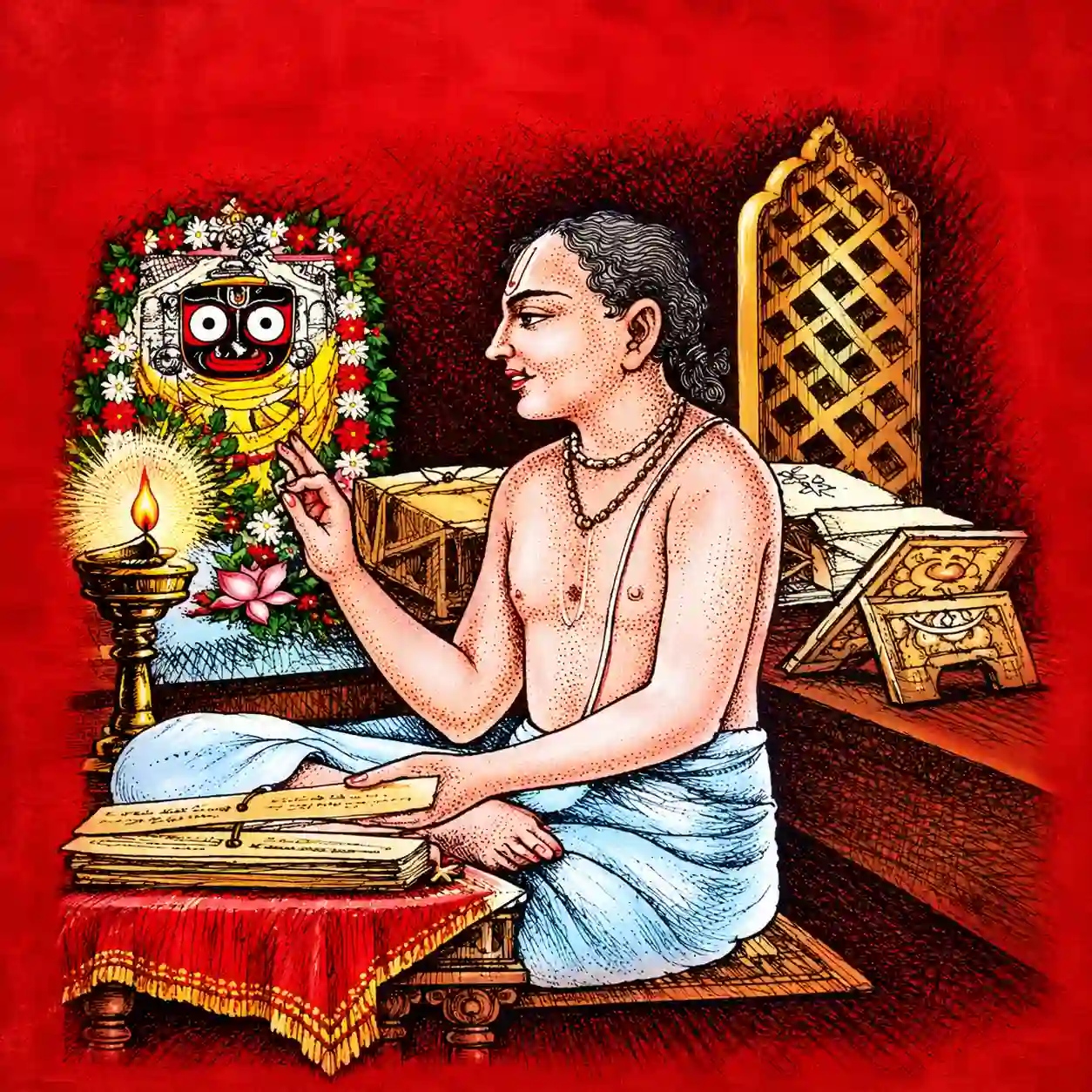
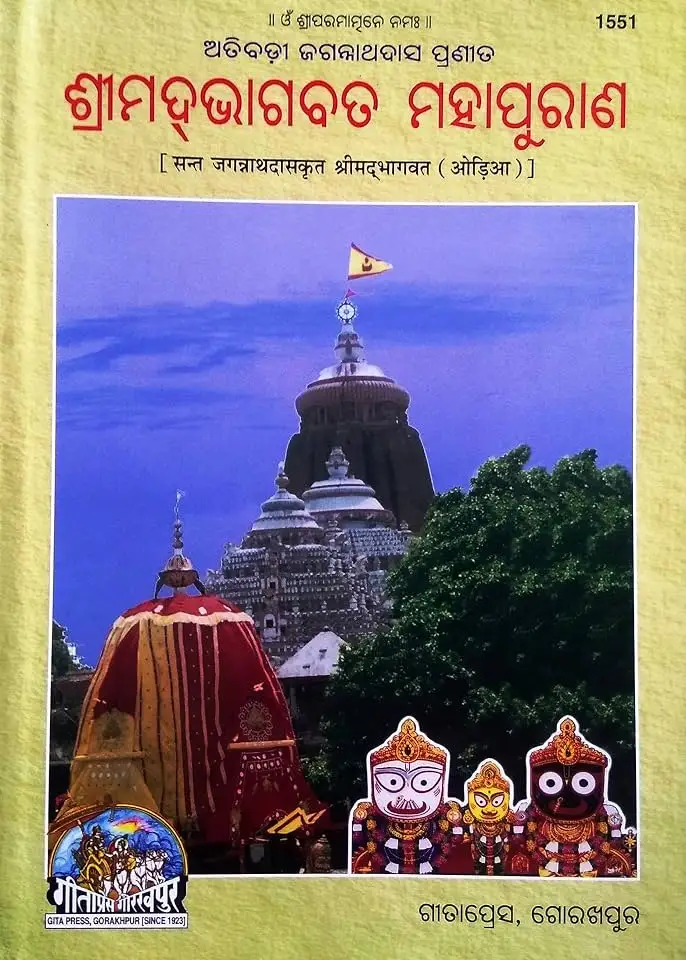
Sanskrit Bhagavatam remained hard for anyone without formal schooling in the language. Most people therefore heard the stories from priests, scholars or public narrators rather than reading the original themselves. Tradition credits Jagannath Das with shaping the Bhagavata into a form that ordinary Odia speakers could recite and follow. He came from a family linked to the Puri Jagannath Temple. Older accounts describe his father, Bhagaban Das, as a Purana Panda and his mother as Padmavati. After his father’s death Jagannath Das kept explaining religious texts and gradually began composing an Odia version of the Bhagavatam. Accounts say his mother urged him to make the text clear for those who could not follow Sanskrit. He worked through the chapters and set the material in Odia verse. The finished work became tied to Navakshari Chhanda, a nine-syllable metre that suited oral recitation and memorisation.
The Odia Bhagabata Is a Poetic Rendering
The Odia Bhagabata is not a strict word-for-word translation of the Sanskrit original. It is a poetic and devotional rendering shaped for Odia readers and listeners. Its metre, language and style of explanation helped it travel beyond Sanskrit-educated circles. Traditional accounts differ on some details of its composition and completion. Certain narratives assign later sections to other contributors, including Mahadeva Das. Those points belong to the traditional history of the text and should not be treated as settled fact without a specific scholarly edition. Jagannath Das’s work is widely connected with the spread of Bhagavata reading in Odia homes and village gatherings.
Why Navakshari Chhanda Is Mentioned So Often
The metre matters because the Odia Bhagabata grew inside a strong oral culture. A text written only for silent reading would have reached fewer people. The rhythm of Navakshari Chhanda made the verses easy to recite before groups of listeners. People could hear the same passage again and again and remember parts of it without owning a manuscript or studying Sanskrit. This helped the Bhagabata become part of evening readings, village gatherings and household religious teaching.
Bhagabata Janma Puja at Home
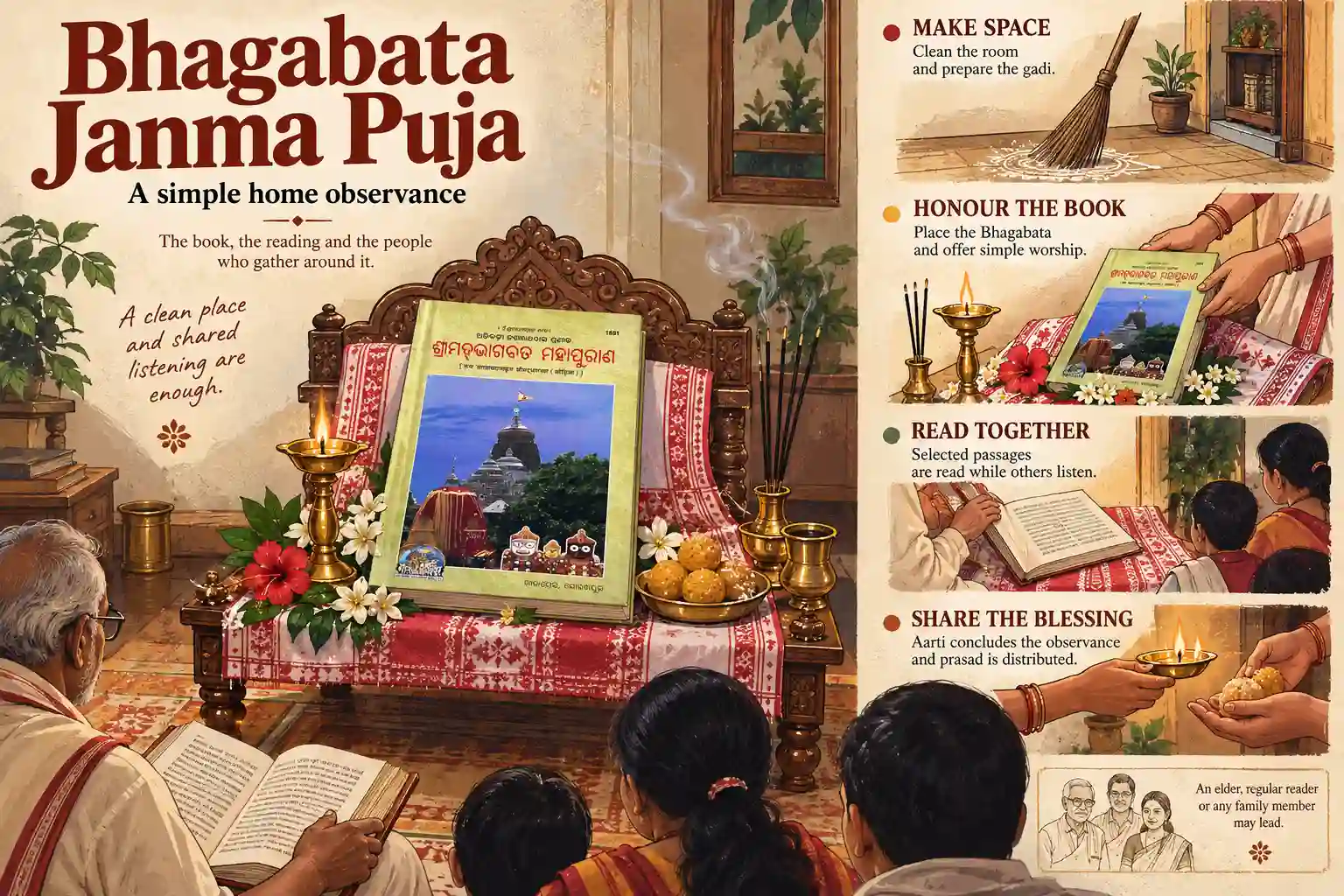
Customs differ from house to house, yet a common pattern includes:
- Cleaning the prayer room or Bhagabata Gadi
- Placing a fresh cloth on the seat
- Keeping the Odia Bhagabata on the gadi
- Offering flowers, incense and a lamp
- Preparing bhoga or laddus
- Performing aarti
- Reading selected chapters or passages
- Inviting family members and neighbours to listen
- Distributing prasad after the reading
An elder, a regular Bhagabata reader or any family member who can recite may lead the reading. Those who cannot read still take part by listening. The puja does not need costly decoration. A clean place, respectful placement of the book and a period of reading are enough for a simple household observance.
The Seven-Day Reading Tradition
The story of Parikshit and Sukadeva gives Bhagavata recitation its seven-day link.
| StageTraditional account | |
|---|---|
| Bhadraba Shukla Navami | Bhagavata narration begins |
| Six following days | Continuous hearing of the text |
| Bhadraba Purnima | Narration concludes |
| Bhagabata Janma | Annual remembrance of the completion |
Some temples, institutions and villages organise longer reading programmes around the festival. Others hold a single special reading on Purnima. Local practices are not the same, and a one-day household observance does not have to follow the full seven-day schedule.
Bhagabata Janma Is Different from Krishna Janmashtami
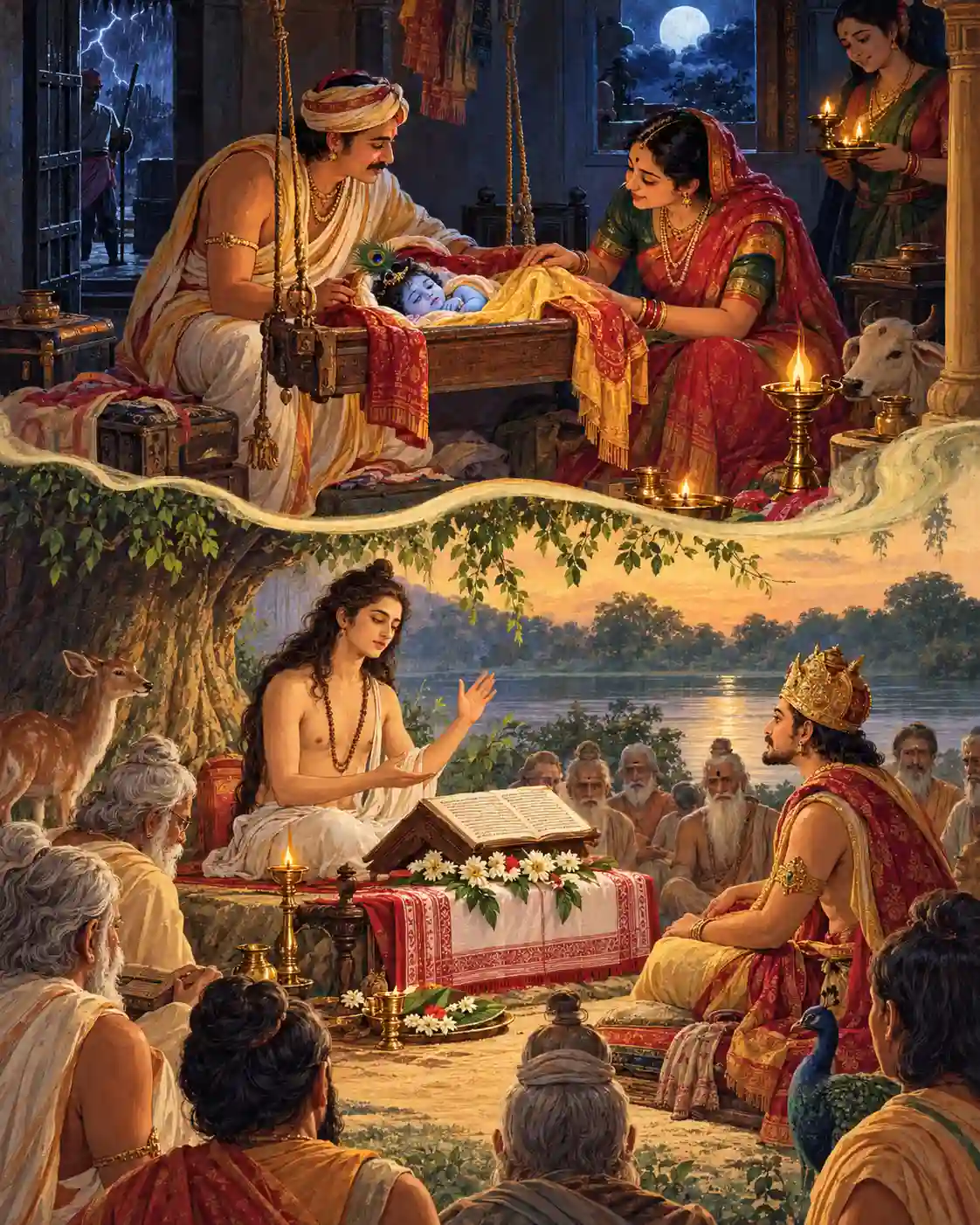
The two festivals are sometimes mixed up because both are linked with Krishna and the month of Bhadraba. Krishna Janmashtami marks the birth of Lord Krishna and falls on Krishna Paksha Ashtami. Bhagabata Janma falls on Bhadraba Purnima and recalls the completion of the Bhagavata narration by Sukadeva Goswami to King Parikshit. The rituals, stories and dates are different.
The Role of Listening
The Bhagavata tradition puts hearing at the centre. A listener does not need to be a Sanskrit scholar or an experienced religious speaker. In Odisha the text has long been read aloud in places where people of different educational backgrounds sit together. A person can follow the story through Odia verse even without knowing the Sanskrit source. That is also why daily or weekly Bhagabata readings continue in some families long after the annual Janma puja ends. The festival date marks the special occasion, while the repeated reading becomes the regular practice.
Devotees interested in another Krishna-related festival memory can also read: https://localdrive.in/janmashtami-2026-in-odisha-the-krishna-dress-i-still-remember-from-school/
What Families Should Check for 26 September 2026
Before arranging the puja, families usually verify:
- The local Purnima tithi timing
- The suitable puja period according to the household panji
- Whether the nearby Bhagabata Tungi has a public reading
- The time fixed for aarti or community recitation
- Bhoga and prasad arrangements
- Whether children can attend the evening reading
The calendar date is Saturday, 26 September 2026. The exact ritual hour may differ between towns and districts because lunar tithi calculations depend on location. For a simple observance families clean the Bhagabata Gadi, place the Odia Bhagabata on it, offer the usual puja items and arrange a reading. The date commemorates the completion of a narration; the reading is the act through which households observe it.