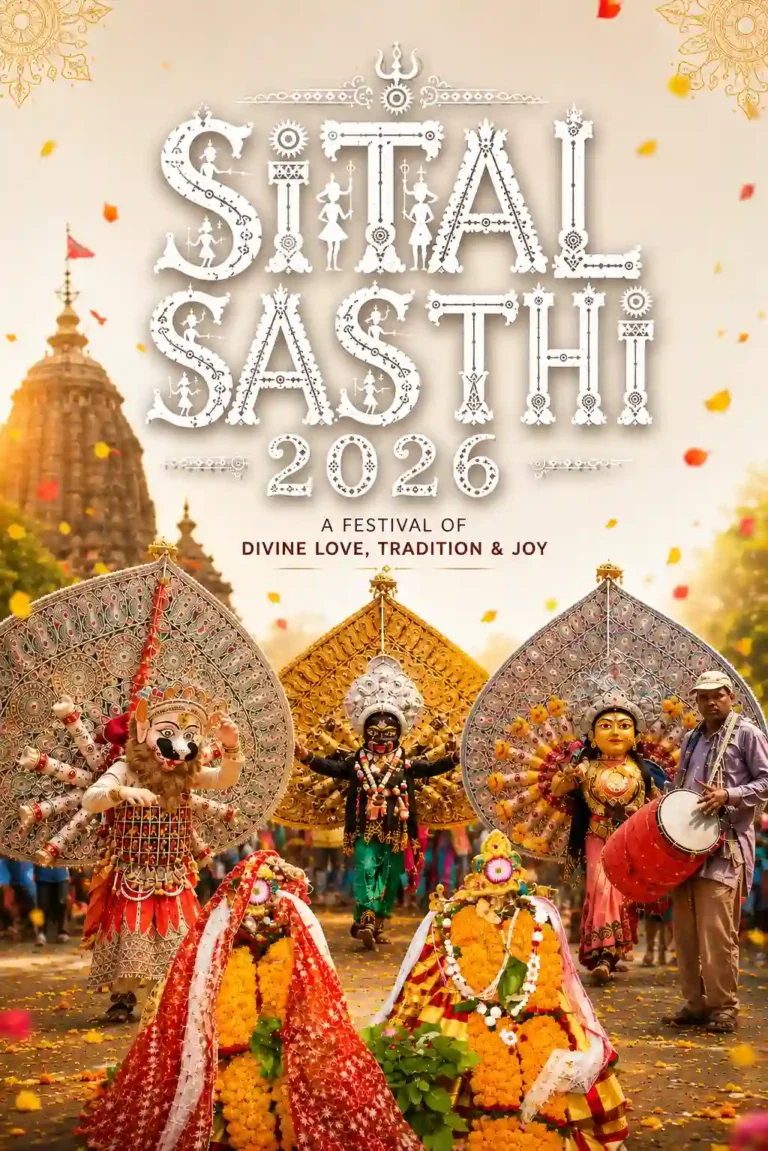
As the intense summer heat grips Odisha during the month of Jyeshtha, people across the state begin preparing for one of the most colourful and spiritually emotional festivals of the year, Sital Sasthi 2026. Unlike ordinary temple rituals, this festival transforms entire towns into vibrant wedding venues where Lord Shiva and Goddess Parvati are worshipped not as distant deities, but as beloved members of the community.
From the electrifying carnival atmosphere of Sambalpur to the deeply devotional temple rituals of Puri and Bhubaneswar, Sital Sasthi beautifully combines:
- Spiritual devotion
- Folk traditions
- Community participation
- Ritual theater
- Cultural heritage
This unique Shaivite festival celebrates the divine marriage of Lord Shiva and Goddess Parvati and symbolizes the cooling of cosmic energy before the arrival of the monsoon.
Whether you are searching for Sital Sasthi in Odisha, curious about the Sital Sasthi significance, exploring Pahili Raja traditions, or planning to experience the Raja Festival in Odisha during 2026, this detailed guide covers everything you need to know.Table of Contents
What is Sital Sasthi?
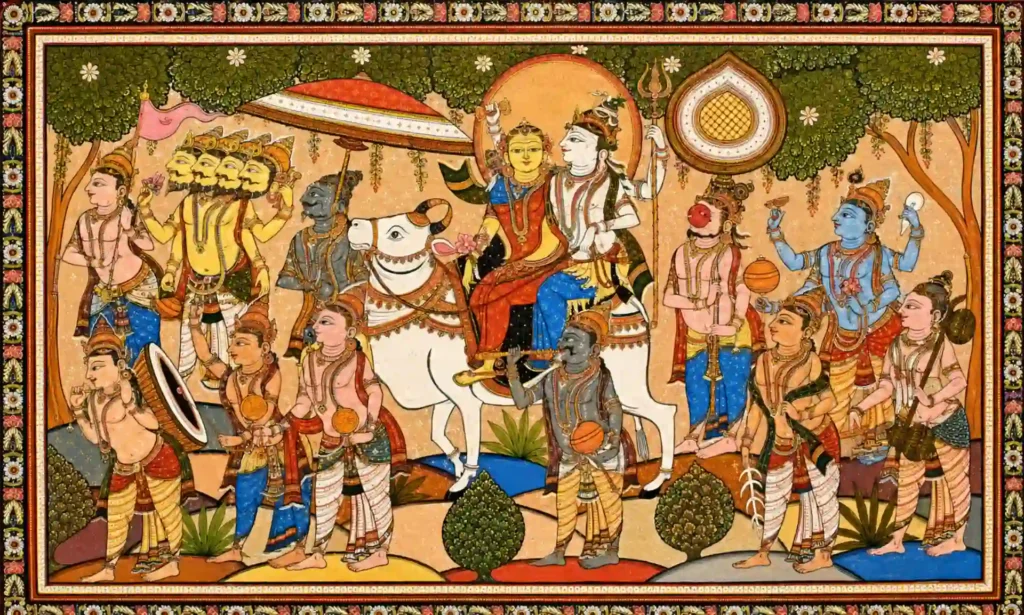
The sixth day of the bright fortnight (Shukla Paksha) of the Hindu month of Jyeshtha which is celebrated as the wedding day of the God Shiv and Goddess Parvati.
In 2026:
- Sital Sasthi 2026 falls on 19 June 2026.
Why is Sital Sasthi Celebrated?
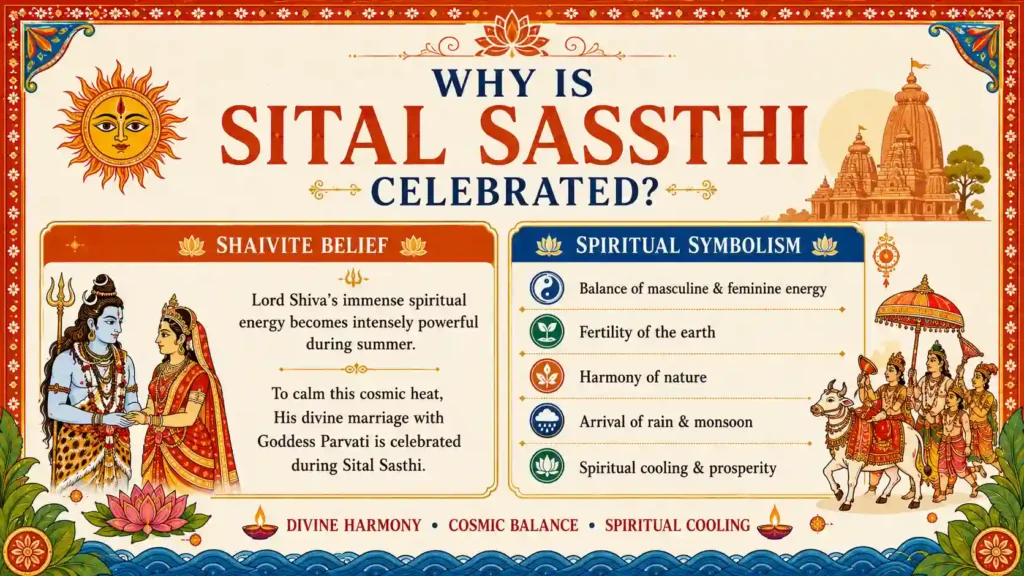
According to Shaivite tradition:
Lord Shiva’s immense spiritual energy becomes intensely powerful during summer.
To calm this cosmic heat:
His marriage with Goddess Parvati is solemnized.
This divine union symbolizes:
- Balance between masculine and feminine energy
- Fertility of the earth
- Harmony of nature
- Arrival of rain and monsoon
The Divine Marriage of Shiva and Parvati
The story of Sital Sasthi originates from ancient Hindu mythology.
After the death of Goddess Sati:
Lord Shiva withdrew into deep meditation and isolation.
Meanwhile:
Goddess Parvati, the daughter of King Himavan, performed severe penance to win Shiva’s love.
Eventually:
Shiva accepted her devotion and agreed to marry her.
Their marriage became:
One of the most celebrated divine unions in Hinduism.
Sital Sasthi commemorates this sacred wedding ceremony with extraordinary grandeur across Odisha.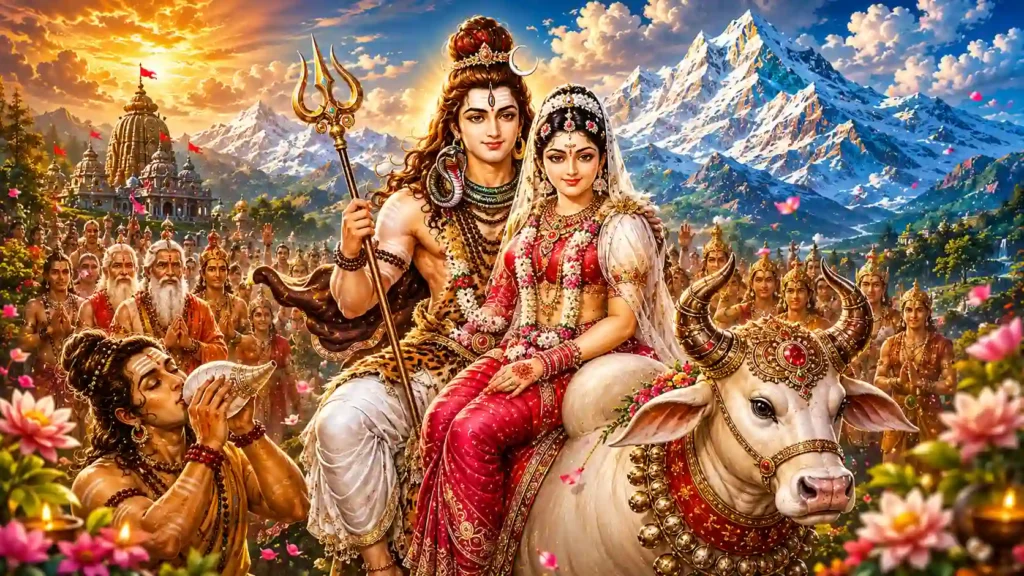
Sambalpur Sital Sasthi: Odisha’s Greatest Divine Carnival
When people speak of Sambalpur Sital Sasthi, they refer to one of India’s most spectacular street festivals.
With a legacy of more than:
400 years
the celebration in Sambalpur has evolved into a massive cultural carnival attracting:
- Devotees
- Tourists
- Researchers
- Photographers
- Folk artists
from across India and abroad.
The Humanization of the Gods
One extraordinary feature of Sital Sasthi is that:
The divine wedding follows every custom of a traditional Odia human marriage.
Ordinary citizens are selected as:
- Parents of Lord Shiva
- Parents of Goddess Parvati
They perform:
- Kanyadana
- Wedding rituals
- Processions
- Community feasts
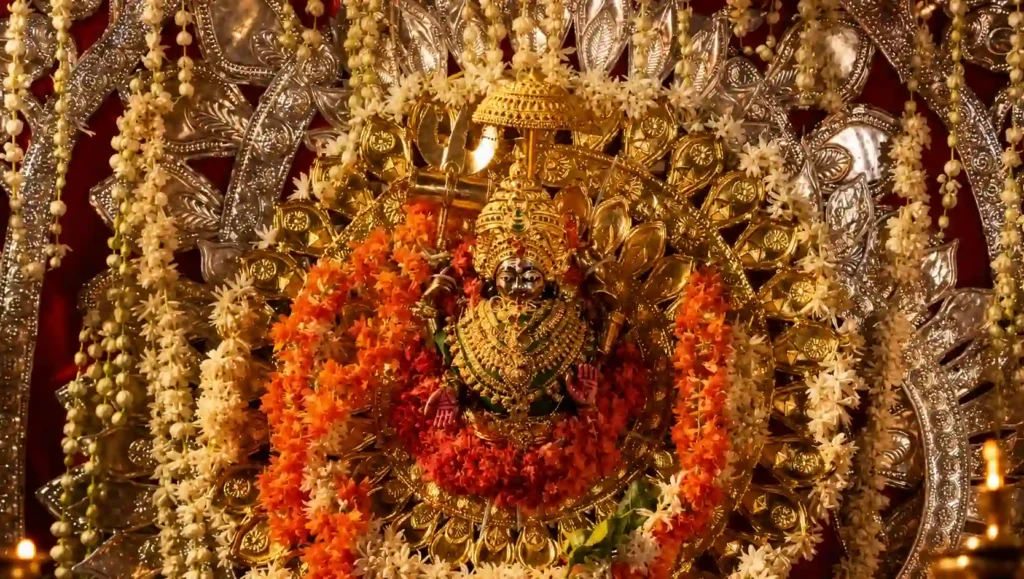
Thala Utha Ritual and Grand Barat Procession
Thala Utha Ritual
Preparations begin during:
Akshaya Tritiya
with the:
Thala Utha ritual
During this ceremony:
- Community members collect initial donations
- Organizing committees officially begin preparations
- Divine parental families are selected
This marks the ceremonial beginning of the wedding festivities.
The Grand Barat Procession
The most exciting part of the festival is:
The Barat (Wedding Procession)
On the wedding night:
- Lord Shiva rides a decorated Nandi (bull)
- Folk artists dance across streets
- Dhol and Mahuri music echo through the city
- Thousands join the procession joyfully
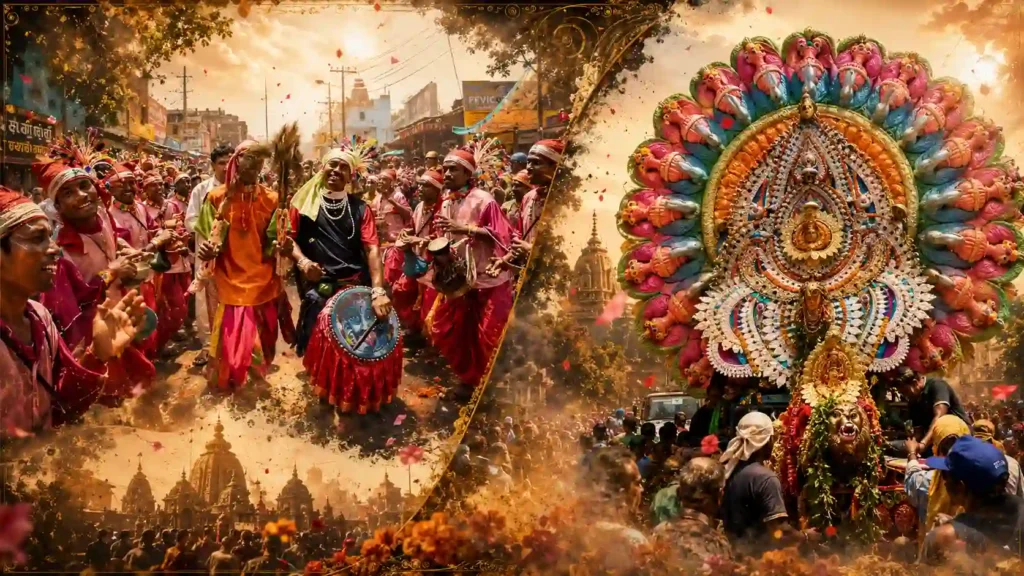
Folk Dances and Cultural Performances
The procession includes:
- Sambalpuri folk dance
- Ghanta dance
- Dulduli performers
- Paika martial artists
- Mythological tableaux
International cultural troupes also participate in modern celebrations.
Consequently, Sambalpur Sital Sasthi has become a major cultural tourism attraction.Sital Sasthi in Puri
In Puri, Sital Sasthi takes on a unique devotional identity closely linked with Jagannath culture.
The celebrations revolve around:
- Pancha Mahadeva temples
- Ancient Shaivite traditions
- Jagannath Temple rituals
The Dohala Ritual
One fascinating ritual in Puri is:
Dohala
The divine couple Jambeswara Mahadev and Mother Parbati is carried on:
A decorated dola Viman
while devotees rhythmically sway the viman through temple streets.
The movement symbolizes:
- Joy
- Celebration
- Divine harmony
Kanya Chori Ritual and Sital Sasthi in Bhubaneswar
Kanya Chori Ritual
A day before the wedding:
Kanya Chori
is performed symbolically.
This playful ritual reflects:
As the representative idols of Goddess Parvati is kept in the custody of a servitor whole year, Mahadev comes for the Kanya chori ritual and brings the bride Parbati with him.
Traditional dramatic storytelling before the formal marriage ceremony.Sital Sasthi in Bhubaneswar
In Bhubaneswar:
Ancient Shiva temples become spiritual centres during Sital Sasthi.
Lingaraj Temple Celebrations
At Lingaraj Temple:
Representative idols of Lord Shiva and Goddess Parvati are taken in procession to the wedding mandap.
The rituals preserve:
- Ancient Ekamra Kshetra traditions
- Classical Shaivite practices
Sital Sasthi in Cuttack and Khordha
In Cuttack:
Neighbourhood Shiva temples organize elaborate feasts and folk music performances.
Traditional:
Pana (sweet summer drink)
is distributed to devotees.
Meanwhile, in Khordha and nearby regions:
Paika Akhada martial traditions become part of the processions.
Important Places to Experience Sital Sasthi 2026
Nandapada, Sambalpur
- Strict adherence to ancient customs
- Traditional rituals
- Grand processions
Lokanatha Temple
- Hidden Shiva Lingam
- Ancient rituals
- Spiritual atmosphere
Kapilash Temple
Thousands carry sacred water uphill during Sital Sasthi celebrations.
Bargarh and Jharsuguda
- Massive tableaux
- Folk performances
- Decorative processions
My Personal Experience Witnessing Sital Sasthi
A few years ago, I witnessed Sital Sasthi in Sambalpur for the first time.
The city felt alive throughout the night.
As Lord Shiva’s Barat entered the streets:
- Drums thundered loudly
- Folk dancers moved energetically
- Devotees showered flowers from balconies
Yet amidst the grand celebration, there was something deeply emotional.
People truly behaved as if:
Their own daughter was getting married.
I still remember elderly women singing traditional wedding songs while children danced beside decorated tableaux.
The atmosphere felt neither purely religious nor purely cultural.
It felt:
- Personal
- Community-driven
- Spiritually joyful
Travel Guide for Sital Sasthi 2026
Festival Dates
- 19 June 2026 – Wedding Rituals
- 20 June 2026 – Homecoming Ceremony
Weather Conditions
Expect:
- Hot and humid weather
Carry:
- Cotton clothes
- Umbrella
- Water bottles
Accommodation Tips
If visiting Sambalpur:
Book hotels at least two months early because accommodations become fully occupied quickly.
How to Reach Sambalpur
By Rail
Well connected from:
- Bhubaneswar
- Raipur
- Kolkata
By Air
Nearest airports:
- Jharsuguda Airport
- Biju Patnaik International Airport, Bhubaneswar
Cultural Importance of Sital Sasthi
Sital Sasthi preserves:
- Folk traditions
- Community participation
- Ancient marriage customs
- Local performing arts
Moreover, it strengthens:
- Social unity
- Cultural identity
- Intergenerational heritage transfer
People Also Ask (FAQs)
1. When is Sital Sasthi 2026?
Sital Sasthi 2026 will be celebrated on 20 June 2026.
2. Why is Sital Sasthi celebrated?
It celebrates the divine marriage of Lord Shiva and Goddess Parvati.
3. Which city is famous for Sital Sasthi in Odisha?
Sambalpur is most famous for its grand Sital Sasthi carnival.
4. What is special about Sambalpur Sital Sasthi?
The divine wedding follows traditional human Odia marriage rituals with community participation.
5. What is the significance of “Sital” in Sital Sasthi?
“Sital” symbolizes cooling the earth, nature, and cosmic energy before monsoon arrival.Final Thoughts: Why Sital Sasthi 2026 Is a Festival of Emotion and Unity
In today’s fast-moving world, festivals like Sital Sasthi 2026 remind us that spirituality can still unite communities through joy, tradition, and shared emotion.
Here:
- Gods become family members
- Streets become wedding halls
- Entire cities become participants in divine celebration
Whether you experience:
- The grand carnival of Sambalpur
- The sacred rituals of Puri
- Or the temple traditions of Bhubaneswar
Sital Sasthi leaves behind:
- Peace
- Devotion
- Cultural admiration
- Emotional warmth
So this June, if you truly wish to witness Odisha beyond monuments and beaches, immerse yourself in the magical world of Sital Sasthi.
Listen to the Mahuri.
Watch the glowing processions.
Feel the rhythm of devotion.
And experience one of India’s most beautiful celebrations of divine love. Om Namah Shivaya!Trending Posts