Trip facts
Deity
Maa Narayani, ten-armed Durga
Location
Bhaleri hill near Khallikote, Ganjam
From Bhubaneswar
NH-16, about 2.5–3 hours
Nearest station
Balugaon, about 15 km
Festivals
Chaitra, Ashwina, Pana and Raja Sankranti
Best time
October to March
Narayani Temple at a glance
| Deity | Maa Narayani, ten-armed Mahishamardini Durga |
| Location | Narayani Khola, Bhaleri hill, near Khallikote, Ganjam district, Odisha |
| Landmark | Hill on the Puri–Ganjam district border, beside Chilika Lake |
| Nearest town and railway station | Balugaon (about 15 km by road) |
| Nearest airport | Biju Patnaik International Airport, Bhubaneswar |
| Turn-off | About 5 km west of the national highway (NH-16), on a paved road |
| Main festivals | Chaitra Parba, Ashwina Parba (Durga Puja), Pana (Mesha) Sankranti, Raja Sankranti |
| Natural feature | A perennial hill spring feeding two kunds |
| Best time to visit | October to March. Spring (Chaitra) and autumn (Ashwina) for the festivals |
Why visit Maa Narayani Temple
Narayani combines a living Shakti shrine with the landscape around Chilika. The road from the highway climbs into Narayani Khola, the part of Bhaleri hill where the goddess sits. The hill marks the boundary between Puri and Ganjam districts. Before Odisha became a province in 1936, the same line divided the Bengal and Madras presidencies.
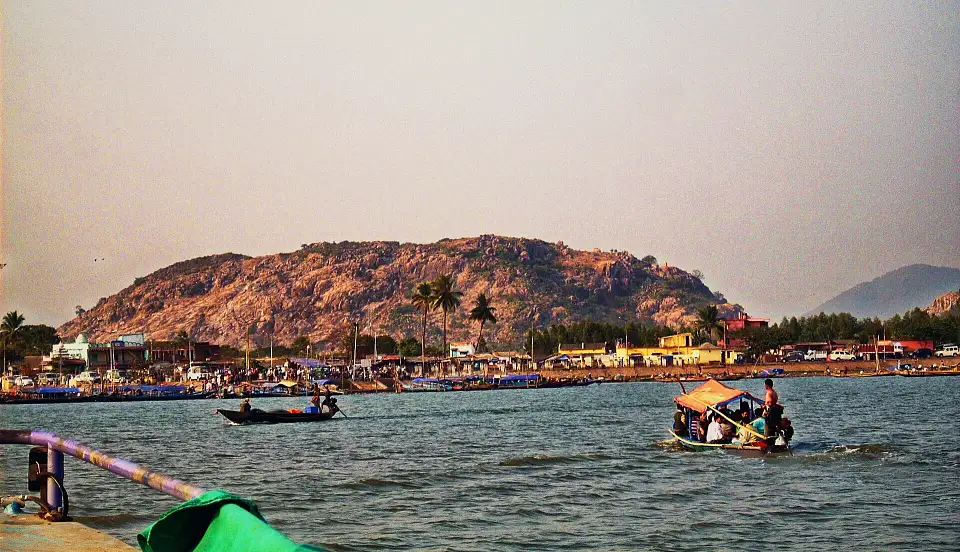
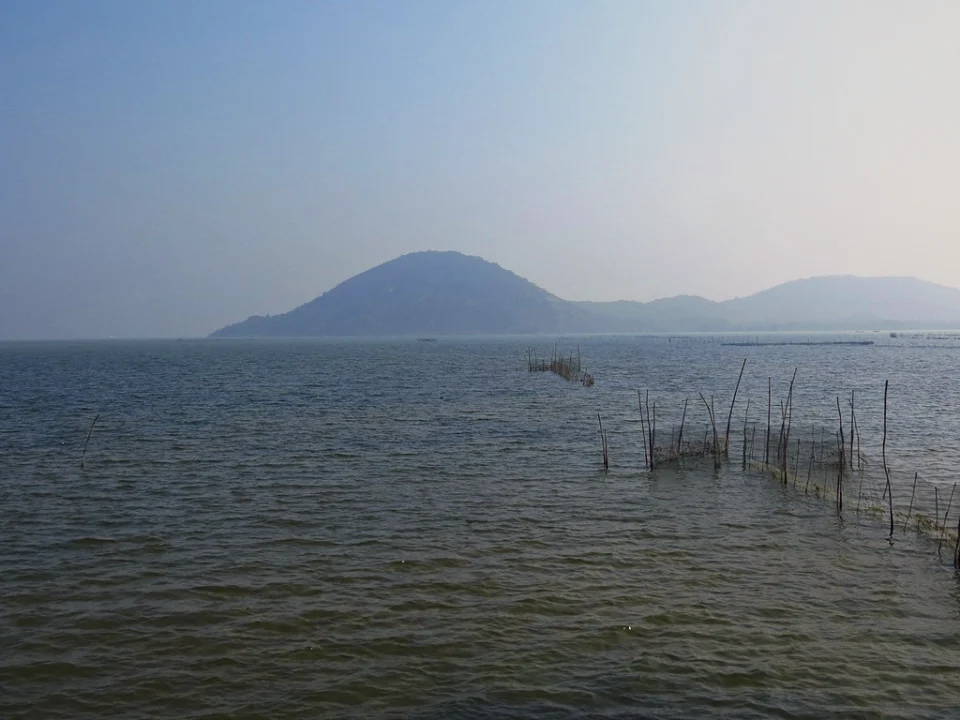
Ganjam district administration describes Narayani as a scenic spot in the lap of Vallery mountain in the Eastern Ghats and lists it as a Shakti peetha. Most visitors pair it with a boat ride on Chilika or a visit to Kalijai island.
History of Narayani Temple
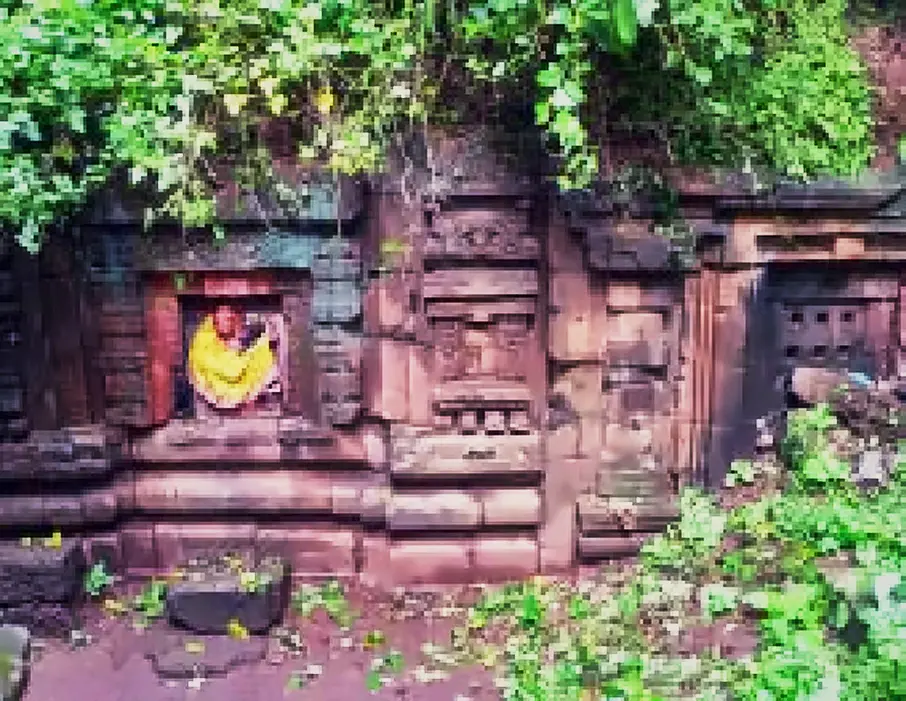
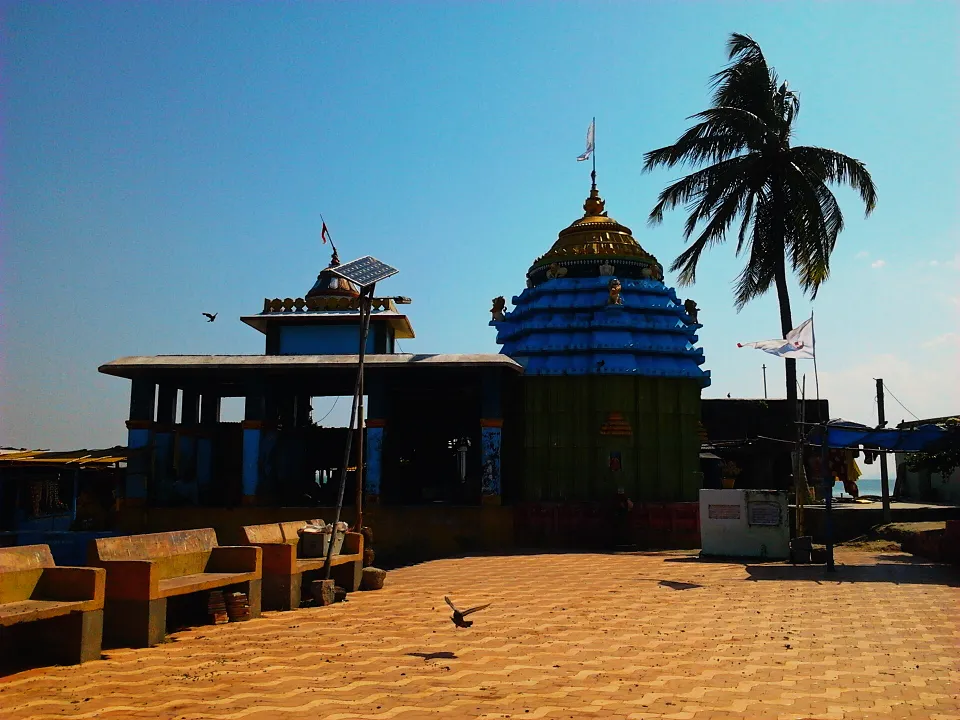
The shrine itself is small and plain, and no carving survives on the visible structure. According to the Odia source essay this article draws on, some people believe the site was once Buddhist and later became a seat of the goddess.
From the 17th century, Raja Balunkeswar of Khallikote is said to have endowed the daily bhoga (food offerings) of the goddess. The temple's Wikipedia entry, citing an Indira Gandhi National Centre for the Arts heritage survey, describes it as a Kalinga-style temple in Bakutagaon village near Khallikote.
The hill around the temple has changed a lot. The essay recalls dense forest full of wild animals, where pilgrims walked chanting the goddess's name for courage. It also remembers mango, jackfruit, areca, coconut and especially Ashoka trees, which kept the grove cool even in summer. Traders later stripped the Ashoka bark for medicine, and the forest thinned after zamindari was abolished. The Forest Department has since replanted the slopes, and the bare hill has turned green again.
The legend of the ten arms: why the priest is called "Debata"
The servitor of Maa Narayani carries the title Debata (deity). He is a Vedic Brahmin whose family once used the surname Satapathy. The essay records the local legend behind the title.
One day the priest Satapathy went to Raja Balunkeswar of Khallikote to ask for bangles for the goddess. The king was a scholar, a generous donor and a devotee. Someone had already told him that the priest was fond of bhang, didn't know the rituals and sold whatever was offered to the goddess.
The king asked how many bangles were needed. The priest, by mistake, asked for two more than Narayani's eight arms needed. The king knew the idol had eight arms but said nothing. He gave the bangles, along with silk and other offerings, and said he would come for darshan the next day.
Back at the shrine, the frightened priest begged the goddess for help. In a dream she told him not to fear and to let the king come. When the king and his courtiers arrived, they found the goddess had ten arms. Suspecting a trick, they examined the idol closely and found the two extra arms weren't attached. They had grown out of the original image.
The amazed king declared that the goddess had yielded to her devotee's faith, and that this priest was himself "Debata". From that day, the Satapathy family has been known by the title Debata.
The idol and the sacred spring
The essay calls the image of Maa Narayani exceptionally beautiful, the peak of the sculptor's art. It's worshipped as the ten-armed Mahishamardini. The goddess's right foot rests on the lion and her left foot presses down the buffalo demon Mahishasura. Her ten hands hold the sword, shield, thunderbolt, trident, arrow, bow, noose, conch, bell and lotus. That's the form described in the traditional dhyana (meditation verse) recited at the shrine.
A small, murmuring stream runs down the hill. The water is clear and considered healthy:
- Upper kund: Collects the spring water. Water for the goddess's bhoga is drawn only from here.
- Lower kund: Takes the overflow from the upper kund. Pilgrims bathe here.
Festivals at Narayani Temple
The essay singles out two seasons for the worship of the goddess:
- Chaitra (spring): The trees are in flower and fruit, and the harvest is in. The temple holds a major fair in Chaitra.
- Ashwina (autumn, Durga Puja): The rivers run clear, the skies are clean, and the paddy fields are full.
Crowds also peak on Pana (Mesha) Sankranti in April and Raja Sankranti in June. Pilgrims come from the old Banapur estate to the north, the Khallikote estate to the south, and across Ganjam and Puri districts. Animal sacrifice is part of local practice, and with Chilika so close, meat is widely cooked at the feasts held around the temple.
Devotees believe strongly in the goddess's healing power. The author of the essay writes that he knew of several patients with long-term illnesses who recovered after performing adhua (lying in vow before the goddess).
Our experience at Narayani Temple
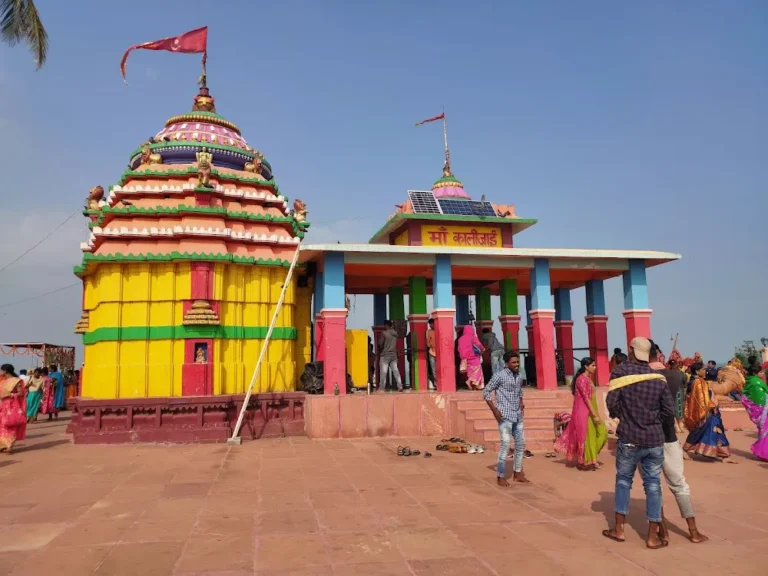
The road from the highway is short and paved, and the first sight of Bhaleri hill from Chilika's shore is still lovely. Once you reach the temple, though, it's hard to find the shrine the old essays describe.
The ancient temple is now hidden. Concrete houses, sheds and shops have been built right up against the shrine. Some were built with devotees' donations to shelter pilgrims, which was a real need. But the old stone of the temple is now wrapped in cement on almost every side. You can't step back and see its original shape. Its ancient texture, the thing that tells you this place is centuries old, is no longer visible.
Facilities for pilgrims are welcome. Development, though, shouldn't erase what people come to see. New buildings could be set back from the sanctum, kept low and finished in stone or laterite tones. The original walls could stay exposed and protected. Odisha has many temples where modern facilities sit comfortably beside ancient stone. Narayani deserves the same care.
Feast waste is spoiling the hill. Narayani is a popular picnic and feast spot, especially on Sankranti days and at weekends. After the cooking and eating, much of the waste is left behind outside the temple premises: leaf plates, plastic cups, water bottles, leftover food and the remains of slaughtered animals. It rots in the heat, draws flies and stray dogs, and some of it washes towards the spring and the kunds that pilgrims bathe in.
If you're coming for a feast, a few simple habits make a big difference:
- Bring two large bags, one for wet waste and one for dry waste, and take them back with you.
- Use the bins near the temple where they exist, and don't leave bags beside them if they're full.
- Never throw waste, food or meat scraps near the stream or the kunds.
- Choose reusable steel plates and glasses over plastic and thermocol.
- If you see waste near where you sit, pick it up even if it isn't yours.
The goddess's hill is a shared space. Leave it the way you'd want to find it.
How to reach Narayani Temple from Bhubaneswar
The national highway (NH-16) runs south from Bhubaneswar through Khurda and along Chilika's western shore to Balugaon and on to Berhampur. Near the Puri–Ganjam border, the line between the two districts runs from Bhaleri hill down through the Chhatragarh ghati to the edge of Chilika. Turn west at the signboard for Narayani and drive about 5 km on a paved road to the temple.
- By car: Take NH-16 from Bhubaneswar towards Berhampur, past Balugaon, then follow the Narayani turn-off. Allow about 2.5–3 hours each way. It's a comfortable day trip, and any car can manage the paved approach road.
- By train: Balugaon is the nearest railway station, about 15 km away, on the Howrah–Chennai main line. Take an auto or taxi from the station.
- By air: Biju Patnaik International Airport in Bhubaneswar is the nearest airport.
Best time to visit Narayani Temple
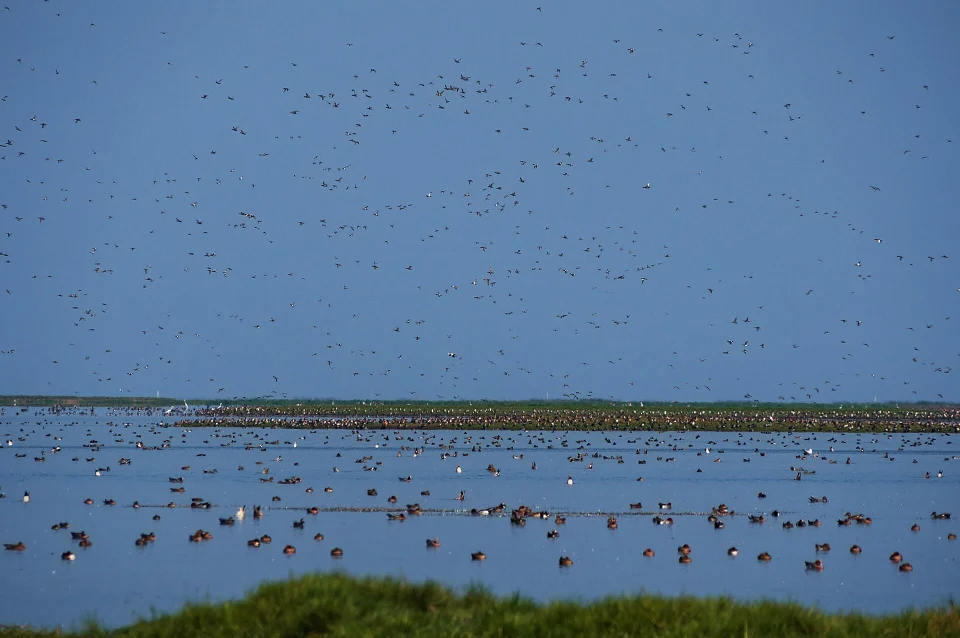
- October to March: Cool, dry weather and the clearest views over Chilika. Migratory birds arrive at the lake in winter, so you can combine a bird-watching trip.
- Chaitra (March–April) and Ashwina (September–October): Festival seasons with large crowds.
- April to June: Hot, but the spring keeps the grove around the temple a little cooler.
- Monsoon: The hill is at its greenest. Drive carefully on wet roads.
For a quieter darshan, go on a weekday morning and avoid Sankranti days.
Places to visit near Narayani Temple
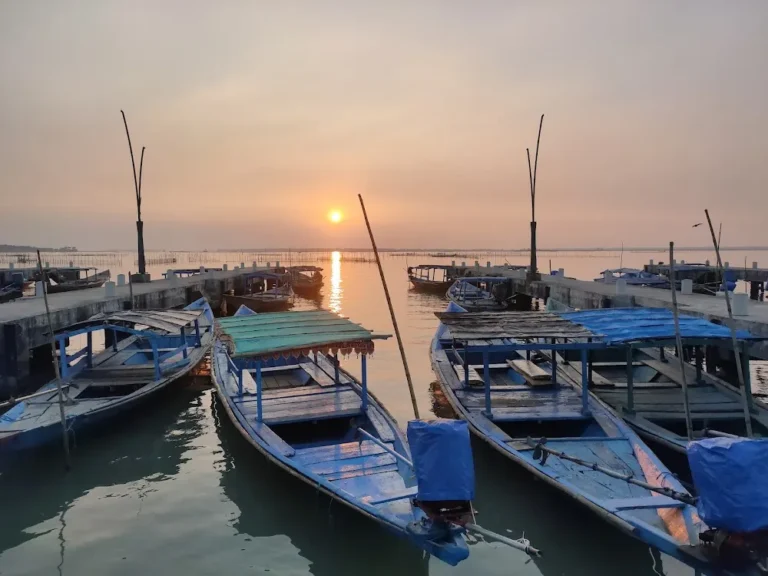
- Chilika Lake: Asia's largest brackish-water lagoon. Take a boat from Balugaon or Barkul.
- Kalijai Temple: An island shrine in Chilika and the protector deity of the boatmen.
- Nalabana Bird Sanctuary: Winter home for migratory birds inside Chilika.
- Barkul and Rambha: Lakeside stops with boat rides and OTDC accommodation.
Two simple trip plans
Day trip from Bhubaneswar
- 6:30 am: Leave Bhubaneswar on NH-16.
- 9:30 am: Darshan at Narayani, a walk to the spring and the kunds.
- 12:00 pm: Lunch in Balugaon.
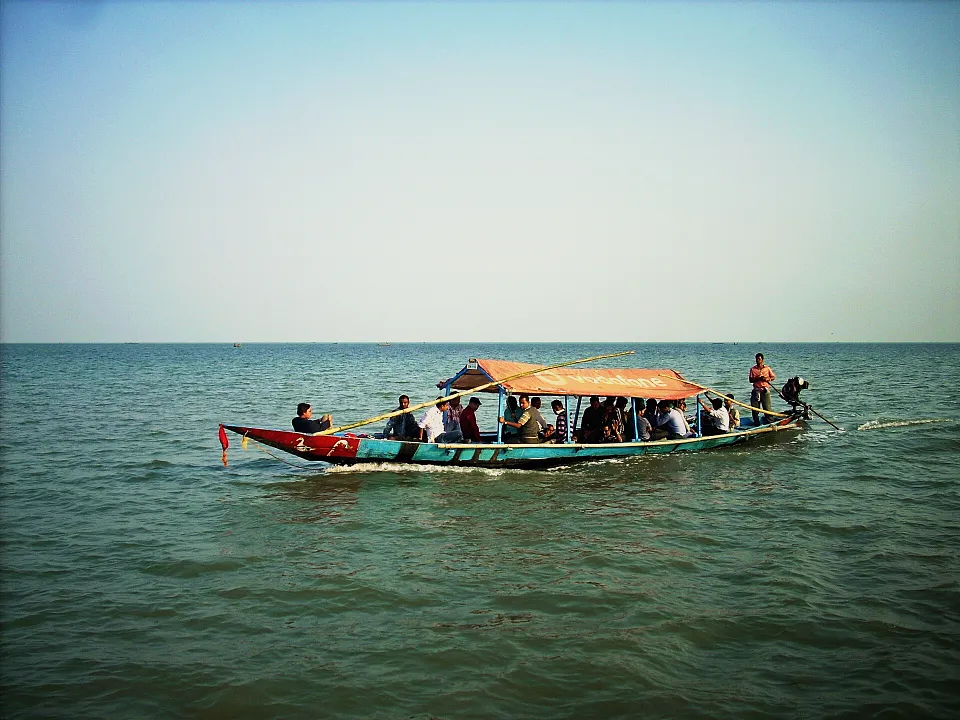
- 1:30–4:00 pm: Boat ride on Chilika from Balugaon or Barkul (Kalijai island if time allows).
- 4:30 pm: Drive back to Bhubaneswar.
Overnight version: Stay at Barkul or Rambha, see sunset over Chilika, and visit Narayani early the next morning before the crowds arrive.
Visitor tips
- Dress modestly and leave footwear at the marked spot before entering the shrine.
- Carry cash for offerings and local shops.
- Leave the upper kund untouched: its water is reserved for the goddess's bhoga.
- Bring a refillable water bottle and a bag for your waste.
- Expect large crowds and slow parking on Sankranti and festival days.
Plan your Narayani and Chilika drive
Narayani is an easy, rewarding drive from Bhubaneswar: a hill shrine with a living legend, a clear spring and Chilika at its feet. Book a self-drive car with Localdrive, pair the temple with a boat ride on the lake, and take your waste home with you.
Frequently asked questions
Where is Narayani Temple located?
Narayani Temple is in Narayani Khola on Bhaleri (Vallery) hill, near Khallikote in Ganjam district, Odisha. It's about 15 km by road from Balugaon and about 5 km west of NH-16. The hill sits on the border between Puri and Ganjam districts, close to Chilika Lake.
Which goddess is worshipped at Narayani Temple?
The temple's deity is Maa Narayani, a ten-armed form of Mahishamardini Durga. She is shown standing on the lion and crushing the buffalo demon Mahishasura, holding weapons including a sword, trident, bow, conch and lotus.
Why does Maa Narayani have ten arms?
Local legend says the idol once had eight arms. A priest mistakenly asked the Khallikote king for ten bangles, and when the king came to check, he found two extra arms had grown from the original idol. The king then gave the priest's family the title "Debata".
How do I reach Narayani Temple from Bhubaneswar?
Drive south on NH-16 towards Berhampur, past Balugaon, then turn west at the Narayani signboard and drive about 5 km on a paved road. The trip takes about 2.5–3 hours each way. By train, get off at Balugaon station and take a taxi or auto for the last 15 km.
What is the best time to visit Narayani Temple?
October to March has the most pleasant weather and good views of Chilika. For festivals, visit during Chaitra (March–April) or Ashwina Durga Puja (September–October). Pana Sankranti and Raja Sankranti draw the largest crowds, so choose a weekday if you want a quiet visit.
Is there a water spring at Narayani Temple?
Yes. A perennial spring flows down Bhaleri hill into two kunds. Water from the upper kund is used only for the goddess's offerings, and the overflow collects in the lower kund, where pilgrims bathe.
What can I see near Narayani Temple?
Chilika Lake is right next to it. You can take a boat from Balugaon or Barkul, visit Kalijai island temple, see migratory birds at Nalabana Bird Sanctuary in winter, or stay at Barkul or Rambha on the lake shore.
Photos: Wikimedia Commons, colour-graded by LocalDrive. By Dr. Sadasiba Pradhan (Free Art License); Ckpcb (CC BY-SA 3.0); Ckpcb (CC BY-SA 3.0); Aruni Nayak (CC BY-SA 3.0); Mike Prince from Bangalore, India (CC BY 2.0); Soumyadeep Chatterjee from Siliguri, India (CC BY-SA 2.0).
Related guide: Browse more Shakti temples of Odisha.