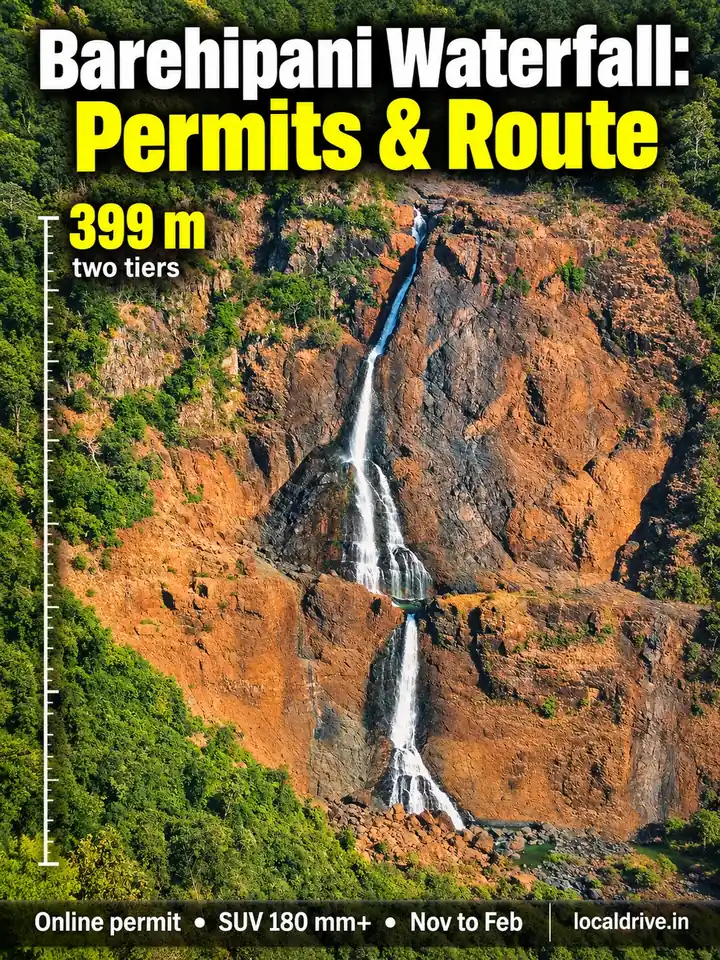
Trip facts
Location
Similipal Tiger Reserve, Mayurbhanj
Height
About 399 m in two tiers
From Bhubaneswar
About 250 km, 5–6 hours
Permit
Online at similipal.org
Vehicle
SUV with 180 mm+ ground clearance
Best time
November to February
Barehipani Waterfall at a glance
| Location | Similipal Tiger Reserve, Mayurbhanj district, Odisha |
| Height | ~399 m (1,309 ft) in two tiers. The tallest single drop is ~259 m |
| River | Budhabalanga |
| Season | Usually 1 November to 15 June. Closed during the monsoon |
| 2026–27 season | Reopened 1 November 2026 |
| Entry gates | Kaliani gate, Jashipur (entry 5–9 am) and Pithabata/Lulung gate, Baripada (entry 8–9 am) |
| Waterfall cut-off | Leave Barehipani and Joranda by 4 pm. Exit the reserve by 6 pm |
| Permit | Advance booking on similipal.org. ID needed at the gate |
| Vehicle | Four-wheeler with ≥180 mm ground clearance (4WD preferred). Sedans and hatchbacks aren't allowed |
| Guide | Mandatory for every vehicle |
| Distance from Bhubaneswar | ~250 km to either gate |
| Best time | November to February |
Why Barehipani is worth the trip
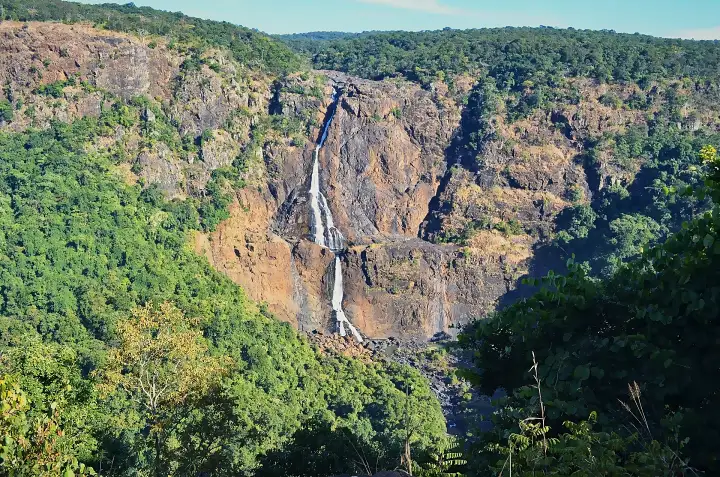
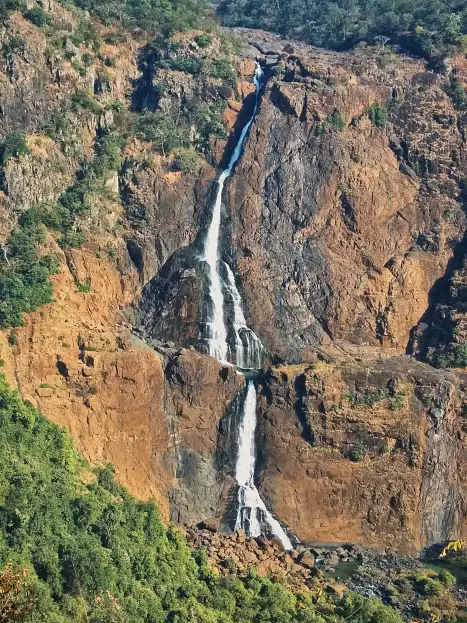
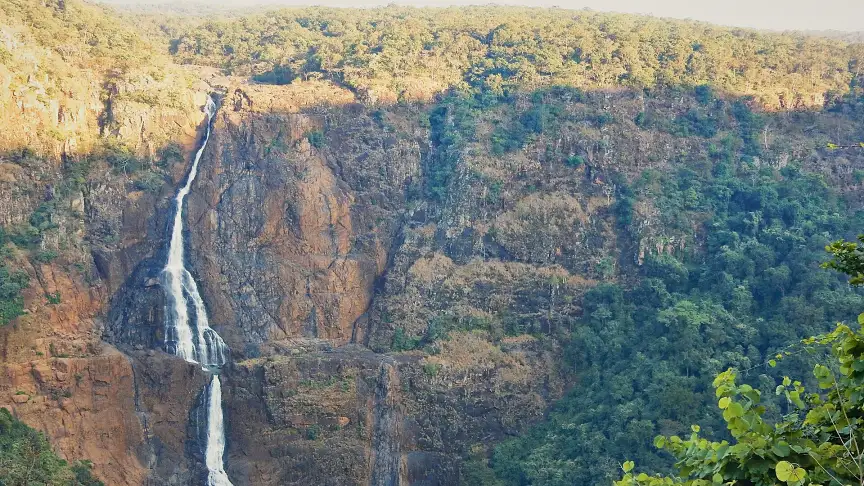
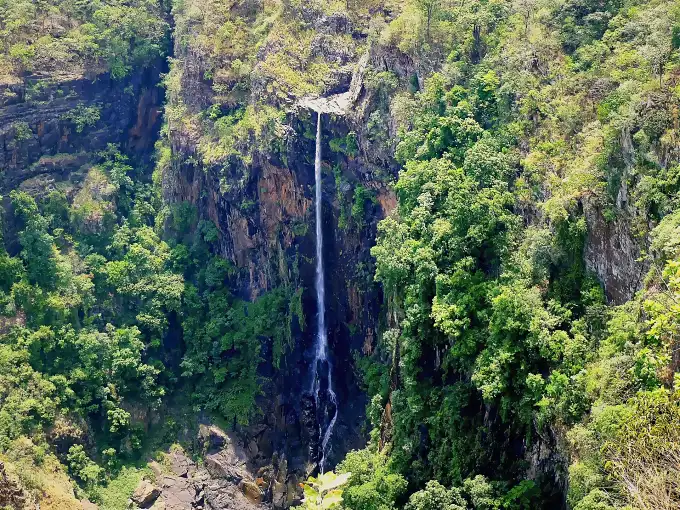
Barehipani is one of the tallest waterfalls in India. According to Incredible India, it is Odisha's tallest waterfall, with two tiers dropping about 399 m. The World Waterfall Database figures quoted on Wikipedia give the tallest single drop as about 259 m. Rankings vary by source: some lists call it India's second-highest waterfall, after Kunchikal Falls in Karnataka, and others place it lower.
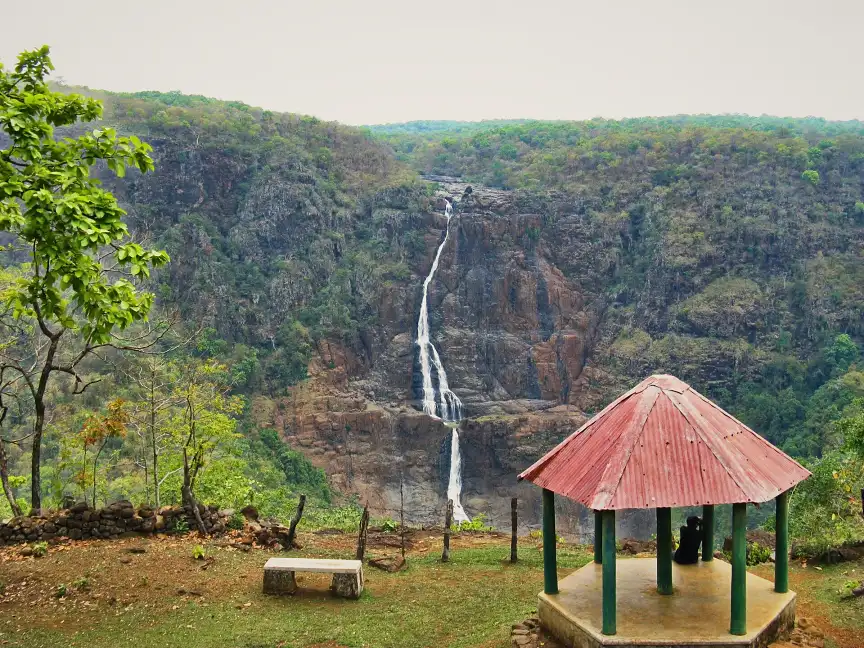
According to the Similipal Tiger Reserve website, the name comes from the local word barehi, meaning rope, because that's what the falls look like from across the valley. The Budhabalanga River runs out of the gorge below and down to the plains.
You don't walk to the base. Visitors watch from a viewing platform on the opposite side of the valley. One traveller who drove there in February 2026 heard the roar of the falls from the platform and saw the late-afternoon sun light up the far mountainside. Barehipani is also the image that represents Similipal in the reserve's printed brochure.
Barehipani Waterfall height and facts
- Total height: about 399 m (1,309 ft). Odisha Tourism uses the same 1,309 ft figure.
- Type: tiered, with two main drops.
- Tallest single drop: about 259 m (850 ft).
- River: Budhabalanga.
- Coordinates: 21.9336° N, 86.3803° E.
- Protected area: Similipal Tiger Reserve, part of the UNESCO World Network of Biosphere Reserves, in the Similipal Hills of the Eastern Ghats.
- Nearby falls: Joranda (about 181 m, a single straight drop) and Uski.
Similipal 2026–27 rules for visiting Barehipani
The rules below come from the Similipal Tiger Reserve notice for the 2026–27 season and the reserve's terms and conditions. They can change at short notice, so check similipal.org before you leave.
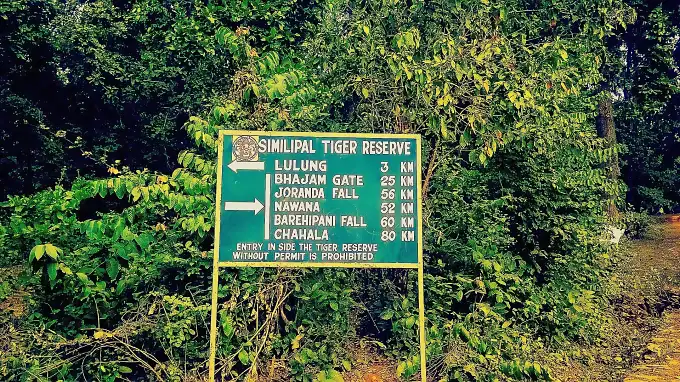
- Daily vehicle cap: 60 four-wheelers a day. 35 enter through the Kaliani gate at Jashipur and 25 through the Pithabata (Lulung) gate at Baripada. If you plan to arrive at the gate and book there, you may find the quota already full.
- Entry windows: 5–9 am at Jashipur and 8–9 am at Pithabata. If you miss the window, you don't get in that day.
- Exit times: Leave Joranda and Barehipani by 4 pm and the reserve by 6 pm. Night driving isn't allowed.
- Permits: For 2026–27, the official notice says entry permits are available through www.similipal.org only. The reserve's form says a printed ticket must be produced at the gate. Carry photo ID for every traveller, because each traveller also signs an undertaking to follow the rules.
- Vehicle rule: Vehicles must be light motor vehicles with ground clearance of 180 mm or more. 4WD is preferred. Buses, trucks, sedans and hatchbacks aren't allowed. The vehicle's capacity has to include the driver and the guide.
- Documents: Vehicle registration and a driving licence are mandatory at the gate, and soft copies are accepted.
- Guide: A nature guide is mandatory for each vehicle. The guide fee is charged on top of the entry fees.
- Checks: Vehicles, passengers and luggage are checked at both entry and exit.
- Not allowed: Drones, alcohol and littering. Bring your own bag for non-biodegradable waste. The reserve's entry form also bans non-vegetarian food inside, but the community canteen at Barehipani sells non-veg meals, so check before you pack food.
- Cameras: An amateur still camera costs ₹50 for Indians and ₹100 for foreign nationals. Professional still cameras cost ₹1,000 and ₹2,000, according to the official booking form.
- Entry fee: News reports from recent seasons put the visitor entry fee at ₹100 per person. Vehicle and guide fees are charged on top of that. Confirm the current amounts on the booking page.
How to reach Barehipani Waterfall from Bhubaneswar
According to Similipal's own distance table, both entry gates are about 250 km from Bhubaneswar: about 252 km to Jashipur and 250 km to Baripada.
| Route | Distance from Bhubaneswar | Approx. drive time | Entry window | Best for |
|---|---|---|---|---|
| Via Baripada → Pithabata (Lulung) gate | ~250 km | 5–6 hrs to Baripada | 8–9 am | NH-16 the whole way, then a short hop from Baripada |
| Via Keonjhar → Jashipur (Kaliani) gate | ~252 km | 5.5–6.5 hrs to Jashipur | 5–9 am | A longer entry window, and the Keonjhar waterfalls on the way |
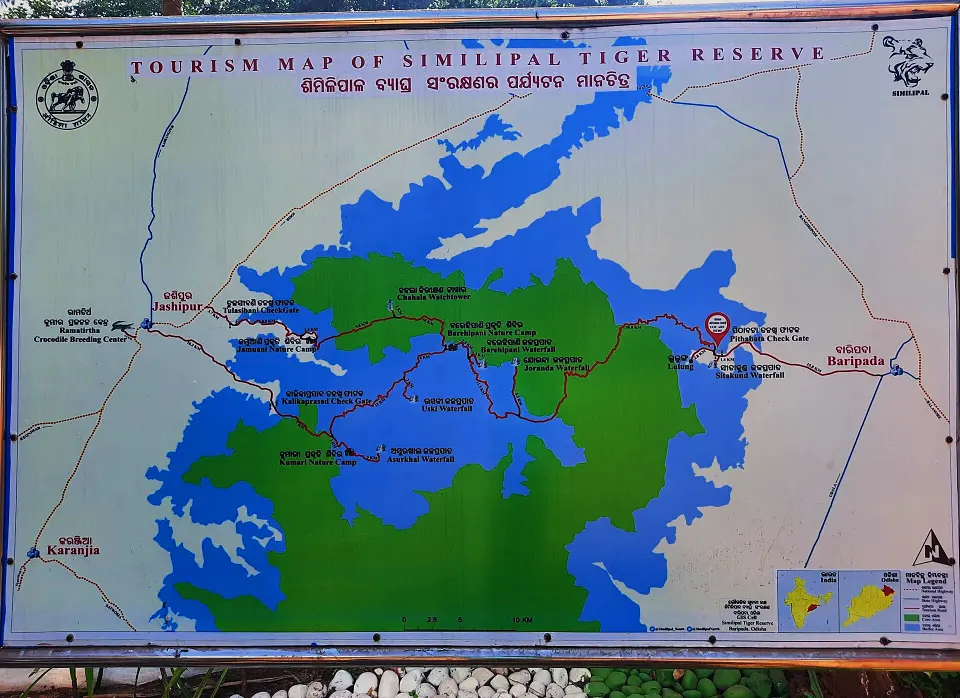
By car via Baripada: Take NH-16 north through Cuttack, Bhadrak and Balasore, then turn off towards Baripada. The Pithabata gate is just outside Baripada town. Because entry closes at 9 am, stay overnight in Baripada and reach the gate by 8 am.
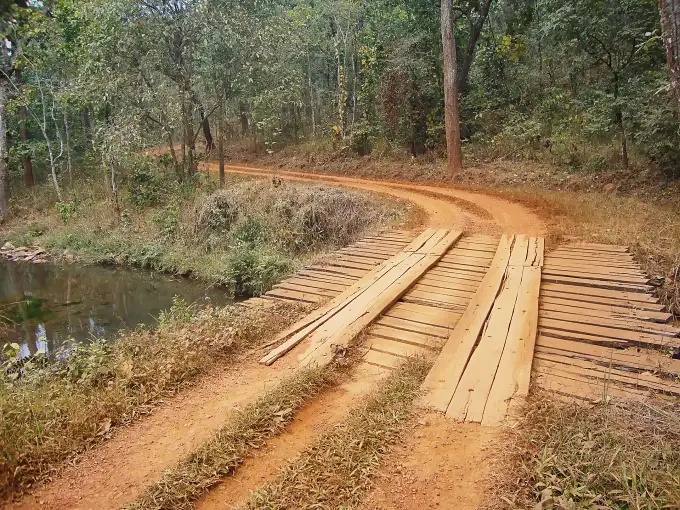
By car via Jashipur: Head north through Cuttack to Panikoili, then follow the Keonjhar highway to Jashipur on NH-49. The Kaliani gate is a short drive from Jashipur junction. One self-driver in February 2026 needed about two hours from Keonjhar to Jashipur. Inside the reserve, the tarmac ended at the gate and the red-earth road was rough and rutted, so expect about 20 km/h.
By train: Baripada is the nearest railhead on the Bhubaneswar side. Badampahar, about 18 km from Jashipur, is closer to the Jashipur gate, but it's linked mainly with Tatanagar.
By air: Bhubaneswar's Biju Patnaik airport is about 242–254 km from the gates. Kolkata (about 230 km from Baripada) and Ranchi are alternatives if you're coming from out of state.
Can you do Barehipani as a day trip from Bhubaneswar? In practice, no. The gates stop letting vehicles in at 9 am and Bhubaneswar is 5–6 hours away, so you'd have to leave around 2 am. Spend the night in Baripada or Jashipur before you go in, or book a night inside the reserve.
Which car can you take into Similipal?
This is where most first-time visitors get caught out. A hatchback or sedan won't be let in, even if you have a permit. You need:
- An SUV or MUV with at least 180 mm of ground clearance. The reserve says 4WD is preferable, and its visitor page goes further, saying private vehicles "should ensure" 4WD.
- Enough seats for the guide. The guide counts against the vehicle's registered seating capacity, so a 5-seater can take only three passengers plus the driver and the guide.
- Documents: The registration certificate and the driver's licence. Soft copies are accepted.
The February 2026 traveller described graded but badly rutted roads. He drove along the ridges to keep the middle of the car off the ground, and said the core-area roads are rougher still. Mobile signal is patchy, so download offline maps before you enter.
If you don't want to drive inside, the reserve runs 12-seater safari vehicles. You can book one on similipal.org or ecotourodisha.com before 7 am on the day of your visit, or at the gate after that.
Where to stay near Barehipani
- Barehipani Nature Camp (inside the reserve): This OFDC-run camp has well-built cottages and is about 5 km from the waterfall viewpoint. The February 2026 visitor reached the viewpoint by a steep descent through deep forest, had no mobile signal and spent the evening watching a clear night sky. Book on similipal.org or ecotourodisha.com. The package includes food and lodging.
- Other nature camps inside the reserve: Gurguria, Kumari, Jamuani and Ramatirtha, plus the Talabandha lodge listed in the 2026–27 notice.
- Outside the reserve: Baripada has OTDC accommodation and town hotels, which suit an early start at the Pithabata gate. Jashipur suits the Kaliani gate.
Night stays inside are popular in December and January, so book as soon as you know your dates.
Best time to visit Barehipani Waterfall
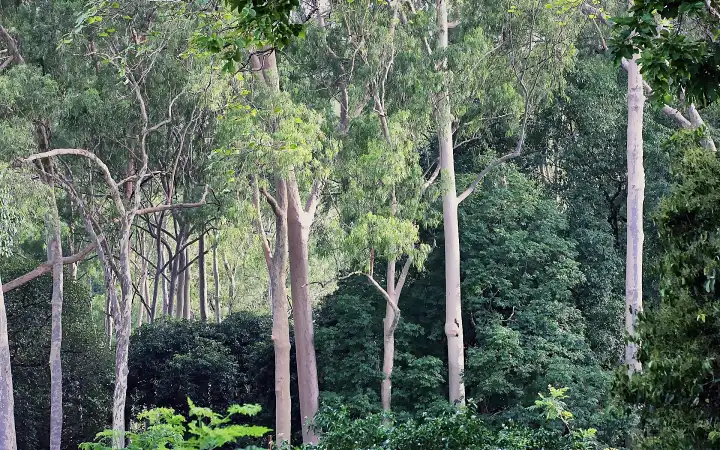
The reserve is usually open from 1 November to 15 June, and the Similipal website recommends November to the end of February for Barehipani. In those months, the falls still carry plenty of post-monsoon water, the air is cool and the forest roads are dry.
- November–February: The best months, with strong flow and pleasant days. Evenings inside the reserve get chilly, so pack a jacket.
- March–mid-June: It gets hotter and the waterfall thins out, but there are fewer visitors.
- Monsoon: The reserve is closed. In 2025 it closed on 30 June and reopened on 18 October.
The Field Director announces the opening and closing dates each season, so check them before you plan around the edges of the season.
Things to do around Barehipani
- Joranda Waterfall: About 181 m high and a single straight drop. It's the usual pairing with Barehipani, and the same 4 pm cut-off applies. It can be more than 30–40 km from Barehipani by forest road, so allow a few hours for the round trip.
- Uski Waterfall: A smaller cascade. Check the trail details with your guide, because the trailhead is easy to miss.
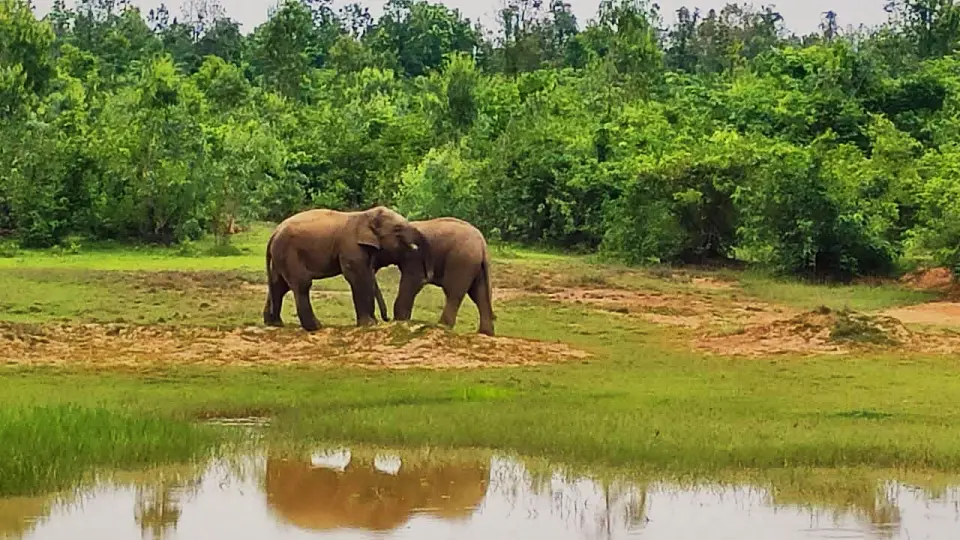
- Wildlife drive: You might see elephants, gaur, deer and Similipal's birdlife. The February 2026 traveller warned that sightings from the road are rare without a proper safari.
- Outside the reserve: Ramatirtha, Lulung and the dams around Baripada, including Kalo, Haldia and Jambhira.
Two-day self-drive itinerary: Bhubaneswar → Baripada → Barehipani → Bhubaneswar
All times are approximate. Book your permit and, if you're staying inside, your camp before you set off.
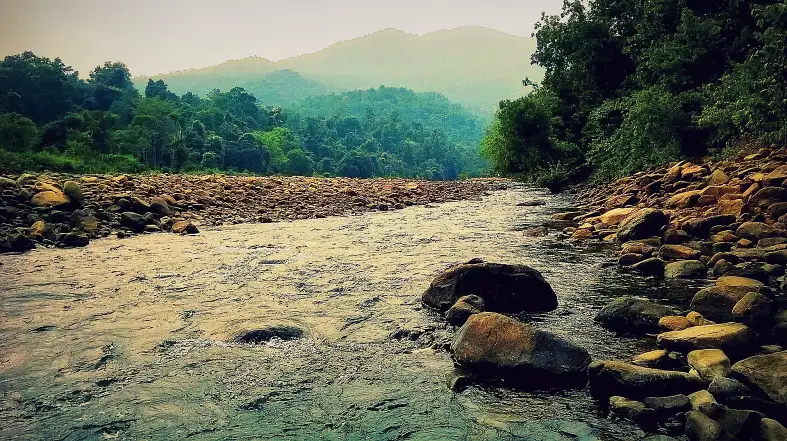
Day 1: Drive to Baripada
- Late morning: Leave Bhubaneswar on NH-16 towards Cuttack, Bhadrak and Balasore.
- Afternoon: Lunch on the highway, then continue to Baripada (about 5–6 hours of driving in total).
- Evening: Check in, print your permit and refuel. Pack water, snacks and a litter bag for the next day.
Day 2: Barehipani and back
- 6:30 am: Leave Baripada for the Pithabata (Lulung) gate.
- 8:00 am: Gate checks, ID verification and pick up your guide.
- 8:30 am–12:30 pm: Drive slowly through the reserve towards Barehipani, watching for wildlife.
- 12:30 pm: Lunch at the Barehipani canteen. Pre-book it: a veg meal is ₹130 and a non-veg meal ₹200.
- 1:30–3:30 pm: The Barehipani viewpoint. Leave by 4 pm.
- 4:00–6:00 pm: Drive back to the gate before the 6 pm exit deadline.
- Evening: Stay another night in Baripada, or drive back to Bhubaneswar if you're fresh. Night driving on the highway is tiring, so the extra night is the safer choice.
More relaxed version: Book a night at Barehipani Nature Camp. You see the falls in the late-afternoon light, stay overnight in the forest and visit Joranda the next morning.
Safety and responsible travel tips
- Stay on the marked roads, and get out of the vehicle only where your guide says it's allowed.
- Wear dull colours. Bright clothes can startle wildlife.
- Don't fly drones, play loud music or feed animals.
- Don't try to climb down towards the falls from unofficial points. One traveller writing on the Odisha Tourism blog found a viewpoint on the way down that visitors aren't allowed to go down to.
- Fill up with fuel in Baripada or Jashipur. There are no fuel stations inside the reserve.
- Take out all the plastic and other non-biodegradable waste you bring in.
Plan your Similipal drive
Barehipani rewards the long drive, but only if you plan it properly: book your permit early, reach the gate before the entry window closes and go in a car that clears 180 mm. Book a self-drive SUV with Localdrive, plan two days and make the most of Odisha's highest waterfall.
Frequently asked questions
What is the height of Barehipani Waterfall?
Barehipani Waterfall is about 399 m (1,309 ft) high and falls in two tiers. Its tallest single drop is about 259 m. That makes it the highest waterfall in Odisha, and it's often listed as India's second-highest waterfall by total height, though rankings vary between sources.
Where is Barehipani Waterfall located?
Barehipani Waterfall is inside Similipal Tiger Reserve in Mayurbhanj district, northern Odisha. It's on the Budhabalanga River in the Similipal Hills. You enter the reserve through the Pithabata (Lulung) gate near Baripada or the Kaliani gate near Jashipur. Both are about 250 km from Bhubaneswar.
How do I reach Barehipani Waterfall from Bhubaneswar?
Drive about 250 km on NH-16 to Baripada and enter through the Pithabata gate, or about 252 km via Keonjhar to the Jashipur gate. The drive takes about 5–6 hours. Because the gates admit vehicles only until 9 am, stay overnight in Baripada or Jashipur and enter the next morning.
Is Similipal open now, and what are the timings?
Yes. Similipal reopened for the 2026–27 season on 1 November 2026 and usually stays open until mid-June. Vehicles enter between 5 and 9 am at Jashipur and between 8 and 9 am at Pithabata. Visitors must leave Barehipani and Joranda by 4 pm and the reserve by 6 pm.
Do I need a permit to visit Barehipani Waterfall?
Yes. For 2026–27, the official notice says entry permits must be booked in advance on www.similipal.org. Every traveller needs photo ID at the gate, every vehicle needs a nature guide and the vehicle's registration and the driver's licence are checked. Only 60 vehicles are allowed in each day.
Can I take my own car to Barehipani Waterfall?
Yes, if it's an SUV or MUV with at least 180 mm of ground clearance. 4WD is preferred. Sedans and hatchbacks aren't allowed inside Similipal. The guide counts against your vehicle's seating capacity, so leave a seat free, and carry the registration certificate and your driving licence.
What is the best time to visit Barehipani Waterfall?
November to February is the best time to visit. The falls carry strong post-monsoon flow, the weather is cool and the forest roads are dry. Similipal is usually open from 1 November to 15 June and closed during the monsoon. Expect a thinner waterfall and hotter days from March onwards.
Can I stay near Barehipani Waterfall?
Yes. The OFDC-run Barehipani Nature Camp is inside the reserve, about 5 km from the viewpoint. Book it online at similipal.org or ecotourodisha.com. Other nature camps are at Gurguria, Kumari, Jamuani and Ramatirtha. Outside the reserve, Baripada and Jashipur have hotels for an early start.
Can you swim or go down to the base of Barehipani Waterfall?
No. Visitors see Barehipani from an official viewing platform across the gorge. Bathing isn't permitted, and you can't climb down to the base. Stay on the marked roads and get out of your vehicle only at points your guide says are allowed.
Photos: Wikimedia Commons, colour-graded by LocalDrive. By Nihar.race (CC BY-SA 4.0); Samarth Joel Ram (CC BY-SA 3.0); Pramita Mukherjee (CC BY-SA 4.0); Byomakesh07 (CC BY-SA 4.0); MaxA-Matrix (CC BY-SA 4.0); Debasmitag (CC BY-SA 4.0); Toni Wöhrl (CC BY-SA 4.0); Adya1996 (CC BY-SA 4.0); Toni Wöhrl (CC BY-SA 4.0); Byomakesh07 (CC BY-SA 3.0); dibyaranjan giri (CC BY-SA 4.0).
Related guide: Browse more waterfalls in Odisha.