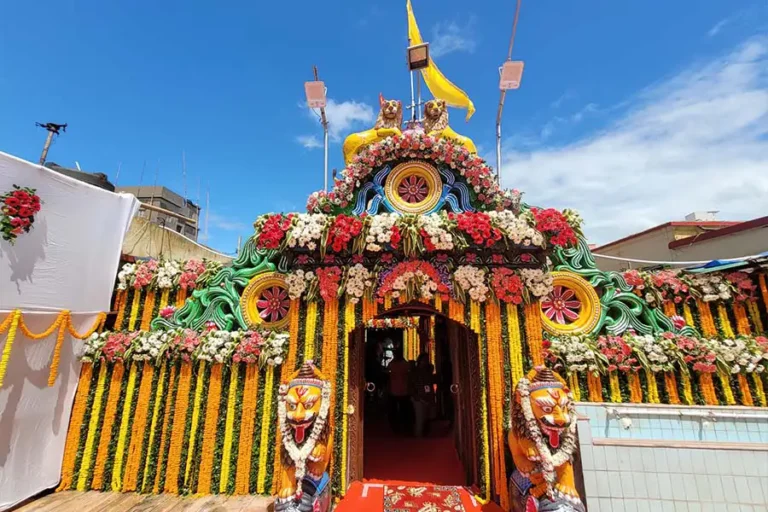
Trip facts
Deity
Lord Shiva as Amareswar Mahadev
Location
Mani Sahu Chhak, Buxi Bazaar, Cuttack
From Bhubaneswar
30–35 km, about 45–75 minutes
Nearest station
Cuttack, about 1–2 km
Festivals
Maha Shivaratri, Shitala Sasthi
Best time
October to February
In the heart of Cuttack, amid busy roads, neighbourhood markets and the everyday rhythm of city life, stands a temple that carries stories far older than the streets surrounding it.
Amareswar Temple, situated near Buxi Bazaar, is an important Shiva shrine associated with local history, fascinating legends and centuries of religious traditions.
Unlike Odisha's grand temple complexes, celebrated for their monumental stone carvings and elaborate architecture, Amareswar Temple offers a different kind of heritage experience. Its significance lies in its sacred traditions, unusual architectural features, fascinating religious structures and the stories preserved by generations of devotees.
One of the most interesting aspects of this temple is its association with the Somavanshi period, its legendary discovery through a cowherd's experience and the remarkable Ramayana Pillar that preserves one crore inscriptions of Lord Rama's name.
For travellers exploring Cuttack beyond its well-known landmarks, Amareswar Temple offers an opportunity to discover a lesser-known dimension of Odisha's spiritual and cultural heritage.
The History of Amareswar Temple: How Old Is This Shrine?
The exact construction date of Amareswar Temple has not yet been established through conclusive archaeological research. However, historical interpretations and local traditions suggest that the shrine could be several centuries old.
According to the historical account documented in the Odia source material, there are two prominent views regarding its origin:
- Some believe the temple dates back to the 9th century CE.
- Others associate its origins with the 11th century CE.
The temple's origins have also been discussed in connection with the Somavanshi or Kesari rulers of Odisha, who ruled from the late 9th to the late 11th century and patronised Shaivism and temple construction.
An interesting historical interpretation is offered by the temple priest, Shri Fakir Mohan Dash, who associates the temple with Mukundadeva, regarded in the source as Odisha's last Hindu emperor.
However, the original architectural style of Amareswar Temple differs considerably from the monumental stone temples of Bhubaneswar, Puri and Konark. This makes a definitive attribution to a particular dynasty or ruler difficult.
What makes this shrine particularly interesting is that its present appearance may have evolved through several phases of construction, renovation and religious patronage.
The source also mentions two small shrines in front of the main temple, containing the worshipped footprints of its first Mahant. These structures suggest the important role played by religious institutions and Mahants in preserving and developing the temple complex.
The temple's association with the Gopal Tirtha Math of Bali Sahi, Puri, is another significant part of its institutional history.
Heritage insight: Amareswar Temple reminds us that the history of a religious monument is not always limited to the date of its construction. Its continuing traditions, renovations, religious institutions and community participation are equally important to understanding its heritage.
The Legend of Amareswar: The Cow, the Cowherd and the Divine Shiva Lingam
Every ancient temple has a story that connects its sacred identity with the beliefs of its devotees. At Amareswar Temple, one such fascinating legend explains the divine appearance of Lord Shiva.
According to local folklore, the area around present-day Buxi Bazaar was once covered by dense forest. Cattle belonging to a king were regularly taken there for grazing.
One day, the cowherd noticed something unusual. A particular cow, despite being healthy and full of milk, was returning from grazing without producing any milk.
Curious about this strange occurrence, the cowherd decided to follow the animal.
What he witnessed left him astonished.
The cow would stand over an anthill at a particular location and spontaneously release its milk onto it. This happened repeatedly.
Unable to understand the phenomenon, the cowherd and his companions decided to dig into the anthill. When they struck it with their digging tools, blood reportedly began flowing from the spot.
On further excavation, they discovered a divine manifestation of Mahashambhu, a Shiva Lingam associated with a Hiranyagarbha form.
According to the temple's traditional account, a mark believed to have been made by the digging tool can still be seen.
The discovery gradually became known among the local people, and worship of Lord Shiva began at the site.
This legend gives Amareswar Temple a special place in the spiritual imagination of Cuttack.
Why Is It Called Amareswar?
The precise historical origin of the name Amareswar is not conclusively established in the available historical account.
However, a popular local legend connects the name with an extraordinary incident involving a grieving father.
According to the story, around 200–300 years ago, a family belonging to a local Telugu settlement lost its only son.
While the funeral procession was approaching the cremation ground, the heartbroken father prayed to God. He pleaded that if the divine truly existed, his son should return home alive from the cremation ground.
What happened next became part of the temple's folklore.
The boy reportedly moved inside the funeral bier and regained consciousness before reaching the cremation ground.
Overwhelmed with gratitude, the father later organised religious celebrations and arranged for a well to be dug beside the temple.
Local belief holds that the well never dries up, even during the hottest summer months.
The divine manifestation was subsequently associated with immortality, giving rise to the name Amareshwar or Amareswar, understood in the local tradition as the Lord associated with immortality.
These accounts are religious legends rather than independently established historical events, but they remain an important part of the shrine's cultural identity.
Architecture and Sacred Structures: What Makes Amareswar Temple Special?
Spread across approximately 25–27 gunthas of land, Amareswar Temple is more than a single Shiva shrine. Its premises contain several religious structures, sacred trees, sculptures and architectural features that reflect different periods of development.
Here are the highlights visitors should explore.
A. The Main Shiva Temple and Its Underground Sanctum
The main shrine is built on a stone platform, with the presiding deity, Mahashambhu, situated below the ground level.
One of the most distinctive features is the staircase leading down to the sanctum.
According to the source, the lower chamber measures approximately 10 × 12 feet and can be reached through eleven steps.
The Shiva Lingam remains submerged in water for approximately seven to eight months of the year. From Phalguna (around February–March) until Jyeshtha (around May–June), the lower portion is generally dry.
During the remaining months, water covers the lower sanctum, and worship is conducted from the upper staircase area.
A wooden canopy known as Kanakamandini stands above the deity. It was reportedly crafted by the late local artisan Niladri Maharana.
The temple priests also narrate a fascinating belief: when the lower chamber is filled with water and the surroundings become quiet, bubbling sounds can sometimes be heard. Devotees interpret these sounds as the breathing of Lord Amareswar.
B. The Ancient Baula Tree and Sacred Courtyard
Another interesting attraction is the ancient Baula tree situated around 20–30 feet from the temple mandapa.
The source estimates its age at approximately 200–300 years and its height at 110–120 feet.
A stone image of Lord Krishna is worshipped beneath the tree.
The temple premises also contain:
- Nagapadma.
- Bilva tree.
- Amla tree.
- Champa tree.
- An old Tulasi Chaura.
These sacred trees and structures add a distinctive atmosphere to the temple courtyard.
C. The Subsidiary Shrines
Amareswar Temple is home to several smaller shrines dedicated to different Hindu deities.
Among the important ones are:
- Lakshmi Narayan Temple: Built in 1979 through the efforts of local devotees. Its images include white marble sculptures brought from Rajasthan and bronze images associated with Puri.
- Jagannath Temple: Constructed around 30–35 years before the source was written, through the efforts of the late Raghunath Behera. It houses Jagannath, Balabhadra and Subhadra.
- Trinath Temple: Built approximately 10–12 years before the source was written through the efforts of devotee Bharat Panda.
- Hanuman Shrine: Contains a stone image of Hanuman near the main temple.
- Other shrines: Include smaller structures dedicated to Shiva, serpents and other deities.
The combination of these shrines makes the temple complex an interesting destination for people exploring Odisha's diverse religious traditions.
D. The Ramayana Pillar: One Crore Names of Lord Rama
Perhaps the most distinctive feature of the temple premises is its 45–50-foot-high Ramayana Pillar.
This remarkable structure is not simply a decorative monument. It is associated with an extraordinary devotional effort: preserving one crore names of Lord Rama.
The pillar has several distinct sections:
- Its lower portion is circular.
- The middle section is octagonal.
- The upper portion is square-shaped.
- The top is crowned with an inverted Ramachita-like structure and five brass pots.
Seven sections of black marble contain Sanskrit verses from the Valmiki Ramayana, written in Devanagari script.
The pillar also features religious symbols such as the conch, discus and Ramachita.
One of its most fascinating aspects is the preservation of the one crore names of Rama inside the pillar. According to the historical account, these names were written on different materials, including:
- Bilva leaves.
- Paper.
- Palm leaves.
- Bricks.
This makes the Ramayana Pillar a particularly meaningful expression of devotion, literary tradition and cultural preservation.
For anyone interested in religious heritage, this is a feature worth exploring slowly rather than simply passing by.
E. The Mandapa and Its Sculptural Details
The mandapa was reportedly constructed around 200–300 years ago by members of the local Bhagat family.
Its decorative features include depictions of Krishna's water sports, Gopis, Narasimha, Brahma, Ganesha and Kartikeya.
Elephant trunks, lion figures and other decorative motifs are also present.
Unlike the older stone structures, several elements of the mandapa were constructed using cement.
This provides an interesting example of how temple complexes evolve over time, incorporating the architectural preferences and craftsmanship of different generations.
Festivals and Celebrations at Amareswar Temple
Amareswar Temple is not just a place of daily worship. Its cultural importance becomes particularly visible during its annual festivals and religious celebrations.
Some of the important occasions include Maha Shivaratri, Shitala Sasthi, Makar Sankranti, Bada Osha, Dussehra and the monthly Chaturdashi observances.
Maha Shivaratri: The Night of Mahadeep
Maha Shivaratri is one of the most significant festivals celebrated here.
The celebrations include special worship, circumambulation of the temple and a large gathering of devotees.
One of the most important rituals is the raising of the Mahadeep on the temple's summit, generally around 3–4 AM.
Before the Mahadeep is raised, the deity is taken around the temple three times.
The celebrations also extend beyond the temple premises towards Mani Sahu Chhak, where visitors can experience the festive atmosphere and traditional stalls.
Another special ritual is Harihara Bheta, the ceremonial meeting of the movable images of Lakshmi-Narayan and Shiva-Parvati.
Shitala Sasthi: Celebrating the Divine Wedding of Shiva and Parvati
Shitala Sasthi holds particular cultural importance at Amareswar Temple.
The celebrations begin on Panchami, the day before Sasthi, with the ceremonial wedding of Shiva and Parvati.
One of the unique traditions is the symbolic participation of the Nahaka family of Basuli Sahi, whose head assumes the role of the bride's father.
The senior priest of the temple assumes the role of the groom's father.
The wedding is celebrated with traditional rituals, musical instruments, devotional gatherings and community participation.
On Shitala Sasthi, the movable deity is taken in a procession towards Mangalabag, accompanied by devotees, cymbals, drums and other traditional instruments.
This festival is a wonderful example of how religious traditions are kept alive through community participation and inherited cultural responsibilities.
Makar Sankranti and Nabanka Bedha
The temple also celebrates Makar Sankranti through a distinctive ritual involving the circumambulation of the temple by the movable deity.
On the previous day, the deity completes nine rounds of the temple premises, known as Nabanka Bedha.
On Makar Sankranti, eight rounds are performed.
Offerings include Makar Chaula, garlands made from marigold flowers, betel leaves, areca nuts, curd and Khaja.
Bada Osha and Dussehra
During Bada Osha, special Gaja-Manda offerings are made to Lord Shiva.
Dussehra is another important occasion, especially for the worship of Goddess Parvati.
The temple's traditional account describes eighteen different forms or adornments of the Goddess, performed over the prescribed festival period.
These celebrations demonstrate how Amareswar Temple preserves a rich combination of Shaiva, Shakta and Vaishnava traditions.
The Personal Experience: What Does a Visit to Amareswar Temple Feel Like?
The experience of visiting Amareswar Temple is different from visiting a monumental tourist attraction.
Imagine walking through the busy lanes of Buxi Bazaar. Shops, vehicles, conversations and the everyday activities of Cuttack surround you. Then, as you enter the temple premises, the atmosphere begins to change.
The sound of temple bells, the fragrance of incense and the sight of devotees offering prayers create a more contemplative environment.
The most intriguing part of the visit is the underground sanctum. The idea of a Shiva Lingam situated below ground level, surrounded by water for much of the year, makes this shrine particularly unusual.
The experience becomes even more meaningful when you take time to notice the smaller details: the ancient Baula tree, the subsidiary shrines, the sculptures and the Ramayana Pillar.
The Ramayana Pillar deserves special attention. Thinking about one crore names of Lord Rama being preserved through handwritten inscriptions on different materials gives a sense of the devotion and dedication behind the monument.
Rather than treating Amareswar as just another stop on a temple tour, visitors can approach it as a place where history, folklore, faith and community traditions come together.
A traveler's takeaway: Sometimes, the most interesting heritage destinations are not the largest or most famous monuments. They are the places where stories have survived through generations.
How to Reach Amareswar Temple from Bhubaneswar
Amareswar Temple is located at Mani Sahu Chhak, Buxi Bazaar, in the old city area of Cuttack, Odisha.

It is approximately 30–35 km from central Bhubaneswar, making it a convenient destination for a half-day or one-day heritage trip.
Route details
| Travel information | Details |
|---|---|
| Starting point | Bhubaneswar |
| Destination | Amareswar Temple, Buxi Bazaar, Cuttack |
| Approx. distance | 30–35 km |
| Estimated driving time | 45–75 minutes, depending on traffic |
| Main highway | NH-16 |
| Local destination | Mani Sahu Chhak, Buxi Bazaar |
| Recommended transport | Private car, taxi or auto-rickshaw |
The general driving route is:
Bhubaneswar → Rasulgarh → Phulnakhara → Manguli → Cuttack → Buxi Bazaar → Amareswar Temple.
The final stretch passes through Cuttack's busy old-city neighbourhood. The temple is situated close to Mani Sahu Chhak. Allow additional time for navigating the narrow local roads.–Buxi Bazaar route.
How to Reach by Different Modes of Transport
By car or taxi: Take NH-16 from Bhubaneswar towards Cuttack. Continue towards Buxi Bazaar and Mani Sahu Chhak. For convenience, arrange parking before entering the congested temple neighbourhood.
By train: Cuttack Railway Station is approximately 1–2 km from the temple. From the station, take an auto-rickshaw or local taxi towards Buxi Bazaar.
By bus: Travel from Bhubaneswar to Cuttack by bus and take a local auto or cab to Buxi Bazaar.
Planning Your Visit to Amareswar Temple
If you are planning a visit, here is a practical guide to make your journey more comfortable.
Best Time to Visit
The cooler months between October and February are generally comfortable for exploring Cuttack.
However, the best time depends on what you want to experience:
- October–February: Comfortable weather for temple visits and heritage exploration.
- Maha Shivaratri: Best for experiencing the temple's major Shiva celebrations and Mahadeep ritual.
- Shitala Sasthi: Ideal for witnessing the traditional ceremonial wedding of Shiva and Parvati.
- Makar Sankranti: Experience the special Nabanka Bedha and temple circumambulation traditions.
Festival dates change according to the Hindu calendar. Check with the temple before planning a festival-specific visit.
Temple Timings
Online listings currently differ regarding the temple's opening and darshan hours. One listing reports round-the-clock access, while another provides more restricted hours. These should not be treated as a confirmed daily worship schedule.
Recommendation: Contact the temple locally or confirm timings before travelling, especially if you wish to attend a particular puja.
How Much Time Should You Spend?
- Regular darshan: 30–45 minutes.
- Detailed exploration of the temple complex: 45–90 minutes.
- Temple visit combined with nearby Cuttack attractions: Half a day.
These are suggested planning estimates, not official visit durations.
What to Explore Inside the Temple
Do not restrict your visit to the main Shiva shrine. Take time to explore:
- The underground Shiva sanctum.
- The ancient Baula tree.
- The Ramayana Pillar.
- The Lakshmi-Narayan Temple.
- The Jagannath Temple.
- The smaller subsidiary shrines.
- The mandapa and its sculptural details.
Important Travel Tips
- Wear comfortable footwear.
- Dress respectfully when entering the temple.
- Follow the temple's photography and mobile-phone rules.
- Avoid taking photographs during rituals without permission.
- Keep children close in crowded areas.
- The old-city lanes can be narrow, so avoid taking large vehicles directly into the temple surroundings.
- Do not assume parking is available inside the premises.
- Check special darshan arrangements before visiting during Maha Shivaratri.
Food and Local Experiences
Cuttack has a rich food culture. After visiting the temple, explore the local food establishments around Buxi Bazaar and other parts of the city.
You can also explore the city's famous street-food culture, traditional sweets and local markets.
Places to Explore Near Amareswar Temple
If you are travelling from Bhubaneswar, you can combine your temple visit with other heritage attractions in Cuttack.
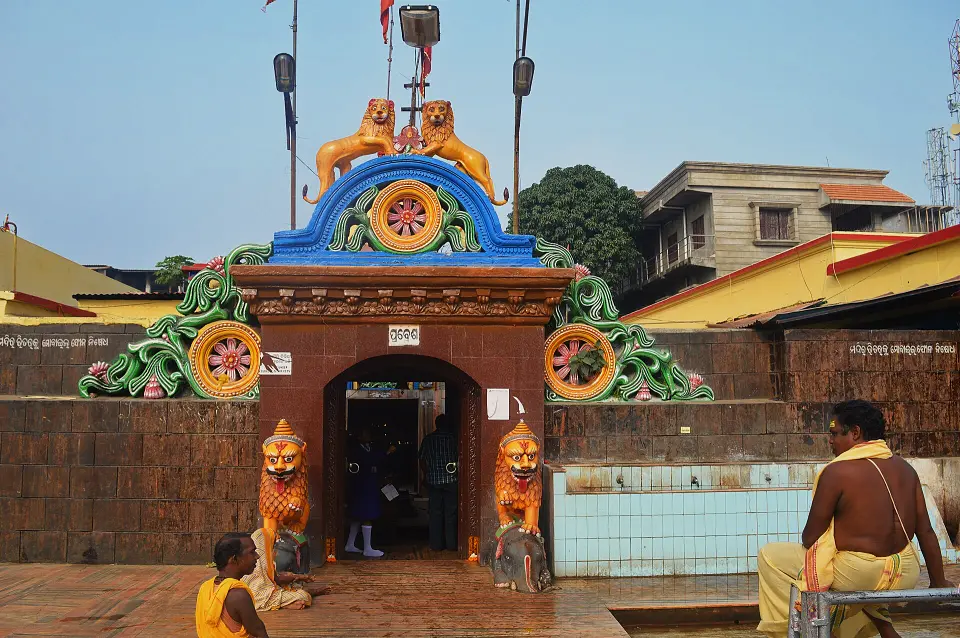
Cuttack Chandi Temple
A prominent temple dedicated to Goddess Chandi and one of Cuttack's important religious landmarks.
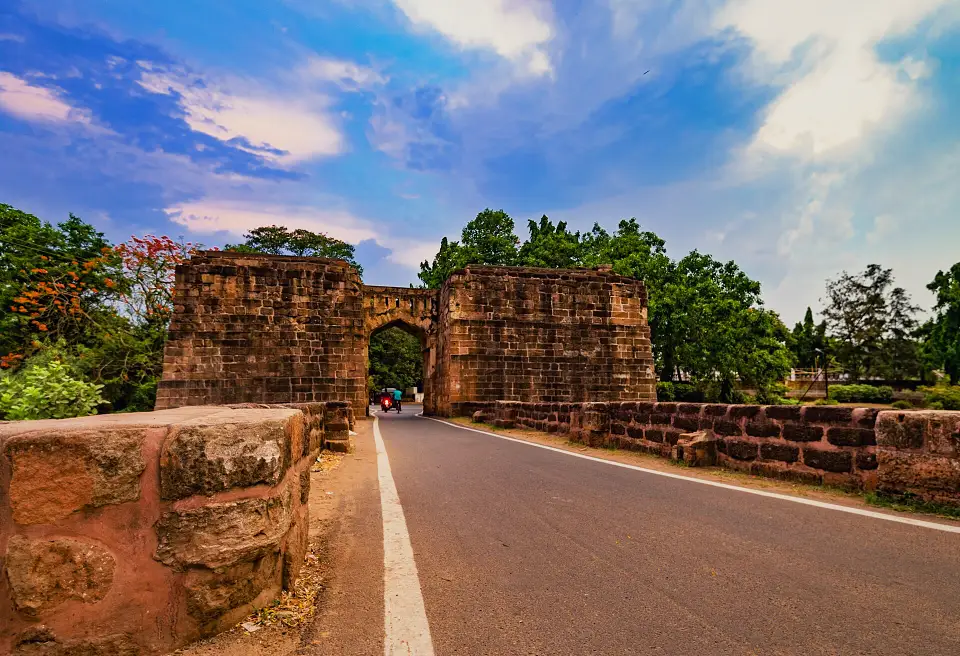
Barabati Fort
Explore the remains of Cuttack's historic fort and learn about the city's medieval political history.
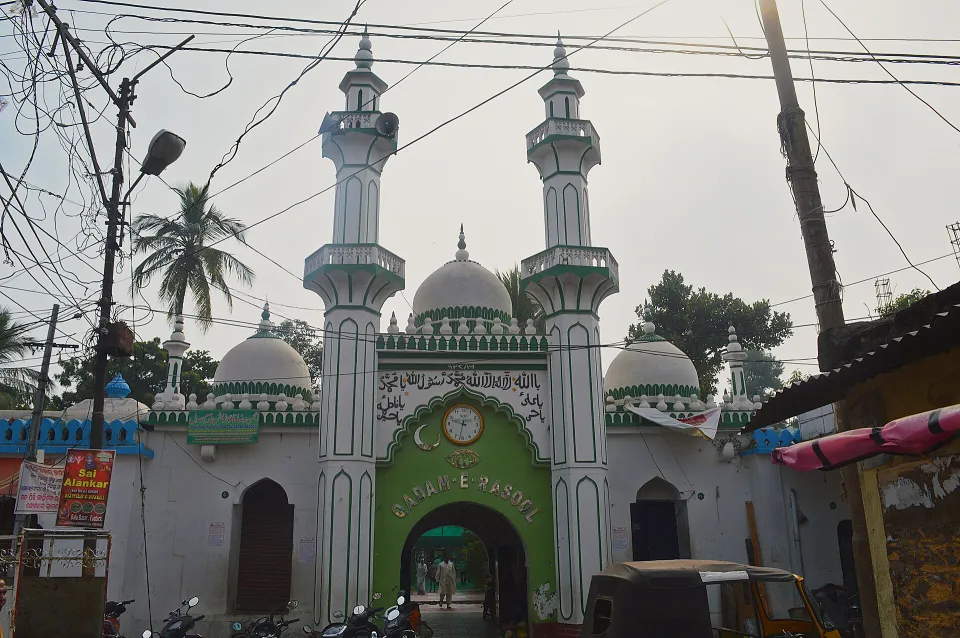
Qadam-i-Rasool
An important Indo-Islamic heritage monument that reflects Cuttack's diverse cultural history.
Mahanadi Riverfront, Cuttack
Enjoy the river landscape and discover another dimension of Cuttack's geography and urban identity.
Suggested One-Day Itinerary: Bhubaneswar to Cuttack
Here is a suggested itinerary for travellers who want to explore Amareswar Temple and other attractions in Cuttack in a single day.
| Time | Activity |
|---|---|
| 7:00 AM | Depart from Bhubaneswar |
| 8:15 AM | Reach Cuttack |
| 8:30 AM | Visit Amareswar Temple |
| 10:00 AM | Explore Buxi Bazaar and local surroundings |
| 11:00 AM | Visit Cuttack Chandi Temple |
| 12:30 PM | Lunch and local food exploration |
| 2:00 PM | Explore Barabati Fort |
| 3:30 PM | Visit Qadam-i-Rasool |
| 4:30 PM | Enjoy the Mahanadi riverfront |
| 5:30 PM | Begin return journey to Bhubaneswar |
The itinerary is indicative. Adjust the timings according to temple schedules, traffic, weather and the time spent at each attraction.
Frequently Asked Questions About Amareswar Temple, Cuttack
Where is Amareswar Temple located?
Amareswar Temple is located at Mani Sahu Chhak, Buxi Bazaar, Cuttack, Odisha, India. It is situated in the old-city area of Cuttack.
How far is Amareswar Temple from Bhubaneswar?
Amareswar Temple is approximately 30–35 km from central Bhubaneswar. By road, the journey generally takes around 45–75 minutes, depending on traffic.
Who is the main deity of Amareswar Temple?
Lord Shiva, worshipped as Amareswar Mahadev, is the presiding deity of the temple.
What is special about Amareswar Temple?
The temple is particularly known for its underground Shiva Lingam, which remains submerged in water for much of the year. It is also known for its Ramayana Pillar, containing one crore names of Lord Rama according to the temple's historical account.
How old is Amareswar Temple?
Its exact construction date is unknown. Historical interpretations suggest that its origins may date to the 9th or 11th century CE. A definitive archaeological dating is still needed.
Which king built Amareswar Temple?
There is no conclusively established answer. Some historical interpretations associate its origins with the Somavanshi or Kesari rulers, while temple tradition also associates it with Mukundadeva.
Why does the Shiva Lingam remain underwater?
According to the temple's traditional account, the lower sanctum receives water for approximately seven to eight months each year. The Shiva Lingam is submerged during this period and becomes accessible for direct viewing when the chamber is dry.
What is the Ramayana Pillar at Amareswar Temple?
It is a 45–50-foot-high pillar featuring Sanskrit verses from the Valmiki Ramayana. It is particularly significant because one crore names of Lord Rama are said to be preserved inside it on materials such as paper, palm leaves, Bilva leaves and bricks.
Which festivals are celebrated at Amareswar Temple?
Major festivals include Maha Shivaratri, Shitala Sasthi, Makar Sankranti, Bada Osha, Dussehra and monthly Chaturdashi observances.
What is special about Shitala Sasthi at Amareswar Temple?
Shitala Sasthi is celebrated through a traditional ceremonial wedding of Shiva and Parvati. The celebrations involve community participation, traditional wedding rituals, music and a religious procession.
Is Amareswar Temple suitable for a one-day trip from Bhubaneswar?
Yes. Its proximity to Bhubaneswar makes it suitable for a half-day or full-day trip. Visitors can also combine it with Cuttack's other heritage and religious attractions.
What are the visiting hours of Amareswar Temple?
Online listings provide differing opening hours. Visitors should confirm the current schedule with the temple before travelling.
Is parking available at Amareswar Temple?
Parking availability may be limited because the temple is situated in the busy Buxi Bazaar neighbourhood. It is advisable to park at a suitable location outside the narrow lanes and walk to the temple.
What other places can I visit near Amareswar Temple?
Popular attractions include Cuttack Chandi Temple, Barabati Fort, Qadam-i-Rasool and the Mahanadi riverfront.
Why Amareswar Temple Deserves More Attention
Odisha's heritage is not limited to the magnificent temples of Puri, Bhubaneswar and Konark. It also lives in neighbourhood shrines, ancient traditions, forgotten stories and monuments that continue to remain part of everyday community life.
Amareswar Temple represents this lesser-explored side of Odisha.
Its underground Shiva Lingam, the legend of its divine discovery, the Ramayana Pillar preserving one crore names of Lord Rama and its distinctive festivals make it an important destination for heritage enthusiasts, researchers, devotees and travellers.
Perhaps the most valuable aspect of Amareswar Temple is that its heritage is not merely preserved in stone. It continues through rituals, oral traditions, community participation and generations of devotees.
The next time you visit Cuttack, take a little time away from its busy markets and explore this remarkable shrine.
Because sometimes, the most extraordinary stories of Odisha are hidden in the most ordinary corners of its cities.
Quick Travel Information
| Location | Mani Sahu Chhak, Buxi Bazaar, Cuttack, Odisha 753001 |
| From Bhubaneswar | 30–35 km |
| Travel time | 45–75 minutes |
| Presiding deity | Lord Shiva (Amareswar Mahadev) |
| Recommended visit | 1–1.5 hours |
Best reached by car, taxi or local auto-rickshaw.
Special occasions: Maha Shivaratri and Shitala Sasthi.
Photos: Wikimedia Commons, colour-graded by LocalDrive. Photos show nearby places, not the temple itself. By Kamalakant Nayak (CC BY-SA 3.0); Coldbreeze16 (CC BY-SA 4.0); Bikashrd (CC BY-SA 4.0); Coldbreeze16 (CC BY-SA 4.0).
Related guide: Browse more Shiva temples of Odisha.