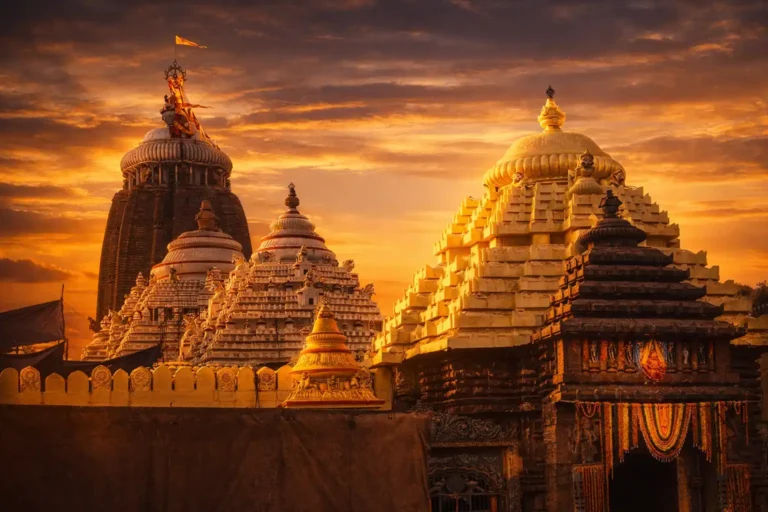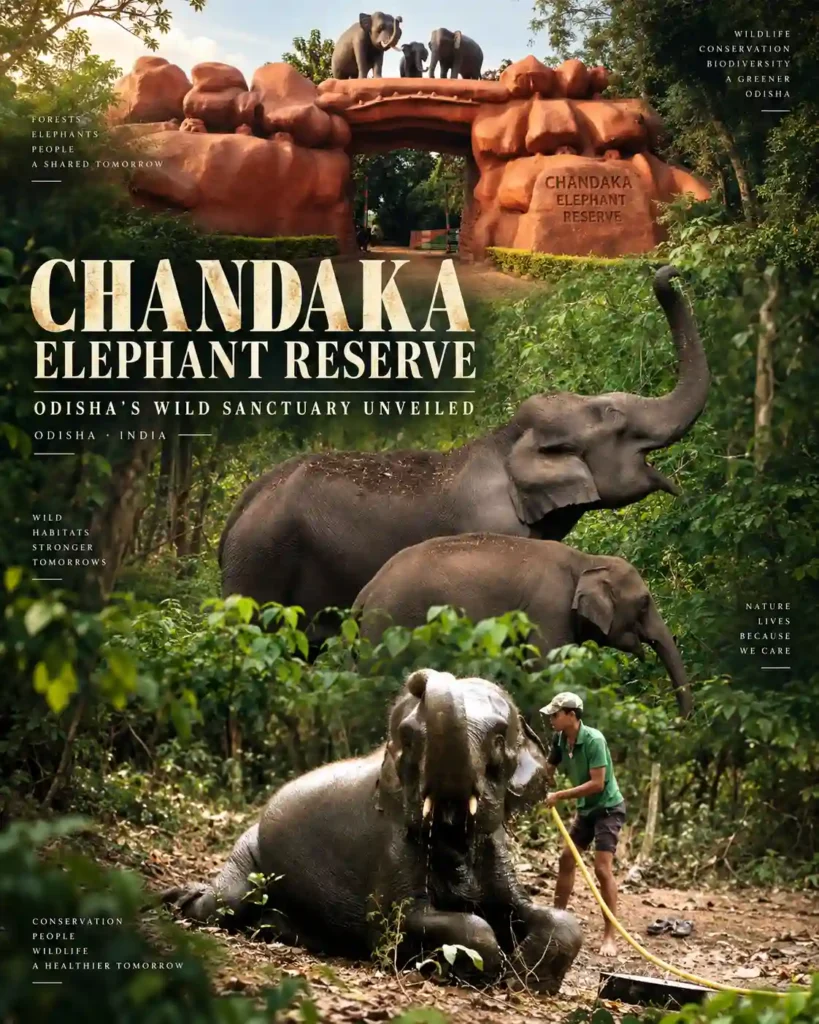
There are forests you travel to because they are far away from a city. Chandaka is different.
The Chandaka-Dampara Wildlife Sanctuary lies close to Bhubaneswar, yet the character of the landscape changes quickly once the built-up areas give way to forest. The protected area covers 193.39 square kilometres and is closely associated with the conservation of Asian elephants and their habitat.
Its location is part of the attraction. Visitors do not have to travel deep into rural Odisha to experience a protected forest landscape. Chandaka brings forest, reservoirs, birdlife and elephant habitat within relatively easy reach of the state capital.
But Chandaka should not be approached like a wildlife park where an animal sighting is guaranteed. The forest operates on its own rhythm. An elephant may appear near a water body, move through vegetation or remain completely out of sight during a particular visit.
That uncertainty is part of what makes a forest different from a conventional tourist attraction.
Chandaka Elephant Reserve at a Glance
Before planning a visit, these are the basic details worth knowing.
| Detail | Information |
|---|---|
| Location | Khurda district, Odisha |
| Nearest major city | Bhubaneswar |
| Protected area | 193.39 sq km |
| Conservation importance | Asian elephant habitat and forest ecosystem |
| Major tourism areas | Deras and Godibari |
| Nature camps | Deras and Chandaka Godibari |
| Activities | Safari, nature trails, trekking, cycling, birdwatching and selected boating experiences |
| Nearest airport | Biju Patnaik International Airport, Bhubaneswar |
| Nearest major railway station | Bhubaneswar Railway Station |
Chandaka Elephant Reserve – Odisha’s Untamed Forest Escape
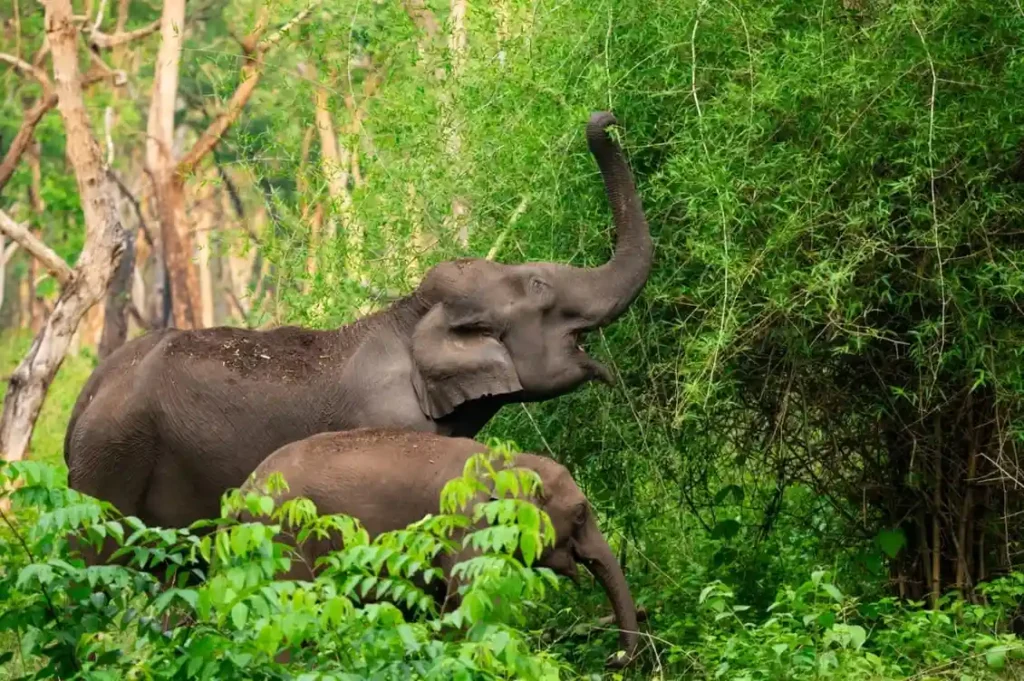
Chandaka is not simply another green space on the outskirts of Bhubaneswar. It is a protected forest landscape where wildlife conservation takes place alongside roads, settlements and a growing urban region.
That proximity creates an unusual travel experience. The journey can begin in a busy city environment and gradually become quieter as forest vegetation takes over the view.
The sanctuary's identity is strongly connected with elephants. However, the value of Chandaka is broader than elephant sightings. The forest supports birds, deer, wild boar, primates, reptiles and many smaller forms of life that are easier to miss when visitors focus only on large animals.
For that reason, a good Chandaka visit is less about counting how many animals you saw and more about noticing how a functioning forest behaves.
The Rich Wildlife of Chandaka Elephant Reserve
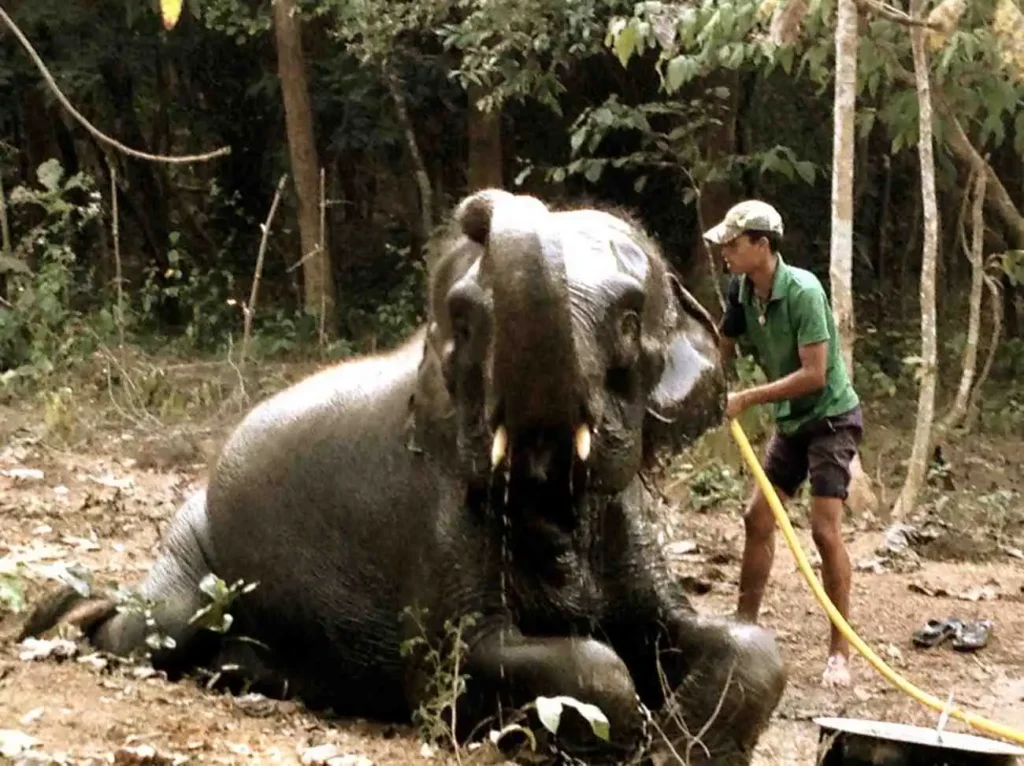
The Asian elephant is the species most closely associated with Chandaka, but it is only one part of the sanctuary's wildlife community.
Government wildlife and tourism information describes Chandaka as a habitat for a range of mammals, birds and reptiles. Wildlife associated with the landscape includes spotted deer, barking deer, sambar, wild boar, sloth bear, langurs, macaques, civets and pangolin, along with reptiles such as pythons and monitor lizards.
Birds are another important part of the forest experience. Chandaka is recognised by Odisha Tourism as one of the state's birdwatching destinations, making it worthwhile for visitors who are willing to slow down and observe the canopy, forest edges and water bodies.
What wildlife can you actually see?
Wildlife sightings depend on season, weather, food, water availability and animal movement. There is no reliable way to promise a particular species on a particular day.
You may encounter deer or birds relatively easily while larger animals remain hidden. You may also notice signs of wildlife without seeing the animal itself.
Tracks, droppings, broken vegetation, calls and movement through dense vegetation can all tell part of the story.
Can you see elephants at Chandaka?
Elephants are present in the Chandaka landscape, but visitors should never treat an elephant sighting as guaranteed.
If elephants are encountered, maintaining distance is essential. Visitors should remain inside the vehicle when instructed, avoid shouting or sudden movement and follow the directions of forest staff or guides.
Chandaka's Forests, Bamboo and Natural Landscape
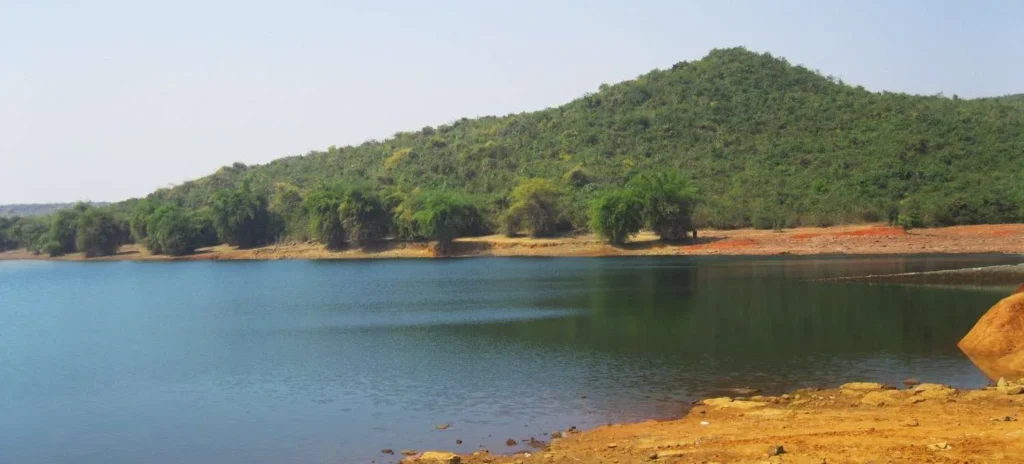
Chandaka does not have one uniform type of vegetation. Odisha Tourism describes the Chandaka-Dampara landscape as a combination of semi-evergreen forest, thorny bamboo brakes and sal forest.
That variation becomes noticeable while travelling through different sections of the sanctuary. Dense vegetation can give way to more open areas, while reservoirs introduce a completely different visual character.
For photographers, these changes are important. The forest provides subjects beyond wildlife: bamboo textures, sal trees, reservoir reflections, birds, tracks, changing light and long forest roads disappearing into vegetation.
Deras and Godibari: The Main Nature-Camp Areas
Deras and Godibari are central to the visitor experience at Chandaka. Odisha Tourism currently lists both as Chandaka nature-camp locations.
The two areas provide a base for visitors interested in spending more time around the forest rather than making a short roadside stop.
Deras is particularly associated with the reservoir and organised tourism experiences. Godibari is connected with the forest-side activities included in Chandaka tourism programmes.
Odisha Tourism has published itineraries that include an open-jeep jungle safari from Deras towards Godibari, followed by activities such as jungle trekking and cycling.
Jungle Safari at Chandaka
A safari is one of the most obvious ways to experience Chandaka, but expectations matter.
The objective should not be to force a wildlife encounter. Moving through the forest allows visitors to observe different habitats and look for birds, deer, elephant signs and other wildlife.
Current Odisha Tourism itineraries describe an open-jeep jungle safari between Deras and Godibari, with the wider programme also incorporating jungle trekking and cycling.
Tour timings, pricing, availability and operating conditions can change. Anyone planning a trip around a specific safari should check the current official booking information before travelling.
Nature Trails and Trekking at Chandaka
Walking through a forest changes what you notice.
A vehicle covers more distance, but a slow trail makes it easier to notice small details: insects moving through leaves, bird calls from the canopy, tracks in the soil and changes in vegetation.
Odisha Tourism has promoted organised nature walks around the Chandaka-Dampara Wildlife Sanctuary, particularly during winter weekends, and its wider nature-tourism programme includes trekking and nature trails.
Visitors should use designated routes and follow the instructions of guides or forest personnel rather than entering restricted areas independently.
Birdwatching in Chandaka
Chandaka is one of Odisha's recognised birdwatching destinations.
The combination of forest vegetation and water habitats gives birdwatchers different environments to observe. Early morning is generally more comfortable for spending extended periods outdoors and can be particularly rewarding for people interested in bird activity.
A pair of binoculars can make a bigger difference than a large camera lens if your objective is identification rather than photography.
The most useful approach is simple: stop walking, listen, locate the call and then look through the vegetation.
Boating and Water-Based Experiences
Water is an important part of Chandaka's visitor landscape. Odisha Tourism lists boating among the activities available at selected nature camps, including Chandaka.
Availability can vary, so visitors should not assume that every water-based activity operates every day or throughout the year.
The reservoirs also have value beyond recreation. Water bodies can influence bird activity and animal movement, which is one reason areas around water can be interesting for wildlife observation.
Best Time to Visit Chandaka Elephant Reserve
The best time depends on what you want from the visit rather than one universally perfect month.
October to February
The cooler part of the year is generally more comfortable for outdoor activities, nature walks, birdwatching and spending several hours around the forest.
Post-monsoon months
After the rains, the vegetation can retain a strong green character and the landscape around the reservoirs can be particularly attractive.
Summer
Odisha's hotter months can make long outdoor activities uncomfortable. If travelling during this period, early morning is generally preferable to the middle of the day.
Monsoon
Rain can make forest trails and roads more difficult. Conditions may also affect specific tourism activities.
Before travelling, check the current operating status rather than relying only on a seasonal travel guide.
Is Early Morning Better for Wildlife?
Early morning can be a good time for wildlife observation because temperatures are generally more comfortable and the forest is often more active than during the hottest part of the day.
But early morning does not mean guaranteed elephants.
Wildlife movement changes constantly. A visitor who sees an elephant near water on one morning may find the same area empty on another day.
The right expectation is opportunity, not certainty.
Conservation and the Human-Wildlife Boundary
Chandaka's conservation story is particularly relevant because the sanctuary exists close to a large and expanding urban area.
Protecting elephants is not only a matter of keeping animals inside a boundary. Wildlife moves through a landscape that also contains roads, settlements and agricultural areas.
That makes the boundary between forest and human habitation an important part of conservation management.
Elephant tracking, habitat management, community awareness and measures intended to reduce conflict are therefore part of the broader conservation picture.
A 2024 report on Chandaka described the installation of a hanging solar fence on a 1.1-kilometre stretch intended to discourage elephants from entering nearby habitation. The system was designed as a non-lethal deterrent.
For visitors, this provides useful context. The forest is not an isolated wilderness detached from everyday life. Conservation here involves managing a living landscape shared by wildlife and neighbouring communities.
What Makes Chandaka Different From a Zoo?
This is one of the most important things to understand before visiting.
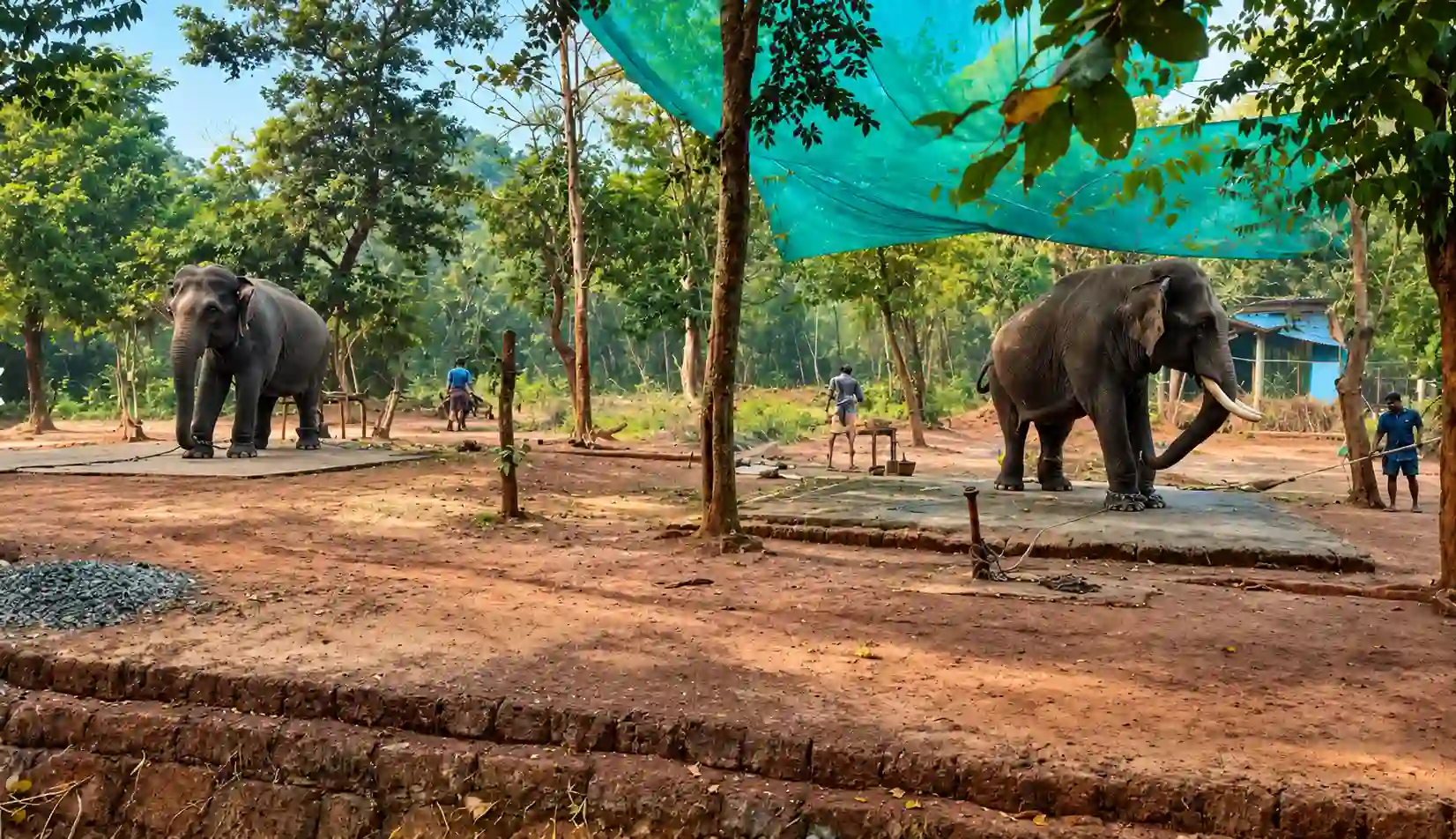
A zoo is designed around predictable animal viewing. A protected forest is not.
At Chandaka, you can travel through a section of forest without seeing a large animal at all. You may hear a bird but never identify it. You may notice elephant tracks without finding the herd.
That is not a failed wildlife experience. It is how wildlife observation works in a natural habitat.
Visitors who understand this usually get more from the landscape itself rather than spending the entire trip waiting for one particular animal.
Things to Do at Chandaka Elephant Reserve
- Take an open-jeep safari through designated forest routes.
- Go birdwatching around forest and water habitats.
- Join a nature trail where organised access is available.
- Try trekking or cycling through designated tourism areas.
- Consider a nature-camp stay at Deras or Chandaka Godibari.
- Explore the landscape through photography rather than focusing only on animal portraits.
- Spend time around the reservoirs while respecting restricted areas and wildlife.
Chandaka for Families
Chandaka can work well for families who want children to experience a real forest environment.
The most useful way to prepare children is to explain that animals may not appear on demand. Ask them to look for birds, insects, unusual trees, tracks and sounds instead of making the entire outing about finding an elephant.
That small change can turn the trip into an introduction to how a natural ecosystem actually works.
Chandaka for Photographers
Chandaka is officially recognised by Odisha Tourism as a photography destination, and the forest provides opportunities for both wildlife and landscape photography.
Wildlife photography may involve elephants, deer and birds, but the landscape itself can produce stronger editorial photographs: forest roads, bamboo, reservoir reflections, silhouettes, tracks and the contrast between the protected forest and the nearby city.
A long lens is useful for wildlife. A wider lens is often better for telling the larger story of Chandaka.
Practical Travel Tips for Chandaka
Carry enough water
Carry drinking water for the duration of your outdoor activity rather than assuming refreshments will be available wherever you stop.
Wear proper footwear
Closed shoes with a reasonable grip are more practical for forest trails than open footwear.
Keep the forest quiet
Loud music, shouting and unnecessary noise reduce the quality of the wildlife experience and can disturb animals.
Never feed wildlife
Feeding wild animals changes natural behaviour and can create risks for both animals and people.
Keep your distance from elephants
Never attempt to approach an elephant for a photograph. If forest staff ask visitors to remain inside a vehicle or move away, follow the instruction immediately.
Carry binoculars
If birdwatching is part of your plan, binoculars can be more useful than relying entirely on a camera.
Check current arrangements
Safari schedules, accommodation, activity availability, access conditions and prices can change. Confirm current information before travelling.
How to Reach Chandaka Elephant Reserve
By Air
Biju Patnaik International Airport in Bhubaneswar is the nearest major airport. Bhubaneswar serves as the practical gateway for travellers arriving from other parts of India.
By Train
Bhubaneswar Railway Station is the main rail connection for visitors travelling by train. From the city, Chandaka can be reached by road.
By Road
Chandaka is close enough to Bhubaneswar to work as a day-trip destination. The exact journey time depends on the starting point, traffic and the particular entrance or tourism facility being visited.
If your destination is Deras or Godibari, use the exact tourism facility shown on your booking rather than relying on a generic map pin for Chandaka.
Can Chandaka Be Covered in One Day?
Yes. Chandaka is practical as a day trip from Bhubaneswar.
Odisha Tourism currently publishes Chandaka programmes built around a daytime visit. One official itinerary includes arrival at Deras, an open-jeep jungle safari to Godibari, lunch and activities such as jungle trekking and cycling before departure.
A day trip makes sense for visitors with limited time. However, staying overnight at a nature camp gives the forest more breathing room and removes the pressure to fit everything into a few hours.
Should You Stay Overnight at Chandaka?
Odisha Tourism currently lists Deras and Chandaka Godibari under its Chandaka Nature Camps.
An overnight stay is worth considering if your priority is slow travel, birdwatching, photography or simply spending more time away from the city.
It is less about luxury and more about changing the pace of the visit.
Nearby Attractions to Chandaka Elephant Reserve
Nandankanan Zoological Park
Nandankanan is another major wildlife attraction in the Bhubaneswar area. It offers a very different experience from Chandaka because it is a managed zoological park rather than a natural protected forest.
Udayagiri and Khandagiri Caves
The ancient rock-cut caves provide a historical dimension to a Bhubaneswar itinerary and can be combined with a nature-focused visit on another part of the day.
Lingaraj Temple
Visitors extending their trip through Bhubaneswar can combine Chandaka with the city's historic temple landscape.
Together, these places reveal very different aspects of the region: protected forest, archaeology, wildlife tourism and living cultural heritage.
Who Will Enjoy Chandaka Most?
Chandaka is particularly suited to travellers who enjoy:
- Birdwatching
- Nature photography
- Forest walks
- Wildlife observation
- Short trips from Bhubaneswar
- Nature-camp stays
- Quiet outdoor experiences
It may be less satisfying for visitors whose only objective is getting a guaranteed elephant photograph.
The forest cannot promise that.
What to Expect During Your First Visit
Expect changing vegetation, uneven stretches of forest road, bird calls, water bodies and periods when nothing obvious appears to be happening.
That last part is important.
Wildlife observation often involves long periods of waiting followed by a brief moment of activity. A herd may appear for only a short time. A bird may cross the road and disappear into vegetation almost immediately.
Patience is therefore one of the most useful things to carry into Chandaka.
Frequently Asked Questions About Chandaka Elephant Reserve
Where is Chandaka Elephant Reserve located?
Chandaka-Dampara Wildlife Sanctuary is located in Khurda district of Odisha, close to Bhubaneswar. The protected area covers approximately 193.39 square kilometres.
Is Chandaka an elephant reserve?
Chandaka is strongly associated with elephant conservation, and tourism material commonly refers to the area as Chandaka Elephant Sanctuary or Chandaka Elephant Reserve. The protected-area designation used by Odisha wildlife authorities is Chandaka-Dampara Wildlife Sanctuary.
What animals can be found in Chandaka?
Asian elephants are the flagship species. The landscape also supports deer, wild boar, sloth bear, primates, civets, pangolin, reptiles and a variety of birds.
Can I see elephants at Chandaka?
Elephant sightings are possible, but they are not guaranteed. Wildlife movement depends on natural conditions, so visitors should never plan a trip on the assumption that an elephant will appear.
What is the best time to visit Chandaka?
The cooler months are generally more comfortable for outdoor activities. October through February is a practical period for visitors who want to combine nature walks, birdwatching and forest activities.
Can Chandaka be visited as a day trip?
Yes. Its proximity to Bhubaneswar makes a day trip practical, and Odisha Tourism currently offers structured Chandaka programmes involving safari and outdoor activities.
Can I stay overnight at Chandaka?
Yes. Odisha Tourism lists Deras and Chandaka Godibari as nature-camp locations.
What activities are available at Chandaka?
Depending on the current programme and operating conditions, activities can include open-jeep safari, trekking, nature walks, cycling, birdwatching, photography and selected boating experiences.
Is Chandaka suitable for children?
It can be a good family nature outing, provided children are supervised and understand that wildlife sightings are unpredictable. Children should never approach animals or leave designated visitor areas.
What should I carry to Chandaka?
Carry water, comfortable footwear, sun protection, insect repellent, binoculars if available, a camera and any personal medicines you may need.
Chandaka Is More Than an Elephant-Sighting Trip
The easiest way to misunderstand Chandaka is to reduce the entire destination to elephants.
The elephants are important, but they are part of a much larger forest system. Birds depend on the habitat. Deer move through the vegetation. Reptiles occupy the forest floor. Water bodies influence animal and bird activity. Communities live around the protected landscape.
Once you start looking at those connections, Chandaka becomes much more interesting.
It becomes a place where conservation, wildlife and an expanding city meet in the same landscape.
Final Word: Why Chandaka Deserves Your Time
Chandaka Elephant Reserve offers something unusually accessible in Odisha: a protected forest experience close to Bhubaneswar.
You can come for an open-jeep safari, spend time around Deras, look for birds, walk a nature trail, photograph the landscape or stay overnight at a nature camp.
But the most important expectation is also the simplest one: do not demand a particular wildlife encounter from the forest.
An elephant may appear. A deer may cross the road. A bird may call from somewhere above you. Or you may spend most of the visit simply moving through trees and listening.
All of those are part of visiting a real forest.
Chandaka's real appeal is not that it guarantees wildlife. It is that, so close to Bhubaneswar, it still gives visitors a chance to experience a landscape where wildlife does not perform on schedule.
Visitor Information & Verification Note
Tourism arrangements, safari schedules, accommodation availability, activity timings, access restrictions and prices can change. Visitors should confirm the latest information through the official Odisha Tourism and Odisha Wildlife channels before travelling.
Official information: Odisha Tourism | Odisha Wildlife