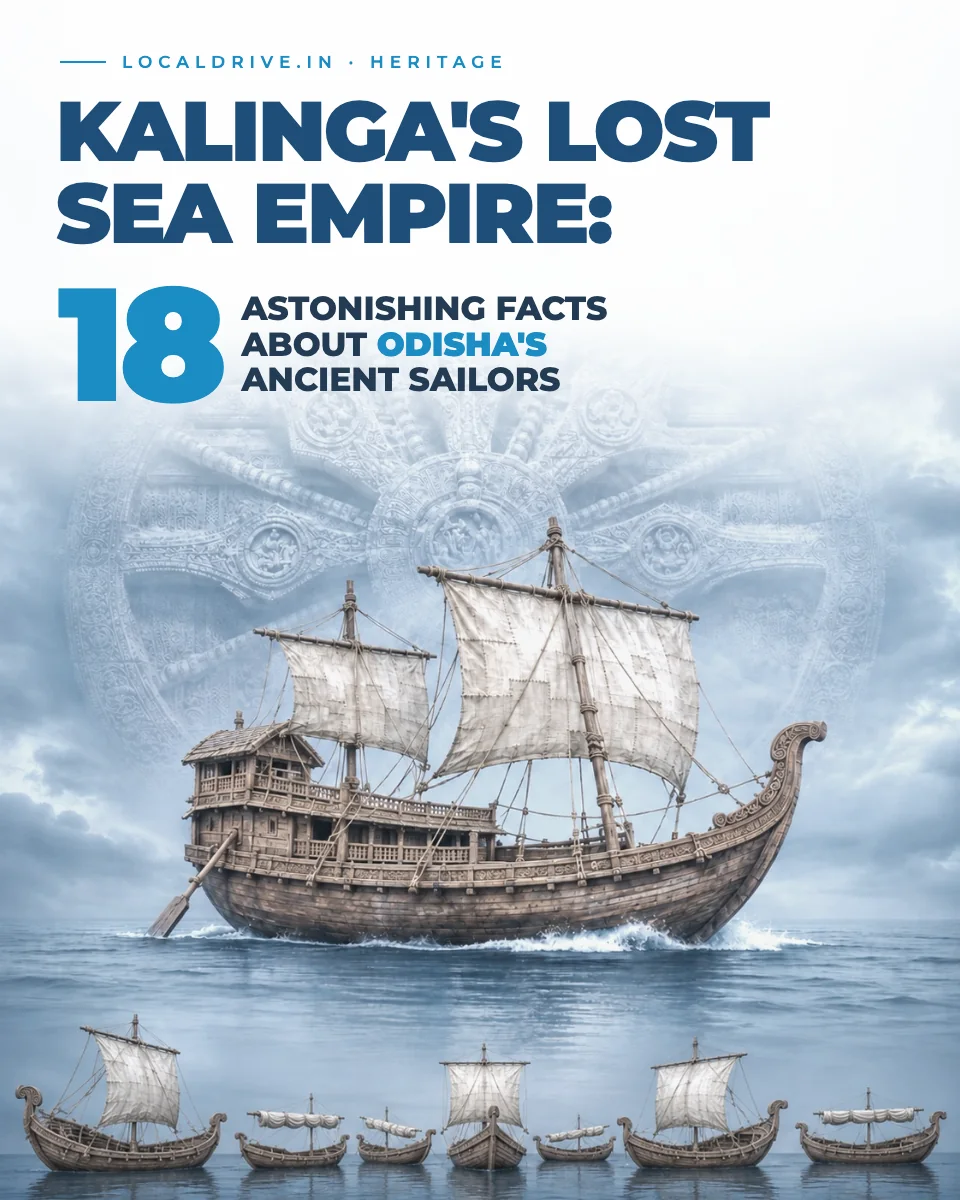
Trip facts
Era
About 800 BC to 1866
Sailed to
Sri Lanka, Java, Malaya, China
Ships
Boitas with crews of up to several hundred
Key ports
Tamralipta, Dantapura, Manikapatna, Paradip
Last port
Balasore, closed 1862–66
See it today
Bali Jatra, Cuttack, on Kartik Purnima
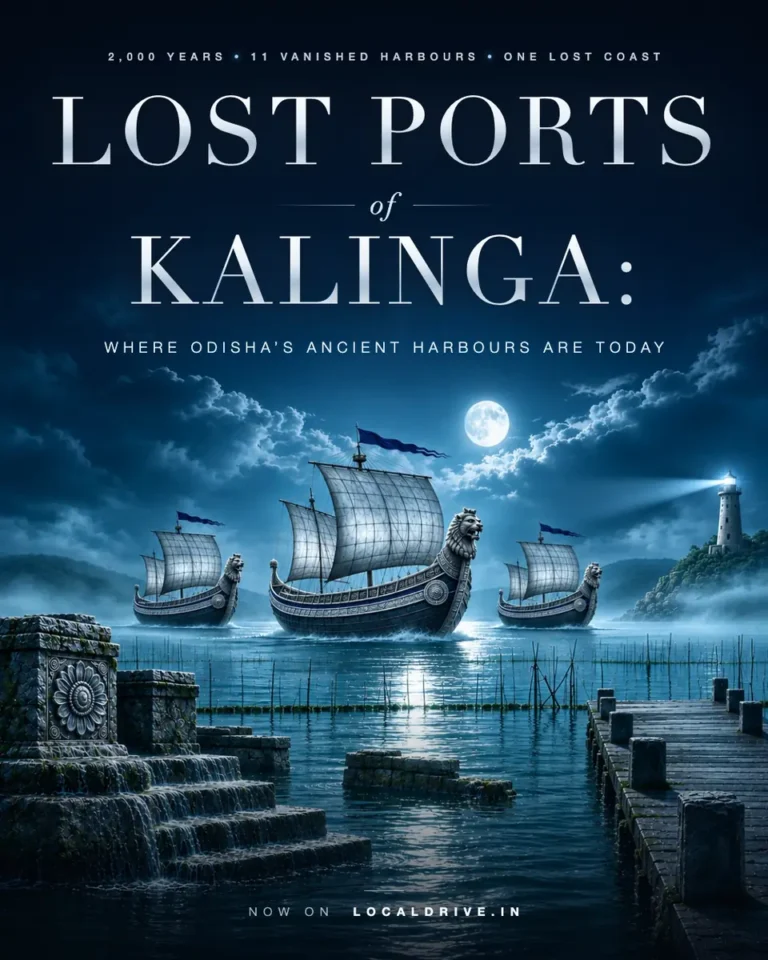
For more than 2,000 years, the coast we now call Odisha sent ships across the Bay of Bengal to Sri Lanka, Java, Malaya and China. Ancient Kalinga sat between the mouths of the Ganges and the Godavari, with navigable rivers and the sheltered Chilika lagoon in between. That made it one of the best-placed sea powers in the ancient East. The trade didn't fade quietly in the Middle Ages, either. It ended only in the 1860s, at the port of Balasore.
Most of the facts below pull together Jain texts, Sri Lankan chronicles, Greek and Roman geographers, Chinese trade officials, Arab sailors and Odia folk tales. Where something is a theory rather than an established fact, we say so.
Kalinga's sea story at a glance
| Period | What happened | Source |
|---|---|---|
| c. 800–700 BC | Kanchanapura, a Kalinga capital, trades freely with Lanka | Jain texts |
| c. 6th–5th century BC | Pihunda is a busy port in Mahavira's time. Merchants from Champa sail in to trade | Uttaradhyayana Sutra |
| c. 5th century BC | Prince Vijaya sails from Tamralipta to Sri Lanka with 700 companions | Mahavamsa |
| AD 75 | Navigators from Kalinga reach Java and found a colony there | Javanese tradition |
| Early 4th century AD | Princess Hemamala carries the Buddha's Tooth Relic from Dantapura to Sri Lanka | Dathavamsa |
| AD 411 | Fa-hien sails from Tamralipta and reaches Sri Lanka in 14 days | Fa-hien's travels |
| AD 636 | Hiuen Tsang describes a great Odisha port used by foreign sea traders | Hiuen Tsang's records |
| AD 795 | An Odisha king sends a Buddhist manuscript to the Chinese emperor | Chinese annals |
| AD 1226 | A Chinese trade official describes giant "Kia-ling" (Kalinga) ships | Chau Ju-kua |
| 1330s–40s | A Chinese traveller records Odisha's coin values and exports | Wang Ta-yuan |
| 1400–1550 | Paradip appears on the sea route to Malacca and Singapore | Arabic nautical manuscript, Paris |
| Early 1800s | Balasore has 500–600 sailing ships | Fakir Mohan Senapati |
| 1862–66 | The British end salt production at Balasore. Silt closes the river mouth, and the trade ends | Senapati; Buckland |
The ancient voyages: facts most people have never heard
The earliest record of a Kalinga port is in a Jain scripture
The first written mention of Kalinga's sea trade is in the Jain Uttaradhyayana Sutra. It describes Pihunda as a famous port and trading centre in Mahavira's time, where merchants from Champa (the capital of Anga, in today's Bihar) arrived by sea. Other Jain texts describe Kanchanapura, a Kalinga capital, trading freely with Lanka. On that evidence, organised sea trade on this coast dates back to around 800–700 BC.
Dantapura was the "city of ivory"
According to the Jain tradition, Dantapura, an early capital of Kalinga, took its name from danta, meaning ivory, because the city grew rich on the ivory trade. The Roman writer Pliny knew it as Dandagula and placed it about 625 Roman miles south of the mouth of the Ganges. Scholars still don't agree on where it was. One identification places it at the ruined fort of Dantavaram Kota near Srikakulam, on the Vamsadhara River.
The Buddha's Tooth Relic left India from a Kalinga port
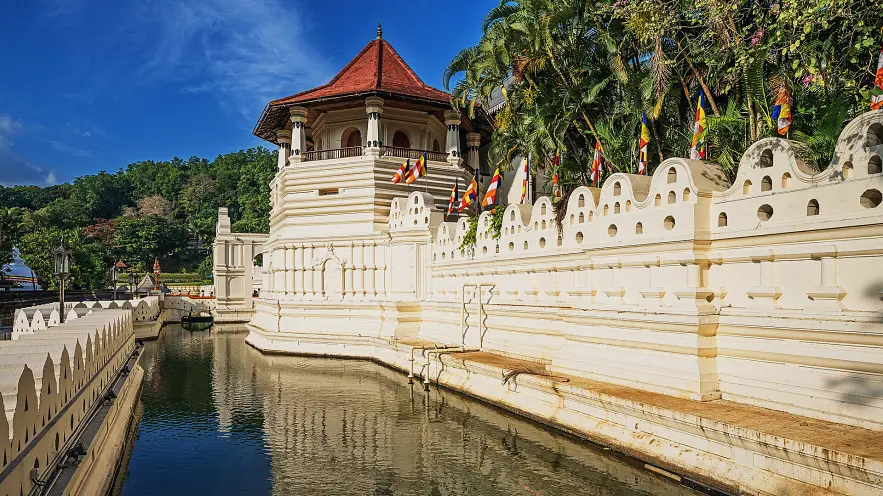
Sri Lanka's chronicle the Dathavamsa says that in the early 4th century AD, King Guhasiva of Dantapura sent the Buddha's sacred Tooth Relic to Sri Lanka. His daughter Hemamala and her husband Dantakumara slipped away by sea with it. The relic is still the most revered object in Sri Lanka, at the Temple of the Tooth in Kandy.
Sri Lanka's founding prince sailed from this coast
The Mahavamsa says Prince Vijaya, banished by his father, sailed from the port of Tamralipta with 700 companions and landed on Sri Lanka's north coast in the early 5th century BC. Tamralipta survives as Tamluk in West Bengal, but in that period it lay within northern Kalinga, the region Greek writers called Gangaridae.
A kingdom called "Kalinga" existed in Java
A Javanese tradition says a band of navigators from Kalinga landed in Java in AD 75 and planted a colony that lasted for centuries. Chinese records from the Tang dynasty describe a Javanese kingdom called Holing, which scholars accept as the Chinese spelling of Kalinga. Holing sent embassies to the Chinese court between AD 640 and 818.
Kalidasa called the king of Kalinga "Lord of the Great Ocean"
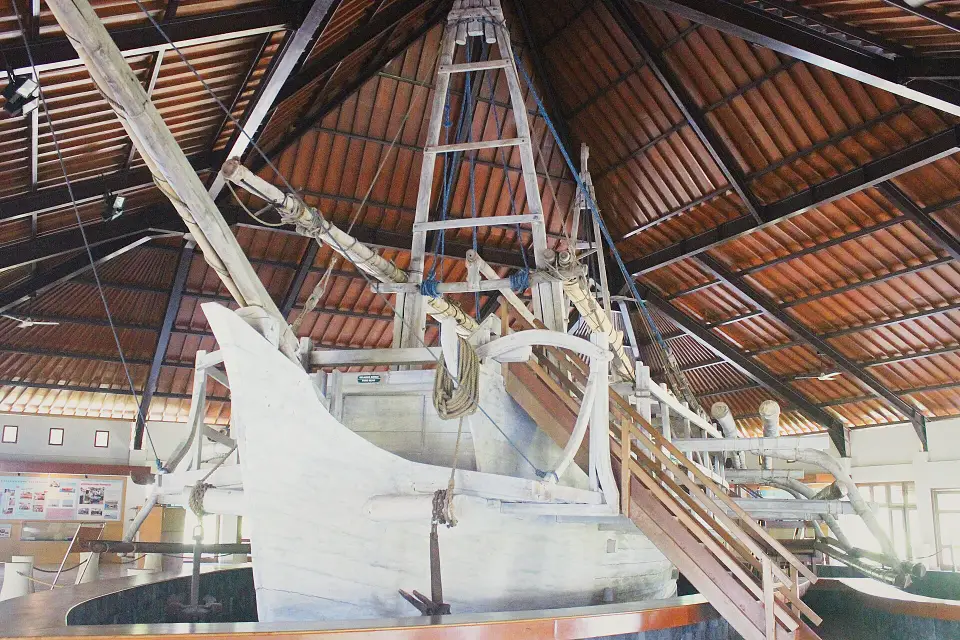
In the Raghuvamsa, the poet Kalidasa describes King Hemangada of Kalinga as lord of the Mahendra mountains and of the great ocean. Kalidasa knew Indian geography well, indicating that Kalinga was the leading sea power of the eastern coast in the 4th–5th centuries AD, under the Mathara kings.
Fourteen days from Tamralipta to Sri Lanka
In October AD 411, the Chinese pilgrim Fa-hien boarded a large merchant ship at Tamralipta. It sailed south-west on the first winds of the winter monsoon and reached Sri Lanka in exactly 14 days and nights. He didn't name a single port on the way, which suggests a non-stop run across the open bay.
A port that astonished Hiuen Tsang
When Hiuen Tsang visited Odisha in AD 636, he described a sea-port he called Che-li-ta-lo-ching. It was a thoroughfare and resting place for sea traders and strangers from distant lands. He gave it unusual space in his account. Nobody has identified for certain where it was.
An Odisha king corresponded with the emperor of China
In AD 795, the Chinese emperor Te-tsong received a Buddhist manuscript, the Gandavyuha, autographed by a king of Odisha. The Chinese annals translate the king's name as "the fortunate monarch who does what is pure, the lion". Historian R. C. Majumdar identified him as the Bhauma king Sivakaradeva Unmattasimha, pointing to busy trade between the two countries.
Arab sailors knew Odisha as a land ruled by a queen
Arab and Persian geographers of the 9th and 10th centuries describe the eastern coast and a country they called Urshin or Ursfin, ruled by a woman. One writer calls her Raina, which is likely a corruption of Rani. Several Bhauma queens ruled Odisha in this period, and historian K. C. Panigrahi linked the earliest reference, from AD 846, to Tribhuvana Mahadevi I.
Bhubaneswar has a stone carving of boats carrying elephants
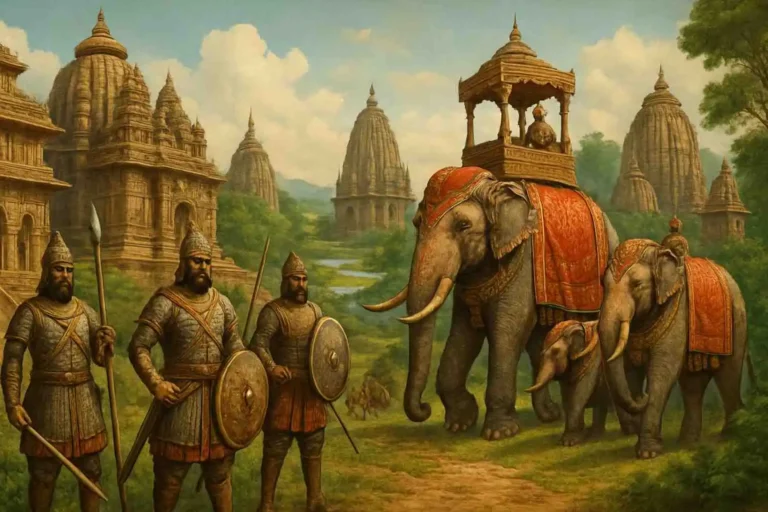
A broken temple panel dug up from rice fields in Bhubaneswar shows two river boats, each carrying an elephant, with a man and a young woman seated in one of them. It dates to the 8th or 9th century. Elephants from Kalinga's forests were famous, and they were shipped down the rivers to the ports for export. There is also a small shrine near the Brahmeswar temple where a goddess called Naukabahini ("she who rides a boat") is still worshipped. Her pedestal shows a boat and a boatman.
Chinese records describe Kalinga ships with hundreds of men on board
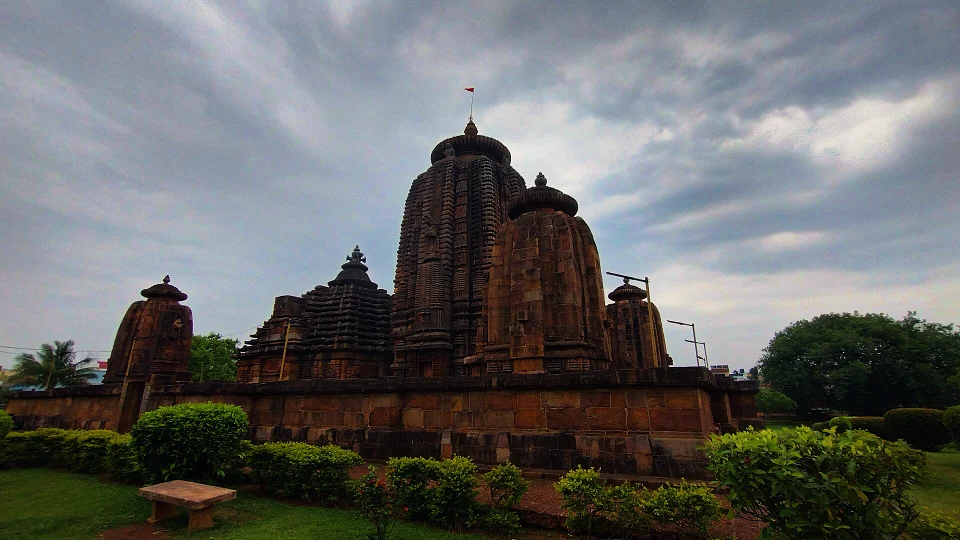
Chau Ju-kua, the Chinese commissioner of foreign trade at Quanzhou, published an account of foreign seafarers in 1226. He describes "Kia-ling" ships. Large ones carried several hundred men and small ones over a hundred. Each ship chose a senior trader as headman, and the Chinese port authorities licensed him to discipline the crew with a light bamboo cane. When a crew member died, the headman made an inventory of his property. This was an organised, disciplined merchant fleet.
One Odisha silver coin bought 46 baskets of rice
In the 1330s and 1340s, the Chinese traveller Wang Ta-yuan recorded Odisha's economy in detail. One Odisha silver coin was worth ten taels of Chinese paper money, or 11,520 cowrie shells, and it bought 46 baskets of rice. Odisha exported kingfisher feathers, beeswax and fine cotton, and imported Chinese porcelain, silk, satin, cloves and nutmeg. The most surprising line: of the Chinese who went to trade in Odisha, nine out of ten never came back, because living there was so easy and so cheap.
Paradip was on the medieval sea route to Malacca
An Arabic nautical manuscript in the Bibliothèque Nationale in Paris (MS 2559), written by master mariners between about 1400 and 1550, lists a port called Faradib on the international route to Malacca and Singapore, which corresponds to Paradvipa, today's Paradip. The well-known geographer Paul Wheatley had taken it for an island in the Ganges delta.
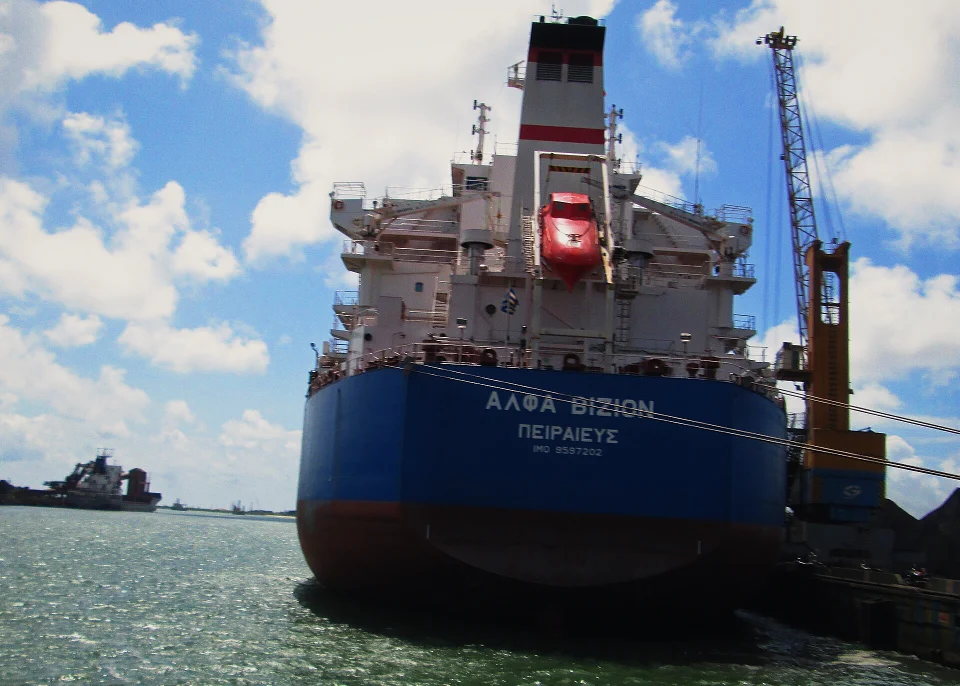
Odisha traders moved to Kerala when their ports silted up
By 1451, the Chinese writer Ma Huan found "Kolings" working as commission agents at Cochin, on India's west coast. Some Kalinga merchants likely moved there as the river mouths of Odisha silted up. In Malacca, the Portuguese apothecary Tomé Pires used the word "Kling" at least 26 times in his Suma Oriental (1512–15). Portuguese records even listed Odisha merchants separately from other "Klings".
Balasore once had 500–600 sailing ships
The Odia writer Fakir Mohan Senapati recalled that in his boyhood, Balasore had between five and six hundred ships in service. About three-quarters carried salt. The rest took goods to Madras, Colombo and the islands of the Bay of Bengal. Dutch, Danish, French and British merchants all set up trading posts there before moving on to Bengal. Ships sailed up the Mahanadi as far as Cuttack, where a tall lamp-pillar at Jobra guided them.
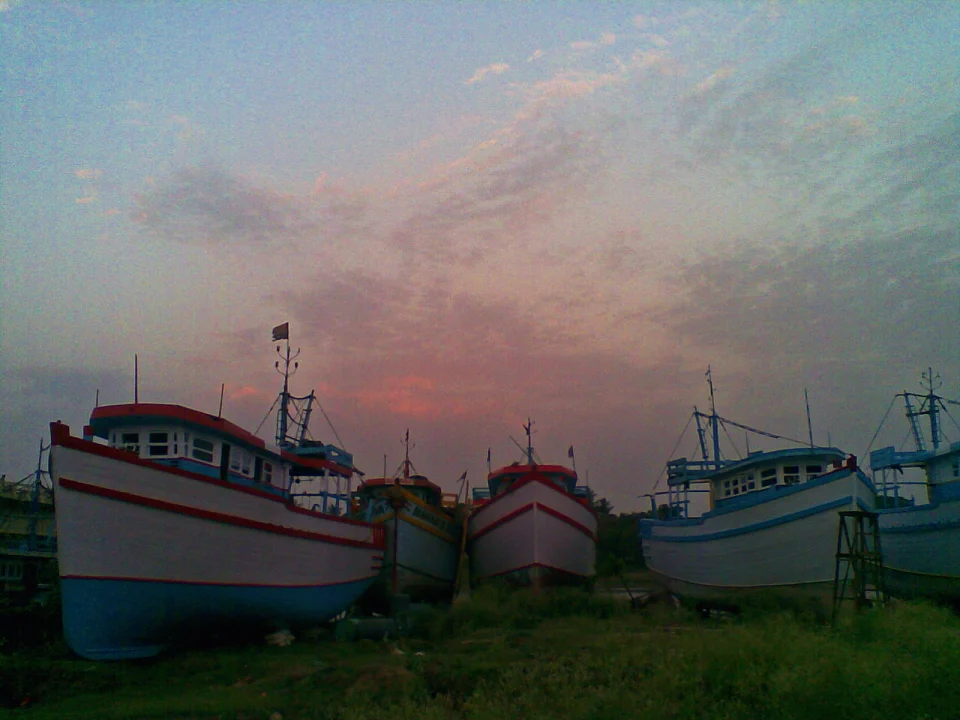
The trade ended in the 1860s, not in ancient times
When the British government ended the salt system at Balasore in 1862–66, the port stopped working. Silt was already building up at the mouth of the Budhabalanga, and the rest of the trade died with it. That closed a maritime story that had run for more than 2,000 years.
Even the poets turned against the sea
By the 18th century, voyages had become a dangerous gamble. The poets Upendra Bhanja and Dinakrushna Das wrote of storms, pirates and shipwrecks. One poet advised readers not to go trading by ship if they could get enough alms at home.
Two manuscripts: one astonishing, one reliable
The "submarine" ships of the Brahmanda Purana. A palm-leaf manuscript found in a Brahmin's house in Bhubaneswar, and later moved to the state museum, describes thousands of fast vessels on Chilika. It says fleets of more than fifteen ships sailed together to Java, Malaya, Sri Lanka and China. It goes further: ships shaped like fish or birds, covered in thin copper plates, driven by machines, able to hide under the water and carrying thousands of passengers. This cannot be taken literally as the manuscript hasn't been properly studied or dated. It is a remarkable piece of folklore rather than evidence of ancient submarines.
The three talking ships of the Arnaba Bihara. The 18th-century Sanskrit poem Arnaba Bihara ("Voyage into the sea") by Nrusimgha Rajaguru survives on just two palm leaves. It names three older maritime manuals, all now lost: Bahitra Kirti Baibhaba, Jalajana and Bisakha Nirdesa. It describes flag-decked ships sailing from the Chitrotpala branch of the Mahanadi, from Chilika and from Chandrabhaga. It ends with a conversation between three ships, Gajaraja, Megharaja and Hansaraja, carrying elephants, diamond jewellery and fine cloth for women.
The festivals that still remember the voyages
Kautilya's Arthashastra sets a shipping season running from Ashadha (June–July) to Kartik (October–November). In Kalinga, the busiest sailing time seems to have been the month of Kartik, and that's where most of Odisha's sea-linked rituals cluster.
- Akashadipa (sky lamps): Through Kartik, families in coastal Odisha hang an oil lamp at the top of a tall bamboo pole every evening. These likely once served as beacons for boats returning at night.
- Boita Bandana: On the new-moon night of Kartik, women draw a large ship on the courtyard floor and load it overnight with boxes, water pots and brass utensils. At dawn they worship it with flowers and a lamp. This functions as a traditional welcome for ships expected back by that date.
- Floating boats on Kartik Purnima: Before dawn on the full moon, women float small boats with lamps on rivers and ponds, chanting "Aka Ma Bai". Nobody knows for sure what the words mean. Writer Gopinath Mohanty suggested they're worn-down Dravidian words for a virgin river goddess who protected sailors. Cuttack's Bali Jatra on the Mahanadi, held at the same time, is also linked to the old voyages to Bali.
- Khudurukuni (Bhalukuni): Unmarried girls fast on Sundays in Bhadrab (August–September) and worship Goddess Mangala. The story is about Taapoi, a merchant's daughter mistreated by her sisters-in-law while her seven brothers are away trading. They return by river just in time to rescue her. The festival's name may derive from khiudra kona, meaning "small port", linking Mangala to Kakatpur, which was itself a port until the 13th–14th century.
- Kanjiamla: In Margasira (November–December), women build a small square "island" in a courtyard, surround it with a water channel holding a live fish, plant a ripe rice plant in the middle and dress five dried fish as brides. One theory suggests Kanjiamla comes from Kalinji amala, "the harvest of the Kalinga people", recalling settlers growing rice on islands such as Java.
Sri Subanathi: the warrior princess who sailed to Lanka
In the Oriya-speaking Singhbhum region (now in Jharkhand), a folk deity called Sri Subanathi is worshipped around a ship drawn on the ground. A potter, not a Brahmin, acts as priest and sings her story from memory. People of any caste can join in.
In the story, Sri is a princess of Dantahuli, interpreted as Dantapura. She's an excellent hunter, warrior and ship's captain. Her father fits out sixteen ships with tents, flags, jewels, horses and war elephants. The crew includes navigators, earth-diggers and woodcutters, a dancer's daughter, a storyteller's son and musicians. She sails when the "good wind" starts to blow, disguises herself as a man called Bidara Naik ("the fearless captain"), survives a poisoning attempt by the king of Simghala (Sri Lanka), defeats him in single combat and brings him home as a prisoner. The story ends in tragedy: she falls in love with her captive but is too proud to marry him.
Notable details in the legend include:
- The sailors' song names seas that aren't on the route to Sri Lanka, including what sound like the Black Sea and the Red Sea. It keeps repeating "sail for Susa", the name of an ancient Persian city.
- This connects to the Baveru Jataka, which tells of Indian ships taking peacocks to Babylon. Odisha's forests are still full of wild peacocks, suggesting memories of much older voyages got mixed into the tale over centuries.
- The story appears to carry memories spread over nearly 2,000 years, from about the 8th century BC to the 12th–13th century AD, when followers of the Natha sect used it to spread their teachings.
Where you can still see traces of Kalinga's sea trade
You can't sail with the Sadhabas any more, but you can drive to the places in their story. These make a good loop from Bhubaneswar:
- Bhubaneswar: The Naukabahini shrine near the Brahmeswar temple, and the Odisha State Museum, which holds the Brahmanda Purana manuscript.
- Cuttack: The Mahanadi riverfront, where Bali Jatra is held every Kartik Purnima and where ships once sailed upriver to the Jobra lamp-pillar.
- Kakatpur: The temple of Goddess Mangala, the protector of sinking ships in the Khudurukuni songs.
- Konark and Chandrabhaga: The ancient port of Arkatirtha, where the Prachi, Chandrabhaga and Kushabhadra rivers met the sea. An excavation here found evidence of contact with China.
- Manikapatna, at the mouth of Chilika: A port that stayed in use until the late 15th century and later. The Odisha government's excavation confirmed a port site.
- Paradip: The "Faradib" of the medieval Arab sailors, and still Odisha's main port.
- Balasore: The last great sailing port of Odisha, on the Budhabalanga River.
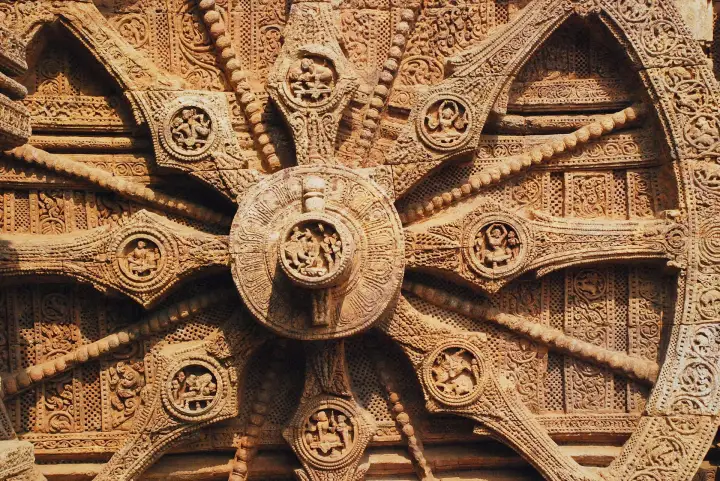
Plan your Kalinga coast drive
Kalinga's sailors are gone, but their ports, temples and festivals are still within a day's drive of Bhubaneswar. Book a self-drive car with Localdrive and follow the Sadhaba coast from Konark and Chilika up to Balasore.
Frequently asked questions
What was Kalinga's role in ancient maritime trade?
Kalinga, the ancient name for the Odisha coast and its neighbours, was one of the main sea-trading regions of eastern India. Its merchants sailed to Sri Lanka, Java, Malaya, Burma and China. Records of its ports run from Jain texts of around the 6th century BC to Chinese accounts of the 13th and 14th centuries AD.
When did Kalinga's sea trade begin and end?
Jain texts suggest organised sea trade on the Kalinga coast by around 800–700 BC. The trade shrank from the 15th century as river mouths silted up and wars weakened Odisha. It finally ended when the port of Balasore stopped working after the British ended the salt system there in 1862–66.
Who were the Sadhabas?
The Sadhabas were the seafaring merchants of Odia folk tales. They owned ships called boitas and spent months or years trading overseas. The word traces back to the Sanskrit sarthavaha, a caravan or merchant leader. The trader surname Sahu is believed to come from the related title Sadhu.
Did Kalinga have links with Java and Bali?
Yes. A Javanese tradition records Kalinga navigators founding a colony in Java in AD 75, and Tang-dynasty Chinese records describe a Javanese kingdom called Holing, the Chinese spelling of Kalinga. Odisha's Bali Jatra festival and the floating of toy boats on Kartik Purnima are widely seen as memories of the voyages to Bali.
What is Boita Bandana?
Boita Bandana is a ritual held in coastal Odisha in the month of Kartik. Women draw a ship on the courtyard floor on the new-moon night, place household items on it overnight and worship it at dawn. It's believed to come from the custom of welcoming merchant ships home.
Which ancient ports of Kalinga are known today?
Ports mentioned in the sources include Pihunda, Kanchanapura, Dantapura, Tamralipta (Tamluk), Arkatirtha (Konark), Manikapatna on Chilika, Paradip, Kalingapatnam, Palura and Balasore. The exact locations of several, including Dantapura and Pihunda, are still debated.
Did ancient Kalinga have submarines?
No. A palm-leaf Brahmanda Purana manuscript from Bhubaneswar describes copper-plated, machine-driven ships that could hide underwater, but historians treat it as unreliable since it hasn't been properly studied or dated.
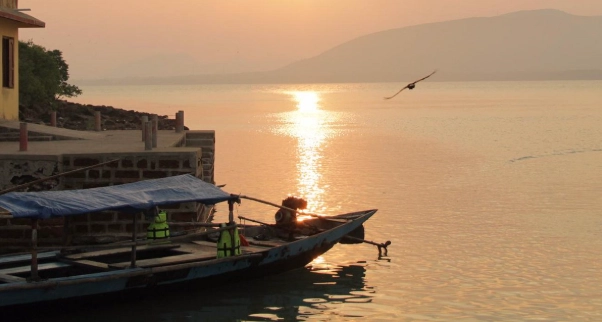
Photos: Wikimedia Commons, colour-graded by LocalDrive; they show places linked to the story, not the ancient voyages themselves. By A.Savin (FAL); Abdul harits (CC BY-SA 4.0); Hellohappy (CC BY-SA 4.0); Jnanaranjan sahu (CC BY-SA 4.0); Dr.Subhransu (CC BY-SA 3.0); Kamalakant Nayak (CC BY-SA 3.0); Bikashrd (CC BY-SA 4.0).
Related guide: Read more on the maritime heritage of Odisha.