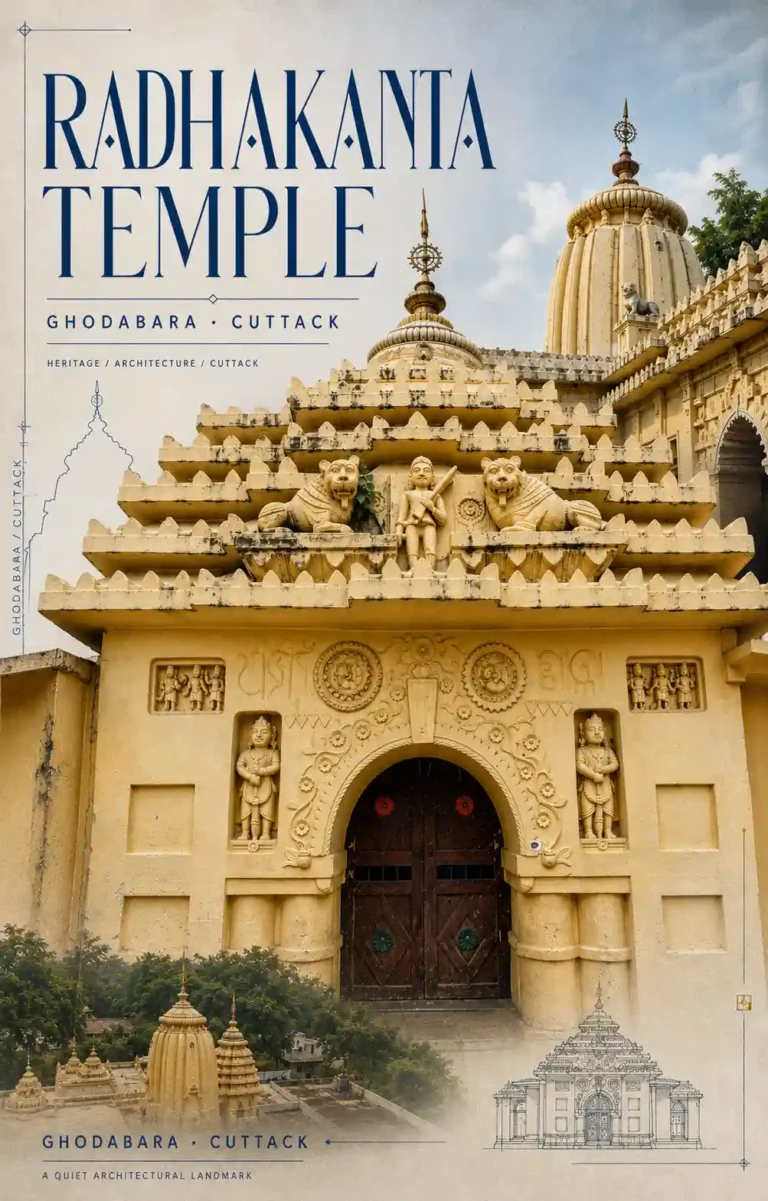
Radhakanta Temple in Ghodabara, Cuttack, Odisha, stands as an old Jagannath-related temple. Its history, traditional bhoga, connection with the Mahanadi and legends of Gajapati-era travel and trade make it an interesting heritage site. The temple sits inside Ghodabara village, approximately 48 km from Bhubaneswar.
We came across Radhakanta Temple while searching Google Maps for an old temple around Cuttack. That random search led us to a memorable village visit.
Unlike Odisha’s famous pilgrimage sites, Radhakanta Temple does not attract large crowds. Instead, the people of Ghodabara keep its traditions alive through regular worship, local stories and their connection with the Mahanadi region.Table of Contents
Location
Where Is Radhakanta Temple Located?
Radhakanta Temple is located in Ghodabara village in Cuttack district, Odisha. It is situated near the Mahanadi and the Subarnapur region.
The temple is inside the village, so the final stretch of the journey is through a narrow village road. Depending on the vehicle and road conditions, visitors may need to park outside and walk the remaining distance.
This is one reason the temple feels different from major tourist destinations in Odisha. There is no large commercial area surrounding it.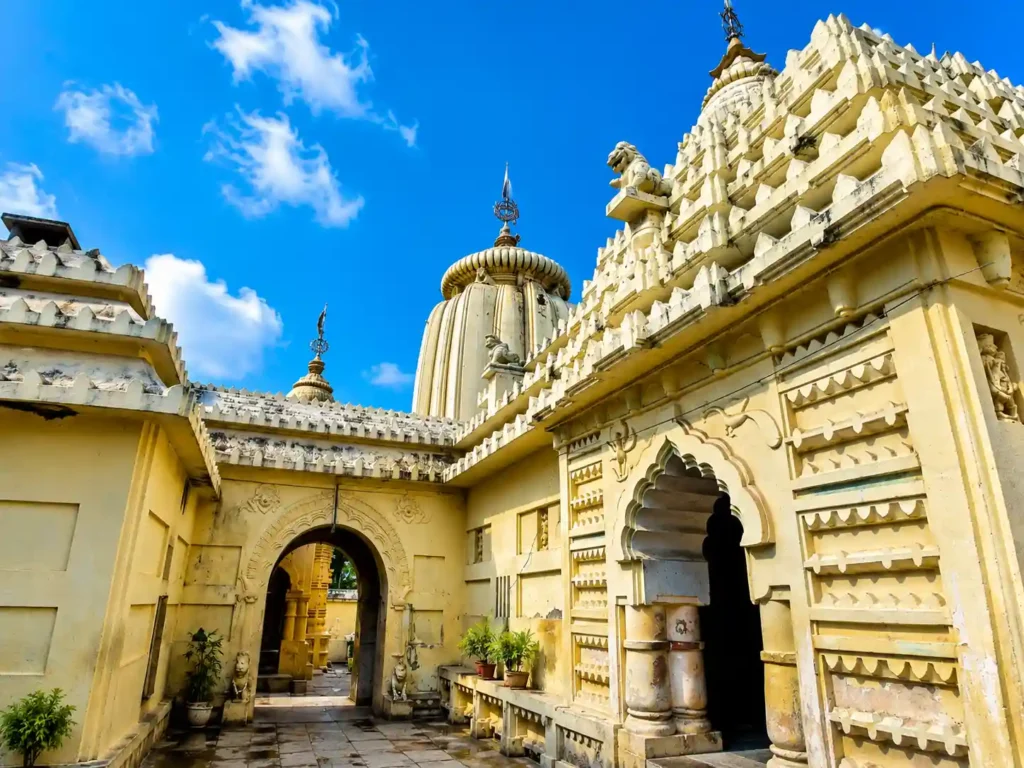
How Far Is Radhakanta Temple From Bhubaneswar?
Radhakanta Temple is approximately 48 km from Bhubaneswar.
A typical route is:
Bhubaneswar → Patia → Nandankanan → Baranga → Puri Canal Road → Godisahi Bridge → Banki Road → Debidwar → Pathapur → Subarnapur Bridge → Ghodabara → Radhakanta Temple
The exact travel time can vary depending on traffic and the condition of the final village road.What Is the History of Radhakanta Temple?
The history of Radhakanta Temple combines an older local religious tradition with the construction of the present temple.
According to local accounts, the Radhakanta idol dates back to around the 1200s. The present temple has a connection with Iswara Subudhi, who is locally associated with its establishment in the 19th century.
Construction reportedly began around 1850, while local tradition places the temple’s establishment around 1865.
Much of this history has survived through oral traditions passed down within the local community. Readers should therefore treat specific dates and details as traditional historical accounts unless independent archival sources confirm them.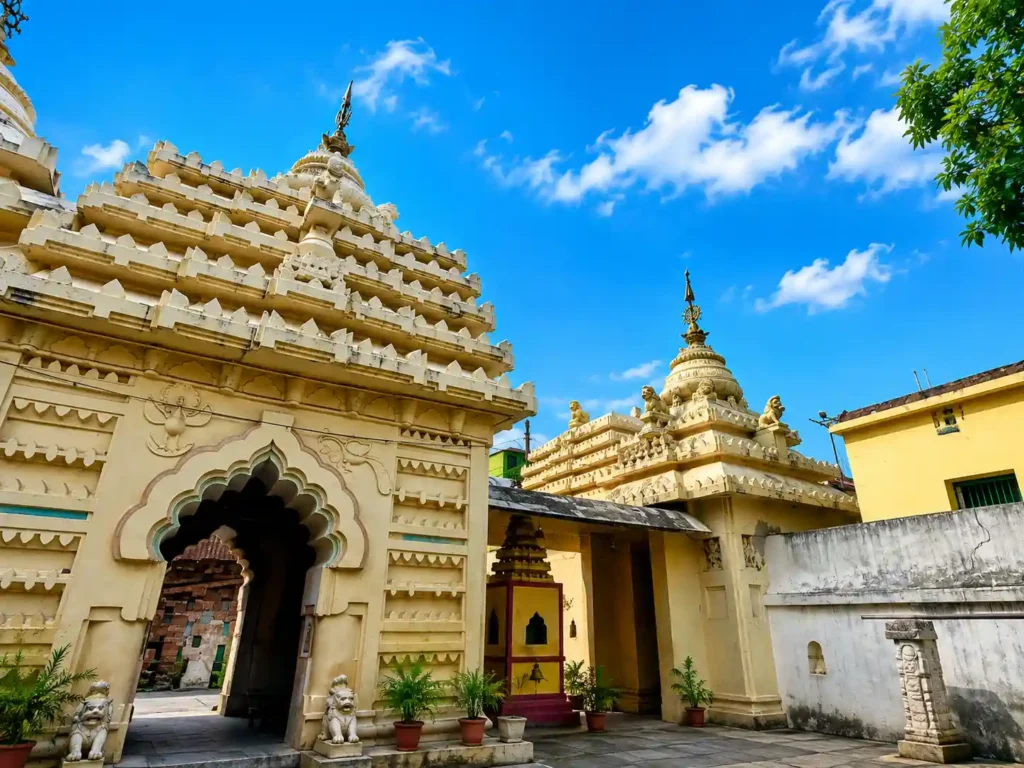
Who Built Radhakanta Temple in Ghodabara?
According to local tradition, Iswara Subudhi was responsible for establishing the present Radhakanta Temple at Ghodabara.
He is remembered locally as a devoted follower of Lord Jagannath.
The story says that Iswara Subudhi received a Swapnadesh, or divine instruction in a dream, asking him to establish a temple at Ghodabara.
Following the instruction, he established the temple and dedicated it to the worship associated with Lord Jagannath.What Is the Connection Between Radhakanta Temple and Lord Jagannath?
The temple’s strongest religious connection is with Lord Jagannath.
Local tradition says that Iswara Subudhi was a devotee of Lord Jagannath and regularly visited the Trutiya Dev Temple in Subarnapur.
According to the story associated with the temple, his devotion eventually led to the divine instruction to establish Radhakanta Temple at Ghodabara.
This makes the temple part of a wider Jagannath cultural landscape extending beyond Puri.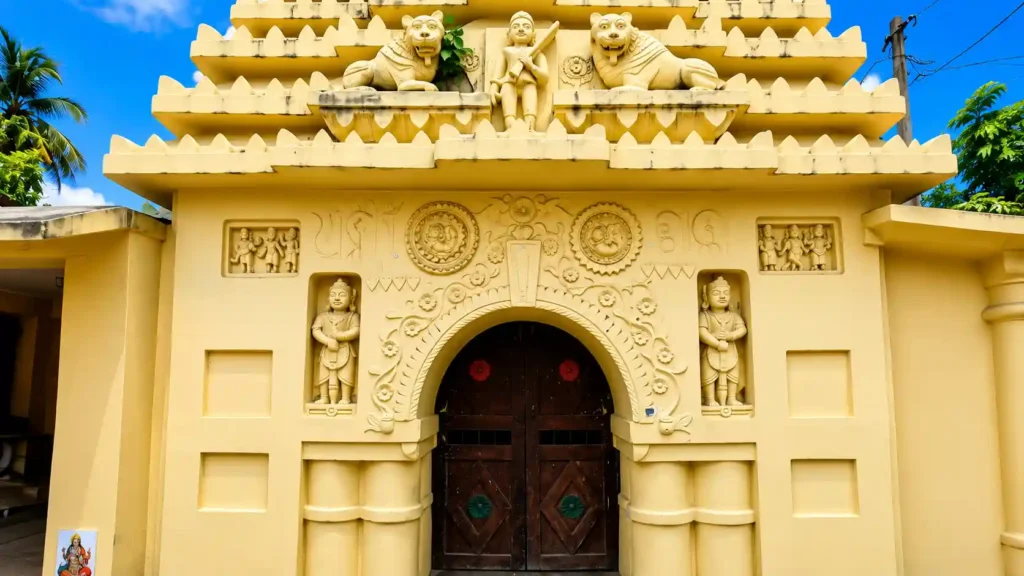
What Is the Story of Iswara Subudhi?
Iswara Subudhi is an important figure in the local history of Radhakanta Temple.
According to accounts shared locally, he was involved in the jaggery trade and maintained connections with Puri through the Mahanadi region.
He is also associated with a family whose descendants became connected with the temple and the surrounding community.
Local accounts mention five sons and their associated titles:
- Gangadhar Mahapatra
- Bhagirathi Samantray
- Bhagaban Choudhuri
- Narayan Sahoo
- Hadibandhu Raktabuddhi
How Was the Temple Connected With Mahanadi Trade?
The Mahanadi played an important role in transportation and trade across Odisha.
According to local tradition, Iswara Subudhi traded jaggery and transported it to Puri through the Mahanadi route.
He reportedly brought paan from Puri and supplied it to areas such as Dhenkanal and Angul.
This trade history connects Radhakanta Temple with more than religious traditions.
The temple’s story also shows how rivers connected villages, markets and pilgrimage centres through trade.
One of the most interesting aspects of Ghodabara is this connection between the temple’s history and the Mahanadi’s role in the region.Why Is Ghodabara Called Ghodabara?
Local tradition links Ghodabara with horses, while folklore connects the nearby village of Karabara with elephants.
According to local tradition, Gajapati Kings travelled towards Banki along the Mahanadi route.
On the southern side of the river, the kings reportedly rested their elephants beneath banyan trees in the area associated with Karabara.
After crossing the Mahanadi, they travelled onward by horse and reportedly kept the animals beneath banyan trees around present-day Ghodabara.
Since “Ghoda” means horse in Odia, local tradition links the name Ghodabara to the horses that once stayed in the area.
This story comes from oral tradition rather than confirmed historical evidence, but it remains an important part of Ghodabara’s cultural memory.What Bhoga Is Offered at Radhakanta Temple?
Radhakanta Temple serves traditional bhoga such as Korakhai, Ukhuda, fruits, Khechudi, Arua Anna, Dalma, Ghanta Tarkari and Khiri.
What Does the Temple Serve as Regular Bhoga?
The temple serves these items as regular bhoga:
- Korakhai
- Ukhuda
- Fruits
What Does the Temple Serve as Sankhudi Bhoga?
The temple prepares Sankhudi Bhoga with:
- Khechudi
- Arua Anna
- Dalma
- Ghanta Tarkari
- Khiri
What Does the Temple Serve as Ratri Bhoga?
The temple serves these items as Ratri Bhoga:
- Arua Anna
- Dahi
- Dalma
- Badsingara
A notable local tradition avoids sugar in these preparations. Instead, temple cooks use jaggery and kanda for certain sweet dishes.
This tradition gives visitors an interesting glimpse into the food practices of traditional Odia temples.Which Festivals Does Radhakanta Temple Celebrate?
Radhakanta Temple celebrates two important festivals: Dola Purnima and Janmashtami.
Dola Purnima
Dola Purnima holds an important place in Odisha’s Vaishnava and Jagannath traditions, and devotees celebrate the festival at Radhakanta Temple.
Janmashtami
Janmashtami marks the birth of Lord Krishna, and devotees also observe the festival at Radhakanta Temple.
During these festivals, devotees gather at the temple and bring more activity to the otherwise peaceful village surroundings.What Is Special About the Dharmashala?
One unusual feature of Radhakanta Temple is its Dharmashala within the temple premises.
Instead of being completely separate from the religious complex, the resting or accommodation space forms part of the wider temple environment.
This reflects an older idea of the temple as more than a place of worship—a space connected with community, hospitality and social life.What Does Radhakanta Temple Look Like?
One unusual feature of Radhakanta Temple is its Dharmashala within the temple premises.
Instead of being completely separate from the religious complex, the resting or accommodation space forms part of the wider temple environment.
This reflects an older idea of the temple as more than a place of worship—a space connected with community, hospitality and social life.Is Radhakanta Temple Worth Visiting?
Yes, Radhakanta Temple is worth visiting if you enjoy lesser-known temples, Jagannath traditions, Odisha history and rural cultural heritage.
You may not enjoy the temple as much if you expect a large complex, extensive tourist facilities or a busy pilgrimage destination.
However, Ghodabara offers a more personal experience for visitors who want to see how a temple remains connected to everyday village life.
The temple’s size is not its biggest attraction.
Its real appeal lies in the stories, traditions and community connection surrounding it.How to Reach Radhakanta Temple From Bhubaneswar?
Route From Bhubaneswar
Follow the general route: Bhubaneswar → Patia → Nandankanan → Baranga Chakka → Puri Canal Road → Godisahi Bridge → Banki Road → Debidwar → Pathapur → Subarnapur Bridge → Ghodabara Once inside Ghodabara village, the road becomes narrower.Travel Tip
If your vehicle cannot comfortably enter the final village lane, park at a suitable location outside and walk to the temple. It is also sensible to check the route on Google Maps immediately before travelling because rural road conditions can change.Radhakanta Temple Ghodabara: Quick Facts
| Feature | Details |
|---|---|
| Temple | Radhakanta Temple |
| Location | Ghodabara, Cuttack, Odisha |
| Distance from Bhubaneswar | Approximately 48 km |
| Religious tradition | Jagannath / Radhakanta |
| Present temple | Associated locally with the 19th century |
| Local founder tradition | Iswara Subudhi |
| Important festivals | Dola Purnima, Janmashtami |
| River connection | Mahanadi |
| Traditional bhoga | Korakhai, Ukhuda, Khechudi, Dalma, Khiri and others |
| Nearby region | Subarnapur and Banki |