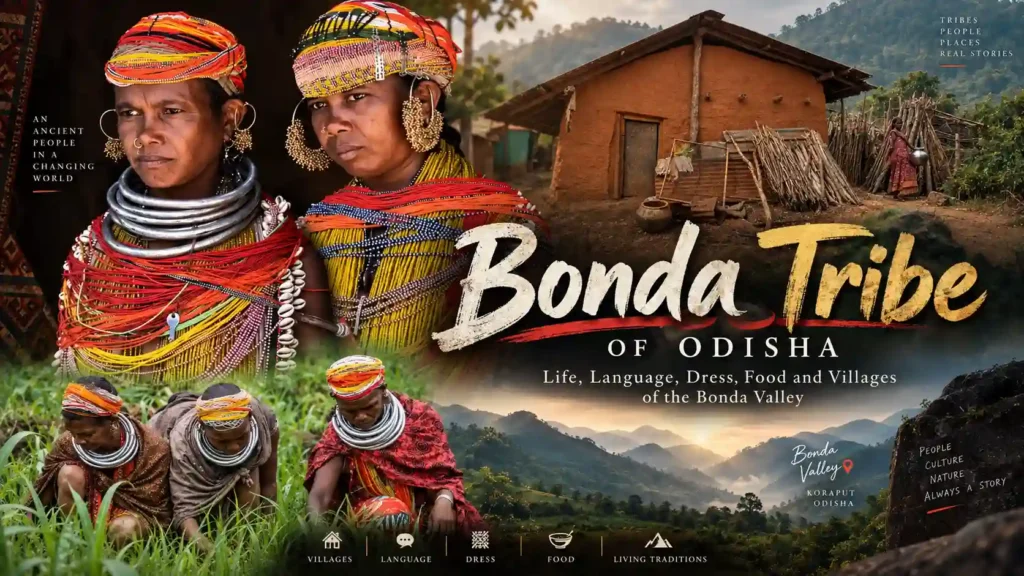
Where the Bonda Live
The Bonda are associated with the Bonda Valley of Koraput district in Odisha, particularly the hill settlements around Mudulipada and surrounding villages.
The terrain has always influenced movement. Villages are separated by hills and forest, and some services require travel outside the immediate settlement.
In the account from the Bonda villages, residents described walking roughly 15 km to reach Mudulipada before continuing onward for other transport and services. Roads have improved in some areas, but walking remains necessary for certain journeys.
A government primary school is available in the area, while students seeking higher education have to travel farther.
Healthcare is also not located inside every settlement. Residents described travelling outside their village for treatment.
Bonda Language: Remo
The Bonda language is generally known as Remo.
It belongs to the Munda branch of the Austroasiatic language family and is one of the features that distinguishes the Bonda from neighbouring communities.
Visitors cannot assume that Hindi or Odia will be understood everywhere. At the same time, younger residents and people who interact regularly with outsiders may know other languages.
The language remains part of ordinary conversation inside Bonda households and villages.
Several objects were identified using local Bonda words, including names for clothing, ornaments, household objects and food.
That vocabulary is tied to things people actually use.
Bonda Women and Traditional Clothing
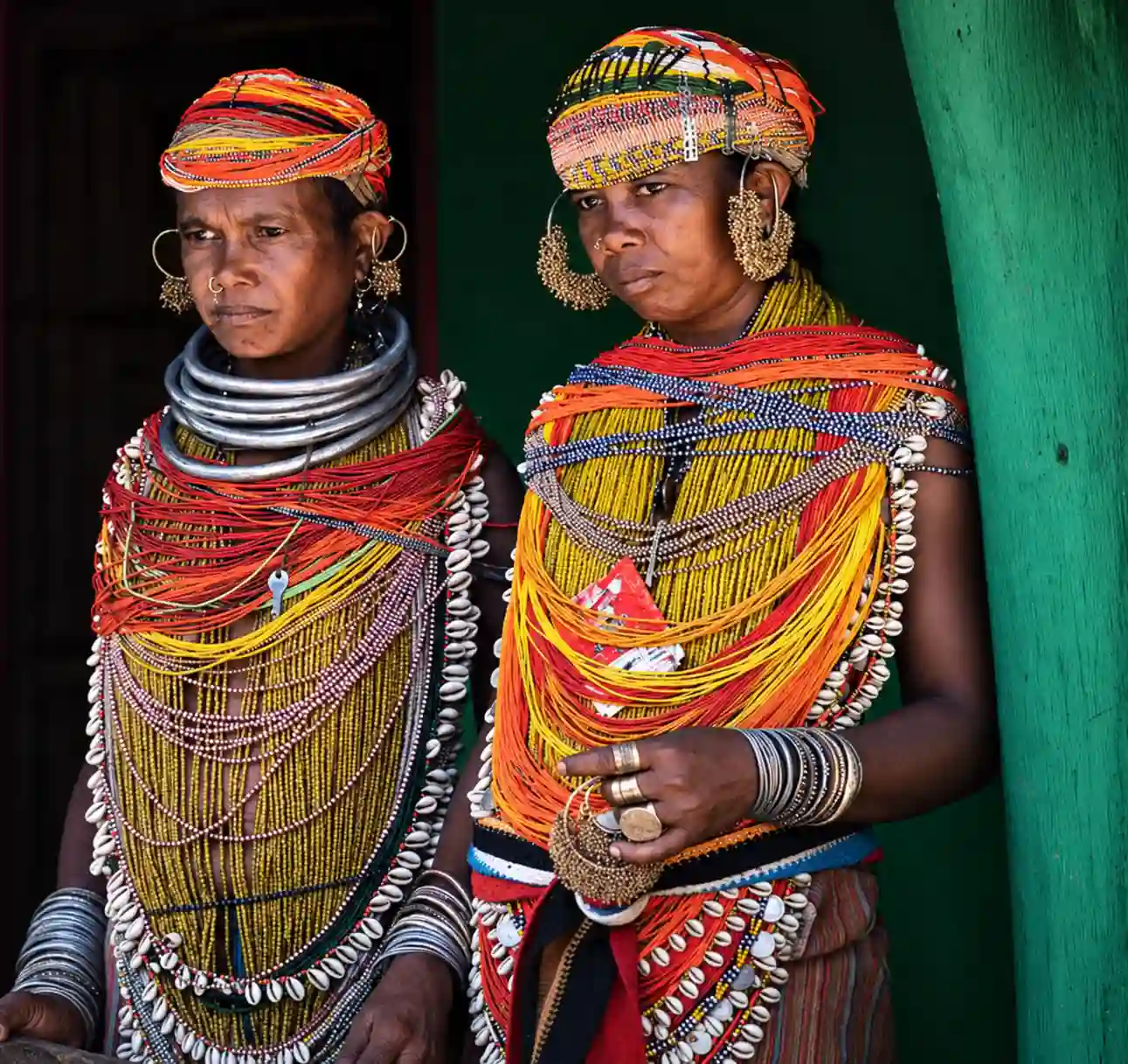
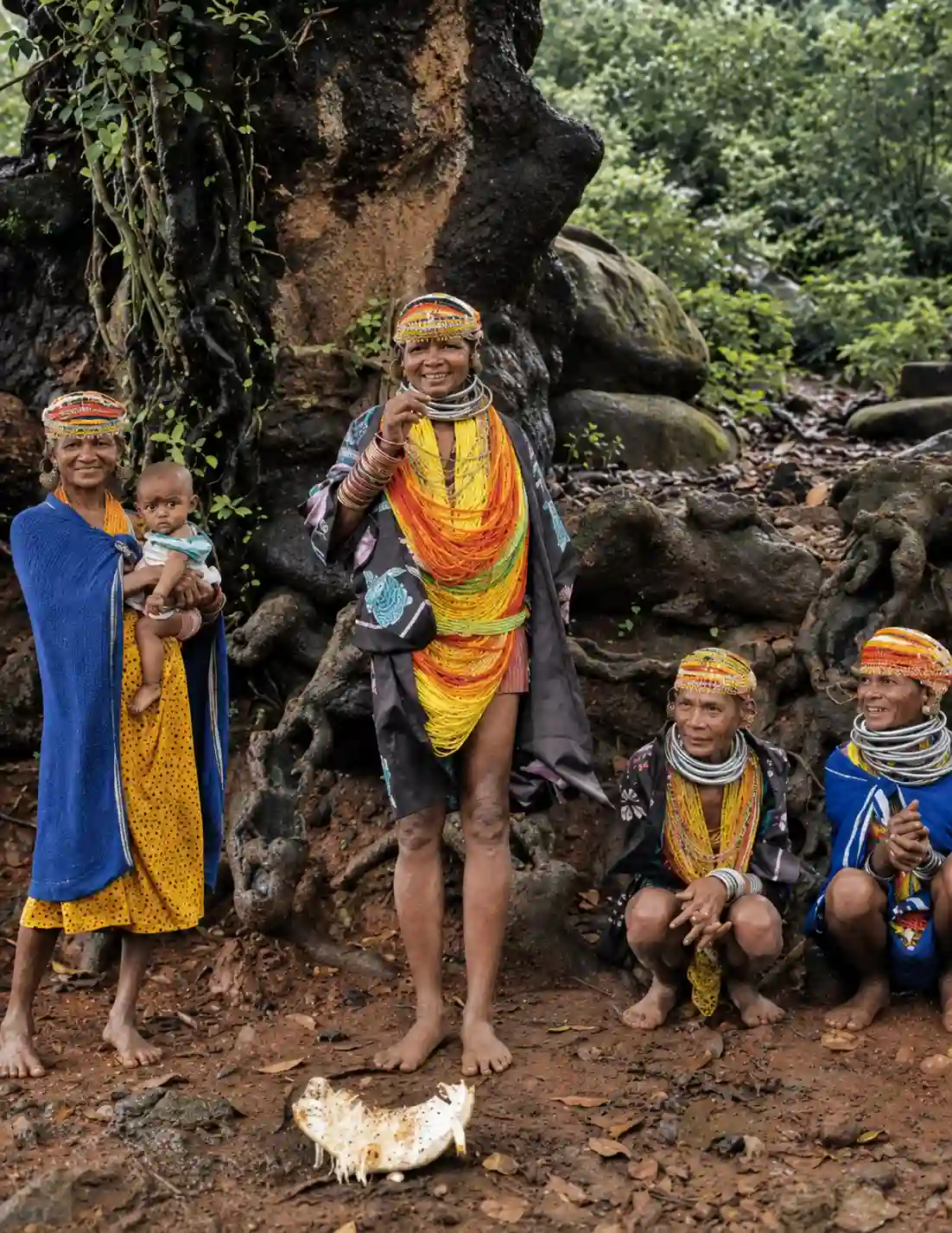
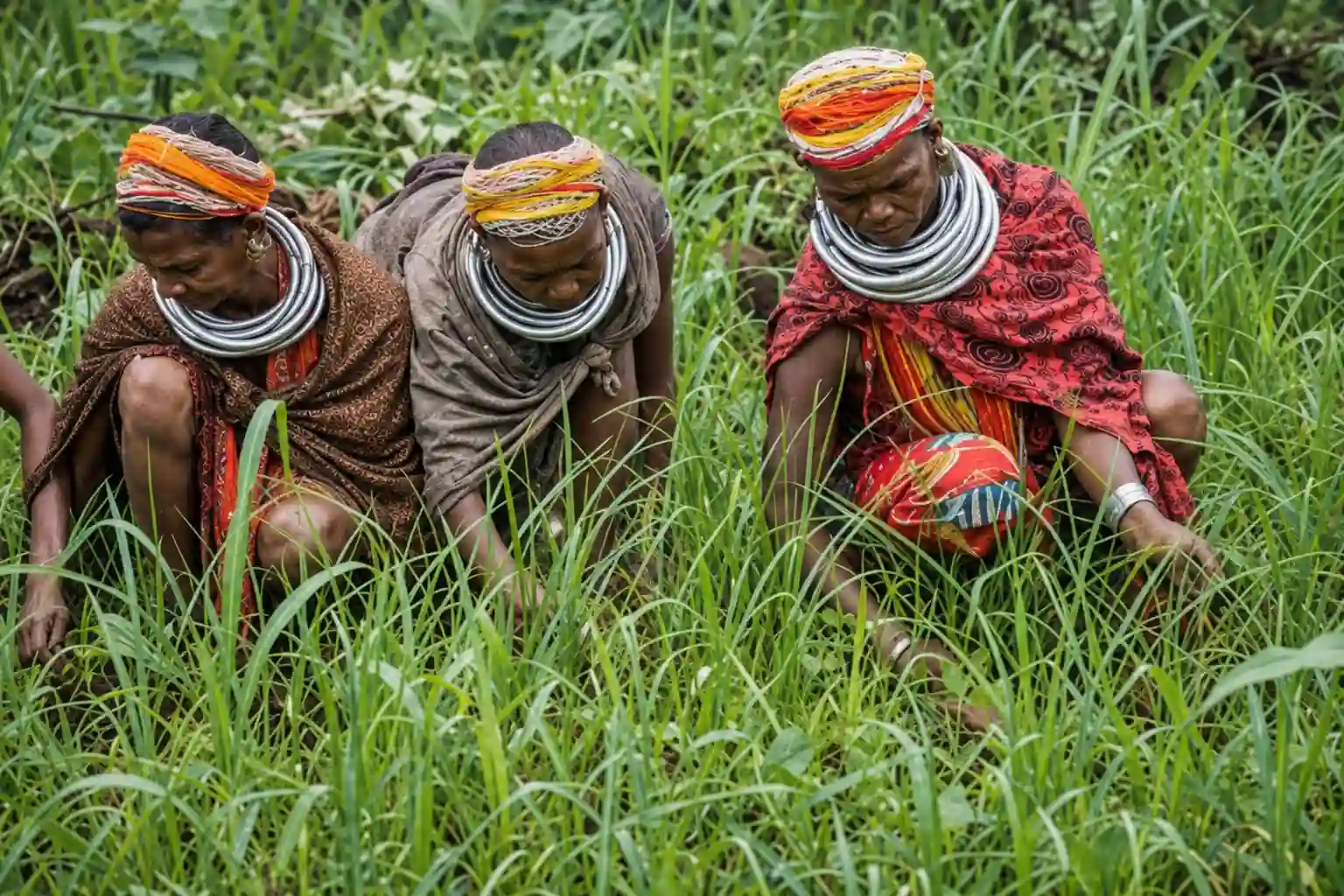
The appearance of Bonda women is perhaps the first thing outsiders notice.
Older descriptions often mention clothing made from tree bark. That form of dress is no longer the normal everyday clothing in the villages described in the source. Women seen there were wearing modern fabric garments, while older forms of Bonda dress remain part of cultural memory and identity.
The traditional style is better understood as something that has changed rather than something that has simply disappeared.
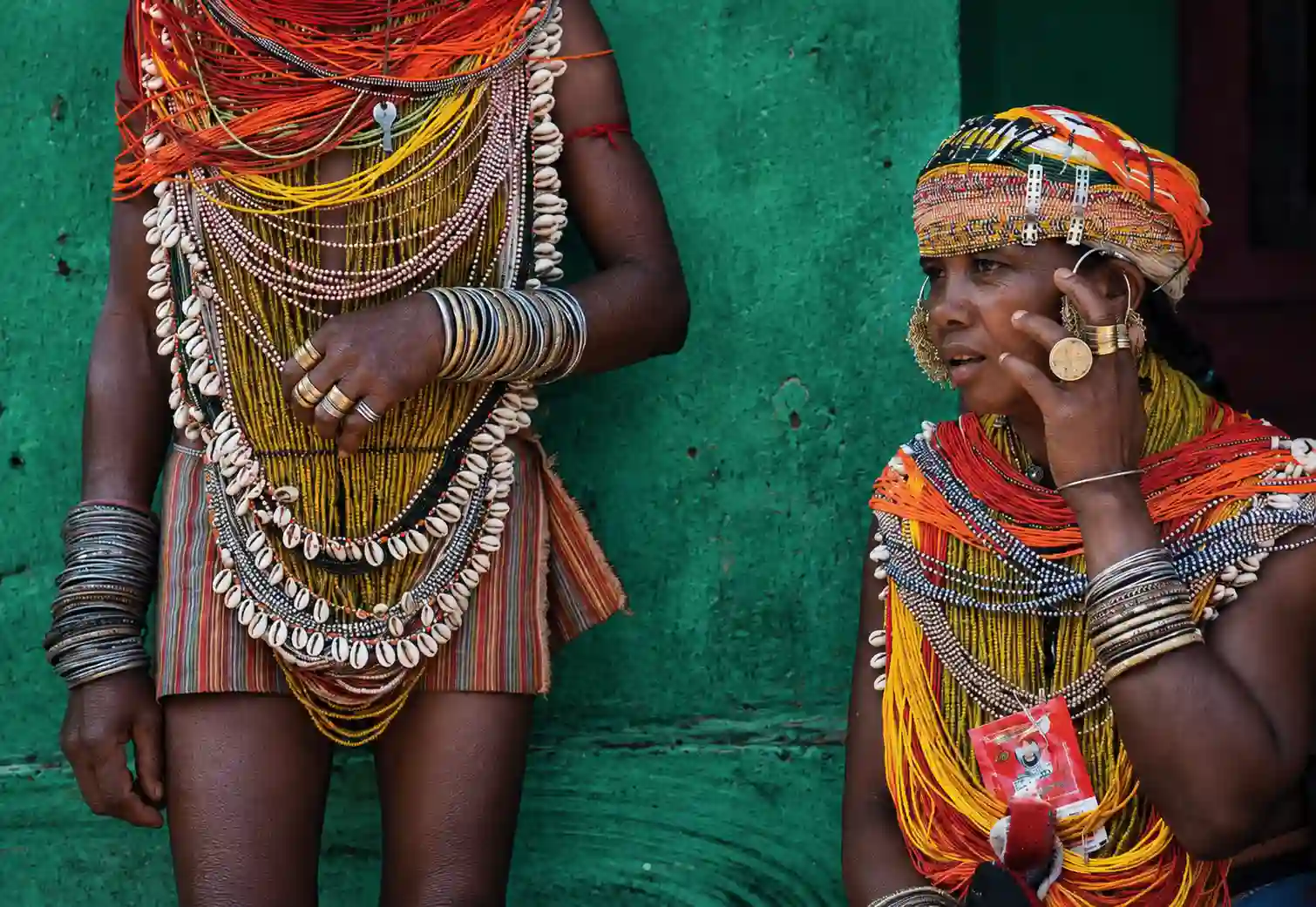
Heavy necklaces remain particularly noticeable.
Women may wear several necklaces made from aluminium or other metals, along with earrings, bangles and other ornaments. Some jewellery may contain silver, gold, brass or mixed materials, depending on the piece.
The necklaces can be substantial in weight.
According to women interviewed in the village, some are worn continuously, including while sleeping. The ornaments are not simply items brought out for a festival.
Why Some Bonda Women Keep Their Hair Short
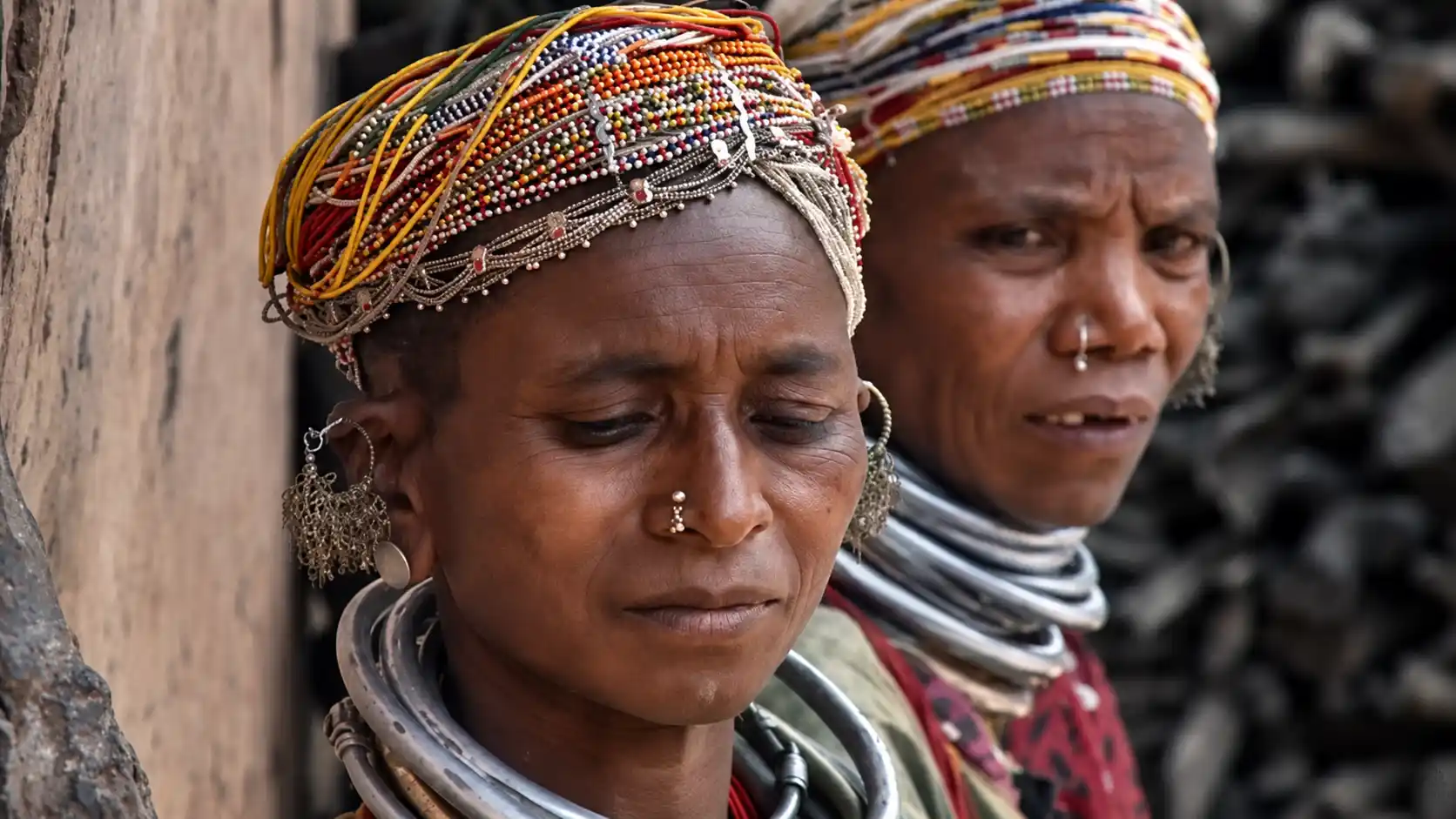
The hairstyle seen among some older Bonda women has a practical explanation given by residents themselves.
The heavy necklaces sit around the neck and upper chest. Short or closely managed hair allows the ornaments to sit securely rather than resting heavily against longer hair.
It is a small detail that is easy to miss in photographs.
The jewellery, hairstyle and clothing work together as part of the traditional appearance.
Ringa and Older Forms of Dress
The name Ringa in connection with an older form of Bonda clothing.
Residents explained that this older garment is no longer commonly worn.
The change is significant when comparing photographs or travel videos from different periods. A visitor expecting every woman to appear in bark or traditional dress may instead find women wearing contemporary fabrics while retaining traditional jewellery.
Clothing has changed faster than some other visible elements of Bonda identity.
Bonda Houses
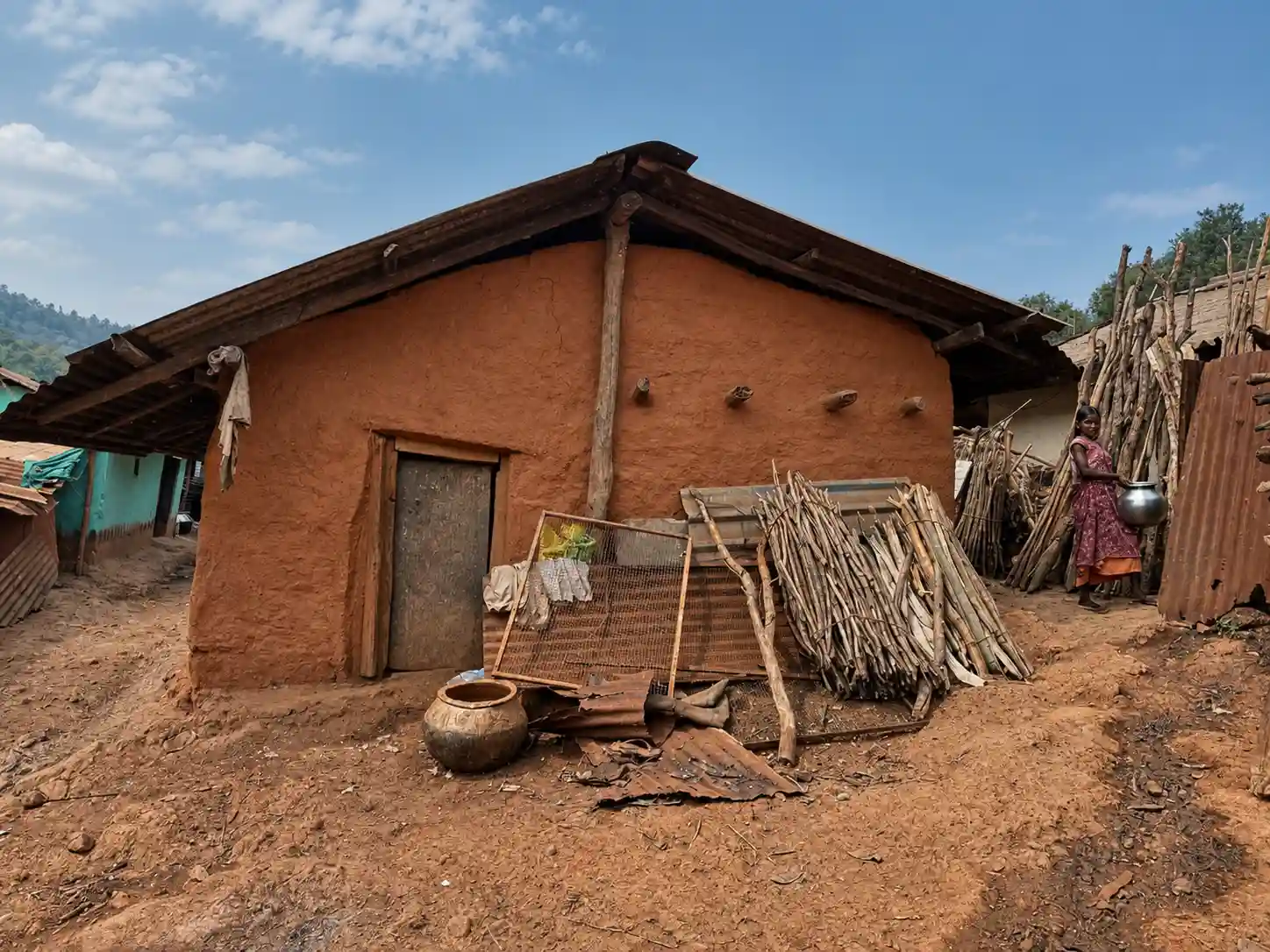
Bonda houses are generally built with locally available materials.
Mud is used extensively for walls. Wooden elements provide structure and storage. Some interiors have mud surfaces finished with hand-applied patterns.
Houses that remain noticeably cool inside, particularly compared with the heat outside.
There may be separate spaces for sleeping, cooking and storing agricultural produce. Where space is limited, mats and blankets are used for sleeping instead of beds.
Storage structures are often made from wood or bamboo. Agricultural products such as millet and other crops are kept inside or above the living area.
A house therefore has to serve several functions at once.
Cooking Inside a Bonda Home
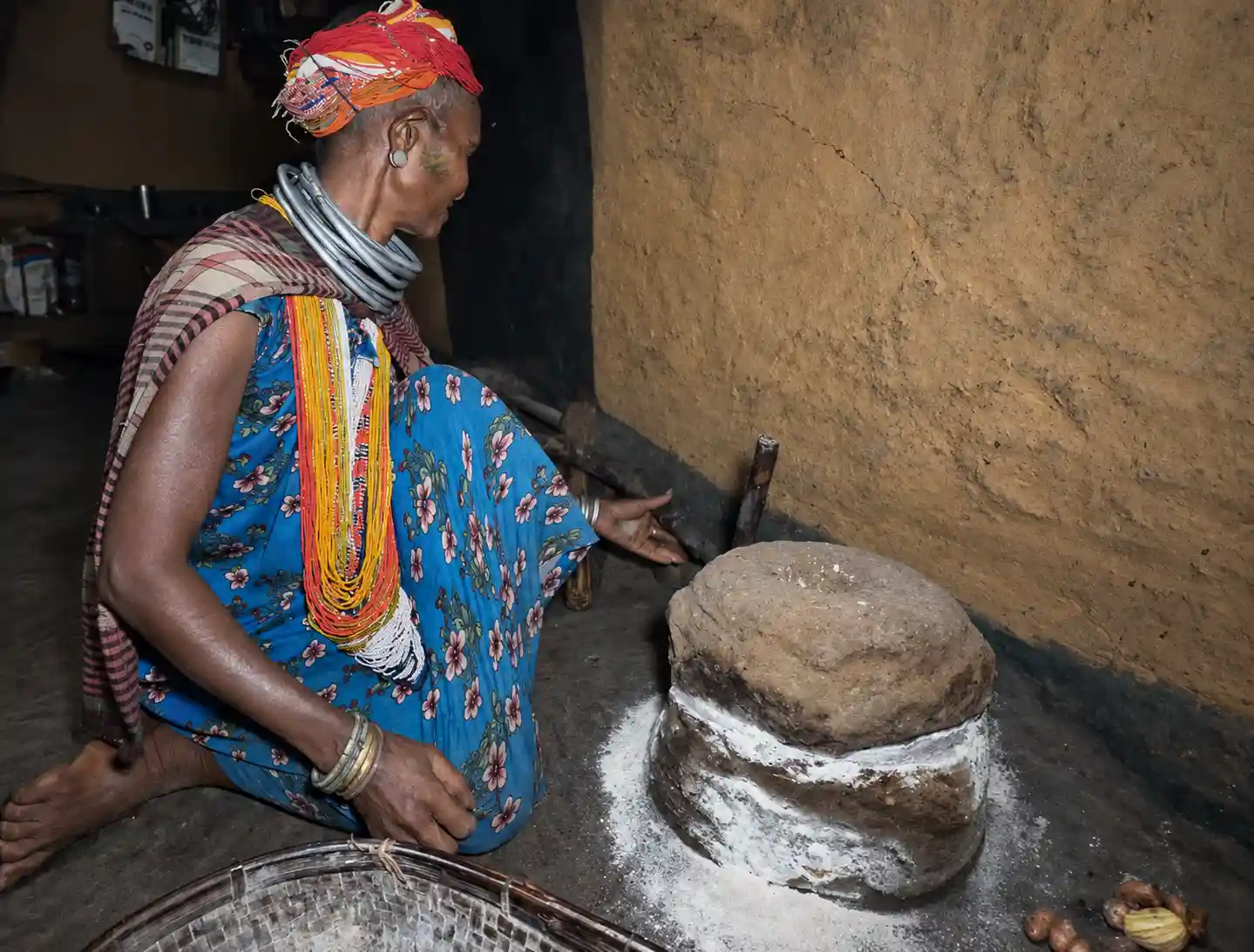
The traditional cooking arrangement described in the villages uses three stones placed together as a simple hearth.
A cooking vessel is positioned above the stones while firewood burns underneath.
Firewood is collected locally and used for cooking. Large aluminium vessels are common in the household kitchens shown in the source.
Food storage is closely tied to agriculture. Grain, vegetables and seeds may be kept inside the house rather than in a separate modern storage building.
The kitchen is not necessarily a separate room in the way it would be in an urban home.
Mandiya and the Bonda Diet
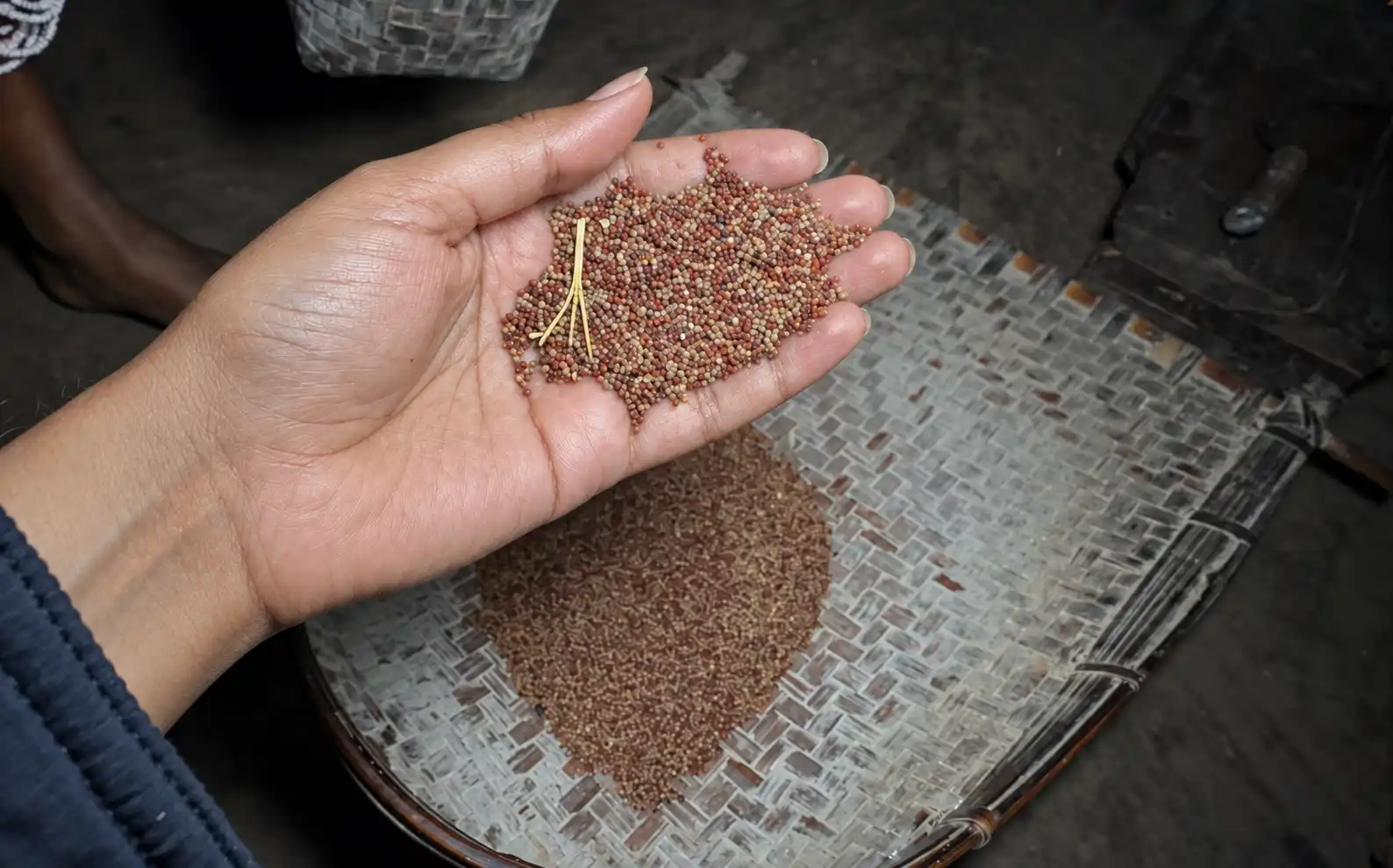
Mandiya, referring to finger millet or ragi, is an important crop and food in the area described.
The preparation shown in the source involves several stages. The grain is dried, washed and pounded. It is then ground into a powder.
The powder can be mixed with hot water to prepare a drink or food.
Millets fit the agricultural conditions of the region and remain part of the local diet alongside rice, vegetables and other foods.
Jackfruit seeds are also cooked as a vegetable.
The food system is no longer completely isolated from outside markets. Packaged foods such as noodles and other commercially produced items have reached the villages as well.
Farming Has Replaced Much of the Older Hunting Economy
Hunting appears in many descriptions of the Bonda, but residents interviewed in the source said that hunting is no longer an ordinary daily activity.
The bow and arrows shown in the village are traditional hunting equipment. Residents explained that such weapons may still appear in traditional contexts and festivals, rather than being carried every day for routine hunting.
Agriculture now occupies a major place in village life.
Millets, rice, vegetables, fruits and other crops are grown according to the land available to each household.
Men interviewed in the source described going into the surrounding area for agricultural and forest-related work. Women handle substantial amounts of household and agricultural work as well.
Animals Around the Village
Cattle, goats and other domestic animals are kept by families.
One unusual detail from the interviews concerns milk. Residents said that cattle are not generally kept for milk consumption in their area.
Forest animals mentioned during the visit included deer, wild boar and bear. The residents distinguished between animals living in the forest and those entering the settlement.
The surrounding forest remains physically close to village life.
Water Is a Daily Practical Problem
Water access is one of the less visible difficulties of life in the hills.
Residents described using water emerging from natural sources in the forest and bringing it toward the settlement through pipes. The absence of a conventional well or hand pump in the village visited.
The distance to a reliable water source can make an ordinary household task involve walking.
Electricity has reached the villages. Residents said power is generally available, although heavy rain can cause interruptions.
Mobile connectivity has also arrived in places. The visit recorded working mobile internet inside the valley.
The presence of a smartphone signal alongside difficult water access says more about the uneven arrival of infrastructure than any simple description of the Bonda as either “isolated” or “modern.”
Toilets Are Still Missing in Some Villages
Residents said the village visited did not have household toilets. Men, women and children therefore went outside to defecate.
Bathing arrangements were different, with some households having their own bathing spaces.
This distinction matters when describing living conditions. Electricity and mobile connectivity do not automatically mean that every basic public facility has arrived.
Schools and Young Bonda Residents
Education has reached the Bonda settlements through government schools.
A primary school serves children in the area, while students wanting to continue beyond the local level have to travel.
The interviews also included young people who had completed technical education such as ITI training. That is a very different path from the forest-based livelihood often associated with older descriptions of the community.
Not every child attends school regularly. Some children remain at home, while others attend the available schools.
The younger generation is therefore growing up between two settings: the Bonda village and the institutions outside it.
A Small Village Market Can Arrive on a Motorcycle
A conventional shopping street is not necessary for goods to reach a remote settlement.
A motorcycle being used as a mobile shop, bringing goods into the village.
For residents, this provides access to products without requiring every purchase to involve a long journey.
The same village can therefore have traditional agricultural storage, mud houses and forest paths alongside packaged food and mobile commerce.
Bonda Women Have Strong Economic and Household Roles
The source repeatedly shows women working inside the household, processing grain, cooking, caring for family members and maintaining domestic spaces.
Women also make and repair clothing. One woman interviewed had sewing skills and provided stitching services for people in the village.
Claims that “women rule” Bonda society are sometimes repeated in travel descriptions, but such a statement is too broad without specifying the social institution being discussed.
What can be observed from household life is that women perform substantial productive and domestic work, while men also undertake farming and forest-related work. Household responsibilities do not fit neatly into an urban division of labour.
Marriage Customs
Bonda marriage customs have attracted considerable attention because of age differences between spouses.
The women may marry younger men and gives the explanation that a younger husband may be better able to care for his wife when she reaches old age.
This should be presented as an explanation given within the account, not as a rule followed by every Bonda family.
Marriage practices can vary between households and over time.
A Community Under Government Protection
The Bonda are classified among Odisha's Particularly Vulnerable Tribal Groups (PVTGs).
Government programmes have focused on education, healthcare, infrastructure and livelihood support in Bonda-inhabited areas.
The shift has not happened all at once.
A village can have a government school and electricity while still lacking toilets. A mobile phone can work where reaching a hospital requires a long journey. Roads can improve without eliminating the need to walk between hill settlements.
These uneven changes are part of the present-day Bonda landscape.
What Has Changed—and What Has Stayed
Several features described in older accounts have changed.
Changed or changing:
- Everyday clothing has shifted toward modern fabrics.
- Packaged foods are available.
- Mobile phones are used.
- Electricity has reached villages.
- Government schools operate in the region.
- Road access has improved.
- Young people are pursuing technical education.
- Agriculture has become more important than traditional hunting.
Still visible:
- Remo language
- Traditional jewellery
- Mud-and-wood houses
- Millet cultivation
- Local food preparation
- Village-based social life
- Traditional agricultural tools
- Knowledge of the surrounding forest
- Older forms of ceremonial clothing and customs
The Bonda Valley therefore cannot be accurately described as a place frozen in the past.
It has changed, but the changes have arrived unevenly.
Visiting Bonda Villages Requires Permission and Respect
For anyone considering a visit: the traveller first approached the village sarpanch and obtained permission before entering and filming.
That should not be treated as an optional courtesy.
Bonda villages are residential communities, not open-air museums. A visitor should seek local permission before entering private homes, photographing people or recording conversations.
Some residents may not want to appear on camera. That choice should be respected.
The same applies to children. Offering food or gifts should be handled carefully and, where appropriate, through local guides or village representatives rather than assuming that visitors can distribute things freely.
A local guide can also help with language and introductions.
The Bonda Valley Is Not a Tourist Set
Photographs of Bonda women wearing heavy jewellery can make the community look distant from contemporary India.
The villages tell a different story.
A woman may wear traditional necklaces and use a modern sewing machine. A mud house may have electricity. A farmer may grow millet while a child uses a smartphone. A traditional bow may remain in a household even though hunting is no longer the family's daily livelihood.
Those combinations are not contradictions that need to be resolved.
They are simply part of present-day Bonda life in Odisha.
Read more about the region: https://localdrive.in/koraput-odisha-tourism-unveiling-the-untouched-tribal-heartland-of-india/