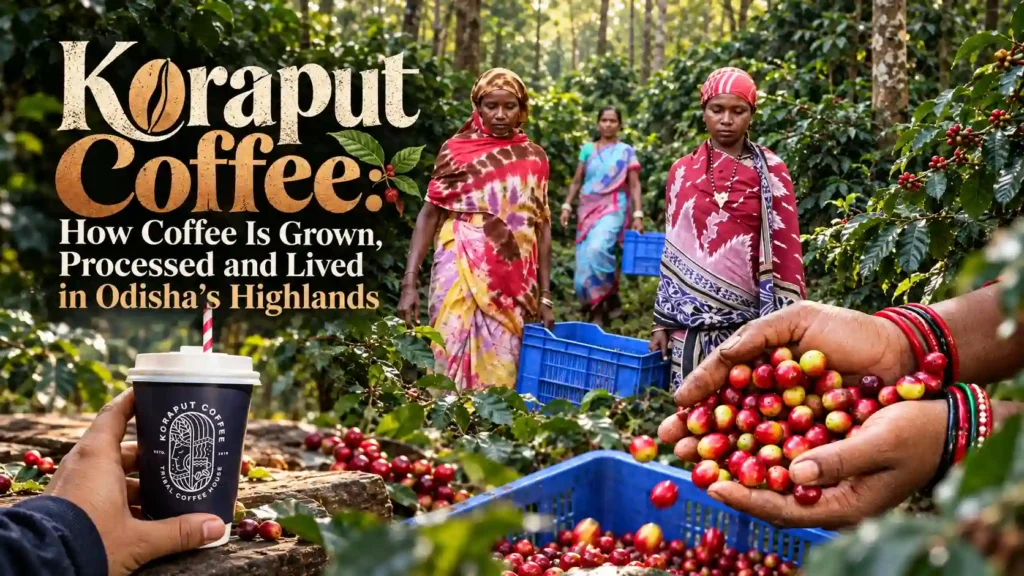
Arabica is grown on small holdings under shade in the Koraput highlands. A 2026 study in Scientific Reports examined district coffee records covering 2006 to 2025 and described the crop as an important cash crop for tribal households.
The records also show something that a short farm visit cannot: production changes from one year to another, and the pattern is different across blocks.
The Setting: Highland Farms and Shade
Coffee needs a particular growing environment, and the Koraput highlands provide one. The district has elevated terrain, substantial rainfall and a cooler climate than many surrounding lowland areas.
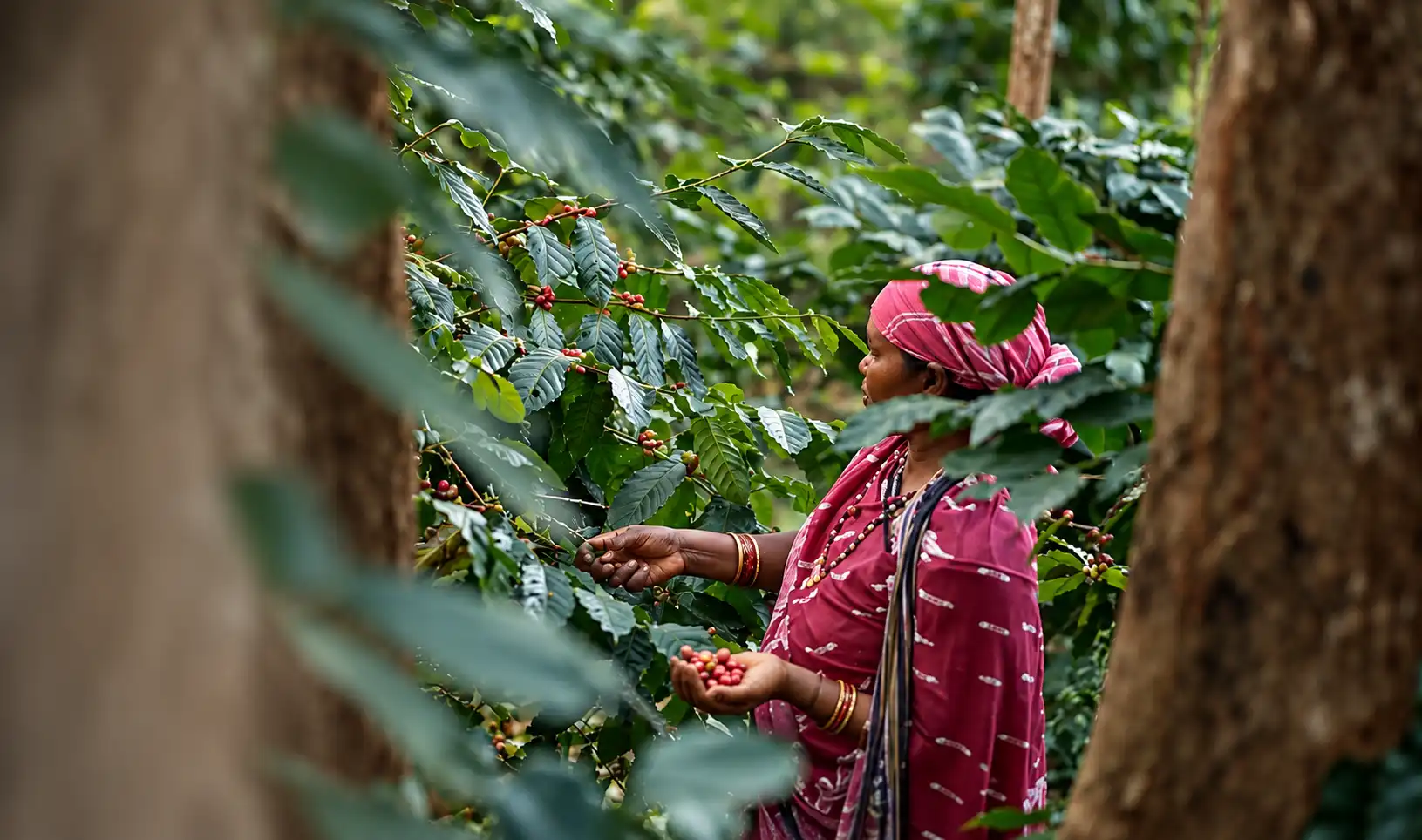
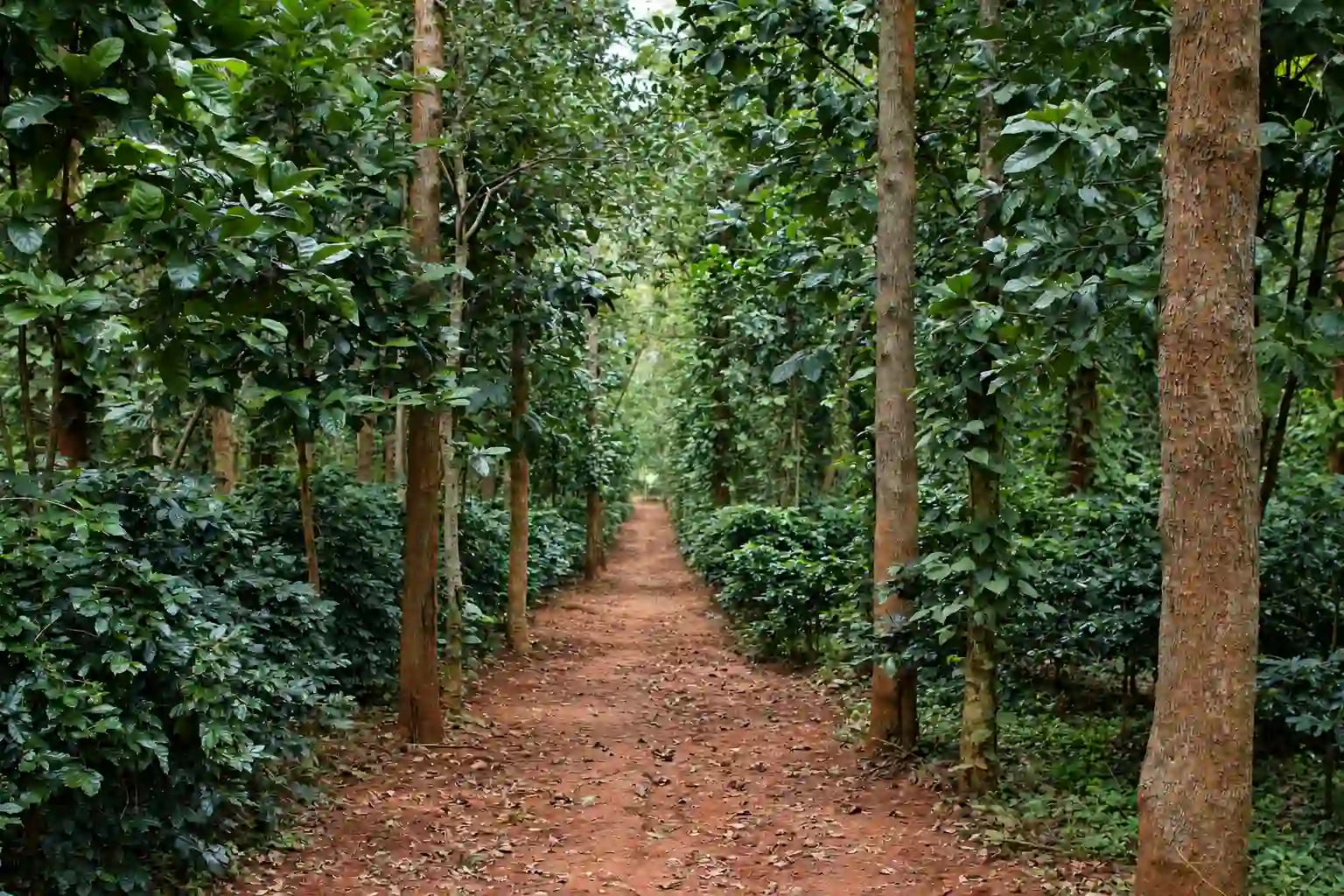
On the farms, coffee is commonly grown beneath existing trees. The shade canopy changes the appearance of the plantation and also means that coffee is being cultivated within a mixed vegetation system rather than a bare field.
Walk a little farther into one of these farms and other crops begin appearing. Cardamom, cinnamon and pepper can share the same agricultural space.
A History That Goes Back to Jeypore
Coffee cultivation in the Koraput region is linked with the old Jeypore royal establishment. Local accounts connect early planting with the period of Maharaja Vikram Dev IV.
The crop did not remain confined to that early stage. Over the years, coffee cultivation spread into farming areas of the district. Government programmes later encouraged tribal communities to take up coffee cultivation, including in areas where shifting cultivation had been practiced.
Today, the older history and newer planting programmes exist side by side. Mature coffee trees can be found in established plantations, while nurseries continue producing seedlings for new planting.
Before the Plantation: The Coffee Nursery
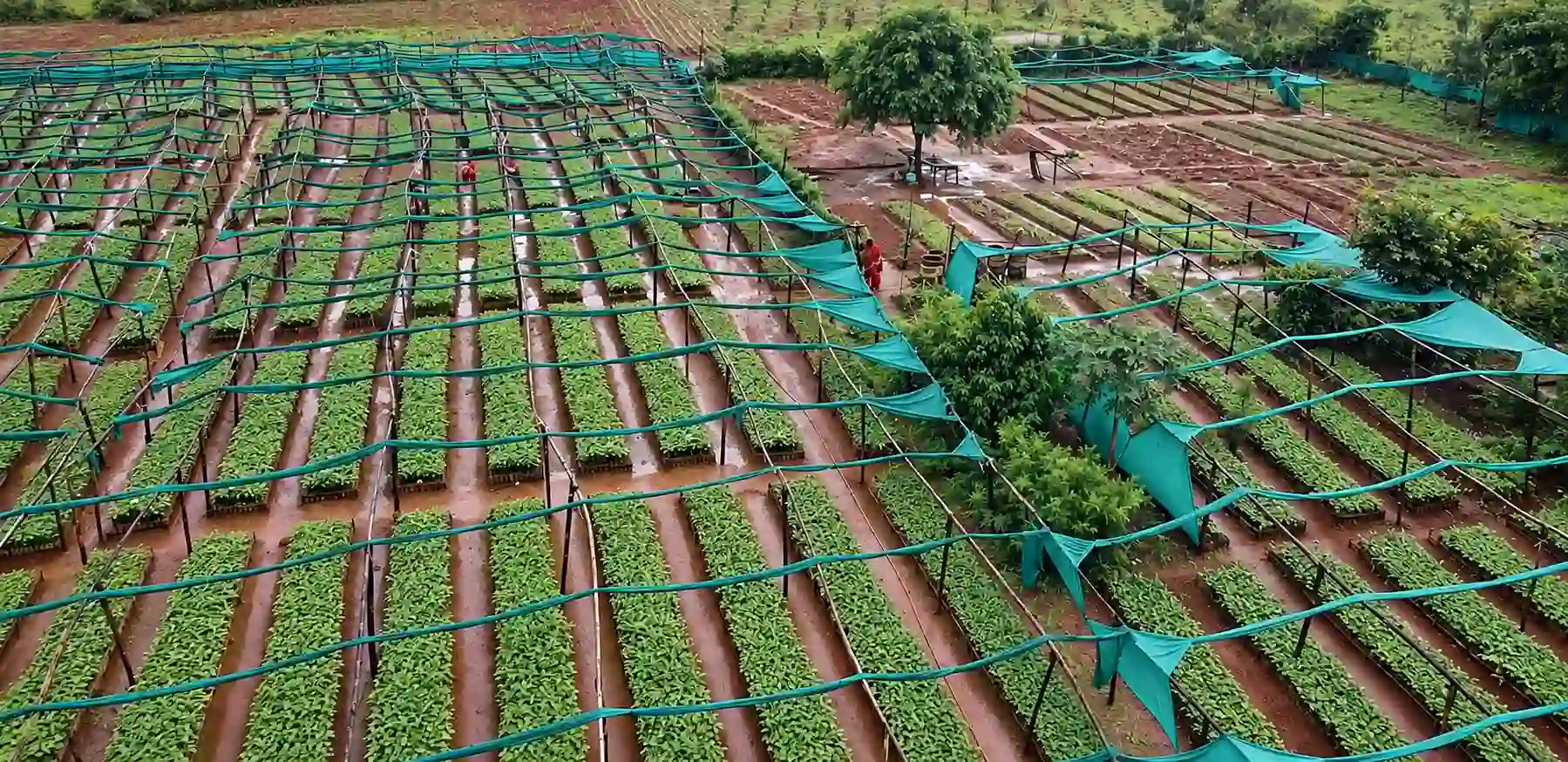
A coffee seedling spends a considerable amount of time in a nursery before it is ready for a field.
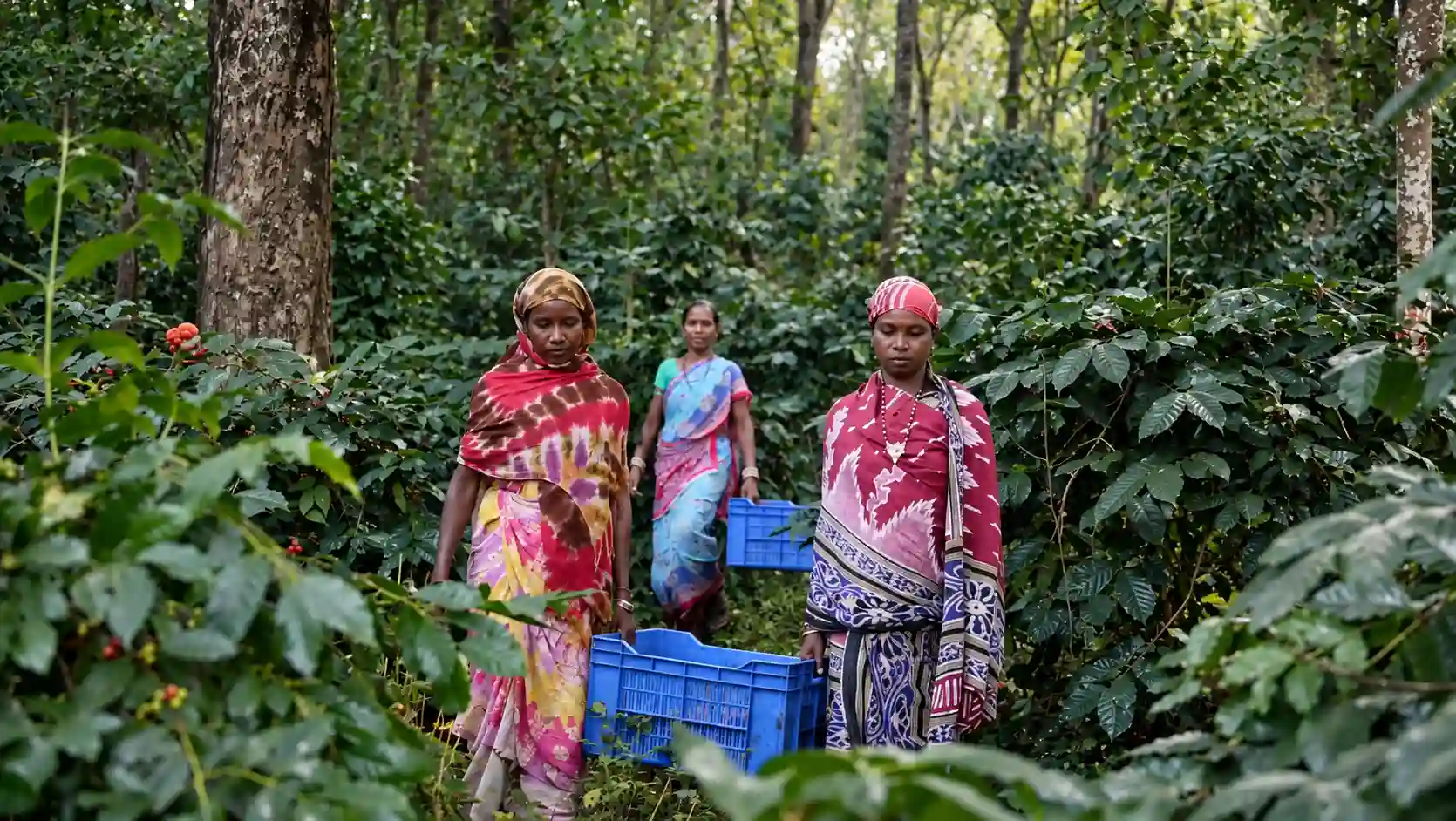
The workers first prepare the beds. Soil, sand and manure are mixed and sieved, the beds are cleaned, and the growing medium is prepared for the seeds. Once the seedlings develop, they are moved into polythene bags and later transferred to another nursery bed.
The daily routine is straightforward but constant. Watering has to be done, weeds have to be removed and the nursery has to be kept clean. A weak or neglected seedling does not become a healthy plantation tree by itself.
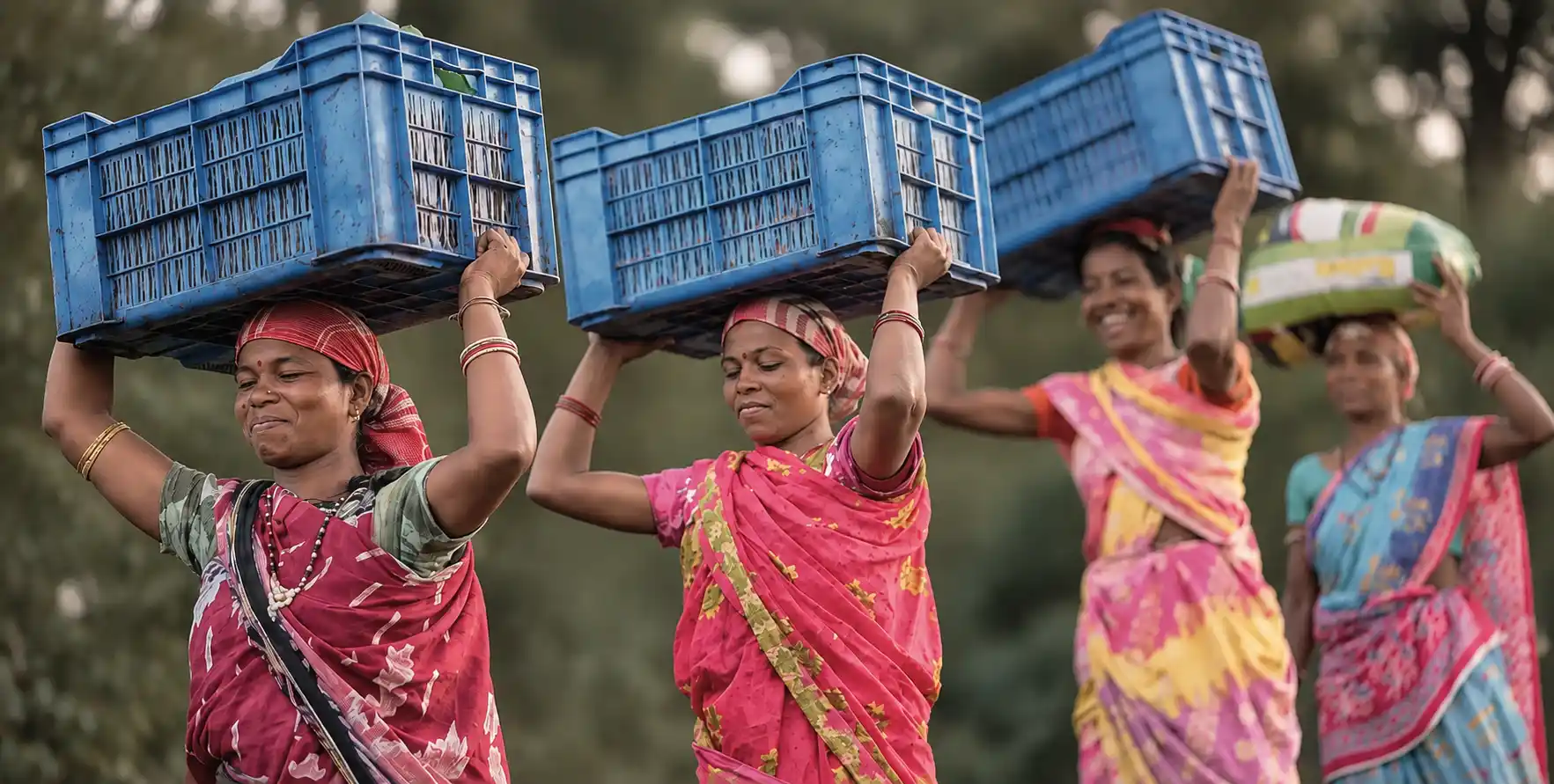
The nursery work described during the coffee programme in Koraput involves Mission Shakti self-help group members. Nursery activity has been taken up in areas including Dasmantpur, Laxmipur, Nandapur, Semiliguda, Koraput and Lamtaput.
Women Working at the Nursery Stage
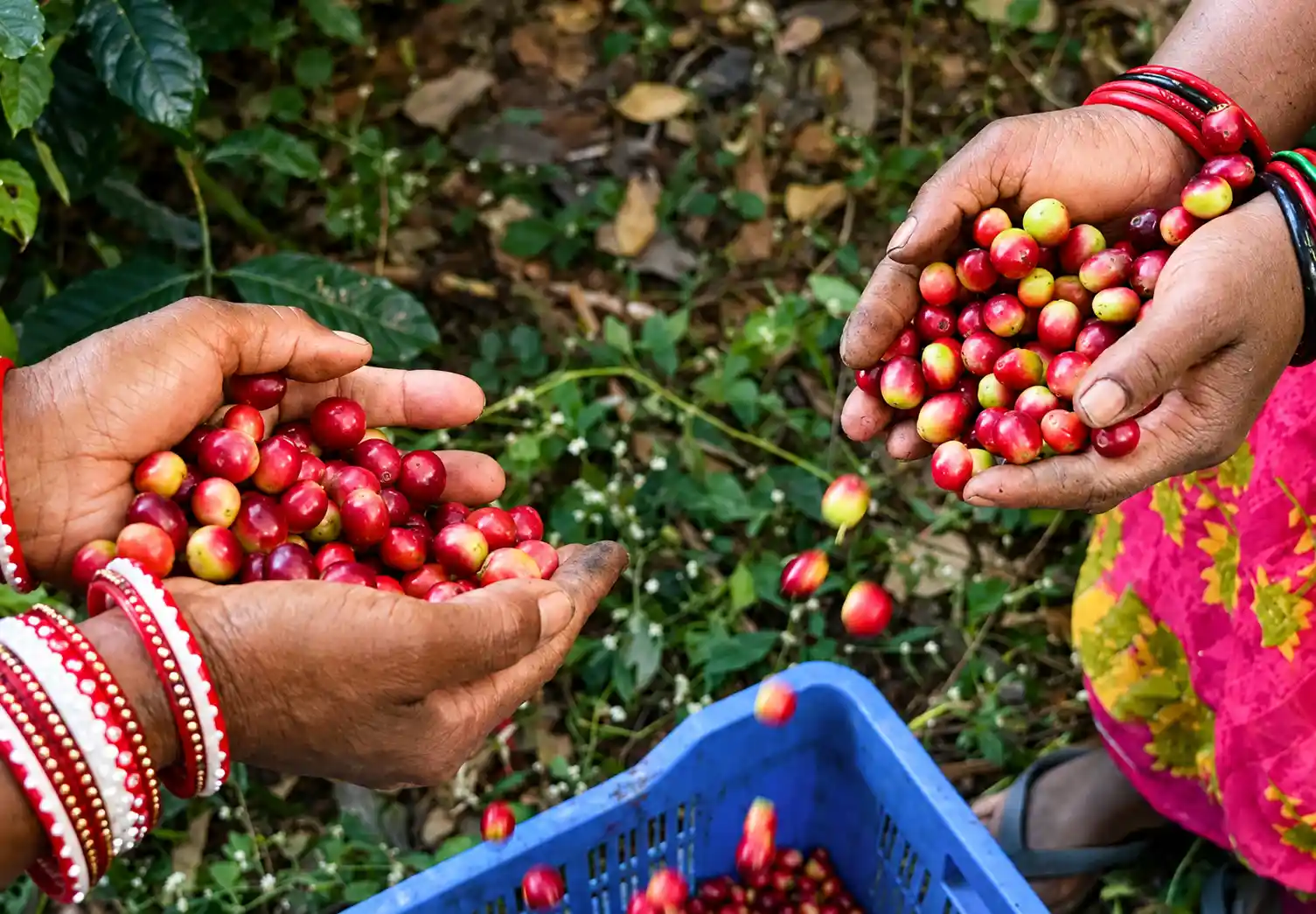
For the women working in these nurseries, the job begins in the morning and continues through the basic maintenance that keeps the seedlings alive and growing.
Once the plants reach the required stage, they are supplied onward for planting. The nursery therefore sits between two parts of the coffee chain: local work for the people preparing the seedlings and planting material for the farms that receive them.
It is an easy stage to miss when looking at a finished coffee plantation. Without it, there would be no steady flow of young plants.
Where Koraput Coffee Is Grown
The district coffee area is spread across several administrative blocks. The 2026 research used records from Bandhugaon, Boipariguda, Dasmantpur, Jeypore, Koraput, Laxmipur, Nandapur, Narayanpatna, Pottangi and Semiliguda.
Those records covered twenty seasons. After the researchers accounted for lagged variables, 190 block-year records remained for the main analysis.
The list is useful for anyone trying to understand the geography of Koraput coffee. It is not a crop confined to one famous garden or one town.
Why One Year's Harvest Cannot Tell the Whole Story
Coffee production in Koraput moves around.
The 2006–2025 records show differences between blocks and between seasons. Rainfall, plantation age, farm management and labour availability are among the factors discussed in the research as possible contributors to those changes.
The researchers grouped block-year records using yield per hectare, export ratio and productivity per farmer. Three performance tiers emerged from that analysis.
The study then used those tiers in prediction models. Adding the tier information improved the results across all eight classifiers tested.
The research has clear boundaries. The data are aggregated at block level, so they do not describe every individual farm. Weather, soil and detailed management information were also not available in the dataset.
What the Block-Level Data Shows
The block averages produced four groups in the study.
Jeypore and Pottangi were placed together in the lower group. Boipariguda, Dasmantpur, Koraput and Semiliguda clustered around the district average. Nandapur and Narayanpatna formed another group, while Bandhugaon and Laxmipur were grouped at the higher end of the measured yield and productivity ratios.
These groups belong to the study's statistical analysis. They should not be read as a statement about every farmer or every plantation inside a block.
Koraput Has Had Strong and Weak Coffee Seasons
The year-level analysis is just as revealing.
The study marked 2008 and 2021 as particularly weak seasons. The year 2013 stood out for yield and productivity. The researchers also placed 2011, 2017 and 2025 in an export-leaning group.
So there is no straight line from one harvest to the next. A good coffee year can be followed by a very different one, and the long record makes that easier to see.
From the Coffee Cherry to Processed Bean
The work changes once the coffee fruit leaves the plant.
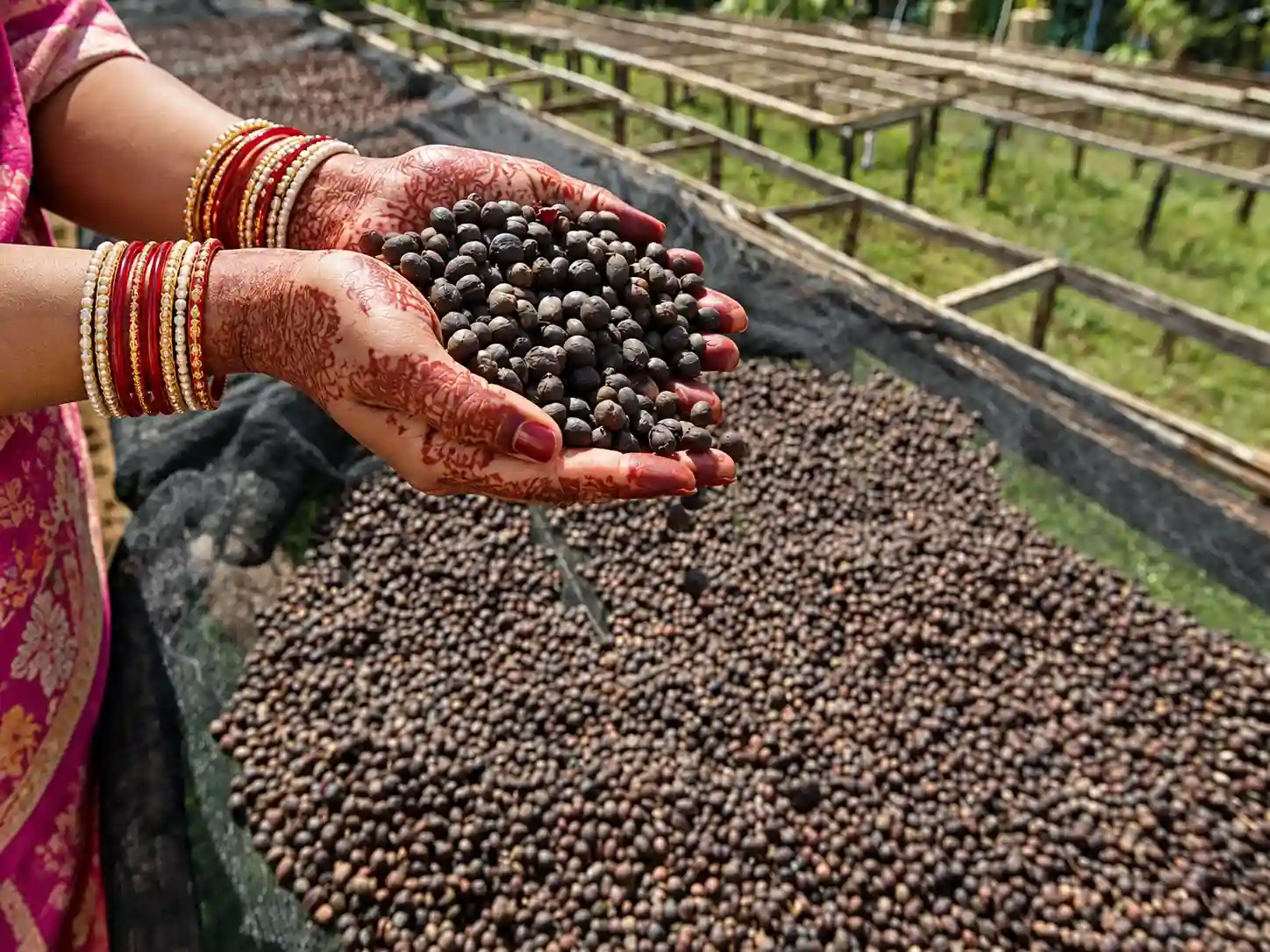
At the processing stage, the fruit has to be separated from the bean, the beans have to be dried and the dried coffee has to be hulled. After that comes roasting and grinding.
During my visit to Brown Valley Coffee Garden, I was shown two processing routes: natural and washed.
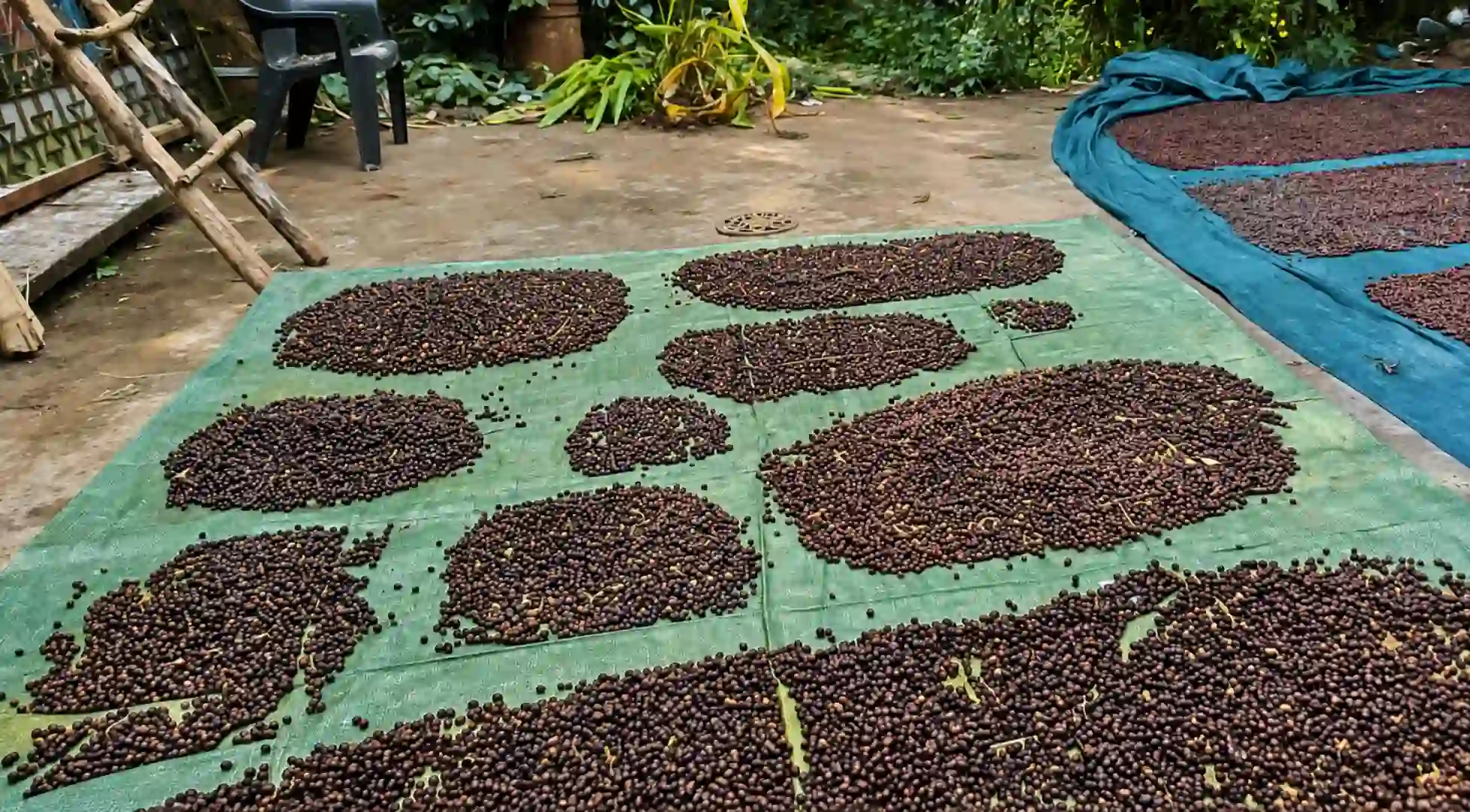
Natural coffee is dried with the fruit still around the bean. The fruit dries, fermentation takes place, and the dried outer material is removed later. Washed coffee goes through a different sequence: the outer fruit is removed earlier, the beans are washed and then dried.
The difference can be noticed in the cup. Natural processing can give a heavier aroma and body, while washed coffee can produce a cleaner profile with notes such as chocolate or caramel, depending on the coffee and roast.
Drying Takes Time
Processing is not a quick change from red coffee fruit to roasted beans.
Natural drying can take several weeks. Washed coffee generally reaches the dry stage sooner because much of the fruit has already been removed.
Once the beans are dry, hulling separates the remaining outer layer. Green coffee then goes to roasting, where heat changes its colour, smell and flavour. Grinding comes after roasting.
Seeing the stages in sequence gives a different perspective on a cup of coffee. The final drink is the last step in a chain that started with a plant growing under shade.
Coffee Farms Can Carry Spices Too
At Brown Valley Coffee Garden, coffee was not the only crop I saw.
Cardamom, cinnamon and pepper were part of the farm landscape. Pepper was discussed as another important crop, while coffee remained the main crop around which the visit was organised.
The mixed planting also changes the experience of walking through the farm. A coffee garden here can have several kinds of plants occupying different heights and spaces rather than a single crop filling every section.
Koraput Coffee and Local Livelihoods
The coffee chain creates work before and after the harvest.
Nursery workers prepare seedlings. Farmers maintain plantations and harvest fruit. Processing requires washing, drying and hulling. Roasting and finished products create another point where coffee can reach consumers.
The Mission Shakti nursery work is one visible part of that chain. The production records provide another view, showing how coffee has become an important income crop for tribal households in the highlands.
The two sides belong together: one is the physical work of producing coffee, and the other is the income and employment attached to that work.
Brown Valley Coffee Garden Is More Than a Coffee Stop
Brown Valley is the kind of place where the coffee process becomes easier to understand because the plants, processing and other crops are all close together.
Instead of hearing only about a finished packet of coffee, a visitor can see the plantation, ask about the fruit, look at the processing equipment and understand why natural and washed coffee are handled differently.
For anyone interested in Koraput coffee, that farm-level view is more useful than treating coffee only as a finished beverage.
My Brown Valley Coffee Garden Experience
During my Koraput trip, Brown Valley Coffee Garden was one of my last stops after the Koraput Coffee Garden was closed, and I spent time walking through the plantation with the people there; I saw coffee growing with cardamom, cinnamon and pepper, learned how the fruit moves through processing, discussed natural and washed coffee, and later walked toward an older part of the property where we were shown a deep section and very old trees before turning back when the route became unsafe, then returned to the main garden and continued the trip.
Before You Visit a Coffee Farm in Koraput
A coffee farm is still a working farm. Ask before entering, stay on the areas where visitors are allowed and follow the instructions of the people managing the property.
If your interest is coffee, give yourself enough time to look at the plants and ask about processing. A quick photograph at the entrance will tell you very little about how the crop is actually produced.
Visiting arrangements can differ between farms, so it is sensible to confirm access before travelling.
Frequently Asked Questions About Koraput Coffee
Where is Koraput coffee grown?
Coffee is cultivated in several highland areas of Koraput district. The recent twenty-year research dataset covered Bandhugaon, Boipariguda, Dasmantpur, Jeypore, Koraput, Laxmipur, Nandapur, Narayanpatna, Pottangi and Semiliguda.
What type of coffee is grown in Koraput?
Arabica is grown on small holdings under shade in the Koraput highlands.
Why is Koraput suitable for coffee?
The district has highland terrain, substantial rainfall and comparatively cool conditions that support coffee cultivation.
What is natural coffee?
In natural processing, coffee fruit is dried around the bean before the dried outer material is removed later.
What is washed coffee?
In washed processing, the outer fruit is removed before the beans are washed and dried.
What other crops grow with coffee?
Depending on the farm, visitors can find cardamom, cinnamon and pepper alongside coffee.
Does Koraput produce the same amount of coffee every year?
No. The 2006–2025 records analysed in the 2026 study show substantial variation between seasons and blocks.
The Coffee Story Is Still Being Written
There is a simple way to understand Koraput coffee: follow the plant.
Start in the nursery, where the seedling is prepared. Follow it to the shaded plantation. Wait for the fruit, then follow it through processing, drying, hulling, roasting and grinding.
Along the way, the people doing the work change, the setting changes and the crop can be affected by the conditions of a particular season.
That is what I saw in Koraput. The coffee cup was the final stop, not the story itself.